

By the Rev. Dr. Ed Hird
You may find this a stretching article in body, mind and spirit. I have intentionally avoided writing this article for years, because I knew that it might be unavoidably controversial. To be honest, I have been waiting for someone else to write this article instead of me. Like most pastors, I want people to like me. With genuine reluctance, I eventually faced my conflict avoidance, obeyed the Lord and read hundreds of yoga books in our local public libraries. In preparing this article, I have not read one book which warns against yoga. All book citations in this article are from yoga advocates and practitioners.
To many people, yoga is just the hottest new exercise fad for younger women. Twenty million North Americans are now doing yoga, including around four million men. These twenty million people are currently being trained by over 70,000 yoga practitioners in at least 20,000 North American locations.[1] Many people equate yoga with simple stretching. Stretching and calisthenics are good things which I participate in weekly at the local gym. The term ‘calisthenics’ comes from the combination of two Greek words ‘kallos’: beauty and ‘sthenos’: strength. Calisthenic exercises are designed to bring bodily fitness and flexibility of movement. Yoga has not cornered the market on healthy stretching and calisthenics. Is it possible that physical fitness does not begin and end on a yoga mat? I am convinced that we do well when we take care of our bodies as part of our Christian stewardship. God wants us to be healthier in body, mind, and spirit. We all need to get back to the gym on a regular basis, whatever our views of yoga. Your body will thank you.
I unknowingly participated in yoga, in the form of martial arts, for twenty years before renouncing it.[2] Many people are unaware that martial arts is yoga in motion, and originated with Buddhist monks. After much prayer, I reluctantly gave it up because I didn’t want any gray area in my Christian life. It is not an easy or light thing for someone to renounce this, even as a Christian. For many, it is absolutely unthinkable. To even imagine giving it up may leave some feeling unexpectedly threatened or even angry. Most of us are more defensive and more emotionally attached than we imagine. In hindsight, I realized that the ritual motions and postures (asanas or katas) had gotten very deep into my psyche, shaping my very identity.[3] Somehow over twenty years, they had become ingrained in me and even became part of me. Without intending it, I was to some degree serving two masters. This was a hard truth for me to accept. Change is never easy. I have heard of one Christian who is so entrenched in yoga that they have vowed to never give up yoga even if God himself told them to stop. It makes you wonder sometimes who is in charge of our lives.
Historically yoga was only taught in secret to high-caste male Brahmins.[4] It was very much a guy thing for the wealthy and powerful. In recent years, North American yoga has largely stripped itself of its more obvious Eastern trappings: gurus, incense, Sanskrit, and loin cloths.[5] It has gone through a remarkable image makeover in a relatively short time period. Yoga classes and paraphernalia have become a ten-billion+ dollar consumer-driven industry, involving designer spandex, yoga mats, and DVDs.[6] Old-time Yoga purists have called this new development the yoga industrial complex. There is so much money to be made that some yoga teachers have been unsuccessfully suing other yoga teachers over alleged copyright violation of specific yoga asana postures. In some parts of North America, yoga moms are replacing the demographic of soccer moms. Yoga has become such a strongly entrenched cultural fad that in some parts of North America it is being taught to children, often using tax-payers’ money, in otherwise strictly secular public school systems. Spiritually speaking, yoga has replaced the Lord’s Prayer which, you will remember, was bounced from our children’s classrooms for being too religious. The unquestioned assumption is that yoga has no religious connection.
This North American yoga industry has registered thousands of copyrights, patents and trademarks, sometimes resulting in threatening lawsuits.[7] The Indian Government is so concerned about the yoga copyrighting that they have set up their own task-force to protect yoga from being pirated by Westerners:
“Yoga piracy is becoming very common, and we are moving to do something about it,” says Vinod Gupta, the head of a recently established Indian government task force on traditional knowledge and intellectual-property theft.
‘We know of at least 150 asanas [yoga positions] that have been pirated in the U.S., the UK, Germany and Japan,’ he says. ‘These were developed in India long ago and no one can claim them as their own.’ In an effort to protect India’s heritage, the task force has begun documenting 1,500 yoga postures drawn from classical yoga texts — including the writings of the Indian sage, Patanjali, the first man to codify the art of yoga.”[8]
 There are seven main kinds of yoga: Hatha Yoga, Bhakti Yoga (devotion), Karma Yoga (action), Jnana Yoga (wisdom), Mantra Yoga, Tantra Yoga, and Raja Yoga (royal). In the 15th Century AD Hatha Yoga Pradipika, its first three verses teach that the ignorant masses are not yet ready for the lofty Raja Yoga, and so Hatha Yoga has been developed as a “staircase” to lead them to Raja Yoga. [9] The most popular yoga offered in one’s local Recreation Center is Hatha Yoga, so-called physical yoga involving numerous yoga techniques called asanas. These yogic asanas appear to the uninitiated as if they are just stretching exercises. The more fully initiated realize that yogic asanas are actually worship postures to Hindu deities. The yoga insiders all know the real scoop. They also know that North Americans are not quite ready yet for the full truth about the religious identity of yoga. My question is this: Is it really honest and respectful to pretend yoga is just a physical activity without any spiritual implications?[10] More importantly, should people get themselves bent out of shape over Christians doing yoga?
For many Westerners, all that matters is that something seems to be working. We rarely look under the hood of our cars. Our practical bent is both a great strength and a greater weakness. We naively think that we can arrogantly detach anything from its heritage, and snatch its alleged benefits without any downside. Yoga has been carefully repackaged to appeal for North Americans to our strongly pragmatic side. The yogic philosophy is initially minimized. Some yoga advocates claim that asanas are just poses, and mantras are just words. Context becomes everything. To argue that asanas and mantras have no inherent meaning is itself an unquestionably reductionistic statement. It is ultimately meaningless to suggest that yoga is meaningless. Is it really as easy to secularize yogic Hinduism as we individualistic North Americans may think?
I.K. Taimini, Indian scholar and chemist, wrote that there is no subject like yoga which is so wrapped up in mystery and on which one can write whatever one likes without any risk of being proved wrong.[11] The religion of Hinduism however is more than just cows, karma and curry. Yoga is the very heart of Hinduism. Yoga is the Hindu word for salvation. Nine out of ten Hindus agree that yoga is Hinduism.[12] Without yoga, there is no Hinduism. Without Hinduism, there is no yoga. There is no historical evidence for the popular New Age belief that yoga predates Hinduism and was originally non-religious. For those of you who believe that ‘secular’ yoga predates Hinduism, I invite you to email me your source document or weblinks for this often-heard claim.
In yoga asanas, one re-enacts the story of a particular Hindu deity, identifying as that specific deity. According to Sanskritist Dr. N. Sjoman, verses from the 19th century yoga text Maisuru Maisiri clearly indicate that “the asanas are assumed to have an inner nature that is associated with their specific name.” The hand postures (mudras) in Hatha Yoga are a replication of the same hand postures in the statues of Hindu gods. Yoga is spiritual embodiment. Is it mere coincidence that yogic asanas and mudras re-enact the exact shape and position of Hindu graven images and deities? The mudras are used to channel psychic energy through the body to alter consciousness. They facilitate the process of yogic Self-Realization, and are designed to awaken and activate the root yogic chakra (psychic wheel).
Unlike Judaism, Christianity and Islam, one does not have to believe in or worship something in order to be impacted by Hinduism. This systemic religious difference is hard for many westerners to comprehend. Because all in Hinduism is seen as maya or illusion, belief for yogic Hinduism is nice but not initially necessary. Nothing is what it appears to be. The actual belief or meaning structure is often introduced much later at a deeper level of initiation. Because Hinduism is technique-based, the mere performance of the yogic asana, with or without belief, is sufficient to open up the chakra energies which produce the psychic interaction.[13] Similar to the way that psychoactive drugs have mental, emotional and even spiritual impact regardless of what one knows about them, yoga also has a chemical impact regardless of one’s yoga knowledge or belief. The initial irrelevance of belief and worship is one of the reasons why yoga practitioners often promote yoga to North Americans as either non-religious or religiously neutral.[14] Transcendental Meditation, a form of Mantra yoga, initiated countless westerners with Sanskrit puja rituals that were never explained to them, but still had a significant impact on their core identity.[15] Yoga is inescapably religious in a way that most North Americans will not notice.[16] This is why many well-meaning North American Christians have uncritically or unwittingly opened their spirit to yogic Hindu philosophies that clash with Christ’s teaching.
The term ‘yoga’ comes from the Sanskrit word ‘yug’, which means to yoke. Few people in community centre yoga classes ask what they are yoking themselves to. Yogic practice is designed to yoke or bring psychic union with Brahman, the highest of the Hindu deities. What looks to us like simple stretches are in fact powerful psychic techniques that have been shown to change the very core of our consciousness. The purpose of yoga is to produce a mind-altering state that fuses male and female, light and darkness, good and evil, god and humanity.[17] As the best-selling author Deepak Chopra said in The Seven Spiritual Laws of Yoga:
“Krishna teaches Arjuna (in the Bhagavad Gita) the essence of yoga, telling him that good and evil, pleasure and pain, and loss and gain are two sides of the same coin of life. The solution that yoga offers is to go beyond the realm of duality and become established in the state of being that is beyond time, space and causality….Krishna tells Arjuna, ‘Go beyond the realm of good and evil where life is dominated by beginnings and endings. Enter into the domain of yoga where all duality finds its unity…”[18]
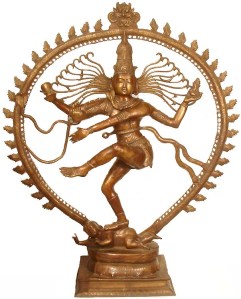 Good and evil in yogic philosophy are ultimately just two sides of the same coin. All is one. The term ‘Hatha Yoga’ refers to the union of the sun (ha or male) and moon (tha or female) into one monistic whole. Some scholars translate Hatha Yoga as ‘violent union’.[19] The definitive symbol of yoga is the Nataraj asana, known as the dancing Shiva who ‘dances’ destruction upon any distinctions (avidya) between the Creator and creation, good and evil, male and female.[20] Yoga philosophy believes that all matter and differences are illusion, and that all illusions can be overcome by the performance of yoga rituals. Yoga works systemically to alter biochemical functions, including our hormones and endocrine system. The so-called physical activity in Hatha Yoga is meant to achieve a changed state of consciousness, eliminating the distinction between subject [self] and object. Yoga is designed to gradually disconnect one’s thoughts and sensory perceptions from one’s sense of self and identity. The result is a profound loss of personhood and individuality in an age when many people are already very confused about who they are. Advanced yoga produces the impression that one no longer exists. This perception can be very convincing.

Yoga is the primary technique used by the yogis in attempting to become gods themselves. Through mantric yoga chanting and asanas, the mind experiences both sensory deprivation and sensory overloading, causing a shutting down of the mind. Unlike Christian prayer and meditation on God’s Word, the purpose of Eastern yogic meditational practices is to ‘kill the mind’. Mantra or breath yoga causes one to enter into a meditational trance state in which the mind is first silenced and then emptied. The ‘killing of the mind’ produces the experience of differences disappearing and all becoming one. Yoga was crafted and developed to enable an escape from rational thinking and a direct access by nonverbal means to a specific psychic state. Many would hold that yogic Hinduism produces a trance state through self-induced hypnosis. Is it fair to wonder if intensive yoga has effects similar to psychological brain-washing techniques? Is it merely accidental that yoga has the ability to cause a blanking of our minds, an actual cessation of our thought processes? Will community centre yoga classes in the future be required to alert prospective candidates to such risks, similar to warnings on cigarette packaging?
While yogic philosophy is polytheistic, it is also monistic, in the sense that it holds that, through yoga, we become the universe and/or god.[21] Yoga is the primary way that yogis attempt to be liberated from the karmic bondage of endless reincarnation. While these tenets are rarely taught at community center yoga classes, they are often held by the community center yoga instructor who has gone to a deeper level of yogic initiation. The further one enters into yoga, the greater the hold that this ‘other master’ has in one’s life. Those yoga instructors reading this article will have a greater sense of what I am referring to.
Yoga promoters realize that most North Americans are not yet ready to hear about the deeper secrets of yoga. Community Center yoga is largely drip-feeding lower-level yoga practices during this time of cultural shift. Hatha Yoga is itself derived from the very secretive tantric yoga. According to William Broad, author of The Science of Yoga, Tantric Yoga developed in India around 600 A.D:
“(Tantric yoga) worships female deities, roots its ceremonies in human sexuality, seeks supernatural powers for material gain, and cloaks its rites in secrecy.”
 In around 1200 A.D., Gorakhnath, a Hindu ascetic of western India, merged the traditions of Tantra and body discipline, forming Hatha Yoga.[22] Broad teaches that the path of enlightenment towards the ecstatic yoga union was known as Tantra.[23] Hatha Yoga is designed to bring a tantric awakening of Kundalini, the Hindu goddess having a serpent power.[24] The Sanskrit word kundalini means “she who is coiled”.[25] The cobra asana is not mere stretching, but is a mind control technique that has been developed over many centuries with proven psychic results. Few community centre yoga buffs realize that the cobra asana was developed to awaken the kundalini cobra chakra. The Kundalini snake is said to reside in the lowest chakra at the base of one’s spine:
“When (Kundalini) is aroused by Yoga practice, she uncoils and travels up the spine toward her lover, Shiva. Traveling the spine through psychic centers called chakras, Kundalini reaches the top chakra to merge with Shiva and there receive divine enlightenment through the union with Brahman….”[26]
I was unaware for many years that there is a Lord of Yoga. According to the Bhagavad-Gita Hindu Scripture, Shiva the Hindu god of destruction is the Lord of Yoga (Yogeshwara) and the first Hatha Yoga teacher. The Bhagavad Gita used the word “Yoga” in chapter six where the deity Krishna declares, “Thus joy supreme comes to the yogi … who is one with Brahman, with God.”[27] For many generations, the Hindu texts like Hatha Yoga Pradipikia has described yogis as “able to fly, levitate, stop their hearts, suspend their breathing, vanish, walk through walls, project themselves into other bodies, touch the moon, survive live burial, make themselves invisible, and die at will.”[28] The Yoga Sutras teach that the advanced yoga practitioner can develop the ability to tell the past and future (3:16, 3.22), discover spirits and communicate with master spirits (3:25, 3:32), enter into another person’s body (3:38), levitate (3:40), speak with animals (3.17), discover knowledge of past lives (3.18), read the minds of others (3.19), and not feel hunger or thirst (3:30). The magical and sexual aspects of Tantric Yoga have both embarrassed middle-class Indian Hindus while intriguing many Western New Agers.[29] The Tantric aspect of Hatha Yoga has been linked to a number of high-profile New Age yoga scandals.[30] Dr. Carl Jung, the father of the New Age movement, remarkably concluded after two decades of study that advanced yoga can loose a flood of suffering of which no sane person ever dream. In his advanced yogic awakening, Gopi Krishna said: “It was variable for many years, painful, obsessive…I have passed through almost all the stages of…mediumistic, psychotic, and other types of mind; for some time I was hovering between sanity and insanity.” [31]
 Yoga came to North America in 1893 when Swami Vivekananda, a disciple of the famous Guru Ramakrishna, taught about yoga at the Chicago World Fair. Laurette Willis, an ex-yoga teacher, calls yoga the missionary arm of Hinduism and the New Age movement. In “An Open Letter to Evangelicals”, Swami Sivasiva Palani wrote:
“A small army of yoga missionaries – hatha, raja, siddha and kundalini – beautifully trained in the last 10 years, is about to set upon the western world. They may not call themselves Hindu, but Hindus know where yoga came from and where it goes.”[32]
As Yoga Guru B.K.S Iyengar notes in his book Light on Yoga, “Some asanas are also called after Gods of the Hindu pantheon and some recall the Avataras, or incarnations of Divine Power.”[33] Because the Hindu deities rode on animals, many yoga asanas are devoted to these deified animals.[34] In the Sun Salutation asana, one is yogically paying direct homage to Surya, the Hindu Sun deity. The Cobra asana is about identification with and worship of the Kundalini snake, yogically awakened in the chakras. The fish asana (Matsyasana) is the yogic worship and reenactment of the Hindu deity Vishnu who turned himself into a fish to rescue people from a flood.[35] The Half Moon asana involves the yogic identification with and worship of Ganesh, the elephant-headed god who threw part of his tusk at the moon.[36] The Tortoise asana is dedicated to the yogic worship of Kurma the Tortoise incarnation of the god Vishnu.[37] The Downward Dog asana reenacts the Hindu worship of the dog as happens for five days each November.[38] In Dr. Raj Balkarana’s book The Stories Behind the Poses , he comments that:
Shiva is sometimes called the “Lord of Beasts,” because his refined consciousness is said to effortlessly tame wild [animals]. Upward facing dog has to do with working with the wild canine energy… The head is above the heart, activating the upward flow of kundalini. Downward Dog is a calming pose. It offers the grounding presence and companionship of a tame and loving dog. The head is below the heart, grounding into the earth.
The Hanuman asana is dedicated to the yogic worship of the Monkey god, Hanuman.[39] The Warrior asana is identified with the yogic worship of Lord Virabhadra who is described as having a thousand arms, three burning eyes, and a garland of skulls.[40] The Corpse asana is the death or extinction of the person when yogic unification with the Hindu deity Brahman wipes out one’s own identity and existence.[41] Dr. Balkarana explains that:
spiritually, Child Pose (Balasana) invokes Krishna, an avatar or incarnation of Vishnu, a member of the Hindu Trinity mentioned earlier. Krishna symbolizes divine play, and this pose embodies and cultivates “grounding, safety, and serenity”
The Lotus asana is identified with the yogic worship of the Hindu deity Lakshmi who sat on a lotus.[42] The Marichi asana is dedicated to the yogic identification with and worship of Marichi, one of the seven Hindu Lords of Creation and the Grandfather of the Sun god Surya. Dr. Balkarana shows how the:
Tree (Vrikshasana) pose is simple, but for those who know the great wisdom behind it, it is among the most profound of yoga poses. In this pose, one’s hands are clasped, closing the circuitry of the heart energy. Also, one’s two legs become like a single grounding rod, connecting with the earth. The upright plane between [sky] and earth is divine…. It is the plane of kundalini [divine feminine energy] rising, of spiritual ascension, of touching the [transcendent] while rooted on earth.
A number of well-intended Christians have been recently promoting Christianized yoga in North America. In their classes, they usually do the same hatha yoga asanas as the new-agers, but add scripture quotes and Gospel music. Subhas R. Tiwari, a Hindu University of America professor who has a master’s degree in yoga philosophy, comments: “Such efforts [to Christianize yoga] point to a concerted, long-term plan to deny yoga its origin. This effort . . . is far from innocent. It is reminiscent of the pattern evident throughout the long history and dynamics of colonizing powers.”[43] Tiwari holds that efforts to Christianize yoga are unjust “encroachment” and thinly veiled Christian proselytism of Hindus.
Some Christians claim that 1 Corinthians 8 and Romans 14 gives them the right to christianize yoga, saying that because Paul ate meat sacrificed to idols, then we can similarly do yoga that has been dedicated to idols. They claim that because they are strong, Spirit-filled Christians, they can do yoga with no downside. Paul however never encouraged Christians to participate in idolatrous Greek or Roman temple rituals as a way of proving how protected they are by the Holy Spirit. In fact, in 1 Corinthians 10: 1-13, Paul stated that Christians needed to flee idolatry and syncretism. Sometimes the wisest thing to do is to simply say no, and remove ourselves from a compromising situation. Never did the Bible encourage us to christianize idolatry or to hang around the idolatrous temple to prove how strong we are. Not everything can be redeemed. Some things need to be renounced. It goes without saying that sacrificing animals to the local temple statue would have been unthinkable for New Testament Christians.
What Paul was encouraging in 1 Corinthians 8 was the practice of saying grace before eating meat at dinner. He knew that most meat would have been sacrificed to idols at the local temple before making it to the butcher. Rather than becoming vegetarian, Paul advocated saying grace as a cleansing prayer. The parallel passage in 1 Timothy 4:3-4 says that saying grace is not just a nice religious thing we do before Sunday dinner, but rather is a significant act of thanksgiving (in the Greek, eucharist), which actually consecrates or sanctifies the meat through prayer and God’s Word.
Saying grace at dinner, however, is radically different than adopting ancient yogic mind-altering techniques. Because yoga physically embodies the spiritual philosophy of Hinduism, it inhibits the Lord’s command to take every thought captive in obedience to Christ. It also disregards Paul’s encouragement in Colossians 2:8 to not be “taken captive by philosophy and empty deception according to the tradition of men, according to the elementary principles of the world, rather than according to Christ.” This is not at the same level of whether or not one chooses to have a Christmas tree in one’s living room, or what kind of worship music one prefers. Yes, there is great freedom on non-essentials for Christians. But on more essential issues like idolatry or immorality, the bible is clear that we are to have clear boundaries. Some, coming out from legalistic church backgrounds, defend yoga in the name of freedom. But does christianized yoga bring freedom or bondage? Syncretistically dabbling in things that the bible cautions against leads to great confusion.
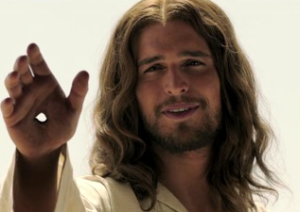 Ultimately from a biblical perspective, the deities of yoga are no deities at all, and their devotees have no power to proscribe or limit what Christian believers may do with their bodies. Jesus is Lord of our bodies, which are the temple of the Holy Spirit (1 Corinthians 6:19). That is why many Christians make use of their bodies in worship, kneeling , arms elevated, or even prostrate. How we use our bodies is an expression of our identity in Christ. We need not be afraid that through involvement in stretching and calisthenics, we may accidentally be stretching in a way that might look like yoga. Even with its 1,500 asana poses, yoga does not own the world of calisthenics and stretching.
With yoga and Hinduism, nothing is what it seems. This is why it has been described as the embrace that smothers. Trying to separate the so-called physical from the spiritual in yoga is like attempting to remove arsenic from a bowl of sugar. Yoga has always been shrouded in illusion and secrecy, and can intentionally look like whatever you want it to in the short term. Hindus are well aware that yoga is an ancient form of divination. The bible does not encourage us to see how close to the line we can get before we fall in, but rather to flee idolatry. In the end, the yogic road leads to idolatry and monism, to serving two masters. The Lordship of Jesus is what is at stake.
Yoga and Christianity go together like ice cream and beach sand. Just as there is no Christian Ouija board, no Christian astrology, and no Christian tarot card reading, there is no Christian Yoga that is either truly Yoga or truly Christian. I invite you to do the stretching, perhaps unthinkable thing of turning from Yoga towards healthy stretching and calisthenics. This will not be easy for you, but it will be life-giving. Please pray about it, like I did. Ask Jesus to reveal to you the truth about yoga. Does he want you to renounce it? Prayer is the way forward. Have you ever prayerfully asked Jesus whether he wants you to give up yoga? Why not ask him now? You will not regret choosing to serve one master. Jesus is Lord. Yoga is not.
p.s. For those who would like to do healthy stretching, I recommend your checking out these two websites: Mayo Clinic Stretches and Sport Injury Stretches. Another healthy option would be to check out Praise Moves with Laurette Willis, a Christ-centered alternative to yoga.
The Rev. Dr. Ed Hird, BSW, MDiv, DMin
-award-winning author of the book Battle for the Soul of Canada
[1] Colleen Titlman, Teach Yourself Visually Yoga (MaranGraphics, Wiley Publishing Inc, New York, NY, 2003), p. 33.; William J. Broad, The Science of Yoga (Simon & Schuster, New York, NY, 2012), p. 2 “twenty million in the USA…more than two hundred and fifty million (yoga practitioners)…”; “Yoga in America Study 2012”, Yoga Journal. http://www.yogajournal.com/press/yoga_in_america “82.2 percent are women; 17.8 percent are men.” (Accessed April 28th 2013)
[2] Nathan Johnson, Zen Shaolin Karate, “Ch’an (zen) monks of the Shaolin Temple” (Ch’an comes from an Indian word dhyana meaning meditation.)
[3] Taekwondo and other martial arts can be traced to a 6th century Buddhist monk Bodhidharma who travelled from India to China and established Zen Buddhism at the Shaolin temple of Ko San So Rim. There he taught them both sitting meditation and the martial arts (moving meditation) to enable his disciples to free themselves from all conscious control in order to attain enlightenment. The karate equivalent to the poomse is the kata patterns. As the Taekwondo author and instructor Eddie Ferrie puts it, “Many of the patterns of taekwondo are rooted in semi-mystical Taoist philosophy and their deeper meaning is said to be far more important than the mere performance of a gymnastics series of exercises. This is not immediately obvious, either when performing or watching the poomse being performed…”
[4] Timothy McCall, Yoga as Medicine: a Yoga Journal Book (Bantam Dell, New York NY, 2007), P. 112 “At one point yoga was only taught to the elite of Indian society, male Brahmins, and then only to those who dedicated their life to it. The teachings and practice of yoga were kept secret from the rest of the world.”
[5] John Capouya, Real Men Do Yoga (Health Communications Inc., Deerfield, Florida, 2003), p. xiii “No chanting, no incense, no gurus…”
[6] Cain Carroll and Lori Kimata, Partner Yoga (Rodale Books, Emmaus, Pennsylvania, 2000), p. 21 “Unlike their predecessors, modern yogis now wear spandex and nail polish and practice postures on thin purple mats.”; “Yoga in America Study 2012”, Yoga Journal. http://www.yogajournal.com/press/yoga_in_america “The previous estimate from the 2008 study was 5.8 billion dollars.” (Accessed April 28th 2013)
[7] Broad, The Science of Yoga, p. 3.
[8] “India makes moves to reclaim heritage from ‘yoga piracy’”, David Orr, Washington Times, September 22nd 2005, http://www.washingtontimes.com/news/2005/sep/22/20050922-114821-4035r/
[9] Titlman, Teach Yourself Visually Yoga, p. 7.; Svatmarama, The Hatha Yoga Pradipika, The Sacred Books of the Hindus, ed. Major Basu, I.M.S. (retired) (Bahadurganj, Allahabad: Sudhindranatah Vasu, 1915), http://www.geocities.com/kriyadc/hatha_yoga_pradipika_chapter1.html.
[10] Titlman, Teach Yourself Visually Yoga, p. 11 “…Yoga is not simply a system of physical exercise or a means of releasing psychic stress, as so many in the West have come to believe…”
[11] Broad, The Science of Yoga, p. ix.
[12] Laurette Willis, “Why A Christian Alternative to Yoga?” http://praisemoves.com/about-us/why-a-christian-alternative-to-yoga (Accessed Dec 14th 2012).
[13] www.yogabasics.com : “More than just stretching, asanas [yoga postures] open the energy channels, chakras and psychic centers of the body. Asanas purify and strengthen the body and control and focus the mind.” (Accessed Dec 12th 2012)
[14] Capouya, Real Men Do Yoga, p. xiii “Yoga’s not some weird Eastern religion. In fact it’s not a religion at all.”; Capouya, p.xvii “He’s not looking for a religious experience, and hasn’t found it. You don’t have to sit around and say ‘Om’ to do yoga…It doesn’t have to be all Eastern and mystical.”; Pat Shapiro, Yoga for Women at Midlife & Beyond (Sunstone Press, Santa Fe, 2006), p. 15 (Yoga) “is not connected with any particular religion and does not require a specific belief system.”; Dr. Candy Gunther Brown, Encinitas School Yoga Lawsuit, p. 5, “Many Americans fail to recognize non-Christian (e.g. Hindu) religious practices as ‘religion’ and fail to understand the inseparability of certain bodily practices from spiritual purposes.” http://bit.ly/11HChls
[15] “Transcendental Meditation”, http://biblefacts.org/cult/tm2.html
[16] According to the Webster’s New World Dictionary, yoga (coming from an east Indian Sanskrit word which means “union with god” or “to yoke”) is “a mystic and ascetic Hindu discipline for achieving union with the supreme spirit through meditation, prescribed postures, controlled breathing, etc.” Merriam-Webster’s online dictionary defines yoga as “Hindu theistic philosophy teaching the suppression of all activity of body, mind, and will in order that the self may realize its distinction from them and attain liberation.”
[17] Carroll and Kimata, Partner Yoga, p. 227 “In these moments of absorption, it is said that we are ‘yoked’ to the underlying force behind all creation. In this place, there are no questions, no opposites, and no struggle; there is only union. This is the essence of yoga.”
[18] Deepak Chopra and David Simon, The Seven Spiritual Laws of Yoga (John Wiley and Sons Inc., Hoboken, New Jersey, 2004), p.197.
[19] Broad, The Science of Yoga, p. 17 “The Sanskrit root of Hatha is hath – to treat with violence, as in binding someone to a post…” P. 17 …a number of scholars translate Hatha Yoga as ‘violent union.’…
[20] http://www.theyogatutor.com/natarajasana The Yoga Teacher, “The definitive symbol of yoga is the Nataraja, otherwise known as the Dancing Shiva.”; http://bit.ly/TNFTRV Tirusula Yoga, “Nata= Dancer. Raja = King / Lord” (Accessed Dec 23rd 2012)
[21] David Frawley (Vamadeva Shastri) “Hindu View of Nature”, Hindu Voice UK, http://www.vedanet.com/2012/06/hindu-view-of-nature “Ultimately for the Hindu as the Upanishads say, ‘Everything is Brahman’ Sarvam Khalvidam Brahma.” (Accessed April 5th 2013)
[22] Broad, The Science of Yoga, p. xxv.; Broad, p.16 “In truth, Hatha is a branch of Tantra.”
[23] Broad, The Science of Yoga, p. 15.
[24] Titlman, Teach Yourself Visually Yoga, p. 16.
[25] Lee Sannella, The Kundalini Experience (Integral Publishing, Lower Lake, California 1987, 1992), P. 8.; Titlman, Teach Yourself Visually Yoga, P.7 “Two popular forms of Tantra Yoga are Kundalini and Kriya Yoga.”
[26] Titlman, Teach Yourself Visually Yoga, p. 26.; Capouya, Real Men Do Yoga, p.89 “In the yoga tradition…there’s a ‘chakra’, or an energy center, around the solar plexus…”
[27] Laurette Willis http://praisemoves.com/about-us/why-a-christian-alternative-to-yoga “…according to Hatha Yoga Pradipika.”; Titlman, Teach Yourself Visually Yoga, p. 12 (Bhagavad-Gita is) “a classic Hindu text believed written between the Fifth Century B.C. and the Second Century A.D.”
[28] Broad, The Science of Yoga, p. 17.
[29]Capouya, Real Men Do Yoga, P. xv (yoga) “…recharges your sex life.”; p.172” …in the Kundalini tradition, the perineum is where energy supposedly enters the body. The more energy you take in there, it’s believed, the hornier you get…”; Carroll and Kimata, Partner Yoga, p. 27 “…contrary to popular belief, not all Tantric yoga is sexual.”; Broad, The Science of Yoga, p.24 “Middle-class Indians found (yoga’s) its obsession with sex and magic to be an ’embarrassing heritage,’ according to Geoffrey Samuel, a yoga scholar…”; Broad, p. 26 “Throughout his career, Gune maintained a virtual taboo on the word ‘Tantra’- the parent of Hatha which Hindu nationalists had come to abhor.”;
[30] Broad, The Science of Yoga, p. 164 “…modern yoga throbs with open sexuality ranging from the blatantly erotic and the bizarrely kinky to the deeply spiritual.”; Broad, p. 164 “…the discipline (of yoga) itself began as a sex cult …”; p. 175 “Even Kripalu came under fire. Former devotees at the Berkshires ashram won more than $2.5 million after its long-term guru–a man who gave impassioned talks on the spiritual value of chastity- confessed to multiple affairs.”; McCall, Yoga as Medicine, p. 109 “Kripalu: This system is perhaps the most New Age in feel of the Yoga styles common in the West.”
[31] Broad, Science of Yoga, p. 10; Gopi Krishna, The Awakening of Kundalini (New York: E.P. Dutton, 1975), p. 124
[32] Sivasiva Palani, “An Open Letter to Evangelicals”, Hinduism Today, January 1991, http://bit.ly/10Bzxr1.
[33] http://www.hafsite.org/media/pr/yoga-hindu-origins Hindu American Foundation, “Yoga Beyond Asana: Hindu Thought In Practice”, “Yet, even when Yoga is practiced solely in the form of an exercise, it cannot be completely delinked from its Hindu roots.” (Accessed Dec 23rd 2012)
[34] “The Significance of Animals in Hinduism” http://www.hinduwebsite.com/hinduism/essays/animals.asp “Hindus revere many divinities in animal form. Lord Vishnu incarnated upon earth first as a fish, then as a tortoise and then as a boar… In the Hindu pantheon, each god and goddess is associated with an animal as a vehicle.” (Accessed April 5th 2013); “Why Animal Worship in Hinduism?”, http://bit.ly/XZ4mbS “Almost all the deities in Hinduism have animals as their mode of transport (vehicle) or are associated with animals… Brahma travels on a humongous swan Hamsa, Lord Shiva on the Divine Bull Nandi and Lord Vishnu travels on the Golden-Eagle Garuda” (Accessed April 5th 2013)
[35]“Fish Pose”, http://www.yogajournal.com/basics/2335 (Accessed Dec 26th 2012)
[36] History of Yoga Postures, http://bit.ly/12puYFs (Accessed Dec 29th 2012)
[37] “Sitting like a Tortoise”, http://bit.ly/ZErk2K (Accessed Dec 29th 2012)
[38] “Animal Worship” http://bit.ly/2ogQaB (Accessed April 5th 2013)
[39] http://www.yogajournal.com/practice/889 Hanumanasana: Pose Dedicated to the Monkey God, Hanuman, By Aadil Palkhivala
[40] “Viradhadra” http://bit.ly/K1fK0R (Accessed April 5th 2013)
[41] Mike Stokes, “Shavasana the dead pose”, http://www.godrealized.com/Shavasana.html (Accessed April 5th 2013) “Why is it that in nearly every yoga class, no matter what the style, we end with Savasana?… Why practice death pose? …The reason lies in the fact that death brings us face to face with total annihilation of the self… the essence of Savasana and the essence of yoga, namely total annihilation of separateness and unification with the whole. Annihilation of the self is the access to the experience of yoga.”
[42]“Lakshmi: Goddess of Wealth & Beauty!” http://hinduism.about.com/od/hindugoddesses/p/lakshmi.htm “Lakshmi is the household goddess of most Hindu families.”; “Name: Padmasana” http://babynamesworld.parentsconnect.com/meaning_of_Padmasana.html (Accessed April 5th 2013)
[43] “Pose dedicated to Marichi” http://www.yogajournal.com/poses/939; “Urban Ashtanga Teacher Training” http://bit.ly/XZ2xf3 (Accessed April 5th 2013); Subhas R. Tiwari, “Yoga Renamed is Still Hindu,” Hinduism Today, January-February-March 2006.
P. S. Click this Amazon link to view for free the first two chapters of our new novel Blue Sky.
“I’m afraid there’s been an accident…”
 Sandy Brown and her family have just moved to Spokane, Washington where her husband, Scott, is pastoring a new church. With a fresh start, Sandy is determined to devote more time to her four children. But, within weeks of settling in their new life, the Brown family is plunged into turmoil.
Sandy receives shocking news that her children aren’t safe, which brings back haunting memories of the trauma she experienced as a girl. Then, the unthinkable happens…
A brutal attack puts Sandy on the brink of losing everything she’s loved. Her faith in God and the family she cherishes are pushed to the ultimate limit.
Is healing possible when so many loved ones are hurt? Are miracles really possible through the power of prayer? Can life return to the way it was before?
Blue Sky reveals how a mother’s most basic instinct isn’t for survival… but for family.
If you’re a fan of Karen Kingsbury, then you’ll love Blue Sky. Get your copy today on paperback or kindle.
-Click to check out our marriage book For Better For Worse: discovering the keys to a lasting relationship on Amazon. You can even read the first two chapters for free to see if the book speaks to you.

-The sequel book Restoring Health: body, mind and spirit is available online with Amazon.com in both paperback and ebook form. Dr. JI Packer wrote the foreword, saying “I heartily commend what he has written.” The book focuses on strengthening a new generation of healthy leaders. Drawing on examples from Titus’ healthy leadership in the pirate island of Crete, it shows how we can embrace a holistically healthy life.

In Canada, Amazon.ca has the book available in paperback and ebook. It is also posted on Amazon UK (paperback and ebook), Amazon France (paperback and ebook), and Amazon Germany (paperback and ebook).
Restoring Health is also available online on Barnes and Noble in both paperback and Nook/ebook form. Nook gives a sample of the book to read online.
Indigo also offers the paperback and the Kobo ebook version. You can also obtain it through ITunes as an IBook.
To receive a personally signed copy within North America, just etransfer at ed_hird@telus.net, giving your address. Cheques are also acceptable.
-Click to purchase the Companion Bible Study by Jan Cox (for the Battle of the Soul of Canada) in both paperback and Kindle on Amazon.com and Amazon.ca
Indigo also offers the paperback and the Kobo ebook version. You can also obtain it through ITunes as an IBook.

-Click to purchase the Companion Bible Study by Jan Cox (for the Battle of the Soul of Canada) in both paperback and Kindle on Amazon.com and Amazon.ca

To purchase any of our six books in paperback or ebook on Amazon, just click on this link.


 Sandy Brown and her family have just moved to Spokane, Washington where her husband, Scott, is pastoring a new church. With a fresh start, Sandy is determined to devote more time to her four children. But, within weeks of settling in their new life, the Brown family is plunged into turmoil.




 Edhird's Blog