Everyone wants ‘Peace on Earth’. Is it really possible? President John Adams was a genuine peace-maker, even to his own detriment.
One of my most popular Deep Cove Crier articles, with almost 17,000 online readers, has been my article on John Adams’ good friend Benjamin Franklin. Both were founding fathers of our neighbour to the south. My American relatives have told me that Adams is the greater man.
Adams’ greatest strength and weakness was that he was a passionate peace-maker, even at the cost of sabotaging his own re-election as the second American President. Napoleon in 1797 captured 300 American ships, six percent of the American fleet. (1) The ‘hawks’ in Adams’ own Federalist party desperately wanted to go to war with France, but Adams negotiated a peace treaty that allowed him to disband Alexander Hamilton’s unnecessary and costly army. Hamilton, the commander of this army, took this as a personal insult, and dedicated himself to splitting Adams’ own Federalist Party. John Adams wrote his wife Abigail saying that he knew “Hamilton to be a proud-spirited, conceited, aspiring mortal, always pretending to morality…as great a hypocrite as any in the US…” (2)
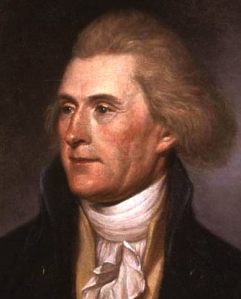
With two Federalist presidential candidates, the Republican presidential candidate, Thomas Jefferson, won the election on the 36th ballot after a deadlocked Congressional tie vote. (3) Jefferson, who had foolishly endorsed the blood-thirsty French Revolution, was wisely mentored by Adams. At his final State of Union address, President Adams stated: “Here and throughout our country, may simple measures, pure morals, and true religion, flourish forever!” (4) His final prayer as he left the House was: “I pray Heaven to bestow the best of Blessings on this House and all that shall hereafter inhabit it. May none but honest and wise Men ever rule under this roof.” (5) Despite strong political differences, Adams and Jefferson ended as good pen pal friends, both dying in 1826 on the significant American July 4th holiday. (6) Jefferson acknowledged Adams as ‘the colossus of independence.’ (7)
John Adams was both passionate about liberty and yet cautious about our human tendency to selfishness. James Grant commended Adams for “his unqualified love of liberty, and his unsentimental perception of the human condition.” (8) As such, Adams produced constitutional boundaries that guarded people’s essential freedoms of life and liberty of speech, assembly, and religion. The US Congress praised Adams for his “patriotism, perseverance, integrity and diligence.” (9) Adams insightfully commented: “our Constitution was made only for a moral & religious people. It is wholly inadequate to the government of any other.” (10) The root of equality, said Adams, was the Golden Rule – Love your neighbour as yourself. (11)
Adams has been described as one of North America’s greatest bibliophiles. He loved to learn, reading voraciously in wide-ranging areas of interest, including the Bible. Equality for Adams was grounded in equal access to education for all: “knowledge monopolized, or in the Possession of a few, is a Curse to Mankind. We should dispense it among all Ranks. We should educate our children. Equality should be preserved in knowledge.” (12) His prayer for his children was: ““Let them revere nothing but religion, morality, and liberty.” (13)
One of Adams’ strengths was that he was deeply honest, even to his own political detriment. Unlike the worldly-wise Benjamin Franklin, he would say exactly what was on his mind. Adams urged Franklin to get more exercise, saying that “the sixth Commandment forbids a man to kill himself as it does to kill his neighbour. A sedentary life is tantamount to suicide.” (14) James Grant commented that “like the mythical George Washington, he seemed incapable of telling a lie; he was naturally and organically honest.” (15) Adams once commented: “The Ten Commandments and the Sermon on the Mount contain my religion.”(16) Adams was indeed an unusual politician. He found the endless political bickering to be painful and pointless, commenting that “a resolution that two plus two makes five would require fully two days of debate.” (17) Adams was known as a foul-weather politician, only drawn to serve his country because of the intense crisis. He would have much rather been anywhere else: “The longer I live and the more I see of public men, the more I wish to be a private one.” (18) Adams was a latecomer to American Independence, preferring to work for reconciliation with the British. While Benjamin Franklin had favour and therefore initial funding from France , John Adams eventually obtained key loans to the United States from the cautious Dutch. Because of his endless negotiations in France, Holland and England, Adams only saw his dear wife Abigail for a grand total of three months over six years. (19) He wrote to Josiah Quincy: “Happy is the man who has nothing to do with politics and strife.” (20)
One of Adams’ first assignments in Congress was to draft a resolution appointing a day of fasting, humiliation, and prayer throughout the thirteen colonies: “that we may, with united hearts and voices, unfeignedly confess and deplore our many sins, and offer up our joint supplications to the all-wise Omnipotent, and merciful Disposer of all events; humbling beseeching him to forgive our iniquities, to remove our present calamities, to avert those desolating judgments with which we are threatened, and to bless our rightful sovereign, King George the third.” (21) Sadly King George dismissed Adams and his colleagues as ‘wicked and desperate persons.’ (22)
King George’s thirty-three thousand British troops resulted in thirty-five thousand American deaths by sword, sickness, or captivity. (23) Adams knew that without heart-forgiveness, American independence would quickly become as barbaric as the French Revolution: “In a time of war, one may see the necessity and utility of the divine prohibitions of revenge and the Injunctions of forgiveness of Injuries and love of Enemies, which we find in Christian Religion. Unrestrained, in some degree by these benevolent Laws, Men would be Devils, at such a Time as such.” (24)
In 1815 he wrote his own gravestone epitaph: “Here lies John Adams, who took upon himself the responsibility of the peace with France in the year 1800.” (25) My prayer is that we too may be passionate peace-makers like President John Adams.
The Rev. Dr. Ed Hird, BSW, MDiv, DMin
-an article previously published in the Deep Cove Crier/North Shore News
(19) McCullough, p. 271 “At last, on June 11th 1782, Adams negotiated with a syndicate of three Amsterdam banking houses — Willink, Van Staphorst, and De la Lande & Fynje — a loan of five million guilders, or two million dollars at five percent interest. It was not the ten million dollars Congress had expected…”; Grant, p. 196.
(20) Grant, p. 157.
(21) Grant, p. 153.
(22) Grant, p. 152.
(23) Grant, p. 256.
(24) Grant, p. 184.
(25) Grant, p. 383.
P. S. Click this Amazon link to view for free the first two chapters of our new novel Blue Sky.
“I’m afraid there’s been an accident…”
Sandy Brown and her family have just moved to Spokane, Washington where her husband, Scott, is pastoring a new church. With a fresh start, Sandy is determined to devote more time to her four children. But, within weeks of settling in their new life, the Brown family is plunged into turmoil.
Sandy receives shocking news that her children aren’t safe, which brings back haunting memories of the trauma she experienced as a girl. Then, the unthinkable happens…
A brutal attack puts Sandy on the brink of losing everything she’s loved. Her faith in God and the family she cherishes are pushed to the ultimate limit.
Is healing possible when so many loved ones are hurt? Are miracles really possible through the power of prayer? Can life return to the way it was before?
Blue Sky reveals how a mother’s most basic instinct isn’t for survival… but for family.
If you’re a fan of Karen Kingsbury, then you’ll love Blue Sky. Get your copy today on paperback or kindle.
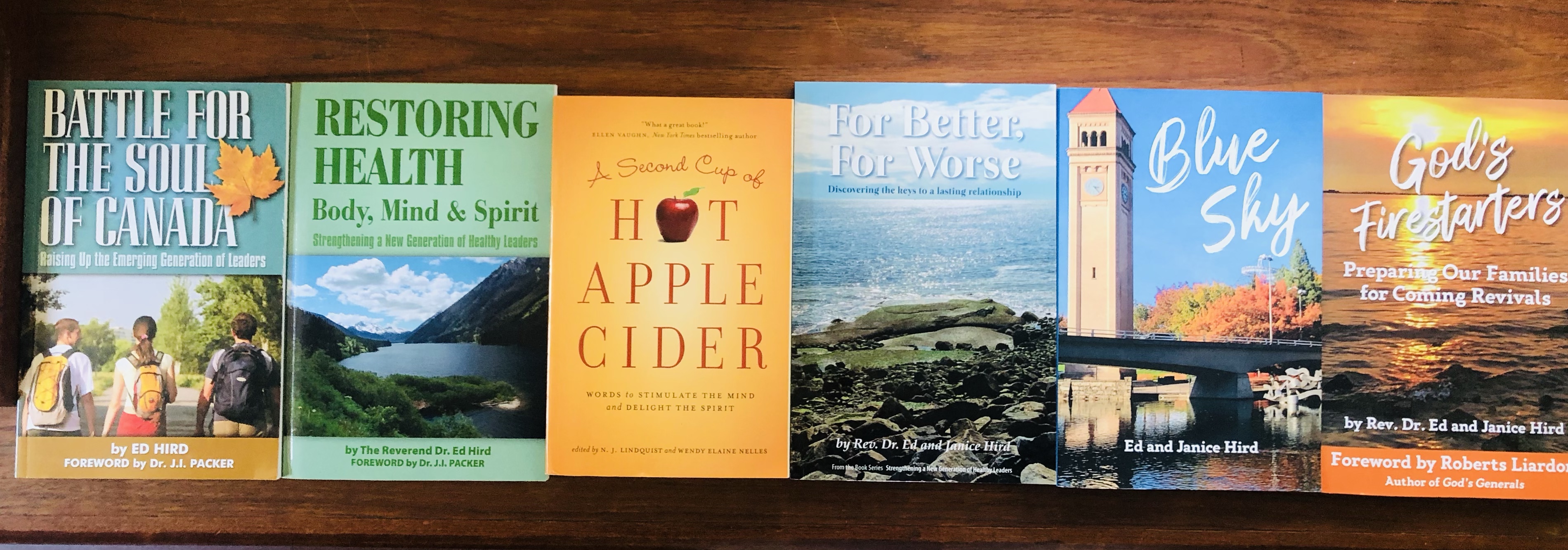
-The sequel book Restoring Health: body, mind and spirit is available online with Amazon.com in both paperback and ebook form. Dr. JI Packer wrote the foreword, saying “I heartily commend what he has written.” The book focuses on strengthening a new generation of healthy leaders. Drawing on examples from Titus’ healthy leadership in the pirate island of Crete, it shows how we can embrace a holistically healthy life.
To receive a personally signed copy within North America, just etransfer at ed_hird@telus.net, giving your address. Cheques are also acceptable.
-Click to purchase the Companion Bible Study by Jan Cox (for the Battle of the Soul of Canada) in both paperback and Kindle on Amazon.com and Amazon.ca
-Click to purchase the Companion Bible Study by Jan Cox (for the Battle of the Soul of Canada) in both paperback and Kindle on Amazon.com and Amazon.ca
To purchase any of our six books in paperback or ebook on Amazon, just click on this link.
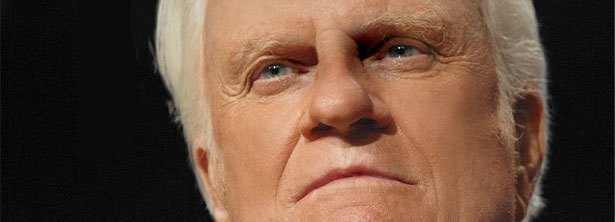
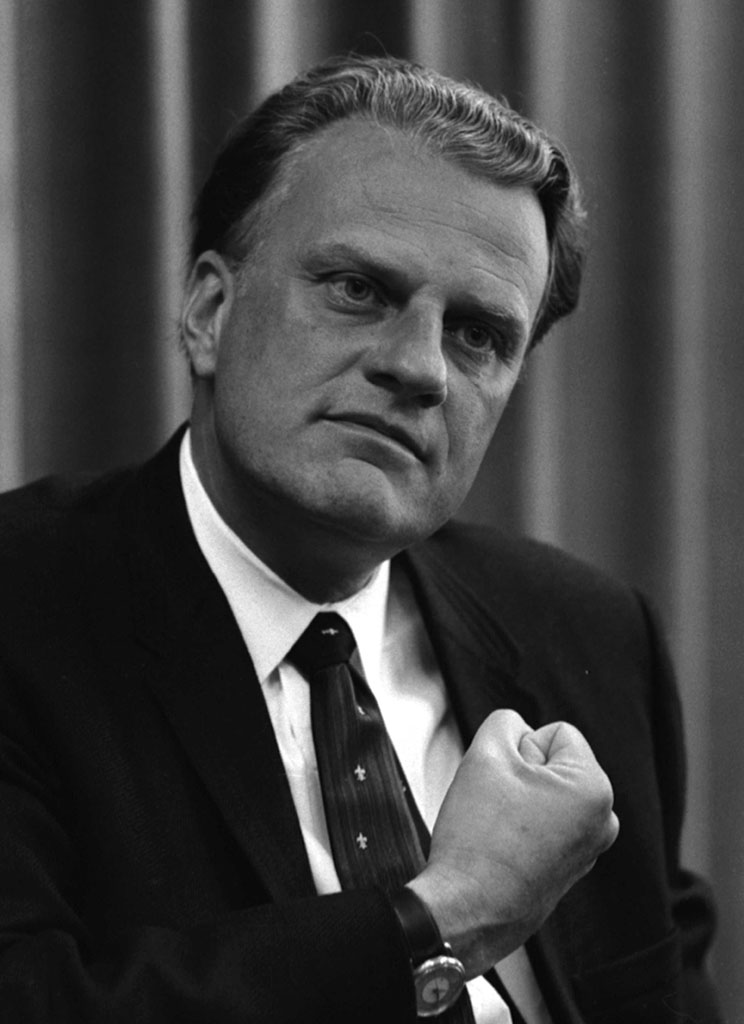
Note: This is an article that I wrote as we participated in the 1984 Billy Graham Crusade. We are grateful for the faithfulness of the late Billy Graham, particularly for his leading my mother to Christ and his impact on Queen Elizabeth.
In 1984, I was privileged to serve as the Publicity Co-ordinator in Abbotsford for the Billy Graham Crusade. At the time, I was serving as a priest at St. Matthew’s Anglican Church in Abbotsford, one of the faithful congregations that still stands for the Lordship of Jesus Christ and the authority of scripture, even to the point of being ejected from their building.
We were privileged to be involved in celebrating Billy Graham’s 95th Birthday with My Hope, his largest ever outreach, on TV, internet and in homes. The following is the article that I wrote on May 2nd 1984 in the Abbotsford, Sumas and Matsqui News:
Checking Doubts about Billy Graham
When people initially think about Billy Graham and the Oct. 14-21 1984 Crusade at BC Place, some are enthusiastic; some are totally opposed; and some have certain reservations.
It seems that the three main reservations people may raise are in the areas of three ‘f’s: finances, follow-up and fundamentalism.
Some people have seen certain ‘TV’ Christians give very manipulative financial pitches. It often seems as though they always have their hands in your wallets. Some evangelists suffer from poor financial procedures, and sometimes from downright dishonesty. Therefore the question is –Can Billy Graham be trusted financially?
The first thing that needs to be mentioned is that Billy Graham comes to this BC Crusade (and in fact to every crusade) at no salary expense whatsoever. His salary is paid totally by the Minneapolis office, and he receives no personal remuneration whatsoever from the local committee. Billy Graham has not accepted as personal remuneration a love gift, an offering, or an honorarium since 1952 when he went on an annual salary. This amount has been pegged at the salary received by an average high school principal. You may ask, ‘Why has Billy Graham been so scrupulous?’ Basically he realizes that unless people trust a person financially, they won’t trust him spiritually. Far too many evangelists in the past were ‘easy marks’ for being suspected as financial crooks and as incompetent people.
Billy Graham has set a high ethical standard for finances that governments and secular businesses could imitate. Other financial areas worth mentioning involve budgeting, accounting, and fundraising. First of all, the local committee sets the budget, as well as receiving, accounting for and disbursing all the funds. Secondly, an independent audit will be done by a public accountant and then published in newspapers. Thirdly most of the funds are raised before the crusade meetings so that there will be no undue emphasis on money during the eight crusade nights.
One common reservation frequently raised by people is ‘does it really stick?’ Isn’t this just momentary enthusiasm that will fade away and disappear?’ Many people are convinced that these so-called converts will never make it in the local church. In response to this concern, R.O. Fern did a major research study among thousands of converts from Billy Graham crusades. In 35 years of crusade evangelism, Billy Graham has preached the Gospel face-to-face to more than 100 million people in more than 100 countries around the world. More than one million people have made commitments to Christ at the crusades.
Fern discovered that 85% of the people who became Christians at the Billy Graham crusades were actively involved in the life of the church , ten, fifteen and even twenty years later — an astonishing success rate when it comes to followup on new Christians. The case is clear. With 85% of converts still in church twenty years later, there can be no doubt that this is more than a quickie hyped-up decision. They are well-thought out, careful life choices.
Because Billy Graham is interested in making disciples for Christ, not just momentary decisions, 45% of the crusade emphasis is put on the followup process. The key to follow-up in the local church. Unless a new convert becomes an integral part of a local church, his chances of survival are minimal.
What is follow-up anyways? Followup means giving continued attention to a new Christian while he or she is being integrated into the church, discovering his place of service, developing his or her full potential for Jesus Christ, and beginning to build Christ’s Church. As Paul said to Barnabas in Acts 15:36, “Let’s go again and visit our brothers and sisters in every city where we have preached the word of the Lord and see how they do.”
Even Paul’s famous epistles were essentially written as followup material for new Christians. Not every follow-up approach is right for every person. Billy Graham has developed nine followup activities that can aid the new Christians. These include personal counselling, Bible study correspondence, local church followup, literature followup, Decision magazine, nurture groups, telephone followup, radio followup, and special followup.
Ultimately, of course, the great followup agent is the Holy Spirit himself. As Psalm 127 puts it, “Unless the Lord builds the house, its builders labour in vain.” That’s why Billy Graham always says the three keys to reaping God’s harvest are (1) Prayer (2) Prayer and (3) Prayer.
A third concern raised by some people is “Isn’t Billy Graham just an extreme right-wing fundamentalist?” Some people have even tried to link him with Ian Paisley of Northern Ireland and Bob Jones Jr. The truth is that Bob Jones and his university blacklisted Billy Graham crusades. During the New York Billy Graham Crusade, Bob Jones, along with other well-known fundamentalists, put a full page ad in the New York Times, calling for a boycott of the Billy Graham Crusade. Billy Graham’s name is ‘mud’ among true fundamentalists. Although he certainly believes in the biblical essentials, he is more accurately described as a solid evangelical than as an extreme fundamentalist.
As a district chairperson for the Billy Graham Crusade, I have spoken to several pastors about the crusade. It is really only the fundamentalists and extreme liberals who are opposed to this upcoming crusade. A true fundamentalist believes in strict double and triple separation from other non-Christians, and Christians who are not as good or separated as they are. The unintended consequence is that they build countless fences that block true friendship evangelism, that block our ability to be in the world but not of it. Billy Graham and his team believe that ‘the best way to maintain the purity of the church is not through fences but through fire –the fire of the Holy Spirit.’
My challenge to you and your local church is to examine any reservations regarding the three ‘f’s of finances, followup, and fundamentalism. You are invited to take the bold step of throwing your weight behind this exciting outreach with Billy Graham.
p.s. Click to check out the excellent online ‘My Hope with Billy Graham’ videos:
P. S. Click this Amazon link to view for free the first two chapters of our new novel Blue Sky.
“I’m afraid there’s been an accident…”
Sandy Brown and her family have just moved to Spokane, Washington where her husband, Scott, is pastoring a new church. With a fresh start, Sandy is determined to devote more time to her four children. But, within weeks of settling in their new life, the Brown family is plunged into turmoil.
Sandy receives shocking news that her children aren’t safe, which brings back haunting memories of the trauma she experienced as a girl. Then, the unthinkable happens…
A brutal attack puts Sandy on the brink of losing everything she’s loved. Her faith in God and the family she cherishes are pushed to the ultimate limit.
Is healing possible when so many loved ones are hurt? Are miracles really possible through the power of prayer? Can life return to the way it was before?
Blue Sky reveals how a mother’s most basic instinct isn’t for survival… but for family.
If you’re a fan of Karen Kingsbury, then you’ll love Blue Sky. Get your copy today on paperback or kindle.
-The sequel book Restoring Health: body, mind and spirit is available online with Amazon.com in both paperback and ebook form. Dr. JI Packer wrote the foreword, saying “I heartily commend what he has written.” The book focuses on strengthening a new generation of healthy leaders. Drawing on examples from Titus’ healthy leadership in the pirate island of Crete, it shows how we can embrace a holistically healthy life.
To receive a personally signed copy within North America, just etransfer at ed_hird@telus.net, giving your address. Cheques are also acceptable.
-Click to purchase the Companion Bible Study by Jan Cox (for the Battle of the Soul of Canada) in both paperback and Kindle on Amazon.com and Amazon.ca
-Click to purchase the Companion Bible Study by Jan Cox (for the Battle of the Soul of Canada) in both paperback and Kindle on Amazon.com and Amazon.ca
To purchase any of our six books in paperback or ebook on Amazon, just click on this link.


 With two Federalist presidential candidates, the Republican presidential candidate, Thomas Jefferson, won the election on the 36th ballot after a deadlocked Congressional tie vote. (3) Jefferson, who had foolishly endorsed the blood-thirsty French Revolution, was wisely mentored by Adams. At his final State of Union address, President Adams stated: “Here and throughout our country, may simple measures, pure morals, and true religion, flourish forever!” (4) His final prayer as he left the House was: “I pray Heaven to bestow the best of Blessings on this House and all that shall hereafter inhabit it. May none but honest and wise Men ever rule under this roof.” (5) Despite strong political differences, Adams and Jefferson ended as good pen pal friends, both dying in 1826 on the significant American July 4th holiday. (6) Jefferson acknowledged Adams as ‘the colossus of independence.’ (7)
 Adams has been described as one of North America’s greatest bibliophiles. He loved to learn, reading voraciously in wide-ranging areas of interest, including the Bible. Equality for Adams was grounded in equal access to education for all: “knowledge monopolized, or in the Possession of a few, is a Curse to Mankind. We should dispense it among all Ranks. We should educate our children. Equality should be preserved in knowledge.” (12) His prayer for his children was: ““Let them revere nothing but religion, morality, and liberty.” (13)
 One of Adams’ first assignments in Congress was to draft a resolution appointing a day of fasting, humiliation, and prayer throughout the thirteen colonies: “that we may, with united hearts and voices, unfeignedly confess and deplore our many sins, and offer up our joint supplications to the all-wise Omnipotent, and merciful Disposer of all events; humbling beseeching him to forgive our iniquities, to remove our present calamities, to avert those desolating judgments with which we are threatened, and to bless our rightful sovereign, King George the third.” (21) Sadly King George dismissed Adams and his colleagues as ‘wicked and desperate persons.’ (22)
 In 1815 he wrote his own gravestone epitaph: “Here lies John Adams, who took upon himself the responsibility of the peace with France in the year 1800.” (25) My prayer is that we too may be passionate peace-makers like President John Adams.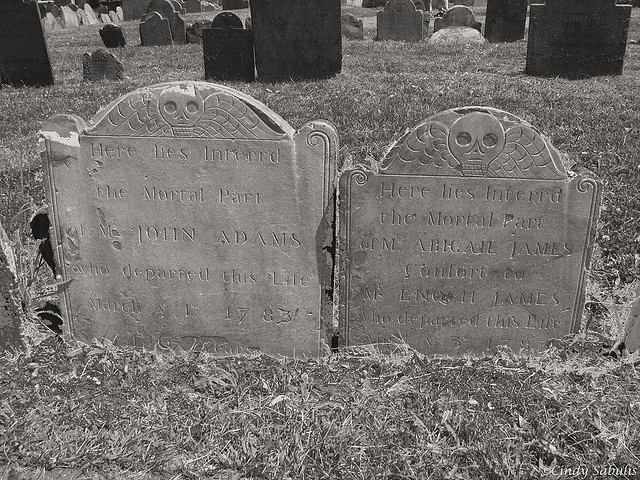
 Sandy Brown and her family have just moved to Spokane, Washington where her husband, Scott, is pastoring a new church. With a fresh start, Sandy is determined to devote more time to her four children. But, within weeks of settling in their new life, the Brown family is plunged into turmoil.




 Edhird's Blog