




The memorial site in Oklahoma City with our United Christian Ashram board


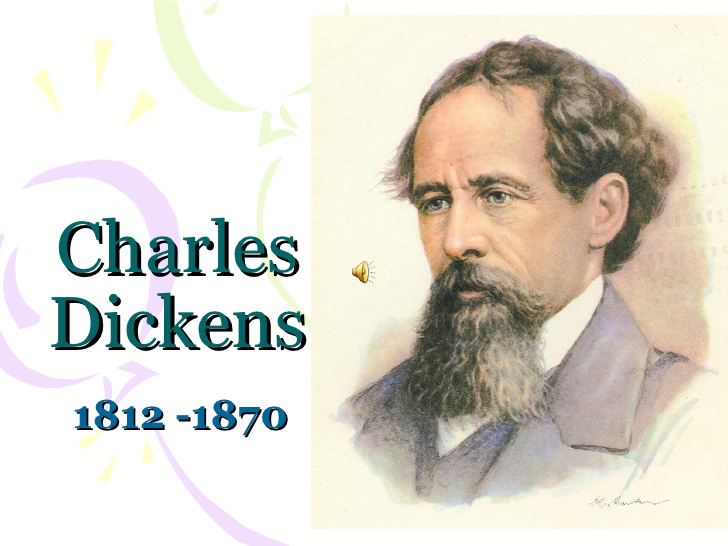
Families and even countries have systemic and generational patterns that need to be understood, in order to become more healthy and even transformative. Charles Dickens was deeply loved by the American people, then deeply resented when he told them in his 1841 book American Tales what he saw, and finally loved again after the Civil War, when they bought over a million of his book Christmas Carol, saving him from bankruptcy.
After the often agonizing and endless American election, Dickens’ wise words are well worth pondering, regardless of one’s political preferences.
American Tales, Chapter XVIII, Concluding Remarks
“(Americans) are by nature, frank, brave, cordial, hospitable, and affectionate. Cultivation and refinement seem but to enhance their warmth of heart and ardent enthusiasm; and it is the possession of these later qualities in a most remarkable degree, which renders an educated American one of the most endearing and most generous of friends. I never was so won upon, as by this class; never yielded up my full confidence and esteem so readily and pleasurably, as to them; never can make again, in half a year, so many friends for whom I seem to entertain the regard of half a life.
These qualities are natural, I implicitly believe, to the whole people. That they are, however, sadly sapped and blighted in their growth among the mass; and that there are influences at work which endanger them still more, and give but little present promise of their healthy restoration, is a truth that ought to be told.
It is an essential part of every national character to pique (i.e. pride) itself mightily upon its faults, and to deduce tokens of its virtue or its wisdom from their very exaggeration. One great blemish in the popular mind of America, and the prolific parent of an innumerable brood of evils, is Universal Distrust. Yet the American citizen plumes (i.e. prides) himself upon this spirit, even when he is sufficiently dispassionate to perceive the ruin it works; and will often adduce it, in spite of his own reason, as an instance of the great sagacity and acuteness of the people, and their superior shrewdness and independence.

‘You carry,’ says the stranger, ‘this jealousy and distrust into every transaction of public life. By repelling worthy men from your legislative assemblies, it has bred up a class of candidates for the suffrage, who, in their very act, disgrace your Institutions and your people’s choice. It has rendered you so fickle, and so given to change, that your inconstancy has passed into a proverb; for you no sooner set up an idol firmly, than you are sure to pull it down and dash it into fragments: and this, because directly you reward a benefactor, or a public servant, you distrust him, merely because he is rewarded; and immediately apply yourselves to find out, either that you have been too bountiful in your acknowledgments, or be remiss in his deserts. Any man who attains a high place among you, from the President downwards, may date his downfall from that moment; for any printed lie that any notorious villain pens, although it militates directly against the character and conduct of a life, appeals at once to your distrust, and is believed. You will strain at a gnat in the way of trustfulness and confidence, however fairly won and well deserved; but you will swallow a whole caravan of camels, if they be laden with unworthy doubts and mean suspicions. Is this well, think you, or likely to elevate the character of the governors or the governed, among you?’
The answer is invariably the same: ‘There’s freedom of opinion here, you know. Every man thinks for himself, and we are not to be easily overreached. That’s how our people come to be suspicious.’
Another prominent feature is the love of ‘smart’ dealing: which gilds over many a swindle and gross breach of trust; many a defalcation (i.e. misappropriation), public and private; and enables many a knave to hold his head up with the best, who well deserves a halter (i.e. noose); though it has not been without its retributive operation, for this smartness had done more in a few years to impair the public credit, and to cripple the public resources, than dull honesty, however rash, could have effected in a century. The merits of a broken speculation, or a bankruptcy, or of a successful scoundrel, are not gauged by its or his observance of the golden rule ‘Do unto others as you would be done by,’ but are considered with reference to their smartness. I recollect, on both occasions of our passing that ill-fated Cairo on the Mississippi, remarking on the bad effects such gross deceits must have been when they exploded, in generating a want of confidence abroad, and discouraging foreign investment: but I was given to understand that this was a very smart scheme by which a deal of money was made: and that its smartest feature was that they forgot these things abroad in a very short time, and speculated again as freely as ever. The following dialogue I have held a hundred times: ‘Is it not a very disgraceful circumstance that such a man as So-and-so should be acquiring a large property by the most infamous and odious means, and not withstanding all the crimes of which he has been guilty, should be tolerated and abetted by your Citizens? He is a public nuisance, is he not?’ ‘Yes, Sir.’ ‘A convicted liar?’ ‘Yes, Sir.’ ‘He has been kicked and cuffed and caned?’ ‘Yes, Sir.’ ‘And he is utterly dishonorable, debased, and profligate?’ ‘Yes, Sir.’ ‘IN the name of wonder, then, what is his merit?’ ‘Well, Sir, he is a smart man.’
In like manner, all kinds of deficient and impolitic usages are referred to the national love of trade; though oddly enough it would be a weighty charge against a foreigner that he regarded the Americans as a trading people. The love of trade is assigned as a reason for that comfortless custom, so very prevalent in country towns, of married people living in hotels, having no fireside of their own, and seldom meeting from early morning until late at night, but at the hasty public meals. The love of trade is a reason why the literature of America is to remain for ever unprotected: ‘For we are a trading people, and don’t care for poetry:’ though we do, by the way, profess to be very proud of our poets: while healthy amusements, cheerful means of recreation, and wholesome fancies, must fade before the stern utilitarian joys of trade.
These three characteristics are strongly represented at every turn, full in the stranger’s view. But the foul growth of America has a more tangled root than this; and it strikes its fibres, deep into its licentious Press.
Schools may be erected, East, West, North and South; pupils may be taught, and masters reared, by scores upon scores of thousands; colleges may thrive, churches may be crammed, temperance may be diffused, and advancing knowledge in all other forms walk through the land with giant strides: but while the newspaper press of America is in, or near, its present abject state, high moral improvement in that country is hopeless. Year by year, it must and will go back; year by year, the tone of public feeling must sink lower down; year by year, the Congress and the Senate must become of less account before all decent men; and year by year, the memory of the Great Fathers of the Revolution must be outraged more and more, in the bad life of their degenerate child.
Among the herd of journals that are published in the States, there are some, the reader scarcely needs be told, of character and credit. From personal intercourse with accomplished gentlemen connected with publications of this class, I have derived both pleasure and profit. But the name of these is Few, and of the others Legion; and the influence of the good, is powerless to counteract the moral poison of the bad.
Among the gentry of America; among the well-informed and moderate: in the learned professions; at the bar and on the bench: there is, as there can be, but one opinion, in reference to the vicious character of these infamous journals. It is sometimes contended — I will not say strangely, for it is natural to seek excuses for such a disgrace — that their influence is not so great as a visitor would suppose. I must be pardoned for saying there is no warrant for this plea, and that every fact and circumstance tends directly to the opposite conclusion.

When any man, of any grade of desert in intellect or character, can climb to any public distinction, no matter what, in America, without first groveling down upon the earth, and bending the knee before this monster of depravity; when any private excellence is safe from its attacks; when any social confidence is left unbroken by it, or any tie of social decency and confidence is held in the least regard; when any man in that free country has freedom of opinion, and presumes to think for himself, and speak for himself, without humble reference to a censorship which, for its rampant ignorance and base dishonesty, he utterly loathes and despises in his heart; when those who most acutely feel its infamy and the reproach it casts upon the nation, and who most denounce it to each other, dare to set their heels upon, and crush it openly, in the sight of all men: then, I will believe that its influence is lessening, and men are returning to their manly senses. But while that Press has its evil eye in every house, and its black hand in every appointment in the state, from a president to a postman; while, with ribald slander for its only stock in trade, it is the standard literature of an enormous class, who must find their reading in a newspaper, or they will not read at all; so long must its odium be upon the country’s head, and so long must the evil it works, be plainly visible in the Republic.”
 Sandy Brown and her family have just moved to Spokane, Washington where her husband, Scott, is pastoring a new church. With a fresh start, Sandy is determined to devote more time to her four children. But, within weeks of settling in their new life, the Brown family is plunged into turmoil.




 Easter for Dickens was about great expectations, about Jesus’ resurrection love: “No one ever loved all people so well and so truly as He did.”[9] To Dickens, Jesus “was always merciful and tender. And because he did such good, and taught people how to love God and how to hope to go to heaven after death, he was called our Saviour.”[10] Dickens explained that the Saviour would teach men to love one another, and not to quarrel and hurt one another; and his name will be called Jesus Christ.[11] Dickens believed in the Easter resurrection of Jesus, saying “as he is now in heaven, where we hope to go, and all to meet each other after we are dead, you can never think what a good place heaven is without knowing who he was and what he did.”[12] In The Life of our Lord, Dickens recorded five accounts of Jesus’ resurrection appearances after his crucifixion,
 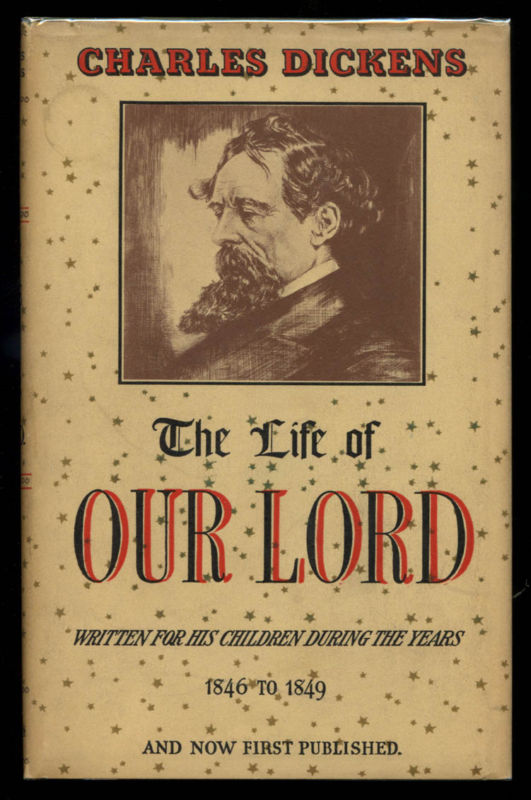 commenting that the resurrected Jesus “was seen by five hundred of his followers at once, and He remained with others of them forty days.”[13]
[1] Charles Dickens, Tale of Two Cities, 3.9.89. Right before his guillotining, Carton memorably said: “I see a beautiful city and a brilliant people rising from this abyss, and, in their struggles to be truly free, in their triumphs and defeats, through long years to come, I see the evil of this time and of the previous time of which this is the natural birth, gradually making expiation for itself and wearing out.” (3.15.46)
[2] Charles Dickens, Christmas Carol, http://www.stormfax.com/1dickens.htm
[3] Charles Dickens, Oliver Twist, https://books.google.ca/books?isbn=1904232469 , 40, http://www.gutenberg.org/ebooks/730
[4] Charles Dickens, Hard Times, (Pocket Books, Division of Simon & Schuster, Inc., 2007, New York, NY), 9.
[5] Hard Times, 376.
[6] Hard Times, 410.
[7] Hard Times, Third Book, One Thing Needful, Chapter 1, p. 2.
[8] Hard Times, Chapter IX, https://books.google.ca/books?isbn=1136413251; http://www.victorianlondon.org/etexts/dickens/hard_times-0037.shtml
[9] Charles Dickens, The Life of Our Lord, http://www.chucknorris.com/Christian/Christian/ebooks/dickens_life.pdf
[10] The Life of Our Lord, 8.
[11] The Life of Our Lord, 14.
[12] The Life of Our Lord, 3.
[13] The Life of Our Lord, 31.
Sandy Brown and her family have just moved to Spokane, Washington where her husband, Scott, is pastoring a new church. With a fresh start, Sandy is determined to devote more time to her four children. But, within weeks of settling in their new life, the Brown family is plunged into turmoil.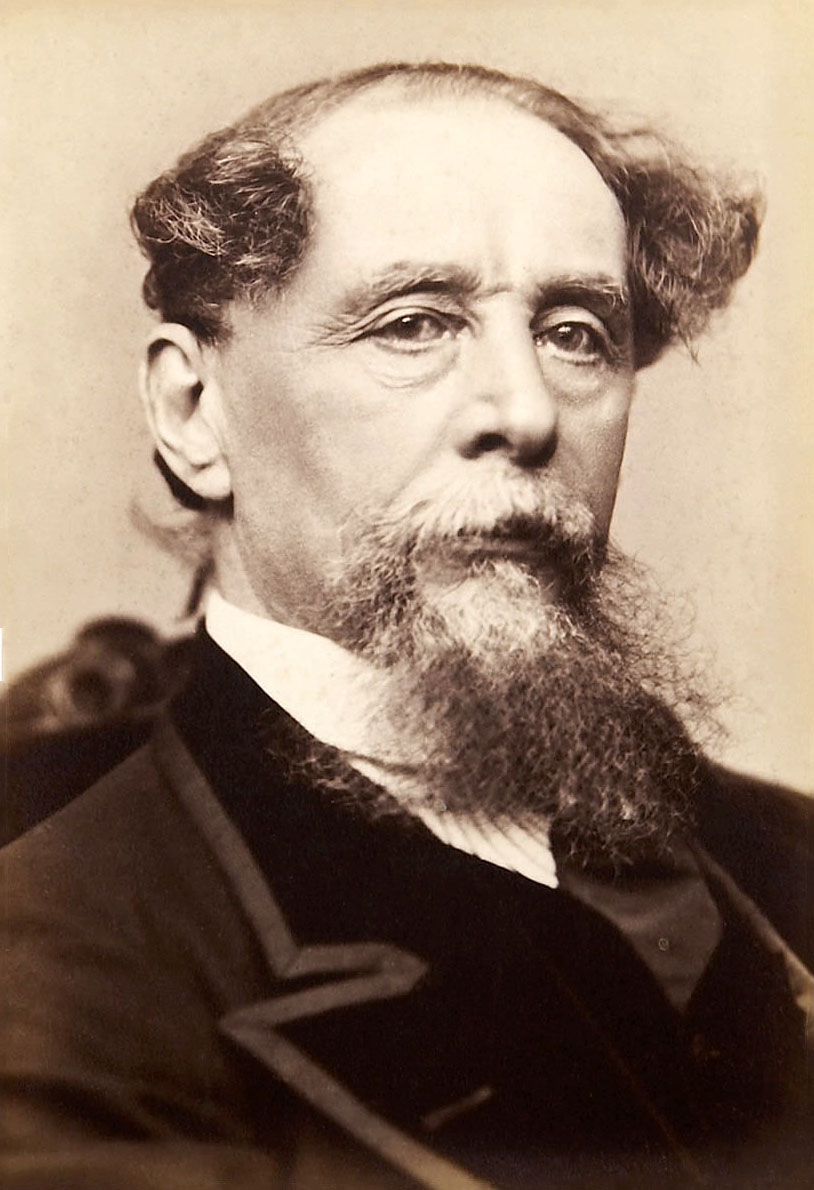
 Despite his high ideals, Dickens was often tempted to be a Scrooge.[12] The financial pressure was enormous and unrelenting. With little initial profit from A Christmas Carol, Dickens wrote: “I shall be ruined beyond all mortal hope of redemption.”[13] Fortunately for Dickens, Americans turned A Christmas Carol into a bestseller.[14] Dickens visited the United States twice, both times being treated like a Hollywood Superstar, even being chased by paparazzi.[15]
 had a partition built in their bedroom, cutting himself off from his wife.[21] Rather than celebrate his wife’s very different personality, he resented her for not being just like himself: “…nothing on earth could make her understand me, or suit us for each other. Her temperament will not go with mine…no one can help me.”[22] Because he had never forgiven his mother for trying to send him back to the blacking factory, it poisoned his relations with his wife: “I never afterward forgot, I never shall forget, I never can forget, that my mother was warm for my being sent back.”[23] Bitterness betrays our highest ideals and turns us into Scrooges. Dickens, under pressure, portrayed himself as a victim, blaming others rather than owning his personal baggage.[24] Remarkably his wife Catherine stayed loyal to her painful husband, going to productions of his work and keeping up with his publications even after the divorce.[25] In the midst of his rejecting his wife, many friendships were cut off, publishers fired, theatricals ended, family vacations ceased, and his charitable work with heiress Angela Burdett-Coutts brought to an end.[26] The breakup of
 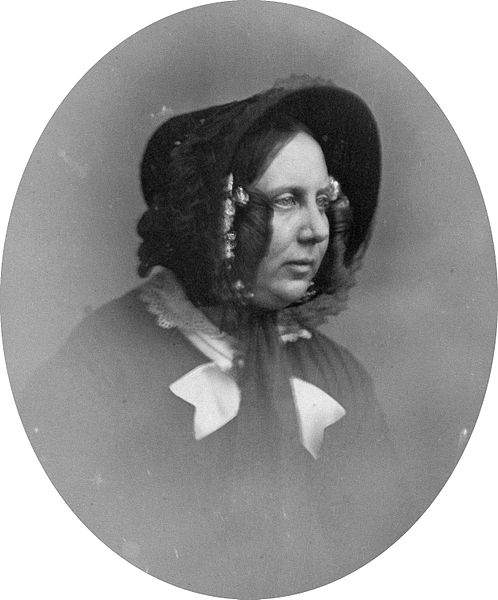 Dickens’ marriage and the secret infatuation that he had with Nelly Ternan wore Dickens out.[27] In the last part of his life, he was as sick as his secrets, exhausted by his coverups and workaholism.[28] Despite Dickens’ tragic male/female relationships, his unforgettable vision for a better society still speaks to us in the early twenty-first century. My prayer for those reading this article is that we will learn to integrate our ideals and our reality in loving our neighbours as ourselves.Sandy Brown and her family have just moved to Spokane, Washington where her husband, Scott, is pastoring a new church. With a fresh start, Sandy is determined to devote more time to her four children. But, within weeks of settling in their new life, the Brown family is plunged into turmoil.
[1] Jane Smiley, Charles Dickens, (Lipper/Viking Penguin Publishing, 2002), v.; Norrie Epstein, The Friendly Dickens, (Viking/Penguin, Toronto, Canada, 1998), xvi “The best-selling novelist in Russia is neither Tolstoy nor Dostoyevsky but Dickens.”; Smiley, 26, “…as close to a household name as any movie star today…the first person to become a ‘name brand’…”
[2] Smiley, v, “Among English writers, Dicken’s only peer, in terms of general fame, worldwide literary stature, and essential Englishness, is William Shakespeare.”; Claire Tomalin, Charles Dickens: a Life, (Viking/Penguin Books,Toronto, Ontario, 2011), Inside Front Cover, “Perhaps the greatest novelist in the English language…”
[3] Smiley, vi “…Dickens did not reveal the details of his painful childhood even to his children.”; Epstein, 15, “His entire life was a reaction against his parents and his childhood…as a man, he was compulsively controlling…In his novels, every abandoned waif was a version of himself; his negligent silly mothers were caricatures of Elizabeth; his wastrel selfish fathers were all John.”
[4] Epstein, 15.
[5] Smiley, 46.
[6] Tomalin, xlii.; Epstein, 207, “Daniel Webster said: ‘Dickens has done more to ameliorate the conditions of the English poor than all the statesmen Great Britain has sent into Parliament.’”; Epstein, 209 “Through his writings and what he meant to reader’s, he has probably influenced more people to do good than any other writer.”
[7] Epstein, 275; Tomalin, 229, “…(Dickens) wrote on many social issues –housing,sanitation, accidents in factories,workhouses,and in the defence of the poor to enjoy Sunday as they choose.”
[8] Epstein, 174, “ Christmas Carol is a phenomenon, an industry, and a ritual… Carol touches our deep desire for a second chance at life.”; Gary L. Colledge, God and Dickens, (Brazos Press, Grand Rapids, Michigan, MI), 52 “Wes Standiford, borwwing from Byron Rogers, refers to Dickens as the man who invented Christmas.”
[9] Epstein, 186, “As his son Charley commented, ‘My father was always at his best at Christmas.’ That season brought out all of Dickens’ most endearing qualities – his hospitality, graciousness, generosity, sense of fun, and genius for entertaining.”
P.187 Chesteron: “The mystery of Christmas is in a manner identical with the mystery of Dickens.”
[10] Smiley, 162 “Love, kindness, forgiveness, benevolence, celebration, mercy, joy, charity, and innocence all had their source, for Dickens, in Christ and Christmas.”; Smiley, 42, Charles Dickens said: “Looking on Niagara Falls: then when I felt how near to my Creator I was standing, the first effect and the enduring one –instant and lasting–of the tremendous spectacle was Peace. Peace of mind,tranquility, recollection of the dead, great thoughts of eternal rest and happiness…”
[11] Charles Dickens, The Life of Our Lord, (Simon and Schuster, New York, NY, 1934), 11, 27 “…God makes no difference between those who wear good clothes and those who go barefoot and in rags.”
[12] Tomalin, Front Inside Cover: “After his death, his own daughter wrote to Bernard Shaw, ‘If you could make the public understand that my father was not a joyous, jocose gentleman walking about the world with a plum pudding and a bowl of punch, you would greatly oblige me.’”
[13] Smiley, 60.; Tomalin, 150 “The accounts for the Carol showed that almost all the profits were absorbed in the expenses of binding, special paper, coloured plates, and advertising.”; Epstein, 185, paraphrase: The Carol’s failure drove Dickens to Italy. His dramatic readings of it earned him more money than any of his books.
[14] Tomalin, 150. “In America, it became his biggest seller, clocking up two million copies in a hundred years.”
[15] Tomalin, P.127 “He was seen as ‘the English writer who was on their side, who believed in liberty and democracy, and who showed in his books that he cared about ordinary people and thought the poor more worthy of attention than the rich.'(…) At the time of his arrival, the New York Herald wrote: ‘His mind is American–his soul is republican –his heart is democratic.’”; Tomalin, 130, “Dickens commented: ‘There was never a King or Emperor upon the earth so cheered l, and followed by crowds…and waited upon by public bodies and deputations of all kinds.”
[16] Epstein, 38. “Maria Beadnell’s capriciousness and his subsequent humiliation influenced him to choose the placid and compliant Catherine Hogarth for a wife.”; Epstein, 45, “…Catherine was so unlike Maria that she never would remind Charles of what he had lost.”
[17] Smiley, 61. “Catherine’s pregnancy with Francis, the fifth child of the family in seven years, seem to have marked a running point in Dicken’s attitude towards his wife. The agitation he betrayed in his money worries and his eagerness to go abroad met with great reluctance and depression on her part. He seems to have held against her both the inconvenience of the pregnancy and her inability to rally quickly after the birth.”
[18] Tomalin, 66. “She (Catherine) had no experience of anything but family life when he met her, and showed little evidence of being interested in anything outside the domestic world.”
[19] Tomalin, 238.
[20] Tomalin, 183 “His need to walk through the streets at night was a tormenting mental phenomenon.”
[21] Smiley, 61 “Catherine’s pregnancy with Francis, the fifth child of the family in seven years, seem to have marked a running point in Dicken’s attitude towards his wife. The agitation he betrayed in his money worries and his eagerness to go abroad met with great reluctance and depression on her part. He seems to have held against her both the inconvenience of the pregnancy and her inability to rally quickly after the birth.”
[22] Smiley, 140, Writing to his good friend Forster, “She (Catherine) is exactly what you know, in the way of being amiable and complying; but we are strangely ill-assorted for the bond there is between us…and if I were sick or disabled tomorrow, I know how sorry she would beans how deeply grieved myself, to think how we had lost each other.”‘ “Her temperament will not go with mine.”; Smiley, 285.; Tomalin, 66. 118, “Kind looks and gentle manner she doubtless had, and a will to please –what she lacked was the strength of character needed to hold her own against her husband’s powerful will.”
[23] Epstein, 26 “…John suddenly wanted his son (Charles) be sent to school; Elizabeth however wanted him to return to the warehouse. With great bitterness, Dickens recalled, “I never afterward forgot, I never shall forget, I never can forget, that my mother was warm for my being sent back.”
[24] Smiley, 148.
[25] Smiley, 150.
[26] Smiley, 18, 289; Tomalin, 210 re Miss Coutts, Dickens, and Urania House: If there was a providence in the fall of a sparrow, these girls were his sparrows, and he wanted them to fly, not fall.”
[27] Nelly ends up marrying an Anglican clergyman, after Dickens’ death, while pretending to be fourteen years younger than she was.
[28] Smiley, 75 “…Dicken’s secretiveness and shame at his origins was a realistic response to the closed, judgemental nature of English society.”; Smiley, 206 “it (his frenetic schedule) left him exhausted…but the habits of industry and restlessness could not be broken.”; Tomalin, Front inside cover, “…the very qualities that made him great –his indomitable energy, boldness, imagination, showmanship, and enjoyment of fame–finally destroyed him.”; Tomalin, 259 “Dickens kept going by taking on too much. He knew no other way to live, and no day went by in which he did not stretch himself, physically, socially, and emotionally.”; Epstein, 53 “Dicken’s nervous energy was perfect for the serial form which required two weeks of concentrated feverish work… On the other hand, the process, continued uninterrupted for almost forty years, was his undoing….at forty three, Dickens looked almost elderly.”

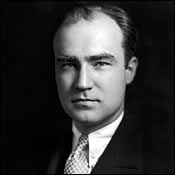 Born in Penglai City in China, Luce first came to North America at age 15. Everything was strange and different to him. Luce had an insatiable curiosity to understand unfamiliar settings. The novelist John Hersey who worked for Luce said that “the most attractive thing about Luce was that he was relentlessly curious about absolutely everything; he was delighted to learn any fact that he had not known before.” This curiosity was at the heart of the inventiveness of the four magazines that he birthed.
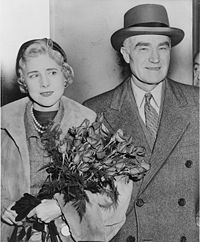 Sadly Luce’s career success was often at the cost of his family life. Divorcing his first wife, he turned to the glamorous Clare Boothe, having what Brinkley described as a marriage made in hell. Philip Seib said that they were ‘both intensely self-centered and exceptionally ambitious…a perfect formula for making each other miserable.”
 “We must recapture our moral strength and our faith in God.” Luce re-explored his faith and became a regular attender at Madison Presbyterian Church. TIME became an active supporter of civil rights and desegregation, with TIME reporters occasionally being beaten and injured.
 Sandy Brown and her family have just moved to Spokane, Washington where her husband, Scott, is pastoring a new church. With a fresh start, Sandy is determined to devote more time to her four children. But, within weeks of settling in their new life, the Brown family is plunged into turmoil.
 By the Rev. Dr. Ed Hird
 temperance. Franklin saw the Judeo-Christian ethic as “the best the world ever saw or is likely to see.”
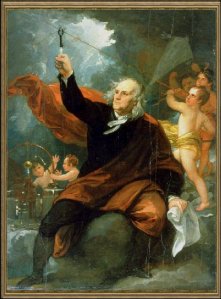 that this lead poisoning was also affecting glazers, type-founders, plumbers, potters, white-lead makers and painters.
 peace accord with Britain, and the Constitution. His unsuccessful proposal for the American Great Seal was to have Pharaoh being swallowed by the Red Sea, along with the words ‘Rebellion to Tyrants is Obedience to God.’
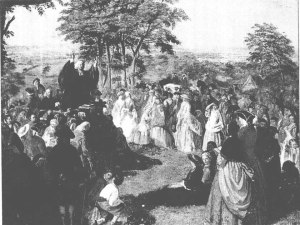 heard without amplification by over 30,000 people at one time. Franklin published all of Whitfield’s books and posted his sermons on the front page of his Philadelphia Gazette. Whitfield wrote to Franklin, saying: “As you have made a pretty considerable progress in the mysteries of electricity, I would now humbly recommend to your diligent unprejudiced pursuit and study the mystery of the new-birth. It is a most important, interesting study, and when mastered, will richly answer and repay you for all your pains.”
 At the 1787 American Constitutional Convention, Franklin commented: “the longer I live, the more convincing proofs I see of this truth — that God governs in the affairs of men. And if a sparrow cannot fall to the ground without His notice, is it probable that an empire can rise without His aid?” On that basis, Franklin arranged that prayers led by local clergy would be held each morning before Assembly business. Franklin said: “If I had ever before been an atheist, I should now have been convinced of the Being and government of a Deity!”Sandy Brown and her family have just moved to Spokane, Washington where her husband, Scott, is pastoring a new church. With a fresh start, Sandy is determined to devote more time to her four children. But, within weeks of settling in their new life, the Brown family is plunged into turmoil.
Seek wisdom leading to life and peace.
a supportive and encouraging community that helps equip and develop one another to write for God's glory
 Edhird's Blog