Edhird's Blog

Restoring Health: body, mind and spirit


Leave a comment

Pigs in the Ocean: the socialism of Dostoevsky’s Possessed

By Rev. Dr. Ed & Janice Hird

-an article for the March 2023 Light Magazine

One of Dostoevsky’s most brilliant, darkest and least known novels is The Possessed, also called Demons or The Devils. Dostoevsky, as a devout Christian, often grounded his novels in particular biblical stories. The opening scripture in this novel is about the pigs being cast into the ocean (Luke 8:32-37).

Have you ever wondered what possessed Putin to invade Ukraine, and why he won’t just go back home to Russia? The Russian people still deeply remember the attacking of Moscow by Napoleon and Hitler, as if it happened yesterday. They are possessed by the idea that they are merely defending their fatherland against Western aggression.

Ideologies (fixed systematic big ideas) can easily become idolatrous and possess a nation. That is why Dr. Jordan Peterson wrote a chapter in his latest book Beyond Order entitled “Say No to Ideology”. Ideologies like Marxism, Nazism, and Fascism have caused over a hundred million people to go over the cliff and die like the Gadarene pigs. Tragically, some of these far-left and far-right ideologies are again romantically possessing many young people around the world. The far-left and far-right, being both totalitarian and haters of democratic freedoms, have much more in common than most would imagine.

The Possessed is the most political of all of his Christ-centered novels. In the very year of 1870 that Dostoevsky was writing Possessed, Vladimir Lenin was born.  Lenin sadly refused to read Possessed as he considered it reactionary garbage. Might the Possessed possess and transform Putin, who is reportedly a Dostoevsky fan?

Dostoevsky, like a John the Baptist or a weeping Jeremiah, cried out in this novel to a younger generation about to go over the edge into socialist chaos and destruction. He was a former revolutionary socialist sent in 1849 to Siberia for ten years. Dostoevsky prophetically warned in this book about the destructive whirlwind of communism that would swallow Russia fifty years later.

The protagonist in this book is Stepan Trofimovich Verkhovensky, a so-called champagne socialist of the 1840s generation who liked to flirt in secretive artist groups with trendy new ideas coming from the West. Significantly, he spoke French like a Parisian, giving him great influence among the nobility. None of Stepan’s obscure writing projects were ever completed.  He was a caricature of Alexander Herzen, the father of Russian socialism, who had been in exile in London with his friend Karl Marx.

In the novel, Stepan, a former University instructor, was exiled for his socialist ideas by the Tsar to the fictitious back-water town of Skvoreshniki. There, being funded by the bitter and controlling heiress Varvara, Stepan spends twenty years training up the 1860s generation of younger revolutionary socialists.

Stepan is shocked when these younger people, including his own son, Pyotr and Varvara’s son Stavrogin, are swallowed by the ideologies of nihilism, hedonism, and suicide. Pyotr and Stavrogin are both deeply alienated from their parents, having being sent away to residential schools in Petersburg.  Education trumped family. All the 1840s fathers were either dead or entirely absent from their sons’ lives.  Stepan had only met his son twice in his entire life.  The younger radicals dismiss Stepan and Varvara as outdated fools.  Pyotr said to his father Stepan: “I curse you henceforth!”

 As hard-core atheists, the young men rejected morality, church, and family as forms of patriarchal oppression. Stepan had taught the younger generation that:

marriage is the moral death of every proud soul, of all independence. Married life will corrupt me, it will sap my energy, my courage in the service of the (socialist) cause.  

The 1840s champagne socialists were mortified by the violence: “we first sowed the seed, nurtured it, prepared the way.” Stepan is so appalled by the destructive fruits of his intellectual labour that he flees on foot from the town. There, among the peasants, he meets Sofya, a Gospel woman who sells him a bible. In the midst of the chaotic suffering of his life, Stepan reads the bible for the first time in over thirty years. He learns from the Sermon on the Mount that “we must forgive, forgive, and forgive.” He encounters God and turns from his ideological possession:

I’ve been telling lies all my life…The worst of it is that I believe myself when I am lying. The hardest thing in life is to live without telling lies.

He receives communion, and decides to also become a travelling bible salesman. Dostoevsky noted: “Even fools are by genuine sorrow turned into wise men.”

In this age of MAID and full-term abortion, it is chilling to see young people in the novel imagine that death is the solution to life’s problems: “I am killing myself to prove my independence and my new terrible freedom.” All the key young men in this novel foolishly end up dead, either from murder or suicide. Dostoevsky is fascinated by the biblical themes of wisdom and foolishness: “Claiming to be wise, they became fools” (Romans 1:22).  Only the women are left to pick up the pieces, as the town is thrown into chaos by revolutionary arsonists.

After Stepan dies three days later, Sofya is ‘adopted’ by Varvara who also wants to spread the gospel. Varvara and Sofya remind us of the women who first saw the resurrected Jesus, becoming the original evangelists. What if women became the key evangelists in the next coming revival?

Dostoevsky passionately wanted everyone, especially his Russian people, to experience the love of Jesus Christ:

If anyone could prove to me that Christ is outside the truth, and if the truth really did exclude Christ, I should prefer to stay with Christ and not with truth.

Thank God that we don’t have to choose between Christ and the truth. Are you willing to let go of your ideologies and share the Truth with a younger lost generation?

Rev. Dr. Ed & Janice Hird

Co-authors, God’s Firestarters


Leave a comment

The Jesus Revolution

We just saw The Jesus Revolution movie last night. It was a delicious feast. I highly recommend it to others. It was so well done. God is on the move. Don’t miss out. Click to view the Jesus Revolution trailer and where you can find a theatre showing near you.


Leave a comment

Asbury student revival continuing streaming online

The ongoing livestream Asbury student services are deeply moving. Worth watching and reposting on this Ash Wednesday.


1 Comment

The God of the Broken

Are you willing to be broken by God?

davidkitz's avatarI love the Psalms

The following post is a chapter from The Elisha Code by Dr. Ed Hird and David Kitz.

And He said,
“Your name shall no longer be called Jacob, but Israel;
for you have struggled with God and with men,
and have prevailed.”
(Genesis 32:28, NKJV)

             The people whom God uses to change the world have first been radically changed by the Spirit of God. Often, these world changers have experienced major setbacks. We might even say they have been broken by God, but they have come through those experiences transformed and empowered by the Spirit.

There is a pattern that emerges as we look back at the lives of the three revivalists we have examined thus far. Each of them reached a breaking point.
A B Simpson A. B. Simpson was a successful minister who through much hard work, built a large church but he experienced burnout and a physical…

View original post 1,750 more words


Leave a comment

Breaking the Gambling Addiction in Canada

Facing our growing Canadian gambling addiction

Posted by Rev. Dr. Ed & Janice Hird | Feb 8, 2023 | The Neighbourhood      

Facing our growing Canadian gambling addiction

Neighbourhood ~

Facing our growing Canadian gambling addiction

By Rev. Dr. Ed & Janice Hird

You can bet that the increase in gambling is harming many Canadian families.  We have personally seen many marriages break up.  Wives are not happy to lose their houses to their husband’s gambling addiction. The Bible in 1 Tim 6:9 warns against falling into the trap of temptation, and into many foolish and harmful desires that plunge people into ruin and destruction.

A devastating earthquake struck southeast Turkey on February 6, killing more than 5,000 people. Turkish Christian Fellowship, partnered with Intercede International, has put together a plan to help earthquake survivors in that region.

Since the COVID restrictions were implemented in 2020, those gambling four or more times a week has increased from 23 percent to 32 percent.  Online gambling has gone from 62 percent to 78 percent for gamblers.  Ruin & destruction for many has been multiplied through these online gambling apps.

Many gambling addictions begin in the teenage period when the brain is not fully developed. Young adults aged 18 to 24 are more likely to take part in risky gambling behaviour. College students have a much higher gambling rate than the general population.  Imagine the debt load that many college students incur on their student loans from online gambling.  The most popular form of Canadian gambling is lottery tickets, seen by many as relatively harmless.

Since Pierre Trudeau legalized gambling in 1969, the provincial governments have been annually making billions from gambling. No wonder that it has been called another tax grab on the poor and most vulnerable.  

Female gamblers average $15,000 of debt. The average debt generated by men addicted to gambling ranges from $55,000 to $90,000. With so many young men indebted to shady loan sharks, it is no wonder that property theft is on the rise.

We have been numbed in our country to the evils of gambling addiction. As it says in 1 Timothy 6:10, the love of money is the root of evil. We have personally seen gambling cause people to wander from the faith and pierce themselves with many griefs. Many in the Christian program Celebrate Recovery often credit the power of the Holy Spirit as vital to getting free from their uncontrollable obsession with gambling. As well, Gamblers Anonymous has helped many get free from this intense craving.

One of the most important books for helping people understand the gambling addiction is Dostoevsky’s The Gambler. Ironically, he wrote it because he needed to pay his gambling debts and avoid losing control over publishing future books through a crooked publisher. His Christian faith helped him eventually break an all-consuming roulette habit that was bankrupting his family. Roulette has been a huge problem in Russia, particularly in the military. Could Putin’s invasion of the Ukraine be seen as his playing Russian roulette with the West?

Alexei, the protagonist in The Gambler, was on a roll at the Roulettenburg Casino.  He commented: “My brows were damp with sweat, and my hands were shaking.”

Gambling gives a buzz similar to cutting oneself, disconnecting oneself temporarily from one’s intense psychological pain. As Alexei also said:

“There arose in me a strange sensation as of a challenge to Fate – as of a wish to deal her a blow on the cheek, and to put out my tongue at her.”

The character Alexei saw this addiction as a madness that seemed to come upon him. Perhaps that is why Step 2 in Gamblers Anonymous talks about a Power greater than our selves restoring us to a normal way of thinking and living. Compulsive gambling is stinking thinking.

To Alexei, this strange gambling sensation was a fearful pleasure, leaving him obsessed with a desire to take risks. The two hundred thousand francs ($6.6 million dollars in today’s money) that he won quickly sprouted wings, and flew off to the sky like an eagle. (Proverbs 23:5) Quicker than the prodigal son, Alexei squandered his wealth in Paris with wine, women, and song. Get-rich-schemes never end well. His initial gaming success did not make him happy:

“My life had broken in two, and yesterday had infected me with a habit of staking my all upon a card.”

Serving two masters is a double-minded hell. (Matthew 6:24) Gambling was a living death for Dostoevsky and his character Alexei. Dostoevsky tried for many years before he finally broke his gambling desire. His character in the novel also longed to be free: “When that hour comes, you will see me arise from the dead.” Alexei longed to set things right and be born again!

Our prayer is that many Canadians will come into a new freedom in Christ from the devastation of chronic gambling.

________________________________________________________________________

Author: Rev. Dr. Ed & Janice Hird

Rev. Dr. Ed & Janice Hird are the co-authors of Blue Sky, a novel, For Better, For Worse: Discovering the keys to a Lasting Relationship


Leave a comment

Broken

E Stanley Jones:, Conversion, P.201 “Hope for the backslider? There is special hope, for you can become strongest in the place you are weakest. When a bone is broken, nature makes the broken place especially strong, that it might not be broken again –it is stronger than the unbroken places”


Leave a comment

The Grieving Scots in Lochaber No More

♫ Scottish Music – Lochaber No More ♫ LYRICS

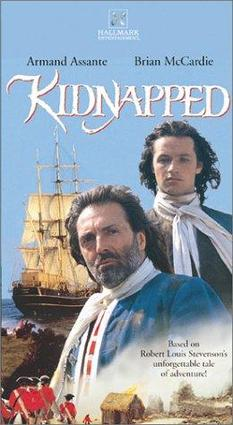
I find this a very moving song mentioned by Robert Louis Stevenson in his novel Kidnapped when the grieving Scots were going to North America.


Leave a comment

The Foolishness of God in Dostoevsky’s Idiot

The Foolishness of God in Dostoevsky’s Idiot

By Rev. Dr. Ed & Janice Hird

-an article for the Light Magazine

Have you ever been foolishly attracted to the world, the flesh and the devil?  Has your self-centeredness and desire for approval ever harmed your best interests? Why does Christianity often look so foolish to secular people in our hi-tech, frantic world?

            In Dostoevsky’s favorite novel The Idiot, we meet Prince Myshkin, a Christ-like person whose goodness, open-heartedness, and genuineness lead people to call him an idiot sixty times in the novel. He saw Myshkin as his best and richest poetic idea. Three times in his notes, Dostoevsky identifies Myshkin as a Christ figure.  Like Jesus, he was full of child-like grace and truth.  In his blueprints, Dostoevsky refers to Myshkin as “Prince Christ”: “Christ is and always will be the ideal, ours (in Russia) or that of civilized Europe.”

Myshkin had just returned to St. Petersburg, the Russian Capital, after five years away in a Swiss sanitorium for epileptics. In the midst of great corruption, Jesus the Word became flesh and made his dwelling among us (John 1:14).  So too, Myshkin came to dwell in the midst of a cynical, jaded world.  As the epicentre of the Russian political world, St. Petersburg was full of clever pretenders, politicians, and posers who hid in plain view from each other: “For the wisdom of this world is foolishness in God’s sight.” (1 Corinthians 3:19) Myshkin exposed the nakedness of the ‘kings with no clothes.’  No one could hide from his loving gaze.

Since only the knowledge of the truth can see us free, Myshkin’s speaking truth to power helped a few give up their lies.  Most initially clung to their lies, and rejected Myshkin as totally inappropriate and stupidly naïve. His ‘unsuccessful’ encounter with the Russian elite reminds me of John 1:10-11:

He was in the world, and though the world was made through him, the world did not recognize him. He came to that which was his own, but his own did not receive him.

Just like with Jesus, Myshkin was the wrong kind of messiah, coming in humility rather than as a conqueror.  As a quintessential Russian holy fool, he threatened their love of power, money, and sexual conquest. Everything for this highly politicized culture was an elaborate game of deception and manipulation. Like the power-hungry Pontius Pilate, they had become cynical about the possibility of truth. In their childishness, they rejected Myshkin’s strong wisdom as weakness:

For the foolishness of God is wiser than human wisdom, and the weakness of God is stronger than human strength. (1 Corinthians 1:25)

The French-speaking Russian elite, though clinging to an outward form of religion, had largely become atheistic because of the influence of the French revolution. Even Christianity for these power-brokers became little more than another way to control and subjugate ‘lesser’ people.  Dostoevsky believed that western culture was dying because it rejected Jesus: “those who kill God also kill man.”

Dostoevsky drew on the comic figure of Don Quixote in creating his ‘positively good and beautiful’ person:

There’s nothing more difficult than that in the whole world… There’s only one positively beautiful person in the world — Christ, so that the appearance of this measurelessly, infinitely beautiful person is in fact of course an infinite miracle.

 He saw Don Quixote as the most complete of beautiful people in Christian literature: “…he is only beautiful because he is ridiculous at the same time…” Don Quixote, like Prince Myshkin, was this strange blend of apparent foolishness, and great wisdom.  In their fighting the windmills of secularity, neither made any sense to the sophisticated elite. Outwardly, it looked like a useless failure that only made things worse.

Jesus, like Myshkin and Quixote, is the seemingly ‘foolish’ Prince of fools. Will the real fool stand up? How often are we fooled? 1 Corinthians 2:14 puts it,

The person without the Spirit does not accept the things that come from the Spirit of God but considers them foolishness…

Quixote, Jesus, and Myshkin suffer deeply because they ‘foolishly’ love and serve the unlovable.  All three were ridiculed, beaten with stones, and betrayed by their most trusted friends.

One is reminded of the suffering servant of Isaiah 53 who was despised and rejected. It reminds us of the apparent foolishness of Jesus’ love on the cross for us:

For the message of the cross is foolishness to those who are perishing, but to us who are being saved it is the power of God. (I Corinthians 1:18)

Jesus, the bridegroom, loves his bride, the very broken, often conflicted Church. Similarly, Myshkin loved his potential bride Nastasia who was very beautiful, but deeply wounded in her soul by sexual exploitation. Myshkin helped open Nastasia’s eyes temporarily to her deep worth, but in her shame, she kept running from Myshkin back to those who would mistreat her.  The most beautiful often feel the most ugly and unworthy. We too as the wounded bride of Christ often run from his relentless love.

The problem of the existence of God had long tormented Dostoevsky, the intellectual idiot.  He came to a deep faith in Christ through much suffering and questioning as a political prisoner in Siberia: “My hosanna has passed through a great crucible of doubt.” He struggled with irritability and spite, and had a strong gambling addiction that took him many years to break free.  Through the example of other faithful prisoners and in reading the New Testament, Dostoevsky:

accepted Christ back into (his) heart, whom (he) had come to know as a child living with my parents and whom (he) almost lost once, because of turning into a ‘European liberal.’”

            Dostoevsky wanted all of us to accept the crucified idiot back into our hearts.  Imagine how such a heart transformation might affect the Russian/Ukrainian conflict. Have you ever lost the Prince of Peace through giving into cynicism and negativity? What if you opened our heart and mind up again today?

Rev. Dr. Ed and Janice Hird

Co-authors, God’s Firestarters


1 Comment

Pastor Jack Hayford Finished Well

An amazing man.

davidkitz's avatarI love the Psalms

In this age of scandal and disappointment, what a blessing it is to see a leader finish well. Pastor Jack Hayford, who was promoted to glory on January 8th, 2023, fought the fight, ran the race, and kept the faith.

Pastor Jack was born as a breech baby with a near-fatal neck condition. After prayers for breakthrough, Jack was miraculously healed. A few years later, he was healed from childhood polio. These healings gave Jack a deep reliance on the power and gifts of the Holy Spirit for daily living.

Jack Hayford - Photo Pastor Jack Hayford

For thirty years, he was the lead pastor of Church on the Way, Van Nuys, California, growing to over 12,000 people by 1999. Fifty percent of his congregation was Spanish-speaking. Randy Remington, president of the Foursquare denomination, commented, “Pastor Jack was a Kingdom ambassador whose influence transcended denominational, generational, and global boundaries.”

Jack served as President…

View original post 448 more words