Edhird's Blog

Restoring Health: body, mind and spirit


Leave a comment

The Discipline of Seeking a Rebuke

March 5th 2023

All Saints Crescent Beach

The Lenten Discipline of Seeking a rebuke (Proverbs 27:1-13) (video)

By Rev. Dr. Ed Hird

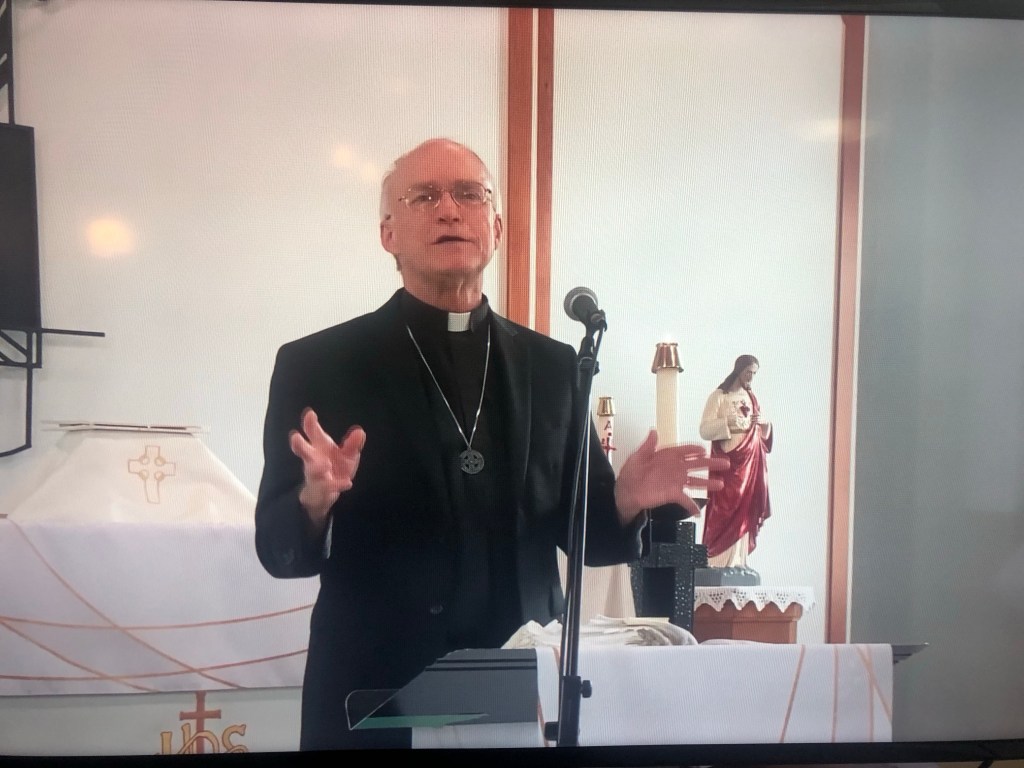
Dreams are funny things. Last night I dreamt that I was doing substitute teaching, but left early without checking with the principal. Today, as I substitute teach for Bishop Peter, I will make sure not to check out early 😉

A great Lenten discipline can be to do prayer walking. As many of you know, I am in a Christian walking group that walks Mondays & Wednesdays on the White Rock Promenade and on Fridays at Crescent Beach. While we were walking, we discussed about President Eisenhower being raised JW before being converted to Christ by Billy Graham. Out of the blue, I saw two JWs standing by the Beecher street turnaround. I had a wonderful chance to share with them about Jesus being our Lord and God (John 20:28). We even chatted about the meaning of Proverbs 27, today’s passage.

I have a question for you related to today’s Proverbs teaching. What happens when politicians surround themselves with yes men? Have you ever noticed that it never ends well. What might happen if Putin or perhaps Canadian federal leaders surrounded themselves with people who could constructively disagree with them without losing their jobs or perhaps even their necks?

You may have noticed that those who always agree with us, those who celebrate our sinful, destructive behaviours, are not true friends. You will remember Bishop Peter’s excellent series on spiritual friendship. Genuine spiritual friends want the best for us. Real spiritual friends will even risk a friendship if it means saving us from destruction. Do you have a spiritual friend that you can trust to tell you the truth in love? Does anyone have permission to speak honestly into your life? Can any one disagree with you and even privately challenge you without losing your friendship? Without the rebuke of such spiritual friends, we can easily become dangerous, particularly if we are in positions of power.

Many Christians switch churches every time anyone gets close and speaks into their life. We are a culture on the run. So many even as Christians are in hiding, sometimes in plain view. Some husbands have been hiding from their wives for years, even when they are in the same room, perhaps hiding behind a newspaper, tv, cell phone, or video games. Instead of seeking, we are isolating and hiding from the Lord and one another.

Proverbs 18:1 says that “whoever isolates himself seeks his own desire; he breaks out against all sound judgement.” To isolate ourself against such friends robs us of life-giving wisdom. So many of us, even as Christ followers, are scared to death of vulnerability, of letting others speak into our lives. How many of you, as Proverbs 27:17 puts it, want iron to sharpen iron in your relationships?

You may remember when the prophet Nathan rebuked David after he killed Uriah. Who can forget Jesus rebuking his disciples in Matthew 18 when they bickered about who was the greatest? His rebuke was to show them a child. The least is the greatest. Jesus rebuked lovingly, kindly, and gently. Matthew 12:20 , quoting Isaiah 42, says of Jesus “A bruised reed he will not break, and a smoldering wick he will not snuff out.” Jesus did not crush people with his words. Jesus’ rebuke is not rejection.

Be careful who you seek a rebuke or feedback from. Don’t go to gossips or bad tempered people to seek a rebuke. Go to someone who respects and loves you enough to tell you the truth.

You will also remember in Luke 9:56 when James & John, Zebedee’s sons of thunder, wanted to call fire down to destroy an unfriendly Samaritan village, and Jesus rebuked them. Jesus’ rebukes flipped everything on its head. Significantly, Jesus in Revelation 3:9 said to the Laodiceans, “As many as I love, I rebuke”. Proverbs 3:11-12 says: “Don’t resent his rebuke for the Lord disciplines those he loves.” Don’t harden your hearts to Jesus’ rebukes. When we receive his easier rebukes, then he won’t need to turn over our tables or rebuke us like he did when Peter forbid Jesus from going to the cross.

Proverbs 29:1 says that whoever remains stiff-necked after many rebukes will suddenly be destroyed—without remedy.” How many of us have struggled with being stiff-necked? You may remember that the resurrected Jesus rebuked his disciples in Mark 16:14 for their slowness to belief and their hardness of heart. Has Jesus ever rebuked you? Do any of you want to share? (Pause)

Seeking a rebuke may feel very countercultural. We live in a cancel culture that so easily takes offense, and then cuts other people off. Have you ever felt like you have to walk on eggs shells around certain relatives or friends? What if we stopped resenting and despising other people’s advice? What if we admitted, as Proverbs 19:20 teaches, that we actually need their wisdom to live a more godly healthy life? No Christian is a solitary island. We need God’s family. Part of belonging to a Christian community is about learning about the Lenten discipline of seeking a rebuke. Titus 1:13 says that such rebukes will make us healthy and sound in the faith.

I first learned about seeking a rebuke from our first Anglican Coach Dr Gil Stieglitz who emphasized how key this was for husbands who want a healthy marriage. Gil suggested that for those who don’t like the biblical word ‘rebuke’, think of the word ‘feedback’. Ask your wife for feedback on how you can improve and grow. Your wife already knows what it will take. You just need to have the courage to ask her. If you non-defensively listen and apply her wisdom, you will be amazed how the intimacy in your marriage will increase.

As Proverbs 15:4 puts it, a Christlike rebuke, needs to be with a gentle tongue. Gentleness is a tree of life. Colossians 4:6 says that our speech needs to always be gracious and seasoned with salt. Galatians 6:1 calls us to restore people in a spirit of gentleness. 1 Peter 3:15 likewise calls us to gentleness and respect. 2 Timothy 2:25 speaks of gently instructing others. A Christ-centered rebuke is quietly and kindly spoken. It is not about yelling, accusing, or finger-wagging. The receiver would not necessarily realize that they had been rebuked. It is too easy to win an argument and lose the person. You will notice when Jesus rebuked and challenged people, he often used a question. You may remember Jesus’ probing question in Luke 9:41 when the disciples couldn’t heal the convulsing boy: “How long shall I stay with you and put up with you?” Have you ever noticed how patient Bishop Peter is with how slow we often are to get things? Have you noticed how from time to time, he will repeat key concepts like the importance of self-awareness, waiting for the penny to drop? Bishop Peter’s rebukes are very gentle. We often don’t even realize when Bishop Peter is rebuking us.

The most effective questions are not usually angry why questions, but rather observational who, what, where, when and how questions.

While doing my doctoral thesis, my professor asked me two breakthrough questions: Have you ever thought of including a glossary? Have you ever thought of including colour pie charts for my data results? On both occasions, I defensively deflected, saying that it wasn’t needed. The rebuke was a very gentle “you might want to think of it.” The gentleness stopped me in my tracks. Why was I so resistant? I decided to do both changes which became the two most complimented parts of my thesis.

Matthew 18:15 suggests that privacy is key, initially just between you and him alone. One of the most loving things anyone can do for you is tell you when you’re wrong. A true friend tells you the truth, even when it hurts. A loving friend will help you identify and remove any logs in your eyes.

How many of you love the Bible? Is it really only full of warm fuzzies? Have you ever heard this verse from Woke 3:16? “Thus says the Inclusive One, I’m ok and you’re OK and that’s Ok. Go and sin some more.”

2nd Timothy 3:16-17 however says “All Scripture is God-breathed and is useful for teaching, rebuking, correcting and training in righteousness (…)” Is it okay for the Bible to not only affirm us but also rebuke and correct us? As 2 Timothy 4:2 puts it, correct, rebuke and encourage—with great patience and careful instruction.

In our highly secular culture, we have lost sight that a Christ-like rebuke is an act of great love that may turn us back from a destructive path. How many of you have ever embraced a rebuke as a blessing?

How defensive are you? Can you welcome a rebuke? Are you willing to seek one from a trusted friend? It takes humility to receive a rebuke.

Proverbs 1:23, 10:17, & 15:10 both teach that correction and rebuke are actually the way to life.

Proverbs 5:12-14 tells us that those who spurn correction will soon be in serious trouble.

Proverbs 6:23 says that if we repent at God’s rebuke, He will pour out his spirit to us.

Proverbs 9:7-9 says that rebuking mockers is a waste of time because they will hatefully insult and abuse you. The wise however will love you when you rebuke them, and become even wiser and learned. How many of you today are willing to learn how to love being rebuked? This has to come through surrendering our will to the power of the Holy Spirit.

Proverbs 10:17 teaches that those who ignore the rebuke of correction will lead others astray from the way of life to death. Seeking a rebuke is actually a life and death Lenten discipline.

Proverbs 12:1 teaches that those who hate the rebuke of correction are stupid.

Proverbs 13:1 teaches that mockers do not respond to rebukes.

Proverbs 13:8 says whoever heeds the rebuke of correction receives honour. Few people make a positive correlation between seeking a rebuke and being honoured.

Proverbs 15:5 teaches that whoever heeds the rebuke of correction shows prudence.

Proverbs 15:32 teaches that those who disregard the rebuke of correction actually despise themselves. Self-hatred cripples us from becoming more self aware & Christlike.

Proverbs 17:10 teaches that a discerning person is actually impressed by a rebuke.

Proverbs 25:12 poetically tells us that like an earring of gold or an ornament of fine gold is the rebuke of a wise judge to a listening ear. Have we ever turned a deaf ear to God’s golden wisdom?

The book of Proverbs teaches again and again that the wise welcome a rebuke. Fools however despise reproof while welcoming flattery.

In this key passage of Proverbs 27:5-6, we are told that “Better is open rebuke than hidden love.

Some people deeply appreciate and value you, but they will never tell you. It is hidden love.

Wounds from a friend can be trusted, but an enemy multiplies kisses.”

The more open and honest, the more effective is the rebuke. Enemies wound you to hurt you. It takes a genuine friend to wound us in a way that heals and brings greater Christlikeness. A healthy rebuke is like healthy surgery.

Proverbs 28:23 teaches that “whoever rebukes a person will in the end gain favor rather than one who has a flattering tongue.” Flattery initially feels very pleasant. Proverbs 26:28 tells us that A lying tongue hates those it hurts, and a flattering mouth works ruin.

Proverbs 29:5 says that those who flatter their neighbors are spreading nets for their feet.

Romans 16:18 says that divisive people deceive the hearts of the unsuspecting with smooth talk and flattering words.

How many of you remember the unctuous clergy William Collins in Jane Austen’s Pride and Prejudice, who was always flattering and buttering up Lady Catherine De Bourgh?

The well-known evangelist DL Moody said that there are more people ruined by flattery than by telling them their faults. The Holy Spirit never flatters, but convicts us of sin, and that is the reason, said Moody, that many don’t like Him.

Psalm 141: says that for a righteous man to rebuke us is kindness like oil on our heads. How many of us today are willing to seek such a kind anointing?

Let us pray.

Proverbs 27:1-13 NIV https://bible.com/bible/111/pro.27.1-13.NIV

1. “Do not boast about tomorrow, for you do not know what a day may bring.

2. Let someone else praise you, and not your own mouth; an outsider, and not your own lips.

3. Stone is heavy and sand a burden, but a fool’s provocation is heavier than both.

4. Anger is cruel and fury overwhelming, but who can stand before jealousy?

5. Better is open rebuke than hidden love.

6. Wounds from a friend can be trusted, but an enemy multiplies kisses.

7. One who is full loathes honey from the comb, but to the hungry even what is bitter tastes sweet.

8. Like a bird that flees its nest is anyone who flees from home.

9. Perfume and incense bring joy to the heart, and the pleasantness of a friend springs from their heartfelt advice.

10. Do not forsake your friend or a friend of your family, and do not go to your relative’s house when disaster strikes you—

11. better a neighbor nearby than a relative far away. Be wise, my son, and bring joy to my heart; then I can answer anyone who treats me with contempt.

12. The prudent see danger and take refuge, but the simple keep going and pay the penalty.

13. Take the garment of one who puts up security for a stranger; hold it in pledge if it is done for an outsider.”


Leave a comment

Pigs in the Ocean: the socialism of Dostoevsky’s Possessed

By Rev. Dr. Ed & Janice Hird

-an article for the March 2023 Light Magazine

One of Dostoevsky’s most brilliant, darkest and least known novels is The Possessed, also called Demons or The Devils. Dostoevsky, as a devout Christian, often grounded his novels in particular biblical stories. The opening scripture in this novel is about the pigs being cast into the ocean (Luke 8:32-37).

Have you ever wondered what possessed Putin to invade Ukraine, and why he won’t just go back home to Russia? The Russian people still deeply remember the attacking of Moscow by Napoleon and Hitler, as if it happened yesterday. They are possessed by the idea that they are merely defending their fatherland against Western aggression.

Ideologies (fixed systematic big ideas) can easily become idolatrous and possess a nation. That is why Dr. Jordan Peterson wrote a chapter in his latest book Beyond Order entitled “Say No to Ideology”. Ideologies like Marxism, Nazism, and Fascism have caused over a hundred million people to go over the cliff and die like the Gadarene pigs. Tragically, some of these far-left and far-right ideologies are again romantically possessing many young people around the world. The far-left and far-right, being both totalitarian and haters of democratic freedoms, have much more in common than most would imagine.

The Possessed is the most political of all of his Christ-centered novels. In the very year of 1870 that Dostoevsky was writing Possessed, Vladimir Lenin was born.  Lenin sadly refused to read Possessed as he considered it reactionary garbage. Might the Possessed possess and transform Putin, who is reportedly a Dostoevsky fan?

Dostoevsky, like a John the Baptist or a weeping Jeremiah, cried out in this novel to a younger generation about to go over the edge into socialist chaos and destruction. He was a former revolutionary socialist sent in 1849 to Siberia for ten years. Dostoevsky prophetically warned in this book about the destructive whirlwind of communism that would swallow Russia fifty years later.

The protagonist in this book is Stepan Trofimovich Verkhovensky, a so-called champagne socialist of the 1840s generation who liked to flirt in secretive artist groups with trendy new ideas coming from the West. Significantly, he spoke French like a Parisian, giving him great influence among the nobility. None of Stepan’s obscure writing projects were ever completed.  He was a caricature of Alexander Herzen, the father of Russian socialism, who had been in exile in London with his friend Karl Marx.

In the novel, Stepan, a former University instructor, was exiled for his socialist ideas by the Tsar to the fictitious back-water town of Skvoreshniki. There, being funded by the bitter and controlling heiress Varvara, Stepan spends twenty years training up the 1860s generation of younger revolutionary socialists.

Stepan is shocked when these younger people, including his own son, Pyotr and Varvara’s son Stavrogin, are swallowed by the ideologies of nihilism, hedonism, and suicide. Pyotr and Stavrogin are both deeply alienated from their parents, having being sent away to residential schools in Petersburg.  Education trumped family. All the 1840s fathers were either dead or entirely absent from their sons’ lives.  Stepan had only met his son twice in his entire life.  The younger radicals dismiss Stepan and Varvara as outdated fools.  Pyotr said to his father Stepan: “I curse you henceforth!”

 As hard-core atheists, the young men rejected morality, church, and family as forms of patriarchal oppression. Stepan had taught the younger generation that:

marriage is the moral death of every proud soul, of all independence. Married life will corrupt me, it will sap my energy, my courage in the service of the (socialist) cause.  

The 1840s champagne socialists were mortified by the violence: “we first sowed the seed, nurtured it, prepared the way.” Stepan is so appalled by the destructive fruits of his intellectual labour that he flees on foot from the town. There, among the peasants, he meets Sofya, a Gospel woman who sells him a bible. In the midst of the chaotic suffering of his life, Stepan reads the bible for the first time in over thirty years. He learns from the Sermon on the Mount that “we must forgive, forgive, and forgive.” He encounters God and turns from his ideological possession:

I’ve been telling lies all my life…The worst of it is that I believe myself when I am lying. The hardest thing in life is to live without telling lies.

He receives communion, and decides to also become a travelling bible salesman. Dostoevsky noted: “Even fools are by genuine sorrow turned into wise men.”

In this age of MAID and full-term abortion, it is chilling to see young people in the novel imagine that death is the solution to life’s problems: “I am killing myself to prove my independence and my new terrible freedom.” All the key young men in this novel foolishly end up dead, either from murder or suicide. Dostoevsky is fascinated by the biblical themes of wisdom and foolishness: “Claiming to be wise, they became fools” (Romans 1:22).  Only the women are left to pick up the pieces, as the town is thrown into chaos by revolutionary arsonists.

After Stepan dies three days later, Sofya is ‘adopted’ by Varvara who also wants to spread the gospel. Varvara and Sofya remind us of the women who first saw the resurrected Jesus, becoming the original evangelists. What if women became the key evangelists in the next coming revival?

Dostoevsky passionately wanted everyone, especially his Russian people, to experience the love of Jesus Christ:

If anyone could prove to me that Christ is outside the truth, and if the truth really did exclude Christ, I should prefer to stay with Christ and not with truth.

Thank God that we don’t have to choose between Christ and the truth. Are you willing to let go of your ideologies and share the Truth with a younger lost generation?

Rev. Dr. Ed & Janice Hird

Co-authors, God’s Firestarters


Leave a comment

The Foolishness of God in Dostoevsky’s Idiot

The Foolishness of God in Dostoevsky’s Idiot

By Rev. Dr. Ed & Janice Hird

-an article for the Light Magazine

Have you ever been foolishly attracted to the world, the flesh and the devil?  Has your self-centeredness and desire for approval ever harmed your best interests? Why does Christianity often look so foolish to secular people in our hi-tech, frantic world?

            In Dostoevsky’s favorite novel The Idiot, we meet Prince Myshkin, a Christ-like person whose goodness, open-heartedness, and genuineness lead people to call him an idiot sixty times in the novel. He saw Myshkin as his best and richest poetic idea. Three times in his notes, Dostoevsky identifies Myshkin as a Christ figure.  Like Jesus, he was full of child-like grace and truth.  In his blueprints, Dostoevsky refers to Myshkin as “Prince Christ”: “Christ is and always will be the ideal, ours (in Russia) or that of civilized Europe.”

Myshkin had just returned to St. Petersburg, the Russian Capital, after five years away in a Swiss sanitorium for epileptics. In the midst of great corruption, Jesus the Word became flesh and made his dwelling among us (John 1:14).  So too, Myshkin came to dwell in the midst of a cynical, jaded world.  As the epicentre of the Russian political world, St. Petersburg was full of clever pretenders, politicians, and posers who hid in plain view from each other: “For the wisdom of this world is foolishness in God’s sight.” (1 Corinthians 3:19) Myshkin exposed the nakedness of the ‘kings with no clothes.’  No one could hide from his loving gaze.

Since only the knowledge of the truth can see us free, Myshkin’s speaking truth to power helped a few give up their lies.  Most initially clung to their lies, and rejected Myshkin as totally inappropriate and stupidly naĂŻve. His ‘unsuccessful’ encounter with the Russian elite reminds me of John 1:10-11:

He was in the world, and though the world was made through him, the world did not recognize him. He came to that which was his own, but his own did not receive him.

Just like with Jesus, Myshkin was the wrong kind of messiah, coming in humility rather than as a conqueror.  As a quintessential Russian holy fool, he threatened their love of power, money, and sexual conquest. Everything for this highly politicized culture was an elaborate game of deception and manipulation. Like the power-hungry Pontius Pilate, they had become cynical about the possibility of truth. In their childishness, they rejected Myshkin’s strong wisdom as weakness:

For the foolishness of God is wiser than human wisdom, and the weakness of God is stronger than human strength. (1 Corinthians 1:25)

The French-speaking Russian elite, though clinging to an outward form of religion, had largely become atheistic because of the influence of the French revolution. Even Christianity for these power-brokers became little more than another way to control and subjugate ‘lesser’ people.  Dostoevsky believed that western culture was dying because it rejected Jesus: “those who kill God also kill man.”

Dostoevsky drew on the comic figure of Don Quixote in creating his ‘positively good and beautiful’ person:

There’s nothing more difficult than that in the whole world… There’s only one positively beautiful person in the world — Christ, so that the appearance of this measurelessly, infinitely beautiful person is in fact of course an infinite miracle.

 He saw Don Quixote as the most complete of beautiful people in Christian literature: “…he is only beautiful because he is ridiculous at the same time…” Don Quixote, like Prince Myshkin, was this strange blend of apparent foolishness, and great wisdom.  In their fighting the windmills of secularity, neither made any sense to the sophisticated elite. Outwardly, it looked like a useless failure that only made things worse.

Jesus, like Myshkin and Quixote, is the seemingly ‘foolish’ Prince of fools. Will the real fool stand up? How often are we fooled? 1 Corinthians 2:14 puts it,

The person without the Spirit does not accept the things that come from the Spirit of God but considers them foolishness…

Quixote, Jesus, and Myshkin suffer deeply because they ‘foolishly’ love and serve the unlovable.  All three were ridiculed, beaten with stones, and betrayed by their most trusted friends.

One is reminded of the suffering servant of Isaiah 53 who was despised and rejected. It reminds us of the apparent foolishness of Jesus’ love on the cross for us:

For the message of the cross is foolishness to those who are perishing, but to us who are being saved it is the power of God. (I Corinthians 1:18)

Jesus, the bridegroom, loves his bride, the very broken, often conflicted Church. Similarly, Myshkin loved his potential bride Nastasia who was very beautiful, but deeply wounded in her soul by sexual exploitation. Myshkin helped open Nastasia’s eyes temporarily to her deep worth, but in her shame, she kept running from Myshkin back to those who would mistreat her.  The most beautiful often feel the most ugly and unworthy. We too as the wounded bride of Christ often run from his relentless love.

The problem of the existence of God had long tormented Dostoevsky, the intellectual idiot.  He came to a deep faith in Christ through much suffering and questioning as a political prisoner in Siberia: “My hosanna has passed through a great crucible of doubt.” He struggled with irritability and spite, and had a strong gambling addiction that took him many years to break free.  Through the example of other faithful prisoners and in reading the New Testament, Dostoevsky:

accepted Christ back into (his) heart, whom (he) had come to know as a child living with my parents and whom (he) almost lost once, because of turning into a ‘European liberal.’”

            Dostoevsky wanted all of us to accept the crucified idiot back into our hearts.  Imagine how such a heart transformation might affect the Russian/Ukrainian conflict. Have you ever lost the Prince of Peace through giving into cynicism and negativity? What if you opened our heart and mind up again today?

Rev. Dr. Ed and Janice Hird

Co-authors, God’s Firestarters


Leave a comment

Jimmy Stewart’s Wonderful Life

How many of you also love Jimmy Stewart’s iconic Christmas movie It’s a wonderful Life? What is your favorite scene? Click to view our Light Magazine article

Jimmy Stewart’s Wonderful Life

by Rev. Dr. Ed & Janice Hird

One of our favourite Christmas movies is It’s a Wonderful Life where Jimmy Stewart plays the part of a generous but discouraged businessman who discovers that he really was making a positive impact. You will remember how the Christmas angel Clarence had to earn his wings by helping out Jimmy Stewart (aka George Bailey). George was so distraught at Christmas that he was about to jump off a bridge.  Clarence, the delightful angel shows George what an amazing impact his generosity is making, and how much poorer his town would be without him.

The movie was based on a short story and booklet The Greatest Gift, written by Philip Van Doren Stern in 1943. Stern wrote a Charles Dickens ‘Christmas Carol’ spinoff for the North American audience. In 1946, Frank Capra wrote the movie version.  It was initially seen as a box-office flop, falling three million dollars short of breaking even, and not even winning one Academy Award Oscar.  In 1947, the FBI and Senator Joseph McCarthy’s House Un-American Activities Committee (HUAC) secretly investigated It’s a Wonderful Life, fearing it was “communist propaganda”, stirring up class warfare, because it portrayed the villain as being a “scrooge-type” banker.

Since It’s a Wonderful Life was seen as a failure, the producers didn’t even bother to renew the copyright license in the late 1970s. This meant that television studios could show the movie for free at Christmas. After a few years   It’s a Wonderful Life became a cult classic.   It later went on to become the number one inspirational North American movie ever made.

Who can forget the conflict around the Christmas tree as George Bailey was close to committing suicide? We loved his honest prayer: “Dear Father in Heaven, I’m not a praying man, but if you’re up there and you can hear me, show me the way. I’m at the end of my rope. Show me the way, God.” His unscripted tears were genuine. Stewart commented in a 1987 interview, “As I said those words, I felt the loneliness, the hopelessness of people who had nowhere to turn, and my eyes filled with tears. I broke down sobbing.” Actress Carol Burnett called this one of the finest pieces of acting ever seen. Because Jimmy Stewart was suffering from post-World War II PTSD, he was able to connect with George Bailey’s trauma with unusual depth.  On his twentieth combat mission flying over the city of Gotha, the floor of Stewart’s plane was hit, blowing a hole right below his feet.  It was one mission too many for Stewart.  He was grounded because of his paralyzing fear of making a mistake and causing someone to die. Friends observed that he had aged ten to twenty years. He began suffering from shakes, sweats, a short temper, mood swings, and nightmares.  He couldn’t keep food down, and had to live on just ice cream and peanut butter.

Christmas 1946 was surprisingly healing for both George Bailey and Jimmy Stewart himself. Who can fail to recall the final scene around the Christmas tree when all his friends come together and unite in support? Who can forget the joyful Christmas carols sung by Jimmy Stewart, friends and family as they thanked the baby Jesus for the true meaning of Christmas?

This Christmas, let not forget to unwrap the true gift of Christmas, the Christ Child come to earth to save us.


Leave a comment

Messy Healing

Advent is the season of “anticipation.” It is the start of a new liturgical year, and we have much planned for our service: we’re blessing and lighting the Advent Wreath; we’re celebrating a baby dedication; and I’ll be preaching an Advent series on “Spiritual Friendship.” I’m looking forward to celebrating with you.
So come, join us as we worship the triune God together.
In case you missed it, you can find the Healing service (Rev Ed Hird preached on ‘Messy Healing: Why Does it sometimes take too long? Mark 8:22-26) from last week by clicking HERE.
Important Dates:
Ladies’ “Refresh” this Tuesday 10:30am.
Thursday Support Group this week: 6:00pm dinner together; Prayer Vigil at 7:00pm.
Remember we are a fragrance-free community.
Advent preaching series: “Spiritual Friendship.”
All Saints Christmas Party and Community Lunch: next Sunday the 4th of December (after the service). Bring some food and enjoy the fellowship. (Please note that until our renovations are complete, we do not have facilities for either heating or cooling food.) Everyone welcome.
“9 Lessons and Carols” Sunday the 18th of Dec. Hot mince pies and hot apple juice after the service. Everyone welcome.
Christmas Eve Candlelight Family Service 7:00pm Christmas Eve. Everyone welcome
Christmas Day Family Service 10:00am Christmas Day
If you want to see our monthly church schedule, you can find that on our website.
If you have any further questions, or need help in any way, don’t hesitate to contact me.
Thank you Church.
Stay vigilant and prayerful.
Love each other deeply and keep Jesus at the very centre of everything you do.
Blessings on all you do.
The peace of our Lord,
Peter Klenner
Bishop and Pastor
All Saints Community Church
Crescent Beach
604.209.5570

Rev. Ed Hird preaching on Mark 8:22-26


Leave a comment

Battle for the Tortured Soul of Russia

Enjoy this Light Magazine article and feel free to repost. Praying for the soul of Russia.

Leo Tolstoy’s battle for the tortured soul of Russia

By Rev. Dr. Ed & Janice Hird

After publishing his wildly successful War and Peace in 1865, Tolstoy thought of writing a novel on Peter the Great. So, he began learning ancient Greek.

Tolstoy called the time of terrible uncertainty between writing projects “the dead time.”  His self-doubt perhaps meant that he would never write anything again. He was plagued by fears that he himself was finished as a writer. “It was all over for him; it was time for him to die.”

Two years after finishing War and Peace, he still felt so depressed that he privately told a friend that he had no will to live, and had never felt so miserable in all his life. It would be three years before Tolstoy started Anna Karenina, a novel in which both key characters Anna Karenina and Konstantin Levin struggled with great self-doubt about their relationships and even life itself. It seems that many of Tolstoy’s more painful emotions were projected onto Anna Karenina.

Perhaps more than any other, Anna Karenina is Tolstoy’s novel that readers consistently say they cannot stop reading. If you are still mystified to why Russia recently invaded Ukraine, read Anna Karenina.  The intense humanity of Tolstoy’s complex characters allows us to read it again and again with new insights about the Russian soul. Many consider Anna Karenina to be the best novel ever written. Over 300,000,000 people have purchased it so far. You could be next. Tolstoy saw it as his first novel, as he refused to call his earlier War & Peace a novel. 

Why did Tolstoy write such an intense novel about adultery?  Biblically speaking, adultery is often a metaphor for spiritual idolatry.  As Romans 1 puts it, we are tempted to abandon ourselves to the twin temptations of adultery and idolatry. 

How was Tolstoy able to write so vividly and realistic about adultery and idolatry?  Because like the Apostle Paul, he considered himself to be the chief of sinners. In his 1882 book Confessional, he commented:

I cannot recall those years without horror, loathing, and heart-rending pain. I killed people in war, challenged men to duels with the purpose of killing them, and lost at cards; I squandered the fruits of the peasants’ toil and then had them executed; I was a fornicator and a cheat. Lying, stealing, promiscuity of every kind, drunkenness, violence, murder – there was not a crime I did not commit… Thus, I lived for ten years.” 

His mother died when Tolstoy was two year’s old.  Raised as an aristocratic orphan, he came into massive wealth and landholdings at age 19. His wild gambling debts in the military forced him to sell off villages that he owned, before he finally lost his principal house itself.  Similarly, Levin, the hero of the Anna Karenina novel, struggled with gambling temptations before getting married and settling down. Many of the Russian aristocracy in the 1800s were renowned for massive gambling debts in the military, while simultaneously despising money itself.  Is the reckless Russian invasion of the Ukraine an expression of this same gambling addiction? 

Like many in the Russian aristocracy, Tolstoy was trained to see hunting and warfare as vital to masculine courage and bravery.  Many of Tolstoy’s books, including Anna Karenina, give a seldom-seen, up-close view of the battlefield.  He was the first newspaper war correspondent. Tolstoy no more glorified warfare than John Newton glorified slavery.  Both Tolstoy and Newton, however, because of their first-hand experience, were able to give a first-hand critique of what was really happening in their time. Both helped turn many others to peace and reconciliation. 

Tolstoy defined his essential family trait by the Russian word dikost which means wildness, shyness, originality and independence in thinking, much like the quintessential Russian bear.  Not even the autocratic Tzar himself could tame Tolstoy.  In his novels, Tolstoy could get away with saying things that would immediately exile other Russians to Siberia.  He was so uncontrollable, almost like John the Baptist, so that even the top officials feared to criticize him publicly. 

One of Tolstoy’s more scandalous behaviours was that he wrote his novels in the Russian language, rather than using  any of the twelve other languages he knew.  The accepted language of communication for the Russian aristocracy was French, which their serfs could not understand.  Because the Russian literary language had been created specifically to translate the bible, the Russian Orthodox Church saw it as blasphemous to degrade the holy Russian language in the writing of ‘heathen’ folktales or novels.  The Anna Karenina novel scandalized many religious officials by its thoughtful critique of religious hypocrisy and judgementalism, and its rejection of violence.  He became a pacifist after fighting in the Crimea. 

Tolstoy chose Romans 12: 19 “Vengeance is mine, says the Lord, I will repay” as an epigraph to Anna Karenina. Many people in life, even as Christians, are tempted to take revenge when they have been hurt.  Just think of all the trauma that the Ukrainian people have been through recently.  How could they ever forgive the Russians? Tolstoy, in Anna Karenina, shows us again and again how tempting revenge is, yet how unsatisfying it is to the soul.  Kitty had to give up her desire for revenge regarding Anna & Vronsky before she could be well again and marry Levin.  Similarly, Levin had to forgive Kitty for initially rejecting his marriage proposal, before he could give her a second chance.  It is only when we trust that God alone will bring justice and fairness that we lose the need to even the score. Could God make a way where there is no way in the current mess between Russia and Ukraine?

Reading Anna Karenina reminds us of Isaiah 5:20 where it warns against calling evil good and good evil, putting darkness for light and light for darkness, bitter for sweet and sweet for bitter. Though Anna is initially used to save Dolly and Stepan Oblonsky’s marriage from his affair, everything following become a twisted web of deceit and half-truths. Again, it reminds us of Jeremiah 17:9 â€œour hearts are deceitful and desperately wicked; who can understand them?”  Self-deception, which so many fell into, is the worst form of deception.  Often our eyes and ears are closed shut, and we refuse to hear and see. We often deceive ourselves that we know better than God himself and His Word. 

Anna was described as being clad in an impenetrable armour of falsehood.  Deception ultimately kills relationships, as it did with Anna and Count Vronsky.  Romans 3:23 has never stopped being true; the wages of sin and self-deception are still death.  Tolstoy symbolizes this at both the beginning and ending of the novel, where the railway station is the place not only of progress, but also of death.  Progress, for its own sake, only turns us into unfeeling machines.

By contrast, the joy of Levin and Kitty’s marriage was that it became a relationship without guile or deceit. They held back no secrets on each other. They were who they were, for better, for worse, for richer, for poorer, in sickness and health.  As a result, they went from being tortured souls to becoming healthy souls.  What might it take for tortured Russia to rediscover the deeply Christ-like, profoundly human souls of Levin and Kitty?  Lord, have mercy on Russia and their neighbours, in Jesus’ name. Amen.


Leave a comment

Growing in Fruitfulness

This article came out in the online Light magazine. You are invited to read and repost this to others. What if you chose to never retire from making a difference in other people’s lives?


Leave a comment

Finishing Well, Growing in Fruitfulness

An article published in the October 2022 Light Magazine

By Rev. Dr. Ed & Janice Hird

C.S. Lewis memorably commented, “You are never too old to set another goal or to dream a new dream.” God wants each of us to finish well, not peter out.

As we age, self-surrender to God and his Kingdom purposes is always the way forward.  If there is breath in their lungs, God still has something for his servants to do. We are never to stop serving others until the Lord takes us home. Never stop learning, reading and listening.  Do you still have fire in your bones to make a difference? Would you like to get your fire, your zest for living, back?

Ed has taken many funerals over the past decades of ordained ministry.  When we hear the funeral eulogies from family members, it often makes us wish that we had known the deceased better.  Many people often wait until the loved one is dead to say how much they loved him.  We often wonder: “Why wait?’  Part of finishing well is having a faithful team cheer as you aim for the finish line.

One of Ed’s favorite mentors, Dr. E. Stanley Jones, entered his 50’s by deciding that it would be the most fruitful decade of his life, and it was.  When he became age 60, age 70, and then age 80, he decided the decade was once again the best, and it was.  While he was officially ‘retired’ by the Methodist Board of Missions in 1954, he went on to have a remarkable fruitful phase of ministry for almost two more decades. In 1963, for instance, he preached 736 times. Jones deeply lived out Psalm 92:14: “They still shall bring forth fruit to old age, they are ever full of sap and green.”

E. Stanley Jones reminds people in his 28 books that there is no such thing as retirement from a biblical perspective.  Retreading, recycling, repositioning, yes.  But we can never retire from being fruitful in life and making a lasting difference. “Never retire”, said Jones, “change your work. The human personality is made for creation; and when it ceases to create, it creaks, and cracks, and crashes.”Creativity is at the heart of staying fully alive.Without growing in creativity, we shrink and become less human, less Christlike. 

Secular retirement is often sold to people as getting something that they deserve.  This is their time to focus on themselves first.  E. Stanley Jones commented that 

Those who come in ‘to enjoy themselves’ the balance of their days wither prematurely and become inane and empty…Where there is no creative purpose, there is nothing but the creation of frustration.  

When Ed left St. Simon’s North Vancouver after serving for 31 years, he intentionally did not have a retirement party, but rather a ‘new chapter of ministry’ party.  In our current culture, we don’t often do transitions well. What new chapter are you currently writing in the book of your life? Are you stuck in any way? Is it time to turn the page? Paul says, I have fought the fight, I have finished the race, I have kept the faith.  Paul did that till the end.  

A number of pastors when they get older don’t finish well.  They may become grumpy, critical, and negative.  With aging, we have our aches and pains, and we have to work harder at being positive. When you’re older, it is easier to be negative, to be a no-centered person. E. Stanley Jones said that we are not as old as our arteries, but rather as our attitudes.  Are you growing in becoming a more positive, thankful person?

Dr. Martin Gumpert in his book You are Younger than You Think says that ‘idleness is the greatest enemy of the aged and presents them with their ticket to death.’ When the retirement age of 65 was invented by the USA in the 1930s, the average manonly lived 18 months after retirement.  It was too much of a shock to their system in ceasingproductive activity.  The AA Big Book comments that many people never become alcoholic until they retire.  They say to themselves “I’ve worked hard all my life.  Now I will do what I want to do with my life.” In contrast, those, who seek first Christ’s Kingdom, say no to idleness and addiction. 

As we age, it is too easy to succumb nostalgia, resenting newer expressions.  Are you still passionate about God’s future revivals?  Many people involved in an earlier revival resist a newer revival because it doesn’t look like the older revival. That is tragic. What we admire about Bill Prankard,even though he’s a classic, old-school Pentecostal, is that he’s aged well. John Arnott invited Bill Prankard to speak at the Toronto Airport Fellowship/Catch the Fire.  Bill initially refused, saying that he was too old-school Pentecostal. John pushed back, saying that we need your healing anointing. You can see that their friendship was a win-win. Those who say no to nostalgia are those who can say yes to the next revival.  

A key verse that can help us finish well is â€œHe who has begun the good work in you will carry it onuntil the day of Christ Jesus.” (Phil 1:6) We need to never settle down, never get stuck in a rut, never give up on life. E. Stanley Jones commented: “We don’t grow old.  We get older by not growing.” Are you growing older gracefully? Are you still growingin creativity?  As Christians, we grow from the inside out.  God cares about producing true beauty of character. It is a good work that God has begun in us, and will continue to carry out until he takes us home. There is no retirement from growing in Christ in the Christian life.

Winston Churchill, when he turned 77, commented, “We are happier in many ways when we grow old than when we were young. The young men sow wild oats. The old grow sage.” In a study of four hundred outstanding people as reported by Sunshine Magazine, they discovered that people in their sixties accomplish 35% of the world’s greatest achievements, people in their seventies 23%, and people after age eighty produced 8 percent. This means that 64% of the greatest achievements have be done by people age sixty and over. Think of Michaelangelo who was writing poetry and designing buildings up to the time of his death at ninety. 

Finishing well is about growing daily in gratitude. E. Stanley Jones said:

To grow old, not only gracefully, but gratefully, is the Christian’s privilege.  For the Christian is not to bear old age but to use it.  Is there any more utterly beautiful than a face, now grown old, but chiseled into tenderness and sympathy and experience?

There is a beauty of holiness into which we can all grow in Christ.  Think of Mother Theresa as she poured out her life sacrificially for the least, the last and the lost.  Her gray hair truly was a crown of splendor. (Proverbs 16:31) Those who finish well live for others.  Is it all about you, and getting your way, or do others come first? Those who live for others grow perpetually young in spirit.  As Psalm 103:5 puts it, he renews our youth like an eagle.  They that wait on the Lord shall renew their strength, mounting up with wings like eagles. (Psalm 40:31)


Every season of our lives has beautiful possibilities for fruitfulness. Think of Revelation 22:2 where it describes the tree of life having unique fruit for each month.  Don’t fight the current season that you are in. Embrace it and use it for God’s glory. Your current season of life is full of adventure if you have eyes to see it. May the Lord give us the courage and strength to bring forth lasting fruit even into our older age.  Everyone can finish well.

Rev. Dr. Ed & Janice Hird

Co-authors of God’s Firestarters


Leave a comment

Archbishop Masimango

We are having a delightful in-person Anglican Mission Clergy Retreat at Richmond Emmanuel Church for the first time since COViD 19. Archbishop Masimango, the Anglican Primate of the Congo who licenses us and is doing ordinations, is here for both the Clergy Retreat and the AMIC Summit.


Leave a comment

Word Guild Award

It was fun to write about Phil Callaway, our greatest Canadian comedian. Janice P Hird and I were also Word Guild finalists for our God’s Firestarters book 📕.