One of the privileges of parenting is to cheer for one’s children in their various school musicals. Our boys’ school for eight years was British Columbia Christian Academy (BCCA) in Port Coquitlam. As well as having great academics and strong family values, BCCA has become well known for its strong drama and music programs.
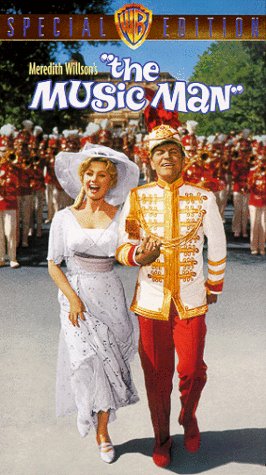
My three boys were blessed to be involved in several memorable BCCA productions, including Fiddler on the Roof, Annie, and now The Music Man. My youngest son Andrew had a lot of fun shaving his hair off for his role as Daddy Warbucks, and the next year became Professor Harold Hill of Music Man fame. While putting on a school play is a tremendous amount of work (and driving for the parents!), it is an invaluable way to build school spirit and teamwork.
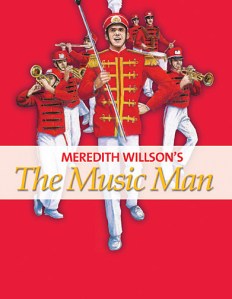
As I carpooled Andrew each morning to school, I listened to Andrew/Professor Harold Hill sing his heart out. The Music Man has so many unforgettable songs that it’s hard to single any out. “Seventy-Six Trombones” is my favorite, but there are many more: “Gary, Indiana”, “Wells Fargo Wagon”, and “Trouble” are all remarkably gripping. Paul McCartney and the Beatles enjoyed The Music Man so much that they even recorded one of The Music Man’s hit songs “Till There Was You”.
The original title for the play was “The Silver Triangle.” The earliest version of “The Music Man” included a young, spastic boy. Willson’s advisors thought it would be best to eliminate the spastic boy from the story, so Willson decided to change the spastic boy into the younger brother of Marian Paroo and have him lisp. The musical “The Music Man” opened on Broadway on Dec. 19, 1957, at the Majestic Theatre and ran for 1,375 performances. The show became not only a hit but a happening, squeezing out the season’s other Broadway classic, Westside Story, for the Tony ‘Best Musical’ award.
During the 1940’s a relatively unknown musician named Meredith Willson kept fiddling with a musical story about his boyhood in Mason City, Iowa. As a young person, Willson had started off, playing the flute in his town band, before ending up with the John Philip Sousa Band, and then the New York Philharmonic, where he served under Toscanini and Stravinsky.
It took Meredith Willson eight years, forty songs, and thirty revisions to birth one of the world’s most well-loved musicals. The Music Man is one of those very unusual Broadway hits where one person single-handedly produced the book, music and lyrics. Meredith Willson was also famous for “The Unsinkable Molly Brown”(1964) about the Titanic.
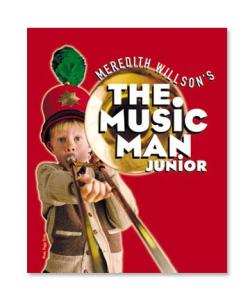
The gist of the ‘Music Man’ story, for those of you who have never seen it, is that Professor Harold Hill, a traveling salesman and con artist talks an unsuspecting Iowa small town into putting out hard, cold cash for band instruments and uniforms, as a solution to a civic frenzy drummed up by Harold Hill over the town’s new pool hall. “Remember, my friends, what a handful of trumpet players did to the famous, fabled walls of Jericho. Oh, billiard parlor walls come a-tumblin’ down.”
There are few things more captivating to many parents than the gentle form of flattery that suggests our children have some previously undetected musical genius.
In the process of wooing and sidelining the town’s librarian Marian Paroo, Harold Hill himself faces the depth of his own deception, and his longing to be a real-live band leader. The romance between Harold Hill and Marian Paroo is much like an irresistible force meeting an immovable object. Like any good salesman, the one thing that Harold Hill could not resist was a challenge. Whether it was the challenge of selling band instruments to hard-nosed Iowans or romancing a confirmed bachelorette like Marian, Harold jumped in with both feet.
Harold Hill discovered that behind this brusque, off-putting librarian is a passionate heart with standards so high that make her unobtainable: “All I want”, sang Marian Paroo,” is a plain man, all I want is a modest man, a quiet man, a gentle man, a straightforward and honest man…I would like him to be more interested in me than he is in himself…”
Marian’s mother Mrs. Paroo challenged Marian on her ‘paralysis of analysis’ regarding men: “I know all about your standards and if you don’t mind my sayin’ so, there’s not a man alive who could hope to measure up to that blend’a Paul Bunyan, Saint Pat and Noah Webster you’ve got concocted for yourself outta your Irish imagination, your Iowa stubbornness, and your liberry fulla’ books.”
What The Music Man musical proves to me isthat love conquers all. Love conquered the ‘conman’ Harold Hill so that he ended up staying and literally facing the music. Love conquered Marian Paroo’s impossible standards so that she actually opened up her heart to a member of the opposite sex. Love can conquer all, even your and my hearts. But unless we open up our hearts, Love can never break in.
If The Music Man ever come to your area, I encourage you to not miss out on the time of your life, seventy-six trombones later.
The Rev. Dr. Ed Hird, BSW, MDiv, DMin
-previously published in the North Shore News/Deep Cove Crier
P. S. Click this Amazon link to view for free the first two chapters of our new novel Blue Sky.
“I’m afraid there’s been an accident…”
Sandy Brown and her family have just moved to Spokane, Washington where her husband, Scott, is pastoring a new church. With a fresh start, Sandy is determined to devote more time to her four children. But, within weeks of settling in their new life, the Brown family is plunged into turmoil.
Sandy receives shocking news that her children aren’t safe, which brings back haunting memories of the trauma she experienced as a girl. Then, the unthinkable happens…
A brutal attack puts Sandy on the brink of losing everything she’s loved. Her faith in God and the family she cherishes are pushed to the ultimate limit.
Is healing possible when so many loved ones are hurt? Are miracles really possible through the power of prayer? Can life return to the way it was before?
Blue Sky reveals how a mother’s most basic instinct isn’t for survival… but for family.
If you’re a fan of Karen Kingsbury, then you’ll love Blue Sky. Get your copy today on paperback or kindle.
-The sequel book Restoring Health: body, mind and spirit is available online with Amazon.com in both paperback and ebook form. Dr. JI Packer wrote the foreword, saying “I heartily commend what he has written.” The book focuses on strengthening a new generation of healthy leaders. Drawing on examples from Titus’ healthy leadership in the pirate island of Crete, it shows how we can embrace a holistically healthy life.
To receive a signed copy within North America, just etransfer at ed_hird@telus.net, giving your address. Cheques are also acceptable.
-Click to purchase the Companion Bible Study by Jan Cox (for the Battle of the Soul of Canada) in both paperback and Kindle on Amazon.com and Amazon.ca
-Click to purchase the Companion Bible Study by Jan Cox (for the Battle of the Soul of Canada) in both paperback and Kindle on Amazon.com and Amazon.ca
To purchase any of our six books in paperback or ebook on Amazon, just click on this link.
I have twice had the privilege of having one of my sons in the “Joseph and the Amazing Technicolor Dreamcoat” musical. My middle son Mark, as part of a North Vancouver Choir, was in the Livent Production at the Ford Theatre in downtown Vancouver. My youngest son Andrew played Zebulun in a Joseph production at the Terry Fox Theatre in Port Coquitlam. It was a lot of fun and a lot of hard work. I want to commend all the young people (and not so young) in ‘Joseph’ for the excellent job that they did, pouring their hearts and souls into a high-quality performance. It was exciting to see my son Andrew shine with life and vitality as he experienced the joy of working together on a high-quality community theatre team.
‘Joseph’ is one of those musicals that never seems to wear out, probably because of its theme of biblical proportions! It was so much fun! Perhaps the most colorful musical ever! I especially loved that amazing coat: it was red and yellow and green and brown and scarlet and all those other 57 amazing colours.
The Joseph musical variety was remarkable: country (One More Angel in Heaven), French-bistro (Those Canaan Days), Disco-rock (Go, Go, Go Joseph), Calypso (Benjamin), and even Elvis (Song of the King). Weeks later, these catchy songs kept running through my head when I was waking up or going to sleep.
The Joseph musical began in 1968 as a 20-minute “pop cantata” by Andrew Lloyd Webber and Tim Rice for a school Easter concert in the UK. Derek Jewell, then the jazz and pop critic for the SUNDAY TIMES, unexpectedly gave the Joseph Musical national exposure when he wrote: “Throughout its twenty-minute duration it bristles with wonderfully singable tunes. It entertains. It communicates instantly, as all good pop should. And it is a considerable piece of barrier-breaking by its creators.”
Tim Rice’s favorite Bible story had long been Joseph and his coat of many colors. Speaking of the Genesis 39 Joseph story, Tim Rice commented: “This great tale has everything — plausible, sympathetic characters, a flawed hero, and redeemed villains … It is a story of triumph against the odds, of love and hate, of forgiveness and optimism. As with all great stories, the teller has no need to spell out the messages if he tells the tale well…”
Five years later, Joseph was expanded to 40 minutes in London, and then to 90 minutes in New York. After Andrew Lloyd Webber’s huge success with Jesus Christ Superstar, his Joseph musical finally hit Broadway in 1982, where it became one of the most enduring and endearing shows of all time.
With tens of millions of people having seen Joseph worldwide, the Joseph musical now has a place in The Guinness Book of Records for the world’s longest running touring musical.
As well as twelve different professional casts in its thirty-one year history, Joseph has been performed in 15,000 schools or local theatres, involving over 500,000 performers of all ages. Nowadays there are nearly 500 school or amateur productions each year in the UK, and over 750 in the US & Canada.
The song that touched me the deepest in Joseph was “Close Every Door To Me”. Joseph poignantly sings: “Close every door to me, Keep those I love from me. Children of Israel are never alone, for I know I shall find my own peace of mind, for I have been promised a land of my own.” This song both faced the depths of Joseph’s despair in prison, and yet clung steadfastly to God’s promises of hope. Joseph never gave up on his dreams, and neither should we.
Even after betrayal again and again by his brothers and others, Joseph saw the big picture, and at the end extended forgiveness to his jealous brothers. “You meant it for evil”, he said to them, “but God meant it for good.” All things really do work for good for those who love the Lord. May you, like Joseph, discover His goodness today.
The Rev. Dr. Ed Hird, BSW, MDiv, DMin
-previously published in the North Shore News/Deep Cove Crier
P. S. Click this Amazon link to view for free the first two chapters of our new novel Blue Sky.
“I’m afraid there’s been an accident…”
Sandy Brown and her family have just moved to Spokane, Washington where her husband, Scott, is pastoring a new church. With a fresh start, Sandy is determined to devote more time to her four children. But, within weeks of settling in their new life, the Brown family is plunged into turmoil.
Sandy receives shocking news that her children aren’t safe, which brings back haunting memories of the trauma she experienced as a girl. Then, the unthinkable happens…
A brutal attack puts Sandy on the brink of losing everything she’s loved. Her faith in God and the family she cherishes are pushed to the ultimate limit.
Is healing possible when so many loved ones are hurt? Are miracles really possible through the power of prayer? Can life return to the way it was before?
Blue Sky reveals how a mother’s most basic instinct isn’t for survival… but for family.
If you’re a fan of Karen Kingsbury, then you’ll love Blue Sky. Get your copy today on paperback or kindle.
-The sequel book Restoring Health: body, mind and spirit is available online with Amazon.com in both paperback and ebook form. Dr. JI Packer wrote the foreword, saying “I heartily commend what he has written.” The book focuses on strengthening a new generation of healthy leaders. Drawing on examples from Titus’ healthy leadership in the pirate island of Crete, it shows how we can embrace a holistically healthy life.
To receive a signed copy within North America, just etransfer at ed_hird@telus.net, giving your address. Cheques are also acceptable.
-Click to purchase the Companion Bible Study by Jan Cox (for the Battle of the Soul of Canada) in both paperback and Kindle on Amazon.com and Amazon.ca
-Click to purchase the Companion Bible Study by Jan Cox (for the Battle of the Soul of Canada) in both paperback and Kindle on Amazon.com and Amazon.ca
To purchase any of our six books in paperback or ebook on Amazon, just click on this link.
One of the most well-known children’s songs throughout the world is “Jesus loves me, this I know.” Somehow that song, like “Amazing Grace”, forms part of the spiritual memory banks of most adults. The vast majority of baby boomers and their ‘builder’ parents have gone as children either to Sunday School or Catechism. As a result, most older adults, whether or not they currently attend church, have significant core memories connected with those early experiences. This would not necessarily be true with GenXers and Millennials.
As a teenager, I found church boring and avoided it by golfing and skiing on Sunday mornings. But as a child, I remember enjoying Sunday School and looking forward to going. I’ve always liked to sing, and one of my favorite hymns as a child was “Jesus loves me, this I know”. Even though I did not know Jesus personally, something touched me as I sang that song in Sunday School. Years later, I still feel deeply moved by this simple song.
Dr. Karl Barth was one of the most brilliant and complex intellectuals of the twentieth century. He wrote volume after massive volume on the meaning of life and faith. A reporter once asked Dr. Barth if he could summarize what he had said in all those volumes. Dr. Barth thought for a moment and then said: “Jesus loves me, this I know, for the Bible tells me so.”
When Mao Tse Tung attempted to crush the church in China, things seemed very bleak. In 1972 however, a message leaked out which simply said: “The this I know people are well”. The Communist authorities did not understand the message. But Christians all around the world knew instantly that this referred to the world’s most famous children’s hymn. Miraculously the Chinese Church, instead of being crushed, has boomed under persecution, growing from 1.5 million believers to over 100 million.
The author of this amazing little children’s song was Anna Bartlett Warner, sister to the famous 19th century writer, Susan B. Warner. Susan’s first novel The Wide Wide World was an instant success, second only to Uncle Tom’s Cabin, the most popular 19th century novel written in North America. Anna published her own novel Dollars and Cents under the pseudonym “Amy Lothrop”. Anna and Susan collaborated together on fifteen fiction and children’s books. Neither sister ever married, so they shared a house on Constitution Island right across from the famous West Point Military Academy.
The two sisters took a great interest in the Military Academy in which their uncle Thomas Warner was a chaplain and professor. As a result, they opened their home to the cadets and held Sunday School classes. Anna outlived her sickly sister by thirty years, and continued to run a very large Sunday School throughout her life. It was her invariable custom to write for her students a fresh hymn once a month. “Jesus Loves Me” was one of those monthly West Point hymns. Anna also gave the song to her sister Susan to use in the novel Say and Seal. In Susan’s book, a Sunday School teacher sings ‘Jesus Loves Me’ to a sick pupil.
Great words without a great tune don’t get very far in the musical world. Fortunately William Batchelder Bradbury stumbled across the “Jesus Loves Me” words, and wrote the now unforgettable tune. Thirteen years earlier, Bradbury had written the tune for the “Just as I am” hymn, which everyone nowadays associates with Billy Graham Crusades. In 1862, Bradbury found the “Jesus loves me” words in a best-selling 19th-century book, in which the words were spoken as a comforting poem to a dying child, John Fox. Along with his tune, Bradbury added his own chorus “Yes, Jesus loves me, Yes, Jesus Loves me…” Within months, this song raced across the hearts of children throughout North America, and eventually all the continents of the world.
Even after 155+ years, “Jesus Loves Me” is still the No. 1 spiritual song in the hearts of children around the world. Why is this? I believe that it is because all of us deep down need to know that God loves us. When I tell unchurched people that Jesus loves them, many of them genuinely thank me. One lady said: “Great…we can use lots of love”. A man said: “Thanks…I’m going to need Him some day.” Whatever situation we are in, all of us need to know that the Lord really loves and cares for each of us.
I loved my Grandpa deeply, even though sometimes he was distant and abrasive. Grandpa claimed to be an atheist, who had no time for religion. One day I discovered to my surprise that Grandpa used to be active in a church choir, until his first wife died giving birth to her second child. Left with two children under age two, he turned bitter and dropped out of church.
When Grandpa was in his late 80’s, I was speaking with him about that painful time in his life. Initially he said that he didn’t want to talk about it, but then he started talking. First he said that God sure works in mysterious ways. Then my atheist Grandpa began to sing “Jesus loves me, this I know” to my three year-old son. My son began to dance in front of Grandpa, and an amazing catharsis happened for my Grandfather. Shortly after, my ‘atheist’ grandfather began listening to hymns again. The next time I visited him, Grandpa spontaneously sang: “Up from the grave He arose!” Within two years, I took my Grandpa’s funeral, confident that Grandpa had rediscovered that Jesus loved him too.
-previously published in the Deep Cove Crier/North Shore News
P. S. Click this Amazon link to view for free the first two chapters of our new novel Blue Sky.
“I’m afraid there’s been an accident…”
Sandy Brown and her family have just moved to Spokane, Washington where her husband, Scott, is pastoring a new church. With a fresh start, Sandy is determined to devote more time to her four children. But, within weeks of settling in their new life, the Brown family is plunged into turmoil.
Sandy receives shocking news that her children aren’t safe, which brings back haunting memories of the trauma she experienced as a girl. Then, the unthinkable happens…
A brutal attack puts Sandy on the brink of losing everything she’s loved. Her faith in God and the family she cherishes are pushed to the ultimate limit.
Is healing possible when so many loved ones are hurt? Are miracles really possible through the power of prayer? Can life return to the way it was before?
Blue Sky reveals how a mother’s most basic instinct isn’t for survival… but for family.
If you’re a fan of Karen Kingsbury, then you’ll love Blue Sky. Get your copy today on paperback or kindle.
-The sequel book Restoring Health: body, mind and spirit is available online with Amazon.com in both paperback and ebook form. Dr. JI Packer wrote the foreword, saying “I heartily commend what he has written.” The book focuses on strengthening a new generation of healthy leaders. Drawing on examples from Titus’ healthy leadership in the pirate island of Crete, it shows how we can embrace a holistically healthy life.
To receive a signed copy within North America, just etransfer at ed_hird@telus.net, giving your address. Cheques are also acceptable.
-Click to purchase the Companion Bible Study by Jan Cox (for the Battle of the Soul of Canada) in both paperback and Kindle on Amazon.com and Amazon.ca
Indigo also offers the paperback and the Kobo ebook version. You can also obtain it through ITunes as an IBook.
-Click to purchase the Companion Bible Study by Jan Cox (for the Battle of the Soul of Canada) in both paperback and Kindle on Amazon.com and Amazon.ca
To purchase any of our six books in paperback or ebook on Amazon, just click on this link.
Beethoven once said: “Handel was the greatest composer that ever lived. I would uncover my head, and kneel before his tomb.” King George III called Handel “the Shakespeare of Music.” George Bernard Shaw commented that “Handel is not a mere composer in England: he is an institution. What is more, he is a sacred institution.”
In North America and England, at the very least, Handel’s Messiah has become the most popular and performed and recorded and listened to choral work. Many people stereotype Handel’s Messiah as Christmas music, but in earlier years, Messiah performances were more likely to occur at Easter. For Handel, the Messiah was an Easter event that told not merely of birth but also of death and resurrection.
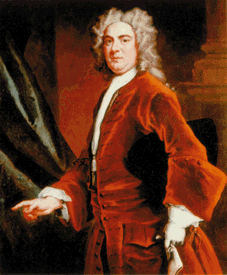
George Frideric Handel was born in Halle, Germany within a month of Johanne Sebastian Bach (1685). Handel’s father was a barber-surgeon who hated music and wanted his son to become a successful lawyer. His aunt Anna gave Handel a spinet harpsichord that they hid in Handel’s attic, wrapping each string with thin strips of cloth, so that Handel could play undetected.
When George was eight or nine, the Duke of Weissenfels heard him play the postlude to a church service and he summoned the boy’s father and told him he ought to encourage such talent. His only teacher was Friedrich Wilhelm Zachow, a most learned and imaginative musician and teacher, who instilled in his young pupil a lifelong intellectual curiosity. At age 11, Handel entered a musical contest at the Berlin court of the Elector with the famous composer Buononcini, and won.
When Handel moved to England in 1712, it was a beehive of musical activity with Italian opera ruling the day. Within the next 30 year period in England, Handel wrote about 40 operas and 26 oratorios. Handel did not play to easy audiences. If opera attenders felt bored in Handel’s day, they would often start loud conversations, and walk around freely. It was also a custom for them to play cards, and eat snacks right during the opera.
As Smith/Carlson put it, Handel “…was an inviting target for critics and for satire. He was a foreigner, and an individual no one could help noticing. He had large hands, large feet, a large appetite, and he wore a huge white wig with curls rippling over his shoulders. He spoke English rather loudly in a colourful blending of Italian, German, and French. He was temperamental, he loved freedom, and he hated restrictions which placed limits on his art…”
Charles Burney, who later sang and played under him, told how Handel once raged at him when he made a mistake, “a circumstance very terrific to a young musician.” But when Handel found that his mistake was caused by a copying error, he apologized generously (“I pec your parton – I am a very odd tog”, he said in Germanic English).
Handel also struggled with his weight, a problem about which critics mercilessly teased him. His London years were up and down, and unbelievably down at times. As Romain Rolland has tried to explain it: “He was surrounded by a crowd of bulldogs with terrible fangs, by unmusical men of letters who were likewise able to bite, by jealous colleagues, arrogant virtuosos, cannibalistic theatrical companies, fashionable cliques, feminine plots, and nationalistic leagues…Twice he was bankrupt, and once he was stricken by apoplexy amid the ruin of his company. But he always found his feet again; he never gave in.”
The situation was so bleak in 1741 that just before he wrote the Messiah, he had seriously considered going back to Germany. But instead of giving up, he turned more strongly to God. Handel composed the Messiah in 24 days without once leaving his house. During this time, his servant brought him food, and when he returned, the meal was often left uneaten. While writing the “Hallelujah Chorus”, his servant discovered him with tears in his eyes. He exclaimed, “I did think I did see all Heaven before me, and the great God Himself!!” As Newman Flower observes, “Considering the immensity of the work, and the short time involved in putting it to paper, it will remain, perhaps forever, the greatest feat in the whole history of musical composition.”
At a Messiah performance in 1759, honouring his seventy-fourth birthday, Handel responded to enthusiastic applause with these words: “Not from me – but from Heaven- comes all.” In his last years he worshipped twice every day at St. George’s Church, Hanover Square, near his home.
The Messiah was first performed in Dublin in 1742, and immediately won huge popular success. In order to have room enough for the people, a request was sent afar and wide, asking, “The favour of the Ladies not to come with hoops this day to the Music Hall in Fishamble Street. The Gentlemen are desired to come without their swords.” This is how the Dublin Newspaper reported the event: “…The best Judges allowed it to be the most finished work of Musick. Words are wanting to express the exquisite Delight it afforded to the admiring crowded Audience. The Sublime, the Grand, and the Tender, adapted to the most elevated, majestic, and moving Words, conspired to transport and charm the ravished Heart and Ear…” Handel could have made a financial killing from the Messiah, but instead he designated that all the proceeds would go to charities.
In contrast to the Irish, the English did not initially like the Messiah. This oratorio, after all, had no story. The soloists had too little to do, and the chorus too much. It was different, and the audience wasn’t ready for it. Jennens who wrote the script didn’t like it either. He commented: “Handel’s Messiah has disappointed me, being set in great haste, though he said he would be a year about it, and make it the best of all his Compositions. I shall put no more Sacred Works into his hands, thus to be abused.”
Twenty-five years later, Handel’s Messiah was so popular with the English that they almost rioted, while waiting to hear it at Westminster Abbey. People screamed, as they feared being trampled. Others fainted. Some threatened to break down the church doors.
Handel’s use of biblical words in a theatre was revolutionary, and those who opposed Handel went to great extremes to keep his oratorios from being successful. For example, certain self-righteous women gave large teas or sponsored other theatrical performances on the days when Handel’s concerts were to take place in order to rob him of an audience. As well, his enemies hired boys to tear down the advertisements about Handel’s Messiah. One opponent wrote to a newspaper asking “if the Playhouse is a fit Temple…or a Company of Players fit Ministers of God’s Word.” This person saw the Messiah as “prostituting sacred things to the perverse humour of a Set of obstinate people.”
In contrast, the famous preacher John Wesley liked Handel’s Messiah. He wrote: “In many parts, especially several of the choruses, it exceeded my expectation.” One clergy William Hanbury in 1759 said that you could hardly find an eye without tears in the whole audience.
The King was so deeply stirred with the exultant music, that when the first Hallelujah rang through the hall, he rose to his feet and remained standing until the last note of the chorus echoed through the house. From this began the custom of standing for the Hallelujah chorus. When a nobleman praised Handel as to how entertaining the Messiah was, Handel replied, “My Lord, I should be sorry if I only entertained them; I wished to make them better.”
What is it about the Messiah that makes it so popular? Many scholars point to the spaciousness in Handel’s music, the dramatic silences, and the stirring contrast. Sadie commented that the music of Handel’s, is a blend of different styles: English church music (especially the choruses), the German Passion-music tradition, the Italian melodic style. In fact, three of the choruses are arranged from Italian love-duets which Handel had written thirty years before. Handel’s genius was in bringing new and dramatic twists to the familiar and mundane.
In 1759 the almost blind Handel conducted a series of 10 concerts. After performing the Messiah, he told some friends that he had one desire –to die on Good Friday. “I want to die on Good Friday,” he said, “in the hope of rejoining the good God, my sweet Lord and Saviour, on the day of His resurrection.”
On Good Friday, he bid good-bye to his friends and dies the very next day on Holy Saturday, April 14th, 1759. Handel was fittingly buried in Poet’s Corner at Westminster Abbey. A close friend of Handel’s, James Smyth, said: “Handel died as he lived –as a good Christian, with a true sense of his duty to God and man, and in perfect charity with all the world…”
My prayer is that the words and music of Handel’s Messiah may help us experience the intimacy of Handel’s relationship with His Messiah, Jesus of Nazareth.
-previously published in the Deep Cove Crier/North Shore News
P. S. Click this Amazon link to view for free the first two chapters of our new novel Blue Sky.
“I’m afraid there’s been an accident…”
Sandy Brown and her family have just moved to Spokane, Washington where her husband, Scott, is pastoring a new church. With a fresh start, Sandy is determined to devote more time to her four children. But, within weeks of settling in their new life, the Brown family is plunged into turmoil.
Sandy receives shocking news that her children aren’t safe, which brings back haunting memories of the trauma she experienced as a girl. Then, the unthinkable happens…
A brutal attack puts Sandy on the brink of losing everything she’s loved. Her faith in God and the family she cherishes are pushed to the ultimate limit.
Is healing possible when so many loved ones are hurt? Are miracles really possible through the power of prayer? Can life return to the way it was before?
Blue Sky reveals how a mother’s most basic instinct isn’t for survival… but for family.
If you’re a fan of Karen Kingsbury, then you’ll love Blue Sky. Get your copy today on paperback or kindle.
-The sequel book Restoring Health: body, mind and spirit is available online with Amazon.com in both paperback and ebook form. Dr. JI Packer wrote the foreword, saying “I heartily commend what he has written.” The book focuses on strengthening a new generation of healthy leaders. Drawing on examples from Titus’ healthy leadership in the pirate island of Crete, it shows how we can embrace a holistically healthy life.
To receive a signed copy within North America, just etransfer at ed_hird@telus.net, giving your address. Cheques are also acceptable.
-Click to purchase the Companion Bible Study by Jan Cox (for the Battle of the Soul of Canada) in both paperback and Kindle on Amazon.com and Amazon.ca
-Click to purchase the Companion Bible Study by Jan Cox (for the Battle of the Soul of Canada) in both paperback and Kindle on Amazon.com and Amazon.ca
To purchase any of our six books in paperback or ebook on Amazon, just click on this link.


 As I carpooled Andrew each morning to school, I listened to Andrew/Professor Harold Hill sing his heart out. The Music Man has so many unforgettable songs that it’s hard to single any out. “Seventy-Six Trombones” is my favorite, but there are many more: “Gary, Indiana”, “Wells Fargo Wagon”, and “Trouble” are all remarkably gripping. Paul McCartney and the Beatles enjoyed The Music Man so much that they even recorded one of The Music Man’s hit songs “Till There Was You”.
 During the 1940’s a relatively unknown musician named Meredith Willson kept fiddling with a musical story about his boyhood in Mason City, Iowa. As a young person, Willson had started off, playing the flute in his town band, before ending up with the John Philip Sousa Band, and then the New York Philharmonic, where he served under Toscanini and Stravinsky.
 The gist of the ‘Music Man’ story, for those of you who have never seen it, is that Professor Harold Hill, a traveling salesman and con artist talks an unsuspecting Iowa small town into putting out hard, cold cash for band instruments and uniforms, as a solution to a civic frenzy drummed up by Harold Hill over the town’s new pool hall. “Remember, my friends, what a handful of trumpet players did to the famous, fabled walls of Jericho. Oh, billiard parlor walls come a-tumblin’ down.”
 town’s librarian Marian Paroo, Harold Hill himself faces the depth of his own deception, and his longing to be a real-live band leader. The romance between Harold Hill and Marian Paroo is much like an irresistible force meeting an immovable object. Like any good salesman, the one thing that Harold Hill could not resist was a challenge. Whether it was the challenge of selling band instruments to hard-nosed Iowans or romancing a confirmed bachelorette like Marian, Harold jumped in with both feet.
 Sandy Brown and her family have just moved to Spokane, Washington where her husband, Scott, is pastoring a new church. With a fresh start, Sandy is determined to devote more time to her four children. But, within weeks of settling in their new life, the Brown family is plunged into turmoil.





 When Mao Tse Tung attempted to crush the church in China, things seemed very bleak. In 1972 however, a message leaked out which simply said: “The this I know people are well”. The Communist authorities did not understand the message. But Christians all around the world knew instantly that this referred to the world’s most famous children’s hymn. Miraculously the Chinese Church, instead of being crushed, has boomed under persecution, growing from 1.5 million believers to over 100 million.
 ts under the pseudonym “Amy Lothrop”. Anna and Susan collaborated together on fifteen fiction and children’s books. Neither sister ever married, so they shared a house on Constitution Island right across from the famous West Point Military Academy.
 century book, in which the words were spoken as a comforting poem to a dying child, John Fox. Along with his tune, Bradbury added his own chorus “Yes, Jesus loves me, Yes, Jesus Loves me…” Within months, this song raced across the hearts of children throughout North America, and eventually all the continents of the world.
 Sandy Brown and her family have just moved to Spokane, Washington where her husband, Scott, is pastoring a new church. With a fresh start, Sandy is determined to devote more time to her four children. But, within weeks of settling in their new life, the Brown family is plunged into turmoil.

 When George was eight or nine, the Duke of Weissenfels heard him play the postlude to a church service and he summoned the boy’s father and told him he ought to encourage such talent. His only teacher was Friedrich Wilhelm Zachow, a most learned and imaginative musician and teacher, who instilled in his young pupil a lifelong intellectual curiosity. At age 11, Handel entered a musical contest at the Berlin court of the Elector with the famous composer Buononcini, and won.
 The situation was so bleak in 1741 that just before he wrote the Messiah, he had seriously considered going back to Germany. But instead of giving up, he turned more strongly to God. Handel composed the Messiah in 24 days without once leaving his house. During this time, his servant brought him food, and when he returned, the meal was often left uneaten. While writing the “Hallelujah Chorus”, his servant discovered him with tears in his eyes. He exclaimed, “I did think I did see all Heaven before me, and the great God Himself!!” As Newman Flower observes, “Considering the immensity of the work, and the short time involved in putting it to paper, it will remain, perhaps forever, the greatest feat in the whole history of musical composition.”
 Edhird's Blog