As New York and Washington reeled in 2001 from 9/11, the Red Cross flew into action, saving lives and bringing hope. Thank God for the Red Cross who time and again make a difference in times of great tragedy.
Great organizations invariably are birthed from great people. The Red Cross was birthed from the vision and drive of Jean Henri Dunant, who received the world’s first Nobel Peace Prize. Dunant was a Swiss businessman who ‘happened’ to be on hand to see the carnage and horror of the battle of Solferino, Italy, in 1858. Forty thousand wounded lay in their death throes under a blazing sun, in suffocating heat, helpless and unattended. Amid the anguished cries of the wounded, in an atmosphere of panic and confusion, he gathered together a team of volunteers to relieve the ‘inexpressible sufferings’ of war.
Four days after the battle, Dunant discovered five hundred wounded who had been overlooked. Dunant commented: “I succeeded in getting together a certain number of women who helped me as best as they could to aid the wounded…Food, and above all drink, had to be taken around to these men. Then their wounds could be dressed and their bleeding, muddy, vermin-covered bodies washed. All this took place in a scorching, filthy atmosphere, in the midst of vile, nauseating odors, with lamentations and cries of anguish all around!” From this courageous action by Dunant at Solferino, the International Red Cross was born.
Dunant returned to Geneva but was so preoccupied with what he has seen at Solferino that he wrote a book at his own expense in 1862 entitled ‘ A Memory of Solferino’. He wrote at length about the wounds and suffering he had seen and the shambles in which urgently necessary surgery was done. “Would it not be possible”, he pleaded, “in time of peace and quiet to form relief societies for the purpose of having care given to the wounded in wartime by zealous, devoted and thoroughly qualified volunteers?”
On August 22nd 1864, through the impetus of Dunant’s book, the historic First Geneva Convention was birthed. It provided for the alleviation of the sufferings of soldiers wounded on the battlefield. It gave neutral status to the military hospitals and medical personnel of the armies of the signing countries. As an identifying symbol, the Geneva Convention decided that these non-combatants should wear a red cross on a white field, a reversal of the colours in the Swiss national flag. In 1865 Great Britain and Canada added their names to the first ten European countries who signed the Geneva Convention treaty.
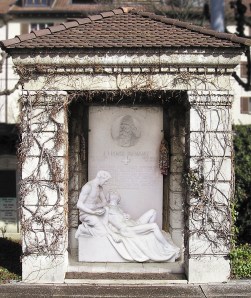
Tragically, Jean Henri Dunant subsequently suffered from business failure and deep depression. Resigning from the Red Cross in 1867, he virtually disappeared from sight. In 1895, Dunant was discovered in Heiden, Switzerland by a newspaper reporter. By then the Red Cross had become famous, and financial assistance to assist Dunant began to pour in from all around the world. In 1901 Dunant shared with Frederick Passy, a French internationalist, the first Nobel Peace Prize. From Geneva, his old home, came this message from the International Committee of the Red Cross: “There is no man who more deserves this honour, for it was you, forty years ago, who set on foot the international organization for the relief of the wounded on the battlefield. Without you, the Red Cross, the supreme humanitarian achievement of the nineteenth century would probably have never been undertaken.” Dunant gave all of the Nobel Peace Prize money away to charity, and died peacefully in his sleep on October 30th 1910.
Few people realize that Jean Henri Dunant also helped co-found the International Young Men’s Christian Association (YMCA). Dunant started very humbly by inviting a few friends to meet regularly at his house to study the Bible, to encourage each other in good works, and to bring about a spiritual awakening among young people.
Jean Henri Dunant proved that one person can make a difference. One person can change this world. Jean Henri Dunant knew Jesus Christ as his Bridge over Troubled Water. My prayer during this time of great uncertainty is that many of us may turn to the Bridge who will give us the strength to care for our neighbours for better for worse, in sickness and in health, for richer for poor.
The Rev. Dr. Ed Hird, BSW, MDiv, DMin
-previously published in the North Shore News/Deep Cove Crier
P. S. Click this Amazon link to view for free the first two chapters of our new novel Blue Sky.
“I’m afraid there’s been an accident…”
Sandy Brown and her family have just moved to Spokane, Washington where her husband, Scott, is pastoring a new church. With a fresh start, Sandy is determined to devote more time to her four children. But, within weeks of settling in their new life, the Brown family is plunged into turmoil.
Sandy receives shocking news that her children aren’t safe, which brings back haunting memories of the trauma she experienced as a girl. Then, the unthinkable happens…
A brutal attack puts Sandy on the brink of losing everything she’s loved. Her faith in God and the family she cherishes are pushed to the ultimate limit.
Is healing possible when so many loved ones are hurt? Are miracles really possible through the power of prayer? Can life return to the way it was before?
Blue Sky reveals how a mother’s most basic instinct isn’t for survival… but for family.
If you’re a fan of Karen Kingsbury, then you’ll love Blue Sky. Get your copy today on paperback or kindle.
-The sequel book Restoring Health: body, mind and spirit is available online with Amazon.com in both paperback and ebook form. Dr. JI Packer wrote the foreword, saying “I heartily commend what he has written.” The book focuses on strengthening a new generation of healthy leaders. Drawing on examples from Titus’ healthy leadership in the pirate island of Crete, it shows how we can embrace a holistically healthy life.
To receive a signed copy within North America, just etransfer at ed_hird@telus.net, giving your address. Cheques are also acceptable.
-Click to purchase the Companion Bible Study by Jan Cox (for the Battle of the Soul of Canada) in both paperback and Kindle on Amazon.com and Amazon.ca
-Click to purchase the Companion Bible Study by Jan Cox (for the Battle of the Soul of Canada) in both paperback and Kindle on Amazon.com and Amazon.ca
To purchase any of our six books in paperback or ebook on Amazon, just click on this link.
As told in the delightful movie “Mrs. Brown”, Queen Victoria had a great love for the Scottish Balmoral Castle. The Queen actually preferred Scotland to England. As a result, everything Scottish suddenly became fashionable. Tartans, reels, bagpipes and sporrans were considered cultured and refined where before they had been hidden away when friends from the South arrived.
Queen Victoria also had a preference for Scottish doctors, in particular Sir James Simpson of Edinburgh. Her appointment of James Simpson as one of her Majesty’s Physicians was symptomatic of Victoria’s innovative leadership style. Despite the prejudice many have today to all things ‘Victorian’, Queen Victoria helped open the doors for her people to modern science and medicine. Even as a child, she led the way as the first member of the Royal Family to be vaccinated for smallpox. Later as Victoria was to give birth to her fifth child, she turned to Sir James Simpson, the father of modern anesthetics, for help.
Until Queen Victoria’s bold move, there was a great controversy about the morality of whether women should use anesthetics in childbirth. Her leadership broke people free from superstition and fear. Her use of an anaesthetic was so controversial that the official Royal Press ‘The Lancet’ actually denied that she had accepted chloroform, but the lay press rushed to spread the news.
Dr. Petrie in Liverpool considered anesthesia a breach of medical ethics. It was the act of a coward, he wrote, to avoid pain, and if a woman insisted on the use of chloroform to alleviate her labour pains, she must be told that she was in no fit state to make decisions. ‘Are we going to allow the patient to tell us what to do?’ he enquired indignantly.
Sir James Simpson used careful statistics to overcome enormous prejudice among these medical colleagues. Many of Simpson’s fellow doctors feared that chloroform would increase the already high death rate following operation, increase the incidence of bleeding, paralysis, & pneumonia, and bring on ‘mania’ in the mother.
There were also clergymen who argued that anesthetics was somehow against the Bible. Simpson humorously responded that on the occasion of the first recorded operation –the removal of a rib – the Lord had caused a deep sleep to fall on Adam, proof of his approval of anesthesia! In defending anesthesia against clerical criticism, Simpson noted that some churchmen also first spoke against optical glasses, spectacles and the telescope as ‘offsprings of man’s wicked mind’, because they changed the natural appearance of things and presented them in an untrue light. Simpson was so convinced of the rightness of anesthetics that he even called his study ‘St. Anesthesia’.
In the midst of this raging battle with the medical and ecclesiastical establishments, along came Queen Victoria who settled the controversy in one decisive act. Throughout the British Empire, her loyal subjects agreed that the sensible Queen would have never taken chloroform from Dr. Simpson if it was really dangerous or against the will of the Lord. The gift of anesthetic was Queen Victoria’s present to millions of grateful mothers around the world.
The mothers of the mid-nineteenth century were looking for a doctor who would consider them seriously as people, and not as baggage. James Simpson was a man of great compassion who could not bear to see women in pain. As a young intern, Simpson ran out in horror during a cancer operation and almost switched to studying law. ‘Can nothing be done’; he pleaded, ‘to make operations less painful?’ James Simpson was a man who respected women of all classes and considered it their due to receive the best medical attention that there was to offer. Simpson didn’t just treat the Queen as an individual; he treated all women as ‘queens’. Simpson, as a man of deep faith, knew that in Christ there was neither slave nor free, male nor female, for all are one and equally valued in the Lord (Galatians 3:28).
In 1870 a contemporary of Simpson wrote, “Simpson adopted obstetrics when it was the lowest and most ignoble of our medical arts: he has left it a science numbering amongst its professors many of the most distinguished of our modern physicians.’ The average physician of the early Victorian age was armed with a jar of sticky black leeches and an obsession for putting them to work. With the discovery of chloroform, Simpson held that ‘a new light had burst upon Surgery, and a large boon conferred on mankind.’
Simpson was a natural inventor who was always eager to experiment in new directions –the fight against puerperal fever, the invention of new types of forceps, the combating of cholera, and the invention of the vacuum suction extractor to help with childbirth problems. And he invented the uterine sound instrument by accident by dropping a straight tool on the ground and bending it!
For Simpson, faith was as natural as breathing. Family prayers were at 8:15am in the dining room. Everyone had their own Bible in their hand, and the family sat around the mahogany table. Simpson always read the Lesson, but enjoyed the children leading the prayers. After the tragic death of his fifteen-year old son Jamie, Simpson had a profound encounter with Jesus Christ. ‘I am the oldest sinner and the youngest believer in this room’ he said to a gathering of enthusiastic medical missionary students. Despite his fame for discovering chloroform, Simpson said to all: “My greatest discovery is Jesus Christ as my Lord and Saviour”.
For his service to Queen Victoria, Simpson became the first Scottish doctor to knighted as a baronet. In his memoirs Lord Playfair, Professor of Chemistry, called Simpson ‘…the greatest physician of his time’. A doctor in the Indian Army said in the Bombay Courier of 22 January 1848 that “the most outstanding character that he had come across in his tour of the medical centres of Europe was ‘little Simpson of Edinburgh’ who had the four ideals for the perfect physician: the brain of an Apollo, the eye of an eagle, the heart of a lion, and the hand of a lady –nothing baffles his intellect, nothing escapes his penetrating glance…” Despite all the rejection Simpson experienced, he was eventually elected President of the Edinburgh Royal College of Physicians, as a Foreign Associate of the Academy of Medicine of Paris, and given the Swedish Royal Order of St. Olaf.
The Scottish people loved him deeply. When Simpson was dying in extreme pain, he commented: ‘When I think, it is of the words ‘Jesus only’ and really that is all that is needed, is it not?’ To honour this Christ-like man, 80,000 Scots watched his funeral procession in Edinburgh.
My prayer is that each of us may treat the mothers in our lives, as Sir James Simpson treated all women, with respect and dignity.
-Previously published in the North Shore News/Deep Cove Crier
P. S. Click this Amazon link to view for free the first two chapters of our new novel Blue Sky.
“I’m afraid there’s been an accident…”
Sandy Brown and her family have just moved to Spokane, Washington where her husband, Scott, is pastoring a new church. With a fresh start, Sandy is determined to devote more time to her four children. But, within weeks of settling in their new life, the Brown family is plunged into turmoil.
Sandy receives shocking news that her children aren’t safe, which brings back haunting memories of the trauma she experienced as a girl. Then, the unthinkable happens…
A brutal attack puts Sandy on the brink of losing everything she’s loved. Her faith in God and the family she cherishes are pushed to the ultimate limit.
Is healing possible when so many loved ones are hurt? Are miracles really possible through the power of prayer? Can life return to the way it was before?
Blue Sky reveals how a mother’s most basic instinct isn’t for survival… but for family.
If you’re a fan of Karen Kingsbury, then you’ll love Blue Sky. Get your copy today on paperback or kindle.
-The sequel book Restoring Health: body, mind and spirit is available online with Amazon.com in both paperback and ebook form. Dr. JI Packer wrote the foreword, saying “I heartily commend what he has written.” The book focuses on strengthening a new generation of healthy leaders. Drawing on examples from Titus’ healthy leadership in the pirate island of Crete, it shows how we can embrace a holistically healthy life.
To receive a signed copy within North America, just etransfer at ed_hird@telus.net, giving your address. Cheques are also acceptable.
-Click to purchase the Companion Bible Study by Jan Cox (for the Battle of the Soul of Canada) in both paperback and Kindle on Amazon.com and Amazon.ca
-Click to purchase the Companion Bible Study by Jan Cox (for the Battle of the Soul of Canada) in both paperback and Kindle on Amazon.com and Amazon.ca
To purchase any of our six books in paperback or ebook on Amazon, just click on this link.
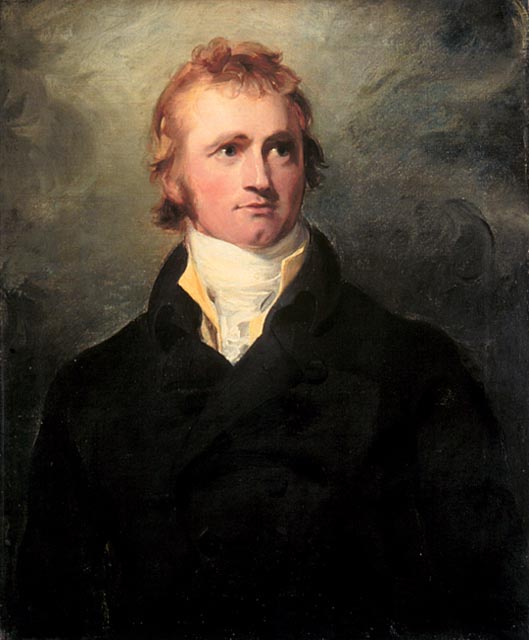
Sir Alexander Mackenzie ranks as one of the most remarkable persons of North American wilderness history and, indeed, as one of the greatest travelers of all time. His transcontinental crossing predated (and indeed inspired) the more famous Lewis and Clark American expedition by twelve years. Even Bernard De Voto, the well-known Utah-born historian said of Mackenzie, “In courage, in the faculty of command, in ability to meet the unforeseen with resources of craft and skill, in the will that cannot be overborne, he has had no superior in the history of American exploration.”
Mackenzie realized the dream of a Canada stretching from sea to sea. Beneath the lion and the unicorn supporting the coat of arms of Canada are the Latin words: A MARI USQUE AD MARE, taken from a Biblical text, ‘He shall have dominion also from sea to sea and from the river to the ends of the earth. Without Alexander Mackenzie (and his Nor’Wester friends Simon Fraser and David Thompson), Canada would have lost her entire Pacific Coast, being shut off from any access to the sea.
In 1764, Alexander Mackenzie was born in Stornoway on the Isle of Lewis, a windswept, rugged island in the Outer Hebrides off the west coast of Scotland. When Alexander was ten, his mom died. Neighbours, knowing he had memorized long passages from the Bible, predicted that Alexander would become a clergyman. Through the local pastor’s library, he learned about astronomy and the use of telescopes. At age 13, Alexander tabulated all the animal and plant life in the Hebrides, and he and his pastor tried unsuccessfully to get it published in London.
To escape the grinding poverty, his family, like thousands of other Highlanders, moved to the New World, only to become caught up in the American Revolution. His father, like Simon Fraser’s dad, joined a United Empire Loyalist regiment near New York, before escaping with his family to Montreal. In those days, every one of Montreal’s 4000 inhabitants was involved in some way with the fur trade. To young Alexander Mackenzie, the Montreal-based North West Company fur trade signified adventure, a chance to travel and explore new territory.
The heart of the fur industry was the voyageurs, who were the heroes and athletes of the 18th century. As with the NHL, a voyageur was an old man at forty and forced to retire.
A good voyageur paddled 40 strokes to the minute and could keep up that pace from dawn to dusk with brief stops. They had the reputation of being the finest canoeists in the world, who could travel anywhere. Most of the North West Company’s 1,100 voyageurs were Canadians, which in those days meant that they were Quebec-born francophones. The Northwest Company brought together a unique blend of Canadians and Scots like Simon Fraser and Alexander Mackenzie. At the height of the North West Company, it had eight times as many men in Western Canada as the more cautious Hudson’s Bay Company.
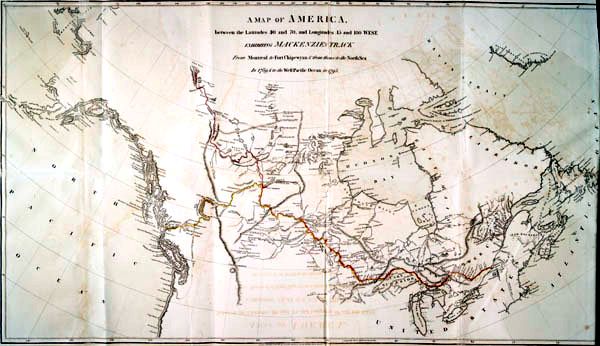
While looking for the Pacific Ocean, Mackenzie discovered and charted the largest river in Canada, the 2,500-mile long Mackenzie River . He reached the Arctic Ocean on July 14th, 1789 –the same day as the angry Paris mobs stormed the French Bastille. Mackenzie was so heartbroken over ending up at the wrong ocean that he named his river ‘The River of Disappointment.’ The Arctic explorer Sir John Franklin renamed it the Mackenzie River. Over 200 years later, there are 11 different places named after Alexander Mackenzie in BC and the North West Territories, including the Mackenzie Delta, the Mackenzie Mountains, the Mackenzie Highway, and the Sir Alexander Mackenzie Provincial Park.
Mackenzie the Scottish Bulldog was above all things resilient. Rather than give up his Pacific quest, he went to England to improve his knowledge of astronomy and geography. Upon returning to Canada, Mackenzie once again struck out towards the Pacific Ocean, known by some First Nations as the ‘Stinking Lake’. This time he traveled down the Peace River and the Parsnip River before trekking the final distance over the ‘Grease Trail’, traveled by the First Nations for countless generations. Once again his victory was bitter-sweet. Yes, he had succeeded in reaching Bella Coola on the Pacific Ocean. But like Simon Fraser, he too had discovered a route that was useless as a fur-trading canoe highway.
Following his two epic journeys to the Arctic and the Pacific Oceans, Mackenzie wrote an instant best-selling book called Voyages. His book was so popular with the English and Germans that the publisher could not print enough copies to keep up with the demand. During this time, he went back to England, became friendly with the Prince of Wales, and was knighted by his father King George IV. That winter and spring, Sir Alexander was the most popular man in London. No social event was considered a success unless he attended it.
Between his book sales and his fur trading, Mackenzie became one of Canada’s wealthiest men. He even spent a brief period in Canadian politics which ‘bored him to tears’. He also founded his own fur-trading ‘XY Company’ and tried unsuccessfully to do a corporate takeover of the failing Hudson’s Bay Company.
Few people in Canada realize that Mackenzie was an unwitting ‘accomplice’ in Napoleon’s planned re-conquest of Canada. Napoleon had Mackenzie’s book smuggled from England and translated into French. Mackenzie’s description of the Western Canada river system was so precise that Napoleon had set up a scheme during the War of 1812 to use Mackenzie’s book to invade Canada. Canada would be conquered by a surprise attack from New Orleans, up the Mississippi River. Fortunately for Canada, Napoleon ended up invading Moscow rather than Ottawa.
My prayer is that Jesus may raise up many more Alexander Mackenzies, people with bull-dog persistence, inexhaustible energy, and insatiable curiosity.
-previously published in the North Shore News/Deep Cove Crier
P. S. Click this Amazon link to view for free the first two chapters of our new novel Blue Sky.
“I’m afraid there’s been an accident…”
Sandy Brown and her family have just moved to Spokane, Washington where her husband, Scott, is pastoring a new church. With a fresh start, Sandy is determined to devote more time to her four children. But, within weeks of settling in their new life, the Brown family is plunged into turmoil.
Sandy receives shocking news that her children aren’t safe, which brings back haunting memories of the trauma she experienced as a girl. Then, the unthinkable happens…
A brutal attack puts Sandy on the brink of losing everything she’s loved. Her faith in God and the family she cherishes are pushed to the ultimate limit.
Is healing possible when so many loved ones are hurt? Are miracles really possible through the power of prayer? Can life return to the way it was before?
Blue Sky reveals how a mother’s most basic instinct isn’t for survival… but for family.
If you’re a fan of Karen Kingsbury, then you’ll love Blue Sky. Get your copy today on paperback or kindle.
-The sequel book Restoring Health: body, mind and spirit is available online with Amazon.com in both paperback and ebook form. Dr. JI Packer wrote the foreword, saying “I heartily commend what he has written.” The book focuses on strengthening a new generation of healthy leaders. Drawing on examples from Titus’ healthy leadership in the pirate island of Crete, it shows how we can embrace a holistically healthy life.
To receive a signed copy within North America, just etransfer at ed_hird@telus.net, giving your address. Cheques are also acceptable.
-Click to purchase the Companion Bible Study by Jan Cox (for the Battle of the Soul of Canada) in both paperback and Kindle on Amazon.com and Amazon.ca
-Click to purchase the Companion Bible Study by Jan Cox (for the Battle of the Soul of Canada) in both paperback and Kindle on Amazon.com and Amazon.ca
To purchase any of our six books in paperback or ebook on Amazon, just click on this link.
How do you feel about the world-famous Mr. Van Rijn’s paintings?
Rembrandt Harmenszoon van Rijn is one of the few men or women in history recognizable from just his first name. Others are Napoleon, Michaelangelo, and Cleopatra. Today Rembrandt is known to hundreds of millions of people in all parts of the world. Many art experts see him as the greatest of all Dutch painters, indeed as one of the greatest artists who ever lived.
By his subtle contrasts of light and dark, Rembrandt caused the people he painted to seem alive. Theatre people often call Rembrandt the Shakespeare of painting –for his capacity to probe personality, his compassion for each person he depicts, and his feeling for grasping the dramatic moment and displaying it with moving effect.
On July 15, 1606, Rembrandt was born as the ninth child of a well-to-do couple in Leiden, Holland. While in his early 20’s, he developed an overnight celebrity status somewhat akin to the rise of the Beatles. This brief time of prosperity and popularity,however, was followed by much sorrow and rejection. Championed as the Netherlands alternative to Peter Paul Ruben in Belgium, Rembrandt became very wealthy and over-extended. Taking out an enormous mortgage on a beautiful house, he was accused of wasting his inheritance and living an indulgent lifestyle.
Rembrandt responded by painting himself with his wife Saskia, as a Prodigal Son/wealthy playboy with his latest female conquest. As a young person, Rembrandt had all the attributes of the Prodigal Son: brash, overconfident, spendthrift, hedonistic, and very arrogant. Money dominated and crippled much of his life. He earned a lot; he consumed a lot; he wasted a lot. Sadly, much of his energy and talent was depleted in protracted court cases about financial disputes and bankruptcy affairs.
Rembrandt’s best-known painting, the so-called Night Watch, was both his greatest success artistically and his worst failure relationally. While painting the Night Watch, he made many people angry who would no longer buy his paintings. The soldiers, who paid to be in the picture, all wanted to be front and centre. Instead of painting a typical group portrait, Rembrandt created a masterpiece where some soldiers were prominent and others were hardly visible.
Around that time, his wealthy heiress wife Saskia, whom he deeply loved and admired, died, leaving Rembrandt to care for his nine-month-old son, Titus. Rembrandt had already lost his son Rumbartus in 1635, his first daughter Cornelia in 1638, and his second daughter Cornelia in 1640. Ten days before Saskia died, she changed her will so that Rembrandt would never be able to remarry without being disinherited.
After Saskia’s death, things worsened. Rembrandt became involved in a very unhappy relationship with his housekeeper, Geertje Dircx. When he refused to marry her, she took Rembrandt to court and won a settlement. In response, Rembrandt and Geertje’s own brother had Geertje confined to an insane asylum for the next five years.
Unable to marry, he then became involved in another scandal with his new housekeeper, Hendrickje Stoffels, whose pregnancy scared off even more of his Dutch customers. His financial problems became so severe that in 1656 Rembrandt was declared insolvent. All of Rembrandt’s possessions, his large collection of artwork, and his house in Amsterdam were sold in three auctions during 1657 and 1658. In 1663, Hendrickje, who has been described as ‘one of the noblest souls to serve a troubled genius’, died. Five years later, Rembrandt’s hopes were again raised and then dashed when he celebrated his son Titus’ wedding, only to see him buried that same year. Only his daughter Cornelia, his daughter-in-law Magdalene van Loo, and his granddaughter Titia survived him.
Rembrandt became more and more fascinated with painting ‘old age’, as he felt that it often revealed the most about human nature. Bludgeoned by tragedies that might have crushed a weaker man, Rembrandt achieved a new depth to his art. Rembrandt was close to his death when he painted his Prodigal Son, seen by many as the last will and testament of a turbulent and troubled life.
In his Prodigal Son painting, the essence of love was concentrated in the hands. When the famous author Henri Nouwen saw the Prodigal Son painting in the St Petersburg Hermitage, he was struck by the sight of “a man in a great red cloak tenderly touching the shoulders of a disheveled boy kneeling before him. I could not take my eyes away. I felt drawn by the intimacy between the two figures, the warm red of the man’s cloak, the golden yellow of the boy’s tunic, and the mysterious light engulfing them both. But, most of all, it was the hands –the old man’s hands–as they touched the boy’s shoulders that reached me in a place where I had never been reached before. …” Nouwen realized that Rembrandt must have shed many tears and died many deaths before he could have so exquisitely painted the father’s heart for his lost son. Rembrandt had once again painted himself as the Prodigal Son, but this time coming back home to his Father.
Instead of the rich apparel with which the youthful Rembrandt painted himself in younger days, he now wore only a tattered undertunic covering his wasted body. The Prodigal Son, like Rembrandt, returned to the Father with nothing: his money, his health, his honour, his self-respect, his reputation…everything had been squandered (Luke 15). Yet the good news of Rembrandt’s painting was that the Father still loved him and welcomed him home unconditionally.
Rembrandt indeed saw himself as the Prodigal Painter coming home to the true Father. Rembrandt knew that he had wandered a long way, but that it was never too late to return home. My prayer is that many of us may have the courage, like Rembrandt, to turn our hearts towards Home, where love and forgiveness are waiting.
The Rev. Dr. Ed Hird, BSW, MDiv, DMin
-author of the award-winning Battle for the Soul of Canada
-previously published in the North Shore News/Deep Cove Crier
P. S. Click this Amazon link to view for free the first two chapters of our new novel Blue Sky.
“I’m afraid there’s been an accident…”
Sandy Brown and her family have just moved to Spokane, Washington where her husband, Scott, is pastoring a new church. With a fresh start, Sandy is determined to devote more time to her four children. But, within weeks of settling in their new life, the Brown family is plunged into turmoil.
Sandy receives shocking news that her children aren’t safe, which brings back haunting memories of the trauma she experienced as a girl. Then, the unthinkable happens…
A brutal attack puts Sandy on the brink of losing everything she’s loved. Her faith in God and the family she cherishes are pushed to the ultimate limit.
Is healing possible when so many loved ones are hurt? Are miracles really possible through the power of prayer? Can life return to the way it was before?
Blue Sky reveals how a mother’s most basic instinct isn’t for survival… but for family.
If you’re a fan of Karen Kingsbury, then you’ll love Blue Sky. Get your copy today on paperback or kindle.
-The sequel book Restoring Health: body, mind and spirit is available online with Amazon.com in both paperback and ebook form. Dr. JI Packer wrote the foreword, saying “I heartily commend what he has written.” The book focuses on strengthening a new generation of healthy leaders. Drawing on examples from Titus’ healthy leadership in the pirate island of Crete, it shows how we can embrace a holistically healthy life.
-Click to purchase the Companion Bible Study by Jan Cox (for the Battle of the Soul of Canada) in both paperback and Kindle on Amazon.com and Amazon.ca
-Click to purchase the Companion Bible Study by Jan Cox (for the Battle of the Soul of Canada) in both paperback and Kindle on Amazon.com and Amazon.ca
To purchase any of our six books in paperback or ebook on Amazon, just click on this link.

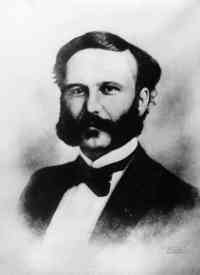
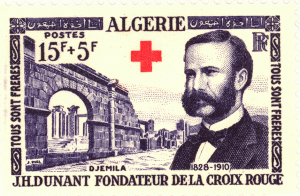 Dunant returned to Geneva but was so preoccupied with what he has seen at Solferino that he wrote a book at his own expense in 1862 entitled ‘ A Memory of Solferino’. He wrote at length about the wounds and suffering he had seen and the shambles in which urgently necessary surgery was done. “Would it not be possible”, he pleaded, “in time of peace and quiet to form relief societies for the purpose of having care given to the wounded in wartime by zealous, devoted and thoroughly qualified volunteers?”
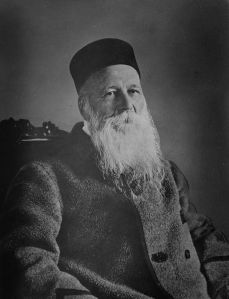 Tragically, Jean Henri Dunant subsequently suffered from business failure and deep depression. Resigning from the Red Cross in 1867, he virtually disappeared from sight. In 1895, Dunant was discovered in Heiden, Switzerland by a newspaper reporter. By then the Red Cross had become famous, and financial assistance to assist Dunant began to pour in from all around the world. In 1901 Dunant shared with Frederick Passy, a French internationalist, the first Nobel Peace Prize. From Geneva, his old home, came this message from the International Committee of the Red Cross: “There is no man who more deserves this honour, for it was you, forty years ago, who set on foot the international organization for the relief of the wounded on the battlefield. Without you, the Red Cross, the supreme humanitarian achievement of the nineteenth century would probably have never been undertaken.” Dunant gave all of the Nobel Peace Prize money away to charity, and died peacefully in his sleep on October 30th 1910.
 among young people.
 Sandy Brown and her family have just moved to Spokane, Washington where her husband, Scott, is pastoring a new church. With a fresh start, Sandy is determined to devote more time to her four children. But, within weeks of settling in their new life, the Brown family is plunged into turmoil.






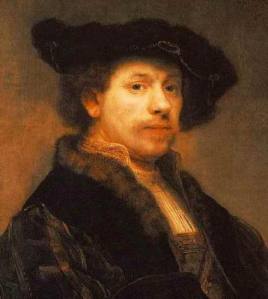
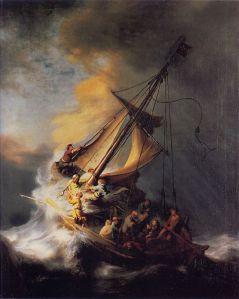 ninth child of a well-to-do couple in Leiden, Holland. While in his early 20’s, he developed an overnight celebrity status somewhat akin to the rise of the Beatles. This brief time of prosperity and popularity,however, was followed by much sorrow and rejection. Championed as the Netherlands alternative to Peter Paul Ruben in Belgium, Rembrandt became very wealthy and over-extended. Taking out an enormous mortgage on a beautiful house, he was accused of wasting his inheritance and living an indulgent lifestyle.
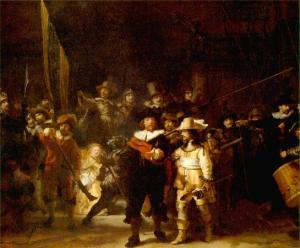 called Night Watch, was both his greatest success artistically and his worst failure relationally. While painting the Night Watch, he made many people angry who would no longer buy his paintings. The soldiers, who paid to be in the picture, all wanted to be front and centre. Instead of painting a typical group portrait, Rembrandt created a masterpiece where some soldiers were prominent and others were hardly visible.
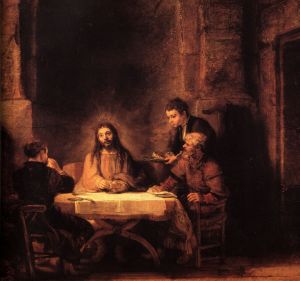 another scandal with his new housekeeper, Hendrickje Stoffels, whose pregnancy scared off even more of his Dutch customers. His financial problems became so severe that in 1656 Rembrandt was declared insolvent. All of Rembrandt’s possessions, his large collection of artwork, and his house in Amsterdam were sold in three auctions during 1657 and 1658. In 1663, Hendrickje, who has been described as ‘one of the noblest souls to serve a troubled genius’, died. Five years later, Rembrandt’s hopes were again raised and then dashed when he celebrated his son Titus’ wedding, only to see him buried that same year. Only his daughter Cornelia, his daughter-in-law Magdalene van Loo, and his granddaughter Titia survived him.
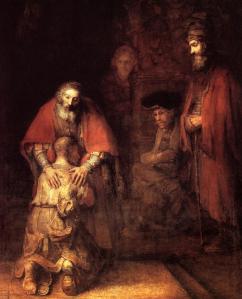 love was concentrated in the hands. When the famous author Henri Nouwen saw the Prodigal Son painting in the St Petersburg Hermitage, he was struck by the sight of “a man in a great red cloak tenderly touching the shoulders of a disheveled boy kneeling before him. I could not take my eyes away. I felt drawn by the intimacy between the two figures, the warm red of the man’s cloak, the golden yellow of the boy’s tunic, and the mysterious light engulfing them both. But, most of all, it was the hands –the old man’s hands–as they touched the boy’s shoulders that reached me in a place where I had never been reached before. …” Nouwen realized that Rembrandt must have shed many tears and died many deaths before he could have so exquisitely painted the father’s heart for his lost son. Rembrandt had once again painted himself as the Prodigal Son, but this time coming back home to his Father.
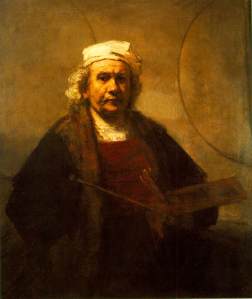 Prodigal Painter coming home to the true Father. Rembrandt knew that he had wandered a long way, but that it was never too late to return home. My prayer is that many of us may have the courage, like Rembrandt, to turn our hearts towards Home, where love and forgiveness are waiting.
 Edhird's Blog