Edhird's Blog

Restoring Health: body, mind and spirit


Leave a comment

Can A Nation Be Born in A Day? (Isaiah 66:1-9)

Nov 30th 2025

By Rev. Dr. Ed HIrd

Why do we light five candles at Advent? It is about Jesus the Light of the world who breaks into our darkness. God’s first action in Genesis 1:3 was to say: “Let there be light. 1 John 1:5 says: “God is light, and in him is no darkness at all”. In John 8:12 and 9:5, Jesus said: “I am the light of the world. Whoever follows me will not walk in darkness, but will have the light of life.” That’s what Advent is all about.

Despite what Carl Jung suggested, God does have not a dark side, ala Luke Skywalker in Star War.  John 1:5 reminds us that “Jesus the light shines in the darkness, and the darkness has not overcome it.”

Isaiah 66, being the last chapter, is very similar to the last book of Revelation. Many people are not aware how eschatological and apocalyptic that Advent really is.  Advent is not just about remembering Jesus first coming in a manger, but also preparing for his second coming.  Both Advents are about light breaking into our darkness. As Isaiah 9:2 puts it, “the people walking in darkness have seen a great light; on those living in the land of deep darkness, a light has dawned.” Isaiah 60:1-2 says: “Arise, shine for your light has come, and the glory of the Lord rises upon you, even in the midst of gross darkness. Have you noticed that the darkness these days is getting much grosser?

2 Corinthians 11:14 says that Satan comes as an angel of light offering counterfeit enlightenment.  Jesus brings the true enlightenment in a very dark and lost world.  As Isaiah 42:6 and 49:6 tell us, Jesus the Jewish messiah is also the Light to all the Gentile Nations. You don’t need to do yoga to get Jesus’ enlightenment. What you need to do, as Bishop Peter often reminds us, is to surrender our wills. 

My late mother Lorna, who used to sit in this second pew, suffered during the winter from SADS, Seasonal Affective Disorder.  Is anyone else affected by the lack of sunlight in the winter? Mom was drawn to the Light in the midst of darkness. That is why we flew as a family to Hawaii in December 1971, right before my Jesus movement conversion.  Hawaii was indeed a Paradise of Amazing light. The only problem is that I brought my personal darkness with me.  When I was born again in a day, I was filled with heavenly light that has never left me in the past 53 years. One Day at a Time. Jesus in Matthew 5:14 calls us the Light of the World. In John 12:36, Jesus said: “Believe in the light while you have the light, so that you may become children of light.” Paul in Ephesians 5:8-9 and 1 Thessalonians 5:5 similarly calls us Children of Light.

One thing that brightened up my mother during the winter was looking at vibrant, colourful paintings. My mother was an amateur painter who took lessons from Bob Hickling, whose arms were paralyzed from polio so he painted with his mouth. My mom loved not only Van Gogh but also Monet, the French father of Impressionism which focused on light, form, and nature. Monet did not use chiaroscuro like Rembrandt, who painted sharp almost three-dimensional contrasts between light and dark. Instead, Monet used extra colour to create effects of light, shadow and depth, giving momentary impressions (hence impressionism). Monet painted the impression of brilliant light by putting contrasting vibrant colors, such as blue and orange, right next to each other. Instead of creating shadows with dark paint, he would create blue and green shadows through which light broke through.

My mother’s love for paintings is now rubbing off on me at age 71. How many of you have or had parents who loved paintings? How many of you have picked up your parent’s love of paintings? How many of you love to actually paint? Both Monet & Van Gogh loved painting sunflowers. (Show painting) His revolutionary method of painting in the outdoors was called plein air. Monet famously said, “To see, we must forget the name of the things we are looking at.”

Some see Monet as the world’s most famous painter. Has any one been to seen Monet’s famous Japanese-inspired garden and pond in Giverny, France? It’s visited by over one half million people annually.  Born in 1840, Claude Monet was passionate about light in his flower paintings. In the early 1890s, he painted Rouen Cathedral first in morning light, then midday light, and then gray weather, showing his deep fascination with the effects of light. What however would light be without colour? Monet said:  • Color is my day-long obsession, joy and torment.

Monet struggled with depression, poverty, illness, and discouragement. He became so despondent over his lack of sales that in 1868, he attempted suicide by trying to drown himself in the Seine River. Troubled by cataracts, Monet sometimes was so frustrated with his paintings that he destroyed as many as 500 of his own 2500 paintings. He would burn, cut or kick them into oblivion, ripping them to shreds. He once wrote that “age has worn me out. My life has been nothing but a failure, and all that’s left for me to do is to destroy my paintings before I disappear.”

Yet, one of his paintings has since sold for 110 million dollars.

Hitler as a failed painter stole many of Monet’s paintings from Jewish art collectors. In October 2024, after 86 years, the FBI returned Monet’s Bord de Mer painting to the granddaughters of a Jewish couple who fled Vienna in 1938. His fellow impressionists Degas, Renoir, and Cézanne were all antisemitic. Claude Monet however rejected French antisemitism by supporting Alfred Dreyfus, a Jewish army officer unjustly accused of treason and imprisoned.

That is why the nation of Israel loves Monet. The Israel Museum in Jerusalem houses several of his paintings. The Tel Aviv Museum of Art holds Monet’s Water Lily Pond. There are around 130,000 painters in Israel. The most famous Israeli painter was Marc Chagall.

Monet had a God-given ability to see light and colour, helping others to see God’s creation in a whole new way. Similarly, through Advent, Jesus removed our spiritual cataracts so that we can see with Kingdom eyes spiritual light and colour, helping others to see God’s new creation in a whole new way. As Hank Williams sang, ‘I saw the Light. I saw the Light. No more in darkness. No more in night.’ That is what Advent is all about.

In Isaiah 66 1, the Lord says:

Heaven is my throne,

    and the earth is my footstool.

Where is the house you will build for me?

Where will my resting place be?

God is the Father of lights. As James 1:17 puts it, “Every good and perfect gift is from above, coming down from the Father of the heavenly lights, who does not change like shifting shadows.” The house that God dwells in is full of unimaginable heavenly light.  Do I hear an Amen?

2 Has not my hand made all these things,

    and so they came into being?”

declares the Lord.

“These are the ones I look on with favor:

    those who are humble and contrite in spirit,

and who tremble at my word.

Vs 2 tells us that in order to dwell in God’s heavenly house, we need to humble ourselves with contrition and tremble at His Word?  How many of you tremble at God’s Word?  It is so easy to become blasé and distracted. God wants us to repent of all lukewarmness to His Word and recover our first love for Jesus and the Bible.

3 But whoever sacrifices a bull

    is like one who kills a person,

and whoever offers a lamb

    is like one who breaks a dog’s neck;

whoever makes a grain offering

    is like one who presents pig’s blood,

and whoever burns memorial incense

is like one who worships an idol.

They have chosen their own ways,

    and they delight in their abominations;

Vs 2 & 3 tells us that choosing our own ways, delighting in abominations, it never ends well.  As E Stanley Jones said in his book The Way, there are essentially two choices in life: God’s way or not the way.  Not the way, doing it our own way, always ends in darkness.  Idolatry is all about choosing the darkness. Revival is about choosing to turn from darkness back to the true Advent Light, Jesus. 

4 so I also will choose harsh treatment for them

    and will bring on them what they dread.

For when I called, no one answered,

    when I spoke, no one listened.

They did evil in my sight

and chose what displeases me.”

Revival is about realizing that our way doesn’t work.  Vs. 4 tells us that idols don’t answer or listen when we call.  Doing what displeases Jesus is always a lose-lose.  IF we want Advent revival, we must choose what pleases Jesus, the Light of the World. 

5 Hear the word of the Lord,

    you who tremble at his word:

“Your own people who hate you,

    and exclude you because of my name, have said,

‘Let the Lord be glorified,

    that we may see your joy!’

Yet they will be put to shame.

Vs 5 reminds us that when you choose the Advent Light, not everyone will be happy about this.  They may hate you and exclude you because of your love for Jesus the Light of Advent. 

6 Hear that uproar from the city,

    hear that noise from the temple!

It is the sound of the Lord

repaying his enemies all they deserve.

Vs. 6 tells us that there is no escaping the sound of Light that God releases into our life.  We reap as we sow. As the Creeds remind us, Jesus the Lord of Advent Light will indeed return to judge the living and the dead.

7 “Before she goes into labor,

    she gives birth;

before the pains come upon her,

she delivers a son.

Vs. 7 teaches that breakthrough always require labour pains.  Advent is a season of labour pains, as we are preparing for the Light of the Christ Child. How many of you as mothers had a completely pain-free delivery?  How many mothers have ever suffered or worried about your children post-birth?  How old does one’s children need to before you stop being tempted to worry about them?  Let me ask you: What is God trying to birth in your life, your family, your work?  What is God birthing right now in Israel and secondarily in our nation of Canada?

October 7th, the worst massacre of Jews since the Holocaust, has changed Israel forever.  The electric fence failed them. Many Israelis are turning to the Lord in a way that they never did before.  Has anyone noticed that technology, no matter how impressive, is not our saviour. It will let us down.

Vs 8 says: Who has ever heard of such things?

    Who has ever seen things like this?

Can a country be born in a day

    or a nation be brought forth in a moment?

Yet no sooner is Zion in labor

than she gives birth to her children.

Advent represents desert and waiting times for the Light of Christ.  Israel, since 1948, has turned a barren desert into one of the greatest fruit-exporting country on earth, just like the Old Testament prophesied. They export over 800 million dollars of fruit per year, especially dates, figs, pineapples, avocados, oranges, and mangoes. They have also planted 250 million trees throughout Israel.

God has kept his covenant promises to the ancient Jewish people.  Isaiah 11: 12 says, “He will raise a banner for the nations and gather the exiles of Israel; He will assemble the scattered people of Judah from the four quarters of the earth.

In Ezekiel 11:17, “the Sovereign Lord says: I will gather you from the nations and bring you back from the countries where you have been scattered, and I will give you back the land of Israel again.’”

Prophetically speaking, the rebirth of the Nation of Israel on May 14th 1948 is “The Time Clock of the Nations.” Many are realizing that this single miracle of Israel, “born in one day,” is the biggest and most prominent sign of the coming return of the Messiah to Jerusalem!

 British Bible teacher Lance Lambert says: “No other nation in the history of mankind has twice been uprooted from its land, scattered to the ends of the earth and then brought back again to that same territory.  Israel has twice lost its statehood and its national sovereignty, twice had its capital destroyed, its towns and cities razed to the ground, its people deported and dispersed, and then twice had it all restored again. No other nation or ethnic group has been scattered to the four corners of the earth, and yet survived as an easily identifiable and recognizable group.” This is a miracle.

The first exile took place under Babylonian rule in 587 BC. As for the second great exile, Roman forces serving under the Roman commander Titus destroyed and dismantled Jerusalem in August AD 70, exactly as Jesus had prophesied 37 years earlier. The Romans killed 600,000 Jewish residents and deported 300,000 more to locations scattered around the Empire. Sixty-five years later in 135 AD, the forces of Roman Emperor Hadrian crushed the last Jewish uprising, led by Bar Kokhba at Masada. 

Hadrian’s hatred for the Jews burned so brightly that he changed Jerusalem’s name to his own name and declared it “a Roman city forever which no Jew could enter under pain of death.” He built a temple to Jupiter on the site of the former Jewish Temple. Then he renamed the land “Palestine.”

In Vs 9, God says: Do I bring to the moment of birth and not give delivery? Do I close up the womb when I bring to delivery?” says your God.

Many Canadians are wondering these days: Is there hope for Canada? Things seem pretty dark. Will Canada survive against all odds? Can a nation like Canada be born again in day? Will a revival of divine light sweep through our dark land?  The existence of Israel, just like the existence of Canada, is miraculous. Humanly speaking, neither Israel nor Canada should have come into existence, or continued to exist.  Yet God keeps breaking his advent light into both Canada and Israel.  I don’t believe that God has given up on either Canada or Israel.

I see both Canada and Israel as like turkeys.  Wild turkeys are amazingly good fliers, considering their substantial bodies. They reach treetops in seconds to escape predators. Once airborne, they can fly at 55 miles per hour! Domesticated turkeys, however, have lost this ability. The question for us Canadians is ‘will we be a wild turkey or a tame turkey?’  Can Canada learn, by waiting on the Lord,  to fly like an eagle or at least like a wild turkey? How many of us here today want to be a wild turkey for Jesus?  John A Macdonald our first prime minister was a wild turkey for Jesus. 

John A Macdonald was a Moses figure who saw the promised land from sea to sea, that Canada might be born in a day.

Every time we spent a ten-dollar bill from 1971 to 2018, we came face-to-face with Sir John A Macdonald.  In 2018, starting with Victoria, eight of Macdonald’s ten statues across Canada have been vandalized and removed by ‘cancel culture, though the one in Ontario’s Queen’s Park was recently returned.  In the name of ‘tolerance’, inclusiveness, and diversity, John A.’ statues have been ‘beheaded’, excluded, and defamed. Three public schools have recently removed his name. Many youth have never even heard his name. 

Could you imagine Americans removing their 100+ Washington statues and renaming the State and District/DC of Washington?  Do we really want, in the words of a former Prime Minister, to be a post-national state with no core identity? Canada’s actual history is now at stake.

Though a complicated man with many flaws, Macdonald was the most famous of all Canadian leaders. Some of his tragic mistakes were the hanging of Louis Riel, the creation of native residential schools, and the 1885 Electoral Franchise Act which removed the right of Chinese people to vote. We must honestly admit John A.’s unfortunate weaknesses while not losing sight of his great accomplishments.

Born in Glasgow, Scotland in 1815, he moved at age 15 to the land of his dreams with his family. Like Don Quixote, John A. dreamed the impossible dream that miraculously came true, a nation from sea to sea (Psalm 72:8).  Against all the odds, Canada was birthed on July 1st 1867 and still exists, despite cries from some Quebecers and Albertans to separate. God keep pouring out his light on Canada, far more than we deserve or imagine.

Without Sir John A. Macdonald, BC would have been lost forever from joining Canada. BC would have become the 51st state, physically connecting to Alaska.  Many American leaders publicly stated that it was BC and indeed Canada’s manifest destiny to join the United States.  The vast majority of early BC settlers were Americans drawn from San Francisco by the 1858 Gold Rush. They certainly were not Eastern Canadians from Ontario.  John A’s promise of the Canadian Pacific Railway won over the hearts and mind of ambivalent BCers. The American miners also liked the law and order of Governor James Douglas and Judge Matthew Begbie, protecting them from being robbed like in the American wild west.

After the tragic death of his invalid first wife Isabella, John A. married Agnes Bernard.  They met on Dec 8th 1866 while both were sauntering down Bond Street in London. By Christmas, they were engaged.  They wed six weeks later, at St. George’s Anglican Church in Hanover Square. This was definitely light breaking into John A’ painfully dark family situation.

Agnes spoke French better than her husband, a real asset in bilingual Canada.  He now had a loving wife who worked tirelessly on his behalf –inviting Conservative MPS to his place for dinner rather than get drunk with them in the bars.

As a devout Anglican Christian, Agnes had a significant impact on her husband’s life, causing him to stop drinking and start attending church.  John A was deeply impressed by the Beatitudes, and made a practice of reading his bible every night before bedtime.  Another MP called Agnes ‘Macdonald’s good angel.’ Biographer E.B. Biggar suggests that Agnes may have extended his life by two decades, saving both his liver and his life. This again was Advent Light breaking into alcoholic darkness.

In 1888, during six weeks of Hunter-Crossley revival meetings in Ottawa, Prime Minister Macdonald had a deep encounter with Jesus Christ.  John Hunter and Hugh Crossley were the Canadian Billy Grahams, leading two hundred and fifty thousand Canadians and Americans to Christ.  As one journalist put it, “When the well-known form of the Honorable Prime Minister arose in the centre of the church, many strong men bowed their heads and wept for joy.” After dining at the prime minister’s home several days later, Rev John Hunter confirmed that “Sir John is a changed man.” Wherever Hunter and Crossley went in Canada, the bars became empty and the churches became full.  How many Canadians know this amazing story of Divine light breaking into a politician’s soul? It is not easy for politicians to be saved with all the pressures they are under.

May the example of John A. and Agnes give us the will to love, live and forgive as a nation.  May Albertans and Quebecers realize that we all truly need each other in this grand impossible dream of Canada.  May God keep our land glorious and free, in Jesus’ name.

And finally, can we as God’s people, and you personally be born, be born again, in a day?  Can Advent light break into our lives this very day?  Can people who come from difficult family backgrounds really change?  Can people who struggle with alcohol or drug addiction really be born in a day?  Is change really possible?  Can Jesus really change your heart, your family, one day at a time? 

How many of you today are willing to change, to embrace God’s marvellous light, to be born again, to surrender your will to Jesus one day at a time? How many are willing to say no to darkness and yes to Jesus our Advent Light? How many want to walk in the Advent light as Jesus is in the light?  Let us pray. 


Leave a comment

BC Christian Ashram videos

Do you ever struggle to forgive people? You are invited to watch the powerful messages given at the July 18th Friday BC Christian Ashram Retreat: As We Forgive Others

BC Christian Ashram Retreat July 19th: As We Forgive Others

Matt Henson, Mark Hird, and Holly Roddam spoke on how forgiveness sets us free.  Matt, who is the Executive Director for the UCAI, shared how the Christian Ashram experience could be a spark of revival both to the Church and to the world.  Imagine a forgiveness revival transforming families and nations. To learn more about the BC Christian Ashram and the United Christian Ashram International, click on http://www.christianashram.com and  https://christianashram.org 


1 Comment

70th Birthday Party

My 70th birthday party at White Spot with my three sons James Hird, Mark Hird, Andrew Hird, Alicia Kathleen Hird, Ruthie Esther Hird, my wife Janice P Hird, four dear grandchildren


Leave a comment

Prayerfully Seeking the Lord at Lent

March 19th 2023

Part Three of the Lenten Proverbs series The Lenten Discipline of prayerfully seeking the Lord (Proverbs 28:1-28)

Jesus is Lord! How’s your prayer life these days? How many of you want to pursue the Lord Jesus more passionately this Lent? God is restoring a deeper intimacy and giving us an undivided heart. One of my heroes E Stanley Jones memorably said: “prayer gathers up our highest, most sacred, & our most real moments.” “Jesus is Lord!” as mentioned in 1 Corinthians 12:3, Romans 10:9, and Philippians 2:11 is the earliest creed of the early church, and also the motto of the Christian Ashram retreat movement which Janice & I help lead. Jesus is called Lord over 700 times in the New Testament. Every knee shall bow and every tongue confess…

How many of you want, as Revelation 2:4 puts it, to return to your first love? What was it like for you when you first fell in love with the Lord Jesus? The Asbury outpouring, the Jesus Revolution movie, and the Chosen TV series are all signs to me of God restoring our first love for Jesus. God is clearly on the move. Lord Jesus, don’t pass us by. We are so hungry for your presence, Lord Jesus

Many of are believing that the dam of spiritual resistance is about to break in Canada. Do I hear an amen? Jesus is Lord of Canada!

One of Bishop Peter’s heroes Bishop JC Ryle of Liverpool said.  “A man’s state before God may always be measured by his prayers. Whenever we begin to feel careless about our private prayers there is something very wrong in the condition of our souls. There are breakers ahead. We are in imminent danger of a shipwreck.”

I believe that it is time to seek the Lord Jesus. Do I hear an Amen? Lordship is about surrender, obedience, and revival

As 2nd Chronicles 7:14 puts it, if my people who are called by my name will humble themselves and pray and seek my face and turn from their wicked ways, then I will hear from heaven and forgive their sin and heal their land.

As we are seeking his face and turning in repentance from our wicked ways, God is breaking shame and despair off our lives. 

Nicky Gumbel, founder of the Alpha Course, recently said: “When we pray, God hears more than we say, answers more than we ask, gives more than we imagine – in his own time and in his own way.”

Jeremiah 29:13 says “You will seek me and find me when you seek me with all your heart.” Mendelsohn does a wonderful version of Isaiah 55:5-6. ‘Seek the Lord while he may be found. Call on him while he is near’.  God wants to be found. He is not hiding from us. He is more willing to be found than we are willing to seek him. In times of outpouring, God is somehow easier to be found. Lent is about our heart seeking God’s face, his presence.  As Psalm 63:1 puts it, earnestly I seek you, my soul thirsts for you in a dry an weary land where there is no water. 

The good news is that God chose us before we chose Him, he loved us before we loved him, and he sought us before we sought him. God is the hound of heaven relentlessly pursuing and seeking us. How many of you have ever heard the Bethel song about God’s reckless love:”

Oh, the overwhelming, never-ending, reckless love of God

Oh, it chases me down, fights ’til I’m found, leaves the 99

And I couldn’t earn it

I don’t deserve it, still You give yourself away.

You are never too far from the Lord Jesus. All you have is turn back, changing direction, and He is right there embracing you. Lenten repentance is all about turning back to the God & Father of Abraham, Isaac, & Jacob, revealed in Jesus Christ. The highest thing we can say about God the Father is that he’s Christ-like.

As Matthew 28:20 reminds us, the Lord Jesus is always with us. As believers, he indwells us. But we so easily get distracted from an awareness of this reality. That is why Psalm 105:4 says to seek his presence continually. 

I will never forget visiting the Psychiatric ward in Abbotsford in 1982. A man told me that he never prayed to God, but only to the Virgin Mary. I sensed that he was really talking about his parents, not God. I asked if Mary was like his own mom. “Yes, exactly”, he said. “I can tell her anything.” When I asked if God was like his father, he totally agreed: “You just can’t talk to either of them.” I said to him that his issue wasn’t with God, and that if he would work on his father wound, he would get a breakthrough with God. That next week, a psychiatrist phoned me to tell me that this man had a breakthrough because of this insight.

I’ll never forget ministering in Honduras in 1994 where the brand new Anglicans wanted to know what I thought about Mary. I said that I agreed with her when she said at the Cana wedding ‘Whatever Jesus says, do it’. Because Mary is huge in Latin America, they later asked me again what I thought about Mary. I said that I agreed with what the book of Ephesians said about Mary. Nothing. The female in Ephesians is not Mary but rather the bride of Christ the Church.

I will also never forget in 2010 visiting Canada’s oldest spiritual pilgrimage near Quebec City. This church was highly focused on St Anne de Beaupre, who they claim to be mother Mary’s mother.  I wonder: Why do some people seem to give more attention to St Anne or to Mother Mary than to her son? Some people have the idea that Jesus is too busy or not accessible almost like a medieval King. The best one might hope for us to slip the King a second hand message through a member of the royal family or nobility. How many of us have ever had a one-to-one personal sit down day with modern-day Kings like President Biden or Putin or JinPing? They are just too busy and detached. But Jesus is an approachable, foot-washing servant king.

If Mother Mary was here today, she would say to us: “Seek my son Jesus directly.” Jesus is Lord! As 1 Timothy 2:5 puts it, Jesus is the only mediator between God and humanity. There is only one without sin. Romans 3:23 refers to everyone except Jesus. 

Mary, being mortal, died just like the rest of us. I will never talk to Mary until I get to heaven, because the Bible doesn’t want us to talk to the dead. That’s the sin of necromancy explicitly forbidden in Deuteronomy 18:10-11: “There shall not be found among you any … that uses divination, or an observer of times, or an enchanter, or a witch, or a charmer, or a consulter with familiar spirits, or a wizard, or a necromancer.” 1 Chronicles 10:13, 1 Samuel 28:7-19, 2 King’s 21:6, Isaiah 8:19, Leviticus 8:19, 19:31, 20:6 , & 20:27 also forbid talking with the dead “Do not turn to mediums or necromancers; do not seek them out, and so make yourselves unclean by them: I am the Lord your God.”

Speaking to dead soldiers in WW1 gave rise to huge spiritualism and occultism in the United Kingdom. Fallen angels, also known as familiar spirits or spirit guides, can give you accurate information while pretending to be your dead uncle or aunt.

I do honour Mary and give thanks for her faithfulness. She was an amazing lady. When I get to heaven, I will be happy to say ‘Hail, Mary., full of grace. Blessed are you among women’. In the meantime, I give thanks to God for Mary who is full of grace and blessed among women. When Jesus is central in our life, then Mary goes back to her proper place. Mary was Jesus-focused, not Mary-focused. Jesus is Lord!

 I also don’t recommend praying to the saints. It matters to whom we direct our prayers. Jesus is Lord, not the saints. Our name as All Saints Church reminds us that all of us as believers are forgiven saints. Bishop Peter like the rest of us is a saint, Saint Peter. The Anglican Church in its Catholic/protestant wisdom kept all the saints before the 16th reformation, but never added any others. How many of us miss Bishop Peter and Jenny, two of our All Saints saints? How would you feel if I started praying to St Peter during his absence?: ‘Our Peter who art in Australia, help us with our problems back in Crescent Beach’. We don’t pray to the saints or to Mary, not even St Peter in Australia. Jesus is Lord!

Who we actually pray to is huge. As the Ten Commandments puts it in Deuteronomy 5 & Exodus 20, we don’t pray to or worship or make graven images of any other gods or idols. As Christians, we don’t pray to Buddha, Krishna, or any of the other 330 million gods in Hinduism. Jesus is Lord! As Trinitarian Christians, we can pray to any member of the Trinity, or to all three at once. As the Athanasian Creed of 450AD affirms, “…the Father is Lord, the Son is Lord, the Holy Spirit is Lord. Yet there are not three lords; there is but one Lord.”

Some of you may wonder why born again Christians need to seek the Lord Jesus. We need to for the same reason that married people need to regularly pursue their spouses. We all need more of Jesus. Jesus is Lord!

Corrie Ten Boom said if the devil can’t make you sin, he’ll make you busy. Has busyness been hampering your prayer life lately? Our anxious busyness can cloud a greater sense of his beauty and majesty. Have you ever slipped into complacency in your spiritual life? Have you ever been on spiritual autopilot, business as usual? You may remember how Keith Green powerfully song: “My eyes are dry, my faith is old, my heart is hard, my prayers are cold, and I know how I ought to be, alive to you and dead to me.”

What if this Lent especially, we choose to seek first God’s Kingdom and his righteousness. If God is only second, before you know it, he will become last in our busy agenda. North America busyness loves to swallow us alive and exhaust us so that there is nothing left for the Lord Jesus. 

Psalm 10:4 says that pride will actually  block us from seeking the Lord. The good news of 1 Chronicles 28:8 is if we humbly seek the Lord, he will be found by us. Hebrews 11:6 says that he rewards those who seek him. Jesus said in Matthew 7:7 “seek and you will find, knock and the door will open, ask and it shall be given to you” let me ask you, this Lent, are you seeking, asking, knocking? 

Like the disciples on the Mount of Transfiguration, would you like to see nothing but the Lord Jesus? Are you ever tempted, like Peter, to build three tabernacles? 

How many of us want more abundant life this Lent? Amos 5:6 & Psalm 69:32 calls us to seek the Lord that we may live, abundantly live. Jesus is Lord of Life!

1 Chronicles 22:19 & Colossians 3:1 tell us to set our mind and heart to seek the Lord, on the things that are above. What direction are we setting our focus? Whatever has our attention has us. What if we prayed each day, especially during the remaining 20 days of Lent 2023, according to 2 Thessalonians 3:5 that the Lord would direct our hearts to the love of God and the steadfastness of Christ? The Lord Jesus is the King of hearts. 

Joel 2.12-13 says ‘return to me with all your heart,…rend your heart, not your clothing’ Maybe Lent 2023 could be the time to seek him with our whole heart. Do any of us this Lent need to ‘up our game’ in terms of seeking the Lord? Have we been a bit distracted or half-hearted lately? How many of us would like a more Spirit-filled Lent?

What might happen this Lent if, as Proverbs 3:5-6 puts it, we would trust in the Lord with all our heart and not lean on our own understanding? What might happen if in all our ways we acknowledged him? How many of us today want God to make our ways straight?

There is nothing you can do during Lent that will make Jesus love you more. Some of us this Lent need to renounce the secret lie that we are not lovable. He already loves you deeply with an everlasting love. The Lenten disciplines of seeking a rebuke, self-examination, and seeking the Lord will allow you to receive more of his love. Believing is receiving. Jesus is Lord!

How many of us want more joy this Lent? 1 Chronicles 16:10 & Psalm 70:4 says that those who seek the Lord will experience joy and gladness in Christ. Jesus is Lord over anxiety and discouragement.

Psalm 34:4 says that those who seek the Lord will be delivered from all their fears. Jesus is Lord over our fears.

Proverbs says in 2:3-6 and 28:5 that those who seek the Lord will receive wisdom and understanding.

How many of you have Bible verses on your wall? Did your parents or other family members do this? My mom had John 3:16 on the kitchen wall until I got her to take it down, because it was too religious. During the Jesus Revolution, I had mom put John 3:16 back on the wall and added a picture of Jesus. One of my favorite wall plaque verses nowadays is Isaiah 40:31 “They that wait on the Lord…” Our impatience is often our greatest enemy. How many of us struggle with impatience? A huge part of seeking Jesus is quietly waiting on the Lord. Richard Sibbes said that ‘The soul is never quiet till it comes to God and that is the one thing the soul desires.’ As Psalm 46:10 puts I, Be still and know that I am God.

How many of you ever listen to worship music as you have your daily devotional time? Music touches the heart. I love many styles of music. Recently God has been ministering to me early in the morning through Gregorian chant, Keith Green music, and through quiet flute music as I sing and pray under my breath in the Spirit. I use headphones because of Proverbs 27:14, as my wife is not a morning person. What kind of music helps you prayerfully seek the Lord?

Proverbs 28:1. The wicked flee though no one pursues, but the righteous are as bold as a lion. 

Lord, give us a boldness to seek your presence. It takes courage to seek the Lord. If you come from a so-called nonreligious or addictive family, it may be very difficult for you to seek the Lord. It may feel awkward or uncomfortable. You may even have to battle your inner family voices telling you that this will never work. Your inner family tapes may be telling that prayer is only for hyper religious super saints.  In our family, my ex agnostic father was the son of an atheist rather until age 87. My dad was the first adult male who ever attended church. Church in our family was good for women and children, not real men.  Many of us in our selfishness are often more avoiders than seekers. Perhaps rather than seeker-sensitive service, we need avoider-sensitive services. Starting with Adam & Eve, many of us are hiding from God, sometimes in plain view. Our greatest need in worship is not just to be welcoming to newcomers but to be welcoming God. We need Spirit-sensitive services.

2. When a country is rebellious, it has many rulers, but a ruler with discernment and knowledge maintains order. 

3, A ruler who oppresses the poor is like a driving rain that leaves no crops. 

There are many verses in Proverbs 28 about difficult, corrupt politicians and leaders, and how some people try to hide from their governmental overreach.  The Bible is remarkable current in this current push for digital ID and so-called 15-minute cities where our freedom of travel and assembly may be at risk. Listening to much of the news nowadays is enough to drive you to despair, or better yet to prayer. It’s that bad. Prayer, you say! I had an elder in a previous church who was so upset over the election of an unnamed politician that he refused to pray for him. I told him: “the Bible doesn’t give you that option.” How deeply our nations needs 1 Timothy 2 prayers for our politicians, especially for the most painful ones.

4, Those who forsake instruction praise the wicked, but those who heed it resist them.

5, Evildoers do not understand what is right, but those who seek the Lord understand it fully. 

Have you noticed that we live in a Isaiah 5:20 culture where evil is often called goodness and goodness is called evil. Up is down and down is up. The only way forward in our desperately confused world is to prayerfully seek the Lord Jesus. Radical obedience & self-surrender are key ways to seek the Lord. Jesus is Lord over our confusion and uncertainty.

6. Better the poor whose walk is blameless than the rich whose ways are perverse. 

7. A discerning son heeds instruction, but a companion of gluttons disgraces his father.

8. Whoever increases wealth by taking interest or profit from the poor amasses it for another, who will be kind to the poor. 

9. If anyone turns a deaf ear to my instruction, even their prayers are detestable

The King James Version of ‘detestable’ here is abomination. How many of us would like our prayers to be an abomination in the sight of the Lord Jesus? Deafness regarding receiving a rebuke and self examination is deadly to a vital prayer life. Detestable prayers include those prayers done by angry, critical self-appointed prayer warriors. I believe in spiritual warfare, and tearing down strongholds in our mind using Ephesians 6 armour. But why do we never hear about prayer peacemakers or prayer reconcilers. It is so easy in our argumentative culture to even weaponize the Lenten spiritual disciplines, so that even the Bible and prayer become ways to attack others and win points while often losing the person. Jesus is Lord over our detestable deafness.

10. Whoever leads the upright along an evil path will fall into their own trap, but the blameless will receive a good inheritance. 

Prayer protects our spiritual inheritance from evil path. Jesus is Lord over our future inheritance. Do not be manipulated by the nihilistic prophets of doom and gloom who are telling our younger generation that there is no future for them. They might as well not get married and have families. Just take free drugs and let the government look after you until you’re ready for your own personal MAID service.

11. The rich are wise in their own eyes; one who is poor and discerning sees how deluded they are. 

Prayer is so key to protect us from the deceitful pride of riches. Many of the Uber rich think that they have the inherent right to control our lives and tell us how to live. Jesus however is Lord over economics. Jesus, not mammon, is our only master.

12. When the righteous triumph, there is great elation; but when the wicked rise to power, people go into hiding.

The political corruption and overreach in Canada is bad enough to drive us to our knees in prayer. Jesus however is Lord, even over politics!

13. Whoever conceals their sins does not prosper, but the one who confesses and renounces them finds mercy. 

Secrecy kills spiritual intimacy with the Lord Jesus. We are as sick as our secrets. May 1 John 1:9 revival cause us to come out of the dark and walk prayerfully in the Light. Jesus is Lord over our darkest secrets that no one else knows.

14, Blessed is the one who always trembles before God, but whoever hardens their heart falls into trouble.

Does any one have trouble right here in River City, oh, I meant Crescent Beach. 😉 True prayer is about a soft, trembling heart. Remove our hearts of stone and stiff necks, Lord. Jesus is Lord over our stiff necks! Romans 10:9 says that if you declare with your mouth, “Jesus is Lord,” and believe in your heart that God raised him from the dead, you will be saved. Maybe there is someone here today who has never personally received Jesus as their Lord but would like to today. I invite you to receive Him today if that is you. Maybe there is someone who has hardened their heart and needs to come back to the Lord Jesus. Let us pray.

Proverbs 28:1-28 NIV https://bible.com/bible/111/pro.28.1-28.NIV

15. Like a roaring lion or a charging bear is a wicked ruler over a helpless people. 

16. A tyrannical ruler practices extortion, but one who hates ill-gotten gain will enjoy a long reign. 

17. Anyone tormented by the guilt of murder will seek refuge in the grave; let no one hold them back. 

18. The one whose walk is blameless is kept safe, but the one whose ways are perverse will fall into the pit. 

19. Those who work their land will have abundant food, but those who chase fantasies will have their fill of poverty. 

20. A faithful person will be richly blessed, but one eager to get rich will not go unpunished. 

21. To show partiality is not good— yet a person will do wrong for a piece of bread. 

22. The stingy are eager to get rich and are unaware that poverty awaits them. 

23. Whoever rebukes a person will in the end gain favor rather than one who has a flattering tongue. 

24. Whoever robs their father or mother and says, “It’s not wrong,” is partner to one who destroys. 

25. The greedy stir up conflict, but those who trust in the Lord will prosper. 

26. Those who trust in themselves are fools, but those who walk in wisdom are kept safe. 

27. Those who give to the poor will lack nothing, but those who close their eyes to them receive many curses. 

28. When the wicked rise to power, people go into hiding; but when the wicked perish, the righteous thrive.”


Leave a comment

The Disciplines of Seeking a Rebuke & Self Examination

If you click HERE, you’ll find last Sunday’s service—the 12th March—the Third Sunday in Lent.
(In case you missed it, you can find our service for the Second Sunday in Lent HERE.


Leave a comment

The Asbury Outpouring from a UK Anglican perspective

A wonderful reflection on the Asbury outpouring from a UK Anglican pastor who recently reflected the Asbury outpouring in Wilmore, Kentucky.


Leave a comment

The Benefits of Self-examination

The Lenten Discipline of self-examination  (Proverbs 27:14-27)

By Rev. Dr. Ed Hird

(part 2 of a 3 part series on Proverbs 27 & 28)

March 12th 2023

Many of us have heard of the recent spontaneous student-led revivals on many college campuses, beginning with Asbury college, Dr E Stanley Jones’ alma mater. Asbury, going back to E Stanley Jones in 1905, keeps having unplanned times of revival decade after decade. The Asbury revival of 1970 helped birth the Jesus movement portrayed in the amazing Jesus Revolution movie. We’ve now seen it three times with various family & friends.

How many of you would welcome an outpouring of revival and renewal in Crescent Beach even during these 40 days of Lent? Because God is sovereign, We cannot make revival happen, but we can prepare our hearts for coming revivals. There are six key Lenten disciplines to help us prepare for revival: prayer, fasting, self-examination, repentance, Bible-reading, and generosity to the poor.  E. Stanley Jones said that there is no freedom without discipline. Many people don’t like the word ‘discipline’. Some people use the alternate term ‘rhythm’ or ‘habit’ or ‘practices’. Either way we need to build these disciplines in our lives to fully prepare to celebrate Jesus’ death & resurrection less than a month from now.

Paul said in Galatians 4 that he was into the pains of childbirth until Christ was fully formed in others. How many of you would like, through self-examination, to have Christ more fully formed in you? Less of you, more of Him.  Sometimes spiritual formation through self-examination can feel overwhelming because it challenges us to move beyond our comfort zone & make changes. It may feel like staring blindly down a dark well. 

Self examination however is a vital Lenten tool in our growth in holiness, what the Bible calls sanctification. How many of us have regular medical, automobile and housing examinations and checkups? How much more important is an annual spiritual checkup & examination during Lent?  As Bishop Peter puts it, Lent is a 40-day journey in the desert. Self examination is a desert discipline.

Some of you may be wondering: What is self examination anyways? The Oxford Dictionary defines it as the study of one’s own behavior and motivations. 

Self-examination is not just what we are doing, thinking, or feeling, but even more importantly why we are doing what we are doing. How many of you came from a family where self examination was practiced and perhaps even taught?

The Greek philosopher Socrates, before being executed, said “The unexamined life is not worth living.”  You may have noticed Jesus in the Sermon on the Mount was always going beyond outward behaviour to inwards motivations. Our heart motivations is the heart of the matter. As Proverbs 4:23 says, above all things, guard your heart for out of it are the issues of life. 

Our woke culture tells us to naively trust our heart but the Bible in Jeremiah 17:9 warns that our hearts are deceitful and desperately wicked. 

That is why self-examination is so difficult, because it is so easy to con ourselves. The key here is to be as unbiased and objective about ourselves as possible. This is a tall order. 

So many of us confuse our pseudo-self with our genuine self. The pseudo-self is the imposter, what I call the Hollywood pretend self. Lent is a great time to get real and stop pretending. Lent is about coming out of the darkness, and walking in the light.

Self-examination is about God doing spiritual surgery on us. How many of us want to be put on the operating table during this Lent? When I first served in 1982 as the assistant priest at St Matthew’s Abbotsford, I had an unusual dream where Archdeacon Major wanted me to do brain surgery. I told him, “I had no idea how, but hang on and I will read a book on how to do it.” In prayerfully discerning the meaning of that dream, I realized that I was the patient on the table and God was doing brain surgery on me, renewing my mind. What if we prayed during this Lent, “Rebuke me, O Lord, in your love. I want to change.”?

One of my favorite Psalms 139 in vs. 23-24 invites God to search our hearts and see if there is any wicked way in us and lead us in the way everlasting. It also affirms that we are each wonderfully and fearfully made. Self-examination is not about self-flagellating yourself in a psychological guilt trip.  Self-examination does involve confessing our sins, and faults as in AA’s Step 4 & 5 ‘doing a searching fearless inventory of the exact nature of how we have wronged God and others.”

But it is also about discovering our God-given unique giftedness, strengths, and personality tendencies in Christ. One of the most beautiful thing about one’s spouse is that they are not us. We do not need to apologize for how unique and different that God has made each of us. We are all originals. Don’t try to be a carbon copy of someone else.

What exactly is this self that we are examining? The self in Hinduism is seen as God and therefore sinless. The self in atheistic Buddhism does not exist; it is seen as a mere illusion. (Many people don’t realize that Buddha was an atheist who embraced nothingness.) The self in the Judeo-Christian worldview, however, is made in God’s image and therefore inherently valuable and creative, though broken by sin.

 God, according to Acts 1:24 & 15:8, is the heart-knower. Nothing is hidden from him when he examines us. He counts every hair on our heads. Some of you may know the collect for purity where we pray “Almighty God unto whom all hearts are open and all desires known…” That is why soul-searching is so good for the soul. Getting honest with God during Lent is so liberating. You will feel more whole and healthy inside. It begins with first removing any logs in our eyes, so that we can see clearly.  

During your Lenten self examination, you may want to ask the Lord to show you if you are bearing any grudges.  Dr E Stanley Jones said: “The forgiveness of injuries, the loving of enemies, is the chief characteristic of real Christianity.” Self-examination helps us grow in greater obedience and self-surrender. You might pray: “Lord, I don’t want to forgive that person, but I surrender my bitterness to you.” Our truest self is a surrendered self who is now longer just stuck back in the defeat and rebellion of Romans 7, but who has discovered the Spirit-filled life of Romans 8 and the 2 Corinthians 5:17 identity of being a new creation in Christ Jesus. 

Biblical self-examination as Colossians 3:3 puts it, reveals that we have died. Our new life is now hidden with Christ in God. Rather than being obsessed with self realization, self-actualization, or self fulfillment, Christ is our life, our reason to get up in the morning.  

Proverbs 27 vs. 14 “If anyone loudly blesses their neighbor early in the morning, it will be taken as a curse.”

How many of you are early risers? Early risers even prefer to floss their teeth in the morning.  Sometimes they are too noisy before others want to wake up.  I have learned to use headphones in listening to podcasts or music when my wife is still sleeping. Self-awareness and awareness of others helps us not unnecessarily turn our family & neighbours into enemies. I was so clueless when I first got married that I didn’t realize that my wife was not a morning person. Rise and shine, honey! 

15- 16. “A quarrelsome wife is like the dripping of a leaky roof in a rainstorm; restraining her is like restraining the wind or grasping oil with the hand.”

Perhaps the quarrelsome wife verses are connected to the clueless husband waking her up too early in the morning. Quarrelling marriages and families may feel intergenerationally normal. We lose awareness of how destructive it is. 

17. “As iron sharpens iron, so one person sharpens another.”

Self-examination & self awareness great greatly sharpened through being in a community like All Saints, where iron can sharpen iron. One of the reasons I deeply value being part of All Saints for five years now is that Bishop Peter, with his recovery background, is very gifted in helping people grow in the Lenten spiritual disciplines. 

18. “The one who guards a fig tree will eat its fruit, and whoever protects their master will be honored.”

Might one say that All Saints is a fig tree and Bishop Peter is a guardian of the galaxy? 😉

19. “As water reflects the face, so one’s life reflects the heart.:

This is a profound self examination verse, taking us to the heart of the matter. The first mirrors ever discovered were likely through people gazing at still lakes. How many times in your life have you looked at yourself? How long have you gone without ever looking at a mirror? God wants us to look at the mirror spiritually, not only but rather especially at Lent. People often use addictions like workaholism to avoid self examination, looking at the mirror.  

Many people secretly hate themselves, so they avoid any self-awareness. They become experts at numbing their consciences and blaming others for any issues in their lives. The blame game always ends badly. Have you noticed? Lamentations 3:40 tells us to examine and test our ways, and return to the Lord.

1 Corinthians 11:26 encourages us to examine our self before we receive communion. You might want to try that this morning. Taking communion glibly without self-examination can actually make us sick or worse. 2nd Corinthians 13:5 challenges us to examine ourselves to see whether you are in the faith; test ourselves. Do you not realize that Christ Jesus is in you?”

Dr Gil Stieglitz encourages self-examination through the use of the Ten commandment or the fruit of the Spirit. In your Lenten self-examining, you might to ask yourself how you have been doing lately in honouring your parents, or telling the truth, not coveting.  Dr Gil also trained us in using the seven deadly sins for self examination (Pride, envy, anger, lust, sloth, gluttony, greed). As Christians, we need to regularly self-examine ourselves about the pride of self righteousness, thinking that I am holier than thou.

You probably know that even in prison, there is a pecking order about who is better vs really unforgivable. You might ask yourself how you’re doing in the area of anger and grumpiness. If you are really being brave, seek a rebuke from your spouse by asking them for honest feedback about any of your irritability. You might also ask yourself and others if there is anything that you are slothfully avoiding. Are you perhaps hiding behind excuses, rather than facing responsibility?

In your self-examination, you may wish to ask: where am I being gluttonous, say, with too many video games, too much internet, or too much food? I used to be addicted to sugar, and didn’t think that food would taste good without it. Through my wife’s encouragement, I gave up sugar and am so much healthier because of it.

It can be painful to face the truth about our brokenness. God is not sat all surprised by our brokenness. You will remember what Bishop Peter says about 95% of people being broken. It can be wise to pace ourselves in our Lenten self examination, one day at a time.

Avoid utopian expectations of a quick fix that will immediately solve all your problems, making you perfectly sinless. Growing up in Christ takes time. Have you noticed? The good news is that because of God’s amazing grace, we can trust that God, who knows the worst about us, still loves us anyway. We have deep value as people made in his image, sinners for whom Christ died. Through the new birth, we have become God’s own adopted children. What higher identity could we have than God’s beloved children?

120. “Death and Destruction are never satisfied, and neither are human eyes.

This is also a profound look at the potential destructiveness of human restlessness. Our culture is so often never satisfied. What if in our Lenten self-examining, we repented of restless negativity and chose to be thankful rather than complaining?

21. “The crucible for silver and the furnace for gold, but people are tested by their praise.”

As part of the Lenten discipline of self-examination, we need to guard our hearts against being taken out by flattery. Watch out for people who put you on pedestals. As Bishop Peter often says, don’t believe your own press. This by the way is a gentle rebuke from Peter, a wise warning about the dangers of our celebrity-driven culture. Fame is a deceiver. Galatian 6:3 is clear that if anyone thinks they are something when they are not, they deceive themselves. By definition, pretending that we are better than other people is not biblical self-examination.

Have you noticed that so much of high school culture is largely pretend culture? That is why only 2% of high school romances survive into adulthood. Just think of those two teenagers Romeo and Juliet. Romans 12:3 encourages us to not think of yourself more highly than you ought, but rather think of yourself with sober judgment.

Sober self-examination protects us from being placed on a pedestal or thrown into the dumps. Some half-empty cup people like to use self examination to trash themselves listening to the day and night voice of the accuser: “I’m no good; I’ll never do better; I might as well give up. I am unlovable and worthless.” The Holy Spirit convicts but never condemns.

Philippians 1:6 promises that he who had begun a good work in us will bring it to completion until the day of Christ Jesus. Thank God as Psalm 103:10 puts it that he does not deal with us according to our sins. We can trust the promise of 1 John 1:9 that if we confess our sins, he is faithful and just to forgive us our sins and cleanse us from all unrighteousness. Any self examination must stay right there at the foot of the cross.

Thank God for the finished work done on Calvary hill. That is why Galatians 2:20 says: “I have been crucified with Christ and I no longer live, but Christ lives in me.” God does not want us lost in narcissistic self-absorption. Excessive navel-gazing will cause us to slowly sink in psychological quicksand.

E Stanley Jones said that the tyranny of self preoccupation brings an unhappy, disrupted self. Have you ever noticed that the most miserable people always want to talk about themselves. Nothing else interests them.  Self-preoccupation leaves us lonely, isolated, and emotional cut-off from genuine intimacy as God intends for our families & marriages.

Robert Murray McCheyne, the famous Scottish devotionalist, memorably said: “For every look at yourself, take ten looks at Christ.” Glance at your self while gazing on the cross.

22. “Though you grind a fool in a mortar, grinding them like grain with a pestle, you will not remove their folly from them.”

Fools blindly refuse to examine themselves. Don’t be like them. Husbands, perhaps your wife has a point when she keeps bring up that issue she wants you to look at.

23. “Be sure you know the condition of your flocks, give careful attention to your herds.”

 I have watched Bishop Peter in my five years so far at All Saints take careful care for the sheep at All Saints. You can imagine that this Herd verse has been an important verse for raising our three Hird sons and now our four Hird grandchildren.

 I will never forget my dear wife Janice Hird asking me how our visiting Hird grandchild was doing. I said ‘great’. She is being very quiet. Yes indeed, they were quietly putting Vaseline on the wall by our front door. The Bible is right: pay careful attention to your herds.;) Self-awareness and herd-awareness go together. Self-identity and family identity are closely connected.

You can see how deeply family wounds shaped the key people in the Jesus Revolution movie: Pastor Chuck Smith’s control needs related to fear of his failure, Lonnie Frisbee’s fear of abandonment and Greg Laurie’s fear that everyone will leave him in the end. 

24-27“for riches do not endure forever, and a crown is not secure for all generations. When the hay is removed and new growth appears and the grass from the hills is gathered in, the lambs will provide you with clothing, and the goats with the price of a field.  You will have plenty of goats’ milk to feed your family and to nourish your female servants.”

Proverbs 27:14-27 NIV https://bible.com/bible/111/pro.27.14-27.NIV

How many of you want to grow in the area of self examination this Lent? Let us pray:


Leave a comment

The Discipline of Seeking a Rebuke

March 5th 2023

All Saints Crescent Beach

The Lenten Discipline of Seeking a rebuke (Proverbs 27:1-13) (video)

By Rev. Dr. Ed Hird

Dreams are funny things. Last night I dreamt that I was doing substitute teaching, but left early without checking with the principal. Today, as I substitute teach for Bishop Peter, I will make sure not to check out early 😉

A great Lenten discipline can be to do prayer walking. As many of you know, I am in a Christian walking group that walks Mondays & Wednesdays on the White Rock Promenade and on Fridays at Crescent Beach. While we were walking, we discussed about President Eisenhower being raised JW before being converted to Christ by Billy Graham. Out of the blue, I saw two JWs standing by the Beecher street turnaround. I had a wonderful chance to share with them about Jesus being our Lord and God (John 20:28). We even chatted about the meaning of Proverbs 27, today’s passage.

I have a question for you related to today’s Proverbs teaching. What happens when politicians surround themselves with yes men? Have you ever noticed that it never ends well. What might happen if Putin or perhaps Canadian federal leaders surrounded themselves with people who could constructively disagree with them without losing their jobs or perhaps even their necks?

You may have noticed that those who always agree with us, those who celebrate our sinful, destructive behaviours, are not true friends. You will remember Bishop Peter’s excellent series on spiritual friendship. Genuine spiritual friends want the best for us. Real spiritual friends will even risk a friendship if it means saving us from destruction. Do you have a spiritual friend that you can trust to tell you the truth in love? Does anyone have permission to speak honestly into your life? Can any one disagree with you and even privately challenge you without losing your friendship? Without the rebuke of such spiritual friends, we can easily become dangerous, particularly if we are in positions of power.

Many Christians switch churches every time anyone gets close and speaks into their life. We are a culture on the run. So many even as Christians are in hiding, sometimes in plain view. Some husbands have been hiding from their wives for years, even when they are in the same room, perhaps hiding behind a newspaper, tv, cell phone, or video games. Instead of seeking, we are isolating and hiding from the Lord and one another.

Proverbs 18:1 says that “whoever isolates himself seeks his own desire; he breaks out against all sound judgement.” To isolate ourself against such friends robs us of life-giving wisdom. So many of us, even as Christ followers, are scared to death of vulnerability, of letting others speak into our lives. How many of you, as Proverbs 27:17 puts it, want iron to sharpen iron in your relationships?

You may remember when the prophet Nathan rebuked David after he killed Uriah. Who can forget Jesus rebuking his disciples in Matthew 18 when they bickered about who was the greatest? His rebuke was to show them a child. The least is the greatest. Jesus rebuked lovingly, kindly, and gently. Matthew 12:20 , quoting Isaiah 42, says of Jesus “A bruised reed he will not break, and a smoldering wick he will not snuff out.” Jesus did not crush people with his words. Jesus’ rebuke is not rejection.

Be careful who you seek a rebuke or feedback from. Don’t go to gossips or bad tempered people to seek a rebuke. Go to someone who respects and loves you enough to tell you the truth.

You will also remember in Luke 9:56 when James & John, Zebedee’s sons of thunder, wanted to call fire down to destroy an unfriendly Samaritan village, and Jesus rebuked them. Jesus’ rebukes flipped everything on its head. Significantly, Jesus in Revelation 3:9 said to the Laodiceans, “As many as I love, I rebuke”. Proverbs 3:11-12 says: “Don’t resent his rebuke for the Lord disciplines those he loves.” Don’t harden your hearts to Jesus’ rebukes. When we receive his easier rebukes, then he won’t need to turn over our tables or rebuke us like he did when Peter forbid Jesus from going to the cross.

Proverbs 29:1 says that whoever remains stiff-necked after many rebukes will suddenly be destroyed—without remedy.” How many of us have struggled with being stiff-necked? You may remember that the resurrected Jesus rebuked his disciples in Mark 16:14 for their slowness to belief and their hardness of heart. Has Jesus ever rebuked you? Do any of you want to share? (Pause)

Seeking a rebuke may feel very countercultural. We live in a cancel culture that so easily takes offense, and then cuts other people off. Have you ever felt like you have to walk on eggs shells around certain relatives or friends? What if we stopped resenting and despising other people’s advice? What if we admitted, as Proverbs 19:20 teaches, that we actually need their wisdom to live a more godly healthy life? No Christian is a solitary island. We need God’s family. Part of belonging to a Christian community is about learning about the Lenten discipline of seeking a rebuke. Titus 1:13 says that such rebukes will make us healthy and sound in the faith.

I first learned about seeking a rebuke from our first Anglican Coach Dr Gil Stieglitz who emphasized how key this was for husbands who want a healthy marriage. Gil suggested that for those who don’t like the biblical word ‘rebuke’, think of the word ‘feedback’. Ask your wife for feedback on how you can improve and grow. Your wife already knows what it will take. You just need to have the courage to ask her. If you non-defensively listen and apply her wisdom, you will be amazed how the intimacy in your marriage will increase.

As Proverbs 15:4 puts it, a Christlike rebuke, needs to be with a gentle tongue. Gentleness is a tree of life. Colossians 4:6 says that our speech needs to always be gracious and seasoned with salt. Galatians 6:1 calls us to restore people in a spirit of gentleness. 1 Peter 3:15 likewise calls us to gentleness and respect. 2 Timothy 2:25 speaks of gently instructing others. A Christ-centered rebuke is quietly and kindly spoken. It is not about yelling, accusing, or finger-wagging. The receiver would not necessarily realize that they had been rebuked. It is too easy to win an argument and lose the person. You will notice when Jesus rebuked and challenged people, he often used a question. You may remember Jesus’ probing question in Luke 9:41 when the disciples couldn’t heal the convulsing boy: “How long shall I stay with you and put up with you?” Have you ever noticed how patient Bishop Peter is with how slow we often are to get things? Have you noticed how from time to time, he will repeat key concepts like the importance of self-awareness, waiting for the penny to drop? Bishop Peter’s rebukes are very gentle. We often don’t even realize when Bishop Peter is rebuking us.

The most effective questions are not usually angry why questions, but rather observational who, what, where, when and how questions.

While doing my doctoral thesis, my professor asked me two breakthrough questions: Have you ever thought of including a glossary? Have you ever thought of including colour pie charts for my data results? On both occasions, I defensively deflected, saying that it wasn’t needed. The rebuke was a very gentle “you might want to think of it.” The gentleness stopped me in my tracks. Why was I so resistant? I decided to do both changes which became the two most complimented parts of my thesis.

Matthew 18:15 suggests that privacy is key, initially just between you and him alone. One of the most loving things anyone can do for you is tell you when you’re wrong. A true friend tells you the truth, even when it hurts. A loving friend will help you identify and remove any logs in your eyes.

How many of you love the Bible? Is it really only full of warm fuzzies? Have you ever heard this verse from Woke 3:16? “Thus says the Inclusive One, I’m ok and you’re OK and that’s Ok. Go and sin some more.”

2nd Timothy 3:16-17 however says “All Scripture is God-breathed and is useful for teaching, rebuking, correcting and training in righteousness (…)” Is it okay for the Bible to not only affirm us but also rebuke and correct us? As 2 Timothy 4:2 puts it, correct, rebuke and encourage—with great patience and careful instruction.

In our highly secular culture, we have lost sight that a Christ-like rebuke is an act of great love that may turn us back from a destructive path. How many of you have ever embraced a rebuke as a blessing?

How defensive are you? Can you welcome a rebuke? Are you willing to seek one from a trusted friend? It takes humility to receive a rebuke.

Proverbs 1:23, 10:17, & 15:10 both teach that correction and rebuke are actually the way to life.

Proverbs 5:12-14 tells us that those who spurn correction will soon be in serious trouble.

Proverbs 6:23 says that if we repent at God’s rebuke, He will pour out his spirit to us.

Proverbs 9:7-9 says that rebuking mockers is a waste of time because they will hatefully insult and abuse you. The wise however will love you when you rebuke them, and become even wiser and learned. How many of you today are willing to learn how to love being rebuked? This has to come through surrendering our will to the power of the Holy Spirit.

Proverbs 10:17 teaches that those who ignore the rebuke of correction will lead others astray from the way of life to death. Seeking a rebuke is actually a life and death Lenten discipline.

Proverbs 12:1 teaches that those who hate the rebuke of correction are stupid.

Proverbs 13:1 teaches that mockers do not respond to rebukes.

Proverbs 13:8 says whoever heeds the rebuke of correction receives honour. Few people make a positive correlation between seeking a rebuke and being honoured.

Proverbs 15:5 teaches that whoever heeds the rebuke of correction shows prudence.

Proverbs 15:32 teaches that those who disregard the rebuke of correction actually despise themselves. Self-hatred cripples us from becoming more self aware & Christlike.

Proverbs 17:10 teaches that a discerning person is actually impressed by a rebuke.

Proverbs 25:12 poetically tells us that like an earring of gold or an ornament of fine gold is the rebuke of a wise judge to a listening ear. Have we ever turned a deaf ear to God’s golden wisdom?

The book of Proverbs teaches again and again that the wise welcome a rebuke. Fools however despise reproof while welcoming flattery.

In this key passage of Proverbs 27:5-6, we are told that “Better is open rebuke than hidden love.

Some people deeply appreciate and value you, but they will never tell you. It is hidden love.

Wounds from a friend can be trusted, but an enemy multiplies kisses.”

The more open and honest, the more effective is the rebuke. Enemies wound you to hurt you. It takes a genuine friend to wound us in a way that heals and brings greater Christlikeness. A healthy rebuke is like healthy surgery.

Proverbs 28:23 teaches that “whoever rebukes a person will in the end gain favor rather than one who has a flattering tongue.” Flattery initially feels very pleasant. Proverbs 26:28 tells us that A lying tongue hates those it hurts, and a flattering mouth works ruin.

Proverbs 29:5 says that those who flatter their neighbors are spreading nets for their feet.

Romans 16:18 says that divisive people deceive the hearts of the unsuspecting with smooth talk and flattering words.

How many of you remember the unctuous clergy William Collins in Jane Austen’s Pride and Prejudice, who was always flattering and buttering up Lady Catherine De Bourgh?

The well-known evangelist DL Moody said that there are more people ruined by flattery than by telling them their faults. The Holy Spirit never flatters, but convicts us of sin, and that is the reason, said Moody, that many don’t like Him.

Psalm 141: says that for a righteous man to rebuke us is kindness like oil on our heads. How many of us today are willing to seek such a kind anointing?

Let us pray.

Proverbs 27:1-13 NIV https://bible.com/bible/111/pro.27.1-13.NIV

1. “Do not boast about tomorrow, for you do not know what a day may bring.

2. Let someone else praise you, and not your own mouth; an outsider, and not your own lips.

3. Stone is heavy and sand a burden, but a fool’s provocation is heavier than both.

4. Anger is cruel and fury overwhelming, but who can stand before jealousy?

5. Better is open rebuke than hidden love.

6. Wounds from a friend can be trusted, but an enemy multiplies kisses.

7. One who is full loathes honey from the comb, but to the hungry even what is bitter tastes sweet.

8. Like a bird that flees its nest is anyone who flees from home.

9. Perfume and incense bring joy to the heart, and the pleasantness of a friend springs from their heartfelt advice.

10. Do not forsake your friend or a friend of your family, and do not go to your relative’s house when disaster strikes you—

11. better a neighbor nearby than a relative far away. Be wise, my son, and bring joy to my heart; then I can answer anyone who treats me with contempt.

12. The prudent see danger and take refuge, but the simple keep going and pay the penalty.

13. Take the garment of one who puts up security for a stranger; hold it in pledge if it is done for an outsider.”


Leave a comment

Pigs in the Ocean: the socialism of Dostoevsky’s Possessed

By Rev. Dr. Ed & Janice Hird

-an article for the March 2023 Light Magazine

One of Dostoevsky’s most brilliant, darkest and least known novels is The Possessed, also called Demons or The Devils. Dostoevsky, as a devout Christian, often grounded his novels in particular biblical stories. The opening scripture in this novel is about the pigs being cast into the ocean (Luke 8:32-37).

Have you ever wondered what possessed Putin to invade Ukraine, and why he won’t just go back home to Russia? The Russian people still deeply remember the attacking of Moscow by Napoleon and Hitler, as if it happened yesterday. They are possessed by the idea that they are merely defending their fatherland against Western aggression.

Ideologies (fixed systematic big ideas) can easily become idolatrous and possess a nation. That is why Dr. Jordan Peterson wrote a chapter in his latest book Beyond Order entitled “Say No to Ideology”. Ideologies like Marxism, Nazism, and Fascism have caused over a hundred million people to go over the cliff and die like the Gadarene pigs. Tragically, some of these far-left and far-right ideologies are again romantically possessing many young people around the world. The far-left and far-right, being both totalitarian and haters of democratic freedoms, have much more in common than most would imagine.

The Possessed is the most political of all of his Christ-centered novels. In the very year of 1870 that Dostoevsky was writing Possessed, Vladimir Lenin was born.  Lenin sadly refused to read Possessed as he considered it reactionary garbage. Might the Possessed possess and transform Putin, who is reportedly a Dostoevsky fan?

Dostoevsky, like a John the Baptist or a weeping Jeremiah, cried out in this novel to a younger generation about to go over the edge into socialist chaos and destruction. He was a former revolutionary socialist sent in 1849 to Siberia for ten years. Dostoevsky prophetically warned in this book about the destructive whirlwind of communism that would swallow Russia fifty years later.

The protagonist in this book is Stepan Trofimovich Verkhovensky, a so-called champagne socialist of the 1840s generation who liked to flirt in secretive artist groups with trendy new ideas coming from the West. Significantly, he spoke French like a Parisian, giving him great influence among the nobility. None of Stepan’s obscure writing projects were ever completed.  He was a caricature of Alexander Herzen, the father of Russian socialism, who had been in exile in London with his friend Karl Marx.

In the novel, Stepan, a former University instructor, was exiled for his socialist ideas by the Tsar to the fictitious back-water town of Skvoreshniki. There, being funded by the bitter and controlling heiress Varvara, Stepan spends twenty years training up the 1860s generation of younger revolutionary socialists.

Stepan is shocked when these younger people, including his own son, Pyotr and Varvara’s son Stavrogin, are swallowed by the ideologies of nihilism, hedonism, and suicide. Pyotr and Stavrogin are both deeply alienated from their parents, having being sent away to residential schools in Petersburg.  Education trumped family. All the 1840s fathers were either dead or entirely absent from their sons’ lives.  Stepan had only met his son twice in his entire life.  The younger radicals dismiss Stepan and Varvara as outdated fools.  Pyotr said to his father Stepan: “I curse you henceforth!”

 As hard-core atheists, the young men rejected morality, church, and family as forms of patriarchal oppression. Stepan had taught the younger generation that:

marriage is the moral death of every proud soul, of all independence. Married life will corrupt me, it will sap my energy, my courage in the service of the (socialist) cause.  

The 1840s champagne socialists were mortified by the violence: “we first sowed the seed, nurtured it, prepared the way.” Stepan is so appalled by the destructive fruits of his intellectual labour that he flees on foot from the town. There, among the peasants, he meets Sofya, a Gospel woman who sells him a bible. In the midst of the chaotic suffering of his life, Stepan reads the bible for the first time in over thirty years. He learns from the Sermon on the Mount that “we must forgive, forgive, and forgive.” He encounters God and turns from his ideological possession:

I’ve been telling lies all my life…The worst of it is that I believe myself when I am lying. The hardest thing in life is to live without telling lies.

He receives communion, and decides to also become a travelling bible salesman. Dostoevsky noted: “Even fools are by genuine sorrow turned into wise men.”

In this age of MAID and full-term abortion, it is chilling to see young people in the novel imagine that death is the solution to life’s problems: “I am killing myself to prove my independence and my new terrible freedom.” All the key young men in this novel foolishly end up dead, either from murder or suicide. Dostoevsky is fascinated by the biblical themes of wisdom and foolishness: “Claiming to be wise, they became fools” (Romans 1:22).  Only the women are left to pick up the pieces, as the town is thrown into chaos by revolutionary arsonists.

After Stepan dies three days later, Sofya is ‘adopted’ by Varvara who also wants to spread the gospel. Varvara and Sofya remind us of the women who first saw the resurrected Jesus, becoming the original evangelists. What if women became the key evangelists in the next coming revival?

Dostoevsky passionately wanted everyone, especially his Russian people, to experience the love of Jesus Christ:

If anyone could prove to me that Christ is outside the truth, and if the truth really did exclude Christ, I should prefer to stay with Christ and not with truth.

Thank God that we don’t have to choose between Christ and the truth. Are you willing to let go of your ideologies and share the Truth with a younger lost generation?

Rev. Dr. Ed & Janice Hird

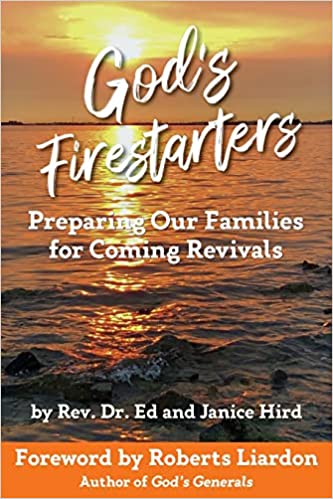
Co-authors, God’s Firestarters


Leave a comment

The Foolishness of God in Dostoevsky’s Idiot

The Foolishness of God in Dostoevsky’s Idiot

By Rev. Dr. Ed & Janice Hird

-an article for the Light Magazine

Have you ever been foolishly attracted to the world, the flesh and the devil?  Has your self-centeredness and desire for approval ever harmed your best interests? Why does Christianity often look so foolish to secular people in our hi-tech, frantic world?

            In Dostoevsky’s favorite novel The Idiot, we meet Prince Myshkin, a Christ-like person whose goodness, open-heartedness, and genuineness lead people to call him an idiot sixty times in the novel. He saw Myshkin as his best and richest poetic idea. Three times in his notes, Dostoevsky identifies Myshkin as a Christ figure.  Like Jesus, he was full of child-like grace and truth.  In his blueprints, Dostoevsky refers to Myshkin as “Prince Christ”: “Christ is and always will be the ideal, ours (in Russia) or that of civilized Europe.”

Myshkin had just returned to St. Petersburg, the Russian Capital, after five years away in a Swiss sanitorium for epileptics. In the midst of great corruption, Jesus the Word became flesh and made his dwelling among us (John 1:14).  So too, Myshkin came to dwell in the midst of a cynical, jaded world.  As the epicentre of the Russian political world, St. Petersburg was full of clever pretenders, politicians, and posers who hid in plain view from each other: “For the wisdom of this world is foolishness in God’s sight.” (1 Corinthians 3:19) Myshkin exposed the nakedness of the ‘kings with no clothes.’  No one could hide from his loving gaze.

Since only the knowledge of the truth can see us free, Myshkin’s speaking truth to power helped a few give up their lies.  Most initially clung to their lies, and rejected Myshkin as totally inappropriate and stupidly naïve. His ‘unsuccessful’ encounter with the Russian elite reminds me of John 1:10-11:

He was in the world, and though the world was made through him, the world did not recognize him. He came to that which was his own, but his own did not receive him.

Just like with Jesus, Myshkin was the wrong kind of messiah, coming in humility rather than as a conqueror.  As a quintessential Russian holy fool, he threatened their love of power, money, and sexual conquest. Everything for this highly politicized culture was an elaborate game of deception and manipulation. Like the power-hungry Pontius Pilate, they had become cynical about the possibility of truth. In their childishness, they rejected Myshkin’s strong wisdom as weakness:

For the foolishness of God is wiser than human wisdom, and the weakness of God is stronger than human strength. (1 Corinthians 1:25)

The French-speaking Russian elite, though clinging to an outward form of religion, had largely become atheistic because of the influence of the French revolution. Even Christianity for these power-brokers became little more than another way to control and subjugate ‘lesser’ people.  Dostoevsky believed that western culture was dying because it rejected Jesus: “those who kill God also kill man.”

Dostoevsky drew on the comic figure of Don Quixote in creating his ‘positively good and beautiful’ person:

There’s nothing more difficult than that in the whole world… There’s only one positively beautiful person in the world — Christ, so that the appearance of this measurelessly, infinitely beautiful person is in fact of course an infinite miracle.

 He saw Don Quixote as the most complete of beautiful people in Christian literature: “…he is only beautiful because he is ridiculous at the same time…” Don Quixote, like Prince Myshkin, was this strange blend of apparent foolishness, and great wisdom.  In their fighting the windmills of secularity, neither made any sense to the sophisticated elite. Outwardly, it looked like a useless failure that only made things worse.

Jesus, like Myshkin and Quixote, is the seemingly ‘foolish’ Prince of fools. Will the real fool stand up? How often are we fooled? 1 Corinthians 2:14 puts it,

The person without the Spirit does not accept the things that come from the Spirit of God but considers them foolishness…

Quixote, Jesus, and Myshkin suffer deeply because they ‘foolishly’ love and serve the unlovable.  All three were ridiculed, beaten with stones, and betrayed by their most trusted friends.

One is reminded of the suffering servant of Isaiah 53 who was despised and rejected. It reminds us of the apparent foolishness of Jesus’ love on the cross for us:

For the message of the cross is foolishness to those who are perishing, but to us who are being saved it is the power of God. (I Corinthians 1:18)

Jesus, the bridegroom, loves his bride, the very broken, often conflicted Church. Similarly, Myshkin loved his potential bride Nastasia who was very beautiful, but deeply wounded in her soul by sexual exploitation. Myshkin helped open Nastasia’s eyes temporarily to her deep worth, but in her shame, she kept running from Myshkin back to those who would mistreat her.  The most beautiful often feel the most ugly and unworthy. We too as the wounded bride of Christ often run from his relentless love.

The problem of the existence of God had long tormented Dostoevsky, the intellectual idiot.  He came to a deep faith in Christ through much suffering and questioning as a political prisoner in Siberia: “My hosanna has passed through a great crucible of doubt.” He struggled with irritability and spite, and had a strong gambling addiction that took him many years to break free.  Through the example of other faithful prisoners and in reading the New Testament, Dostoevsky:

accepted Christ back into (his) heart, whom (he) had come to know as a child living with my parents and whom (he) almost lost once, because of turning into a ‘European liberal.’”

            Dostoevsky wanted all of us to accept the crucified idiot back into our hearts.  Imagine how such a heart transformation might affect the Russian/Ukrainian conflict. Have you ever lost the Prince of Peace through giving into cynicism and negativity? What if you opened our heart and mind up again today?

Rev. Dr. Ed and Janice Hird

Co-authors, God’s Firestarters