Pecos Higgins was born on the Gulf Coast of Texas in 1883. At age 6, some of his associates got him “dog drunk”. While still small, he began to work on cattle ranches up and down the Pecos River. He only had 8 months of actual schooling, but became one of the most colourful cowboy poets in the history of the Wild West.
After two terms in the Texas State penitentiary, Pecos was invited by the Miller Brothers in 1907 to join their “101 Ranch Wild West Show’ on a tour of North America. and Europe. There he met numerous royalty, and was personally invited to have a drink with King Edward 7th of England.
Unfortunately, Pecos Higgins drank enough whisky over the next few years to, as he put it, fill up the Texas Dam. He married and divorced 5 times, bootlegged, cussed, gambled and shot his way through half a century. He even devised his own six-shooter before anyone in Texas had seen one.
At age 71 Pecos ended as a battered, hopeless drunken wreck, lying abandoned in a deserted Arizona Ranch. The Christians that found him said that he looked as if every bone in his body had been broken. Through the practical caring of his new friends, Pecos met Jesus Christ on a personal basis, and was filled up inside with a new attitude of thanksgiving and joy. Pecos never lost that new attitude of gratitude over the concluding 16 years of his life. Here is how he described this new-found joy: “I feel now like I imagine a little hound pup does -When his eyes first come open … I’m as happy as a fed pig in the sunshine.”
The 19th century Cambridge resident, Charles Simeon, once said: “What ingratitude there is in the human heart.” It is so easy to end up as a complaining, grumbling person when things don’t go our way. The best therapy for a complaining or fearful attitude is to switch from grumbling to thankfulness, from moaning to praising, from bellyaching to belly laughing.
Dr. Patrick Dixon commented that someone who can never laugh is as emotionally imprisoned as someone who can never cry. Dr. Dixon notes that laughter alters the levels of various “stress” hormones such as cortisol, dopamine, adrenaline and growth hormone – all hormones released when we are tense, working hard, worried or afraid. In typical office stress, all the hormones are released but no exercise follows and the body suffers. We develop stomach ulcers, arteries clog up, we become irritable and develop a host of other problems – all because the body is pumping out hormones we don’t need. Laughter, says Dr. Dixon, shuts down these hormone levels, keeping them low. Interestingly, endorphin levels (natural morphine-like substances) seem to remain the same following laughter.
More and more research is coming to the forefront, showing that gratitude and joyful laughter are connected with healthy living, while grumbling is connected with diseased living. Dr. E. Stanley Jones once said: “If you are unhappy at home, you should try to find out if your wife hasn’t married a grouch.” Worry, fear, and anger are the greatest disease causers. We need to prune from our lives all tendencies to fault, find, blame and put down others. Instead we need to daily practice the healing therapy of “counting our blessings.”
I would encourage you to take 10 minutes today to write down 10 gifts that you have received in your life that you are thankful for. It might be your children, your work, your sense of humour, your spouse, your parents, the trees and mountains, the country of Canada. Then practice saying thank you” for these wonderful gifts. It always helps to have someone say “thank you” to. That is where God comes in. As the source of all good gifts, it only makes sense to express appreciation to the Creator of this mysterious universe. As someone once said, happiness is seeing a sunset and knowing who to thank.
I am more convinced than ever that I was born to be thankful. Ingratitude is like putting sawdust into my car engine. Through an attitude of gratitude, I am protecting myself from countless diseases that could otherwise come my way. Our immune system is a remarkably delicate mechanism that just cannot handle acidic emotions like bitterness, rage, or malice. I challenge you therefore to find out for yourself whether an attitude of gratitude will improve your emotional and physical health. Over our kitchen table is a wall plaque with the words: “in everything, give thanks.”
May God give you the strength, like Pecos Higgins, to develop an attitude of gratitude.
-previously published in the Deep Cove Crier/North Shore News
P. S. Click this Amazon link to view for free the first two chapters of our new novel Blue Sky.
“I’m afraid there’s been an accident…”
Sandy Brown and her family have just moved to Spokane, Washington where her husband, Scott, is pastoring a new church. With a fresh start, Sandy is determined to devote more time to her four children. But, within weeks of settling in their new life, the Brown family is plunged into turmoil.
Sandy receives shocking news that her children aren’t safe, which brings back haunting memories of the trauma she experienced as a girl. Then, the unthinkable happens…
A brutal attack puts Sandy on the brink of losing everything she’s loved. Her faith in God and the family she cherishes are pushed to the ultimate limit.
Is healing possible when so many loved ones are hurt? Are miracles really possible through the power of prayer? Can life return to the way it was before?
Blue Sky reveals how a mother’s most basic instinct isn’t for survival… but for family.
If you’re a fan of Karen Kingsbury, then you’ll love Blue Sky. Get your copy today on paperback or kindle.
-The sequel book Restoring Health: body, mind and spirit is available online with Amazon.com in both paperback and ebook form. Dr. JI Packer wrote the foreword, saying “I heartily commend what he has written.” The book focuses on strengthening a new generation of healthy leaders. Drawing on examples from Titus’ healthy leadership in the pirate island of Crete, it shows how we can embrace a holistically healthy life.
To receive a signed copy within North America, just etransfer at ed_hird@telus.net, giving your address. Cheques are also acceptable.
-Click to purchase the Companion Bible Study by Jan Cox (for the Battle of the Soul of Canada) in both paperback and Kindle on Amazon.com and Amazon.ca
-Click to purchase the Companion Bible Study by Jan Cox (for the Battle of the Soul of Canada) in both paperback and Kindle on Amazon.com and Amazon.ca
To purchase any of our six books in paperback or ebook on Amazon, just click on this link.
Again and again when people are buried, their family so often asks for Psalm 23. Regardless of whether they have been in church for years, Psalm 23 seems to have a comforting power that touches people again and again. Why is Psalm 23 so meaningful to so many people?
When the late Dr. Billy Graham preached in a Russian Synagogue, what was his topic? None other than Psalm 23. Whether Jewish or Christian, Churchgoer or NonChurchgoer, Right Wing or Left Wing politically, Psalm 23 seems to speak to all of us. All of us can find strength in knowing that the Lord is our Shepherd.
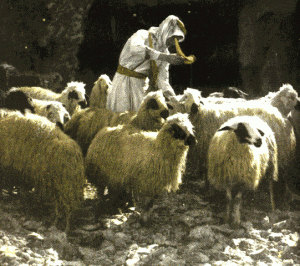
There is an extremely popular book written by a Canadian agrologist entitled “A Shepherd Looks at Psalm 23”. Philip Keller, unlike most of us, is an actual modern-day shepherd, who has spent many years in agricultural research, land management, and ranch development in British Columbia.
From Keller’s first-hand experience, Psalm 23 has burst open with many new insights and surprises. For example, what does it really mean to say “I shall not want”? Keller says that this is a picture of “a sheep utterly satisfied with its owner..utterly contented in the Good Shepherd’s care and consequently not craving or desiring anything more.” Does this describe our personal day-to-day lives? I remember seeing a poster which read: “Happiness is not having what you want, but wanting what you have.”
Why does Psalm 23 talk about “lying down in green pastures”? Keller tells us that sheep will never lie down until four conditions are met:
1) they must be free of all fear
2) They must be free of torment by flies or parasites
3) They must have a full belly
4) They must be in harmony with their fellow sheep.
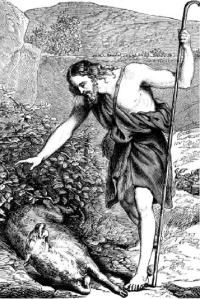
Green pastures did not just happen by accident. A good shepherd would put tremendous labour into clearing rough rocky ground into lush pasture land. Psalm 23 tells us that Jesus the Good Shepherd desires to take away our fear and disharmony so that we can find the inner peace that we have always been looking for.
What about “leading us beside still waters”? What difference does that make? Keller tells us that sheep are made up of about 70% water on average. Without a clean water source, sheep become restless and dehydrated. As well, sheep will not drink from fast, flowing waters, but rather from still calm waters. So too the Good Shepherd desires to fill each of us with calmness and stillness, with living water that can quench our deepest thirst.
Psalm 23 reminds us that the Good Shepherd desires to “restore our soul”. When a death has just occurred in our family, we often feel heavy and burdened inside, even down cast. Jesus said: “Come to me, all you who are weary and burdened, and I will give you rest”. All of us need that inner rest from time to time. Sheep, from time to time, may fall on their backs, and be unable to get up again by themselves. When a sheep becomes “down cast”, it can quickly become a casualty to sun stroke, or attack from wild animals. A Good Shepherd will restore his sheep when they become cast down.
Perhaps most familiar of all is the phrase: “though I walk through the valley of the shadow of death , I will fear no evil, for You are with me”. Think of funerals you have been to, and what comfort these words have been. Keller tells us that the only way to the mountainous green pastures is through the dangerous mountain valleys where wolves and coyotes are in hiding, waiting for their next victim. Psalm 23 reminds us that the Good Shepherd is also a warrior who will fight for us and protect us, even in times of death and tragedy.
All of us want to be loved and cared for by significant others. Most of us believe that there is a God out there. The good news of Psalm 23 is that God really cares about each of us in a way beyond our wildest imagining. That is the meaning of the poetic language speaking of the Shepherd preparing a table before us, anointing our head with oil, and our cup overflowing. All of this means that God personally cares for you.
No matter how tough life gets, and how many setbacks you face, Psalm 23 tell us that God is there for you, and will never give up on you.
-previously published in the Deep Cove Crier/North Shore News
P. S. Click this Amazon link to view for free the first two chapters of our new novel Blue Sky.
“I’m afraid there’s been an accident…”
Sandy Brown and her family have just moved to Spokane, Washington where her husband, Scott, is pastoring a new church. With a fresh start, Sandy is determined to devote more time to her four children. But, within weeks of settling in their new life, the Brown family is plunged into turmoil.
Sandy receives shocking news that her children aren’t safe, which brings back haunting memories of the trauma she experienced as a girl. Then, the unthinkable happens…
A brutal attack puts Sandy on the brink of losing everything she’s loved. Her faith in God and the family she cherishes are pushed to the ultimate limit.
Is healing possible when so many loved ones are hurt? Are miracles really possible through the power of prayer? Can life return to the way it was before?
Blue Sky reveals how a mother’s most basic instinct isn’t for survival… but for family.
If you’re a fan of Karen Kingsbury, then you’ll love Blue Sky. Get your copy today on paperback or kindle.
-The sequel book Restoring Health: body, mind and spirit is available online with Amazon.com in both paperback and ebook form. Dr. JI Packer wrote the foreword, saying “I heartily commend what he has written.” The book focuses on strengthening a new generation of healthy leaders. Drawing on examples from Titus’ healthy leadership in the pirate island of Crete, it shows how we can embrace a holistically healthy life.
To receive a signed copy within North America, just etransfer at ed_hird@telus.net, giving your address. Cheques are also acceptable.
-Click to purchase the Companion Bible Study by Jan Cox (for the Battle of the Soul of Canada) in both paperback and Kindle on Amazon.com and Amazon.ca
-Click to purchase the Companion Bible Study by Jan Cox (for the Battle of the Soul of Canada) in both paperback and Kindle on Amazon.com and Amazon.ca
To purchase any of our six books in paperback or ebook on Amazon, just click on this link.
Baden-Powell, the founder of the world-wide Scouting movement, preferred to learn his lessons from nature rather from a classroom. B.P. was not an academic success. His school reports read:
1) Classics: Seems to me to take very little interest in his work
2) Mathematics: Has to all intent given up the study of mathematics
3) Science: Pays not the slightest attention, except in one week at the beginning of the quarter
4) French: Could do well, but has become very lazy; often sleeps in school.
Baden-Powell was a bit of a loner in school, somewhat reserved though never unpopular. Given a choice, he preferred the solitary pursuits of exploring the woods round the Charterhouse school in Surrey, England. There he learnt how to snare rabbits and cook them in secret with a smokeless fire, how to use an axe, how to creep silently through the bush, how to hide his tracks, how to identify the different kinds of animals and plants, and how to climb a tree and hide from the school authorities. B.P. said that it was in those woods that he gained most of what helped him later in life to find the joy of living.
It is no wonder that years later Baden-Powell that the object in Scouting “was to wean (the boys) from indoors and to make the outdoors attractive to them.” B.P. described Scouting as a school of the outdoors. Scouting, said B.P., was not a science, nor a military code. Rather “it is a jolly game in the outdoors, where boy-men can go adventuring together as older and younger brother, picking up health and happiness, handicraft and helpfulness.”
As Scouting was first developing, B.P said to his adult leaders: “… give your boys all you can of woodcraft and Nature study…The Nature study should be a real close touch with Nature, far beyond the academic dipping into the subject which passes under the name in school. Collecting, whether of plants or bugs, and investigation, whether of beasts or birds, are all-absorbing studies for the boy and mighty good for him.”
Why was Baden-Powell so exciting about Nature study and Outdoor camping? Because B.P. saw it as a “golden chance to bring the boy to God through the direct appeal of Nature and her store of wonders.” Nature study for B.P. was a character-building, and spiritual exercise. Nature study, said B.P., “gives the best means of opening out the minds and thoughts of boys, and at the same time…gives them the power of appreciating beauty in Nature and consequently in art…” Nature study helped “the realization of God, the Creator, through His wonderous work, and the active performance of His will in service for others.”
I believe that Baden-Powell might have really enjoyed living on the North Shore with its unforgettable beauty of mountain, forests, and sea. B.P. would have reminded us that “the mystery of the sea and the heavens, and the fascination of the colouring of the scene, and the modelling of the scene” all point to God’s handiwork. Baden-Powell saw all of nature as gifts from God. We all teach our children to say “thank you” for birthday and Christmas presents. How much more should we say “thank you” for God’s gifts of nature? B.P. said “We teach the boy that a gift is not his till he has expressed his gratitude for it. His attitude to God is, therefore, thankfulness for benefits received; and his method for expressing this is through service, in behalf of God, to his fellow-men.
To Baden-Powell, the question was not what can I get from life, but what can I give in life. When dealing with conflicts in the Scouting movement, B.P. recommended that people “…ask themselves the simple question, `What would Christ have done under the circumstances?’ and be guided accordingly”.
In a last message found among B.P.’s papers after he had died, he said: “Dear Scouts,…I believe that God put us in this jolly world to be happy and enjoy life. Happiness doesn’t come from being rich, not merely from being successful in your career, not by self-indulgence. One step towards happiness is to make yourself healthy and strong while you are a boy, so that you can be useful and so can enjoy life when you are a man. Nature study will show you how full of beautiful and wonderful things God has made the world for you to enjoy. Be contented with what you have got and make the best of it…”
My prayer is that we too, like Baden-Powell, may be filled with gratitude to God our Creator for the wonderful gift of Nature.
P. S. Click this Amazon link to view for free the first two chapters of our new novel Blue Sky.
“I’m afraid there’s been an accident…”
Sandy Brown and her family have just moved to Spokane, Washington where her husband, Scott, is pastoring a new church. With a fresh start, Sandy is determined to devote more time to her four children. But, within weeks of settling in their new life, the Brown family is plunged into turmoil.
Sandy receives shocking news that her children aren’t safe, which brings back haunting memories of the trauma she experienced as a girl. Then, the unthinkable happens…
A brutal attack puts Sandy on the brink of losing everything she’s loved. Her faith in God and the family she cherishes are pushed to the ultimate limit.
Is healing possible when so many loved ones are hurt? Are miracles really possible through the power of prayer? Can life return to the way it was before?
Blue Sky reveals how a mother’s most basic instinct isn’t for survival… but for family.
If you’re a fan of Karen Kingsbury, then you’ll love Blue Sky. Get your copy today on paperback or kindle.
-The sequel book Restoring Health: body, mind and spirit is available online with Amazon.com in both paperback and ebook form. Dr. JI Packer wrote the foreword, saying “I heartily commend what he has written.” The book focuses on strengthening a new generation of healthy leaders. Drawing on examples from Titus’ healthy leadership in the pirate island of Crete, it shows how we can embrace a holistically healthy life.
To receive a signed copy within North America, just etransfer at ed_hird@telus.net, giving your address. Cheques are also acceptable.
-Click to purchase the Companion Bible Study by Jan Cox (for the Battle of the Soul of Canada) in both paperback and Kindle on Amazon.com and Amazon.ca
-Click to purchase the Companion Bible Study by Jan Cox (for the Battle of the Soul of Canada) in both paperback and Kindle on Amazon.com and Amazon.ca
To purchase any of our six books in paperback or ebook on Amazon, just click on this link.
My eldest son James and I did a little bit of “male bonding” by taking time to watch the classic Star Trek movie: STAR TREK: GENERATIONS. It was lots of fun to watch as the U.S.S. Enterprise seems to be getting faster and larger all the time.
I can remember watching the original STAR TREK episodes, as a teenager, with good old Captain James Kirk and the irreplacable Mr. Spock. My son James wanted to know if I used to watch the STAR TREK episodes in “black & white”. He finds it hard to imagine that we had colour “back in my day”. James and I both like the future orientation of the episodes: doors opening by voice, food appearing whenever you want it. Maybe it appeals to our lazy side.
Both James and I really enjoyed STAR TREK: GENERATIONS. The highlights of the movie for us were the explosion and then subsequent saving of the distant planet, as well as the remarkable crash-landing of the massive U.S.S. Enterprise.
Why has STAR TREK appealed to so many generations of viewers? We believe that there is more to STAR TREK than just the action. The greatest drawing card is the continual search for something beyond. The STAR TREK motto is: “To Boldly Go Where No Man has Gone Before”. A Deep Cove friend of mine said to me a while back: “People are searching, more than you would imagine”.
To me, STAR TREK is an outer and visible symbol of the inner and invisible searching that is going on in most of our hearts even right now. Most of us wonder from time to time what life is all about. We wonder where we came from. We wonder where we are going to.
In STAR TREK: GENERATIONS., Captains James Kirk and his successor Jean Luc Picard are both blasted into a hi-tech equivalent of heaven, called the Nexus. Nexus in the dictionary means: bond, link, connexion. In the Nexus, all one’s wishes and dreams are fulfilled, and a person is filled with continual overflowing joy, so much so that one never wants to leave. Even death the “great stalker” cannot touch you there, as the concept of time does not apply in the Nexus.
Significantly what both James Kirk and Jean Luc Picard wanted in the Nexus was “home and family”. Both Captains had sacrificed the opportunity to have a family life in order to pursue their careers. And now that they were older and retired, they just had an empty house to come to. Their deepest desire was to come back home, but there was no home to come back to.
There’s something deep within us that wants to be “home” — and especially “home for the holidays.” Much of our annual Christmas celebrations, and particularly carols like “Chestnuts roasting on an open fire”, has to do with recapturing that sense of “home”. But “you can never go home again,” as Carlos Wilton commented recently.
There’s a sense of incompleteness, of open-endedness, about much of our lives. If only we could return to that sense of security we knew as children (or dreamed about, if we were children who lived in foster homes, or for whatever other reason didn’t know a stable home life)! That’s what James Kirk and Jean Luc Picard were searching for.
Jesus himself knew homelessness. He was born homeless — in a manger, in a stable near an inn where there was no room for him. “Foxes have holes, the birds of the air have nests,” he would one day tell his disciples, “but the son of man has nowhere to lay his head.” By the end of the movie, Captain James Kirk reminded me a lot of Jesus Christ. Both gave up their home in Nexus (heaven) in order to lay down their lives to save others.
‘Coming Home’ is the heart of what Star Trek and life itself is really all about. May we come home to the goodness of the homes we once knew — to make amends, to rebuild broken relationships. May we come home to the Lord we once knew, and yearn to know again. May we come home to the church we once knew, and need once again to have as part of our lives. May we come home to the manger — his home, and the home of us all.
-previously published in the Deep Cove Crier/North Shore News
P. S. Click this Amazon link to view for free the first two chapters of our new novel Blue Sky.
“I’m afraid there’s been an accident…”
Sandy Brown and her family have just moved to Spokane, Washington where her husband, Scott, is pastoring a new church. With a fresh start, Sandy is determined to devote more time to her four children. But, within weeks of settling in their new life, the Brown family is plunged into turmoil.
Sandy receives shocking news that her children aren’t safe, which brings back haunting memories of the trauma she experienced as a girl. Then, the unthinkable happens…
A brutal attack puts Sandy on the brink of losing everything she’s loved. Her faith in God and the family she cherishes are pushed to the ultimate limit.
Is healing possible when so many loved ones are hurt? Are miracles really possible through the power of prayer? Can life return to the way it was before?
Blue Sky reveals how a mother’s most basic instinct isn’t for survival… but for family.
If you’re a fan of Karen Kingsbury, then you’ll love Blue Sky. Get your copy today on paperback or kindle.
-The sequel book Restoring Health: body, mind and spirit is available online with Amazon.com in both paperback and ebook form. Dr. JI Packer wrote the foreword, saying “I heartily commend what he has written.” The book focuses on strengthening a new generation of healthy leaders. Drawing on examples from Titus’ healthy leadership in the pirate island of Crete, it shows how we can embrace a holistically healthy life.
To receive a signed copy within North America, just etransfer at ed_hird@telus.net, giving your address. Cheques are also acceptable.
-Click to purchase the Companion Bible Study by Jan Cox (for the Battle of the Soul of Canada) in both paperback and Kindle on Amazon.com and Amazon.ca
-Click to purchase the Companion Bible Study by Jan Cox (for the Battle of the Soul of Canada) in both paperback and Kindle on Amazon.com and Amazon.ca
To purchase any of our six books in paperback or ebook on Amazon, just click on this link.
Have you ever heard of someone described as having the patience of Job? The person referred to is often either the long suffering wife of an alcoholic or the mother of a large family of nonstop high energy boys. Job, of course, is the most world famous sufferer of inexplicable illness.
Do you know when I have most needed the patience of Job? In 1980, I lost my voice for 18 months. That was a very painful time. But in a strange way, almost equally painful are the times when our car breaks down. I feel very attached to our Chevy Minivan, and whenever it breaks down, I feel personally insulted (can anyone reading this relate??). I’m a very ‘up” person, but one of the few times that I feel depressed (usually for about an hour) is when our car becomes unfaithful.
It’s times like that, when I start to really appreciate Job. Like Job, I ask: ‘Why me??” I mean, couldn’t my car break down at a more convenient time? Have you ever noticed how much car Mechanics resemble doctors? You go to them for One problem, and invariably they find two others. I tell you, it’s enough to drive you to God.
Epic Poetry
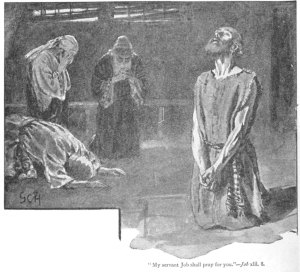
The book of Job is a powerful and challenging 42 chapter long poem. it is a true poem, but a poem none the less. Job is a heartfelt poem about the mystery of evil and suffering. This mystery is something that all of us will struggle with, sooner or later.
Regardless of whether we go to church or not, whether we are religious or not, whether we believe in God or not, all of us either have been or will be personally faced with this mystery. There is a best selling book by Rabbi Harold Kushner entitled: ‘When Bad Things Happen To Good People’. That best seller reminds us that sooner or later a tragedy will land at our doorstep, and life will feel very unfair.
Studies show that most of us go through some type of crisis once In every 18 months. When serious illness, like cancer, strikes our family, our whole world may feel turned upside down. Why me??’ … Why them ??”, we may say.
Sometimes in those situations, God may seem a long way away. Job’s wife had some practical advice to her very ill husband. She said: “Curse God and die., In other words, she told him to just give up. Job, however, was a fighter. No matter how tough it got, he would never throw In the towel. Job said at one point: “Though God slay me, yet will I hope In Him.’
No matter how unfair life seemed, Job never lost his faith in his Higher Power. Job was powerless over his illness, but he knew that there was a Higher Power who had the answers to all his struggles. That is why Job said In that midst of prolonged suffering: I know that my Redeemer lives, and that in the end he will stand upon the earth.
Job had a faith in God that not even tragedy, sickness, and death could shake. He’d lost everything his children, his business, his fortune, his reputation, his health. He had lost everything, everything except his faith In God.
On top of all this, Job had to suffer through the well meaning, but horribly insensitive advice of his four friends. instead of listening to Job and showing that they cared, they blasted him with endless lectures. Their basic message was: “You got what you deserve. It’s your own fault. Anyone who Is sick has done It to himself. God is obviously condemning you for some secret sin. So hurry up and ‘fess up.” The 42 chapter poem made it very clear by the end that Job was not to blame for his sickness, and that we too should not blame others when they are sick.
The unfair and mysterious suffering of Job points ultimately to the unfair and mysterious suffering of Jesus on the cross. The cross shows that God can take everything that is against us and turn it to our advantage. God took Good Friday (the most evil day in history) and turned it into Easter Sunday (the most beautiful day in history).
My prayer for those reading this article is that each of us, like Job, will find the courage to keep on struggling, even when life seems unfair.
The Rev. Dr. Ed Hird, BSW, MDiv, DMin
-previously published in the North Shore News/Deep Cove Crier
P. S. Click this Amazon link to view for free the first two chapters of our new novel Blue Sky.
“I’m afraid there’s been an accident…”
Sandy Brown and her family have just moved to Spokane, Washington where her husband, Scott, is pastoring a new church. With a fresh start, Sandy is determined to devote more time to her four children. But, within weeks of settling in their new life, the Brown family is plunged into turmoil.
Sandy receives shocking news that her children aren’t safe, which brings back haunting memories of the trauma she experienced as a girl. Then, the unthinkable happens…
A brutal attack puts Sandy on the brink of losing everything she’s loved. Her faith in God and the family she cherishes are pushed to the ultimate limit.
Is healing possible when so many loved ones are hurt? Are miracles really possible through the power of prayer? Can life return to the way it was before?
Blue Sky reveals how a mother’s most basic instinct isn’t for survival… but for family.
If you’re a fan of Karen Kingsbury, then you’ll love Blue Sky. Get your copy today on paperback or kindle.
-The sequel book Restoring Health: body, mind and spirit is available online with Amazon.com in both paperback and ebook form. Dr. JI Packer wrote the foreword, saying “I heartily commend what he has written.” The book focuses on strengthening a new generation of healthy leaders. Drawing on examples from Titus’ healthy leadership in the pirate island of Crete, it shows how we can embrace a holistically healthy life.
To receive a signed copy within North America, just etransfer at ed_hird@telus.net, giving your address. Cheques are also acceptable.
-Click to purchase the Companion Bible Study by Jan Cox (for the Battle of the Soul of Canada) in both paperback and Kindle on Amazon.com and Amazon.ca
-Click to purchase the Companion Bible Study by Jan Cox (for the Battle of the Soul of Canada) in both paperback and Kindle on Amazon.com and Amazon.ca
To purchase any of our six books in paperback or ebook on Amazon, just click on this link.
As I was taking our three sons toboganning up Mount Seymour, I saw the Baden-Powell Trail, and was reminded again of the lasting impact that the Baden-Powells have on our society.
From the very beginning, Lord and Lady Baden-Powell were committed to making a significant difference in the lives of young people. They saw the effect of our industrialized, urbanized society: the decline in physical health, the erosion of moral standards, the loss of self discipline. Robert Baden-Powell (B.P. as he is affectionately known) returned from South Africa in 1903 as a war hero.
He had bravely defended the South African town of Mafeking with only a small band of soldiers for 217 days. During the siege, he used the boys of the town as messengers, first aid attendants, and other vital jobs. These boys, who were the first prototype of the boy scouts, played a vital part in saving a beleaguered town. The Boer War as a whole was a great embarrassment to the English nation. Their troops performed poorly and inefficiently. B.P.’s 217 day defense of Mateking provided a bright spot in an otherwise dark period.
When B.P. returned to England, he was appalled at the deterioration of morale in English youth. He described ‘thousands of boys and young men pale, narrow chested, hunched up, miserable specimens, smoking endless cigarettes, numbers of them betting.” He was also concerned about the rampant sexual immorality, resulting in disease, poverty, and unwanted children. B. P. the war hero wanted to use his popularity to help rebuild the vitality and dynamism of young people. The amazing popularity of his scouting movement probably surprised B.P. as much as anyone else.
Within one year after writing the best seller ‘Scouting for Boys’, over 100,000 boys had already enrolled as Scouts. The scouting movement quickly crossed the seas to numerous countries around the world. King Edward VII was very interested in scouting and suggested that B.P. give up his army career and devote all his time to scouting worldwide.
After meeting the future Lady Baden Powell on an ocean cruise in 1912, Robert and Olave Baden-Powell were married in a quiet church wedding that same year. The two formed a powerful alliance that has unforgettably shaped the character of countless young people throughout the world. At Robert’s request, Olave took on the leadership of the floundering Girl Guides movement. Under Olave’s loving and capable direction, the Guiding movement exploded with new energy and growth.
Thanks to this remarkable husband/wife team, over 17 million boys and 8 million girls worldwide are now involved in the scouting/guiding movements. Some people mistake the scouting/guiding movements as merely a recreational diversion for rambunctious children, In fact, Robert and Olave B.P. saw recreation as merely one of many tools to build lasting character. B.P. saw scouting/guiding as “… education in high ideals, in self reliance, in sense of duty, in fortitude, in self respect and regard for others in one word, in those Christian attributes that go to make character.”
Robert and Olave B.P. believed that character could not be imposed from outside. Character and self-discipline had to come from within. Character building for the B. P.’s had a lot to do with trustworthiness, honesty, loyalty, duty, responsibility, friendliness, courtesy, thriftiness, and moral purity. Robert and Olave believed that the heart of character building came from loyalty to God and country. That is why in the very first part of the Scout/Guide Promise, they built in “doing one’s duty to God”.
Olave and Robert Baden-Powell were both committed Christians. Olave expressed her Christian commitment by serving as godmother to over 40 baptized children a responsibility she took very seriously. In her autobiography she wrote: “If I have any message to leave, it is this: Believe in God. He guides and protects you all through life …” Robert, when dealing with conflicts in the Scouting movement, recommended that people ” … ask themselves the simple question, “What would Christ have done under the circumstances?” and be guided accordingly.” Character building for Lord and Lady Baden-Powell was a very spiritual activity.
Both Robert and Olave were impressed by the character building impact of taking urban young people away from the city, and back to the great outdoors. At the formal opening of campfire, they had the campers recite Rudyard Kipling’s poem: ‘Who hath smelt wood smoke at twilight? Who hath heard the birchlog burning? Who is quick to read the noises of the night?”
Robert saw camping as a golden chance to bring the boy to God through the direct appeal of Nature and her store of wonders.” He said that “Our aim is to get hold of the boys and to open up their minds, to bring out each lad’s character (and no two are exactly alike), to make them into good men for God and their country, to encourage them to be energetic workers and to be honourable, manly fellows with a brotherly feeling for one another.”
Olave was equally impressed with the beauty of God’s creation. She said: 1 am sure that God means us to be happy in this life. He has given us a world to live in that is full of beauty and wonders, and He has given us not only eyes to see them but minds to understand them if we only have the sense to look at them in that light.”
My prayer for those reading this article is that the inspiring example of the Baden-Powells may encourage each of us to be more thankful for the beauty of God’s world.
The Rev. Dr. Ed Hird, BSW, MDiv, DMin
-previously published in the Deep Cove Crier/North Shore News
P. S. Click this Amazon link to view for free the first two chapters of our new novel Blue Sky.
“I’m afraid there’s been an accident…”
Sandy Brown and her family have just moved to Spokane, Washington where her husband, Scott, is pastoring a new church. With a fresh start, Sandy is determined to devote more time to her four children. But, within weeks of settling in their new life, the Brown family is plunged into turmoil.
Sandy receives shocking news that her children aren’t safe, which brings back haunting memories of the trauma she experienced as a girl. Then, the unthinkable happens…
A brutal attack puts Sandy on the brink of losing everything she’s loved. Her faith in God and the family she cherishes are pushed to the ultimate limit.
Is healing possible when so many loved ones are hurt? Are miracles really possible through the power of prayer? Can life return to the way it was before?
Blue Sky reveals how a mother’s most basic instinct isn’t for survival… but for family.
If you’re a fan of Karen Kingsbury, then you’ll love Blue Sky. Get your copy today on paperback or kindle.
-The sequel book Restoring Health: body, mind and spirit is available online with Amazon.com in both paperback and ebook form. Dr. JI Packer wrote the foreword, saying “I heartily commend what he has written.” The book focuses on strengthening a new generation of healthy leaders. Drawing on examples from Titus’ healthy leadership in the pirate island of Crete, it shows how we can embrace a holistically healthy life.
To receive a signed copy within North America, just etransfer at ed_hird@telus.net, giving your address. Cheques are also acceptable.
-Click to purchase the Companion Bible Study by Jan Cox (for the Battle of the Soul of Canada) in both paperback and Kindle on Amazon.com and Amazon.ca
-Click to purchase the Companion Bible Study by Jan Cox (for the Battle of the Soul of Canada) in both paperback and Kindle on Amazon.com and Amazon.ca
To purchase any of our six books in paperback or ebook on Amazon, just click on this link.
One of the most well-known children’s songs throughout the world is “Jesus loves me, this I know.” Somehow that song, like “Amazing Grace”, forms part of the spiritual memory banks of most adults. The vast majority of baby boomers and their ‘builder’ parents have gone as children either to Sunday School or Catechism. As a result, most older adults, whether or not they currently attend church, have significant core memories connected with those early experiences. This would not necessarily be true with GenXers and Millennials.
As a teenager, I found church boring and avoided it by golfing and skiing on Sunday mornings. But as a child, I remember enjoying Sunday School and looking forward to going. I’ve always liked to sing, and one of my favorite hymns as a child was “Jesus loves me, this I know”. Even though I did not know Jesus personally, something touched me as I sang that song in Sunday School. Years later, I still feel deeply moved by this simple song.
Dr. Karl Barth was one of the most brilliant and complex intellectuals of the twentieth century. He wrote volume after massive volume on the meaning of life and faith. A reporter once asked Dr. Barth if he could summarize what he had said in all those volumes. Dr. Barth thought for a moment and then said: “Jesus loves me, this I know, for the Bible tells me so.”
When Mao Tse Tung attempted to crush the church in China, things seemed very bleak. In 1972 however, a message leaked out which simply said: “The this I know people are well”. The Communist authorities did not understand the message. But Christians all around the world knew instantly that this referred to the world’s most famous children’s hymn. Miraculously the Chinese Church, instead of being crushed, has boomed under persecution, growing from 1.5 million believers to over 100 million.
The author of this amazing little children’s song was Anna Bartlett Warner, sister to the famous 19th century writer, Susan B. Warner. Susan’s first novel The Wide Wide World was an instant success, second only to Uncle Tom’s Cabin, the most popular 19th century novel written in North America. Anna published her own novel Dollars and Cents under the pseudonym “Amy Lothrop”. Anna and Susan collaborated together on fifteen fiction and children’s books. Neither sister ever married, so they shared a house on Constitution Island right across from the famous West Point Military Academy.
The two sisters took a great interest in the Military Academy in which their uncle Thomas Warner was a chaplain and professor. As a result, they opened their home to the cadets and held Sunday School classes. Anna outlived her sickly sister by thirty years, and continued to run a very large Sunday School throughout her life. It was her invariable custom to write for her students a fresh hymn once a month. “Jesus Loves Me” was one of those monthly West Point hymns. Anna also gave the song to her sister Susan to use in the novel Say and Seal. In Susan’s book, a Sunday School teacher sings ‘Jesus Loves Me’ to a sick pupil.
Great words without a great tune don’t get very far in the musical world. Fortunately William Batchelder Bradbury stumbled across the “Jesus Loves Me” words, and wrote the now unforgettable tune. Thirteen years earlier, Bradbury had written the tune for the “Just as I am” hymn, which everyone nowadays associates with Billy Graham Crusades. In 1862, Bradbury found the “Jesus loves me” words in a best-selling 19th-century book, in which the words were spoken as a comforting poem to a dying child, John Fox. Along with his tune, Bradbury added his own chorus “Yes, Jesus loves me, Yes, Jesus Loves me…” Within months, this song raced across the hearts of children throughout North America, and eventually all the continents of the world.
Even after 155+ years, “Jesus Loves Me” is still the No. 1 spiritual song in the hearts of children around the world. Why is this? I believe that it is because all of us deep down need to know that God loves us. When I tell unchurched people that Jesus loves them, many of them genuinely thank me. One lady said: “Great…we can use lots of love”. A man said: “Thanks…I’m going to need Him some day.” Whatever situation we are in, all of us need to know that the Lord really loves and cares for each of us.
I loved my Grandpa deeply, even though sometimes he was distant and abrasive. Grandpa claimed to be an atheist, who had no time for religion. One day I discovered to my surprise that Grandpa used to be active in a church choir, until his first wife died giving birth to her second child. Left with two children under age two, he turned bitter and dropped out of church.
When Grandpa was in his late 80’s, I was speaking with him about that painful time in his life. Initially he said that he didn’t want to talk about it, but then he started talking. First he said that God sure works in mysterious ways. Then my atheist Grandpa began to sing “Jesus loves me, this I know” to my three year-old son. My son began to dance in front of Grandpa, and an amazing catharsis happened for my Grandfather. Shortly after, my ‘atheist’ grandfather began listening to hymns again. The next time I visited him, Grandpa spontaneously sang: “Up from the grave He arose!” Within two years, I took my Grandpa’s funeral, confident that Grandpa had rediscovered that Jesus loved him too.
-previously published in the Deep Cove Crier/North Shore News
P. S. Click this Amazon link to view for free the first two chapters of our new novel Blue Sky.
“I’m afraid there’s been an accident…”
Sandy Brown and her family have just moved to Spokane, Washington where her husband, Scott, is pastoring a new church. With a fresh start, Sandy is determined to devote more time to her four children. But, within weeks of settling in their new life, the Brown family is plunged into turmoil.
Sandy receives shocking news that her children aren’t safe, which brings back haunting memories of the trauma she experienced as a girl. Then, the unthinkable happens…
A brutal attack puts Sandy on the brink of losing everything she’s loved. Her faith in God and the family she cherishes are pushed to the ultimate limit.
Is healing possible when so many loved ones are hurt? Are miracles really possible through the power of prayer? Can life return to the way it was before?
Blue Sky reveals how a mother’s most basic instinct isn’t for survival… but for family.
If you’re a fan of Karen Kingsbury, then you’ll love Blue Sky. Get your copy today on paperback or kindle.
-The sequel book Restoring Health: body, mind and spirit is available online with Amazon.com in both paperback and ebook form. Dr. JI Packer wrote the foreword, saying “I heartily commend what he has written.” The book focuses on strengthening a new generation of healthy leaders. Drawing on examples from Titus’ healthy leadership in the pirate island of Crete, it shows how we can embrace a holistically healthy life.
To receive a signed copy within North America, just etransfer at ed_hird@telus.net, giving your address. Cheques are also acceptable.
-Click to purchase the Companion Bible Study by Jan Cox (for the Battle of the Soul of Canada) in both paperback and Kindle on Amazon.com and Amazon.ca
Indigo also offers the paperback and the Kobo ebook version. You can also obtain it through ITunes as an IBook.
-Click to purchase the Companion Bible Study by Jan Cox (for the Battle of the Soul of Canada) in both paperback and Kindle on Amazon.com and Amazon.ca
To purchase any of our six books in paperback or ebook on Amazon, just click on this link.
The famous Vancouver-based author Dr. J.I. Packer once commented that “marriage, being the most delicate and demanding of relationships, as well as potentially the most delightful, is a terribly difficult topic on which to write wisely and well.” In spite of such concerns, Dr. Packer agreed to write a foreword endorsing a Gold Medallion Book Award winner entitled “The Mystery of Marriage”. “Rarely”, says Packer, “has a new book roused in me so much enthusiasm as has the combination of wisdom, depth, dignity and glow … that I find in these chapters. “
The author, Mike Mason, believes that marriage comes to everyone as an intense invasion of one’s privacy. That is why he believes that there is in us “a secret resentment of the demands of marriage, a reluctance to give way any more than is absolutely necessary.” In all of us, there is a struggle between the needs for dependence and for independence, between the urge toward loving cooperation and the opposite urge toward detachment, privacy, self sufficiency.
One of the hardest things in marriage, says Mason, is the feeling of being watched. It is the constant surveillance that can get to one, that can wear one down like a bright light shining in the eyes, and that leads inevitably to the crumbling of all defenses, all facades, all the customary shams and masquerades of the personality. Being watched, for Mike Mason, is an ambivalent but life giving experience. “Being watched by one who loves is not like being watched by anyone else on earth! No, to be loved as one is being watched is like one thing only: it is like the watchfulness of the Lord God Himself …”
Marriage to Mike Mason is a profound paradox, full of ambiguity. That is why he believes that ” … there is nothing in the world worse than a bad marriage, and at the same time nothing better than a good one.” To be married, says Mason, is to have found in a total stranger a near and long lost relative, a true blood relative even closer to us than father or mother.
Marriage for Mason is an act of contemplation. It is a divine pondering, an exercise in amazement. “Marriage, as simply as it can be defined, is the contemplation of the love of God in and through the form of another human being.”
Part of the mystery of marriage is that you can never exhaust the uniqueness and otherness of one’s partner. Along with growing familiarity, marriage brings a growing sense of the strangeness and unknowability of one’s spouse. As Mason puts it, ‘There is just something so purely and untouchably mysterious in the fact of living out one’s days cheek by jowl under the same roof with another being who always remains, no matter how close you manage to get, essentially a stranger. You know this person better than you have ever known anyone, yet often you wonder whether you know them at all.”
Love, for Mason, is an earthquake that relocates the center of the universe. Our natural tendency is to treat people as if they were not “others” at all, but merely aspects of ourselves. In a loving marriage, we cease to be the centre of our own universe. The very purpose of marriage is to draw us beyond ourselves, to “get us out beyond our depth, out of the shallows of our own secure egocentricity and into the dangerous and unpredictable depths of a real interpersonal encounter,” That is why marriage is so disturbingly intense and disruptively involving. “Angering, humiliating, melting, chastening, purifying, marriage touches us where we hurt most, in the place of our lovelessness.”
Marriage, says Mason, is one of God’s most powerful secret weapons for the revolutionizing of the human heart. It is a heavy, concentrated barrage upon the place of our greatest weakness, which is our relationship with others.
Marriage to Mason is the beating heart of society itself. Why do people love weddings so much? Because “every time a wedding takes place, the highest hopes and ideals of the whole community are rekindled”. For most people, says Mason, marriage is the single most wholehearted step they will ever take toward a fulfilling of Jesus’ command to love one’s neighbour as oneself.
Marriage is inevitably the flagship of all other relationships. One’s own home is the place where love must first be practised before it can truly be practiced anywhere else. My prayer for those reading this article is that love will first be practised in our homes and our marriages, so that it may truly overflow from our homes to bless the rest of our world.
-previously published in the Deep Cove Crier/North Shore News
P. S. Click this Amazon link to view for free the first two chapters of our new novel Blue Sky.
“I’m afraid there’s been an accident…”
Sandy Brown and her family have just moved to Spokane, Washington where her husband, Scott, is pastoring a new church. With a fresh start, Sandy is determined to devote more time to her four children. But, within weeks of settling in their new life, the Brown family is plunged into turmoil.
Sandy receives shocking news that her children aren’t safe, which brings back haunting memories of the trauma she experienced as a girl. Then, the unthinkable happens…
A brutal attack puts Sandy on the brink of losing everything she’s loved. Her faith in God and the family she cherishes are pushed to the ultimate limit.
Is healing possible when so many loved ones are hurt? Are miracles really possible through the power of prayer? Can life return to the way it was before?
Blue Sky reveals how a mother’s most basic instinct isn’t for survival… but for family.
If you’re a fan of Karen Kingsbury, then you’ll love Blue Sky. Get your copy today on paperback or kindle.
-The sequel book Restoring Health: body, mind and spirit is available online with Amazon.com in both paperback and ebook form. Dr. JI Packer wrote the foreword, saying “I heartily commend what he has written.” The book focuses on strengthening a new generation of healthy leaders. Drawing on examples from Titus’ healthy leadership in the pirate island of Crete, it shows how we can embrace a holistically healthy life.
To receive a signed copy within North America, just etransfer at ed_hird@telus.net, giving your address. Cheques are also acceptable.
-Click to purchase the Companion Bible Study by Jan Cox (for the Battle of the Soul of Canada) in both paperback and Kindle on Amazon.com and Amazon.ca
To receive a signed copy within North America, just send a $20 cheque (USD/CAN) to ED HIRD, 102 – 15168 19th Avenue, Surrey, BC, V4A 0A5, Canada.
-Click to purchase the Companion Bible Study by Jan Cox (for the Battle of the Soul of Canada) in both paperback and Kindle on Amazon.com and Amazon.ca
To purchase any of our six books in paperback or ebook on Amazon, just click on this link.
It’s hard to find a really good movie that the whole family can watch together, without exploitive sexuality and violence. My extended family could not stop talking about ‘The River Runs through It’. So eventually I too saw the movie and joined the ranks of the enthusiastic “River” boosters.
The movie is directed by Robert Redford and the star of the movie “Norman” looks remarkably like a junior Robert Redford. It is set in the Midwestern United States of the 1920’s. Its breathtaking scenic shots are reason enough as to why this movie was an Academy Award winner.
The movie begins by having the elderly Norman recall his father’s words: “Someday when you are ready, you might tell our family story. Only then will you understand what happened and why.” An intriguing feature of this movie is that all the meaningful statements are deliberately understated in a way that provokes curiosity. For example, Norman commented: “in our family there was no clear line between fly fishing and religion.” Norman doesn’t really explain what he means, Instead he just teases your imagination, and then moves on. The symbol of life at its best was “the river running through.”
Again and again, as tragedy and setbacks hit the Maclean family, they seemed to find solace and refreshment by returning to their family river, the big Blackfoot. As the movie put it, “Beneath the (river) rocks are the words of God. Listen … and if Paul and I listened very carefully all our lives, we might hear those words.”
Norman’s father was a rigid, but well meaning Presbyterian minister. There were times in the father’s life where his rigidity seemed to totally alienate his sons. Yet again and again their common love for the river would bring them back together as a family.
As Norman put it, “In the afternoon we would walk with him while he unwound between services and he almost always chose the path along the Blackfoot, which we considered our family river, and it was there that he found his soul restored and his imagination stirred.” Norman, of course, is making a clear allusion to the well known Psalm 23: “He leads me beside still waters, he restores my soul.”
In contrast to the modem tendency to “pigeonhole” religion into a small private slot, Norman’s father saw religion as a totally normal part of everyday life. Faith was as normal for him as breathing or fly fishing. Flyfishing for the Macleans was a symbol of an integrated and healthy spirituality pervading all of life. As Norman put it, “… Paul and I probably received as many hours of instruction in fly fishing as we did in all other spiritual matters.”
Norman’s father saw fly fishing as symbolic of the rhythms of life that we all need to discover. Norman comments: “As a Presbyterian, my father believed that man by nature was a damn mess, and that only by picking up God’s rhythms could we regain power and beauty. To (Norman’s father), all good things come by grace, and grace comes by art, and art does not come easy.” Norman’s father trained his two sons to cast “Presbyterian style”, on a four count rhythm between 10 a.m. and 2 p.m.
One of the most significant moments in the movie was the first time that Paul the younger brother broke free of his father’s instruction, into a shadow casting rhythm all his own. All of us, at some point, need to break free of our fathers’ spiritual instruction, to find a relationship with God that we can call our own Secondhand spirituality can only take us so far.
Paul stayed at home for college, unwilling to “leave the fish he had not yet caught. Norman went east for college, and entirely abandoned fly fishing.
When Norman returned home, he felt embarrassed and awkward down at the river, because he had lost touch with the rhythms of life while at college. Yet as the elderly Norman looked back on his life, he confessed that he was “haunted by waters”. Despite all the tragedy and horror of life, Norman’s returning to the river replenished him again and again.
As Norman put it, “… when I am alone in the half light of the canyon, all existence seems to fade to a being with my soul and my memories, and the sounds of the big Blackfoot River, and the four count rhythm and the hope that a fish will rise.” A Jewish Rabbi said 2,000 years ago: “Whoever believes in me, streams of living water will flow from within him.”
My prayer for those reading this article is that streams of living water may flow through the middle of our lives, bringing a peace that passes all understanding.
-previously published in the Deep Cove Crier/North Shore News
P. S. Click this Amazon link to view for free the first two chapters of our new novel Blue Sky.
“I’m afraid there’s been an accident…”
Sandy Brown and her family have just moved to Spokane, Washington where her husband, Scott, is pastoring a new church. With a fresh start, Sandy is determined to devote more time to her four children. But, within weeks of settling in their new life, the Brown family is plunged into turmoil.
Sandy receives shocking news that her children aren’t safe, which brings back haunting memories of the trauma she experienced as a girl. Then, the unthinkable happens…
A brutal attack puts Sandy on the brink of losing everything she’s loved. Her faith in God and the family she cherishes are pushed to the ultimate limit.
Is healing possible when so many loved ones are hurt? Are miracles really possible through the power of prayer? Can life return to the way it was before?
Blue Sky reveals how a mother’s most basic instinct isn’t for survival… but for family.
If you’re a fan of Karen Kingsbury, then you’ll love Blue Sky. Get your copy today on paperback or kindle.
-The sequel book Restoring Health: body, mind and spirit is available online with Amazon.com in both paperback and ebook form. Dr. JI Packer wrote the foreword, saying “I heartily commend what he has written.” The book focuses on strengthening a new generation of healthy leaders. Drawing on examples from Titus’ healthy leadership in the pirate island of Crete, it shows how we can embrace a holistically healthy life.
To receive a signed copy within North America, just etransfer at ed_hird@telus.net, giving your address. Cheques are also acceptable.
-Click to purchase the Companion Bible Study by Jan Cox (for the Battle of the Soul of Canada) in both paperback and Kindle on Amazon.com and Amazon.ca
-Click to purchase the Companion Bible Study by Jan Cox (for the Battle of the Soul of Canada) in both paperback and Kindle on Amazon.com and Amazon.ca
To purchase any of our six books in paperback or ebook on Amazon, just click on this link.
Beethoven once said: “Handel was the greatest composer that ever lived. I would uncover my head, and kneel before his tomb.” King George III called Handel “the Shakespeare of Music.” George Bernard Shaw commented that “Handel is not a mere composer in England: he is an institution. What is more, he is a sacred institution.”
In North America and England, at the very least, Handel’s Messiah has become the most popular and performed and recorded and listened to choral work. Many people stereotype Handel’s Messiah as Christmas music, but in earlier years, Messiah performances were more likely to occur at Easter. For Handel, the Messiah was an Easter event that told not merely of birth but also of death and resurrection.
George Frideric Handel was born in Halle, Germany within a month of Johanne Sebastian Bach (1685). Handel’s father was a barber-surgeon who hated music and wanted his son to become a successful lawyer. His aunt Anna gave Handel a spinet harpsichord that they hid in Handel’s attic, wrapping each string with thin strips of cloth, so that Handel could play undetected.
When George was eight or nine, the Duke of Weissenfels heard him play the postlude to a church service and he summoned the boy’s father and told him he ought to encourage such talent. His only teacher was Friedrich Wilhelm Zachow, a most learned and imaginative musician and teacher, who instilled in his young pupil a lifelong intellectual curiosity. At age 11, Handel entered a musical contest at the Berlin court of the Elector with the famous composer Buononcini, and won.
When Handel moved to England in 1712, it was a beehive of musical activity with Italian opera ruling the day. Within the next 30 year period in England, Handel wrote about 40 operas and 26 oratorios. Handel did not play to easy audiences. If opera attenders felt bored in Handel’s day, they would often start loud conversations, and walk around freely. It was also a custom for them to play cards, and eat snacks right during the opera.
As Smith/Carlson put it, Handel “…was an inviting target for critics and for satire. He was a foreigner, and an individual no one could help noticing. He had large hands, large feet, a large appetite, and he wore a huge white wig with curls rippling over his shoulders. He spoke English rather loudly in a colourful blending of Italian, German, and French. He was temperamental, he loved freedom, and he hated restrictions which placed limits on his art…”
Charles Burney, who later sang and played under him, told how Handel once raged at him when he made a mistake, “a circumstance very terrific to a young musician.” But when Handel found that his mistake was caused by a copying error, he apologized generously (“I pec your parton – I am a very odd tog”, he said in Germanic English).
Handel also struggled with his weight, a problem about which critics mercilessly teased him. His London years were up and down, and unbelievably down at times. As Romain Rolland has tried to explain it: “He was surrounded by a crowd of bulldogs with terrible fangs, by unmusical men of letters who were likewise able to bite, by jealous colleagues, arrogant virtuosos, cannibalistic theatrical companies, fashionable cliques, feminine plots, and nationalistic leagues…Twice he was bankrupt, and once he was stricken by apoplexy amid the ruin of his company. But he always found his feet again; he never gave in.”
The situation was so bleak in 1741 that just before he wrote the Messiah, he had seriously considered going back to Germany. But instead of giving up, he turned more strongly to God. Handel composed the Messiah in 24 days without once leaving his house. During this time, his servant brought him food, and when he returned, the meal was often left uneaten. While writing the “Hallelujah Chorus”, his servant discovered him with tears in his eyes. He exclaimed, “I did think I did see all Heaven before me, and the great God Himself!!” As Newman Flower observes, “Considering the immensity of the work, and the short time involved in putting it to paper, it will remain, perhaps forever, the greatest feat in the whole history of musical composition.”
At a Messiah performance in 1759, honouring his seventy-fourth birthday, Handel responded to enthusiastic applause with these words: “Not from me – but from Heaven- comes all.” In his last years he worshipped twice every day at St. George’s Church, Hanover Square, near his home.
The Messiah was first performed in Dublin in 1742, and immediately won huge popular success. In order to have room enough for the people, a request was sent afar and wide, asking, “The favour of the Ladies not to come with hoops this day to the Music Hall in Fishamble Street. The Gentlemen are desired to come without their swords.” This is how the Dublin Newspaper reported the event: “…The best Judges allowed it to be the most finished work of Musick. Words are wanting to express the exquisite Delight it afforded to the admiring crowded Audience. The Sublime, the Grand, and the Tender, adapted to the most elevated, majestic, and moving Words, conspired to transport and charm the ravished Heart and Ear…” Handel could have made a financial killing from the Messiah, but instead he designated that all the proceeds would go to charities.
In contrast to the Irish, the English did not initially like the Messiah. This oratorio, after all, had no story. The soloists had too little to do, and the chorus too much. It was different, and the audience wasn’t ready for it. Jennens who wrote the script didn’t like it either. He commented: “Handel’s Messiah has disappointed me, being set in great haste, though he said he would be a year about it, and make it the best of all his Compositions. I shall put no more Sacred Works into his hands, thus to be abused.”
Twenty-five years later, Handel’s Messiah was so popular with the English that they almost rioted, while waiting to hear it at Westminster Abbey. People screamed, as they feared being trampled. Others fainted. Some threatened to break down the church doors.
Handel’s use of biblical words in a theatre was revolutionary, and those who opposed Handel went to great extremes to keep his oratorios from being successful. For example, certain self-righteous women gave large teas or sponsored other theatrical performances on the days when Handel’s concerts were to take place in order to rob him of an audience. As well, his enemies hired boys to tear down the advertisements about Handel’s Messiah. One opponent wrote to a newspaper asking “if the Playhouse is a fit Temple…or a Company of Players fit Ministers of God’s Word.” This person saw the Messiah as “prostituting sacred things to the perverse humour of a Set of obstinate people.”
In contrast, the famous preacher John Wesley liked Handel’s Messiah. He wrote: “In many parts, especially several of the choruses, it exceeded my expectation.” One clergy William Hanbury in 1759 said that you could hardly find an eye without tears in the whole audience.
The King was so deeply stirred with the exultant music, that when the first Hallelujah rang through the hall, he rose to his feet and remained standing until the last note of the chorus echoed through the house. From this began the custom of standing for the Hallelujah chorus. When a nobleman praised Handel as to how entertaining the Messiah was, Handel replied, “My Lord, I should be sorry if I only entertained them; I wished to make them better.”
What is it about the Messiah that makes it so popular? Many scholars point to the spaciousness in Handel’s music, the dramatic silences, and the stirring contrast. Sadie commented that the music of Handel’s, is a blend of different styles: English church music (especially the choruses), the German Passion-music tradition, the Italian melodic style. In fact, three of the choruses are arranged from Italian love-duets which Handel had written thirty years before. Handel’s genius was in bringing new and dramatic twists to the familiar and mundane.
In 1759 the almost blind Handel conducted a series of 10 concerts. After performing the Messiah, he told some friends that he had one desire –to die on Good Friday. “I want to die on Good Friday,” he said, “in the hope of rejoining the good God, my sweet Lord and Saviour, on the day of His resurrection.”
On Good Friday, he bid good-bye to his friends and dies the very next day on Holy Saturday, April 14th, 1759. Handel was fittingly buried in Poet’s Corner at Westminster Abbey. A close friend of Handel’s, James Smyth, said: “Handel died as he lived –as a good Christian, with a true sense of his duty to God and man, and in perfect charity with all the world…”
My prayer is that the words and music of Handel’s Messiah may help us experience the intimacy of Handel’s relationship with His Messiah, Jesus of Nazareth.
-previously published in the Deep Cove Crier/North Shore News
P. S. Click this Amazon link to view for free the first two chapters of our new novel Blue Sky.
“I’m afraid there’s been an accident…”
Sandy Brown and her family have just moved to Spokane, Washington where her husband, Scott, is pastoring a new church. With a fresh start, Sandy is determined to devote more time to her four children. But, within weeks of settling in their new life, the Brown family is plunged into turmoil.
Sandy receives shocking news that her children aren’t safe, which brings back haunting memories of the trauma she experienced as a girl. Then, the unthinkable happens…
A brutal attack puts Sandy on the brink of losing everything she’s loved. Her faith in God and the family she cherishes are pushed to the ultimate limit.
Is healing possible when so many loved ones are hurt? Are miracles really possible through the power of prayer? Can life return to the way it was before?
Blue Sky reveals how a mother’s most basic instinct isn’t for survival… but for family.
If you’re a fan of Karen Kingsbury, then you’ll love Blue Sky. Get your copy today on paperback or kindle.
-The sequel book Restoring Health: body, mind and spirit is available online with Amazon.com in both paperback and ebook form. Dr. JI Packer wrote the foreword, saying “I heartily commend what he has written.” The book focuses on strengthening a new generation of healthy leaders. Drawing on examples from Titus’ healthy leadership in the pirate island of Crete, it shows how we can embrace a holistically healthy life.
To receive a signed copy within North America, just etransfer at ed_hird@telus.net, giving your address. Cheques are also acceptable.
-Click to purchase the Companion Bible Study by Jan Cox (for the Battle of the Soul of Canada) in both paperback and Kindle on Amazon.com and Amazon.ca
-Click to purchase the Companion Bible Study by Jan Cox (for the Battle of the Soul of Canada) in both paperback and Kindle on Amazon.com and Amazon.ca
To purchase any of our six books in paperback or ebook on Amazon, just click on this link.

 By the Rev. Dr. Ed Hird
 At age 71 Pecos ended as a battered, hopeless drunken wreck, lying abandoned in a deserted Arizona Ranch. The Christians that found him said that he looked as if every bone in his body had been broken. Through the practical caring of his new friends, Pecos met Jesus Christ on a personal basis, and was filled up inside with a new attitude of thanksgiving and joy. Pecos never lost that new attitude of gratitude over the concluding 16 years of his life. Here is how he described this new-found joy: “I feel now like I imagine a little hound pup does -When his eyes first come open … I’m as happy as a fed pig in the sunshine.”
 all hormones released when we are tense, working hard, worried or afraid. In typical office stress, all the hormones are released but no exercise follows and the body suffers. We develop stomach ulcers, arteries clog up, we become irritable and develop a host of other problems – all because the body is pumping out hormones we don’t need. Laughter, says Dr. Dixon, shuts down these hormone levels, keeping them low. Interestingly, endorphin levels (natural morphine-like substances) seem to remain the same following laughter.
 an attitude of gratitude, I am protecting myself from countless diseases that could otherwise come my way. Our immune system is a remarkably delicate mechanism that just cannot handle acidic emotions like bitterness, rage, or malice. I challenge you therefore to find out for yourself whether an attitude of gratitude will improve your emotional and physical health. Over our kitchen table is a wall plaque with the words: “in everything, give thanks.”
 Sandy Brown and her family have just moved to Spokane, Washington where her husband, Scott, is pastoring a new church. With a fresh start, Sandy is determined to devote more time to her four children. But, within weeks of settling in their new life, the Brown family is plunged into turmoil.


 ranch development in British Columbia.
 accident. A good shepherd would put tremendous labour into clearing rough rocky ground into lush pasture land. Psalm 23 tells us that Jesus the Good Shepherd desires to take away our fear and disharmony so that we can find the inner peace that we have always been looking for.
 Perhaps most familiar of all is the phrase: “though I walk through the valley of the shadow of death , I will fear no evil, for You are with me”. Think of funerals you have been to, and what comfort these words have been. Keller tells us that the only way to the mountainous green pastures is through the dangerous mountain valleys where wolves and coyotes are in hiding, waiting for their next victim. Psalm 23 reminds us that the Good Shepherd is also a warrior who will fight for us and protect us, even in times of death and tragedy.
 the school authorities. B.P. said that it was in those woods that he gained most of what helped him later in life to find the joy of living.
 with Nature, far beyond the academic dipping into the subject which passes under the name in school. Collecting, whether of plants or bugs, and investigation, whether of beasts or birds, are all-absorbing studies for the boy and mighty good for him.”
 Christmas presents. How much more should we say “thank you” for God’s gifts of nature? B.P. said “We teach the boy that a gift is not his till he has expressed his gratitude for it. His attitude to God is, therefore, thankfulness for benefits received; and his method for expressing this is through service, in behalf of God, to his fellow-men.
 after he had died, he said: “Dear Scouts,…I believe that God put us in this jolly world to be happy and enjoy life. Happiness doesn’t come from being rich, not merely from being successful in your career, not by self-indulgence. One step towards happiness is to make yourself healthy and strong while you are a boy, so that you can be useful and so can enjoy life when you are a man. Nature study will show you how full of beautiful and wonderful things God has made the world for you to enjoy. Be contented with what you have got and make the best of it…”
 Both James and I really enjoyed STAR TREK: GENERATIONS. The highlights of the movie for us were the explosion and then subsequent saving of the distant planet, as well as the remarkable crash-landing of the massive U.S.S. Enterprise.
 James Kirk and his successor Jean Luc Picard are both blasted into a hi-tech equivalent of heaven, called the Nexus. Nexus in the dictionary means: bond, link, connexion. In the Nexus, all one’s wishes and dreams are fulfilled, and a person is filled with continual overflowing joy, so much so that one never wants to leave. Even death the “great stalker” cannot touch you there, as the concept of time does not apply in the Nexus.

 The book of Job is a powerful and challenging 42 chapter long poem. it is a true poem, but a poem none the less. Job is a heartfelt poem about the mystery of evil and suffering. This mystery is something that all of us will struggle with, sooner or later.
 a long way away. Job’s wife had some practical advice to her very ill husband. She said: “Curse God and die., In other words, she told him to just give up. Job, however, was a fighter. No matter how tough it got, he would never throw In the towel. Job said at one point: “Though God slay me, yet will I hope In Him.’
 The unfair and mysterious suffering of Job points ultimately to the unfair and mysterious suffering of Jesus on the cross. The cross shows that God can take everything that is against us and turn it to our advantage. God took Good Friday (the most evil day in history) and turned it into Easter Sunday (the most beautiful day in history).
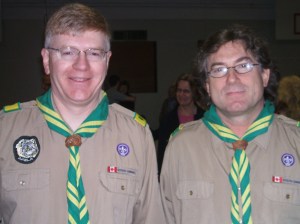 After meeting the future Lady Baden Powell on an ocean cruise in 1912, Robert and Olave Baden-Powell were married in a quiet church wedding that same year. The two formed a powerful alliance that has unforgettably shaped the character of countless young people throughout the world. At Robert’s request, Olave took on the leadership of the floundering Girl Guides movement. Under Olave’s loving and capable direction, the Guiding movement exploded with new energy and growth.
 expressed her Christian commitment by serving as godmother to over 40 baptized children a responsibility she took very seriously. In her autobiography she wrote: “If I have any message to leave, it is this: Believe in God. He guides and protects you all through life …” Robert, when dealing with conflicts in the Scouting movement, recommended that people ” … ask themselves the simple question, “What would Christ have done under the circumstances?” and be guided accordingly.” Character building for Lord and Lady Baden-Powell was a very spiritual activity.
 manly fellows with a brotherly feeling for one another.”
 When Mao Tse Tung attempted to crush the church in China, things seemed very bleak. In 1972 however, a message leaked out which simply said: “The this I know people are well”. The Communist authorities did not understand the message. But Christians all around the world knew instantly that this referred to the world’s most famous children’s hymn. Miraculously the Chinese Church, instead of being crushed, has boomed under persecution, growing from 1.5 million believers to over 100 million.
 ts under the pseudonym “Amy Lothrop”. Anna and Susan collaborated together on fifteen fiction and children’s books. Neither sister ever married, so they shared a house on Constitution Island right across from the famous West Point Military Academy.
 century book, in which the words were spoken as a comforting poem to a dying child, John Fox. Along with his tune, Bradbury added his own chorus “Yes, Jesus loves me, Yes, Jesus Loves me…” Within months, this song raced across the hearts of children throughout North America, and eventually all the continents of the world.


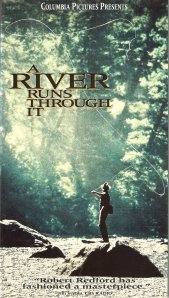
 Again and again, as tragedy and setbacks hit the Maclean family, they seemed to find solace and refreshment by returning to their family river, the big Blackfoot. As the movie put it, “Beneath the (river) rocks are the words of God. Listen … and if Paul and I listened very carefully all our lives, we might hear those words.”

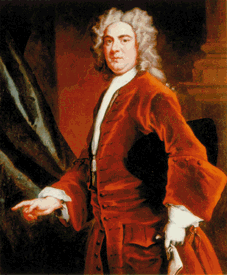 When George was eight or nine, the Duke of Weissenfels heard him play the postlude to a church service and he summoned the boy’s father and told him he ought to encourage such talent. His only teacher was Friedrich Wilhelm Zachow, a most learned and imaginative musician and teacher, who instilled in his young pupil a lifelong intellectual curiosity. At age 11, Handel entered a musical contest at the Berlin court of the Elector with the famous composer Buononcini, and won.
 The situation was so bleak in 1741 that just before he wrote the Messiah, he had seriously considered going back to Germany. But instead of giving up, he turned more strongly to God. Handel composed the Messiah in 24 days without once leaving his house. During this time, his servant brought him food, and when he returned, the meal was often left uneaten. While writing the “Hallelujah Chorus”, his servant discovered him with tears in his eyes. He exclaimed, “I did think I did see all Heaven before me, and the great God Himself!!” As Newman Flower observes, “Considering the immensity of the work, and the short time involved in putting it to paper, it will remain, perhaps forever, the greatest feat in the whole history of musical composition.”
 Edhird's Blog