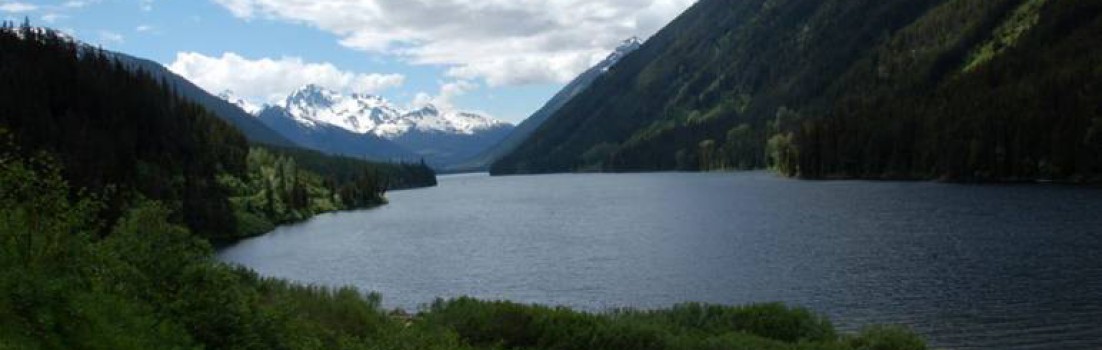
To have the 3508-hectare Mount Seymour Provincial Park right in our Greater Vancouver backyard is such a blessing. All of us, whether nature enthusiasts, hikers, skiers or mountaineers, would enjoy the serene forest cover of hemlock, Douglas fir and red cedar. My wife and I, along with our three sons, have enjoyed many pleasant hours hiking along the Mt Seymour trails, especially on the Baden Powell Trail that ends up down in Deep Cove. In the last number of years that we have been hiking on Mt Seymour, I have often wondered just whom Mt Seymour was named after.
After being given a fascinating book entitled ‘British Columbia Place Names’, I discovered that Mt Seymour is named after the first Governor of the united British Columbia colony, Frederick Seymour. Even though Frederick Seymour has been described as the forgotten governor, his namesake is found scattered all throughout our local community. Examples are Mt Seymour Lions, Mt Seymour Dry Cleaners, Mt Seymour Little League, Mt Seymour Soccer, Seymour Dental Centre, Seymour Animal Clinic, Seymour Golf & Country Club, Seymour Heights Elementary School, and the 11th & 13th Seymour Scouts, Cubs, and Beavers. Even SeyCove High School is a combined name involving Seymour, as well as Deep Cove.
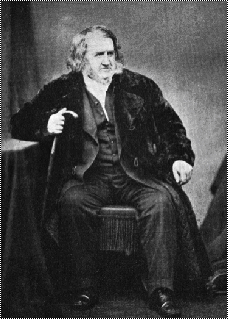
The more I learned about the Seymour connection, the more curious I became about just who Frederick Seymour was and why so many things were named after him, including Seymour Creek, Seymour Arm, Seymour City, and Seymour Street in Vancouver. I discovered that Seymour was born in Belfast, Ireland on September 6, 1820 to a formerly wealthy family that had just lost its properties, position, and paycheck. Through a family friendship with Prince Albert, Seymour was appointed as assistant colonial secretary of Tasmania. Before being appointed as Governor of the mainland colony of British Columbia in 1864, Seymour also served in Antigua, Nevis, and finally as lieutenant governor of British Honduras for 16 years. The Duke of Newcastle chose Seymour for BC because he saw him as ‘a man of much ability and energy’. Seymour was thrilled at the ‘prospect of a change from the swamps of Honduras to a fine country’.
Frederick Seymour got along well with the citizens of the capital city of New Westminster. He upgraded their school, made personal gifts of books and magazines to their library, built a 200-seat ballroom, and encouraged the growth of cricket, tennis, & amateur theatre. He also ambitiously attempted to complete Sir James Douglas’ great highway to the interior of BC, but the financial costs of construction were staggering.
Seymour hosted 3,500 First Nations people at New Westminster for a weeklong celebration of Queen Victoria’s birthday. He also gained the support of a Chilcotin Chief in ending a violent inter-racial dispute at Bute Inlet. Seymour later reported that his ‘great object was to obtain moderation from the white men in the treatment of Indians.’
As the interior BC gold rush began to slump in 1865, Seymour went to England in a bid to cut costs by consolidating the two colonies of Vancouver Island and the Mainland. The British Government endorsed Seymour’s plan which resulted in the abolition of the Vancouver Island House of Assembly and the establishment of New Westminster as the sole capital of BC. Victoria was outraged that it ceased to be a capital and lobbied successfully to move the BC capital back to Victoria. Seymour grudgingly was forced to move from his beloved New Westminster to Victoria where he was deeply disliked by many locals. Despite such Islander animosity, Seymour was able to establish the BC public school system, improve the courts, draw up public health regulations, set standards for mining, and reduce the provincial debt.
During this period, some BCers petitioned that BC join up with the United States. Others began campaigning for BC to join Confederation, a move that Seymour opposed in numerous ways. Seymour initially ‘forgot’ to forward a number of pro-Confederation letters to the Colonial Secretary in London but, when he did, he included his own anti-Confederation messages. Seymour believed that Confederation was only wanted by a vocal minority of business people who were hoping that Confederation would solve BC’s economic woes. Prime Minister John A. Macdonald was outraged at Seymour’s opposition to Confederation, stating that Seymour should be recalled “as being perfectly unfit for his present position, under present circumstances. From all I hear, he was never fit for it.”
Seymour’s provincial recall campaign never had a chance to get off the ground, as Seymour was called up north to settle an inter-tribal war between the Nass and Tsimshian First Nations. Using the famous Anglican missionary William Duncan of Metlakatla as an interpreter, Seymour convinced the warring groups to sign a lasting peace treaty. On his way back, Seymour died in Bella Coola from one or more possible causes: dysentery, Panama Fever, and/or acute alcoholism. His convenient death paved the way for his opponents to sweep the memory of Seymour and his anti-Confederation feelings under the carpet. It is amazing to realize that when BC entered Confederation in 1871, BC had fewer than 40,000 people, of which almost 30,000 were First Nations people. Confederation for better or worse was the ‘watershed experience’ that defined our province. Seymour was an embarrassment to John A. Macdonald and friends. So Seymour the anti-Confederationist became the Forgotten Governor.
In the same way that Seymour was a forgotten governor in the civil realm, God is so often a forgotten governor in the spiritual realm. It is time that we re-establish Jesus Christ in his rightful spiritual place as governor of our land. My prayer is that God may keep our land glorious and free and that God the forgotten governor may have dominion from sea to sea.
-previously published in the North Shore News/Deep Cove Crier
P. S. Click this Amazon link to view for free the first two chapters of our new novel Blue Sky.
“I’m afraid there’s been an accident…”
Sandy Brown and her family have just moved to Spokane, Washington where her husband, Scott, is pastoring a new church. With a fresh start, Sandy is determined to devote more time to her four children. But, within weeks of settling in their new life, the Brown family is plunged into turmoil.
Sandy receives shocking news that her children aren’t safe, which brings back haunting memories of the trauma she experienced as a girl. Then, the unthinkable happens…
A brutal attack puts Sandy on the brink of losing everything she’s loved. Her faith in God and the family she cherishes are pushed to the ultimate limit.
Is healing possible when so many loved ones are hurt? Are miracles really possible through the power of prayer? Can life return to the way it was before?
Blue Sky reveals how a mother’s most basic instinct isn’t for survival… but for family.
If you’re a fan of Karen Kingsbury, then you’ll love Blue Sky. Get your copy today on paperback or kindle.
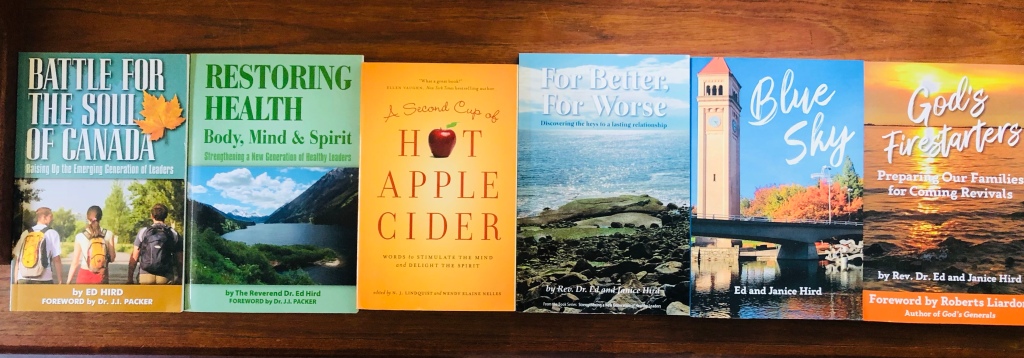
-The sequel book Restoring Health: body, mind and spirit is available online with Amazon.com in both paperback and ebook form. Dr. JI Packer wrote the foreword, saying “I heartily commend what he has written.” The book focuses on strengthening a new generation of healthy leaders. Drawing on examples from Titus’ healthy leadership in the pirate island of Crete, it shows how we can embrace a holistically healthy life.
To receive a signed copy within North America, just etransfer at ed_hird@telus.net, giving your address. Cheques are also acceptable.
-Click to purchase the Companion Bible Study by Jan Cox (for the Battle of the Soul of Canada) in both paperback and Kindle on Amazon.com and Amazon.ca
-Click to purchase the Companion Bible Study by Jan Cox (for the Battle of the Soul of Canada) in both paperback and Kindle on Amazon.com and Amazon.ca
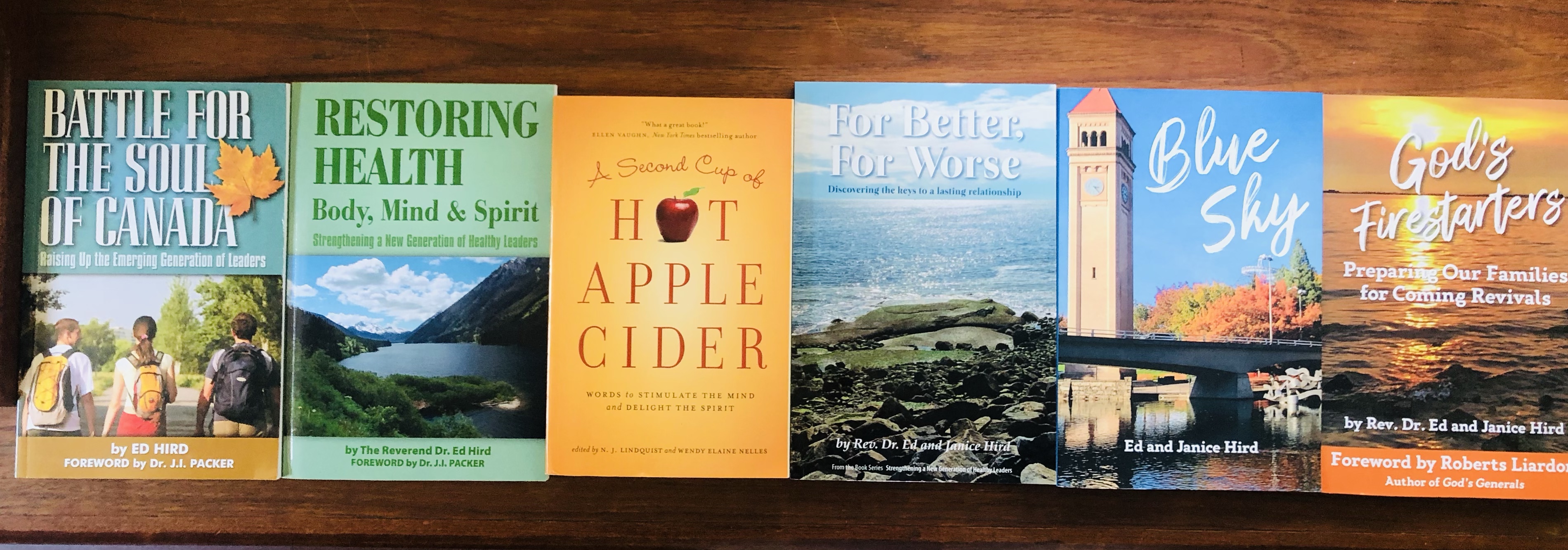
To purchase any of our six books in paperback or ebook on Amazon, just click on this link.
It is good that Joseph Bowes is admitting the need for such seniors facilities. Despite the title ‘Parkgate Highrise not about Seniors’, the discussion is in fact all about negotiating for seniors. Our judeo-christian heritage teaches us to advocate for widows and orphans. Our senior residents need to hear that they are welcome and wanted at the centre of their Seymour-Deep Cove community.
Joseph Bowes’ alternative locations would not meet the needs of our Seymour/Deep Cove seniors. Because these alternative sites are remote and out of the way, they are not near enough, nor accessible enough. Seymour seniors can’t afford to be tucked away in a corner. These alternative suggestions are non-starters and perhaps red-herrings.
The uniquely flat topography makes 3600 Mount Seymour Parkway ideal for seniors access. Many mature seniors find it more challenging to negotiate stairs. The elevators would give these seniors more access and greater mobility to their own community.
Let’s clearly tell the Seymour Seniors that they are both wanted and welcome at the core of their own community. I hope that our civic leadership will put people ahead of bureaucratic plans. The Seymour Seniors population has tripled from 515 to 1500+ since the OCD plan was first envisioned. Our Seymour seniors are worth adjusting for. Seniors deserve better choices as their needs evolve. Independent living is a healthy choice not currently offered in the Seymour community.
I urge others who value the place of seniors to come out and support this application on June 22nd 7pm at North Vancouver District Municipal Hall, 355 West Queens Road.
Rev. Dr. Ed Hird
P. S. Click this Amazon link to view for free the first two chapters of our new novel Blue Sky.
“I’m afraid there’s been an accident…”
Sandy Brown and her family have just moved to Spokane, Washington where her husband, Scott, is pastoring a new church. With a fresh start, Sandy is determined to devote more time to her four children. But, within weeks of settling in their new life, the Brown family is plunged into turmoil.
Sandy receives shocking news that her children aren’t safe, which brings back haunting memories of the trauma she experienced as a girl. Then, the unthinkable happens…
A brutal attack puts Sandy on the brink of losing everything she’s loved. Her faith in God and the family she cherishes are pushed to the ultimate limit.
Is healing possible when so many loved ones are hurt? Are miracles really possible through the power of prayer? Can life return to the way it was before?
Blue Sky reveals how a mother’s most basic instinct isn’t for survival… but for family.
If you’re a fan of Karen Kingsbury, then you’ll love Blue Sky. Get your copy today on paperback or kindle.
-The sequel book Restoring Health: body, mind and spirit is available online with Amazon.com in both paperback and ebook form. Dr. JI Packer wrote the foreword, saying “I heartily commend what he has written.” The book focuses on strengthening a new generation of healthy leaders. Drawing on examples from Titus’ healthy leadership in the pirate island of Crete, it shows how we can embrace a holistically healthy life.
To receive a signed copy within North America, just etransfer at ed_hird@telus.net, giving your address. Cheques are also acceptable.
-Click to purchase the Companion Bible Study by Jan Cox (for the Battle of the Soul of Canada) in both paperback and Kindle on Amazon.com and Amazon.ca
-Click to purchase the Companion Bible Study by Jan Cox (for the Battle of the Soul of Canada) in both paperback and Kindle on Amazon.com and Amazon.ca
To purchase any of our six books in paperback or ebook on Amazon, just click on this link.
My Grandfather Allen loved both Stanley Park and the Stanley Cup. During the Great Depression, he was bumped from being a CPR Railway Engineer to shoving coal. He had to work seven days a week and had little time to see his children. But Grandpa Allen was happy to even have a job in those tough times. When he retired, Grandpa had more time available. He became the co-ordinator for the Stanley Park Shuffleboard Court, and walked every day the 5 miles around the Stanley Park seawall. As a young boy, I loved walking and talking with my Grandpa, feeding the squirrels and enjoying the Park scenery. Stanley Park in beautiful Vancouver BC is still full of many memories for me.
My Grandpa and Nana Allen were also great Stanley Cup fans, never missing a televised game. One of my three sons is such a dedicated hockey fan that if PhDs were offered for studying the NHL, Vancouver Canucks, and Wayne Gretzky, I am sure that we would have a Rhodes Scholar on our hands.
Under Wayne Gretzky’s leadership, The Edmonton Oilers won the Stanley Cup for the fourth time in five years. After one of those victories, Gretzky said, ‘‘You know, I’ve held women and babies. I’ve held jewels and money. But nothing will ever feel as good as holding that cup.’ The recently-retired ‘Great One’ was one of the most accurate shooters in history, was named the NHL’s Most Valuable Player every year from 1980 to 1987, and held over 40 scoring records in the NHL – almost every record for goals and assists that can be achieved. As one sports columnist put it, Gretzky was ‘not merely the best hockey player in the world, but one of the nicest and most unspoiled.’
It is not just Wayne Gretzky but every hockey player who dreams of the moment when he might hoist the coveted Stanley Cup. As a sports commentator put it, the Stanley Cup, sometimes called the ‘Big Mug’, is the hottest thing on ice. As the oldest trophy in North America, being over 100 years old, it’s covered with names of hundreds of players who have played on winning teams. “Hockey, more than any other sport, has placed its emphasis on trophies and cups,” said Clarence S. Campbell, former president of the National Hockey League. “Ever since 1893, the world of hockey has revolved around the Stanley Cup. And the history of pro hockey is the history of the Stanley Cup. I would say that the Cup is the best-known trophy in North American sport today.” Hockey writer Gerald Eskenazi of the New York Times commented during a telecast of the 1974 Stanley Cup finals: “The Stanley Cup is uniquely Canadian. We have nothing in this country that transcends how the Canadians feel about the Stanley Cup as an ultimate goal –not the Super Bowl, not the World Series, nothing…”
The old Cup has been lost, stolen, dented, repaired, and mounted on new bases that grew taller and taller with the years. One player on his way home from a victory party in Ottawa drop-kicked the cup into a canal, then returned the next day to retrieve it. Another team forgot the cup in a photographer’s studio, so the studio cleaning woman took it home and grew geraniums in it! Colorado’s Sylvian Lefebre even went so far as to have his child baptized in the Cup a few years ago! Twice in the late 1960’s, the cup was stolen from the Hockey Hall of Fame in Toronto. In 1968, a replica was made. It is this stand-in that we now see presented to the champion team. The original stays safely in the Hockey Hall of Fame, guarded by electronic burglar alarms.
I had no idea until recently that both the Stanley Cup and Stanley Park are named after the same Governor General of Canada, Frederick Arthur Stanley. When Lord Stanley moved to Canada, his seven sons became passionate hockey players. Being kicked off the public rinks by jealous figure skaters, the Stanley brothers formed their own team ‘The Rideau Rebels’ and played on the frozen lawn of the Governor General’s Rideau Hall residence. Lord Stanley’s seven sons then cornered their father and convinced him to donate a $50 rose bowl for the winner of their amateur competitions. The first winners of the Stanley Cup were the predecessors of the famous Montreal Canadiens who have won the Cup more than any other team in history. It is safe to say that no other cup in history has ever inspired so many brilliant goals, fabulous rushes, split-second saves, and overtime breakthroughs.
Lord Stanley never actually saw a Stanley Cup competition, as he moved back to England in 1893 as the sixteenth Earl of Derby. In England, Lord Stanley went on to become the Lord Mayor of Liverpool, the first Chancellor of Liverpool University, and the president of the British Empire League.
And why did Lord Stanley end up having a park in Vancouver named after him? Once again it was CPR influence by the same William Van Horne who kept BC in Confederation and gave Vancouver its Dutch namesake.
My prayer for all Lord Stanley Cup/Park fans is that we may realize that through faith in Jesus Christ, we have an even greater trophy waiting for us in eternity (Philippians 3:14) Let us run and skate in such a way as to get the prize, the crown of righteousness in the Lord.
-previously published in the North Shore News/Deep Cove Crier
P. S. Click this Amazon link to view for free the first two chapters of our new novel Blue Sky.
“I’m afraid there’s been an accident…”
Sandy Brown and her family have just moved to Spokane, Washington where her husband, Scott, is pastoring a new church. With a fresh start, Sandy is determined to devote more time to her four children. But, within weeks of settling in their new life, the Brown family is plunged into turmoil.
Sandy receives shocking news that her children aren’t safe, which brings back haunting memories of the trauma she experienced as a girl. Then, the unthinkable happens…
A brutal attack puts Sandy on the brink of losing everything she’s loved. Her faith in God and the family she cherishes are pushed to the ultimate limit.
Is healing possible when so many loved ones are hurt? Are miracles really possible through the power of prayer? Can life return to the way it was before?
Blue Sky reveals how a mother’s most basic instinct isn’t for survival… but for family.
If you’re a fan of Karen Kingsbury, then you’ll love Blue Sky. Get your copy today on paperback or kindle.
-The sequel book Restoring Health: body, mind and spirit is available online with Amazon.com in both paperback and ebook form. Dr. JI Packer wrote the foreword, saying “I heartily commend what he has written.” The book focuses on strengthening a new generation of healthy leaders. Drawing on examples from Titus’ healthy leadership in the pirate island of Crete, it shows how we can embrace a holistically healthy life.
-Click to purchase the Companion Bible Study by Jan Cox (for the Battle of the Soul of Canada) in both paperback and Kindle on Amazon.com and Amazon.ca
-Click to purchase the Companion Bible Study by Jan Cox (for the Battle of the Soul of Canada) in both paperback and Kindle on Amazon.com and Amazon.ca
To purchase any of our six books in paperback or ebook on Amazon, just click on this link.
To receive a personally signed copy of any of our books within North America, just etransfer at ed_hird@telus.net, giving your address. Cheques are also acceptable.
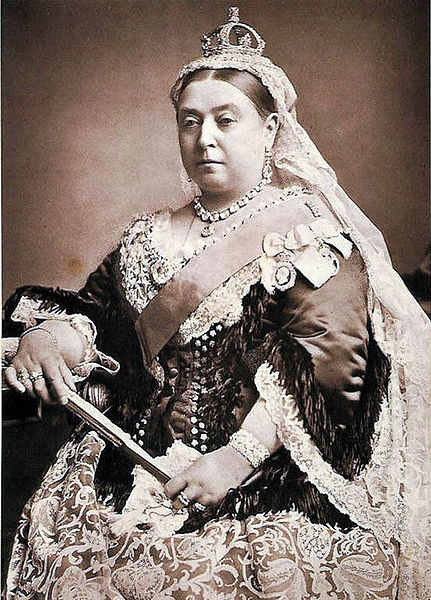
As told in the delightful movie “Mrs. Brown”, Queen Victoria had a great love for the Scottish Balmoral Castle. The Queen actually preferred Scotland to England. As a result, everything Scottish suddenly became fashionable. Tartans, reels, bagpipes and sporrans were considered cultured and refined where before they had been hidden away when friends from the South arrived.
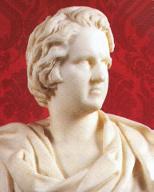
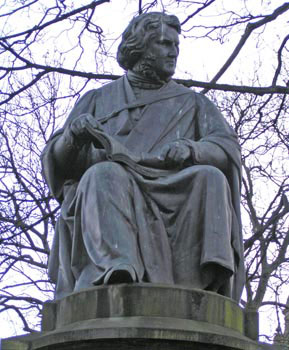
Queen Victoria also had a preference for Scottish doctors, in particular Sir James Simpson of Edinburgh. Her appointment of James Simpson as one of her Majesty’s Physicians was symptomatic of Victoria’s innovative leadership style. Despite the prejudice many have today to all things ‘Victorian’, Queen Victoria helped open the doors for her people to modern science and medicine. Even as a child, she led the way as the first member of the Royal Family to be vaccinated for smallpox. Later as Victoria was to give birth to her fifth child, she turned to Sir James Simpson, the father of modern anesthetics, for help.
Until Queen Victoria’s bold move, there was a great controversy about the morality of whether women should use anesthetics in childbirth. Her leadership broke people free from superstition and fear. Her use of an anaesthetic was so controversial that the official Royal Press ‘The Lancet’ actually denied that she had accepted chloroform, but the lay press rushed to spread the news.
Dr. Petrie in Liverpool considered anesthesia a breach of medical ethics. It was the act of a coward, he wrote, to avoid pain, and if a woman insisted on the use of chloroform to alleviate her labour pains, she must be told that she was in no fit state to make decisions. ‘Are we going to allow the patient to tell us what to do?’ he enquired indignantly.
Sir James Simpson used careful statistics to overcome enormous prejudice among these medical colleagues. Many of Simpson’s fellow doctors feared that chloroform would increase the already high death rate following operation, increase the incidence of bleeding, paralysis, & pneumonia, and bring on ‘mania’ in the mother.
There were also clergymen who argued that anesthetics was somehow against the Bible. Simpson humorously responded that on the occasion of the first recorded operation –the removal of a rib – the Lord had caused a deep sleep to fall on Adam, proof of his approval of anesthesia! In defending anesthesia against clerical criticism, Simpson noted that some churchmen also first spoke against optical glasses, spectacles and the telescope as ‘offsprings of man’s wicked mind’, because they changed the natural appearance of things and presented them in an untrue light. Simpson was so convinced of the rightness of anesthetics that he even called his study ‘St. Anesthesia’.
In the midst of this raging battle with the medical and ecclesiastical establishments, along came Queen Victoria who settled the controversy in one decisive act. Throughout the British Empire, her loyal subjects agreed that the sensible Queen would have never taken chloroform from Dr. Simpson if it was really dangerous or against the will of the Lord. The gift of anesthetic was Queen Victoria’s present to millions of grateful mothers around the world.
The mothers of the mid-nineteenth century were looking for a doctor who would consider them seriously as people, and not as baggage. James Simpson was a man of great compassion who could not bear to see women in pain. As a young intern, Simpson ran out in horror during a cancer operation and almost switched to studying law. ‘Can nothing be done’; he pleaded, ‘to make operations less painful?’ James Simpson was a man who respected women of all classes and considered it their due to receive the best medical attention that there was to offer. Simpson didn’t just treat the Queen as an individual; he treated all women as ‘queens’. Simpson, as a man of deep faith, knew that in Christ there was neither slave nor free, male nor female, for all are one and equally valued in the Lord (Galatians 3:28).
In 1870 a contemporary of Simpson wrote, “Simpson adopted obstetrics when it was the lowest and most ignoble of our medical arts: he has left it a science numbering amongst its professors many of the most distinguished of our modern physicians.’ The average physician of the early Victorian age was armed with a jar of sticky black leeches and an obsession for putting them to work. With the discovery of chloroform, Simpson held that ‘a new light had burst upon Surgery, and a large boon conferred on mankind.’
Simpson was a natural inventor who was always eager to experiment in new directions –the fight against puerperal fever, the invention of new types of forceps, the combating of cholera, and the invention of the vacuum suction extractor to help with childbirth problems. And he invented the uterine sound instrument by accident by dropping a straight tool on the ground and bending it!
For Simpson, faith was as natural as breathing. Family prayers were at 8:15am in the dining room. Everyone had their own Bible in their hand, and the family sat around the mahogany table. Simpson always read the Lesson, but enjoyed the children leading the prayers. After the tragic death of his fifteen-year old son Jamie, Simpson had a profound encounter with Jesus Christ. ‘I am the oldest sinner and the youngest believer in this room’ he said to a gathering of enthusiastic medical missionary students. Despite his fame for discovering chloroform, Simpson said to all: “My greatest discovery is Jesus Christ as my Lord and Saviour”.
For his service to Queen Victoria, Simpson became the first Scottish doctor to knighted as a baronet. In his memoirs Lord Playfair, Professor of Chemistry, called Simpson ‘…the greatest physician of his time’. A doctor in the Indian Army said in the Bombay Courier of 22 January 1848 that “the most outstanding character that he had come across in his tour of the medical centres of Europe was ‘little Simpson of Edinburgh’ who had the four ideals for the perfect physician: the brain of an Apollo, the eye of an eagle, the heart of a lion, and the hand of a lady –nothing baffles his intellect, nothing escapes his penetrating glance…” Despite all the rejection Simpson experienced, he was eventually elected President of the Edinburgh Royal College of Physicians, as a Foreign Associate of the Academy of Medicine of Paris, and given the Swedish Royal Order of St. Olaf.
The Scottish people loved him deeply. When Simpson was dying in extreme pain, he commented: ‘When I think, it is of the words ‘Jesus only’ and really that is all that is needed, is it not?’ To honour this Christ-like man, 80,000 Scots watched his funeral procession in Edinburgh.
My prayer is that each of us may treat the mothers in our lives, as Sir James Simpson treated all women, with respect and dignity.
-Previously published in the North Shore News/Deep Cove Crier
P. S. Click this Amazon link to view for free the first two chapters of our new novel Blue Sky.
“I’m afraid there’s been an accident…”
Sandy Brown and her family have just moved to Spokane, Washington where her husband, Scott, is pastoring a new church. With a fresh start, Sandy is determined to devote more time to her four children. But, within weeks of settling in their new life, the Brown family is plunged into turmoil.
Sandy receives shocking news that her children aren’t safe, which brings back haunting memories of the trauma she experienced as a girl. Then, the unthinkable happens…
A brutal attack puts Sandy on the brink of losing everything she’s loved. Her faith in God and the family she cherishes are pushed to the ultimate limit.
Is healing possible when so many loved ones are hurt? Are miracles really possible through the power of prayer? Can life return to the way it was before?
Blue Sky reveals how a mother’s most basic instinct isn’t for survival… but for family.
If you’re a fan of Karen Kingsbury, then you’ll love Blue Sky. Get your copy today on paperback or kindle.
-The sequel book Restoring Health: body, mind and spirit is available online with Amazon.com in both paperback and ebook form. Dr. JI Packer wrote the foreword, saying “I heartily commend what he has written.” The book focuses on strengthening a new generation of healthy leaders. Drawing on examples from Titus’ healthy leadership in the pirate island of Crete, it shows how we can embrace a holistically healthy life.
To receive a signed copy within North America, just etransfer at ed_hird@telus.net, giving your address. Cheques are also acceptable.
-Click to purchase the Companion Bible Study by Jan Cox (for the Battle of the Soul of Canada) in both paperback and Kindle on Amazon.com and Amazon.ca
-Click to purchase the Companion Bible Study by Jan Cox (for the Battle of the Soul of Canada) in both paperback and Kindle on Amazon.com and Amazon.ca
To purchase any of our six books in paperback or ebook on Amazon, just click on this link.
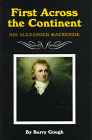
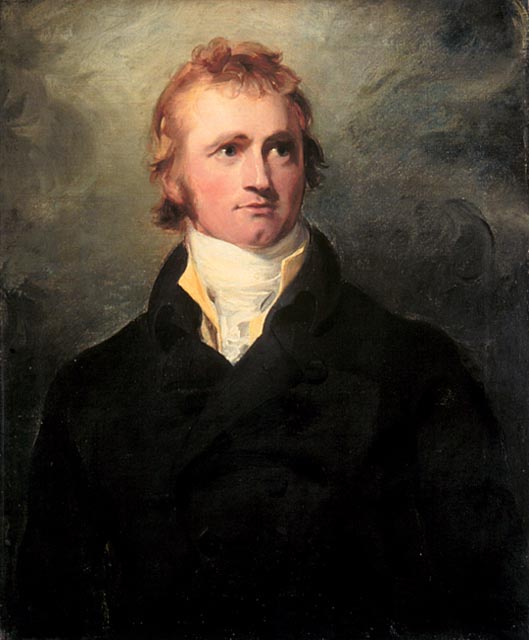
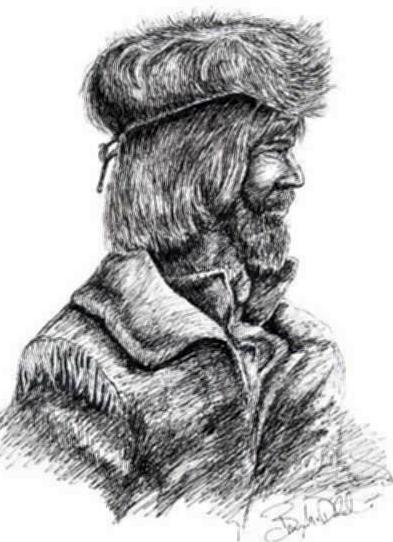
Sir Alexander Mackenzie ranks as one of the most remarkable persons of North American wilderness history and, indeed, as one of the greatest travelers of all time. His transcontinental crossing predated (and indeed inspired) the more famous Lewis and Clark American expedition by twelve years. Even Bernard De Voto, the well-known Utah-born historian said of Mackenzie, “In courage, in the faculty of command, in ability to meet the unforeseen with resources of craft and skill, in the will that cannot be overborne, he has had no superior in the history of American exploration.”
Mackenzie realized the dream of a Canada stretching from sea to sea. Beneath the lion and the unicorn supporting the coat of arms of Canada are the Latin words: A MARI USQUE AD MARE, taken from a Biblical text, ‘He shall have dominion also from sea to sea and from the river to the ends of the earth. Without Alexander Mackenzie (and his Nor’Wester friends Simon Fraser and David Thompson), Canada would have lost her entire Pacific Coast, being shut off from any access to the sea.
In 1764, Alexander Mackenzie was born in Stornoway on the Isle of Lewis, a windswept, rugged island in the Outer Hebrides off the west coast of Scotland. When Alexander was ten, his mom died. Neighbours, knowing he had memorized long passages from the Bible, predicted that Alexander would become a clergyman. Through the local pastor’s library, he learned about astronomy and the use of telescopes. At age 13, Alexander tabulated all the animal and plant life in the Hebrides, and he and his pastor tried unsuccessfully to get it published in London.
To escape the grinding poverty, his family, like thousands of other Highlanders, moved to the New World, only to become caught up in the American Revolution. His father, like Simon Fraser’s dad, joined a United Empire Loyalist regiment near New York, before escaping with his family to Montreal. In those days, every one of Montreal’s 4000 inhabitants was involved in some way with the fur trade. To young Alexander Mackenzie, the Montreal-based North West Company fur trade signified adventure, a chance to travel and explore new territory.
The heart of the fur industry was the voyageurs, who were the heroes and athletes of the 18th century. As with the NHL, a voyageur was an old man at forty and forced to retire.
A good voyageur paddled 40 strokes to the minute and could keep up that pace from dawn to dusk with brief stops. They had the reputation of being the finest canoeists in the world, who could travel anywhere. Most of the North West Company’s 1,100 voyageurs were Canadians, which in those days meant that they were Quebec-born francophones. The Northwest Company brought together a unique blend of Canadians and Scots like Simon Fraser and Alexander Mackenzie. At the height of the North West Company, it had eight times as many men in Western Canada as the more cautious Hudson’s Bay Company.
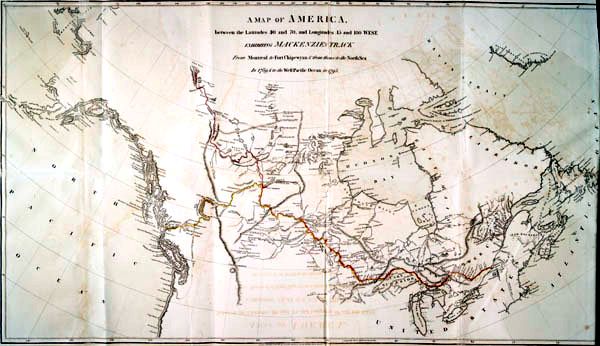
While looking for the Pacific Ocean, Mackenzie discovered and charted the largest river in Canada, the 2,500-mile long Mackenzie River . He reached the Arctic Ocean on July 14th, 1789 –the same day as the angry Paris mobs stormed the French Bastille. Mackenzie was so heartbroken over ending up at the wrong ocean that he named his river ‘The River of Disappointment.’ The Arctic explorer Sir John Franklin renamed it the Mackenzie River. Over 200 years later, there are 11 different places named after Alexander Mackenzie in BC and the North West Territories, including the Mackenzie Delta, the Mackenzie Mountains, the Mackenzie Highway, and the Sir Alexander Mackenzie Provincial Park.
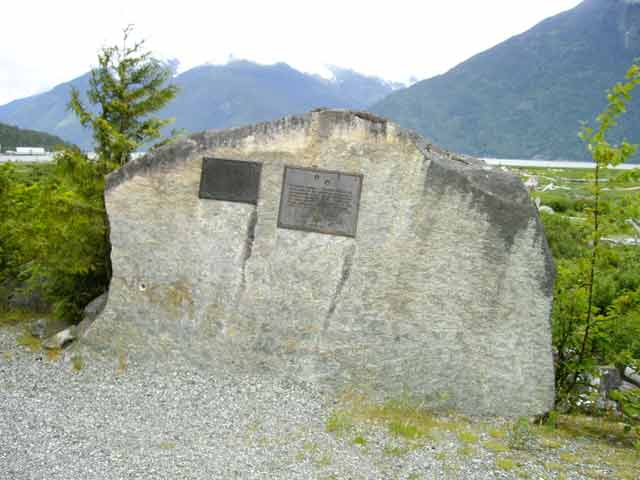
Mackenzie the Scottish Bulldog was above all things resilient. Rather than give up his Pacific quest, he went to England to improve his knowledge of astronomy and geography. Upon returning to Canada, Mackenzie once again struck out towards the Pacific Ocean, known by some First Nations as the ‘Stinking Lake’. This time he traveled down the Peace River and the Parsnip River before trekking the final distance over the ‘Grease Trail’, traveled by the First Nations for countless generations. Once again his victory was bitter-sweet. Yes, he had succeeded in reaching Bella Coola on the Pacific Ocean. But like Simon Fraser, he too had discovered a route that was useless as a fur-trading canoe highway.
Following his two epic journeys to the Arctic and the Pacific Oceans, Mackenzie wrote an instant best-selling book called Voyages. His book was so popular with the English and Germans that the publisher could not print enough copies to keep up with the demand. During this time, he went back to England, became friendly with the Prince of Wales, and was knighted by his father King George IV. That winter and spring, Sir Alexander was the most popular man in London. No social event was considered a success unless he attended it.
Between his book sales and his fur trading, Mackenzie became one of Canada’s wealthiest men. He even spent a brief period in Canadian politics which ‘bored him to tears’. He also founded his own fur-trading ‘XY Company’ and tried unsuccessfully to do a corporate takeover of the failing Hudson’s Bay Company.
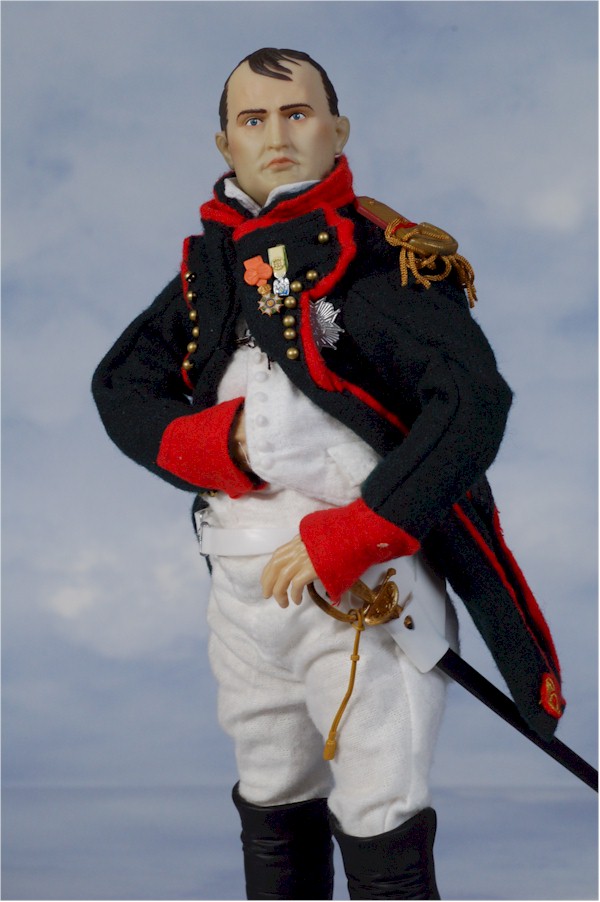
Few people in Canada realize that Mackenzie was an unwitting ‘accomplice’ in Napoleon’s planned re-conquest of Canada. Napoleon had Mackenzie’s book smuggled from England and translated into French. Mackenzie’s description of the Western Canada river system was so precise that Napoleon had set up a scheme during the War of 1812 to use Mackenzie’s book to invade Canada. Canada would be conquered by a surprise attack from New Orleans, up the Mississippi River. Fortunately for Canada, Napoleon ended up invading Moscow rather than Ottawa.
My prayer is that Jesus may raise up many more Alexander Mackenzies, people with bull-dog persistence, inexhaustible energy, and insatiable curiosity.
-previously published in the North Shore News/Deep Cove Crier
P. S. Click this Amazon link to view for free the first two chapters of our new novel Blue Sky.
“I’m afraid there’s been an accident…”
Sandy Brown and her family have just moved to Spokane, Washington where her husband, Scott, is pastoring a new church. With a fresh start, Sandy is determined to devote more time to her four children. But, within weeks of settling in their new life, the Brown family is plunged into turmoil.
Sandy receives shocking news that her children aren’t safe, which brings back haunting memories of the trauma she experienced as a girl. Then, the unthinkable happens…
A brutal attack puts Sandy on the brink of losing everything she’s loved. Her faith in God and the family she cherishes are pushed to the ultimate limit.
Is healing possible when so many loved ones are hurt? Are miracles really possible through the power of prayer? Can life return to the way it was before?
Blue Sky reveals how a mother’s most basic instinct isn’t for survival… but for family.
If you’re a fan of Karen Kingsbury, then you’ll love Blue Sky. Get your copy today on paperback or kindle.
-The sequel book Restoring Health: body, mind and spirit is available online with Amazon.com in both paperback and ebook form. Dr. JI Packer wrote the foreword, saying “I heartily commend what he has written.” The book focuses on strengthening a new generation of healthy leaders. Drawing on examples from Titus’ healthy leadership in the pirate island of Crete, it shows how we can embrace a holistically healthy life.
To receive a signed copy within North America, just etransfer at ed_hird@telus.net, giving your address. Cheques are also acceptable.
-Click to purchase the Companion Bible Study by Jan Cox (for the Battle of the Soul of Canada) in both paperback and Kindle on Amazon.com and Amazon.ca
-Click to purchase the Companion Bible Study by Jan Cox (for the Battle of the Soul of Canada) in both paperback and Kindle on Amazon.com and Amazon.ca
To purchase any of our six books in paperback or ebook on Amazon, just click on this link.
One of the best things that ever happened to the famous BC explorer David Thompson was when a large log rolled from a sleigh and crushed his leg. All things really did work for the good through that tragedy (Romans 8:28). His broken leg gave him time to learn math, science, and instruments of surveying, how to keep field notes and journal-keeping. As a result, David Thompson learned the necessary skills which enabled him to put Western Canada on the map.
The early 19th century Western Canada map was essentially blank until Thompson filled it in. Thompson was one of the master-builders of Canada and possibly the greatest geographer the world has known. As a land geographer, Thompson was the peer of Captain James Cook, the great sea geographer of the oceans. Thompson has been described as a great surveyor disguised as a fur trader, as a marvelous scientist with the sensitive soul of a prophet.
By his own initiative and industry, he explored and surveyed more than a million and a half square kilometres of wilderness, accomplishing the staggering feat of mapping half a continent. Even Alexander Mackenzie, the renowned explorer, was quite astounded and remarked that Thompson had performed more in ten months than he expected could have been done in two years. Thompson’s map, his greatest achievement, was so accurate that 100 years later it remained the basis for many of the maps issued by the Canadian government and the railway companies. We can even credit David Thompson with the exacting survey of much of the Canadian/US 49th Boundary.
Thompson’s written ‘Travels Journal’ shows his multifaceted gifts as scientific explorer, geographer, cartographer, and naturalist. Some scholars have described Thompson’s Journal as one of the finest works in Canadian literature. His directness in prose, his modesty and ability to see himself and others, his sharp powers of observation and intense practicality all contribute to a vivid glimpse of early Canadian pioneering. His account of his adventures has also been described as one of the world’s greatest travel books.
When David was only two years old, his father died and his mother moved to London, changing their Welsh name ApThomas to the more easily spoken Thompson. When David moved to Canada, he never saw either his family or London town again. In his journal, David wrote movingly of a ‘long and sad farewell to my noble, my sacred country, an exile for ever’.
Thompson the Canadian immigrant grew to love ‘the forest and the white water, the shadow and the silence, the evening fire, the stories and the singing and a high heart.’ He was modest, talented and deeply spiritual. The First Nations people gave him the name Koo-Koo-Sint, which means ‘Star-Gazer’, in recognition of his star-based map work. It wasn’t that he was a starry-eyed dreamer, but rather a dedicated scientist using the best mapping technology of his day.
David Thompson apprenticed with the Hudson’s Bay Company, but later switched to the competitors, the North West Company, because the Hudson’s Bay Company wanted him to focus on furs, not map-making. The North West Company appointed Thompson as their official ‘Surveyor and Map Maker’, and proudly displayed his finished map of Canada on their boardroom wall.
Thompson’s brother-in-law, John McDonald, considered Thompson a good trader, a fearless traveler, and a man who was liked and respected by the First Nations. His few criticisms of his brother-in-law had to do with his spirituality, his passion for surveying, and his total unwillingness to drink or to sell liquor when dealing with customers. Thompson had seen so many First Nations people harmed by the liquor trade that he had acquired a strong aversion to such profiteering.
Unlike many Nor-Westers, Thompson did not abandon his wife Charlotte and his family when he finally became wealthy. David and Charlotte Thompson, who had seven sons and six daughters, were only parted by his death fifty-eight years after their marriage.
Thompson tried in vain for years to find a profitable trade route to the Pacific. Upon hearing that the American Jacob Astor had sent out his sea and land expedition to the Oregon country, the Canadians sent David Thompson to try once again. Thompson and his voyageurs bravely made their way down the Columbia River. They were continually wet up to the middle, and exposed to cold highwinds. The glacier water deprived them of all feeling in their limbs. Despite such hardships, Thompson never gave up, instead writing in his Journal that they ‘continued under the mercy of the Almighty and at sunset put up, each of us thankful for our preservation’.
When they finally reached the Pacific watershed, Thompson knelt on the banks of the Blueberry Creek and prayed aloud: ‘May God in his mercy give me to see where these waters flow into the ocean, and let us return in safety.’ He and his voyageurs eventually did make it to the mouth of the Columbia River, but unfortunately arrived there after Jacob Astor. One can speculate that if David Thompson had been a little quicker, the name ‘British Columbia’ might have been a more accurate description of our province.
Despite Thompson’s great success in canoeing to the mouth of the Columbia and in mapping most of Western Canada, he died in extreme poverty and obscurity, even having to pawn his beloved surveying equipment and his overcoat to buy food for his family. Yet throughout the hardships, Thompson never stopped gazing at the Morning Star, Jesus Christ. I give thanks for David Thompson the Star-Gazer who did so much for every one of us as Canadians and British Columbians.
-previously published in the North Shore News/Deep Cove Crier and the Light Magazine
P. S. Click this Amazon link to view for free the first two chapters of our new novel Blue Sky.
“I’m afraid there’s been an accident…”
Sandy Brown and her family have just moved to Spokane, Washington where her husband, Scott, is pastoring a new church. With a fresh start, Sandy is determined to devote more time to her four children. But, within weeks of settling in their new life, the Brown family is plunged into turmoil.
Sandy receives shocking news that her children aren’t safe, which brings back haunting memories of the trauma she experienced as a girl. Then, the unthinkable happens…
A brutal attack puts Sandy on the brink of losing everything she’s loved. Her faith in God and the family she cherishes are pushed to the ultimate limit.
Is healing possible when so many loved ones are hurt? Are miracles really possible through the power of prayer? Can life return to the way it was before?
Blue Sky reveals how a mother’s most basic instinct isn’t for survival… but for family.
If you’re a fan of Karen Kingsbury, then you’ll love Blue Sky. Get your copy today on paperback or kindle.
-The sequel book Restoring Health: body, mind and spirit is available online with Amazon.com in both paperback and ebook form. Dr. JI Packer wrote the foreword, saying “I heartily commend what he has written.” The book focuses on strengthening a new generation of healthy leaders. Drawing on examples from Titus’ healthy leadership in the pirate island of Crete, it shows how we can embrace a holistically healthy life.
To receive a signed copy within North America, just etransfer at ed_hird@telus.net, giving your address. Cheques are also acceptable.
-Click to purchase the Companion Bible Study by Jan Cox (for the Battle of the Soul of Canada) in both paperback and Kindle on Amazon.com and Amazon.ca
-Click to purchase the Companion Bible Study by Jan Cox (for the Battle of the Soul of Canada) in both paperback and Kindle on Amazon.com and Amazon.ca
To purchase any of our six books in paperback or ebook on Amazon, just click on this link.
A number of years ago, my middle son Mark graduated from Simon Fraser University in Chemistry. SFU was named in 1963 by Leslie Peterson, the Provincial Minister of Education, because SFU overlooks the very river where Simon Fraser made his historic journey to the Pacific Coast.
My earliest memory of SFU was walking through the beautiful new plazas in the 1960’s, and then hearing about the student protests that paralyzed the university. One of the most puzzling demands of the students was that SFU be renamed Louie Riel University. What is it about Simon Fraser the Explorer that seems to both repel and attract people? Why is it that he is the least well known of all Canadian explorers?
The Greater Vancouver Book holds that Simon Fraser could be called the founding father of British Columbia because he built the first colonial trading posts west of the Rockies. Fraser, however, is best known for his bold exploration of the great river which bears his name. On the Canadian Peace Tower in Ottawa is the verse “He shall have dominion from sea to sea” (Psalm 72:8) By Simon Fraser’s heroic journey to the Pacific Coast, he made it possible for the Dominion of Canada to stretch from sea to sea. Fraser’s was the third expedition to span the continent of North America: after Alexander Mackenzie and Lewis & Clarke. Simon Fraser felt like a total failure when he reached the Pacific Coast. Yet his remarkable quest kept Canada from remaining land-locked at the Alberta border. Simon Fraser was one of the most successful failures that Canada has ever known.
Descended from a well-known Scottish Highland family, the Lovat Frasers, Simon ‘Jr.’ was the youngest son of Simon Fraser of Culbokie and Isabel Grant of Duldreggan. In September 1773 the family joined a celebrated migration of Highlanders who travelled to America on the SS Pearl to seek their fortunes in the New World. In 1775, the year before the birth of their ninth child Simon, the first shots in the American Revolution were fired. Simon’s Pro-British father was captured at the Battle of Bennington. Every time he and his older son refused to join the rebels, his wife was fined another farm animal. Simon Sr. died thirteen months later from harsh treatment as a prisoner in the Albany jail. Mrs. Fraser fled as a United Empire Loyalist with her family to Canada in 1784.
When Simon turned 16, his Uncle John Fraser, a Montreal judge found him a seven-year clerical apprenticeship with the famous North West Company of Montreal. In 1793 Simon was sent to the Athabascan wilderness to learn his trade at the secluded Peace River posts. By 1802 he was selected as one of the company’s youngest partners.
In 1805 Simon was chosen for the important role of expanding the company’s trade to the land west of the Rocky Mountains from 1805-1808. His mandate from the North West Company was to cross the Rockies and establish trading relations with the Indigenous people in the interior of what is now British Columbia, but which Fraser named New Caledonia. According to family tradition, Fraser selected the name New Caledonia because the country reminded him of his mother’s description of Caledonia, the ancient Roman name for the Scottish Highlands. Between 1805 and 1807 Fraser set up the first four forts west of the Rockies at McLeod, Stuart and Fraser Lakes and Fort George, making himself the pioneer of permanent settlement, in what is now the mainland of BC.
What mattered now above all else to the Nor’Westers was the search for a route to the Pacific that would reduce the enormous cost of the long canoe-haul from Montreal. Only then would they be able to survive the competition from the Hudson’s Bay Company with its monopoly on all shipping to England via the Hudson’s Bay area.
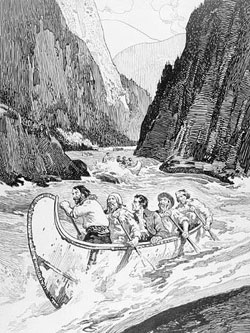
On May 22, 1808, Fraser left Fort George (Modern-day Prince George) with two clerks, John Stuart and Jules Quesnel, 19 voyageurs and two Indian guides. Simon Fraser named his lead canoe, Perseverance, which was also the motto of the North West Company and one of the greatest strengths of the Scottish people. Fittingly, Fraser wrote at the worst of his Fraser River journey: “Our situation is critical and highly unpleasant; however we shall endeavour to make the best of it; what cannot be cured, must be endured.” As he explored one of the world’s most difficult and dangerous rivers, Fraser showed remarkable courage, stamina, and firmness tempered with restraint. In the midst of enormous strain, he never lost his temper nor acted unfairly.
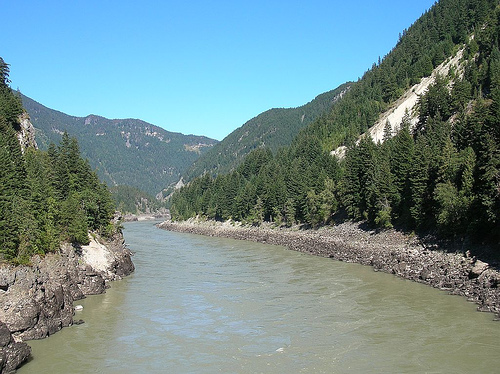
Simon Fraser travelled during the springtime flood, the most dangerous time of the year on the Fraser. After surviving numerous near-drownings and upset canoes, Fraser was at last persuaded that it was impossible to make the entire journey by water. ‘Our situation was really dangerous’, Fraser wrote on June 5th, ‘being constantly between steep and high banks where there was no possibility of stopping the canoe.’ At the Black Canyon, they were forced to follow native guides as they climbed jagged cliffs using intricate scaffolds, bridges and ladders hundreds of feet above the raging water. One missed step would be their last. Simon Fraser commented in his journal: “I have been for a long period among the Rocky Mountains, but have never seen anything to equal this country, for I cannot find words to describe our situation at times. We had to pass where no human beings should venture.” Every bend threatened new dangers –perilous rapids, treacherous portages, and impassible whirlpools.
Despite incurring a serious groin injury, Fraser completed the journey in 36 days (May 28th-July 2nd) and made the return trip in one day less (July 3rd to August 6th). He and his voyageurs had travelled more than a 1,000 miles of uncharted territory on the largest salmon-spawning river in the world.
Sadly this greatest adventure of his life won him little fame and less reward, for the Fraser River was useless as a canoe Highway for fur traders. Even worse, this river which Fraser so successfully navigated turned out not to be the prized Columbia, but rather an unknown river which fellow Nor’wester David Thompson would later name the Fraser River. Before Fraser died in poverty and obscurity in 1862, he learned of the BC Gold rush with hundreds of prospectors rushing up the Fraser River, past the Fraser Valley, and through the Fraser Canyon.
Over two hundred years later, I give thanks to God for the perseverance of Simon Fraser who ‘ran with perseverance the race marked out for him’. (Hebrews 12:1) May Jesus strengthen us this day to never, ever, ever give up in our journeys of life.
-previously published in the North Shore News/Deep Cove Crier
P. S. Click this Amazon link to view for free the first two chapters of our new novel Blue Sky.
“I’m afraid there’s been an accident…”
Sandy Brown and her family have just moved to Spokane, Washington where her husband, Scott, is pastoring a new church. With a fresh start, Sandy is determined to devote more time to her four children. But, within weeks of settling in their new life, the Brown family is plunged into turmoil.
Sandy receives shocking news that her children aren’t safe, which brings back haunting memories of the trauma she experienced as a girl. Then, the unthinkable happens…
A brutal attack puts Sandy on the brink of losing everything she’s loved. Her faith in God and the family she cherishes are pushed to the ultimate limit.
Is healing possible when so many loved ones are hurt? Are miracles really possible through the power of prayer? Can life return to the way it was before?
Blue Sky reveals how a mother’s most basic instinct isn’t for survival… but for family.
If you’re a fan of Karen Kingsbury, then you’ll love Blue Sky. Get your copy today on paperback or kindle.
-The sequel book Restoring Health: body, mind and spirit is available online with Amazon.com in both paperback and ebook form. Dr. JI Packer wrote the foreword, saying “I heartily commend what he has written.” The book focuses on strengthening a new generation of healthy leaders. Drawing on examples from Titus’ healthy leadership in the pirate island of Crete, it shows how we can embrace a holistically healthy life.
To receive a signed copy within North America, just etransfer at ed_hird@telus.net, giving your address. Cheques are also acceptable.
-Click to purchase the Companion Bible Study by Jan Cox (for the Battle of the Soul of Canada) in both paperback and Kindle on Amazon.com and Amazon.ca
-Click to purchase the Companion Bible Study by Jan Cox (for the Battle of the Soul of Canada) in both paperback and Kindle on Amazon.com and Amazon.ca
To purchase any of our six books in paperback or ebook on Amazon, just click on this link.
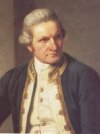
Sometimes I ask myself: Why is English now spoken by hundreds of millions of people in virtually every country of the world? Why do most people of English ancestry live anywhere but England? Australia, New Zealand, USA, Canada, South Africa, etc. Perhaps it is because as seagoing islanders, the British were insatiable searchers for that which was beyond. From the ranks of such inexhaustible seekers emerged the greatest of the 18th century nautical explorers –Captain James Cook. James Cook had an unbounded curiosity and a deep interest in everybody and everything with which he came into contact.
Born on October 27th, 1728 in Yorkshire, Cook’s father was an impoverished Scottish farm labourer and his mother a simple Yorkshire village woman. Cook began his sea life by lugging coal off the treacherous east coast of England. There he learned how to survive the storms, fogs, hidden shoals, and tricky tides.
In 1758, Cook was master of the Pembroke, a 1,250 ton, 64-gun man-of-war. In early 1759, the Pembroke joined a blockade of the Saint Lawrence River designed to prevent French ships from carrying supplies to the fortress colony of Quebec. Cook led patrols up and down the river, charting every hazard, and marking a channel for the warships to follow. During the British assault on Quebec City, Cook successfully navigated the massive Pembroke up the narrow, twisting, and frequently shallow waterway. Without the help of Ship’s Master James Cook, it is doubtful whether the British troops could have taken the fortress by surprise. With only a few years of elementary school education, no one ever expected that a ‘nobody’ like James Cook would one day be chosen as a navy sea captain. Since the upper class were virtually the only officers, there was little chance of promotion by merit in that caste-bound naval world. By sure grit and determination, he taught himself mathematics and astronomy, and at age 40, was chosen as captain, an age when most naval officers had passed their peak.
After being appointed captain, Cook went on to complete three global voyages from 1768 to 1779, exploring and accurately mapping more of the earth’s surface than anyone else before or since. He became the first European to set foot in Australia, the first to fix the position of remote places accurately, the first to establish longitude (one’s position east and west), and the first to have extensive contact with all the various peoples of the Pacific.
It can safely be said that in his time no man knew the world as well as Captain Cook, and no other explorer had such an impact on the global map. As a result, the name of James Cook is commemorated across the length and breadth of the vast Pacific: Cook Strait and Mount Cook in New Zealand; Cooktown and Cook’s Passage in Australia; The Cook Islands in Polynesia, and Cook Inlet in Alaska. With Cook’s discoveries and surveys, the geography of the world was nearly complete. Only Antarctica remained to be discovered.
Upon reaching Hawaii, the islanders worshipped Captain Cook as the god Lono. Curiously, Lono was envisioned as a white god fated to arrive on a magical floating island during the holiday of Mahahiki. Cook’s ships’ huge sails therefore were construed to be long staffs bearing Lono’s divine white banners. When Cook returned to Hawaii from having explored British Columbia, he upset the Hawaiians who had then turned to the season for worshipping the god of war Ku. Things went from bad to worse, and when Cook attempted to hold the king hostage for the return of a stolen cutter, hundreds of Hawaiians converged on him with deadly effect. To many of his crew such as the future Captain George Vancouver, losing Captain Cook was like losing their own father.
Captain James Cook as a World Explorer was not afraid to check out uncharted waters. My prayer for those reading this article is that we too as world explorers may be willing to ‘walk in the spiritual feet’ of Captain James Cook.
-previously published in the North Shore News/Deep Cove Crier
P. S. Click this Amazon link to view for free the first two chapters of our new novel Blue Sky.
“I’m afraid there’s been an accident…”
Sandy Brown and her family have just moved to Spokane, Washington where her husband, Scott, is pastoring a new church. With a fresh start, Sandy is determined to devote more time to her four children. But, within weeks of settling in their new life, the Brown family is plunged into turmoil.
Sandy receives shocking news that her children aren’t safe, which brings back haunting memories of the trauma she experienced as a girl. Then, the unthinkable happens…
A brutal attack puts Sandy on the brink of losing everything she’s loved. Her faith in God and the family she cherishes are pushed to the ultimate limit.
Is healing possible when so many loved ones are hurt? Are miracles really possible through the power of prayer? Can life return to the way it was before?
Blue Sky reveals how a mother’s most basic instinct isn’t for survival… but for family.
If you’re a fan of Karen Kingsbury, then you’ll love Blue Sky. Get your copy today on paperback or kindle.
-The sequel book Restoring Health: body, mind and spirit is available online with Amazon.com in both paperback and ebook form. Dr. JI Packer wrote the foreword, saying “I heartily commend what he has written.” The book focuses on strengthening a new generation of healthy leaders. Drawing on examples from Titus’ healthy leadership in the pirate island of Crete, it shows how we can embrace a holistically healthy life.
To receive a signed copy within North America, just etransfer at ed_hird@telus.net, giving your address. Cheques are also acceptable.
-Click to purchase the Companion Bible Study by Jan Cox (for the Battle of the Soul of Canada) in both paperback and Kindle on Amazon.com and Amazon.ca
-Click to purchase the Companion Bible Study by Jan Cox (for the Battle of the Soul of Canada) in both paperback and Kindle on Amazon.com and Amazon.ca
To purchase any of our six books in paperback or ebook on Amazon, just click on this link.
North Vancouver District…North Vancouver City…West Vancouver… Vancouver City…Vancouver, Washington….How did so many local cities get a Dutch name like Vancouver?
The name goes back to when the Canadian Pacific Railway came to Port Moody in 1886, and then to Vancouver in 1887. Vancouver was first called Gastown, before being changed to Granville after Lord Granville for his part in birthing the Canadian Confederation. Some key ‘movers-and-shakers’ wanted to name Vancouver ‘The City of Liverpool’. The ‘Railway General’, William Van Horne, then vice-president of the CPR, felt that this newly incorporated city deserved a famous name to go with its famous future. “This is destined”, said Van Horne, ” to become a great city, perhaps the greatest city in Canada. We must see to it that it has a name commensurate with its dignity and importance, and Vancouver it shall be, if I have the ultimate decision.”
Since William Van Horne had been the driving force behind CPR’s rapid completion of the CPR line through the Prairies and onto Port Moody; he was listened to most carefully. Sir William Van Horne went on to become the President of the CPR in 1888; before being knighted in 1894. Both the Vancouver, Washington citizens and the Vancouver Island residents were upset that Van Horne had stolen their name given to them by Captain George Vancouver himself. Fort Vancouver, Washington was established in 1824 as the first British Settlement on the West Coast. The Victoria merchants were so upset by this ‘theft’ that they organized a boycott of all Eastern Canada companies who did business with Van Horne’s Vancouver.
Robert Beaven of Victoria complained how wrong it was that Van Horne, being an American citizen, could take so much control after only two years in Vancouver. It is highly ironic that the CPR coast-to-coast railway, which kept BC from joining the USA, was to a very large extent managed and built by Americans. Pierre Burton notes how upset some people were that Van Horne hired more Americans than Canadians to accomplish this nationalist task of uniting Canada by rail.
Why did Van Horne choose Vancouver?? Perhaps part of Van Horne’s attraction to Captain George Vancouver is that they were both of Dutch ancestors, and that both as orphans had ‘made good’ despite enormous obstacles. Vancouver’s paternal family had once been the van Coevordens in the Province of Drenkte, Holland.
Captain Vancouver led one of the greatest expeditions ever undertaken. His mandate came from a sudden threat of war with Spain. British ships had been seized, the flag had been insulted, rights of British subjects had been violated, all in that distant port of Nootka on what came to be called Vancouver Island. Captain Vancouver was sent to receive Nootka back from the Spanish, and to map the Pacific Coast. He and his men, squeezed into two ninety-nine foot sloops, covered 65,000 miles in only four years. Vancouver had meticulously mapped the continental shore line from latitude 56 degrees north, in southeastern Alaska, to his assigned southern limit. He proved once and for all that there was no mythical Northwest Passage. It was a remarkable accomplishment, a tribute to Vancouver’s perseverance, drive, and energy. Without Vancouver’s monumental work, it is conceivable that the northern boundary of Oregon might have been fixed at latitude 54/40 North and Canada today would have no Pacific shores.
Vancouver learnt well from his mentor Captain Cook in the methods of warding off the dreaded illness called scurvy. The seamen detested and grumbled at the strange dishes he made sure were included in their daily diet. They only wanted salt pork, beef, and dried peas –their usual fare. However, Vancouver provided them with extras in the form of pickled cabbage, malt, a peculiar-tasting beer, lime-juice, and something officially described as carrot marmalade. They either ate their foods or were given the lash. British sailors got the nickname ‘limey’ from this ‘peculiar’ practice of daily lime-juice. Vancouver’s ‘limeys’ stayed alive and healthy when, in almost any other vessel afloat, perhaps half of them would be dead inside two years at sea.
Along the way to Vancouver Island, Captain Vancouver learnt many native languages with ease. At one point, he used this skill to do successful marriage counseling that reconciled the King and Queen of Hawaii. In a remarkably contemporary tone, King Tamaahmaah denied his wife’s accusations of adultery, pleading, however, ‘that his high rank and supreme authority was a sort of license for such indulgences.’ The Hawaiian King was so grateful for Vancouver’s marital and political advice that he ceded all of the Hawaiian Islands over to the British Crown. Shortsightedly the British government didn’t want another obscure little colony, and so refused the offer. Just think…if we’d played our cards right, Hawaii could have become the 11th province of Canada!
Captain Vancouver inscribed the names of every officer he had ever respected up and down the coast. : All in all, Vancouver discovered and named more than two hundred places. As a young child, I remembered my mother commenting rapturously about Mt. Baker. I had no idea that Mom was invoking the memory of Vancouver’s third lieutenant. Burrard Inlet was named by Vancouver for an old shipmate of Europa and Expedition days in the Caribbean, Sir Harry Burrard of the navy. Point Grey was named as a compliment to Vancouver’s friend Captain George Grey.
Many BCers don’t realize that the Spanish once ‘owned’ the BC Coast. In honour of his cordial relations with the Captain Quadra who relinquished the Spanish claim to BC, Captain Vancouver gave to Vancouver Island the full name of ‘Quadra & Vancouver Island’.
Four years at sea began to wear down Vancouver’s spirit. Near the end, he commented: “I am once more entrapped in this infernal Ocean, and am totally at a loss to say when I shall be able to quit it.” To his brother Van, he wrote complaining about ‘these remote and uncouth regions’. He never heard one word from his superiors in all of the four years. After his heroic journey around the world, Vancouver received little acclaim and less money. The admiralty took four years to pay the wages they owed Vancouver; the small amount they allowed barely covered his debts. With the horrific Napoleonic wars breaking out, no one had the time to worry about some obscure little settlements on the Northwest coast of what Queen Victoria eventually named as British Columbia.
Vancouver died broken-hearted and rejected at age 40. His tombstone in Petersham was only a plain common grave that was soon forgotten about. Years later, it is well-tended and is remembered annually by the people of British Columbia, who helped rebuild St. Peter’s Church after the Second World War. On this 212th Anniversary of Vancouver’s death, may we each choose to be courageous on our journeys of life. May Jesus the Captain of our souls keep our sails aloft and trimmed.
-previously published in the North Shore News/Deep Cove Crier
P. S. Click this Amazon link to view for free the first two chapters of our new novel Blue Sky.
“I’m afraid there’s been an accident…”
Sandy Brown and her family have just moved to Spokane, Washington where her husband, Scott, is pastoring a new church. With a fresh start, Sandy is determined to devote more time to her four children. But, within weeks of settling in their new life, the Brown family is plunged into turmoil.
Sandy receives shocking news that her children aren’t safe, which brings back haunting memories of the trauma she experienced as a girl. Then, the unthinkable happens…
A brutal attack puts Sandy on the brink of losing everything she’s loved. Her faith in God and the family she cherishes are pushed to the ultimate limit.
Is healing possible when so many loved ones are hurt? Are miracles really possible through the power of prayer? Can life return to the way it was before?
Blue Sky reveals how a mother’s most basic instinct isn’t for survival… but for family.
If you’re a fan of Karen Kingsbury, then you’ll love Blue Sky. Get your copy today on paperback or kindle.
-The sequel book Restoring Health: body, mind and spirit is available online with Amazon.com in both paperback and ebook form. Dr. JI Packer wrote the foreword, saying “I heartily commend what he has written.” The book focuses on strengthening a new generation of healthy leaders. Drawing on examples from Titus’ healthy leadership in the pirate island of Crete, it shows how we can embrace a holistically healthy life.
To receive a signed copy within North America, just etransfer at ed_hird@telus.net, giving your address. Cheques are also acceptable.
-Click to purchase the Companion Bible Study by Jan Cox (for the Battle of the Soul of Canada) in both paperback and Kindle on Amazon.com and Amazon.ca
-Click to purchase the Companion Bible Study by Jan Cox (for the Battle of the Soul of Canada) in both paperback and Kindle on Amazon.com and Amazon.ca
To purchase any of our six books in paperback or ebook on Amazon, just click on this link.


 eymour Street in Vancouver. I discovered that Seymour was born in Belfast, Ireland on September 6, 1820 to a formerly wealthy family that had just lost its properties, position, and paycheck. Through a family friendship with Prince Albert, Seymour was appointed as assistant colonial secretary of Tasmania. Before being appointed as Governor of the mainland colony of British Columbia in 1864, Seymour also served in Antigua, Nevis, and finally as lieutenant governor of British Honduras for 16 years. The Duke of Newcastle chose Seymour for BC because he saw him as ‘a man of much ability and energy’. Seymour was thrilled at the ‘prospect of a change from the swamps of Honduras to a fine country’.
 in 1865, Seymour went to England in a bid to cut costs by consolidating the two colonies of Vancouver Island and the Mainland. The British Government endorsed Seymour’s plan which resulted in the abolition of the Vancouver Island House of Assembly and the establishment of New Westminster as the sole capital of BC. Victoria was outraged that it ceased to be a capital and lobbied successfully to move the BC capital back to Victoria. Seymour grudgingly was forced to move from his beloved New Westminster to Victoria where he was deeply disliked by many locals. Despite such Islander animosity, Seymour was able to establish the BC public school system, improve the courts, draw up public health regulations, set standards for mining, and reduce the provincial debt.
 Sandy Brown and her family have just moved to Spokane, Washington where her husband, Scott, is pastoring a new church. With a fresh start, Sandy is determined to devote more time to her four children. But, within weeks of settling in their new life, the Brown family is plunged into turmoil.












 Edhird's Blog