One of the best loved Christmas Carols is the 19th century carol: Good King Wenceslas. In 1853, John Mason Neale chose Wenceslas as the subject for a children’s song to exemplify generosity. It quickly became a Christmas favorite, even though its words clearly indicate that Wenceslas ‘looked out’ on St. Stephen’s Day, the day after Christmas. So Good King Wenceslas is actually a Boxing Day carol! For a tune, Neale picked up a spring carol, originally sung with the Latin text ‘Tempus adest floridum’ or ‘Spring has unwrapped her flowers’. This original spring tune was first published in 1582 in a collection of Swedish church and school songs.
Wenceslas was the Duke of Bohemia who was murdered in 929 AD by his wicked younger brother, Boleslav. As the song indicates, he was a good, honest, and strongly principled man. The song expresses his high moral character in describing King Wenceslas braving a fierce storm in order to help feed a poor neighbour. Wenceslas believed that his Christian faith needed to be put into action in practical ways. Wenceslas was brought up with a strong Christian faith by his grandmother St. Ludmila. Wenceslas’ own mother Drahomira, however, joined forces with an anti-Christian group that murdered Wenceslas’ grandmother, and seized power in Bohemia. Two years later in 922 AD, the evil Drahomira was deposed, and Good King Wenceslas became the ruler. He became Bohemia’s most famous martyr and patron saint. His picture appeared on Bohemian coins, and the Crown of Wenceslas became the symbol of Czech independence.
Even as a young child, I remember feeling moved as I sung this unusual carol. Why does Good King Wenceslas have such a deep and lasting impact on its hearers? Perhaps it is because there are so many levels of meaning to this carol. A child may hear one thing, an adult may hear another. I find that I can sing it again and again, and new meaning continues to pour forth from the carol. Recently the phrase ‘Fails my heart, I know not how, I can go no longer’ really spoke to me. It reminded me that sometimes there are times in our lives when life and its stresses seem to overwhelm us, and we feel that ‘we can go no longer.’ The response of Good King Wenceslas was most interesting. He said: ‘Mark my footsteps, my good page, Tread thou in them boldly: Thou shalt find the winter’s rage freeze thy blood less coldly.’ Wenceslas reminds us that when we are all alone, life can feel very bleak. It is at such times that solidarity with another human being can help ‘our blood freeze less coldly’. Wenceslas affirms that we are not alone, and subtly points to the basic Christmas message that Jesus our Master will never leave us in the cold.
In His Master’s Steps
In the last verse are the memorable words: ‘In his master’s steps he trod, where the snow lay dinted.’ The author John Neale, an Anglican priest, shows us here that the essence of true living is learning to walk in our Master’s steps. All of us need a Higher Power to help guide us along our journey. Jesus said: “If anyone would come after me (and tread in my steps), he must deny himself and take up his cross and follow me.” Our challenge each Christmas is to look beyond the toys and tinsel, to see ‘the Master’s steps.’
-previously published in the Deep Cove Crier/North Shore News
P. S. Click this Amazon link to view for free the first two chapters of our new novel Blue Sky.
“I’m afraid there’s been an accident…”
Sandy Brown and her family have just moved to Spokane, Washington where her husband, Scott, is pastoring a new church. With a fresh start, Sandy is determined to devote more time to her four children. But, within weeks of settling in their new life, the Brown family is plunged into turmoil.
Sandy receives shocking news that her children aren’t safe, which brings back haunting memories of the trauma she experienced as a girl. Then, the unthinkable happens…
A brutal attack puts Sandy on the brink of losing everything she’s loved. Her faith in God and the family she cherishes are pushed to the ultimate limit.
Is healing possible when so many loved ones are hurt? Are miracles really possible through the power of prayer? Can life return to the way it was before?
Blue Sky reveals how a mother’s most basic instinct isn’t for survival… but for family.
If you’re a fan of Karen Kingsbury, then you’ll love Blue Sky. Get your copy today on paperback or kindle.
-The sequel book Restoring Health: body, mind and spirit is available online with Amazon.com in both paperback and ebook form. Dr. JI Packer wrote the foreword, saying “I heartily commend what he has written.” The book focuses on strengthening a new generation of healthy leaders. Drawing on examples from Titus’ healthy leadership in the pirate island of Crete, it shows how we can embrace a holistically healthy life.
To receive a signed copy within North America, just etransfer at ed_hird@telus.net, giving your address. Cheques are also acceptable.
-Click to purchase the Companion Bible Study by Jan Cox (for the Battle of the Soul of Canada) in both paperback and Kindle on Amazon.com and Amazon.ca
-Click to purchase the Companion Bible Study by Jan Cox (for the Battle of the Soul of Canada) in both paperback and Kindle on Amazon.com and Amazon.ca
To purchase any of our six books in paperback or ebook on Amazon, just click on this link.
Vancouverites put tremendous energy into the Winter Olympics. The lengthy preparations were indeed a marathon.
The world’s most famous Olympic race is the marathon. The original Battle of the Marathon in 490 B.C was just twenty-two miles from embattled Athens. A Greek soldier ran all the way, day and night, to Athens to give his dying words: “Rejoice. We have conquered”.
In 1896, the modern-day Olympics were revived in Greece, spreading throughout the globe. Each one of us in our own way is running an Olympic marathon every day of our life. The Bible tells us: “Run with patience the race set before us.” (Hebrews 12:1) Dr. William Barclay commented: “It is easy to begin the race of life but hard to finish. The one thing necessary for life is staying-power, and that is what so many people lack. It was suggested to a certain very famous man that his biography should be written while he was still alive. He absolutely refused to give permission, and his reason was: ‘I have seen so many men fall out at the last lap.’ It is easy to wreck a noble life or a fine record by some closing foolishness.”
There were many gold medals won by Canadian athletes. Winning is exciting. Many athletes realized that the Olympics are about more than gold, more than just winning. Olympics co-founder Pierre de Coubertin, inspired by a sermon at St. Paul’s Cathedral in London, wrote the following ‘creed’ for the Olympics: “The most important thing in the Olympic Games is not to win but to take part, just as the most important thing in life is not the triumph but the struggle. The essential thing is not to have conquered but to have fought well.” The Christian community in Greater Vancouver came together for the Olympics across denominational and ethnic barriers to affirm that life is about more than gold. The wider Christian community played its part in truly welcoming the world to Vancouver. Many athletes shared their experiences of what it is like to win medals, and what is worth more than gold to them. You can watch them online.
Probably one of the most famous ‘Olympic runners’ is the apostle Paul, a former Rabbi who was knocked off his horse while racing to Damascus, Syria. He often used Olympic Marathon language to communicate his heart: “Do you not know that in a race all the runners run but only one gets the prize? Run in such a way as to get the prize. Everyone who competes in the games goes into strict training. They do it to get a crown of laurel that will not last; but we do it to get a crown that will last forever. Therefore I do not run like a man running aimlessly…” (1 Corinthians 9:24-26).
Paul’s dying words were profoundly Olympic: “I have fought the good fight, I have finished the race, I have kept the faith.” As Bishop Michael Baughen depicts it,
“The relay runner is pounding round the track, using every ounce of energy, heading for the hand-over point. Ahead of him is the next runner in the relay, feet beginning to move in anticipation, eyes on the runner coming towards him, his hand now outstretched to take the baton at the appropriate moment and then to run and run, while the man he took the baton from collapses breathless on to the grass. Paul is pounding towards the end.”
The Vancouver Olympics came in like a storm and then was gone. The Gold medals were soon a distant memory. The lasting question is how your daily marathon is doing? Are you stretching each day towards the finish line? Are you running the race of life in such a way as to get the prize? Life is truly about more than gold.
My prayer for the various Olympics around the world is that the love of God will pour through us in the gift of hospitality so that the world will come to know the prize that lasts forever.
P. S. Click this Amazon link to view for free the first two chapters of our new novel Blue Sky.
“I’m afraid there’s been an accident…”
Sandy Brown and her family have just moved to Spokane, Washington where her husband, Scott, is pastoring a new church. With a fresh start, Sandy is determined to devote more time to her four children. But, within weeks of settling in their new life, the Brown family is plunged into turmoil.
Sandy receives shocking news that her children aren’t safe, which brings back haunting memories of the trauma she experienced as a girl. Then, the unthinkable happens…
A brutal attack puts Sandy on the brink of losing everything she’s loved. Her faith in God and the family she cherishes are pushed to the ultimate limit.
Is healing possible when so many loved ones are hurt? Are miracles really possible through the power of prayer? Can life return to the way it was before?
Blue Sky reveals how a mother’s most basic instinct isn’t for survival… but for family.
If you’re a fan of Karen Kingsbury, then you’ll love Blue Sky. Get your copy today on paperback or kindle.
-The sequel book Restoring Health: body, mind and spirit is available online with Amazon.com in both paperback and ebook form. Dr. JI Packer wrote the foreword, saying “I heartily commend what he has written.” The book focuses on strengthening a new generation of healthy leaders. Drawing on examples from Titus’ healthy leadership in the pirate island of Crete, it shows how we can embrace a holistically healthy life.
To receive a signed copy within North America, just etransfer at ed_hird@telus.net, giving your address. Cheques are also acceptable.
-Click to purchase the Companion Bible Study by Jan Cox (for the Battle of the Soul of Canada) in both paperback and Kindle on Amazon.com and Amazon.ca
-Click to purchase the Companion Bible Study by Jan Cox (for the Battle of the Soul of Canada) in both paperback and Kindle on Amazon.com and Amazon.ca
To purchase any of our six books in paperback or ebook on Amazon, just click on this link.
Where would the NHL be today without artificial ice? Where would Coca-Cola and Pepsi be without the ice-cold ‘pause that refreshes’? Where would your family dinner be ‘at’ without your trusty kitchen fridge? How easy it has been for humanity to produce heat by fire. Yet we have quickly forgottenhow hard it has been for humanity to produce cold by any means.
The earliest method of refrigeration was the storage of food in caves and cold springs. This method of storing food in cold places slowly changed, as people began keeping food in their cellars, in their outdoor window boxes, in the snow, or underwater in nearby lakes, streams, or wells. For most of human history, perishable food have been preserved by drying, smoking, pickling, heating, and icing.
The ancient Romans were as fond of putting ice in their drinks as we are today. In the 1st Century AD, no Roman banquet would have been complete without the provision of lavish amounts of ice or snow for guests to put into their wine goblets. The famous Roman philosopher Seneca condemned snow-shops and ice-cold drinks as a clear sign of ever-growing decadence. The Roman emperor Elgabalus used donkey trains to transport a literal mountain of snow to his hot summer villa: an early form of air conditioning! Mideastern Sultans used their camel-driven postal system to transport snow all the way from the Lebanese Mountains to Cairo, Egypt. In the early days of the British Empire, perishable Norwegian ice would be sent 8,000 miles around Cape Good Hope to colonies in India.
The invention of the icebox led to more efficient refrigeration. Ice was delivered to houses by the IceMan, and was used in wooden iceboxes that were lined in tin or zinc and insulated with sawdust or seaweed. In 1868, ice blocks cost 5 times more per pound than first-quality beefsteak. By 1890 the U.S. was exporting 25 million tons of ice cut from her northern lakes.
The irony of artificial refrigeration is that some of its greatest breakthroughs came in the chilly land of Scotland. From 1750 to 1850, Scotland was the world center of scientific and engineering thought. It was in 1748 that William Cullen of Scotland demonstrated that the evaporation of ether in a partial vacuum produces cold.
Ninety years later in 1837, James Harrison, a Scottish journalist, moved to Australia from Glasgow and set about designing his own refrigeration machine. In 1855 he succeeded in creating and patenting an ether liquid-vapour compression fridge. The compressor worked by exerting pressure on a refrigerant gas, forcing it to pass through a condenser, where it cooled down and liquefied. The liquid then circulated through the refrigeration coils and vaporized again, cooling down the surrounding air.
Australia was in desperate need of refrigeration because of its lack of natural ice needed for keeping food cool. Harrison was convinced that the economic salvation of Australia lay in the marketing of her millions of sheep and cows to the millions of Europeans. But without refrigeration, it was impossible to ship the mutton across the 100 Degree-plus Equator.
Harrison spent his last penny to equip the Norfolk ship with a chemical freezing mixture for twenty tons of beef and mutton at Melbourne. But when the meat arrived in London, it was discovered that the chemical tanks had leaked and ruined the entire cargo. As a result, James Harrison went into bankruptcy, even being forced to sell his successful newspaper business. Though Harrison was financially devastated, he did open the door for the economic salvation of Australia. Other successful refrigerated voyages followed, which finally convinced Europe that Australia had something to offer, and that frozen food could be both safe and delectable.
There is a wise old saying: ‘As the cold of snow in the time of harvest, so is a faithful messenger to them that send him.’ (Proverbs 25:13). I give thanks to God for James Harrison the determined Scottish inventor who CHANGED Australia, who CHANGED our workplaces, who CHANGED our family kitchens by his invention of the cold. God grant us the Serenity to accept the things that we cannot CHANGE, the courage to CHANGE the things we can, and the wisdom to know the difference, through Jesus Christ our Lord. Amen.
The Rev. Dr. Ed Hird, BSW, MDiv, DMin
-previously published in the Deep Cove Crier/North Shore News
P. S. Click this Amazon link to view for free the first two chapters of our new novel Blue Sky.
“I’m afraid there’s been an accident…”
Sandy Brown and her family have just moved to Spokane, Washington where her husband, Scott, is pastoring a new church. With a fresh start, Sandy is determined to devote more time to her four children. But, within weeks of settling in their new life, the Brown family is plunged into turmoil.
Sandy receives shocking news that her children aren’t safe, which brings back haunting memories of the trauma she experienced as a girl. Then, the unthinkable happens…
A brutal attack puts Sandy on the brink of losing everything she’s loved. Her faith in God and the family she cherishes are pushed to the ultimate limit.
Is healing possible when so many loved ones are hurt? Are miracles really possible through the power of prayer? Can life return to the way it was before?
Blue Sky reveals how a mother’s most basic instinct isn’t for survival… but for family.
If you’re a fan of Karen Kingsbury, then you’ll love Blue Sky. Get your copy today on paperback or kindle.
-The sequel book Restoring Health: body, mind and spirit is available online with Amazon.com in both paperback and ebook form. Dr. JI Packer wrote the foreword, saying “I heartily commend what he has written.” The book focuses on strengthening a new generation of healthy leaders. Drawing on examples from Titus’ healthy leadership in the pirate island of Crete, it shows how we can embrace a holistically healthy life.
To receive a signed copy within North America, just etransfer at ed_hird@telus.net, giving your address. Cheques are also acceptable.
-Click to purchase the Companion Bible Study by Jan Cox (for the Battle of the Soul of Canada) in both paperback and Kindle on Amazon.com and Amazon.ca
-Click to purchase the Companion Bible Study by Jan Cox (for the Battle of the Soul of Canada) in both paperback and Kindle on Amazon.com and Amazon.ca
To purchase any of our six books in paperback or ebook on Amazon, just click on this link.
Ever since Coca-Cola decided to promote Santa Claus as part of their soft drink campaign, Santa or St. Nicholas became a household name in North America. Santa is from the Dutch word for Saint. Claus is again a Dutch contraction for Nicholas.
Do you remember back when John Lennon said that the Beatles were bigger than Jesus Christ? Do you remember the controversy? John, of course, was right. The Beatles were for a while more popular and more central for millions. So too is Santa Claus bigger than the baby Jesus at Christmas. As a young boy, St. Nicholas for me was the heart of Christmas. The fact that my mother insisted on dragging me to church on Christmas seemed to me like a horrible religious intrusion into an otherwise good holiday.
When I was 5 years old, though, I became suspicious when Santa kept appearing at all the different shopping centres. I calculated that no reindeer could fly that fast and be in so many places at once. Once I shared my conclusions with my five year old friends, I was amazed that some of my friends’ mothers were not as excited about my “findings” as I was!
Many years later I was surprised to discover that “yes Virginia, there really is a Santa Claus” History tells us that there was a real, live Santa Claus or St. Nicholas in the country of Turkey during the early 4th Century. St. Nicholas was the Bishop of Myra. He was a very faithful Christian who endured terrible suffering and imprisonment during the great persecution by the Roman Emperor Diocletian in 303 A.D.
During this time, many church buildings were destroyed, bibles were burnt, and priests were murdered. As a result of his faithful suffering, Nicholas ended up being made Saint, the Patron Saint of sailors, Russia, and children. His symbol became 3 bags of gold, the dowry he was supposed to have given to three girls to save them from embarrassment. That, of course, is the origin of Santa bringing presents at Christmas.
The musician Randy Stonehill wrote in a Christmas song that “I know that if St. Nicholas was here, he would agree that Jesus gave the greatest gift of all to you and me” It is quite clear that the real Santa Claus (Nicholas) loved Jesus very much, and was willing to suffer for his faith. I believe that if Santa Claus were here today, he would say “Don’t just leave Jesus in the Manger. Make room for Him in your heart, not only at Christmas, but all year round”
This Christmas may we all remember the words of that famous carol Oh Little Town of Bethlehem. “O Holy Child of Bethlehem descend to us, we pray. Cast out our sin and enter in, be born in us today..”
P. S. Click this Amazon link to view for free the first two chapters of our new novel Blue Sky.
“I’m afraid there’s been an accident…”
Sandy Brown and her family have just moved to Spokane, Washington where her husband, Scott, is pastoring a new church. With a fresh start, Sandy is determined to devote more time to her four children. But, within weeks of settling in their new life, the Brown family is plunged into turmoil.
Sandy receives shocking news that her children aren’t safe, which brings back haunting memories of the trauma she experienced as a girl. Then, the unthinkable happens…
A brutal attack puts Sandy on the brink of losing everything she’s loved. Her faith in God and the family she cherishes are pushed to the ultimate limit.
Is healing possible when so many loved ones are hurt? Are miracles really possible through the power of prayer? Can life return to the way it was before?
Blue Sky reveals how a mother’s most basic instinct isn’t for survival… but for family.
If you’re a fan of Karen Kingsbury, then you’ll love Blue Sky. Get your copy today on paperback or kindle.
-The sequel book Restoring Health: body, mind and spirit is available online with Amazon.com in both paperback and ebook form. Dr. JI Packer wrote the foreword, saying “I heartily commend what he has written.” The book focuses on strengthening a new generation of healthy leaders. Drawing on examples from Titus’ healthy leadership in the pirate island of Crete, it shows how we can embrace a holistically healthy life.
To receive a signed copy within North America, just etransfer at ed_hird@telus.net, giving your address. Cheques are also acceptable.
-Click to purchase the Companion Bible Study by Jan Cox (for the Battle of the Soul of Canada) in both paperback and Kindle on Amazon.com and Amazon.ca
-Click to purchase the Companion Bible Study by Jan Cox (for the Battle of the Soul of Canada) in both paperback and Kindle on Amazon.com and Amazon.ca
To purchase any of our six books in paperback or ebook on Amazon, just click on this link.
One of the most encouraging books that I have read on marriage and relationships is by the best-selling author Gary Smalley, who has sold millions of videos on how to strengthen our vital relationships. John Gray, the well-known author of Men are from Mars, Women are from Venus, comments: “If you want a lasting love relationship, I highly recommend Gary Smalley’s guide to forever love”.
One of the keys to his memorable books is that Gary teaches you how to fall in love with life all over again. Everything he writes has to do with the age-old struggle between the life-giving principle of honour and the life-draining emotion of destructive anger. The average person, says Smalley, has little or no idea how damaging that forgotten or ignored anger can be. Worse yet, most people don’t even know how much destructive anger they have buried inside, much like unexploded landmines left in the middle eastern sands. Once buried, our anger does its worst damage, wreaking havoc on our physical and emotional well-being. Facing our anger is indispensable to Making Love Last Forever.
Anger, says Smalley, is a secondary emotion, not a primary feeling. It arises out of fear, frustration, hurt, or some combination of these three. Anger is actually a coping strategy to attempt to banish fear from our lives. Sometimes our parents have non-verbally taught us that perfect anger casts out all fear, when the truth is that only perfect love casts out all fear.
Smalley comments that anger can be thought of as a sticky, bad-smelling dangerous substance that can be compressed and stuffed into something like a spray can. Angry people tend to go around spraying their anger on other people. The spray is felt by others as meanness, insensitivity, and general offensiveness. Most angry people have no idea that their angry spray stings others like hydrochloric acid. Unresolved anger is the No. 1 enemy of Making Love Last Forever.
Some of us as men pride ourselves that we are not as other husbands, who physically beat up their wives in drunken rages. Yet even if our anger never turns violent or illegal, unresolved anger can still prove destructive. All of us want to feel connected in our primary relationships. But one of the most common results of deep anger is relational distance, an unwillingness and inability to let others get close. It is as if we are living inside a relational box of thick plate glass. Yet we keep wondering as men why our wives won’t become more intimate.
Unresolved anger, says Smalley, is not only destructive to our families. It is also destructive to our personal health. Many of the backaches, neckaches, and headaches that send us complaining to our GPs are actually the outworking of buried anger. Anger studies were done on medical doctors and lawyers over a 25 year period. By the age of fifty, only 4 percent of the low-ranked easy-going lawyers and 2 percent of the doctors had died. Lawyers who had ranked high on anger had a 20 percent mortality rate; doctors 14 percent. Studies are also showing that angry people are more susceptible to heart attacks – the leading cause of death in North America. Hostile anger can boost heart rates, raise blood pressure and lead to increased clogging of the arteries. What’s worse, says Smalley, is that the risk of heart attack seems to be greatly increased during the two hours following a bout with anger.
Why do we get angry anyways? Smalley suggests that we get angry because either someone is taking something away from us that we don’t want to lose, or else we’re being denied something we want to gain. By facing and grieving our losses, we break the power of anger to make our lives miserable.
Part of healthy grieving is the willingness to lay aside bitterness, the willingness to say like Jesus: “Father, forgive them for they don’t know what they are doing.” Another key to grieving, says Smalley, is to search for “hidden pearls” in any offense committed against you. The idea here is that some good can come out of any bad situation – if you’ll just look for it. That’s why the Good Book says that all things work for the good for those who love the Lord. Grieving our losses is an irreplaceable key in Making Love Last Forever.
I recently watched a most disturbing and enlightening movie entitled “The Field”. It was about an Irish farmer who dedicated his life to providing for his family’s future. But again and again his anger rose up to destroy everything and everyone that he loved. Given my Irish heritage, it was a strong warning to me that I had to face the anger in my life, or it would one day destroy me.
Unresolved anger can cripple us in so many ways. Anger keeps us distant from the very people we want to care for. In contrast, love builds bridges of trust and forgiveness. Sometimes anger even keeps us distant from God himself. Smalley has found that the greater the unresolved anger, the more difficulty that person has in developing a meaningful spiritual life. Studies after studies are confirming that a healthy spiritual life in a marriage reduces divorce rates, increases marital satisfaction, and lowers the level of relational conflict.
My prayer for those reading this article is that each of us may discover the keys to Making Love Last Forever.
P. S. Click this Amazon link to view for free the first two chapters of our new novel Blue Sky.
“I’m afraid there’s been an accident…”
Sandy Brown and her family have just moved to Spokane, Washington where her husband, Scott, is pastoring a new church. With a fresh start, Sandy is determined to devote more time to her four children. But, within weeks of settling in their new life, the Brown family is plunged into turmoil.
Sandy receives shocking news that her children aren’t safe, which brings back haunting memories of the trauma she experienced as a girl. Then, the unthinkable happens…
A brutal attack puts Sandy on the brink of losing everything she’s loved. Her faith in God and the family she cherishes are pushed to the ultimate limit.
Is healing possible when so many loved ones are hurt? Are miracles really possible through the power of prayer? Can life return to the way it was before?
Blue Sky reveals how a mother’s most basic instinct isn’t for survival… but for family.
If you’re a fan of Karen Kingsbury, then you’ll love Blue Sky. Get your copy today on paperback or kindle.
-The sequel book Restoring Health: body, mind and spirit is available online with Amazon.com in both paperback and ebook form. Dr. JI Packer wrote the foreword, saying “I heartily commend what he has written.” The book focuses on strengthening a new generation of healthy leaders. Drawing on examples from Titus’ healthy leadership in the pirate island of Crete, it shows how we can embrace a holistically healthy life.
To receive a signed copy within North America, just etransfer at ed_hird@telus.net, giving your address. Cheques are also acceptable.
-Click to purchase the Companion Bible Study by Jan Cox (for the Battle of the Soul of Canada) in both paperback and Kindle on Amazon.com and Amazon.ca
-Click to purchase the Companion Bible Study by Jan Cox (for the Battle of the Soul of Canada) in both paperback and Kindle on Amazon.com and Amazon.ca
To purchase any of our six books in paperback or ebook on Amazon, just click on this link.
Struck by cancer, Sandra Crawford never let it defeat her. In this very succinct and transparent book, she explains from the beginning of the journey till the end what it is like to go through all the emotional and physical experiences of breast cancer. By reading this remarkable book, friends and family can better understand the different stages of this journey.
One of her tools for defeating cancer was to keep a daily journal in which she recorded her thoughts, feelings, and prayers. This journal later proved invaluable in writing her remarkable book ‘In the Arms of My Beloved: A Journey through Breast Cancer’*.
Cancer is devastating not only to the person but to the family. It was helpful to read and understand how much someone with cancer needs encouragement from their loved ones. Sandra’s way of writing motivates you to want to come alongside her and be one of her cheerleaders. It made us want to be more caring as a friend and family member to those who are hurting.
Sandra writes: “In my small village of Deep
Deep Cov
Cove, we see many rainbows in the spring. Carrying on the tradition of my mum, whenever I see one, I run to the window to take in the wonder of God’s beauty…” Deep Cove rainbows represented for Sandra victory over cancer.
The suggestions for those going through treatment were very practical. Her down-to-earth way of describing chemotherapy and radiation treatment gave the reader an understanding of what cancer patients really go through. It also removes much of the fear and mystery that surrounds this often taboo area.
Dr. Ruth Demian, MD, commented: “Throughout her journey with breast cancer, Sandra has refused to stay down or be embittered, but has overcome every challenge with faith, courage and determination. Her inspiring story offers hope and practical wisdom to those who are walking through difficult times, especially when faced with serious or life threatening illnesses.”
Sandra is a fighter. She never let cancer defeat her and steal her reason to live. Her sense of humour even in the midst of great challenges was inspiring. Her humour reminded us of her late mother Jackie Crawford. As a young girl, Sandra often sat on the floor of her mother’s office, pecking out cheerful letters to “Mummy” on an old Underwood typewriter.
Coming from a long line of letter writers, she soon demonstrated a natural ability to lift even the saddest heart with a simple note of encouragement or a heart-felt poem. Pastor Lina Gabeli commented: “As you read the pages of this book, you will be strengthened in your faith and fall more in love with Jesus, knowing that with God all things are possible when you believe in His promises and appropriate His word. This is a must read for everyone who is facing sickness or a personal crisis.” In the Arms of My Beloved can be purchased at your local Christian bookstore or ordered online. We give thanks to God for raising up Sandra Crawford to give hope to others facing cancer.
P. S. Click this Amazon link to view for free the first two chapters of our new novel Blue Sky.
“I’m afraid there’s been an accident…”
Sandy Brown and her family have just moved to Spokane, Washington where her husband, Scott, is pastoring a new church. With a fresh start, Sandy is determined to devote more time to her four children. But, within weeks of settling in their new life, the Brown family is plunged into turmoil.
Sandy receives shocking news that her children aren’t safe, which brings back haunting memories of the trauma she experienced as a girl. Then, the unthinkable happens…
A brutal attack puts Sandy on the brink of losing everything she’s loved. Her faith in God and the family she cherishes are pushed to the ultimate limit.
Is healing possible when so many loved ones are hurt? Are miracles really possible through the power of prayer? Can life return to the way it was before?
Blue Sky reveals how a mother’s most basic instinct isn’t for survival… but for family.
If you’re a fan of Karen Kingsbury, then you’ll love Blue Sky. Get your copy today on paperback or kindle.
-The sequel book Restoring Health: body, mind and spirit is available online with Amazon.com in both paperback and ebook form. Dr. JI Packer wrote the foreword, saying “I heartily commend what he has written.” The book focuses on strengthening a new generation of healthy leaders. Drawing on examples from Titus’ healthy leadership in the pirate island of Crete, it shows how we can embrace a holistically healthy life.
To receive a signed copy within North America, just etransfer at ed_hird@telus.net, giving your address. Cheques are also acceptable.
-Click to purchase the Companion Bible Study by Jan Cox (for the Battle of the Soul of Canada) in both paperback and Kindle on Amazon.com and Amazon.ca
-Click to purchase the Companion Bible Study by Jan Cox (for the Battle of the Soul of Canada) in both paperback and Kindle on Amazon.com and Amazon.ca
To purchase any of our six books in paperback or ebook on Amazon, just click on this link.
All married couples want a relationship filled with joy and intimacy. Sometimes the disappointments of life can steal our joy and leave us with the root of bitterness.
Hebrews says that bitterness will defile and harass our most valuable relationships. Bitterness can leave our hearts hardened and cold. Without realizing it, we end up exchanging a heart of love for a heart of stone. Hardening of the arteries can be not just a physical thing, but sometimes a spiritual and emotional reality.
Cecil Osborne once said: “Marriage is the most rewarding and the most difficult relationship known to man.” Studies have shown that no marriages are free from occasional marital conflict. The famous marriage researcher Dr John Gottman commented recently: “when Julie and I do our workshops with couples, one of the main messages we give is that we’ve found that really good marriages, people who are really happy, have terrible fights, where they’re thinking at the end of the fight: Why did I marry this person?”
Some marital problems never go away, but the wise couple doesn’t get gridlocked on these unsolvable problems. They refuse to go bitter inside. The AA Serenity Prayer expresses this wisdom of ‘the serenity to accept the things that cannot be changed.” No one can really change or fix one’s spouse. It is always better to work on oneself, which requires ‘the courage to change’.
How we interpret the meaning of marital conflict is just as important as the conflict itself. Our values and hopes for the future profoundly affect how we navigate the challenges of marital conflict. It is vital that married couples do not give up on their ideals and dreams. This is why Dr Gottman encourages couples to explore each others’ dreams and hopes, with an aim to create shared meaning. Higher expectations for romance and passion have been linked with increased marital satisfaction. Sometimes in a desire to get along, spouses give up something essential that actually fuels the romance and passion of their lives. Bitterness is often about the death of our dreams.
One of the ways out of bitterness is through the use of gentle, self-effacing humour. Aggressive humour like sarcasm kills marriages. Blaming and mocking seals the coffin on your marriage. Dr Gottman found that successful marriages have on average five times more encouraging behaviours than negative behaviours.
Encouraging behaviours do not just have to be the extraordinary, like taking our spouse to Maui or to Crete. Despite what Hollywood sometimes implies, a healthy marriage celebrates the ordinary, not just the extraordinary. After thirty-two years of marriages, my wife and I are learning afresh the joy of simple pleasures: taking regular time together for peaceful walks, for chatting and listening, and for physical exercise.
While doing my doctoral courses, I was pleased to discover that the social sciences have verified the benefits of forgiveness in healing marriages. Dr Grace Ketterman found that couples who refuse to forgive pay a heavy price: “The physical costs of unforgiveness may include hypertension, chronic headaches, high blood pressure, cardiovascular ailments, and gastrointestinal disorders, to name just a handful. Because negative emotions have a depressive effect and can suppress immune function, unforgiveness may even have an indirect link to major and severe disorders like rheumatoid arthritis and cancer.” Jesus’ words ‘forgive and you will be forgiven’, say Ketterman, lie at the heart of marital harmony and health. She speaks both as a psychiatrist of the Christian faith and as a victim of infidelity who chose to forgive and remarry her husband.
Research also indicates that shared spirituality can help protect against the roots of marital bitterness. Ordinary practices like attending church, reading the bible and praying together have been shown scientifically to strengthen one’s marriage. Sadly I have found that many couples view the idea of praying together to be too intimate.
Before my spiritual breakthrough at age 17, I viewed marriage as just ‘a piece of paper’. Research shows that couples who view their marriage as something that God has joined together are more likely to act and think in ways that protect their marriage. I have discovered that God invented marriage and believes in it; therefore marriages are worth fighting for.
Anything that we believe in, we invest in. I admire the courageous couples I know who have been willing to go to marriage counselors like Bonnie Chatwin. There is no quicker way to make progress on marital bitterness than to go for professional help. Social science studies prove that counselling is much cheaper than divorce lawyers.
My prayer for those reading this article is that our marriages may be sweet and full of joy, and that any roots of bitterness will be eradicated through the bonds of love.
P. S. Click this Amazon link to view for free the first two chapters of our new novel Blue Sky.
“I’m afraid there’s been an accident…”
Sandy Brown and her family have just moved to Spokane, Washington where her husband, Scott, is pastoring a new church. With a fresh start, Sandy is determined to devote more time to her four children. But, within weeks of settling in their new life, the Brown family is plunged into turmoil.
Sandy receives shocking news that her children aren’t safe, which brings back haunting memories of the trauma she experienced as a girl. Then, the unthinkable happens…
A brutal attack puts Sandy on the brink of losing everything she’s loved. Her faith in God and the family she cherishes are pushed to the ultimate limit.
Is healing possible when so many loved ones are hurt? Are miracles really possible through the power of prayer? Can life return to the way it was before?
Blue Sky reveals how a mother’s most basic instinct isn’t for survival… but for family.
If you’re a fan of Karen Kingsbury, then you’ll love Blue Sky. Get your copy today on paperback or kindle.
-The sequel book Restoring Health: body, mind and spirit is available online with Amazon.com in both paperback and ebook form. Dr. JI Packer wrote the foreword, saying “I heartily commend what he has written.” The book focuses on strengthening a new generation of healthy leaders. Drawing on examples from Titus’ healthy leadership in the pirate island of Crete, it shows how we can embrace a holistically healthy life.
-Click to purchase the Companion Bible Study by Jan Cox (for the Battle of the Soul of Canada) in both paperback and Kindle on Amazon.com and Amazon.ca
-Click to purchase the Companion Bible Study by Jan Cox (for the Battle of the Soul of Canada) in both paperback and Kindle on Amazon.com and Amazon.ca
To purchase any of our six books in paperback or ebook on Amazon, just click on this link.
DPM 929 ( a doctoral paper for Dr James Ponzetti submitted to Carey Theological
College)
St Jerome, translator of the Vulgate, agonized over how anger destroyed his relationship with his aunt. He wrote: “Tell me, how are we two going to face the Day of Judgement? The sun is witness that it has gone down on our anger not one day, but for many a long year.” (Ketterman, 2000) While St Jerome was obviously not married, his impassioned letter alluding to Ephesians 4:26 shows how vital it is to manage anger in marital and family conflicts.
Segrin, C. & Hanzal, A. (2009) observe that “no marital communication process has generated more scholarly interest than conflict.” This is probably because as Garland (1998) puts it, “Whatever a family’s style of communication, conflict and anger are inevitable.”
The social sciences and seminaries often function in an academic apartheid. Never the twain shall meet. Both are poorer for it. My aim with this paper is to integrate the best of the social science and theological research in how we can help our families more effectively manage anger in martial conflict situations.
It was noted in the DPM 929 class how marital conflict has had more social science attention than the anger component in marriage. Yet marital conflict involves many emotions, including both ‘hot and cold’ anger. Hebrews 12:15 describes cold anger as ‘the root of bitterness which defiles and harasses many’. Garland (1998) says that we must avoid allowing anger to take up permanent residence in our hearts. That is why anger, while encouraged in Ephesians 4:26, must be without sin or harming of others, and must not be taken to bed. Wisely Ephesians 4:26 suggests that going to sleep with unresolved anger gives a foothold for the negativity which sacramental Christians would describe in their baptism as ‘the world, the flesh and the devil.’
We know that anger can be expressed without sin because even the sinless Son of God in Mark 3:5 was legitimately angry at people’s insensitivity to others. The challenge is how in the words of James 1:19 to be slow to anger. Anger can easily take on a life of its own. Waddell (Browning, D. & Evison, I.,1998) wisely comments: “Nothing kills marital love more than hardness of heart.”
In preparing to write this essay, fifty-five books on anger and martial conflict from the Regent/Carey and the Public Libraries were either read or scanned. The overall impression is that there are a lot of angry people stuck in conflictual marriages. Greeff, A. and De Bruyne, T. (2000) observe that the ability of couples to manage marital conflict is key to the success of healthy marriages. Some of the solutions in the books were creative, but many of them after a while seemed rather repetitive and predictable. As well, around one thousand social science articles on anger and marital conflict were scanned through the UBC Library, of which one hundred and two were downloaded for closer examination. It became clear that not all articles are created equal.
Managing conflict, says Gottman (Garland, 1999), is one of the central tasks of maintaining a marriage. Gottman’s research was described both in class and in an article as the ‘Gold Standard’ of marriage research. The Gottmans (2006) recommend that we husbands need to embrace our wife’s anger and learn the meaning behind the emotion. We need to rediscover anger as a healthy emotion that has its own wisdom if we will stop being so defensive. Gottman’s evocative phrase is “Look for the longing in each other’s complaint.” Brain scans have shown us that we experience anger on the right side of the brain, unlike fear and sadness which is on the left side. While fear causes us to withdraw, anger can actually stir us to make a difference and bring constructive change. The challenge is how to harness the power of anger, much like people in BC harness the power of our mighty rivers for electricity.
Dr Gil Stieglitz, our past Coach for the Anglican Coalition in Canada, has been a major influence in helping our congregation become more proactive in strengthening and building marriages. Reminiscent of social exchange theories, Stieglitz (2004) says that love is meeting needs and that each marriage partner needs to aim to out-give the other at a 70/30 ratio. We have found his ‘Five Problems of Marriage’ videos and books to be very practical in helping our couples manage anger in marital conflicts.
Thirty-four years of ordained Anglican ministry have taught me that alcohol abuse has a huge effect on anger and marital life. Johns, A & Newcomb, M (2007) draw a strong research correlation between alcohol problems and anger-related marital conflict. Alcohol abuse has been scientifically linked with a much higher rate of physical violence during anger in marital conflict. One study quoted by Johns (2007) showed that the rate of verbal aggression was 5 to 7 times higher among such couples experiencing marital conflict. Since 1982, I have been privileged to do many AA ‘Fifth Steps’ which has convinced me that supporting people’s recovery from addiction is a key to helping them manage anger better in marital conflict. When feelings and pain are suppressed through substance abuse, the checks and balances around anger in marital conflict often disappear. The Bible describes this phenomenon in 1 Timothy 4:2 as ‘the searing of the conscience’. One of the reasons I strongly value the Twelve-Step process is not only for its helping people stop abusing substances, but also for its value in helping people manage anger and repair the damage done to marriages through past inappropriate anger.
It was reported by Vogel, D and Werner-Wilson, R (2008) that men are more likely than women to withdraw during marital conflict which results in wives feeling rejected. This withdrawal (Gottman, 2006) causes emotional distance, loneliness, and a lack of romance. Ironically this is not about the husband not caring but because his over-caring makes him so anxious (Garland, 1998). The husband’s withdrawal is associated with increases in the wife’s blood pressure, norepinephrine and cortisol, all of which are linked to poorer cardiovascular and immune outcomes (Loving, T., & Heffner, K., 2004) Cortisol is a useful hormone in the short-term ‘fight or flight’ response, but is very destructive long-term to the white T cells which fight off cancer.
Stonewalling in marital conflict (Gottman, 1999) is one of the more serious indicators of future marital collapse. Faulkner, R., & Davey, M. (2005) observe that “women have considerable tolerance for physiological arousal and, thus, can maintain high levels of engagement. Men, in contrast, experience this arousal as being highly aversive and act to dissipate it by withdrawing from the conflict”. The tendency for men to withdraw seems to be linked with the higher tendency for men to physiologically ‘flood’ during marital conflict. When the heart rate goes above 100, the ability to rationally process marital conflict significantly decreases (Gottman, 2006). Gottman recommends the strategy of an agreed-upon ‘Time-out’ until the spouses can emotionally de-escalate. This gives the wife more security and hope for resolution rather than when the husband just shuts down and goes away without any context for readdressing the conflict later. Thomas Jefferson wisely said: “When angry, count ten before you speak; if very angry, an hundred.” (Tavris, 1992)
Marital anger for women (Cox, D & Clair, S, 2005) is often experienced as a threat to intimacy and connection. This results in many women internalizing their anger in the form of self-hate, obsessive thoughts, and guilt, which paralyzes their ability to constructively make use of the emotion.
Anger, even when inappropriately processed in marital conflict, has a number of payoffs. When we are hurt or threatened by our spouse, we tend to feel helpless and weak. When the anger emotion clicks in, it can give us a surge of strength, power and control. This need for control has been linked with some of the worst of the physical violence in marriage. In the Twelve Step process, we reverse the control need by admitting in step 1 that we are powerless over our condition/addiction/marriage. ‘Letting go and letting God’ is at the heart of true recovery. I am reminded of Paul saying in 2 Corinthians 12: 9-10 that God’s grace is sufficient for him, enabling him to realizing that when he is weak, he is strong.
Anger is associated with physiological and biological transitions, with the increase of our heart rate, blood pressure, adrenaline, and noradrenaline. The instinctive, natural way to express anger, says Spielberger (APA, 2009), is to respond aggressively. Assertiveness training has been developed as a more effective way of managing marital anger than either stuffing one’s anger or dumping it on others. I have read many books on assertiveness training over the years which have been helpful but sometimes lack the needed gentleness of the ‘soft startup’ recommended by Gottman.
Much of the 1960’s counselling encouraged couples to let it all hang out and dump our anger on the other spouse. Research has shown that this actually makes things worse. Garland(1999) comments that “anger expressed in venting becomes the first step toward murder, not toward reconciliation (Matthew 5:22).” Neither blowing up or clamming up really helps us manage anger in marital conflict (Cosgrove, 1988). Tavris (1982) found that “aggression frequently has precisely the opposite effect of catharsis: instead of exorcising the anger, it can inflame it.” Many people are afraid of marital anger because of its tendency to get away on us. Plato wrote “[when reason] is asleep, then the wild beast within us, gorged on meat or drink, starts up and having shaken off sleep, goes forth to satisfy his desires; and there is no conceivable folly or crime it won’t commit.”
Lambert, N. & Dollahite, D. (2006) reported that spirituality, especially practices such as prayer between a couple, is closely linked with reduced marital conflict. The shared vision and relation virtues such as selflessness and unconditional love have been linked with better marital functioning in times of anger and conflict. Couples indicated that their involvement in scripture reading and regular church attendance increased their commitment to relational permanence. Marsh, R. and Dallos, R. (2000) found that couples were able to increase their sense of interpersonal space by detouring their anger to God in marital conflict. In my pastoral work, I have found that praying together can really help a couple, though most find such activity too intimate. It is vital that the couple do not use prayer or the bible as weapons to win a fight, but rather as a way to resolve conflict and build a healthier marriage.
Mahoney, A. & Pargament, K. ( 1999) found the benefits of spiritual involvement as a couple to include greater global marital adjustment, more perceived benefits from marriage, less marital conflict, more verbal collaboration, and less use of verbal aggression and stalemate to discuss disagreements for both wives and husbands. Before my spiritual breakthrough at age 17, I viewed marriage as just ‘a piece of paper’. Marsh, R. and Dallos, R. (2000) observe that couples who view their marriage as being a sanctified object (whom God has joined together) are more likely to act and think in ways that protect their marriage. Part of the improved handling of anger in marital conflict comes out of the religious couple’s allegiance to their meta-narrative and their God’s ethical expectations. Even after thirty-two years of marriage, I still have to resist my tendencies to selfishness and irritability. My faith is a major motivator to keep working on myself.
Lambert, N. & Dollahite, D. listed studies showing that the value of forgiveness is linked with better managing anger in marital conflict. Gordon, K. & Hughes, F. (2009) identified three elements of forgiveness:
(a) regaining a more balanced and compassionate view of the offender and the event,
(b) decreasing negative affect towards and avoidance of the offender, and
(c) giving up the right to seek revenge or lash out toward the offender.
Ketterman (2000) observes that couples who refuse to forgive pay a heavy price:
“The physical costs of unforgiveness may include hypertension, chronic headaches, high blood pressure, cardiovascular ailments, and gastrointestinal disorders, to name just a handful. Because negative emotions have a depressive effect and can suppress immune function, unforgiveness may even have an indirect link to major and severe disorders like rheumatoid arthritis and cancer.”
Jesus’ words ‘forgive and you will be forgiven’, say Ketterman, lie at the heart of marital harmony and health. She speaks both as a psychiatrist of the Christian faith and as a victim of infidelity who remarried her husband. Forgiveness is indeed a practical proven key to managing anger in martial conflict.
Another key to managing anger in marital conflict is the reduction of blaming behaviour. Gottman (1999) calls this learning how to complain without criticizing. Gottman (1999, 2006) talks about the Four Horsemen of the Apocalypse (criticism, defensiveness, contempt, and stonewalling) which are greater long-term indicators of divorce than mere anger. Research by Madden, M. & Janoff-Bulman, R. (1981) showed that blaming one’s spouse for marital conflict is negatively associated with marital satisfaction. Couples that habitually blame one another are some of the most difficult to help.
Contempt has a major impact on how we manage anger in marital conflict. Day (2003) noted how “Husbands who were more extroverted were more likely to express anger and contempt during times of relational difficulty.” Gottman (2006) defines contempt as including “hostility or disgust (rolling their eyes). Contempt often involves sarcasm, mocking, name-calling or belligerence.” Contempt is the opposite of honour and respect. Steiglitz (2004) teaches extensively in his books and videos on the need for husbands to honour their wives daily, which he defines as ‘adding value’ and ‘putting them first above our other priorities’. He also emphasizes the need for wives to respect their husbands, which he defines as ‘acknowledging value’ by ‘finding and affirming his strengths in the sea of his weaknesses.” Such acts of love go a long way in repairing the damage done through what he calls our S.A.D. (Selfish, Angry, Demanding) behaviours that we may slip into when our needs are not being met.
One of the more recent emphases in marriage research has been to study not only dysfunctional couples, but also long-term successful couples. Matthews, A. and Hubbard, M. (2004) noted one study of 576 couples who had been married for 50 years or more. The three qualities attributed to such long-term success were trust (82 percent), loving relationship (81 percent), and willingness to compromise (80 percent).
Matthews and Hubbard also noted that the individualism of North American culture militates against healthy anger management in marriage conflict. They suggest that the way forward is to rediscover a theology of marriage that focuses on the common good, the value of community, discipleship and missional orientation. Marriage, said Matthews and Hubbard, ‘must have a purpose, a goal, a task beyond ‘being together’.
Osborne (1988) insightfully noted that “Marriage is the most rewarding and the most difficult relationship known to man.” As Gottman and others have observed, no married couples have been found to be free from anger in marital conflict. Gottman (2009) commented: “when Julie and I do our workshops with couples, one of the main messages we give is that we’ve found that really good marriages, people who are really happy, have terrible fights, where they’re thinking at the end of the fight: Why did I marry this person?” Some marital problems never go away, but the wise couple doesn’t get gridlocked on these unsolvable problems. The AA Serenity Prayer expresses this wisdom of ‘the serenity to accept the things that cannot be changed.” David Mace, in Ridenour, F. (1989) notes how the Lauers studied three hundred marriages lasting fifteen years or longer. All the couples had times of anger and marital conflict. The key to these marriages was that they chose not to attack each other, but rather work on the anger. Mace (1986) compares anger to the squeak in your car’s engine that tells you it’s time for a tune-up. Anger can be your family smoke-alarm. In our DPM 929 Class, I was reminded how healthy marriages and families are foundational to the health and stability of our society
How we interpret the meaning of anger in marital conflict is just as important as the conflict itself. Lester (2003) holds that
“the hermeneutical process is central to the experience of anger. Individuals and communities decide what is threatening as they interpret life situations through the lens of their own narratives – their values, meanings, and beliefs.”
Our values and hopes for the future profoundly affect how we navigate the challenges of marital conflict. This is why Gottman, J. & Silver, N. (1999) encourage couples to explore each others’ dreams and hopes, with an aim to create shared meaning. It is important that couples in conflict do not give up on their ideals and dreams. Higher expectations for romance and passion have been linked with increased marital satisfaction. Sometimes in a desire to get along, spouses give up something essential that actually fuels the romance and passion of their lives.
Positive affect (such as humour or affection) during marital conflict was the only predictor of both marital stability and marital satisfaction 6 years after the wedding. This has also shown to be true for long-term couples dealing with conflict (Gottman, J. and Driver, J., 2004). Positive affect cannot be faked but rather cultivated over time with a series of enjoyable events. As suggested in DPM 929, a healthy marriage has learnt to celebrate the ordinary not just the extraordinary. My wife and I handle anger in marital conflict better when we take regular time together for peaceful walks, for chatting and listening, and for physical exercise.
In Gottman’s interview with Wyatt, R. (2009), he emphasizes the value of a soft-startup in managing anger in marital conflict. Many couples, commented Gottman, say to their spouses “The problem is you, and your personality, your character; you’re a screw-up.” Such personal “you message” attacks do not help couples manage anger better. Garland (1999) says the “I and we’ messages of a soft start-up are “the difference between speaking the truth (Eph 4:25) and the judging of others that Jesus warned against (Mt 7:1). Carl Roger’s active listening model has not born up under clinical research with married couples. It seems to be too demanding to expect one’s spouse to act as a detached Rogerian therapist in the midst of marital conflict (Gottman, 2006).
Anger in marital conflict is handled better when there are approximately five times as many positive behaviours as negative behaviours. Couples in crisis usually only show a corresponding ratio of 1:1 (Gottman, 1999, 2006). The need for a five to one ratio seems to come from the greater emotional impact of negative behaviours on a marriage. Garland (1998) poignantly notes that “truth, especially when it leads to conflict, must be wrapped in words and actions that build rather than tear down love for one another.”
Another well-researched principle for managing anger in marital conflict is the willingness to accept influence from one’s spouse. Gottman (2009) says “If you don’t accept some influence, then you become an obstacle and people find a way around you and you have no power.” This is an area that I have had to work on our thirty-two years of marriage. My wife reports that I have improved in this area. Sometimes it is hard to recognize our own stubbornness and defensiveness because it may be hidden in strengths like perseverance. Going for marriage counselling from time to time can be a real strength, though it is challenging to motivate both partners to be willing to go. We have many couples in our congregation whose marriages have been deeply restored through a willingness to do the hard work of going to a professional marriage counsellor. The particular clinical counsellor that we make the most use of in our church is Bonnie Chatwin who is both a nurse and a clinical counsellor trained at Trinity Western University. I have been invited in a number of times by Bonnie and the couple to co-counsel in particularly challenging situations. One of my greatest joys each Sunday is to see couples in church whose marriages were over, but they did the hard work with a counsellor that enabled them to find new ways to rebuild their marriages and to handle anger more effectively.
We have one couple in our previous congregation who were divorced for six years after an angry misunderstanding. The man kept on serving his wife in practical ways. The wife kept saying to me: “Some day I would like to marry my husband again”. Finally on Father’s Day 2002, they were both kneeling to receive communion and she said to me: “I would like to marry him again some day.” We married them that Sunday at the end of the service, and then remarried them legally later that week. I have followed up that couple with the Dr. Gil DVDs on marriage, and they are still together seven years later. This remarriage not only affected the couple but also their extended family and friends. Every restored marriage give hope to many others, especially to the younger generation that often lives together in a misguided attempt to avoid the pain of divorce.
I have seen some couples who refused counselling because they thought that it would be too expensive, only to spend far more on a divorce settlement. I can think of a case where a successful entrepreneur was so devastated by the divorce that years later, he is still trying to rebuild his life and his career. Bray, J. & Jouriles, E. (1996) confirmed that marriage counselling actually saves couples money compared to the costs of divorce and the medical costs associated with the reduced health of couples involved in marriage breakdowns. Sadly though marital counselling is cost-efficient, many insurance plans do not reimburse for martial therapy. Several couples I know have initially experienced great resistance from their insurance company over the area of paying for marriage counselling. Thankfully this was often positively resolved.
Sometimes Christian couples on the North Shore are suspicious of counselling in general, based on horror stories that they may have heard from others. Not all counselors have the same professional competence or sensitivity to the Judeo-Christian values. By the time that a man may be ready to go for counselling, the woman may have already emotionally detached years before. She may not have physically moved out, but she is no longer there. Both husbands and wives on the North Shore often stonewall each other as to whether they are willing to try out marriage counselling. Many men see counselling as an admission of weakness, neediness and failure. I see it as an act of great courage that will reap great benefits if the couple does not give up. Sometimes just when the couple are making progress in their counselling and the woman feels safe enough to finally open up, the man will pull the plug and claim that the counsellor is biased towards the wife. “I will never go back to counselling”, a man told me. “We will just live as roommates”. I encouraged this individual to rethink his stance. Because many people on the North Shore are wealthy and successful, they are used to getting their own way all the time. Dominating their spouse from a power position does not work these days, especially as women have the ability nowadays to be financially independent.
In conclusion, I am grateful for the work of Dr. Gottman and others who are offering practical social science insights as to how we can better manage our anger in marital conflict. The irony is that many of these research-based insights such as soft-startups, accepting influence, forgiveness, and positive affection all take us back to the historic Judeo-Christian teaching on marriage and healthy relationships.
Bray, J. & Jouriles, E. (1996) Treatment of Marital conflict and prevention of divorce. The American Journal of Family Therapy. 24, 461-473.
Browning, D. & Evison, I., Series Editors (1998) The Family Handbook. Louisville, Westminster John Knox Press.
Cosgrove, M. (1988) Counselling for Anger. Dallas, Word Incorporated.
Cox, D. & Clair, S. (2005).A New Perspective on Women’s Anger: Therapy Through the Lens of Anger Diversion, Women & Therapy, 28, 77-90.
Day, R. (2003) Introduction to Family Processes, New Jersey, Lawrence Earlbaum Associates.
Gottman, J. and Silver, N. (1999) The Seven Principles for Making Marriage Work. New York, Crown Publishers.
Faulkner, R., Davey, M., Davey, A. (2005) Gender-Related Predictors of Change in Marital Satisfaction and Marital Conflict. The American Journal of Family Therapy. 33, 61–83.
Garland, D. (1999) Family Ministry: a Comprehensive Guide. Downers Grove, IVP Academic.
Greeff, A. and De Bruyne, T. (2000) Conflict Management Style and Marital Satisfaction. Journal of Sex & Marital Therapy, 26, 321–334
Gordon, K., Hughes, F., Tomcik, N.,. Dixon, L., and Litzinger, S. (2009) Widening Spheres of Impact: The Role of Forgiveness in Marital and Family Functioning. Journal of Family Psychology, 23, 1–13.
Gottman, J. & Driver, J. (2004) Daily Marital Interactions and Positive Affect During
Marital Conflict Among Newlywed Couples. Seattle, Family Process, Vol. 43, 301-304
Gottman, J., Gottman, J., & DeClaire, J. (2006) 10 Lessons to Transform Your Marriage. New York, Crown Publishers.
Gottman, J. & Silver, N. (1999) The Seven Principles for Making Marriage Work. New York, Crown Publishers Inc.
Johns, A., Newcomb, M., Johnson, M., & Bradbury, T. (2007) Alcohol-related problems, anger, and marital satisfaction in monoethnic Latino, biethnic Latino, and European American newlywed couples, Journal of Social and Personal Relationships, 24, 255–275,
Ketterman, G and Hazard, D. (2000). When I can’t say “I Forgive You”, Colorado Springs, NavPress,
Lambert, N. & Dollahite, D. (2006) How Religiosity Helps Couples Prevent, Resolve, and Overcome Marital Conflict. Family Relations, 55, 439–449.
Lester, A. (2003) The Angry Christian: A Theology for Care and Counselling. Louisville,Westminster John Knox Press.
Loving, T., Heffner, K., Kiecolt-Glaser, J., Glaser, R., & Malarkey, W. (2004) Stress Hormone Changes and Marital Conflict: Spouses’ Relative Power Makes a Difference. Journal of Marriage and Family. 66, 595–612
Mace, D. & V. (1986) The Sacred Fire: Christian Marriage Through the Ages. Nashville, Abingdon Press
Madden, M. & Janoff-Bulman, R. (1981) Blame, Control, and Marital Satisfaction: Wives’ Attributions for Conflict in Marriage. Journal of Marriage and the Family, 663-674.
Mahoney, A., Pargament, K., Jewell, T., Swank, A., Scott, E., Emery, E., and Rye, M. ( 1999) Marriage and the Spiritual Realm: The Role of Proximal and Distal Religious Constructs in Marital Functioning. Journal of Family Psychology. 13, 321-338
Marsh, R. and Dallos, R. (2000)Religious Beliefs and Practices and Catholic Couples’ Management of Anger and Conflict, Clinical Psychology and Psychotherapy, 7, 22-36
Mathews, A. and Hubbard, M. (2004) Marriage Made in Eden. Grand Rapids, Baker Books.
Osborne, O. (1988) The Art of Understanding Your Mate. Grand Rapids, Zondervan.
Ridenour, F. (1989) The Marriage Collection. Grand Rapids, Zondervan.
Segrin, C., Hanzal, A., & Domschke, T. (2009) Accuracy and Bias in Newlywed Couples’ Perceptions of Conflict Styles and the Association with Marital Satisfaction. Communication Monographs. 76 , 207 — 233.
Steigltiz, G (2004) The Five Problems of Marriage, Sacramento: Faith Productions.
Tavris, C. (1982). Anger: The Misunderstood Emotion. New York: Touchstone Books.
Vogel, D., Werner-Wilson, R., Liang, K., Cutrona, C., Seeman, J., & Hackler, A. (2008)
The Relationship of Physiological Arousal with Demand and Withdraw Behavior: Examining the Accuracy of the Escape-Conditioning Hypothesis. Sex Roles, 59, 871–879.
P. S. Click this Amazon link to view for free the first two chapters of our new novel Blue Sky.
“I’m afraid there’s been an accident…”
Sandy Brown and her family have just moved to Spokane, Washington where her husband, Scott, is pastoring a new church. With a fresh start, Sandy is determined to devote more time to her four children. But, within weeks of settling in their new life, the Brown family is plunged into turmoil.
Sandy receives shocking news that her children aren’t safe, which brings back haunting memories of the trauma she experienced as a girl. Then, the unthinkable happens…
A brutal attack puts Sandy on the brink of losing everything she’s loved. Her faith in God and the family she cherishes are pushed to the ultimate limit.
Is healing possible when so many loved ones are hurt? Are miracles really possible through the power of prayer? Can life return to the way it was before?
Blue Sky reveals how a mother’s most basic instinct isn’t for survival… but for family.
If you’re a fan of Karen Kingsbury, then you’ll love Blue Sky. Get your copy today on paperback or kindle.
-The sequel book Restoring Health: body, mind and spirit is available online with Amazon.com in both paperback and ebook form. Dr. JI Packer wrote the foreword, saying “I heartily commend what he has written.” The book focuses on strengthening a new generation of healthy leaders. Drawing on examples from Titus’ healthy leadership in the pirate island of Crete, it shows how we can embrace a holistically healthy life.
To receive a signed copy within North America, just etransfer at ed_hird@telus.net, giving your address. Cheques are also acceptable.
-Click to purchase the Companion Bible Study by Jan Cox (for the Battle of the Soul of Canada) in both paperback and Kindle on Amazon.com and Amazon.ca
-Click to purchase the Companion Bible Study by Jan Cox (for the Battle of the Soul of Canada) in both paperback and Kindle on Amazon.com and Amazon.ca
To purchase any of our six books in paperback or ebook on Amazon, just click on this link.
I remember when I lost my voice for 18 months back in 1980. I will never forget resigning my job, going on sick leave, driving to the Government Employment office only to find out that my company did not have any long-term disability insurance. In the midst of those devastating experiences, my strongest feeling was that I was disappointing my father. However my dad was not feeling that way at all. He was just concerned that I recover my voice and get back on track. Deep within most of us is this inexpressible desire to please our fathers.
In the early 1980’s, I spent almost five years in Abbotsford, during which time we had our second child. Each week I went to visit the sick in the local hospital. While visiting the psychiatric ward, I met a man who had Anglican and Roman Catholic parents. He said to me that he hadn’t seen a priest in thirty years. Out of the blue, he told me that he never prayed to God. ‘God was too angry’, he said. ‘You just couldn’t talk to him. He would always blow up.’ The man went on to say that he only prayed to the Virgin Mary. ‘She was kind, loving, gentle, and would always listen’, he said.
I said to the man, ‘Does God ever remind you of your earthly father?’. ‘Funny you should say that’, he said. ‘ They are just the same. They never listen and they always blow up at me.’ I went on to say, ‘What about your own mother? Does she remind you of the Virgin Mary?’ His eyes brightened up, and he said to me, ‘You must know my parents. My mother is just like the Virgin Mary. She always listens to me’.
I said to the man, ‘Your problem is not with God. It is with your earthly father. If you are willing to deal with the pain of your relationship to your dad, you will find that you will be able to talk to God.’ A week later, a local psychiatrist phoned me up and informed me that this patient had experienced a major breakthrough in his counseling as a result.
In A.A., they say that you are as sick as your secrets. I would agree, but also add that we are as healthy as our relationship with our fathers. So many men nowadays are caught in painful ambivalence and confusion, because they have never really felt affirmed and blessed by their own fathers. The gift of a healthy father is the gift of courage. The gift of a healthy father is the gift of being willing to lay down our lives, if necessary, for our families. In this age of compromise, I give thanks for my own father who has not been afraid to stand up for his family and his convictions.
Without a father who believes in you, it may be very hard as a teenager to feel that you are going to make it through. They say that teenagers experience most things far more intensely than many adults. Their highs are twice as high and their lows are twice as low. That is why premature sexual intimacy and the usual relational breakups are so deeply devastating for our teenagers. A courageous father does more than just give a condom to his kid. He explains to him the real risk of broken hearts and diseased bodies, as well of the benefits of waiting for real commitment. By our faithfulness to our wives, despite the ups and down of life, we give our children courage to believe that they too can enter faithful lasting relationships. The concept of future marriage for many teenagers and young adults has become filled with so much fear and uncertainty. Yet as Dr. Laura put it, ‘Without commitment, there is no future.’ Courageous fathers give to their sons and daughters the courage to commit to the unknown future.
One of the things I love the most about the North Shore is the beautiful trails that are woven throughout our area. Recently I encountered a neighbour walking his dog. Out of the blue, I said, ‘What is a courageous father?’ He said, ‘Someone who holds down a job and cares for his children’. Simple words, but very true. In this age of compromise, in this pressure-cooker world, so many fathers are tempted to run away from it all. The stress just becomes too much.
I thank God for my own father who never ran from our family during good times and bad, during sickness and health, for better or for worse. I thank God for being the father of the fatherless, the one who gives me courage to not run from stress, who gives me the courage to stand my ground when everything else is falling apart, to stand for truth when many seem to be compromising.
P. S. Click this Amazon link to view for free the first two chapters of our new novel Blue Sky.
“I’m afraid there’s been an accident…”
Sandy Brown and her family have just moved to Spokane, Washington where her husband, Scott, is pastoring a new church. With a fresh start, Sandy is determined to devote more time to her four children. But, within weeks of settling in their new life, the Brown family is plunged into turmoil.
Sandy receives shocking news that her children aren’t safe, which brings back haunting memories of the trauma she experienced as a girl. Then, the unthinkable happens…
A brutal attack puts Sandy on the brink of losing everything she’s loved. Her faith in God and the family she cherishes are pushed to the ultimate limit.
Is healing possible when so many loved ones are hurt? Are miracles really possible through the power of prayer? Can life return to the way it was before?
Blue Sky reveals how a mother’s most basic instinct isn’t for survival… but for family.
If you’re a fan of Karen Kingsbury, then you’ll love Blue Sky. Get your copy today on paperback or kindle.
-The sequel book Restoring Health: body, mind and spirit is available online with Amazon.com in both paperback and ebook form. Dr. JI Packer wrote the foreword, saying “I heartily commend what he has written.” The book focuses on strengthening a new generation of healthy leaders. Drawing on examples from Titus’ healthy leadership in the pirate island of Crete, it shows how we can embrace a holistically healthy life.
To receive a signed copy within North America, just etransfer at ed_hird@telus.net, giving your address. Cheques are also acceptable.
-Click to purchase the Companion Bible Study by Jan Cox (for the Battle of the Soul of Canada) in both paperback and Kindle on Amazon.com and Amazon.ca
-Click to purchase the Companion Bible Study by Jan Cox (for the Battle of the Soul of Canada) in both paperback and Kindle on Amazon.com and Amazon.ca
To purchase any of our six books in paperback or ebook on Amazon, just click on this link.
My wife and I recently celebrated our Wedding Anniversary. How good are you at forgiving your spouse?
Reflecting on what makes a marriage work, I was struck by how vital is the gift of forgiveness. My wife, by the way, is very gifted at forgiving, probably because I have given her so much practice. My wife is also very patient and persevering, as I have noticed that often in our marriage, it has taken me a while to really grow and change. The fact that she never gives up on me, and that she keeps on believing the best for me, is a wonderful gift indeed.
A while back, I read a fascinating book entitled ‘Men & Women: Enjoying the Differences’ by the best-selling author Dr. Larry Crabb. He commented that ‘self-centered living is the real culprit in marriages with problems. Other-centered living is the answer.’
Many of us enter marriage thinking that our spouse will meet our deepest needs. We then feel cheated when they don’t, and begin to close our hearts. How many of us enter marriage with the view that we are there to serve our spouse? How many of us see marriage as a way of serving God?
A marriage where both partners are committed to serving one another, to ‘washing one another’s feet’ is a marriage in which self-centeredness gets sidelined. What will it take, says Dr. Crabb, to realize that our selfishness is without excuse and that our first job, in our friendships and marriages, is to recognize our selfishness and learn how we can change?
One thing that men and women have equally in common is that we are all equally self-centered and selfish. Little growth in marriages take place, says Dr. Crabb, until we realize that the disease of self-centeredness is fatal to our souls and marriages.
Nothing exposes our self-centeredness more clearly than anger. Because our hearts are deceitful (Jeremiah 17:9), we have an amazing ability to justify our own anger and bitterness towards our spouse, while simultaneously excusing our own bad attitudes. Being angry at our spouses can be very attractive, because it makes us feel both powerful and self-righteous.
Having coached dozens of couples over the years, I am continually amazed at the self-deception of many who convince themselves that the problem is their spouse, and that their personal faults are far more minor and merely reactive. Self-centeredness is a cancer that blinds us from seeing that the problem is not merely our spouse; the problem is ourselves. Our culture is saturated with excuses for everything. It is not my fault. It’s my spouse’s, my parent’s, my government’s, or my boss’ fault. A.A. calls that ‘stinking thinking’.
Few of us are willing to do a thorough moral inventory of our own personal faults. The bible uses a short, unpopular word for self-centeredness. It calls it ‘sin’. Sin doesn’t mean that we are axe-murderers or child molesters. The heart of the word ‘sin’ is the ‘I’ at the middle. The heart of most marriage problems is self-centered sin.
Dr. E. Stanley Jones, founder of the Christian Ashram, once said that ‘there can be no love between a husband and wife unless there is mutual self-surrender. Love simply cannot spring up without that self-surrender to each other. If either withholds the self, love cannot exist.’
A man and his wife were having painful marriage difficulties. The wife went away to a Christian Ashram, and surrendered her marriage to the Lord. When she returned home, her husband said to her: ‘Well, Miss High and Mighty, what did you learn at the Ashram?’ She replied: ‘I’ve learned that I’ve been the cause of all our troubles.’ She got up from her chair, came around beside him and knelt, folded her hands and said: ‘Please forgive me. I’m the cause of all our troubles.’
At that moment, her husband nearly upset the kitchen table, while getting down on his knees beside her. He blurted out, ‘You’re not the cause of all our troubles — I am.’ There they met each other — and God. Each surrendered to Jesus, then they surrendered to each other and were free. Now this couple, instead of continually criticizing each other, are one in love and forgiveness.
My prayer for those reading this article is that many may find victory through surrender.
-The sequel book Restoring Health: body, mind and spirit is available online with Amazon.com in both paperback and ebook form. In Canada, Amazon.ca has the book available in paperback and ebook.
To receive a signed copy within North America, just etransfer at ed_hird@telus.net, giving your address. Cheques are also acceptable.
-Click to purchase the Companion Bible Study by Jan Cox (for the Battle of the Soul of Canada) in both paperback and Kindle on Amazon.com and Amazon.ca
To purchase any of our six books in paperback or ebook on Amazon, just click on this link.

 By the Rev. Dr. Ed Hird
 murdered in 929 AD by his wicked younger brother, Boleslav. As the song indicates, he was a good, honest, and strongly principled man. The song expresses his high moral character in describing King Wenceslas braving a fierce storm in order to help feed a poor neighbour. Wenceslas believed that his Christian faith needed to be put into action in practical ways. Wenceslas was brought up with a strong Christian faith by his grandmother St. Ludmila. Wenceslas’ own mother Drahomira, however, joined forces with an anti-Christian group that murdered Wenceslas’ grandmother, and seized power in Bohemia. Two years later in 922 AD, the evil Drahomira was deposed, and Good King Wenceslas became the ruler. He became Bohemia’s most famous martyr and patron saint. His picture appeared on Bohemian coins, and the Crown of Wenceslas became the symbol of Czech independence.
 times that solidarity with another human being can help ‘our blood freeze less coldly’. Wenceslas affirms that we are not alone, and subtly points to the basic Christmas message that Jesus our Master will never leave us in the cold.
 Sandy Brown and her family have just moved to Spokane, Washington where her husband, Scott, is pastoring a new church. With a fresh start, Sandy is determined to devote more time to her four children. But, within weeks of settling in their new life, the Brown family is plunged into turmoil.


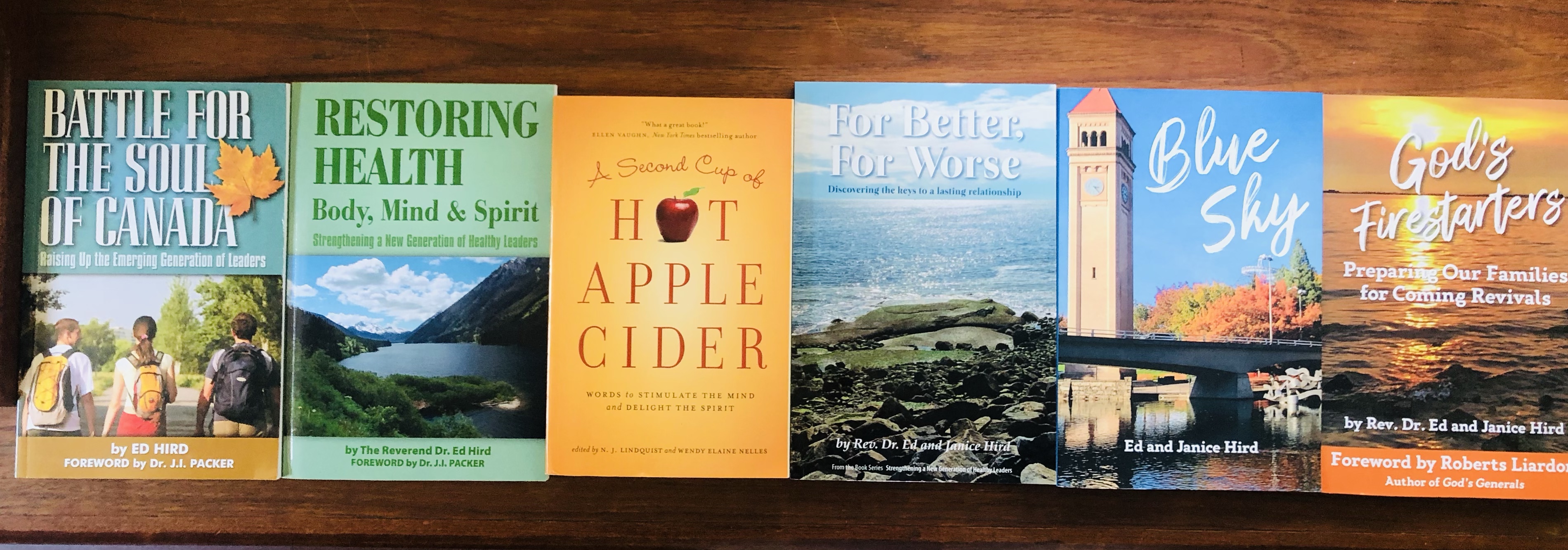


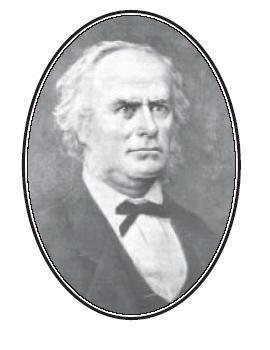



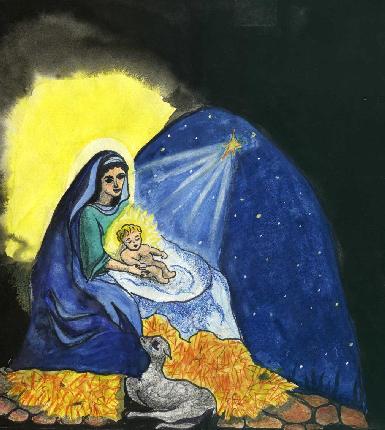


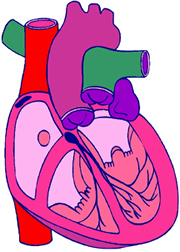


 remarkable book ‘
 Pastor Lina Gabeli commented: “As you read the pages of this book, you will be strengthened in your faith and fall more in love with Jesus, knowing that with God all things are possible when you believe in His promises and appropriate His word. This is a must read for everyone who is facing sickness or a personal crisis.” In the Arms of My Beloved can be purchased at your local Christian bookstore or ordered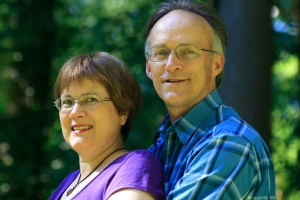
 most rewarding and the most difficult relationship known to man.” Studies have shown that no marriages are free from occasional marital conflict. The famous marriage researcher Dr John Gottman commented recently: “when Julie and I do our workshops with couples, one of the main messages we give is that we’ve found that really good marriages, people who are really happy, have terrible fights, where they’re thinking at the end of the fight: Why did I marry this person?”
 One of the ways out of bitterness is through the use of gentle, self-effacing humour. Aggressive humour like sarcasm kills marriages. Blaming and mocking seals the coffin on your marriage. Dr Gottman found that successful marriages have on average five times more encouraging behaviours than negative behaviours.
 Before my spiritual breakthrough at age 17, I viewed marriage as just ‘a piece of paper’. Research shows that couples who view their marriage as something that God has joined together are more likely to act and think in ways that protect their marriage. I have discovered that God invented marriage and believes in it; therefore marriages are worth fighting for.
 permanent residence in our hearts. That is why anger, while encouraged in Ephesians 4:26, must be without sin or harming of others, and must not be taken to bed. Wisely Ephesians 4:26 suggests that going to sleep with unresolved anger gives a foothold for the negativity which sacramental Christians would describe in their baptism as ‘the world, the flesh and the devil.’
 was described both in class and in an article as the ‘Gold Standard’ of marriage research. The Gottmans (2006) recommend that we husbands need to embrace our wife’s anger and learn the meaning behind the emotion. We need to rediscover anger as a healthy emotion that has its own wisdom if we will stop being so defensive. Gottman’s evocative phrase is “Look for the longing in each other’s complaint.” Brain scans have shown us that we experience anger on the right side of the brain, unlike fear and sadness which is on the left side. While fear causes us to withdraw, anger can actually stir us to make a difference and bring constructive change. The challenge is how to harness the power of anger, much like people in BC harness the power of our mighty rivers for electricity.
 causes emotional distance, loneliness, and a lack of romance. Ironically this is not about the husband not caring but because his over-caring makes him so anxious (Garland, 1998). The husband’s withdrawal is associated with increases in the wife’s blood pressure, norepinephrine and cortisol, all of which are linked to poorer cardiovascular and immune outcomes (Loving, T., & Heffner, K., 2004) Cortisol is a useful hormone in the short-term ‘fight or flight’ response, but is very destructive long-term to the white T cells which fight off cancer.
 and letting God’ is at the heart of true recovery. I am reminded of Paul saying in 2 Corinthians 12: 9-10 that God’s grace is sufficient for him, enabling him to realizing that when he is weak, he is strong.
 vision and relation virtues such as selflessness and unconditional love have been linked with better marital functioning in times of anger and conflict. Couples indicated that their involvement in scripture reading and regular church attendance increased their commitment to relational permanence. Marsh, R. and Dallos, R. (2000) found that couples were able to increase their sense of interpersonal space by detouring their anger to God in marital conflict. In my pastoral work, I have found that praying together can really help a couple, though most find such activity too intimate. It is vital that the couple do not use prayer or the bible as weapons to win a fight, but rather as a way to resolve conflict and build a healthier marriage.
 forgiven’, say Ketterman, lie at the heart of marital harmony and health. She speaks both as a psychiatrist of the Christian faith and as a victim of infidelity who remarried her husband. Forgiveness is indeed a practical proven key to managing anger in martial conflict.
 individualism of North American culture militates against healthy anger management in marriage conflict. They suggest that the way forward is to rediscover a theology of marriage that focuses on the common good, the value of community, discipleship and missional orientation. Marriage, said Matthews and Hubbard, ‘must have a purpose, a goal, a task beyond ‘being together’.
 challenges of marital conflict. This is why Gottman, J. & Silver, N. (1999) encourage couples to explore each others’ dreams and hopes, with an aim to create shared meaning. It is important that couples in conflict do not give up on their ideals and dreams. Higher expectations for romance and passion have been linked with increased marital satisfaction. Sometimes in a desire to get along, spouses give up something essential that actually fuels the romance and passion of their lives.
 many positive behaviours as negative behaviours. Couples in crisis usually only show a corresponding ratio of 1:1 (Gottman, 1999, 2006). The need for a five to one ratio seems to come from the greater emotional impact of negative behaviours on a marriage. Garland (1998) poignantly notes that “truth, especially when it leads to conflict, must be wrapped in words and actions that build rather than tear down love for one another.”
 make the most use of in our church is
  avoid the pain of divorce.
 Sandy Brown and her family have just moved to Spokane, Washington where her husband, Scott, is pastoring a new church. With a fresh start, Sandy is determined to devote more time to her four children. But, within weeks of settling in their new life, the Brown family is plunged into turmoil.
 recover my voice and get back on track. Deep within most of us is this inexpressible desire to please our fathers.
 you will be able to talk to God.’ A week later, a local psychiatrist phoned me up and informed me that this patient had experienced a major breakthrough in his counseling as a result.
 North Shore is the beautiful trails that are woven throughout our area. Recently I encountered a neighbour walking his dog. Out of the blue, I said, ‘What is a courageous father?’ He said, ‘Someone who holds down a job and cares for his children’. Simple words, but very true. In this age of compromise, in this pressure-cooker world, so many fathers are tempted to run away from it all. The stress just becomes too much.
 Many of us enter marriage thinking that our spouse will meet our deepest needs. We then feel cheated when they don’t, and begin to close our hearts. How many of us enter marriage with the view that we are there to serve our spouse? How many of us see marriage as a way of serving God?
 clearly than anger. Because our hearts are deceitful (Jeremiah 17:9), we have an amazing ability to justify our own anger and bitterness towards our spouse, while simultaneously excusing our own bad attitudes. Being angry at our spouses can be very attractive, because it makes us feel both powerful and self-righteous.
 Dr. E. Stanley Jones, founder of the Christian Ashram, once said that ‘there can be no love between a husband and wife unless there is mutual self-surrender. Love simply cannot spring up without that self-surrender to each other. If either withholds the self, love cannot exist.’
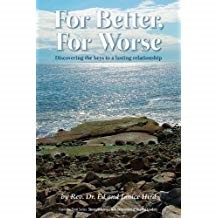 -Click to check out our marriage book
 Edhird's Blog