As New York and Washington reeled in 2001 from 9/11, the Red Cross flew into action, saving lives and bringing hope. Thank God for the Red Cross who time and again make a difference in times of great tragedy.
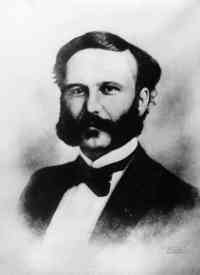
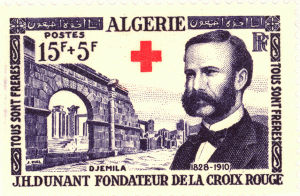
Great organizations invariably are birthed from great people. The Red Cross was birthed from the vision and drive of Jean Henri Dunant, who received the world’s first Nobel Peace Prize. Dunant was a Swiss businessman who ‘happened’ to be on hand to see the carnage and horror of the battle of Solferino, Italy, in 1858. Forty thousand wounded lay in their death throes under a blazing sun, in suffocating heat, helpless and unattended. Amid the anguished cries of the wounded, in an atmosphere of panic and confusion, he gathered together a team of volunteers to relieve the ‘inexpressible sufferings’ of war.
Four days after the battle, Dunant discovered five hundred wounded who had been overlooked. Dunant commented: “I succeeded in getting together a certain number of women who helped me as best as they could to aid the wounded…Food, and above all drink, had to be taken around to these men. Then their wounds could be dressed and their bleeding, muddy, vermin-covered bodies washed. All this took place in a scorching, filthy atmosphere, in the midst of vile, nauseating odors, with lamentations and cries of anguish all around!” From this courageous action by Dunant at Solferino, the International Red Cross was born.
Dunant returned to Geneva but was so preoccupied with what he has seen at Solferino that he wrote a book at his own expense in 1862 entitled ‘ A Memory of Solferino’. He wrote at length about the wounds and suffering he had seen and the shambles in which urgently necessary surgery was done. “Would it not be possible”, he pleaded, “in time of peace and quiet to form relief societies for the purpose of having care given to the wounded in wartime by zealous, devoted and thoroughly qualified volunteers?”
On August 22nd 1864, through the impetus of Dunant’s book, the historic First Geneva Convention was birthed. It provided for the alleviation of the sufferings of soldiers wounded on the battlefield. It gave neutral status to the military hospitals and medical personnel of the armies of the signing countries. As an identifying symbol, the Geneva Convention decided that these non-combatants should wear a red cross on a white field, a reversal of the colours in the Swiss national flag. In 1865 Great Britain and Canada added their names to the first ten European countries who signed the Geneva Convention treaty.
Tragically, Jean Henri Dunant subsequently suffered from business failure and deep depression. Resigning from the Red Cross in 1867, he virtually disappeared from sight. In 1895, Dunant was discovered in Heiden, Switzerland by a newspaper reporter. By then the Red Cross had become famous, and financial assistance to assist Dunant began to pour in from all around the world. In 1901 Dunant shared with Frederick Passy, a French internationalist, the first Nobel Peace Prize. From Geneva, his old home, came this message from the International Committee of the Red Cross: “There is no man who more deserves this honour, for it was you, forty years ago, who set on foot the international organization for the relief of the wounded on the battlefield. Without you, the Red Cross, the supreme humanitarian achievement of the nineteenth century would probably have never been undertaken.” Dunant gave all of the Nobel Peace Prize money away to charity, and died peacefully in his sleep on October 30th 1910.
Few people realize that Jean Henri Dunant also helped co-found the International Young Men’s Christian Association (YMCA). Dunant started very humbly by inviting a few friends to meet regularly at his house to study the Bible, to encourage each other in good works, and to bring about a spiritual awakening among young people.
Jean Henri Dunant proved that one person can make a difference. One person can change this world. Jean Henri Dunant knew Jesus Christ as his Bridge over Troubled Water. My prayer during this time of great uncertainty is that many of us may turn to the Bridge who will give us the strength to care for our neighbours for better for worse, in sickness and in health, for richer for poor.
The Rev. Dr. Ed Hird, BSW, MDiv, DMin
-previously published in the North Shore News/Deep Cove Crier
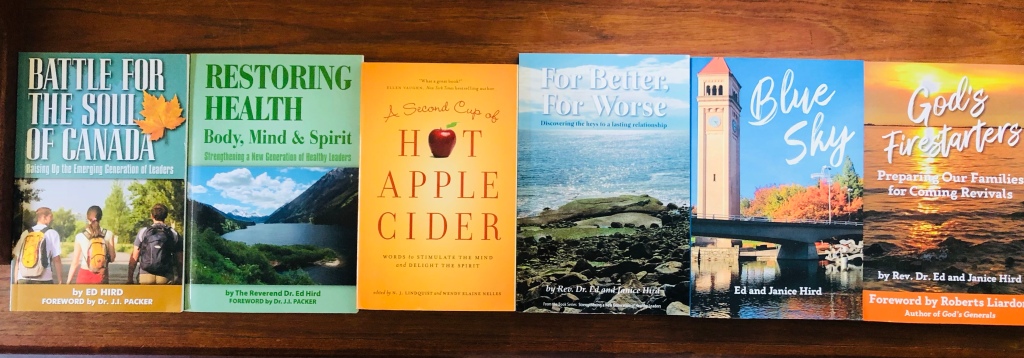
P. S. Click this Amazon link to view for free the first two chapters of our new novel Blue Sky.
“I’m afraid there’s been an accident…”
Sandy Brown and her family have just moved to Spokane, Washington where her husband, Scott, is pastoring a new church. With a fresh start, Sandy is determined to devote more time to her four children. But, within weeks of settling in their new life, the Brown family is plunged into turmoil.
Sandy receives shocking news that her children aren’t safe, which brings back haunting memories of the trauma she experienced as a girl. Then, the unthinkable happens…
A brutal attack puts Sandy on the brink of losing everything she’s loved. Her faith in God and the family she cherishes are pushed to the ultimate limit.
Is healing possible when so many loved ones are hurt? Are miracles really possible through the power of prayer? Can life return to the way it was before?
Blue Sky reveals how a mother’s most basic instinct isn’t for survival… but for family.
If you’re a fan of Karen Kingsbury, then you’ll love Blue Sky. Get your copy today on paperback or kindle.
-The sequel book Restoring Health: body, mind and spirit is available online with Amazon.com in both paperback and ebook form. Dr. JI Packer wrote the foreword, saying “I heartily commend what he has written.” The book focuses on strengthening a new generation of healthy leaders. Drawing on examples from Titus’ healthy leadership in the pirate island of Crete, it shows how we can embrace a holistically healthy life.
To receive a signed copy within North America, just etransfer at ed_hird@telus.net, giving your address. Cheques are also acceptable.
-Click to purchase the Companion Bible Study by Jan Cox (for the Battle of the Soul of Canada) in both paperback and Kindle on Amazon.com and Amazon.ca
-Click to purchase the Companion Bible Study by Jan Cox (for the Battle of the Soul of Canada) in both paperback and Kindle on Amazon.com and Amazon.ca
To purchase any of our six books in paperback or ebook on Amazon, just click on this link.
Growing waiting-lists for needed surgeries remind us of the crisis in our current health system. One doctor summarized the essence of modern medicine as either removing something (surgery) or putting something in (medication). All of us want to be healthy. But do we want to be healthy badly enough to radically change our lifestyles? Are we willing to give up junk food and start heading to the gym on a regular basis? Perhaps true health begins when we get out of denial and admit, as the BCP puts it, that ‘there is no health in us.
The Concise Oxford Dictionary defines ‘health’ as ‘soundness of body, from the West Germanic ‘hailitha’ (whole). The ‘Canadian Global Almanac 2001’ notes that 25% of Canadians see themselves as having excellent health. Only 44% of Canadians age 20-64 were an acceptable weight for their height, according to the ‘Statistical Report of Health of Canadians’. I was sobered to read that twice as many baby-boomers have a weight problem compared to Canadians age 20-24.
The percentage of overweight Canadian men has gone from 27% to 35% (and from 14% to 23% for women). I remember having lunch with another man who told me that, in contrast to women, being overweight looked good on men. Perhaps this kind of rationalization explains why Canadian men are almost twice as likely to have a weight problem as women. Health Canada research has shown that ‘overweight and obesity are linked to a wide range of health problems, especially cardiovascular disease, diabetes, and some forms of cancer’.
There are many other health challenges faced by Canadians than just being overweight. Twenty-six percent suffer from high chronic stress. Twenty-eight percent still smoke and despite years of cancer education, smoking tragically seems to be on the rise among female teens. Nine percent of Canadians consume 14+ drinks per week.
In the face of all these health challenges, only 21% of Canadians are physically active. Our physical inactivity as Canadians is bearing a huge toll on our health system with each Canadian costing $2,512 in annual health expenditures.
The good news is that it is never too late to turn this around. I have personally experienced considerable benefits in pain and stress reduction by consistently going to the gym for the past ten years. Statistics Canada reported that “there is accumulating evidence that indicates physical activity may have multiple beneficial physiological and metabolic effects on heart health. These include ‘advantageous effects on atherosclerosis, plasma lipid/lipoprotein profiles, blood pressure, availability of oxygenated blood for heart muscle needs (ischemia), blood clotting (thrombosis), and heart rhythm disturbances (arrhythmia).” There are also indications that increased physical activity can help reduce depression through “exercise-induced changes in brain neuroreceptor concentrations of monoamines (norepinephrine, dopamine, or serotonin) or endogenous opiates (endorphins and enkephalins)”.
Thank God for the wonderful array of weight rooms and gyms available on the North Shore, especially at Ron Andrews and Parkgate Rec Centres. The clean, spacious, well-stocked facilities are a tremendous encouragement when one is struggling to get to the gym.
One of my favorite workout machines is the stationary bike. I enjoy it because it produces a good warmup and also allows me to read without crashing! I enjoy doing Morning Prayer on the stationary bike. I have found a real wholeness through this experience by bringing health to my whole person: body, mind, and spirit. Silently reading the Book of Common Prayer not only makes the workout go much quicker, but also brings my spirit more alive. It has shown me that both in the physical and the spiritual, we can ‘dissemble and cloke’ our laziness and ‘follow too much the devices and desires of our own hearts’. Perhaps that is why the Bible says that ‘workouts in the gymnasium are useful, but a disciplined life in God is far more so, making you fit both today and forever.’ (1 Timothy 4:4 Message Translation) It’s time to say no to being a spiritual and physical couch-potato!
My prayer for those reading this article is that each of us may find fresh encouragement to get up off our couches and begin a healthy workout of our bodies, minds, and spirits.
The Rev. Dr. Ed Hird, BSW, MDiv, DMin
-previously published in the North Shore News/Deep Cove Crier
P. S. Click this Amazon link to view for free the first two chapters of our new novel Blue Sky.
“I’m afraid there’s been an accident…”
Sandy Brown and her family have just moved to Spokane, Washington where her husband, Scott, is pastoring a new church. With a fresh start, Sandy is determined to devote more time to her four children. But, within weeks of settling in their new life, the Brown family is plunged into turmoil.
Sandy receives shocking news that her children aren’t safe, which brings back haunting memories of the trauma she experienced as a girl. Then, the unthinkable happens…
A brutal attack puts Sandy on the brink of losing everything she’s loved. Her faith in God and the family she cherishes are pushed to the ultimate limit.
Is healing possible when so many loved ones are hurt? Are miracles really possible through the power of prayer? Can life return to the way it was before?
Blue Sky reveals how a mother’s most basic instinct isn’t for survival… but for family.
If you’re a fan of Karen Kingsbury, then you’ll love Blue Sky. Get your copy today on paperback or kindle.
-The sequel book Restoring Health: body, mind and spirit is available online with Amazon.com in both paperback and ebook form. Dr. JI Packer wrote the foreword, saying “I heartily commend what he has written.” The book focuses on strengthening a new generation of healthy leaders. Drawing on examples from Titus’ healthy leadership in the pirate island of Crete, it shows how we can embrace a holistically healthy life.
To receive a signed copy within North America, just etransfer at ed_hird@telus.net, giving your address. Cheques are also acceptable.
-Click to purchase the Companion Bible Study by Jan Cox (for the Battle of the Soul of Canada) in both paperback and Kindle on Amazon.com and Amazon.ca
-Click to purchase the Companion Bible Study by Jan Cox (for the Battle of the Soul of Canada) in both paperback and Kindle on Amazon.com and Amazon.ca
To purchase any of our six books in paperback or ebook on Amazon, just click on this link.
I recently came across a pillow with an embroidered message saying: ‘Mirror , mirror on the wall, I’ve become my mother after all.” Many of us as men realize that we’ve ‘become our father after all’. For many of us, that discovery is a much more pleasant realization than it might have been 20 or 30 years ago.
As a sixteen-year old, I was moving away from my desire to be just like my dad. For the previous ten years (grade 3-10), I was convinced that I would become an electrical engineer, just like my father. After taking several electronics courses at High School however, I came to the painful realization that electrical engineering was not to be my chosen path. This left me with a challenging career crisis: just who and what was I called to be? I remember fearing that I might choose the wrong career and end up 20 years later bored and trapped in a dead-end job.
In our family, we loved to surprise our parents, and so Ed the potential engineer became Ed the Social Worker, and my younger sister the potential artist and basket-weaver became a sheep-genetics scientist instead.
I give my father credit that whatever career choices I embarked upon, he was always supportive. It is only years later looking back that I see how much my father was rooting for me as I wandered my way through eight years of life at University. My father’s example has taught me regarding my 3 adult sons that I can encourage them and root for them, but I can’t live their life for them. They too have to go through the painful choices of mapping out their future career and lifestyle choices.
With all my sons having transitioned from their teens to their twenties, it brings back for me so many memories of my own teenage and young adult struggles for identity and success. I remember how convinced I was that I was very different than my father, and would certainly never become like him.
So how have I become ‘like Father, like Son’? In a way that I never expected, I became like my father in his interest in writing and journalism. I have written over 280 articles for the Deep Cove Crier and other North Shore papers for over 22 years. Similarly my father was a writer and then the editor of the Telecom Advisor for 14 years. The Telecom Advisor is a telecommunications magazine distributed to all large businesses in Western Canada.
Why is it that both my father and I have written over so many articles over the years? Could it be ‘like father, like son?’ Is it in the blood? Granted, my topics of writing are often different than my father’s topics about microprocessors and satellite systems. But even so, the basic impulse to communicate is there in a God-given way.
Back in 1971, when I was sixteen years old, none of my classmates would have guessed that I would have ended up as an Anglican priest. That was the farthest thing from my mind. God is always full of surprises.
My mother, not my father, was the strong church-goer. You can imagine my shock as a 17-year-old when my 48-year-old father decided to become confirmed by Archbishop David Somerville. What a strange thing to do! For better or worse, many teens tend to imitate their father’s behaviour and distance themselves from their mother’s example. Within three months of my father’s confirmation, I gave my life to Jesus Christ and never looked back. ‘Like Father, like Son’
The most famous person who ever lived on planet earth once said: “If you have seen me, you have seen the Father”. Like Father, Like Son. He also said: “Whatever the Father does, the Son does”. Like Father, Like Son. Jesus also said: “He who does not honour the Son does not honour the Father who sent him.” Like Father, Like Son. My prayer for those reading this article is that all of us may honour both our earthly Fathers and our heavenly Father, revealed in his beautiful Son.
The Rev. Dr. Ed Hird, BSW, MDiv, DMin
-previously published in the North Shore News/Deep Cove Crier
P. S. Click this Amazon link to view for free the first two chapters of our new novel Blue Sky.
“I’m afraid there’s been an accident…”
Sandy Brown and her family have just moved to Spokane, Washington where her husband, Scott, is pastoring a new church. With a fresh start, Sandy is determined to devote more time to her four children. But, within weeks of settling in their new life, the Brown family is plunged into turmoil.
Sandy receives shocking news that her children aren’t safe, which brings back haunting memories of the trauma she experienced as a girl. Then, the unthinkable happens…
A brutal attack puts Sandy on the brink of losing everything she’s loved. Her faith in God and the family she cherishes are pushed to the ultimate limit.
Is healing possible when so many loved ones are hurt? Are miracles really possible through the power of prayer? Can life return to the way it was before?
Blue Sky reveals how a mother’s most basic instinct isn’t for survival… but for family.
If you’re a fan of Karen Kingsbury, then you’ll love Blue Sky. Get your copy today on paperback or kindle.
-The sequel book Restoring Health: body, mind and spirit is available online with Amazon.com in both paperback and ebook form. Dr. JI Packer wrote the foreword, saying “I heartily commend what he has written.” The book focuses on strengthening a new generation of healthy leaders. Drawing on examples from Titus’ healthy leadership in the pirate island of Crete, it shows how we can embrace a holistically healthy life.
To receive a signed copy within North America, just etransfer at ed_hird@telus.net, giving your address. Cheques are also acceptable.
-Click to purchase the Companion Bible Study by Jan Cox (for the Battle of the Soul of Canada) in both paperback and Kindle on Amazon.com and Amazon.ca
-Click to purchase the Companion Bible Study by Jan Cox (for the Battle of the Soul of Canada) in both paperback and Kindle on Amazon.com and Amazon.ca
To purchase any of our six books in paperback or ebook on Amazon, just click on this link.
My late mother never forgot the time that she opened up her Mother’s Day card and read the words: ‘You’ve Been Like a Mother To Me’. “But I am your real mother!”, she said. “Exactly”, I responded. “That’s why I chose the card. It’s wonderful that you were not only my birth-mother but also have been so genuinely motherly to me’.
I have been so blessed to have a mother who has been so full of care and compassion through the good times and the bad. But not everyone has been so fortunate. Some people have been raised by their birth-mothers who were so wounded that they were unable to express love and nurture during the formative years. This can leave people with a big hole in their hearts and a sense of loneliness that is hard to express.
Drs. Dennis Cloud & John Townsend, best-selling authors of ‘Boundaries’ and ‘The Mother Factor’, believe that ‘mothering is the most significant, demanding and underpaid profession around.’ When they interviewed people about their definitions of true mothering, certain words came up again and again: nurture, care, bondedness, cookies, and trust. Drs. Cloud and Townsend were able to name five basic needs that must be met by a mother, in order for us to be healthy and secure:
Safety
Nurture
Basic Trust
Belonging and Invitation
Someone to Love.
Safety, says Cloud & Townsend, comes in the form of a person who is predictable, stable, and danger-free. Without this person, the child remains in a state of panic or anxiety, unable to love or learn. I give thanks for my mother who gave me this gift of personal safety. I always knew intuitively that whether I was a success or a failure, obedient or rebellious, my mother would always be there for me.
The second need that mothers meet is ‘to nurture’. Webster’s Dictionary says that to nurture is to ‘feed or nourish’. When I was troubled at school by bullies or exams, my mother was always there to feed me, with cookies, milk, and a listening ear. I remember going through deep struggles as a teenager about the meaning of life and career choices. Mom was always there to listen. True, I often rejected her advice and was closed to her deep spirituality. But most important, her nurturing and food were always there when I was struggling.
The third need that mothers meet is ‘basic trust’. Drs. Cloud & Townsend teach that basic trust is the ability to invest oneself in a relationship. Healthy people let themselves need and depend on others without fear. We live in a high-tech disposable age where everything is up for grabs.
There is an enormous fear of commitment and long-term intimacy. Yet simultaneously many of us ache from the absence of such relational rootedness. My wife and I have been happily married for 41 years. I believe that a big part of why I have not self-destructed my own marriage is because of how healthy my mother was. My mother modeled for me the value of hanging in there through the thick and the thin. My mother demonstrated a deep faith and trust that good would always come out of even the most tragic situations. With the help of her favorite comic writer Erma Bombeck, my mother could always find something to smile about, even when life was not ‘a bowl of cherries’.
The fourth need that mothers meet is ‘belonging and invitation’. All of us, say Drs. Cloud & Townsend, have the need to belong to someone and to something bigger than ourselves. Belonging and love are at the root of our humanness. My mother, as a gifted chauffeur, was forever driving me to endless soccer, baseball, hockey, chess, swimming, & skiing lessons. She knew that I had a deep need to belong and to grow. My mom also did her best to involve me in Sunday school, confirmation classes, youth groups, and summer camps. I had no idea how much I really needed the church family to be my ‘spiritual mother’. Like many in our individualistic age, I figured that I could do any spirituality better on my own. My mother never forced religion down my throat, but the door was always wide open. Thank God for my mother introducing me to God’s family.
The fifth need that mothers meet is ‘someone to love’. There is perhaps no greater wound in a child than having a mother who just can’t love you. We know intuitively that everything about true motherhood is about love and caring. Yet some moms have been so damaged that they are what Drs. Cloud & Townsend would call ‘Phantom Moms’: moms who are not really there in any tangible sense. Others have moms who Drs. Cloud & Townsend call ‘China Doll Moms’: moms who are so fragile and stressed out that no one can get too close for fear of shattering them. Without a mom who can show us real love, we end up feeling unwanted at a deep level and estranged from our true identity. Thank you, Mom, that once again you came through for me in a very practical way. For 62 years, my mom showed me time and time again that I mattered to her, and that she really care. The love of Christ that I saw in my mom allows me to show that same love to others.
The best news of all is that even if our mothers couldn’t fully meet these five basic needs, God can make up for any love deficit. As the Good Book puts it, ‘though your father and mother forsake you, I the Lord will receive you.’ My prayer for for those reading this article is that each of us may discover afresh the amazing love of God, especially as seen in the loving arms of our mothers.
The Rev. Dr. Ed Hird, BSW, MDiv, DMin
-previously published in the North Shore News/Deep Cove Crier
P. S. Click this Amazon link to view for free the first two chapters of our new novel Blue Sky.
“I’m afraid there’s been an accident…”
Sandy Brown and her family have just moved to Spokane, Washington where her husband, Scott, is pastoring a new church. With a fresh start, Sandy is determined to devote more time to her four children. But, within weeks of settling in their new life, the Brown family is plunged into turmoil.
Sandy receives shocking news that her children aren’t safe, which brings back haunting memories of the trauma she experienced as a girl. Then, the unthinkable happens…
A brutal attack puts Sandy on the brink of losing everything she’s loved. Her faith in God and the family she cherishes are pushed to the ultimate limit.
Is healing possible when so many loved ones are hurt? Are miracles really possible through the power of prayer? Can life return to the way it was before?
Blue Sky reveals how a mother’s most basic instinct isn’t for survival… but for family.
If you’re a fan of Karen Kingsbury, then you’ll love Blue Sky. Get your copy today on paperback or kindle.
-The sequel book Restoring Health: body, mind and spirit is available online with Amazon.com in both paperback and ebook form. Dr. JI Packer wrote the foreword, saying “I heartily commend what he has written.” The book focuses on strengthening a new generation of healthy leaders. Drawing on examples from Titus’ healthy leadership in the pirate island of Crete, it shows how we can embrace a holistically healthy life.
To receive a signed copy within North America, just etransfer at ed_hird@telus.net, giving your address. Cheques are also acceptable.
-Click to purchase the Companion Bible Study by Jan Cox (for the Battle of the Soul of Canada) in both paperback and Kindle on Amazon.com and Amazon.ca
-Click to purchase the Companion Bible Study by Jan Cox (for the Battle of the Soul of Canada) in both paperback and Kindle on Amazon.com and Amazon.ca
To purchase any of our six books in paperback or ebook on Amazon, just click on this link.
I vividly remember my father coming home from work on Fridays, and calling out ‘TGIF!!’ Often such announcements would be followed by our whole family going out to celebrate at Nat Bailey’s White Spot restaurant. The White Spot, like A&W, used to be famous for its tradition of eating dinner in one’s car. No self-respecting Vancouverite would dream of eating fish and chips anywhere else.
TGIF was also a pressure that I experienced as an older teenager: a pressure to make my Friday nights very exciting and sensational. If I wasn’t experiencing an adrenaline rush on Friday night, I would feel guilty as if I had failed the invisible TGIF law of the universe.
More recently, I have discovered another meaning to TGIF. TGIF also means facing our fears, facing our anxieties, facing our grief. Friday is a symbol of the ending of the week and also the ending of life. Friday is both an ending and a new beginning, a dying and a potential rising. Very few of us want to face our own personal mortality. Yet our fears of dying are actually our fears of living.
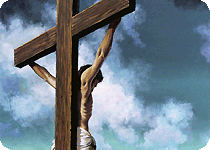
TGIF also makes me think of the most important Friday in the year: Good Friday. Thank God It’s (Good) Friday! Many of us avoid Good Friday like the plague, because like a plague, Good Friday reminds us of death, of pain, and of our own personal mortality. Sometimes we wonder: what in the world is Good about Good Friday? What’s so good about someone going through the worst torture and most agonizing death ever invented?
Many of us are tempted to switch TGIF to TGIS: Thank God It’s Sunday (Easter Sunday in particular). Everybody loves Easter: bunnies, chocolate, eggs, bonnets, lilies, flower crosses, and joyful singing. Everybody loves victory and resurrection and new life. No wonder every church is packed with visitors on Resurrection Sunday. But very few of us love Good Friday. Good Friday just seems too morbid, too deadly, too bloody. It just seems too hard to say TGIF about Good Friday.
I remember as a boy when I first watched a movie about Good Friday. I was struck by the hatred of the soldiers towards Jesus, the brutality that he endured, the whippings and the nails driven in his hands and feet. It all seemed so unfair, so unnecessary. What in the world was good about such a Good Friday? I wanted to drag Jesus down from the cross and save him from his agony. I knew that he had the power to call a legion of angels to save him. Yet he didn’t. I felt very disappointed in Jesus. My other hero Superman always got away when the green Kryptonite was about to kill him. But Jesus let me down and ‘wimped out’ by dying on me. For years, Easter made no sense to me, because I thought it was about remembering a dead Jesus. I had no idea that Jesus was alive and well, and just waiting to change my life.
As a teenager, I became convinced that there was no life after death, and that nothing awaited me but extinction and returning to dust. I began to fear the power of death and the meaninglessness and emptiness of life. I even began to secretly wonder if life itself was worth living. TGIF began to lose its effect on me.
One day in Grade 12, I met some fellow students who seemed different: happier, more peaceful, more focused in their life. They had a joy that seemed to bubble over. I knew that whatever they had, I wanted it too. So I asked them what made them ‘tick’. They said with a smile that their secret was a personal relationship with Jesus Christ. They told me that Jesus had broken the power of death on the Cross, that he had taken my sin and guilt on Good Friday, and rose to new life on Resurrection Sunday. They told me that I could live forever if I would turn from my self-centeredness and let Jesus become the centre of my life.
I was hungry and curious. So I ‘opened the door of my life’ and let Jesus come in. It felt like rivers of liquid love filling me from the inside out. I experienced joy in a whole new way. I felt whole and peaceful in an unexpected way. Most importantly, I lost my fear of death. I knew that my life had meaning and purpose because of Jesus taking my place on Good Friday 2000 years ago. TGIF!
The Rev. Dr. Ed Hird, BSW, MDiv, DMin
-previously published in the North Shore News/Deep Cove Crier
P. S. Click this Amazon link to view for free the first two chapters of our new novel Blue Sky.
“I’m afraid there’s been an accident…”
Sandy Brown and her family have just moved to Spokane, Washington where her husband, Scott, is pastoring a new church. With a fresh start, Sandy is determined to devote more time to her four children. But, within weeks of settling in their new life, the Brown family is plunged into turmoil.
Sandy receives shocking news that her children aren’t safe, which brings back haunting memories of the trauma she experienced as a girl. Then, the unthinkable happens…
A brutal attack puts Sandy on the brink of losing everything she’s loved. Her faith in God and the family she cherishes are pushed to the ultimate limit.
Is healing possible when so many loved ones are hurt? Are miracles really possible through the power of prayer? Can life return to the way it was before?
Blue Sky reveals how a mother’s most basic instinct isn’t for survival… but for family.
If you’re a fan of Karen Kingsbury, then you’ll love Blue Sky. Get your copy today on paperback or kindle.
-The sequel book Restoring Health: body, mind and spirit is available online with Amazon.com in both paperback and ebook form. Dr. JI Packer wrote the foreword, saying “I heartily commend what he has written.” The book focuses on strengthening a new generation of healthy leaders. Drawing on examples from Titus’ healthy leadership in the pirate island of Crete, it shows how we can embrace a holistically healthy life.
To receive a signed copy within North America, just etransfer at ed_hird@telus.net, giving your address. Cheques are also acceptable.
-Click to purchase the Companion Bible Study by Jan Cox (for the Battle of the Soul of Canada) in both paperback and Kindle on Amazon.com and Amazon.ca
-Click to purchase the Companion Bible Study by Jan Cox (for the Battle of the Soul of Canada) in both paperback and Kindle on Amazon.com and Amazon.ca
To purchase any of our six books in paperback or ebook on Amazon, just click on this link.
My wife, like many loving wives, wants her husband healthy. She had been encouraging me to get back on the treadmill. I enjoy walking, especially throughout the spectacular trails interwoven through our local community. But I had a lot of prejudice towards the idea of spending time on a seemingly never-ending treadmill at the local gym.
Even though I don’t want to be controlled by my wife, I do want to be healthy. So I took the ‘plunge’ and became a ‘convert’ regarding the benefits of Rec Centre treadmills. As a result, I feel healthier, stronger, and more peaceful inside. I actually look forward now to doing the very thing that I once dreaded. Lifting weights, maybe. Stretching, perhaps. But working out on the treadmill, never!
Part of what changed my mind was being ‘reared ended’ by a taxi. I started going for various treatments to loosen up my neck and shoulders, but nothing seemed to really last. The neck spasms and headaches had a nasty habit of sapping a lot of my energy needed for work and family. Finally while having my aching back adjusted, I was told: ‘You need a personal trainer’. My immediate reaction was to try to graciously change the subject. The next thing I knew, I was meeting with a personal trainer at the local Rec Centre. I have been involved in many sports and exercise programs over the years. Sooner or later I usually would push it too far and too fast, and injure myself. Once injured and ‘humbled’, I often thought twice before ‘getting back in the ring’.
Thanks to six sessions with a personal trainer, I have finally learned how to pace myself, and as a result, I have only injured myself once since getting back to the gym. I have learnt that the secret to virtually all the gym equipment is going ‘one step at a time’. Patience, while not my strongest characteristic, is definitely a virtue in the weight room!
Sometimes the daily routines of life like work, taking our children to school, etc, can seem like a never-ending treadmill. Many suffer from exhaustion and feel like crying out: ‘Stop the treadmill! I want to get off.’ Those of us who work out on Rec Centre treadmills know how dangerous it can be to get off a treadmill before it actually stops. As I was working out this morning on a Rec Centre treadmill, I sensed that perhaps there are two different treadmills in our lives: treadmills of life and treadmills of death. Treadmills of life bring strength, encouragement and renewed hope. Treadmills of death bring weariness, discouragement, and monotony. Many medieval treadmills were even designed as punishment for prisoners who would be given no rest.
What helps me keep going on the Rec Centre treadmill is the practice of silently lifting up names of people I care for. Rather than worry about these people, I have been learning how to give them back to the Lord, and trust that they are safe in his hands. Working out on the treadmill teaches me that I am not called to worry about tomorrow, but rather to just take one step at a time, one day at a time. Even though it may feel like my time on the treadmill is endless, experience has taught me that sooner or later it comes to an end. So too, the treadmill of life is over far more suddenly than many of us expect. Every funeral that I attend reminds me that even the best vitamins, the best sports workout, the best vacations can only delay temporarily the inevitable day of my last step on the treadmill of planet earth.
Jesus dismantled the treadmill of death by his death and resurrection on Good Friday and Easter Sunday. As a result, I no longer am chained to that ‘medieval treadmill’ of decay. I choose to take ‘one step at a time’ on the treadmill of life, life that is abundant, exciting, and eternal. See you at God’s Gym!
The Rev. Dr. Ed Hird, BSW, MDiv, DMin
-previously published in the North Shore News/Deep Cove Crier
P. S. Click this Amazon link to view for free the first two chapters of our new novel Blue Sky.
“I’m afraid there’s been an accident…”
Sandy Brown and her family have just moved to Spokane, Washington where her husband, Scott, is pastoring a new church. With a fresh start, Sandy is determined to devote more time to her four children. But, within weeks of settling in their new life, the Brown family is plunged into turmoil.
Sandy receives shocking news that her children aren’t safe, which brings back haunting memories of the trauma she experienced as a girl. Then, the unthinkable happens…
A brutal attack puts Sandy on the brink of losing everything she’s loved. Her faith in God and the family she cherishes are pushed to the ultimate limit.
Is healing possible when so many loved ones are hurt? Are miracles really possible through the power of prayer? Can life return to the way it was before?
Blue Sky reveals how a mother’s most basic instinct isn’t for survival… but for family.
If you’re a fan of Karen Kingsbury, then you’ll love Blue Sky. Get your copy today on paperback or kindle.
-The sequel book Restoring Health: body, mind and spirit is available online with Amazon.com in both paperback and ebook form. Dr. JI Packer wrote the foreword, saying “I heartily commend what he has written.” The book focuses on strengthening a new generation of healthy leaders. Drawing on examples from Titus’ healthy leadership in the pirate island of Crete, it shows how we can embrace a holistically healthy life.
To receive a signed copy within North America, just etransfer at ed_hird@telus.net, giving your address. Cheques are also acceptable.
-Click to purchase the Companion Bible Study by Jan Cox (for the Battle of the Soul of Canada) in both paperback and Kindle on Amazon.com and Amazon.ca
-Click to purchase the Companion Bible Study by Jan Cox (for the Battle of the Soul of Canada) in both paperback and Kindle on Amazon.com and Amazon.ca
To purchase any of our six books in paperback or ebook on Amazon, just click on this link.
With millions set free from the ravages of uncontrollable drinking, who among us cannot be thankful for the gift of Alcoholics Anonymous? Many of us have friends, family, and co-workers who are alive and well today because of the miracle of the 12 Steps. Over the years, I have had the privilege of doing a number of ‘5th Steps’ with people in recovery. I have always come away from those experiences with a deepened sense of gratitude for the amazing gift of life.
One of the perhaps unexpected spin-offs of AA has been the dozens of recovery groups who apply the 12 Steps to all kinds of addictions and challenges, including overeating, narcotics, sexual brokenness, emotional dysfunctions, and gambling dependencies. One of the fastest-growing spin-offs is the ACOA movement for Adult Children of Alcoholics. There is even a specifically Christ-centered expression based on the beatitudes called ‘Celebrate Recovery’ that over five million people have already participated in over 35,000 host churches.
Where did these amazing 12 Steps come from, in the first place? They were written by Bill W who had been mentored towards a life-changing faith by the Rev. Samuel Shoemaker. Dr. Sam, as he was known affectionately in AA circles, had a profound impact on the spiritual awakening of Bill W.
As Bill W tells it in ‘AA Comes of Age’, he went with his friend Ebby to Dr. Sam’s Calvary Church Mission. “There were some hymns and prayers. Then Tex, the leader, exhorted us. Only Jesus could save, he said. Somehow this statement did not jar me. Certain men got up and gave testimonials. Numb as I was, I felt interest and excitement rising. Then came the call. Some men were starting forward to the rail. Unaccountably impelled, I started too…I knelt among the shaking penitents. Maybe then and there, for the first time, I was penitent too. Something touched me. I guess it was more than that. I was hit. I felt a wild impulse to talk. Jumping to my feet, I began…Ebby, who at first had been embarrassed to death, told me with relief that I had done all right and had ‘given my life to God.’”
Bill W said that ‘It was from Sam that co-founder Dr. Bob and I in the beginning absorbed most of the principles that were afterwards embodied in the Twelve Steps of Alcoholics Anonymous, steps that express the heart of AA’s way of life.’ Bill W went on to say that Dr. Sam ‘gave us the concrete knowledge of about what we could do about (alcoholism)’ and that Dr. Sam ‘passed on the spiritual keys by which we were liberated’. Dr Sam, according to Bill W, ‘has been the connecting link’. Dr Sam even hosted the first AA meetings in his Calvary Episcopal (Anglican) Church Hall in New York.
Even though Dr. Sam was not an alcoholic, he had unusual insights into the human condition that drew alcoholics to him. Reminiscing about the first time that he met Dr. Sam, Bill W said: ‘I can still see him standing there before the lectern. His utter honesty, his tremendous forthrightness, struck me deep. I shall never forget it.’ According to Bill W, Dr. Sam ‘always called a spade a spade, and his blazing eagerness, earnestness, and crystal clarity drove home his message point by point…Here was a man quite as willing to talk about his own sins as about anybody else’s.’
The author of twenty-eight books, Dr. Sam was named as one of the ten greatest preachers in North America. He challenged all of the backward failings of humanity with fierceness, wit and relevancy. But Dr. Sam was never pessimistic or despairing.
Upon Dr. Sam’s death, the late Billy Graham said: ‘Words cannot express adequately the sense of personal loss I have felt at the home-coming of our beloved Sam. What a blessing it has been for me to talk and especially pray with this giant among men. I doubt that any man in our generation has made a greater impact for God on the Christian world than did Sam Shoemaker’.
Many 12 Step groups around the world pray both the Serenity Prayer and the Lord’s prayer. Both prayers are about ‘letting Go and letting God’. According to Bill W, breakthroughs happen when “…we can surrender and truly feel, ‘Thy will, not mine, be done’”. It is so hard to let go. Yet as we work the twelve steps, as we admit our powerlessness, as we turn our lives and will over to the care of God, as we seek only for the knowledge of God’s will, then miracles can happen.
As Dr. Sam said to the 20th Anniversary AA Convention, “Prayer is not trying to get God to change His will. It is trying to find out what His will is, to align ourselves or realign ourselves with His purpose for the world and for us. When we let willfulness cool out of us, God can get His will across to us as far as we need to see ahead of us. Dante said, ‘In His will is our peace’.”
Dr. Sam concluded his address to the 20th Anniversary AA Convention by saying: “I thank God that the church has so widely associated itself with AA, because I think AA people need the church for personal stabilization and growth, but also because I think that the church needs AA as a continuous spur to greater aliveness and expectation and power.” “Perhaps the time has come”, said Dr. Sam, “for the church to be reawakened and revitalized by the insights and practices found in AA.”
My prayer for those reading this article is that as with Bill W and Dr. Sam, God may make each of us a channel of his peace, his serenity and his sobriety.
The Rev. Dr. Ed Hird, BSW, MDiv, DMin
-previously published in the North Shore News/Deep Cove Crier
P. S. Click this Amazon link to view for free the first two chapters of our new novel Blue Sky.
“I’m afraid there’s been an accident…”
Sandy Brown and her family have just moved to Spokane, Washington where her husband, Scott, is pastoring a new church. With a fresh start, Sandy is determined to devote more time to her four children. But, within weeks of settling in their new life, the Brown family is plunged into turmoil.
Sandy receives shocking news that her children aren’t safe, which brings back haunting memories of the trauma she experienced as a girl. Then, the unthinkable happens…
A brutal attack puts Sandy on the brink of losing everything she’s loved. Her faith in God and the family she cherishes are pushed to the ultimate limit.
Is healing possible when so many loved ones are hurt? Are miracles really possible through the power of prayer? Can life return to the way it was before?
Blue Sky reveals how a mother’s most basic instinct isn’t for survival… but for family.
If you’re a fan of Karen Kingsbury, then you’ll love Blue Sky. Get your copy today on paperback or kindle.
-The sequel book Restoring Health: body, mind and spirit is available online with Amazon.com in both paperback and ebook form. Dr. JI Packer wrote the foreword, saying “I heartily commend what he has written.” The book focuses on strengthening a new generation of healthy leaders. Drawing on examples from Titus’ healthy leadership in the pirate island of Crete, it shows how we can embrace a holistically healthy life.
To receive a signed copy within North America, just etransfer at ed_hird@telus.net, giving your address. Cheques are also acceptable.
-Click to purchase the Companion Bible Study by Jan Cox (for the Battle of the Soul of Canada) in both paperback and Kindle on Amazon.com and Amazon.ca
-Click to purchase the Companion Bible Study by Jan Cox (for the Battle of the Soul of Canada) in both paperback and Kindle on Amazon.com and Amazon.ca
To purchase any of our six books in paperback or ebook on Amazon, just click on this link.
Regarding your June 25th 2010 Editorial “Tough Call’, I would agree that the North Vancouver District Council decision regarding the proposed Seymour Seniors Residence will be a tough call indeed. No matter what they decide, some will be disappointed. It is significant though that speakers at the NVDC Public Hearing supported the Seymour Seniors Residence by a 2-1 ratio.
In your editorial, you commented that “Rev. Ed Hird is correct when he suggests an OCP, unlike the Ten Commandments, is not written in stone. A municipality’s vision for its future evolves as it matures, external and statistical factors affecting planning.” Somehow this 10 Commandment/OCP contrast has struck a chord with many, even being re-quoted in your sister newspaper The Delta Optimist. As the massive population of North Shore babyboomers begins to hit age 65 as of 2012, something needs to change. Some at District Council argued that the OCP was an unchangeable covenant. Perhaps it’s time for a New Covenant, a fresh beginning that makes room for our valued Seymour seniors.
In your editorial, you stated that “…the excellent services envisioned by Pacific Arbour might justify breaking existing zoning height in Lynn Valley where there are more seniors and more available services…”. I fully agree with you that Pacific Arbour offers excellent services and is ‘a respected company’. The demographics of Seymour/Deep Cove where I have served for 23 years clearly show a significant increase of seniors, tripling since the OCP plan. The Seymour seniors love their Seymour community. They don’t want to be forced to relocate to Lynn Valley. They need and deserve real options in their own backyard, where they can walk to their own Parkgate seniors centre, to the Parkgate Rec Centre, Shopping Centre, Library and other amenities.
When Mary and Joseph turned up in Bethlehem, they were told to go away. There is no room in the inn for you. Fortunately one innkeeper made room for them in a manger. Let’s not kick our seniors out of Seymour. Let’s tell them that there is room at the inn for Seymour seniors, even when their health changes.
As stated by some several very involved citizens, people must come before plans. This is exactly what would occur if the Seymour Seniors Residence was approved by Mayor and Council. A good plan would become a great plan as it allows an much needed amendment. Community leaders see this. Let’s trust that Mayor and Council will reflect this in their upcoming deliberations.
Sincerely,
Rev. Dr. Ed Hird
*Note: The District of North Vancouver Council ended up voting unanimously 7-0 in favour of the Cedarsprings Residence which is now nearing completion.
P. S. Click this Amazon link to view for free the first two chapters of our new novel Blue Sky.
“I’m afraid there’s been an accident…”
Sandy Brown and her family have just moved to Spokane, Washington where her husband, Scott, is pastoring a new church. With a fresh start, Sandy is determined to devote more time to her four children. But, within weeks of settling in their new life, the Brown family is plunged into turmoil.
Sandy receives shocking news that her children aren’t safe, which brings back haunting memories of the trauma she experienced as a girl. Then, the unthinkable happens…
A brutal attack puts Sandy on the brink of losing everything she’s loved. Her faith in God and the family she cherishes are pushed to the ultimate limit.
Is healing possible when so many loved ones are hurt? Are miracles really possible through the power of prayer? Can life return to the way it was before?
Blue Sky reveals how a mother’s most basic instinct isn’t for survival… but for family.
If you’re a fan of Karen Kingsbury, then you’ll love Blue Sky. Get your copy today on paperback or kindle.
-The sequel book Restoring Health: body, mind and spirit is available online with Amazon.com in both paperback and ebook form. Dr. JI Packer wrote the foreword, saying “I heartily commend what he has written.” The book focuses on strengthening a new generation of healthy leaders. Drawing on examples from Titus’ healthy leadership in the pirate island of Crete, it shows how we can embrace a holistically healthy life.
To receive a signed copy within North America, just etransfer at ed_hird@telus.net, giving your address. Cheques are also acceptable.
-Click to purchase the Companion Bible Study by Jan Cox (for the Battle of the Soul of Canada) in both paperback and Kindle on Amazon.com and Amazon.ca
-Click to purchase the Companion Bible Study by Jan Cox (for the Battle of the Soul of Canada) in both paperback and Kindle on Amazon.com and Amazon.ca
To purchase any of our six books in paperback or ebook on Amazon, just click on this link.
Did you know that suicide has become the No. 2 killer of teenagers in North America? Suicide is a taboo subject that no one wants to talk about. It may frighten us; yet it has to be faced. In North America the suicide rate for male teens aged 15 to 19 has increased to 3 times the 1967 rate (2 ½ times increase for females).
So what can we do about teen suicide? How can we get the help to teens who really need it? Well, first of all, we need to know what the causes of suicide are. Why do people do it? Experts say that there are five main causes of suicide:
Severe feelings of guilt and hostility towards others
Punishing others through suicide
Emotional illness (35% of suicides involve severe depression and temporary insanity)
Physical illness such as cancer (40% of men who commit suicide and 20% of women)
Losses such as death of loved ones, or financial ruin
Camus, the famous philosopher, once said that there is but one philosophic problem and that is suicide. It revolves around life’s apparent meaninglessness, despair, and absurdity.
I think Camus has a point. You see, life sometimes can feel very unfair, very abusive, and very cruel. Life can often destroy your dreams, and make you wish that you’d never been born. For some people, they never feel any suicide temptation. Some others feel it very infrequently. There are others who feel these emotions on a regular basis. They may have never acted on those feelings, but the feelings still haunt them.
Every time those feelings come, it becomes a major struggle to once again choose life and renounce the powers of death. The suicide temptation is often an addiction. Anything becomes an addiction when it controls our lives, when no matter how much we dislike the activity, we seem to return to it again and again. I believe that Jesus Christ, through counseling and prayer, can break the power of any addiction. But it’s not easy. There’s no such thing as a quickie cure.
The root of addiction is none other than fear and guilt. All addictions, whether to suicide or whatever, are fed by bondage to fear and guilt. The more fearful we become, the guiltier we become, the greater control the addiction to suicide gets over us.
The cycle may go like this. Say you’ve had a very depressing week, your teacher flunked you, your parents grounded you, your girlfriend dropped you, your baseball coach cut you, and your car died on you. In the midst of this depression, you may begin to feel; “What’s the use? I wish I wasn’t alive”.
Suicide addiction can easily set in at this point. First of all, you feel guilty that you just felt that way. Secondly, you may feel fear that those feelings will become worse. So you just try to avoid these suicide feelings and shut them out of your mind. But it doesn’t work and you just feel more guilty. Winning over temptation by mental avoidance never works.
Another thing that increases the suicide addiction is that when we feel guilty about these feelings, we’re too embarrassed to have God around. We feel too unclean, too unspiritual; so without fully realizing it, we ask God to leave the room and wait outside until the temptation is over.
This, of course, makes us feel even more rejected and guilty. Then we feel abandoned by God just when we need him. The old saying, “If you don’t feel close to God, guess who moved?” is still true. But we tend to say to ourselves; If God abandons me when I really need him, why bother to fight it. I’m not worth it. Why resist it?”
So then we take the other step of self-abandonment. We abandon ourselves to the hopelessness of wallowing in our suicide feelings, and to an ever-increasing vicious cycle of fear and guilt.
How then does Jesus break the addiction of suicide? Jesus breaks the addiction by breaking the power of guilt and fear. By dying on the cross as the forsaken one, as the abandoned one, He exchanges His cleanness for our uncleanness. He was abandoned and forsaken so that we need never feel abandoned or forsaken. You may remember that He died on the cross, saying ” My God, my God, why have you forsaken me?”
In the Garden of Gethsemane, Jesus became grieved and distressed, saying “My soul is deeply grieved to the point of death”. In Gethsemane and on the cross, he took our agony, our guilt, our depression, our fear, so that we don’t have to be stuck with that garbage any more.
The Bible says that Jesus has been tempted in all things as we are, yet without sin (Hebrews 4:15). That means that Jesus allowed Himself to feel the awful pull to death and suicide, and then he broke its power on the Cross. In an allegorical sense, you could say that Jesus “committed suicide” on the cross so that we don’t have to.
As a result you don’t need to punish yourself anymore. Jesus took your punishment. You don’t need to condemn yourself anymore. “Now there is no condemnation for those in Christ Jesus.” (Romans 8:1). You don’t need to be consumed with fear any more. “Perfect Love casts out all fear.” (I John 4:18)
Some of you reading this may be secretly struggling with suicide feelings. Some of you feel very guilty and fearful about it. I challenge you to give these feelings to Jesus and accept his offer of forgiveness.
I challenge you to seek professional counseling and really give Christ a chance to do some long-term personal healing. “Choose life that you may live in the love of the Lord.”
The Rev. Dr. Ed Hird, Rector, BSW, MDiv, DMin
-previously published in the Abbotsford News and the North Shore News/Deep Cove Crier
P. S. Click this Amazon link to view for free the first two chapters of our new novel Blue Sky.
“I’m afraid there’s been an accident…”
Sandy Brown and her family have just moved to Spokane, Washington where her husband, Scott, is pastoring a new church. With a fresh start, Sandy is determined to devote more time to her four children. But, within weeks of settling in their new life, the Brown family is plunged into turmoil.
Sandy receives shocking news that her children aren’t safe, which brings back haunting memories of the trauma she experienced as a girl. Then, the unthinkable happens…
A brutal attack puts Sandy on the brink of losing everything she’s loved. Her faith in God and the family she cherishes are pushed to the ultimate limit.
Is healing possible when so many loved ones are hurt? Are miracles really possible through the power of prayer? Can life return to the way it was before?
Blue Sky reveals how a mother’s most basic instinct isn’t for survival… but for family.
If you’re a fan of Karen Kingsbury, then you’ll love Blue Sky. Get your copy today on paperback or kindle.
-The sequel book Restoring Health: body, mind and spirit is available online with Amazon.com in both paperback and ebook form. Dr. JI Packer wrote the foreword, saying “I heartily commend what he has written.” The book focuses on strengthening a new generation of healthy leaders. Drawing on examples from Titus’ healthy leadership in the pirate island of Crete, it shows how we can embrace a holistically healthy life.
To receive a signed copy within North America, just etransfer at ed_hird@telus.net, giving your address. Cheques are also acceptable.
-Click to purchase the Companion Bible Study by Jan Cox (for the Battle of the Soul of Canada) in both paperback and Kindle on Amazon.com and Amazon.ca
-Click to purchase the Companion Bible Study by Jan Cox (for the Battle of the Soul of Canada) in both paperback and Kindle on Amazon.com and Amazon.ca
To purchase any of our six books in paperback or ebook on Amazon, just click on this link.
I lived in Montreal, Quebec, during the days of Trudeaumania, and was naively caught up in the energy of it. I even had newspaper photos of Trudeau plastered on my wall. Trudeau symbolized the boundless optimism of Canada in the late 1960’s when we believed that if we tried a bit harder, our national problems would rapidly go away. As a westerner who has spent most of my life in BC, I also went through the alienation phase with Trudeau when my heart hardened to his style of leadership. Given the hardness of my heart, I was surprised how much his funeral moved me, even to the point of tears. I felt like I wasn’t just mourning for Trudeau’s death but for the death of an era when things seemed simpler.
When my mother-in-law passed on, my wife and I both decided to take a 13-week ‘Grief Share’ course. Grief Share is a video series with small group sharing by the participants. As a clergyman, I often take funerals and help others deal with their grief. But when one’s own family is involved, grief is experienced quite differently.
We live in a high-tech culture that gives us little time to really grieve. In contrast to the speed of modern internet communications, grieving cannot be rushed. The heart of ‘quality grieving’ involves a lot of ‘quantity grieving’. Grieving takes a lot more time than many of us want to devote to it.
Another thing that has been reinforced to me through taking the ‘Grief Share’ course is that grieving is best done in community and through relationships. Our culture is radically individualistic and private about things that really matter. Some people have become so private about death that they have even given up on funerals. Instead we just read in the paper about the death of former friends and loved ones. The tragedy of the demise of funerals is that it has left many people stuck in grief, with no way to express it.
I was in the Okanagan visiting relatives when my Aunt Marg said to me: ‘Ed, I have a friend who has had a mental breakdown, and no one can figure out why. Can you help her?’ Meeting with Aunt Marg’s friend, I discovered that due to an physical illness, she had missed her mother’s funeral. Sensing that this was the root of the breakdown, I led her on the shore of Lake Okanagan in some brief prayers, releasing memories of her mom into the arms of Jesus. Upon returning to Vancouver, my Aunt Marg phoned me and said: ‘I don’t know what happened. But whatever you did seemed to work. She is totally better now’. Some of you reading this article may be suffering at this very moment from never having been able to go to the funeral of a loved one. Perhaps your loved one lived half way around the world, and it didn’t seem practical. Perhaps no funeral was even permitted. Either way, you need to create the opportunity for you to release the memories of your loved one into Jesus’ arms.
Grief, when not dealt with, can cut us off from others. Grief can paralyze our day-to-day functioning in ways that can be embarrassing. None of us are immune from grief. That is why the Good Book encourages us to ‘weep with those who weep’. Grieving is best done when a loving community and family surround us with their thoughts and prayers. We have to fight the temptation in grief that makes us want to hide away and try to handle it ourselves. Time by itself heals nothing. In fact, refusing to weep with those who weep can actually make us sick, sick at heart, sick in body, sick in spirit. How much unnecessary cancer, heart disease and arthritis comes because we refuse to grieve?
That is why the most famous person in the universe said: ‘Blessed are those who mourn, for they shall be comforted’. Jesus knew that there is a healing that can come when we face our grief head-on. There is a comfort that can come when we are willing to be honest about how tough it has been to lose our loved ones. There is a blessing that will come when we let the tears flow and allow others to listen deeply to our pain. Even Jesus, the Son of God, went through intense grief and loss. The shortest verse in the bible is simply ‘Jesus wept’. Weeping is an expression of the depth of our love.
I have found that grieving will not destroy me, but refusing to grieve will. Grieving will not cause me to fall apart, but rather fall together. Grieving will not bring a breakdown, but rather a breakthrough. So many of the dysfunctional and addictive things that we do in life are the fruit of our unwillingness to do the hard work of grieving. But running from death always brings death, death of hope, death of peace and death of intimacy.
By embracing death on that painful cross, Jesus broke the power of death to destroy our hopes and dreams. By rising from the dead, Jesus proved that death does not have the final word. By faith in Jesus’ resurrection, we will see our loved ones again. We need not fear as we grieve, for Jesus has them in his loving arms.
The Rev. Dr. Ed Hird, BSW, MDiv, DMin
-previously published in the North Shore News/Deep Cove Crier
P. S. Click this Amazon link to view for free the first two chapters of our new novel Blue Sky.
“I’m afraid there’s been an accident…”
Sandy Brown and her family have just moved to Spokane, Washington where her husband, Scott, is pastoring a new church. With a fresh start, Sandy is determined to devote more time to her four children. But, within weeks of settling in their new life, the Brown family is plunged into turmoil.
Sandy receives shocking news that her children aren’t safe, which brings back haunting memories of the trauma she experienced as a girl. Then, the unthinkable happens…
A brutal attack puts Sandy on the brink of losing everything she’s loved. Her faith in God and the family she cherishes are pushed to the ultimate limit.
Is healing possible when so many loved ones are hurt? Are miracles really possible through the power of prayer? Can life return to the way it was before?
Blue Sky reveals how a mother’s most basic instinct isn’t for survival… but for family.
If you’re a fan of Karen Kingsbury, then you’ll love Blue Sky. Get your copy today on paperback or kindle.
-The sequel book Restoring Health: body, mind and spirit is available online with Amazon.com in both paperback and ebook form. Dr. JI Packer wrote the foreword, saying “I heartily commend what he has written.” The book focuses on strengthening a new generation of healthy leaders. Drawing on examples from Titus’ healthy leadership in the pirate island of Crete, it shows how we can embrace a holistically healthy life.
To receive a signed copy within North America, just etransfer at ed_hird@telus.net, giving your address. Cheques are also acceptable.
-Click to purchase the Companion Bible Study by Jan Cox (for the Battle of the Soul of Canada) in both paperback and Kindle on Amazon.com and Amazon.ca
-Click to purchase the Companion Bible Study by Jan Cox (for the Battle of the Soul of Canada) in both paperback and Kindle on Amazon.com and Amazon.ca
To purchase any of our six books in paperback or ebook on Amazon, just click on this link.

 Dunant returned to Geneva but was so preoccupied with what he has seen at Solferino that he wrote a book at his own expense in 1862 entitled ‘ A Memory of Solferino’. He wrote at length about the wounds and suffering he had seen and the shambles in which urgently necessary surgery was done. “Would it not be possible”, he pleaded, “in time of peace and quiet to form relief societies for the purpose of having care given to the wounded in wartime by zealous, devoted and thoroughly qualified volunteers?”
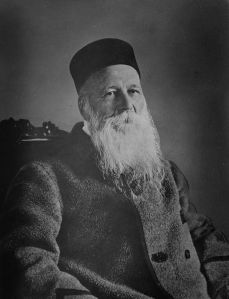 Tragically, Jean Henri Dunant subsequently suffered from business failure and deep depression. Resigning from the Red Cross in 1867, he virtually disappeared from sight. In 1895, Dunant was discovered in Heiden, Switzerland by a newspaper reporter. By then the Red Cross had become famous, and financial assistance to assist Dunant began to pour in from all around the world. In 1901 Dunant shared with Frederick Passy, a French internationalist, the first Nobel Peace Prize. From Geneva, his old home, came this message from the International Committee of the Red Cross: “There is no man who more deserves this honour, for it was you, forty years ago, who set on foot the international organization for the relief of the wounded on the battlefield. Without you, the Red Cross, the supreme humanitarian achievement of the nineteenth century would probably have never been undertaken.” Dunant gave all of the Nobel Peace Prize money away to charity, and died peacefully in his sleep on October 30th 1910.
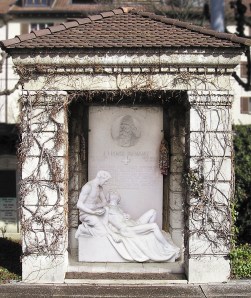 among young people.
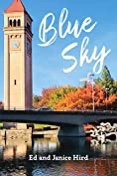 Sandy Brown and her family have just moved to Spokane, Washington where her husband, Scott, is pastoring a new church. With a fresh start, Sandy is determined to devote more time to her four children. But, within weeks of settling in their new life, the Brown family is plunged into turmoil.