When Alexander Fleming’s picture turned up on the front cover of Time magazine, the byword stated “His penicillin will save more lives than war can spend”. A vivid example of this ‘miracle’ was the usage of penicillin on D-Day to save 3,000 on Normandy Beach from deadly gangrene. Some researchers consider penicillin to be one of the key top-secret weapons that helped the Allies win World War II.
It is hard for our modern generation to fully appreciate that before penicillin, even an infected pinprick or a tiny cut might be lethal. Hospitals were full of people with easily caught infections raging out of control. Children died regularly from scarlet fever, from infections of the bones, throat, stomach, or brain. It is no exaggeration to say that many of you reading this article would not be here today if it weren’t for the miracle of antibiotics touching you and your extended family.
In 1881, Alexander Fleming was born in Ayrshire in the lowlands of southwestern Scotland. A playground accident smashed the bridge of his nose and left him looking like a battered boxer. Andre Maurois said that Fleming had those qualities which many attribute to the Scots: a capacity for hard and sustained work, a combative spirit which refuses to admit defeat, a steadfastness and loyalty which creates respect and affection, and a true humility which protects against pretentiousness and pride.
Affectionately called Little Flem, his gift of silence appeared to be inexhaustible. One colleague said that Fleming ‘could be more eloquently silent than any man I have ever known.’ His capacity for silence was only matched by his capacity for waiting – and for hanging on, an attribute that greatly helped him in his penicillin adventure.
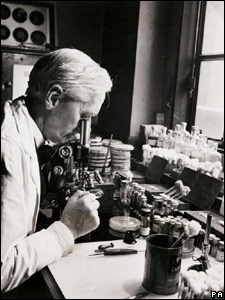
The body’s fight with infection was Fleming’s abiding interest. One of Fleming’s first breakthroughs was in the discovery of lysozyme, a natural antiseptic contained in human tears and saliva. Fleming’s method of collecting lysozyme was to recruit a passing student or laboratory boy and drop lemon juice in his eye! Eventually Fleming switched to the use of egg white which has a stronger concentration of lysozyme.
Lysozyme, unfortunately, ended up being an embarrassment to Fleming because it proved useless in killing harmful diseases. As a result, his fellow colleagues mostly treated Fleming’s later penicillin discovery as if it were another laboratory dead-end. Alexander Fleming always said, ‘We shall hear more about lysozyme one day’. With thousands of scientific papers now written about it, the Russians use lysozyme for preserving caviar; doctors add lysozyme to cow-milk to reproduce the component structure of human milk, as well as for the treatment of eye and intestinal infections.
Fleming, being a ‘packrat’, never liked to throw anything away. One day, Fleming noticed a blue mould growing on one of his unwashed petri dishes. He seized the moment and changed the world forever. From that moment, Fleming became obsessed with penicillin mould, even using his friends’ moldy old shoes. Fleming showed amazing ingenuity in his makeshift creation of the first penicillin ‘factory’, employing devices like oilcans, biscuit tins, dustbins, bedpans, milk churns, and bookracks!
For twelve long years after his 1928 discovery of penicillin, Fleming faced skeptical indifference. Penicillin was a medical Cinderella that no one wanted to dance with. ‘The man of genius’, writes Lord Beaverbrook, ‘ is often an egotist. When, as sometimes happens, he is simple and retiring, the world is inclined to underestimate his gifts…’
In 1937 Howard Florey and Ernst Chain of Oxford purified Fleming’s lysozyme. From there, they purified Fleming’s penicillin, making it stable, concentrated, and more useful.
When Alexander Fleming turned up in Oxford, Chain was taken completely by surprise. He had thought that Fleming was dead! Fleming generously said of the two,‘We all owe a lot to Florey, Chain and their co-workers. They did not initiate penicillin but they put it on the map as an effective drug.’
By freeze-drying it at a low temperature with a neutral pH, Chain and Florey were able to purify penicillin to become a thousand times more powerful than Fleming’s original mold. Once completely purified, penicillin became a million times stronger than at first!
By one biographer’s account, Fleming was given 25 honorary degrees, 26 medals, 18 prizes, 13 decorations, the freedom of 15 cities and boroughs, and honorary membership in 89 academies and societies. Both Florey and Fleming were knighted in 1944, and in 1945 Fleming, Florey and Chain were jointly given the Nobel Prize for Physiology and Medicine. Medical centers, research institutes, and even a moon crater were named in honour of the beloved ‘father’ of penicillin. It meant a lot to Fleming as a Scot when he was elected as Rector of Edinburgh University in 1951. When Fleming received an ovation at a Spanish bullfight, 20,000 fans broke out into mass hysteria. The famous Spanish scientist Don Gregorio Maranon said of Fleming that ‘God selected him to carry out the greatest miracle which humanity has ever seen’.
Yet despite all the honours showered on Fleming, fame didn’t spoil him. He remained a simple humble man, not even bothering to patent penicillin for personal profit. When Fleming was asked to what he attributed his success, he said: ‘I can only suppose that God wanted penicillin, and that this was his reason for creating Alexander Fleming.’
Countless millions have been saved physically through Fleming’s sacrificial work on penicillin. Countless millions have been saved spiritually through Jesus’ sacrificial work on the cross. When is the last time that we thanked God for such amazing acts of generosity?
The Rev. Dr. Ed Hird, BSW, MDiv, DMin
-previously published in the North Shore News/Deep Cove Crier
P. S. Click this Amazon link to view for free the first two chapters of our new novel Blue Sky.
“I’m afraid there’s been an accident…”
Sandy Brown and her family have just moved to Spokane, Washington where her husband, Scott, is pastoring a new church. With a fresh start, Sandy is determined to devote more time to her four children. But, within weeks of settling in their new life, the Brown family is plunged into turmoil.
Sandy receives shocking news that her children aren’t safe, which brings back haunting memories of the trauma she experienced as a girl. Then, the unthinkable happens…
A brutal attack puts Sandy on the brink of losing everything she’s loved. Her faith in God and the family she cherishes are pushed to the ultimate limit.
Is healing possible when so many loved ones are hurt? Are miracles really possible through the power of prayer? Can life return to the way it was before?
Blue Sky reveals how a mother’s most basic instinct isn’t for survival… but for family.
If you’re a fan of Karen Kingsbury, then you’ll love Blue Sky. Get your copy today on paperback or kindle.
-The sequel book Restoring Health: body, mind and spirit is available online with Amazon.com in both paperback and ebook form. Dr. JI Packer wrote the foreword, saying “I heartily commend what he has written.” The book focuses on strengthening a new generation of healthy leaders. Drawing on examples from Titus’ healthy leadership in the pirate island of Crete, it shows how we can embrace a holistically healthy life.
To receive a signed copy within North America, just etransfer at ed_hird@telus.net, giving your address. Cheques are also acceptable.
-Click to purchase the Companion Bible Study by Jan Cox (for the Battle of the Soul of Canada) in both paperback and Kindle on Amazon.com and Amazon.ca
-Click to purchase the Companion Bible Study by Jan Cox (for the Battle of the Soul of Canada) in both paperback and Kindle on Amazon.com and Amazon.ca
To purchase any of our six books in paperback or ebook on Amazon, just click on this link.
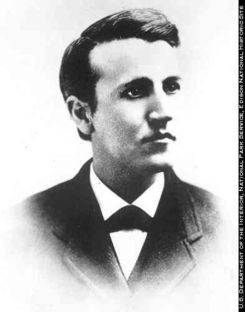
I had no idea that Thomas Edison’s family were United Empire Loyalists, refugees fleeing to Canada in the aftermath of the American Revolutionary War. Thomas’ grandfather Samuel Sr. even took part in the Canadian conquest of Detroit during the war of 1812. But frustrated with inequalities in Canada, his son Samuel Jr. joined in Mayor William Lyon Mackenzie’s 1837 unsuccessful plot to liberate Toronto from Canada. As Samuel Edison Jr. fled with his family to Ohio, Canada lost one of the world’s greatest inventors: Thomas Alva Edison.
In talking to many people, I have not met one yet who hasn’t heard of Thomas Edison. But few of us have realized just how prolific an inventor Edison really was, with 1,069 different inventions patented! Edison of course is best known for the creation of the world’s first usable lightbulb. Realizing that a lightbulb needed a power source, he went on to create the world’s first electrical power station, a revolutionary act that transformed modern technology, and created ten of millions of jobs. Henry Ford once commented: ‘To find a man who has not benefited by Edison and who is not in debt to him, it would be necessary to go deep into the jungle.’
It was also interesting to discover that his own father and his teachers saw this unique genius as unintelligent. He irritated his superiors by continually asking questions. He also had trouble hearing which made learning difficult in school. Years later, Thomas said, ‘My father thought I was stupid, and I almost decided I must be a dunce’. Thomas was afraid to tell his mother how difficult school was, in case she too would lose her confidence in him. His mother Nancy, who always stood up for him, eventually pulled him out and home-schooled him herself. Edison later said: ‘My mother was the making of me; she let me follow my bent’. At one particularly low point, he realized that his mother was ‘the most enthusiastic champion a boy ever had.’ At age 12, he began selling newspapers and snacks from 6am-11pm to railway passengers. During his spare moments, he used to conduct chemistry experiments in the baggage cars until one day he was fired for setting the train car on fire. As the last of seven children, Thomas was always a kid at heart, seeing life as one big experiment.
Edison’s next job as a telegrapher allowed him to create his first invention, an automatic telegraph dispatcher that allowed him to work on his experiments and sleep the rest of the time. His invention worked like clockwork until one day sleepy Edison was fired for not forwarding an unusual message warning of a narrowly-averted head-on train collision.
Thomas Edison changed his world before he even reached age 40. His success in the fields of telegraph, telephone, phonograph, and the electric light were achieved between the ages of 20 to 39. He continued inventing right up until his death at age 85. Edison aimed to produce one minor invention every ten days and one major one every six months. Inventing for Edison was as natural as breathing.
One co-worker said of Edison that ‘His genius for sleep equaled his genius for invention. He could go to sleep anywhere, any time on anything.’ Always a night bird, Edison would often start work at nightfall, break for ‘lunch’ at midnight, and then go until daybreak. Because Edison believed that changing clothes was bad for creativity, he often slept fully clothed. His wife Mary was so irritated by this habit that she often encouraged him to sleep elsewhere. Sadly time for his wife and children often became lost in his passion for creativity and invention.
Edison created and patented both the gramophone, the ancestor of our modern CD and Tape Player, as well as the Kinetoscope, the ancestor of movie cameras. As well as creating the world’s first Movie Studio in New Jersey, he indirectly created the Hollywood film industry by ‘driving’ his competitors right across the country in their efforts to avoid Edison’s subpoenas and court orders. Edison struggled all his life with lawsuits over people stealing or imitating his inventions. But it never stopped Edison’s creativity in bringing new light to age-old technological problems.
As Edison brought physical light, so Jesus brings spiritual light to the darkness and confusion that we all face on a daily basis. Jesus said: ‘I am the light of the world. Whoever follows me will never walk in darkness, but will have the light of life’. As you are reading this article, it may be very dark outside, but you are directly benefiting from Edison’s enlightening breakthrough with workable light bulbs.
My prayer is that in the same way that each of us benefit from the light that Edison has brought into our lives, so too we may be willing to benefit from the light that Jesus is waiting to bring into our lives.
The Rev. Dr. Ed Hird, BSW, MDiv, DMin
-previously published in the North Shore News/Deep Cove Crier
P. S. Click this Amazon link to view for free the first two chapters of our new novel Blue Sky.
“I’m afraid there’s been an accident…”
Sandy Brown and her family have just moved to Spokane, Washington where her husband, Scott, is pastoring a new church. With a fresh start, Sandy is determined to devote more time to her four children. But, within weeks of settling in their new life, the Brown family is plunged into turmoil.
Sandy receives shocking news that her children aren’t safe, which brings back haunting memories of the trauma she experienced as a girl. Then, the unthinkable happens…
A brutal attack puts Sandy on the brink of losing everything she’s loved. Her faith in God and the family she cherishes are pushed to the ultimate limit.
Is healing possible when so many loved ones are hurt? Are miracles really possible through the power of prayer? Can life return to the way it was before?
Blue Sky reveals how a mother’s most basic instinct isn’t for survival… but for family.
If you’re a fan of Karen Kingsbury, then you’ll love Blue Sky. Get your copy today on paperback or kindle.
-The sequel book Restoring Health: body, mind and spirit is available online with Amazon.com in both paperback and ebook form. Dr. JI Packer wrote the foreword, saying “I heartily commend what he has written.” The book focuses on strengthening a new generation of healthy leaders. Drawing on examples from Titus’ healthy leadership in the pirate island of Crete, it shows how we can embrace a holistically healthy life.
To receive a signed copy within North America, just etransfer at ed_hird@telus.net, giving your address. Cheques are also acceptable.
-Click to purchase the Companion Bible Study by Jan Cox (for the Battle of the Soul of Canada) in both paperback and Kindle on Amazon.com and Amazon.ca
-Click to purchase the Companion Bible Study by Jan Cox (for the Battle of the Soul of Canada) in both paperback and Kindle on Amazon.com and Amazon.ca
To purchase any of our six books in paperback or ebook on Amazon, just click on this link.
How are your knees feeling today? Are you fit enough for The Knee Knackering North Shore Trail Run, a challenging 30-mile foot race along the Baden-Powell Centennial Trail from Horseshoe Bay to Deep Cove? Running Wild magazine has recognized the Knee Knackering race on the North Shore of Vancouver, BC as one of the 25 toughest races in North America, as it involves some 16,000 feet of vertical climb and descent.
What started as a group run with 8 participants in 1989 has quickly grown into the biggest ultramarathon race in Canada. Since 1994, there has been so much interest that the Northshore Ultra Trailrunning Society (N.U.T.S.) has been forced to use a lottery to select a maximum slate of 175 runners. Raising over $10,000 for various charities since its inception, the Knee Knackering race has benefited the North Shore Search and Rescue team.
Knee Knackering however is not just limited to the North Shore Mountains. Because of the increased emphasis on physical fitness, knee injuries are becoming more common among athletes and the general population. According to the California Podiatric Medical Association, out of the more than 100 million North Americans who will visit the emergency room this year, almost 13 million will be treated due to sports-related injuries. More than 4.1 million people seek medical care each year for a knee problem. James M. Fox MD says ‘The annual cost of these knee injuries, including hospital bills, physical therapy sessions, and hours lost from work exceeds 40 billion dollars!
There is a hit song being played on the local radios these days which gives the advice: ‘Be good to your knees; you are going to need them later’. It’s so true. I remember when I used to jog a mile and a half every day. Some days I forgot to warm up properly and would sometimes injure my knees. I would be in agony trying to crawl up the stairs, only to go out jogging the next day if I felt better. Very few of us, when we are young, think about the long-term damage that we may be doing to our long-term knee joints.
Dr. Richard Villar, a specialist hip and knee surgeon, holds that the knee is the most commonly injured joint in the body. In San Francisco, a sports medicine clinic reviewed 10,000 recreational injuries, and nine activities – basketball, dance, football, gymnastics, running, skiing, tennis, soccer, and figure skating – accounted for three-fourths of the injuries. What part of the anatomy was number one on the hit parade? Knees.
The injured knee is also particularly unforgiving. Knee injuries account for more time lost from competition by young athletes than any other type of surgery. Knee injuries end more athletic careers and disable more athletes in later years than any other sports injury. A severely injured knee is often at risk when an athlete returns to competition, even after surgery.
Of the 187 joints in the body, the knee is, without a doubt, the best at grabbing one’s attention and is our most vulnerable joint, according to James Fox, MD. An estimated 50 million North Americans have suffered or are suffering knee pain or injuries. For an estimated 17 million North American athletes, the injury rate in such sports as football, gymnastics, skiing, and racket sports is projected at over 50 percent. According to sports medicine specialists, the initial complaint of over half the athletes they see is knee pain. Dr. Fox notes that if you’re an athlete, the chances of knee surgery are five times greater than surgery on any other part of the body
One in four high-school football players will suffer some kind of knee injury. According to a National Athletic Trainers Association study, about fifteen thousand high-school football players require knee surgery every year—almost 70 percent of all operations performed on high-school football players. A nine-year study showed that 70 percent of all football players had knee surgery by the age of twenty-six, including half of all running backs and virtually every quarterback.
When a knee is injured, it is vital to get evaluation from a medical expert as soon as possible. The best treatment for injury is prevention, which is why we have many recreational therapists available to guide us in strengthening our knees through exercise at our local Rec Centres.
Immediate treatment of minor sports injuries is called RICE after its four components: rest, ice, compression, and elevation. Arthroscopic ‘keyhole’ surgery allows doctors using miniature cameras to repair damaged knee cartilage, resulting in a dramatically reduced recovery period. Up to a million ‘keyhole’ surgeries are done each year. Up to 200,000 knee joints are surgically replaced each year. There are now dozens of websites offering sports braces to reduce and allegedly prevent knee damage. Even the snowboarder websites are offering custom designed knee braces for the active boarder.
As we strengthen our knees physically, it is also vital that we strengthen our knees spiritually. In both the Old and New Testament, we are encouraged to strengthen our tired arms and our weak knees (Isaiah 35:3, Hebrews 12:10). The Concise Oxford Dictionary defines being weak-kneed as ‘the inability to stand firm, the want of resolution’. There can be a danger in our gentle Canadian culture that we may fail to take a stand when a stand needs to be taken. Only passionate persistent prayer in Jesus’ name can free us from morally weak knees.
–previously published in the North Shore News/Deep Cove Crier
P. S. Click this Amazon link to view for free the first two chapters of our new novel Blue Sky.
“I’m afraid there’s been an accident…”
Sandy Brown and her family have just moved to Spokane, Washington where her husband, Scott, is pastoring a new church. With a fresh start, Sandy is determined to devote more time to her four children. But, within weeks of settling in their new life, the Brown family is plunged into turmoil.
Sandy receives shocking news that her children aren’t safe, which brings back haunting memories of the trauma she experienced as a girl. Then, the unthinkable happens…
A brutal attack puts Sandy on the brink of losing everything she’s loved. Her faith in God and the family she cherishes are pushed to the ultimate limit.
Is healing possible when so many loved ones are hurt? Are miracles really possible through the power of prayer? Can life return to the way it was before?
Blue Sky reveals how a mother’s most basic instinct isn’t for survival… but for family.
If you’re a fan of Karen Kingsbury, then you’ll love Blue Sky. Get your copy today on paperback or kindle.
-The sequel book Restoring Health: body, mind and spirit is available online with Amazon.com in both paperback and ebook form. Dr. JI Packer wrote the foreword, saying “I heartily commend what he has written.” The book focuses on strengthening a new generation of healthy leaders. Drawing on examples from Titus’ healthy leadership in the pirate island of Crete, it shows how we can embrace a holistically healthy life.
To receive a signed copy within North America, just etransfer at ed_hird@telus.net, giving your address. Cheques are also acceptable.
-Click to purchase the Companion Bible Study by Jan Cox (for the Battle of the Soul of Canada) in both paperback and Kindle on Amazon.com and Amazon.ca
-Click to purchase the Companion Bible Study by Jan Cox (for the Battle of the Soul of Canada) in both paperback and Kindle on Amazon.com and Amazon.ca
To purchase any of our six books in paperback or ebook on Amazon, just click on this link.
Why is Toronto, Ontario, sometimes called Toronto the Good?
It goes back to Mayor William Howland of Toronto*, a public servant who was so dedicated to helping the disadvantaged that he gave away most of his wealth. Son of the Honorable W.P. Howland, the first Lieutenant-Governor of Ontario, William was possessed with a bubbly enthusiasm and phenomenal capacity for hard work.
By the age he was 25, William was president, vice-president, or a director of more than a dozen companies in the fields of insurance and finance, electrical services, and paint manufacturing. When he became president of the Queen City Fire Insurance Company in 1871, he was the youngest insurance company president in Canada. As well, Howland was President of three influential organizations: the Toronto Board of Trade, the Dominion Board of Trade, and the Manufacturer’s Association of Ontario. Out of his love for his country, he served as Chairman of the Canada First movement, personally financing its weekly newspaper ‘The Nation’.
At age 32, Howland was led to Christ by his priest, Dr. W.S. Rainsford of St. James Anglican Cathedral. His life-changing experience gave him a new passion for helping the poor. He became involved helping with the Hillcrest Convalescent Hospital, the YMCA, the Haven Home for Unwed Mothers, the Prisoner’s Aid Association, the Central Prison Mission School, and the Toronto General Hospital. Night after night, Howland visited the slums, going from house-to-house, and reaching out to the poor, the sick, and the alcoholic. He also purchased 50 acres to start an Industrial School in order to steer youth away from the life of crime. Other initiatives were his building an alternative school for drop-outs, and a Home for the Aged and Homeless Poor. When he began to teach an interdenominational bible study for 100 young men, his new priest J.P. Lewis objected to Howland’s involvement with non-Anglicans. Out of this rejection, he began the interdenominational Toronto Mission Union, which operated seniors’ homes, convalescent homes, and Toronto’s first-ever home nursing service.
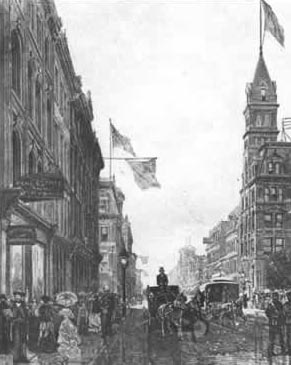
Because of his great compassion for the poor, he was elected as Mayor of Toronto in 1885, with a strong mandate to clean up the city. Howland signaled his arrival in the mayor’s office by installing a twelve-foot banner on the wall, reading, “Except the Lord Build the City, the Watchman Wakes but in Vain”. Despite fierce opposition, Howland was so successful, that Toronto became nicknamed ‘Toronto the Good’. As champion of the poor, Howland and his Alliance friend, Rev. John Salmon, would tramp the lanes and alleys, feeding the poor, praying over the sick, and comforting the sad. With a population of just 104,000, Toronto had over 800 licensed and unlicensed saloons. Over half of all criminal offenses recorded in 1885 were related to drunkenness.
Howland is described in Desmond Morton’s book Mayor Howland: the Citizen’s Candidate as the first reform mayor in Toronto’s history. Due to bureaucratic corruption, municipal garbage collection was all but non-existent. Even City Hall’s own garbage was rarely picked up. Rotting garbage fouled the alleyways, yards, and streets, giving Toronto a reputation for flies, stench, and disease. With no general sewage system, Toronto lived on the verge of a typhoid epidemic. Children swam in the same Toronto harbour area into which raw sewage was flowing from the ditches. Toronto’s fresh water supply was sucked through leaking and rotting wooden pipes, half buried in the sewage and sludge of the Toronto harbour.
Howland believed that we didn’t usually need more laws; we just needed to enforce the ones that already existed. He shocked the city bureaucrats by enforcing the already existing bylaw which forbid the depositing of garbage within the city limits. After he threatened to send the city commissioner to jail for breaking this bylaw, garbage miraculously began to be collected! Howland also worked hard in the construction of a trunk sewer system, to redirect the sewage away from the Toronto Harbour. He had such a dramatic impact in reducing the crime rate that other mayors began visiting Toronto, hoping to imitate Howland’s miracle.
During his re-election campaign in 1887, all the taxi cabs were paid off by Howland’s opponent so that they would refuse to take Howland’s supporters to the polling stations. Women however (2,000 widows and single women with property) had just been given the vote. So they held up their long Victorian dresses, and trucked through the snow to give Howland the moral reformer a second term. When Howland was re-elected by a landslide, over 3,000 of his supporters at the YMCA hall spontaneously burst into singing ‘Praise God From Whom All Blessings Flow.’
After he unexpectedly stepped down as Mayor after two terms, Howland became the founding President of the Christian Alliance (which later took the name C&MA: Christian and Missionary Alliance). The unique interdenominational nature of the early C&MA allowed Howland to be its president, while still remaining an Anglican. When he died unexpectedly at age 49, his funeral involved Anglican, Alliance, and Presbyterian clergy. With more than a thousand mourners on foot from all social classes, it was the largest funeral procession that had ever been held in Toronto. A poem published in the Toronto Globe said of Howland:
And not Toronto mourns alone; All Canada his fame had heard; His name is dear, a household word, And far and wide, his worth was known.
May William H. Howland continue to be a living symbol of the difference that just one Canadian can make.
The Rev. Dr. Ed Hird, BSW, MDiv, DMin
-previously published in the North Shore News/Deep Cove Crier
* My Torontonian interest stems from being the great-great grandson of Thomas Allen who served as Toronto Alderman for 19 years during the late 19th Century.
P. S. Click this Amazon link to view for free the first two chapters of our new novel Blue Sky.
“I’m afraid there’s been an accident…”
Sandy Brown and her family have just moved to Spokane, Washington where her husband, Scott, is pastoring a new church. With a fresh start, Sandy is determined to devote more time to her four children. But, within weeks of settling in their new life, the Brown family is plunged into turmoil.
Sandy receives shocking news that her children aren’t safe, which brings back haunting memories of the trauma she experienced as a girl. Then, the unthinkable happens…
A brutal attack puts Sandy on the brink of losing everything she’s loved. Her faith in God and the family she cherishes are pushed to the ultimate limit.
Is healing possible when so many loved ones are hurt? Are miracles really possible through the power of prayer? Can life return to the way it was before?
Blue Sky reveals how a mother’s most basic instinct isn’t for survival… but for family.
If you’re a fan of Karen Kingsbury, then you’ll love Blue Sky. Get your copy today on paperback or kindle.
-The sequel book Restoring Health: body, mind and spirit is available online with Amazon.com in both paperback and ebook form. Dr. JI Packer wrote the foreword, saying “I heartily commend what he has written.” The book focuses on strengthening a new generation of healthy leaders. Drawing on examples from Titus’ healthy leadership in the pirate island of Crete, it shows how we can embrace a holistically healthy life.
To receive a signed copy within North America, just etransfer at ed_hird@telus.net, giving your address. Cheques are also acceptable.
-Click to purchase the Companion Bible Study by Jan Cox (for the Battle of the Soul of Canada) in both paperback and Kindle on Amazon.com and Amazon.ca
-Click to purchase the Companion Bible Study by Jan Cox (for the Battle of the Soul of Canada) in both paperback and Kindle on Amazon.com and Amazon.ca
To purchase any of our six books in paperback or ebook on Amazon, just click on this link.
Mother’s Day always bring to mind exceptional mothers who have made a difference.
Well-known author Maggie Siggins holds that the most exceptional Canadian mother of the 19th century was Louis Riel’s grandmother, Marie-Anne Lagimordiere(née Gaboury). Her home town was Maskinongé, a small village near modern-day Trois-Rivières in Quebec. In 1807, Marie-Anne became the first women of European background to permanently settle in Canada’s far west. It would take another forty years before another European woman joined her.
With the death of her father when she was 12, Marie-Anne spent the next fifteen years as a housekeeper to a priest who taught her to read and write French, Latin, and do basic math. Such education was rare for women in those days. Marie-Anne did not marry until late in life, from a 19th Century Quebecois perspective. She rejected suitor after suitor until the grand old age of 26.
Doing the unthinkable, she married a voyageur Jean Baptiste, and then accompanied him back into the hinterlands of western Canada. They broke the cardinal rule that under no circumstances were Eastern Canadian wives to be involved in the fur trade. Wives in the fur trade were known as ‘fur widows’, only seeing their husbands every four or five years.
Travelling almost 3,000 kilometres by canoe, Marie-Anne faced violent rapids, portages, and deadly storm on her way west. Upon arriving at Pemina, her husband’s ‘country wife’ tried to poison Marie-Anne with a plum pudding. Her hungry dogs ate the pudding instead of Marie-Anne, and all the dogs died!
Living until age 96, Marie-Anne never returned to see her family in Eastern Canada. It is said that she was healthy and wise up till the end. Instead of her dainty dresses, she adopted caribou-skin leggings and embroidered moccasins. Along with learning to make pemmican, Marie-Anne became fluent in Ojibwe and Cree, and helped establish the city of Winnipeg.
She was described in Maggie Siggins’ book Marie-Anne as being ‘one tough cookie’ in order to survive her Western adventures. Shortly after her horse rushed towards a herd of buffalo, Marie-Anne gave birth to her second child in the middle of a prairie field. Another time when a large bear attacked her companion, Marie-Anne fought back and shot the bear dead. Once she and her husband were captured by the Tsu Tinna. Upon escaping, they were chased for five days until reaching the safety of Edmonton.
Marie-Anne lived through terrifying conflict between the Hudson Bay Company and the North West Company, in which many forts were burned to the ground. For four summers in a row, swarms of grasshoppers were so thick that the sky was pitch black. All crops, gardens, and greenery were ravaged within a few short hours. During the Great Flood of 1825, Marie-Anne’s house was swept away by the river surge. Trees and cattle were swallowed up. Marie-Anne begged her husband to leave this ‘God-forsaken’ land, but Jean Baptiste replied that if the local clergy refused to leave, they too would hang in there. Remarkably all of her seven children lived to adulthood, with her four sons becoming involved in the thriving family businesses.
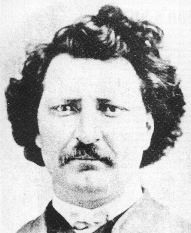
Her favorite grandchild was one of Canada’s most famous leaders Louis Riel. He was deeply influenced by the passion and courage of his dear grandmother. She taught him to speak the various first nations languages. She taught him to be willing to risk. As Marie-Anne was grieved by the alcoholic debauchery that she saw at Fort Williams, Louis Riel likewise rejected alcohol abuse. Dying in 1875, Marie-Anne lived long enough to see her grandson Louis’ dream come true: that Manitoba become a province, not just a territory in the Canadian Confederation.
My prayer is that like Louis Riel, we may be inspired by our mothers and grandmothers to be pioneers and explorers of Canada’s future.
The Rev. Dr. Ed Hird, BSW, MDiv, DMin
-an article previously published in the Deep Cove Crier
P. S. Click this Amazon link to view for free the first two chapters of our new novel Blue Sky.
“I’m afraid there’s been an accident…”
Sandy Brown and her family have just moved to Spokane, Washington where her husband, Scott, is pastoring a new church. With a fresh start, Sandy is determined to devote more time to her four children. But, within weeks of settling in their new life, the Brown family is plunged into turmoil.
Sandy receives shocking news that her children aren’t safe, which brings back haunting memories of the trauma she experienced as a girl. Then, the unthinkable happens…
A brutal attack puts Sandy on the brink of losing everything she’s loved. Her faith in God and the family she cherishes are pushed to the ultimate limit.
Is healing possible when so many loved ones are hurt? Are miracles really possible through the power of prayer? Can life return to the way it was before?
Blue Sky reveals how a mother’s most basic instinct isn’t for survival… but for family.
If you’re a fan of Karen Kingsbury, then you’ll love Blue Sky. Get your copy today on paperback or kindle.
-The sequel book Restoring Health: body, mind and spirit is available online with Amazon.com in both paperback and ebook form. Dr. JI Packer wrote the foreword, saying “I heartily commend what he has written.” The book focuses on strengthening a new generation of healthy leaders. Drawing on examples from Titus’ healthy leadership in the pirate island of Crete, it shows how we can embrace a holistically healthy life.
To receive a signed copy within North America, just etransfer at ed_hird@telus.net, giving your address. Cheques are also acceptable.
-Click to purchase the Companion Bible Study by Jan Cox (for the Battle of the Soul of Canada) in both paperback and Kindle on Amazon.com and Amazon.ca
-Click to purchase the Companion Bible Study by Jan Cox (for the Battle of the Soul of Canada) in both paperback and Kindle on Amazon.com and Amazon.ca
To purchase any of our six books in paperback or ebook on Amazon, just click on this link.
How do you feel about the world-famous Mr. Van Rijn’s paintings?
Rembrandt Harmenszoon van Rijn is one of the few men or women in history recognizable from just his first name. Others are Napoleon, Michaelangelo, and Cleopatra. Today Rembrandt is known to hundreds of millions of people in all parts of the world. Many art experts see him as the greatest of all Dutch painters, indeed as one of the greatest artists who ever lived.
By his subtle contrasts of light and dark, Rembrandt caused the people he painted to seem alive. Theatre people often call Rembrandt the Shakespeare of painting –for his capacity to probe personality, his compassion for each person he depicts, and his feeling for grasping the dramatic moment and displaying it with moving effect.
On July 15, 1606, Rembrandt was born as the ninth child of a well-to-do couple in Leiden, Holland. While in his early 20’s, he developed an overnight celebrity status somewhat akin to the rise of the Beatles. This brief time of prosperity and popularity,however, was followed by much sorrow and rejection. Championed as the Netherlands alternative to Peter Paul Ruben in Belgium, Rembrandt became very wealthy and over-extended. Taking out an enormous mortgage on a beautiful house, he was accused of wasting his inheritance and living an indulgent lifestyle.
Rembrandt responded by painting himself with his wife Saskia, as a Prodigal Son/wealthy playboy with his latest female conquest. As a young person, Rembrandt had all the attributes of the Prodigal Son: brash, overconfident, spendthrift, hedonistic, and very arrogant. Money dominated and crippled much of his life. He earned a lot; he consumed a lot; he wasted a lot. Sadly, much of his energy and talent was depleted in protracted court cases about financial disputes and bankruptcy affairs.
Rembrandt’s best-known painting, the so-called Night Watch, was both his greatest success artistically and his worst failure relationally. While painting the Night Watch, he made many people angry who would no longer buy his paintings. The soldiers, who paid to be in the picture, all wanted to be front and centre. Instead of painting a typical group portrait, Rembrandt created a masterpiece where some soldiers were prominent and others were hardly visible.
Around that time, his wealthy heiress wife Saskia, whom he deeply loved and admired, died, leaving Rembrandt to care for his nine-month-old son, Titus. Rembrandt had already lost his son Rumbartus in 1635, his first daughter Cornelia in 1638, and his second daughter Cornelia in 1640. Ten days before Saskia died, she changed her will so that Rembrandt would never be able to remarry without being disinherited.
After Saskia’s death, things worsened. Rembrandt became involved in a very unhappy relationship with his housekeeper, Geertje Dircx. When he refused to marry her, she took Rembrandt to court and won a settlement. In response, Rembrandt and Geertje’s own brother had Geertje confined to an insane asylum for the next five years.
Unable to marry, he then became involved in another scandal with his new housekeeper, Hendrickje Stoffels, whose pregnancy scared off even more of his Dutch customers. His financial problems became so severe that in 1656 Rembrandt was declared insolvent. All of Rembrandt’s possessions, his large collection of artwork, and his house in Amsterdam were sold in three auctions during 1657 and 1658. In 1663, Hendrickje, who has been described as ‘one of the noblest souls to serve a troubled genius’, died. Five years later, Rembrandt’s hopes were again raised and then dashed when he celebrated his son Titus’ wedding, only to see him buried that same year. Only his daughter Cornelia, his daughter-in-law Magdalene van Loo, and his granddaughter Titia survived him.
Rembrandt became more and more fascinated with painting ‘old age’, as he felt that it often revealed the most about human nature. Bludgeoned by tragedies that might have crushed a weaker man, Rembrandt achieved a new depth to his art. Rembrandt was close to his death when he painted his Prodigal Son, seen by many as the last will and testament of a turbulent and troubled life.
In his Prodigal Son painting, the essence of love was concentrated in the hands. When the famous author Henri Nouwen saw the Prodigal Son painting in the St Petersburg Hermitage, he was struck by the sight of “a man in a great red cloak tenderly touching the shoulders of a disheveled boy kneeling before him. I could not take my eyes away. I felt drawn by the intimacy between the two figures, the warm red of the man’s cloak, the golden yellow of the boy’s tunic, and the mysterious light engulfing them both. But, most of all, it was the hands –the old man’s hands–as they touched the boy’s shoulders that reached me in a place where I had never been reached before. …” Nouwen realized that Rembrandt must have shed many tears and died many deaths before he could have so exquisitely painted the father’s heart for his lost son. Rembrandt had once again painted himself as the Prodigal Son, but this time coming back home to his Father.
Instead of the rich apparel with which the youthful Rembrandt painted himself in younger days, he now wore only a tattered undertunic covering his wasted body. The Prodigal Son, like Rembrandt, returned to the Father with nothing: his money, his health, his honour, his self-respect, his reputation…everything had been squandered (Luke 15). Yet the good news of Rembrandt’s painting was that the Father still loved him and welcomed him home unconditionally.
Rembrandt indeed saw himself as the Prodigal Painter coming home to the true Father. Rembrandt knew that he had wandered a long way, but that it was never too late to return home. My prayer is that many of us may have the courage, like Rembrandt, to turn our hearts towards Home, where love and forgiveness are waiting.
The Rev. Dr. Ed Hird, BSW, MDiv, DMin
-author of the award-winning Battle for the Soul of Canada
-previously published in the North Shore News/Deep Cove Crier
P. S. Click this Amazon link to view for free the first two chapters of our new novel Blue Sky.
“I’m afraid there’s been an accident…”
Sandy Brown and her family have just moved to Spokane, Washington where her husband, Scott, is pastoring a new church. With a fresh start, Sandy is determined to devote more time to her four children. But, within weeks of settling in their new life, the Brown family is plunged into turmoil.
Sandy receives shocking news that her children aren’t safe, which brings back haunting memories of the trauma she experienced as a girl. Then, the unthinkable happens…
A brutal attack puts Sandy on the brink of losing everything she’s loved. Her faith in God and the family she cherishes are pushed to the ultimate limit.
Is healing possible when so many loved ones are hurt? Are miracles really possible through the power of prayer? Can life return to the way it was before?
Blue Sky reveals how a mother’s most basic instinct isn’t for survival… but for family.
If you’re a fan of Karen Kingsbury, then you’ll love Blue Sky. Get your copy today on paperback or kindle.
-The sequel book Restoring Health: body, mind and spirit is available online with Amazon.com in both paperback and ebook form. Dr. JI Packer wrote the foreword, saying “I heartily commend what he has written.” The book focuses on strengthening a new generation of healthy leaders. Drawing on examples from Titus’ healthy leadership in the pirate island of Crete, it shows how we can embrace a holistically healthy life.
-Click to purchase the Companion Bible Study by Jan Cox (for the Battle of the Soul of Canada) in both paperback and Kindle on Amazon.com and Amazon.ca
-Click to purchase the Companion Bible Study by Jan Cox (for the Battle of the Soul of Canada) in both paperback and Kindle on Amazon.com and Amazon.ca
To purchase any of our six books in paperback or ebook on Amazon, just click on this link.
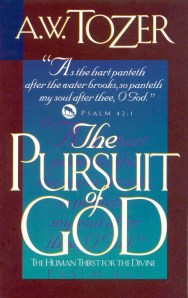
One of my favorite authors is Dr. A.W. Tozer. I appreciate him because he stirs me to think, to feel, to hope, and to search. In this information age of ever-increasing data, Tozer gave us more than just more knowledge; he gave us wisdom to live by. He believed that the widest thing in the universe is not space: it is the potential of the human heart.
Tozer saw it as one of the world’s worst tragedies that we allow our hearts to shrink until there is room in them for little besides ourselves. There are times in my life when my heart has shrunk and hardened. Dr Tozer has been like a ‘heart surgeon’ to me, performing spiritual angioplasty when I have needed it the most. He has helped me keep my heart open and soft towards my family, my community, and my God.
Tozer’s final years of life were spent in Toronto. On May 12, 1963, he died of a heart attack at age 66. Some wonder why Tozer’s writings are as fresh today as when he was alive. It is because, as one friend commented, “He left the superficial, the obvious and the trivial for others to toss around. . . . His books reach deep into the heart.”
Tozer’s love for words also pervaded his family life. He quizzed his children on what they read and made up bedtime stories for them. “The thing I remember most about my father,” reflects his daughter Rebecca, “was those marvelous stories he would tell.”
His humor, written and spoken, has been compared to that of Will Rogers–honest and homespun. People could one moment be swept by gales of laughter and the next sit in a holy hush. Tozer believed that the essence of true religion is spontaneity.
Tozer held that one way society destroys people is by preventing them from thinking their own thoughts. As Canadians with our emphasis on accepting all views, we are particularly susceptible to being programmed by our media. Our ‘vastly improved methods of communication’ of which the shortsighted boast so loudly now enable a few people in strategic centers to feed into millions of minds alien thought-stuff, ready-made and pre-digested. A little effortless assimilation of these borrowed ideas and the average person has done all the thinking he will or can do. Tozer believed that the mind should be an eye to see with rather than a bin to store facts in. Every time I read Tozer, I feel like the fog has lifted from the tops of the forests, and I can see clearly again.
In Greater Vancouver, there are many very successful people. Sometimes the most successful outwardly are the most wounded inwardly, especially in one’s primary relationships. “Not the educators nor the legislators nor the scientists can give us tranquillity of heart, and without tranquillity, whatever else they give us is useless at best.” Tozer commented that in this world people are rated by what they do. They are rated according to the distance they have come up the hill of achievement.
Tozer believed that excessive preoccupation with the struggle to win narrows the mind, hardens the heart, and blots out a thousand bright visions that might be enjoyed if there were only leisure to notice them. No one, said Tozer, is worthy to succeed unless he is willing to fail. Jesus died an apparent failure, discredited by the leaders of established religion, rejected by society, and forsaken by his friends. We can afford to follow Jesus to failure. Faith, says Tozer, dares to fail. Jesus’ resurrection is the ultimate reason why failure and crosses need not intimidate us.
One hundred and twelve years after his birth, Dr. A.W. Tozer still serves as a symbol of resurrected hope and wisdom in our fragmented age.
-previously published in the Deep Cove Crier/North Shore News
P. S. Click this Amazon link to view for free the first two chapters of our new novel Blue Sky.
“I’m afraid there’s been an accident…”
Sandy Brown and her family have just moved to Spokane, Washington where her husband, Scott, is pastoring a new church. With a fresh start, Sandy is determined to devote more time to her four children. But, within weeks of settling in their new life, the Brown family is plunged into turmoil.
Sandy receives shocking news that her children aren’t safe, which brings back haunting memories of the trauma she experienced as a girl. Then, the unthinkable happens…
A brutal attack puts Sandy on the brink of losing everything she’s loved. Her faith in God and the family she cherishes are pushed to the ultimate limit.
Is healing possible when so many loved ones are hurt? Are miracles really possible through the power of prayer? Can life return to the way it was before?
Blue Sky reveals how a mother’s most basic instinct isn’t for survival… but for family.
If you’re a fan of Karen Kingsbury, then you’ll love Blue Sky. Get your copy today on paperback or kindle.
-The sequel book Restoring Health: body, mind and spirit is available online with Amazon.com in both paperback and ebook form. Dr. JI Packer wrote the foreword, saying “I heartily commend what he has written.” The book focuses on strengthening a new generation of healthy leaders. Drawing on examples from Titus’ healthy leadership in the pirate island of Crete, it shows how we can embrace a holistically healthy life.
To receive a signed copy within North America, just etransfer at ed_hird@telus.net, giving your address. Cheques are also acceptable.
-Click to purchase the Companion Bible Study by Jan Cox (for the Battle of the Soul of Canada) in both paperback and Kindle on Amazon.com and Amazon.ca
-Click to purchase the Companion Bible Study by Jan Cox (for the Battle of the Soul of Canada) in both paperback and Kindle on Amazon.com and Amazon.ca
To purchase any of our six books in paperback or ebook on Amazon, just click on this link.
There is a time in every life, comments Stephen Lawson, when all hell breaks loose. Suddenly. Unexpectedly. Cataclysmically. All hell breaks loose. One day, life is sunny. Calm. Clear. Predictable. Your job is secure. Your children behave. Your health is good. Then out of the blue, like a violent, angry thunderstorm blowing across your landscape, tragedy strikes. You’re hit hard. All hell breaks loose.
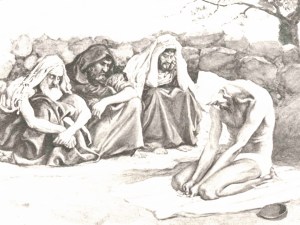
Why do bad things happen to good people? Why does tragedy strike those who love God the most? Why do the good die young? One of the most famous sufferers on Planet Earth asked all these questions. He suffered so deeply that his wife couldn’t stand it anymore. She said to her husband Job: “Curse God and die”. In other words, get it over with. It’s no use. There is no future. You could almost see Job’s wife as the first Euthanasia advocate.
Yet rather than choosing suicide, Job clung tenaciously to life. Often human tragedies like the loss of career, family, or home leads to an even greater tragedy – the denial of any meaning to life. This was the great temptation that faced Job, and that faces each of us at least once every 18 months on average.
Job went through horrendous suffering for 42 chapters, and yet he never once gave up. He was tormented by insults from his friends, harrassed by their insensitive advice and browbeaten into admitting wrongdoing that he never committed. Under attack, Job groaned, he wailed, he doubted and fell into deep depression, he lashed out like an infuriated animal….but he never cursed God. No matter how discouraged he was, he clung to his integrity. He never gave up his rock-bed conviction that he was not to blame for his terrible illness.
Thousands of years later, we contemporary, scientifically-sophisticated people are still often blaming people when they become sick. Even in the 21st century, we can too easily be just like Job’s three comforters who just made their friend feel worse. “Oh, you’re sick in hospital with cancer…Obviously you are not thinking enough positive mental thoughts, or jogging enough, or eating enough granola.” One way or another, we can slip into psychosomatically blaming others for their illnesses.
Job was covered from head to toe with putrid boils that never stopped itching. His feverish body hung limp on its frame, his eyes sank back into his head, and his ribs protruded from his skin. Job’s three friends lacked the courage to feel Job’s pain, and respond rather than just react. Job didn’t need a lecture from his three friends; he needed love. He didn’t need a sermon; he needed sympathy. He didn’t need criticism; he needed comfort. When we are struck down by tragedy, we need to know that our friends really care. And we need to know that God cares, God really listens, and God will never leave us.
Why is it that so many famous writers, poets, philosophers, and scientists have turned time and again to the book of Job? Perhaps because it easily takes its place among the masterpieces of the world’s literature.
The author of Job was a poet of rare genius who powerfully expressed our deepest feelings and thoughts. Sooner or later, we all identify with Job because suffering is part and parcel of life. We are bonded to Job through our common experience of pain. Many reject God, but no one rejects Job. Simply by suffering so greatly and hanging on for dear life through it all, Job has won our hearts.
As Stephen Lawson puts it, heaven is often silent. In such times, the only answer God gives is a deeper revelation of Himself. We learn that He is the answer we seek. Ultimately we must not trust a plan, but a Person. There is something about our questioning minds that longs for answers. If we only knew, we reason, we could handle our pain. Yet placing God’s infinite wisdom into our finite brains would be like trying to pour the Atlantic Ocean into a Dixie Cup. It just wouldn’t fit. It’s too vast and deep.
Job’s faith wavered. He mourned. He cried. He protested. He questioned. He even cursed the day of his birth. But he never cursed God. In the face of adversity, he remained firm in his only hope – God. When our world falls apart unexpectedly, we must not dwell on why but on who. Only God’s disclosure of Himself is powerful enough to heal the heart and relieve the pain.
Job in his sufferings, said Mike Mason, resembled Jesus on the cross. The only person who has ever endured more than Job was Jesus of Nazareth. We do not need to have nails driven into our hands and feet to know what a cross is. A cross is a cross. To be crushed is to be crushed, and we all have had a taste of this. Job in his suffering was looking for what could only be found in a manger, on a cross, in an empty tomb. The key to Job’s sufferings, and indeed to life itself, is the cross. Jesus did not rise above suffering; he went through it. Jesus let himself be captured by soldiers, tried by legalists and bureaucrats, condemned by a mob, scourged by mockers, and finally pinned and exhibited like a specimen insect.
No amount of suffering could shake either Jesus or Job from their rock-bottom clinging to God. Though he slay me, said Job, yet will I trust in Him This very day we can either curse God and die, or bless God and live. May we choose Life today.
-previously published in the Deep Cove Crier/North Shore News
P. S. Click this Amazon link to view for free the first two chapters of our new novel Blue Sky.
“I’m afraid there’s been an accident…”
Sandy Brown and her family have just moved to Spokane, Washington where her husband, Scott, is pastoring a new church. With a fresh start, Sandy is determined to devote more time to her four children. But, within weeks of settling in their new life, the Brown family is plunged into turmoil.
Sandy receives shocking news that her children aren’t safe, which brings back haunting memories of the trauma she experienced as a girl. Then, the unthinkable happens…
A brutal attack puts Sandy on the brink of losing everything she’s loved. Her faith in God and the family she cherishes are pushed to the ultimate limit.
Is healing possible when so many loved ones are hurt? Are miracles really possible through the power of prayer? Can life return to the way it was before?
Blue Sky reveals how a mother’s most basic instinct isn’t for survival… but for family.
If you’re a fan of Karen Kingsbury, then you’ll love Blue Sky. Get your copy today on paperback or kindle.
-The sequel book Restoring Health: body, mind and spirit is available online with Amazon.com in both paperback and ebook form. Dr. JI Packer wrote the foreword, saying “I heartily commend what he has written.” The book focuses on strengthening a new generation of healthy leaders. Drawing on examples from Titus’ healthy leadership in the pirate island of Crete, it shows how we can embrace a holistically healthy life.
To receive a signed copy within North America, just etransfer at ed_hird@telus.net, giving your address. Cheques are also acceptable.
-Click to purchase the Companion Bible Study by Jan Cox (for the Battle of the Soul of Canada) in both paperback and Kindle on Amazon.com and Amazon.ca
-Click to purchase the Companion Bible Study by Jan Cox (for the Battle of the Soul of Canada) in both paperback and Kindle on Amazon.com and Amazon.ca
To purchase any of our six books in paperback or ebook on Amazon, just click on this link.
As a child, I read a comic book version of Don Quixote, and concluded that he was a total fool to go chasing after windmills. Years later, I’ve observed that many of us as adults end up chasing after windmills in business, politics, relationships, or sports.
One of those windmills is twisting ourselves into a knot, trying to have the perfect marriage relationship. Anne Wilson Shaef, a well-known 12-Step writer, comments that relationships are always better in the abstract, and that reality is the stuff that ruins what dreams are made of. Her counsel is that when we let go of what marriage should be and let marriage be what it is, we can have a chance for marriage to be what it can be.
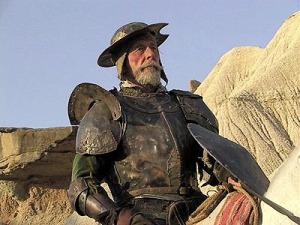
If you’ve never seen the award-winning Broadway musical and Hollywood movie Man of La Mancha, I recommend that you and your spouse rent or borrow it in the near future. There is something about those songs that stir me every time I hear them, especially To Dream the Impossible Dream, Dulcinea, and Aldonza.
Peter O’toole does a brilliant performance as Don Quixote, a skinny old gentleman with wispy white hair and a care-worn face, a seeming mad-man who dreams the impossible dream of restoring love and gallantry to everyday relationships. Sophia Loren memorably lives out the character of Aldonza, a sullen and abused kitchen-wench, who is transformed into Dulcinea by Quixote’s unfailing respect.
The so-called sexual revolution of the 1960’s was supposed to remove barriers that kept people from reaching their full potential. Instead it slowly eroded an appreciation for the sanctity of the marriage relationship, and often left women more vulnerable to abuse and abandonment.
Don Quixote symbolizes a recovery of chivalry and mutual respect in the male-female relationship. Upon encountering Aldonza, Don Quixote sings: “I have dreamed thee too long, never seen thee or touched thee but know thee with all of my heart. Half a prayer, half a song, thou has always been with me, though we have always been apart, Dulcinea…Dulcinea”. Don Quixote repeatedly speaks blessing into Aldonza’s life, calling her Dulcinea (meaning sweetness).
Despite her rejection of his love, Don Quixote still keeps speaking into her life with patience and gentleness. Again and again Quixote reaffirms that the male-female marriage relationship is far more than just physical: it is a spiritual reality, an experience of one flesh intimacy.
That is why Quixote, the Man of La Mancha, sings: “I see heaven when I see thee, and thy name is like a prayer an angel whispers, Dulcinea…I have sought thee, sung thee, dreamed thee, Dulcinea”. Because of how deeply Aldonza has been hurt by other men, it seems almost impossible that she could ever learn to trust again. She struggles between the fear that Don Quixote is just an old fool and the faint hope that he might indeed be her knight in shining armour.
At one point in the movie, Quixote’s relatives try to take him away from Aldonza, claiming that he is mad. The priest pauses and says: “One might say that Jesus was mad, or St. Francis.” In one sense, Don Quixote functions as a Christ-figure, one who gives his life for others, even though dismissed as insane by his own family (Mark 3:21). In another sense, Don Quixote symbolizes the faithful pilgrim, like Francis of Assisi, who saw so clearly through the hypocrisy of his age that he was rejected as a “fool for Christ”(1 Corinthians 4:10). Either way, Don Quixote reminds us as men that sometimes we have to humble ourselves and look foolish, if we really want our marriages to blossom.
Don Quixote was shameless in his affirming of Dulcinea. In response, she cynically said: “Your heart doesn’t know much about women”. Instead of giving up, Quixote gently responded: “Woman is the soul of man, the radiance that lights his way. Woman is glory”. Dulcinea was deeply afraid that he would just use her and discard her, like all the rest. She said to him: “What do you want of me?”
As a true errant knight, Quixote said: “I ask of my lady that I may be allowed to serve her, that I may hold her in my heart, that to her I may dedicate each victory and call upon her in defeat, and if at last I give my life, I give it in the sacred name of Dulcinea.”
Gradually Dulcinea melts in the face of Don Quixote’s gentleness and patience. She sings: “Can’t you see what your gentle insanities do to me? Rob me of anger and give me despair. Blows and abuse I can take and give back again, Tenderness I cannot bear.”
Tenderness is what we most need in our marriages today. Tenderness is what will heal the deepest wounds. Tenderness is a gift of love from the heart of Jesus himself. May Don Quixote’s gentle insanities give each of us hope for our marriages in the days and years ahead.
-previously published in the Deep Cove Crier/North Shore News
P. S. Click this Amazon link to view for free the first two chapters of our new novel Blue Sky.
“I’m afraid there’s been an accident…”
Sandy Brown and her family have just moved to Spokane, Washington where her husband, Scott, is pastoring a new church. With a fresh start, Sandy is determined to devote more time to her four children. But, within weeks of settling in their new life, the Brown family is plunged into turmoil.
Sandy receives shocking news that her children aren’t safe, which brings back haunting memories of the trauma she experienced as a girl. Then, the unthinkable happens…
A brutal attack puts Sandy on the brink of losing everything she’s loved. Her faith in God and the family she cherishes are pushed to the ultimate limit.
Is healing possible when so many loved ones are hurt? Are miracles really possible through the power of prayer? Can life return to the way it was before?
Blue Sky reveals how a mother’s most basic instinct isn’t for survival… but for family.
If you’re a fan of Karen Kingsbury, then you’ll love Blue Sky. Get your copy today on paperback or kindle.
-The sequel book Restoring Health: body, mind and spirit is available online with Amazon.com in both paperback and ebook form. Dr. JI Packer wrote the foreword, saying “I heartily commend what he has written.” The book focuses on strengthening a new generation of healthy leaders. Drawing on examples from Titus’ healthy leadership in the pirate island of Crete, it shows how we can embrace a holistically healthy life.
To receive a signed copy within North America, just etransfer at ed_hird@telus.net, giving your address. Cheques are also acceptable.
-Click to purchase the Companion Bible Study by Jan Cox (for the Battle of the Soul of Canada) in both paperback and Kindle on Amazon.com and Amazon.ca
-Click to purchase the Companion Bible Study by Jan Cox (for the Battle of the Soul of Canada) in both paperback and Kindle on Amazon.com and Amazon.ca
To purchase any of our six books in paperback or ebook on Amazon, just click on this link.
When England was facing an impossible future in 1941, Winston Churchill emerged as the dynamic visionary leader who gave the English people the courage to see their way through to victory.
Churchill has been described as the greatest statesman of the past 100 years. Others have called him the last truly great man of the western world. As Commentator Peter Graves notes, “His record of wartime heroism and peacetime leadership may never be equalled …” Churchill was born into the privileged world of British aristocracy. His father, Lord Randolph Churchill was the youngest son of the Duke of Malborough. His mother Jenny Jerome was the vivacious daughter of an American financier.
Churchill was a rising star in the Conservative Party at just age 26. He landed in hot water however for supporting free trade, at a time when the Conservatives were in a protectionist mood. Churchill then switched to the Liberal Party, becoming one of the youngest cabinet ministers ever. As president of the Board of Trade, he introduced many social reforms. Notably he eliminated sweat labour, set up labour exchanges for the unemployed, and brought in a nationwide minum wage, along with compulsory meal breaks at work. Many people don’t realize that the British owe their traditional tea breaks to Churchill!
Churchill was blamed for a disastrous WWI military expedition to the Dardanelles in Turkey, which cost the British many lives and ships. Cold-shouldered by his colleagues, he decided to fight on the Western Front. His frontline heroism earned him a reputation as a real man’s man. Churchill was then brought back into the Liberal Cabinet, until in 1924 he changed parties a second time. He returned to the Conservatives, becoming Chancellor of the Exchequer. But once again Churchill fell out of favour, and spent the next 10 years out of political office. Peter Graves commented that Churchill led a life of spectacular victories and spectacular failures.
Even in serious setbacks, however, Churchill had an amazing ability to find something encouraging. While lecturing in the States, he looked the wrong way and was run over by a New York taxicab. Instead of feeling sorry for himself, be made $5,000, while in hospital, by writing an article about what it is like to be run over by a car. A most prolific writer, Churchill once humorously commented: “I’ve written very many books. I think that by the time I was 25 years old, I’d written as many books as Moses.” His six-volume series on the 2nd World war earned him the Nobel Prize of Literature.
Written off as a has-been and a warmonger, Churchill was largely ignored as he warned England of Hitler’s aggressive military intentions. Yet as Neville Chamberlain’s appeasement policy collapsed, a nationwide campaign emerged to bring Churchill back.
On the day Chamberlain appointed him as the First Lord of the Admiralty, Churchill said: “We are fighting to save the whole world from the pestilence of Nazi tyranny.” In six months with Churchill, there were five years worth of change. He cut through all the red tape and doubled the production of aircraft needed to defend Britain.
On becoming Prime Minister, Churchill uttered those immortal words: “I have nothing to offer but blood, toil, tears and sweat .You ask what is our policy. I will say: it is to wage war by sea, land and air, with all our might and with all the strength that God can give us to wage war against a monstrous tyranny never surpassed in the darkened, lamentable catalogue of human crime …”
Churchill had an amazing gift of being able to reinspire and reinvigorate people who were close to giving up. The people of England trusted him because be didn’t hide the painful truth from them. He never gave them the impression that defeating Hitler would be quick and easy. Instead, Churchill said clearly that the English people had before them “many, many long months of struggle and of suffering.” For Churchill, the British people were a tough, robust people who would rather face an ugly truth than a beautiful deception.
His finest hour, said Martin Gilbert, was the leadership Churchill gave to Britain when it was most isolated, most threatened and most weak. Churchill’s strong dislike of bullying, unfairness and victimization helped to fuel his ironclad opposition to tyranny Peter Graves commented that if ever a man was matched to a moment, then such a man was Winston Churchill in 1940.
All around, Europe had been overrun by the Nazi warmachine, and only England still resisted. Bombarded night after night in fierce air raid attacks, Churchill the Leader ignited his country with new hope that they really had a future.
As the late Phyllis Beck, former Seniors Columnist for the Deep Cove Crier, once put it, “Churchill swayed us tremendously into believing that we were doing the right thing … that every person was needed by his country.”
May the perseverance of Winston Churchill be an inspiration to each of us in our daily struggles to do the right thing.
-previously published in the Deep Cove Crier/North Shore News
P. S. Click this Amazon link to view for free the first two chapters of our new novel Blue Sky.
“I’m afraid there’s been an accident…”
Sandy Brown and her family have just moved to Spokane, Washington where her husband, Scott, is pastoring a new church. With a fresh start, Sandy is determined to devote more time to her four children. But, within weeks of settling in their new life, the Brown family is plunged into turmoil.
Sandy receives shocking news that her children aren’t safe, which brings back haunting memories of the trauma she experienced as a girl. Then, the unthinkable happens…
A brutal attack puts Sandy on the brink of losing everything she’s loved. Her faith in God and the family she cherishes are pushed to the ultimate limit.
Is healing possible when so many loved ones are hurt? Are miracles really possible through the power of prayer? Can life return to the way it was before?
Blue Sky reveals how a mother’s most basic instinct isn’t for survival… but for family.
If you’re a fan of Karen Kingsbury, then you’ll love Blue Sky. Get your copy today on paperback or kindle.
-The sequel book Restoring Health: body, mind and spirit is available online with Amazon.com in both paperback and ebook form. Dr. JI Packer wrote the foreword, saying “I heartily commend what he has written.” The book focuses on strengthening a new generation of healthy leaders. Drawing on examples from Titus’ healthy leadership in the pirate island of Crete, it shows how we can embrace a holistically healthy life.
To receive a signed copy within North America, just etransfer at ed_hird@telus.net, giving your address. Cheques are also acceptable.
-Click to purchase the Companion Bible Study by Jan Cox (for the Battle of the Soul of Canada) in both paperback and Kindle on Amazon.com and Amazon.ca
-Click to purchase the Companion Bible Study by Jan Cox (for the Battle of the Soul of Canada) in both paperback and Kindle on Amazon.com and Amazon.ca
To purchase any of our six books in paperback or ebook on Amazon, just click on this link.


 bridge of his nose and left him looking like a battered boxer. Andre Maurois said that Fleming had those qualities which many attribute to the Scots: a capacity for hard and sustained work, a combative spirit which refuses to admit defeat, a steadfastness and loyalty which creates respect and affection, and a true humility which protects against pretentiousness and pride.
 concentration of lysozyme.
 In 1937 Howard Florey and Ernst Chain of Oxford purified Fleming’s lysozyme. From there, they purified Fleming’s penicillin, making it stable, concentrated, and more useful.
 n the Nobel Prize for Physiology and Medicine. Medical centers, research institutes, and even a moon crater were named in honour of the beloved ‘father’ of penicillin. It meant a lot to Fleming as a Scot when he was elected as Rector of Edinburgh University in 1951. When Fleming received an ovation at a Spanish bullfight, 20,000 fans broke out into mass hysteria. The famous Spanish scientist Don Gregorio Maranon said of Fleming that ‘God selected him to carry out the greatest miracle which humanity has ever seen’.
 Sandy Brown and her family have just moved to Spokane, Washington where her husband, Scott, is pastoring a new church. With a fresh start, Sandy is determined to devote more time to her four children. But, within weeks of settling in their new life, the Brown family is plunged into turmoil.











 Sandy Brown and her family have just moved to Spokane, Washington where her husband, Scott, is pastoring a new church. With a fresh start, Sandy is determined to devote more time to her four children. But, within weeks of settling in their new life, the Brown family is plunged into turmoil.

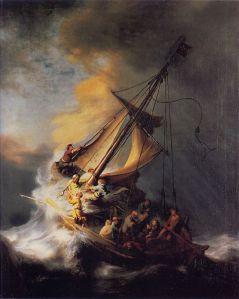 ninth child of a well-to-do couple in Leiden, Holland. While in his early 20’s, he developed an overnight celebrity status somewhat akin to the rise of the Beatles. This brief time of prosperity and popularity,however, was followed by much sorrow and rejection. Championed as the Netherlands alternative to Peter Paul Ruben in Belgium, Rembrandt became very wealthy and over-extended. Taking out an enormous mortgage on a beautiful house, he was accused of wasting his inheritance and living an indulgent lifestyle.
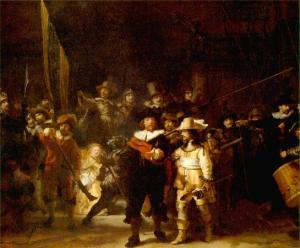 called Night Watch, was both his greatest success artistically and his worst failure relationally. While painting the Night Watch, he made many people angry who would no longer buy his paintings. The soldiers, who paid to be in the picture, all wanted to be front and centre. Instead of painting a typical group portrait, Rembrandt created a masterpiece where some soldiers were prominent and others were hardly visible.
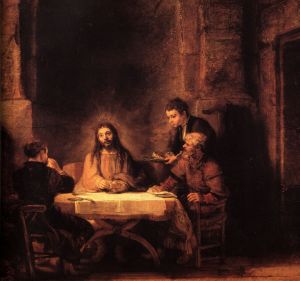 another scandal with his new housekeeper, Hendrickje Stoffels, whose pregnancy scared off even more of his Dutch customers. His financial problems became so severe that in 1656 Rembrandt was declared insolvent. All of Rembrandt’s possessions, his large collection of artwork, and his house in Amsterdam were sold in three auctions during 1657 and 1658. In 1663, Hendrickje, who has been described as ‘one of the noblest souls to serve a troubled genius’, died. Five years later, Rembrandt’s hopes were again raised and then dashed when he celebrated his son Titus’ wedding, only to see him buried that same year. Only his daughter Cornelia, his daughter-in-law Magdalene van Loo, and his granddaughter Titia survived him.
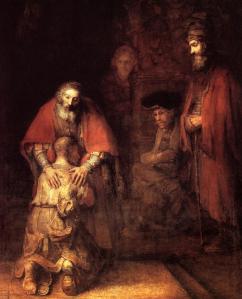 love was concentrated in the hands. When the famous author Henri Nouwen saw the Prodigal Son painting in the St Petersburg Hermitage, he was struck by the sight of “a man in a great red cloak tenderly touching the shoulders of a disheveled boy kneeling before him. I could not take my eyes away. I felt drawn by the intimacy between the two figures, the warm red of the man’s cloak, the golden yellow of the boy’s tunic, and the mysterious light engulfing them both. But, most of all, it was the hands –the old man’s hands–as they touched the boy’s shoulders that reached me in a place where I had never been reached before. …” Nouwen realized that Rembrandt must have shed many tears and died many deaths before he could have so exquisitely painted the father’s heart for his lost son. Rembrandt had once again painted himself as the Prodigal Son, but this time coming back home to his Father.
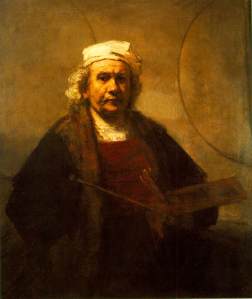 Prodigal Painter coming home to the true Father. Rembrandt knew that he had wandered a long way, but that it was never too late to return home. My prayer is that many of us may have the courage, like Rembrandt, to turn our hearts towards Home, where love and forgiveness are waiting.
 family life. He quizzed his children on what they read and made up bedtime stories for them. “The thing I remember most about my father,” reflects his daughter Rebecca, “was those marvelous stories he would tell.”
 successful people. Sometimes the most successful outwardly are the most wounded inwardly, especially in one’s primary relationships. “Not the educators nor the legislators nor the scientists can give us tranquillity of heart, and without tranquillity, whatever else they give us is useless at best.” Tozer commented that in this world people are rated by what they do. They are rated according to the distance they have come up the hill of achievement.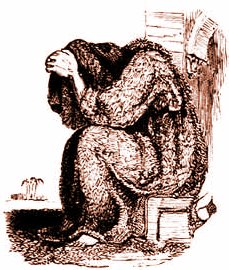
 Yet rather than choosing suicide, Job clung tenaciously to life. Often human tragedies like the loss of career, family, or home leads to an even greater tragedy – the denial of any meaning to life. This was the great temptation that faced Job, and that faces each of us at least once every 18 months on average.
 scientifically-sophisticated people are still often blaming people when they become sick. Even in the 21st century, we can too easily be just like Job’s three comforters who just made their friend feel worse. “Oh, you’re sick in hospital with cancer…Obviously you are not thinking enough positive mental thoughts, or jogging enough, or eating enough granola.” One way or another, we can slip into psychosomatically blaming others for their illnesses.
 through our common experience of pain. Many reject God, but no one rejects Job. Simply by suffering so greatly and hanging on for dear life through it all, Job has won our hearts.
 had a taste of this. Job in his suffering was looking for what could only be found in a manger, on a cross, in an empty tomb. The key to Job’s sufferings, and indeed to life itself, is the cross. Jesus did not rise above suffering; he went through it. Jesus let himself be captured by soldiers, tried by legalists and bureaucrats, condemned by a mob, scourged by mockers, and finally pinned and exhibited like a specimen insect.
 If you’ve never seen the award-winning Broadway musical and Hollywood movie Man of La Mancha, I recommend that you and your spouse rent or borrow it in the near future. There is something about those songs that stir me every time I hear them, especially To Dream the Impossible Dream, Dulcinea, and Aldonza.
 and mutual respect in the male-female relationship. Upon encountering Aldonza, Don Quixote sings: “I have dreamed thee too long, never seen thee or touched thee but know thee with all of my heart. Half a prayer, half a song, thou has always been with me, though we have always been apart, Dulcinea…Dulcinea”. Don Quixote repeatedly speaks blessing into Aldonza’s life, calling her Dulcinea (meaning sweetness).
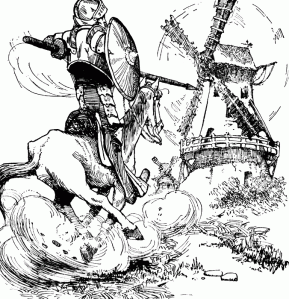 At one point in the movie, Quixote’s relatives try to take him away from Aldonza, claiming that he is mad. The priest pauses and says: “One might say that Jesus was mad, or St. Francis.” In one sense, Don Quixote functions as a Christ-figure, one who gives his life for others, even though dismissed as insane by his own family (Mark 3:21). In another sense, Don Quixote symbolizes the faithful pilgrim, like Francis of Assisi, who saw so clearly through the hypocrisy of his age that he was rejected as a “fool for Christ”(1 Corinthians 4:10). Either way, Don Quixote reminds us as men that sometimes we have to humble ourselves and look foolish, if we really want our marriages to blossom.
 Quixote’s gentleness and patience. She sings: “Can’t you see what your gentle insanities do to me? Rob me of anger and give me despair. Blows and abuse I can take and give back again, Tenderness I cannot bear.”
 By the Rev. Dr. Ed Hird
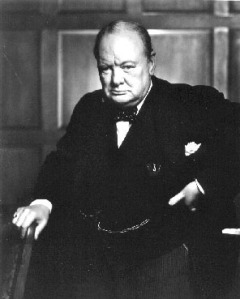 Churchill was a rising star in the Conservative Party at just age 26. He landed in hot water however for supporting free trade, at a time when the Conservatives were in a protectionist mood. Churchill then switched to the Liberal Party, becoming one of the youngest cabinet ministers ever. As president of the Board of Trade, he introduced many social reforms. Notably he eliminated sweat labour, set up labour exchanges for the unemployed, and brought in a nationwide minum wage, along with compulsory meal breaks at work. Many people don’t realize that the British owe their traditional tea breaks to Churchill!
 had an amazing ability to find something encouraging. While lecturing in the States, he looked the wrong way and was run over by a New York taxicab. Instead of feeling sorry for himself, be made $5,000, while in hospital, by writing an article about what it is like to be run over by a car. A most prolific writer, Churchill once humorously commented: “I’ve written very many books. I think that by the time I was 25 years old, I’d written as many books as Moses.” His six-volume series on the 2nd World war earned him the Nobel Prize of Literature.
 On becoming Prime Minister, Churchill uttered those immortal words: “I have nothing to offer but blood, toil, tears and sweat .You ask what is our policy. I will say: it is to wage war by sea, land and air, with all our might and with all the strength that God can give us to wage war against a monstrous tyranny never surpassed in the darkened, lamentable catalogue of human crime …”
 Nazi warmachine, and only England still resisted. Bombarded night after night in fierce air raid attacks, Churchill the Leader ignited his country with new hope that they really had a future.
 Edhird's Blog