
By the Rev. Dr. Ed Hird 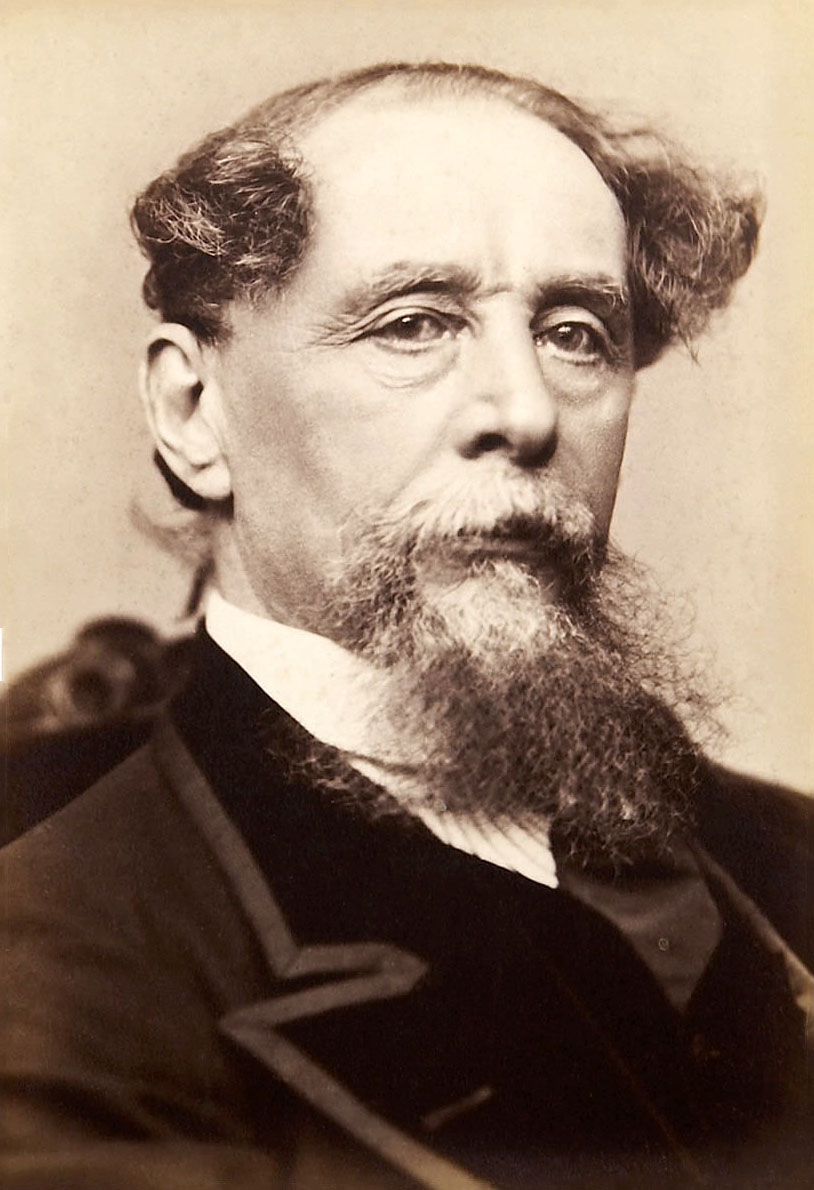
At a recent birthday party, I had the joy of meeting a fellow UBC School of Social Work alumni whom I had not seen since our 1976 graduation. As we renewed our friendship, he gave me a Charles Dickens biography as a Christmas present. This sent me to our local library to get out numerous Dickens books, biographies and movies. Dickens was perhaps the first true celebrity in the modern sense.[1] While many of us love the beauty of Shakespeare, Dickens remains more accessible to most English-speaking people.[2]
Why have Dickens’ books continued to speak to us a hundred and fifty years later? Perhaps it is because of Dickens’ secret suffering in his painful childhood.[3] His parents moved more than twenty times in eighteen years.[4] Since Dickens’ father was sent to debtors’ prison and Charles Dickens to a blacking factory, he was able to tell compelling stories of degradation and abuse. The average Londoner in the 1840s died by age twenty seven, with almost half of the deaths being children under the age of ten.[5] Dickens was deeply disturbed by the poverty, hunger, and ignorance, as well as by the indifference of the rich and powerful to the widespread suffering.[6] George Bernard Shaw said that Dickens’ book Little Dorritt is more seditious than Karl Marx’s Das Kapital.[7]
The ideals of family life and generosity to the poor in Dickens’ classic A Christmas Carol continue to strike a chord today with countless millions.[8] Dickens, like many of us, was at his best at Christmas, letting down his hair, resting from his frenetic writing, and enjoying the warmth of family and good food.[9] Many people don’t realize that Dickens had a very deep faith in the Christ of Christmas.[10] The last Dickens book The Life of Our Lord was published posthumously 85 years later, after the death of his last child. Written for his ten children, it shows both his love for both Jesus and one’s neighbours: “My dear children, I am very anxious that you should know something about the History of Jesus Christ. For everybody ought to know about Him. No one ever lived, who was so good, so kind, so gentle, and so sorry for all people who did wrong, or were in anyway ill or miserable, as he was.”[11]
 Despite his high ideals, Dickens was often tempted to be a Scrooge.[12] The financial pressure was enormous and unrelenting. With little initial profit from A Christmas Carol, Dickens wrote: “I shall be ruined beyond all mortal hope of redemption.”[13] Fortunately for Dickens, Americans turned A Christmas Carol into a bestseller.[14] Dickens visited the United States twice, both times being treated like a Hollywood Superstar, even being chased by paparazzi.[15]
Marrying on the rebound, Dickens chose a wife to whom he was not romantically attracted.[16] Catherine Hogarth Dickens did not live up to his fictional ideals of women who were perpetually young, attractive, thin, and emotionally passionate.[17] While she loved being at home looking after her large family, he always wanted to be on the go, particularly abroad.[18] The more anxious Dickens became, the faster he went and the slower Catherine went. Before he developed painful gout, he would walk twelve miles every night.[19] It was his way of both de-escalating and carefully observing his environment for new book material. Dickens commented: “If I couldn’t walk fast and far, I should just explode and perish.”[20]
Sadly, after a marital conflict, Dickens had a partition built in their bedroom, cutting himself off from his wife.[21] Rather than celebrate his wife’s very different personality, he resented her for not being just like himself: “…nothing on earth could make her understand me, or suit us for each other. Her temperament will not go with mine…no one can help me.”[22] Because he had never forgiven his mother for trying to send him back to the blacking factory, it poisoned his relations with his wife: “I never afterward forgot, I never shall forget, I never can forget, that my mother was warm for my being sent back.”[23] Bitterness betrays our highest ideals and turns us into Scrooges. Dickens, under pressure, portrayed himself as a victim, blaming others rather than owning his personal baggage.[24] Remarkably his wife Catherine stayed loyal to her painful husband, going to productions of his work and keeping up with his publications even after the divorce.[25] In the midst of his rejecting his wife, many friendships were cut off, publishers fired, theatricals ended, family vacations ceased, and his charitable work with heiress Angela Burdett-Coutts brought to an end.[26] The breakup of
 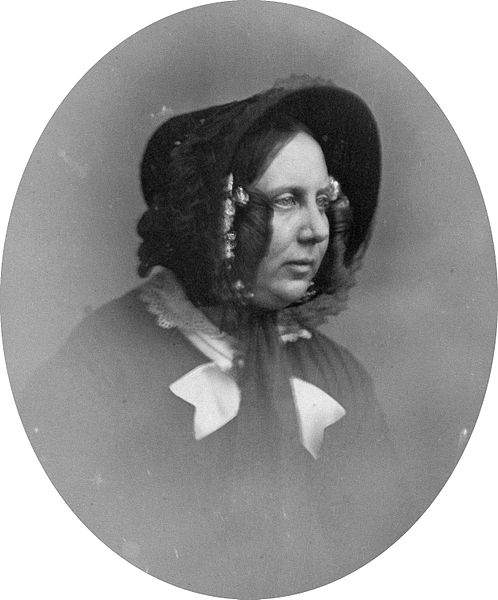 Dickens’ marriage and the secret infatuation that he had with Nelly Ternan wore Dickens out.[27] In the last part of his life, he was as sick as his secrets, exhausted by his coverups and workaholism.[28] Despite Dickens’ tragic male/female relationships, his unforgettable vision for a better society still speaks to us in the early twenty-first century. My prayer for those reading this article is that we will learn to integrate our ideals and our reality in loving our neighbours as ourselves.
The Rev. Dr. Ed Hird, BSW, MDiv, DMin
-an article previously published in the Light Magazine and the North Shore News/Deep Cove Crier
P. S. Click this Amazon link to view for free the first two chapters of our new novel Blue Sky.
“I’m afraid there’s been an accident…”
 Sandy Brown and her family have just moved to Spokane, Washington where her husband, Scott, is pastoring a new church. With a fresh start, Sandy is determined to devote more time to her four children. But, within weeks of settling in their new life, the Brown family is plunged into turmoil.
Sandy receives shocking news that her children aren’t safe, which brings back haunting memories of the trauma she experienced as a girl. Then, the unthinkable happens…
A brutal attack puts Sandy on the brink of losing everything she’s loved. Her faith in God and the family she cherishes are pushed to the ultimate limit.
Is healing possible when so many loved ones are hurt? Are miracles really possible through the power of prayer? Can life return to the way it was before?
Blue Sky reveals how a mother’s most basic instinct isn’t for survival… but for family.
If you’re a fan of Karen Kingsbury, then you’ll love Blue Sky. Get your copy today on paperback or kindle.
-Click to check out our marriage book For Better For Worse: discovering the keys to a lasting relationship on Amazon. You can even read the first two chapters for free to see if the book speaks to you.

-The sequel book Restoring Health: body, mind and spirit is available online with Amazon.com in both paperback and ebook form. Dr. JI Packer wrote the foreword, saying “I heartily commend what he has written.” The book focuses on strengthening a new generation of healthy leaders. Drawing on examples from Titus’ healthy leadership in the pirate island of Crete, it shows how we can embrace a holistically healthy life.

In Canada, Amazon.ca has the book available in paperback and ebook. It is also posted on Amazon UK (paperback and ebook), Amazon France (paperback and ebook), and Amazon Germany (paperback and ebook).
Restoring Health is also available online on Barnes and Noble in both paperback and Nook/ebook form. Nook gives a sample of the book to read online.
Indigo also offers the paperback and the Kobo ebook version. You can also obtain it through ITunes as an IBook.
To receive a personally signed copy within North America, just etransfer at ed_hird@telus.net, giving your address. Cheques are also acceptable.
-Click to purchase the Companion Bible Study by Jan Cox (for the Battle of the Soul of Canada) in both paperback and Kindle on Amazon.com and Amazon.ca
Indigo also offers the paperback and the Kobo ebook version. You can also obtain it through ITunes as an IBook.

-Click to purchase the Companion Bible Study by Jan Cox (for the Battle of the Soul of Canada) in both paperback and Kindle on Amazon.com and Amazon.ca

[1] Jane Smiley, Charles Dickens, (Lipper/Viking Penguin Publishing, 2002), v.; Norrie Epstein, The Friendly Dickens, (Viking/Penguin, Toronto, Canada, 1998), xvi “The best-selling novelist in Russia is neither Tolstoy nor Dostoyevsky but Dickens.”; Smiley, 26, “…as close to a household name as any movie star today…the first person to become a ‘name brand’…”
[2] Smiley, v, “Among English writers, Dicken’s only peer, in terms of general fame, worldwide literary stature, and essential Englishness, is William Shakespeare.”; Claire Tomalin, Charles Dickens: a Life, (Viking/Penguin Books,Toronto, Ontario, 2011), Inside Front Cover, “Perhaps the greatest novelist in the English language…”
[3] Smiley, vi “…Dickens did not reveal the details of his painful childhood even to his children.”; Epstein, 15, “His entire life was a reaction against his parents and his childhood…as a man, he was compulsively controlling…In his novels, every abandoned waif was a version of himself; his negligent silly mothers were caricatures of Elizabeth; his wastrel selfish fathers were all John.”
[4] Epstein, 15.
[5] Smiley, 46.
[6] Tomalin, xlii.; Epstein, 207, “Daniel Webster said: ‘Dickens has done more to ameliorate the conditions of the English poor than all the statesmen Great Britain has sent into Parliament.’”; Epstein, 209 “Through his writings and what he meant to reader’s, he has probably influenced more people to do good than any other writer.”
[7] Epstein, 275; Tomalin, 229, “…(Dickens) wrote on many social issues –housing,sanitation, accidents in factories,workhouses,and in the defence of the poor to enjoy Sunday as they choose.”
[8] Epstein, 174, “ Christmas Carol is a phenomenon, an industry, and a ritual… Carol touches our deep desire for a second chance at life.”; Gary L. Colledge, God and Dickens, (Brazos Press, Grand Rapids, Michigan, MI), 52 “Wes Standiford, borwwing from Byron Rogers, refers to Dickens as the man who invented Christmas.”
[9] Epstein, 186, “As his son Charley commented, ‘My father was always at his best at Christmas.’ That season brought out all of Dickens’ most endearing qualities – his hospitality, graciousness, generosity, sense of fun, and genius for entertaining.”
P.187 Chesteron: “The mystery of Christmas is in a manner identical with the mystery of Dickens.”
[10] Smiley, 162 “Love, kindness, forgiveness, benevolence, celebration, mercy, joy, charity, and innocence all had their source, for Dickens, in Christ and Christmas.”; Smiley, 42, Charles Dickens said: “Looking on Niagara Falls: then when I felt how near to my Creator I was standing, the first effect and the enduring one –instant and lasting–of the tremendous spectacle was Peace. Peace of mind,tranquility, recollection of the dead, great thoughts of eternal rest and happiness…”
[11] Charles Dickens, The Life of Our Lord, (Simon and Schuster, New York, NY, 1934), 11, 27 “…God makes no difference between those who wear good clothes and those who go barefoot and in rags.”
[12] Tomalin, Front Inside Cover: “After his death, his own daughter wrote to Bernard Shaw, ‘If you could make the public understand that my father was not a joyous, jocose gentleman walking about the world with a plum pudding and a bowl of punch, you would greatly oblige me.’”
[13] Smiley, 60.; Tomalin, 150 “The accounts for the Carol showed that almost all the profits were absorbed in the expenses of binding, special paper, coloured plates, and advertising.”; Epstein, 185, paraphrase: The Carol’s failure drove Dickens to Italy. His dramatic readings of it earned him more money than any of his books.
[14] Tomalin, 150. “In America, it became his biggest seller, clocking up two million copies in a hundred years.”
[15] Tomalin, P.127 “He was seen as ‘the English writer who was on their side, who believed in liberty and democracy, and who showed in his books that he cared about ordinary people and thought the poor more worthy of attention than the rich.'(…) At the time of his arrival, the New York Herald wrote: ‘His mind is American–his soul is republican –his heart is democratic.’”; Tomalin, 130, “Dickens commented: ‘There was never a King or Emperor upon the earth so cheered l, and followed by crowds…and waited upon by public bodies and deputations of all kinds.”
[16] Epstein, 38. “Maria Beadnell’s capriciousness and his subsequent humiliation influenced him to choose the placid and compliant Catherine Hogarth for a wife.”; Epstein, 45, “…Catherine was so unlike Maria that she never would remind Charles of what he had lost.”
[17] Smiley, 61. “Catherine’s pregnancy with Francis, the fifth child of the family in seven years, seem to have marked a running point in Dicken’s attitude towards his wife. The agitation he betrayed in his money worries and his eagerness to go abroad met with great reluctance and depression on her part. He seems to have held against her both the inconvenience of the pregnancy and her inability to rally quickly after the birth.”
[18] Tomalin, 66. “She (Catherine) had no experience of anything but family life when he met her, and showed little evidence of being interested in anything outside the domestic world.”
[19] Tomalin, 238.
[20] Tomalin, 183 “His need to walk through the streets at night was a tormenting mental phenomenon.”
[21] Smiley, 61 “Catherine’s pregnancy with Francis, the fifth child of the family in seven years, seem to have marked a running point in Dicken’s attitude towards his wife. The agitation he betrayed in his money worries and his eagerness to go abroad met with great reluctance and depression on her part. He seems to have held against her both the inconvenience of the pregnancy and her inability to rally quickly after the birth.”
[22] Smiley, 140, Writing to his good friend Forster, “She (Catherine) is exactly what you know, in the way of being amiable and complying; but we are strangely ill-assorted for the bond there is between us…and if I were sick or disabled tomorrow, I know how sorry she would beans how deeply grieved myself, to think how we had lost each other.”‘ “Her temperament will not go with mine.”; Smiley, 285.; Tomalin, 66. 118, “Kind looks and gentle manner she doubtless had, and a will to please –what she lacked was the strength of character needed to hold her own against her husband’s powerful will.”
[23] Epstein, 26 “…John suddenly wanted his son (Charles) be sent to school; Elizabeth however wanted him to return to the warehouse. With great bitterness, Dickens recalled, “I never afterward forgot, I never shall forget, I never can forget, that my mother was warm for my being sent back.”
[24] Smiley, 148.
[25] Smiley, 150.
[26] Smiley, 18, 289; Tomalin, 210 re Miss Coutts, Dickens, and Urania House: If there was a providence in the fall of a sparrow, these girls were his sparrows, and he wanted them to fly, not fall.”
[27] Nelly ends up marrying an Anglican clergyman, after Dickens’ death, while pretending to be fourteen years younger than she was.
[28] Smiley, 75 “…Dicken’s secretiveness and shame at his origins was a realistic response to the closed, judgemental nature of English society.”; Smiley, 206 “it (his frenetic schedule) left him exhausted…but the habits of industry and restlessness could not be broken.”; Tomalin, Front inside cover, “…the very qualities that made him great –his indomitable energy, boldness, imagination, showmanship, and enjoyment of fame–finally destroyed him.”; Tomalin, 259 “Dickens kept going by taking on too much. He knew no other way to live, and no day went by in which he did not stretch himself, physically, socially, and emotionally.”; Epstein, 53 “Dicken’s nervous energy was perfect for the serial form which required two weeks of concentrated feverish work… On the other hand, the process, continued uninterrupted for almost forty years, was his undoing….at forty three, Dickens looked almost elderly.”



 Sandy Brown and her family have just moved to Spokane, Washington where her husband, Scott, is pastoring a new church. With a fresh start, Sandy is determined to devote more time to her four children. But, within weeks of settling in their new life, the Brown family is plunged into turmoil.
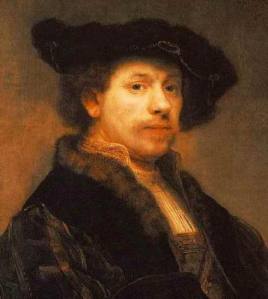
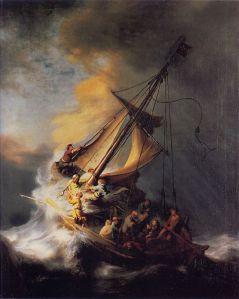 ninth child of a well-to-do couple in Leiden, Holland. While in his early 20’s, he developed an overnight celebrity status somewhat akin to the rise of the Beatles. This brief time of prosperity and popularity,however, was followed by much sorrow and rejection. Championed as the Netherlands alternative to Peter Paul Ruben in Belgium, Rembrandt became very wealthy and over-extended. Taking out an enormous mortgage on a beautiful house, he was accused of wasting his inheritance and living an indulgent lifestyle.
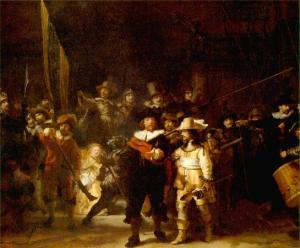 called Night Watch, was both his greatest success artistically and his worst failure relationally. While painting the Night Watch, he made many people angry who would no longer buy his paintings. The soldiers, who paid to be in the picture, all wanted to be front and centre. Instead of painting a typical group portrait, Rembrandt created a masterpiece where some soldiers were prominent and others were hardly visible.
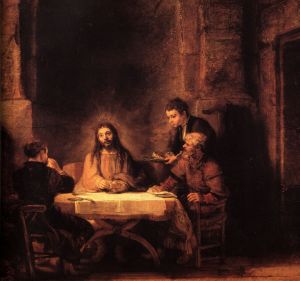 another scandal with his new housekeeper, Hendrickje Stoffels, whose pregnancy scared off even more of his Dutch customers. His financial problems became so severe that in 1656 Rembrandt was declared insolvent. All of Rembrandt’s possessions, his large collection of artwork, and his house in Amsterdam were sold in three auctions during 1657 and 1658. In 1663, Hendrickje, who has been described as ‘one of the noblest souls to serve a troubled genius’, died. Five years later, Rembrandt’s hopes were again raised and then dashed when he celebrated his son Titus’ wedding, only to see him buried that same year. Only his daughter Cornelia, his daughter-in-law Magdalene van Loo, and his granddaughter Titia survived him.
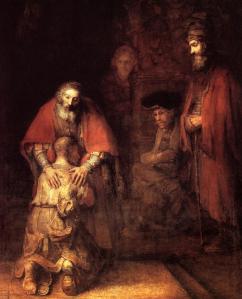 love was concentrated in the hands. When the famous author Henri Nouwen saw the Prodigal Son painting in the St Petersburg Hermitage, he was struck by the sight of “a man in a great red cloak tenderly touching the shoulders of a disheveled boy kneeling before him. I could not take my eyes away. I felt drawn by the intimacy between the two figures, the warm red of the man’s cloak, the golden yellow of the boy’s tunic, and the mysterious light engulfing them both. But, most of all, it was the hands –the old man’s hands–as they touched the boy’s shoulders that reached me in a place where I had never been reached before. …” Nouwen realized that Rembrandt must have shed many tears and died many deaths before he could have so exquisitely painted the father’s heart for his lost son. Rembrandt had once again painted himself as the Prodigal Son, but this time coming back home to his Father.
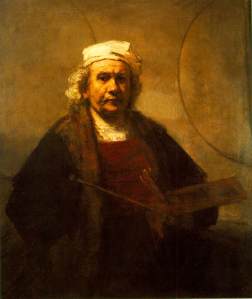 Prodigal Painter coming home to the true Father. Rembrandt knew that he had wandered a long way, but that it was never too late to return home. My prayer is that many of us may have the courage, like Rembrandt, to turn our hearts towards Home, where love and forgiveness are waiting.
 reportedly had over 250 partners/girlfriends stashed in different locations, many which falsely believed that they were married to Hughes. Perhaps this is why Marilyn Monroe sadly commented: “A wise girl kisses but doesn’t love, listens but doesn’t believe, and leaves before she is left.”
 Romancing the Stone, Joan Wilder a romance writer meets Jack Colton who violates every one of her imaginary ideas of what a real man will act like. Romancing the Stone reminds us that real romance involves the messiness and disappointments of everyday life. Dr Karl Menninger, the famous psychiatrist, said: “Love cures people, both the ones who give it and the ones who receive it.”
 Dr Gil Stieglitz tells us in his video series ‘The Five Problems of Marriage’ that one of the top needs of wives is for romance, to be nurtured and pursued. Some husbands don’t realize that they still need to date their wives, even after they are finally married to them. To some men, dating their wives is unthinkable. It would be like trying to get on a bus that they are already on.
 The Good Book says that he that does not love doesn’t know God, because God is love. Pearl Buck the famous novelist wrote: “Love alone could waken love.”
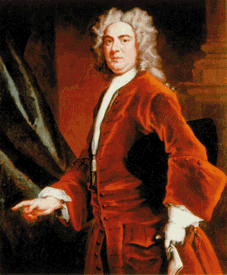 When George was eight or nine, the Duke of Weissenfels heard him play the postlude to a church service and he summoned the boy’s father and told him he ought to encourage such talent. His only teacher was Friedrich Wilhelm Zachow, a most learned and imaginative musician and teacher, who instilled in his young pupil a lifelong intellectual curiosity. At age 11, Handel entered a musical contest at the Berlin court of the Elector with the famous composer Buononcini, and won.
 The situation was so bleak in 1741 that just before he wrote the Messiah, he had seriously considered going back to Germany. But instead of giving up, he turned more strongly to God. Handel composed the Messiah in 24 days without once leaving his house. During this time, his servant brought him food, and when he returned, the meal was often left uneaten. While writing the “Hallelujah Chorus”, his servant discovered him with tears in his eyes. He exclaimed, “I did think I did see all Heaven before me, and the great God Himself!!” As Newman Flower observes, “Considering the immensity of the work, and the short time involved in putting it to paper, it will remain, perhaps forever, the greatest feat in the whole history of musical composition.”
 Edhird's Blog