Archbishop Thomas Cranmer, shaper of the Anglican Way – Light Magazine
— Read on lightmagazine.ca/archbishop-thomas-cranmer-shaper-of-the-anglican-way/
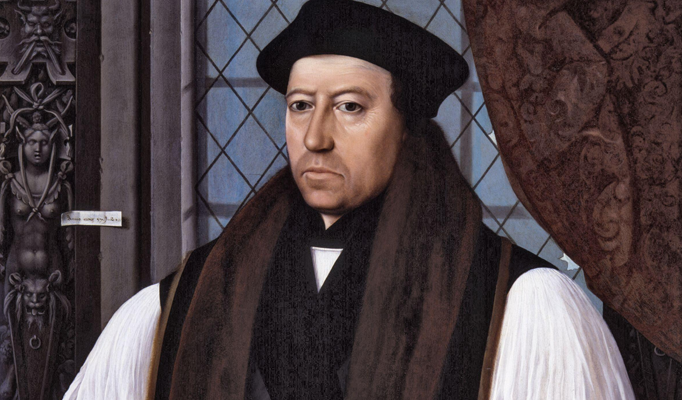

Archbishop Thomas Cranmer, shaper of the Anglican Way – Light Magazine
— Read on lightmagazine.ca/archbishop-thomas-cranmer-shaper-of-the-anglican-way/

We just had a wonderful Anglican Mission Clergy Retreat and Summit at Richmond Emmanuel Church with Archbishop Masimango, Anglican Primate of the Congo. The ordinations last night by the Primate were a wonderful blessing.
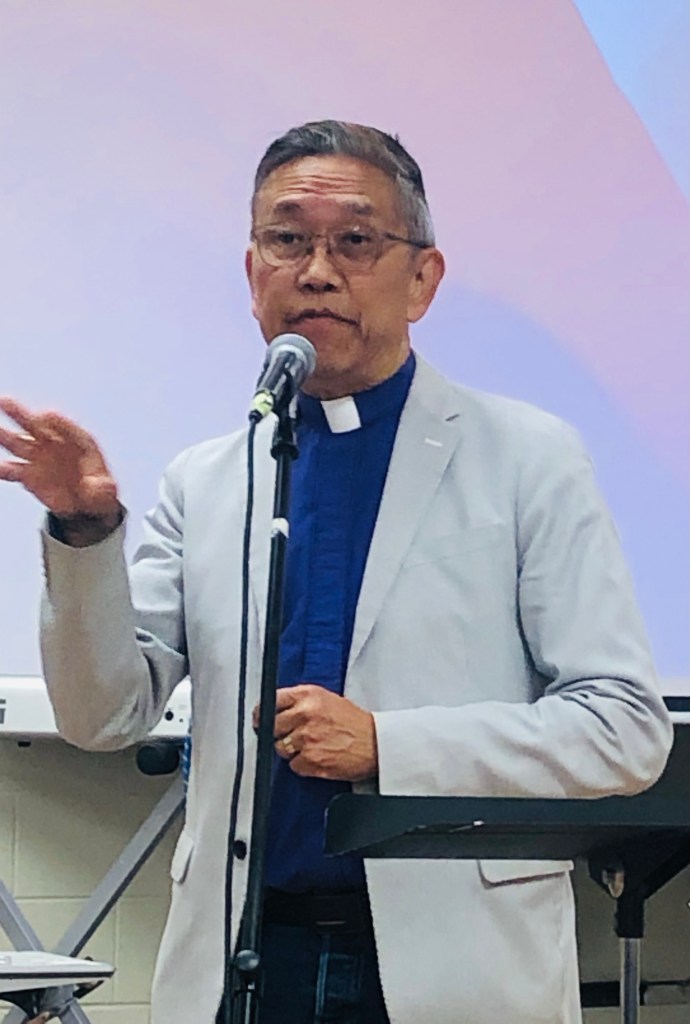

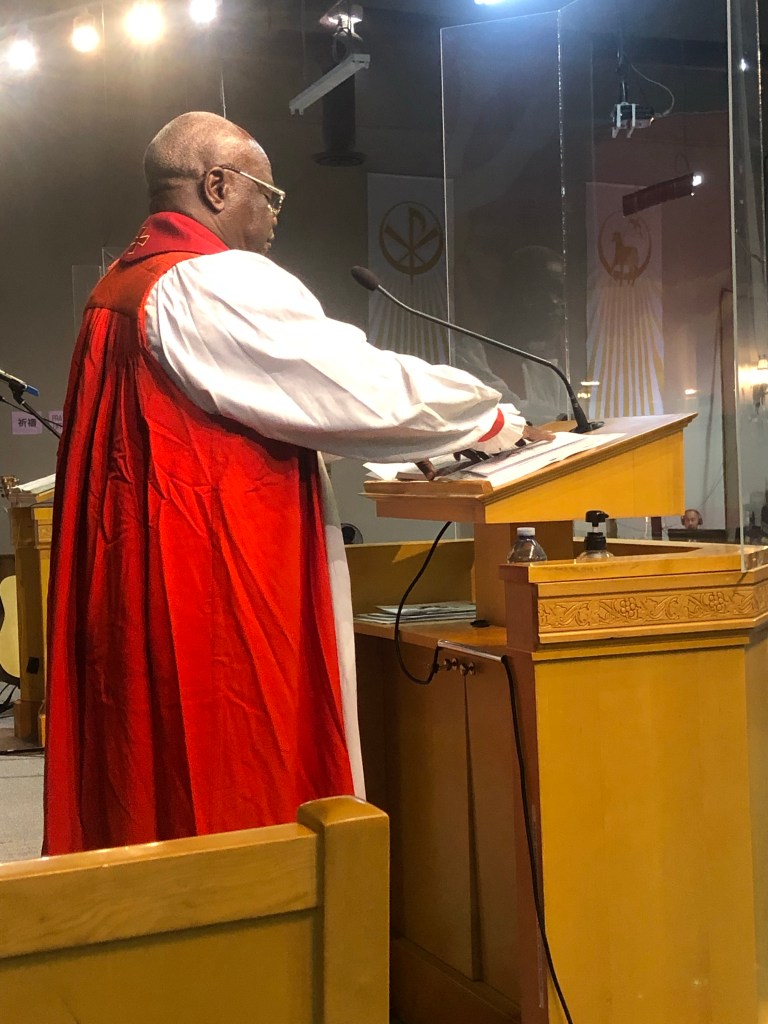

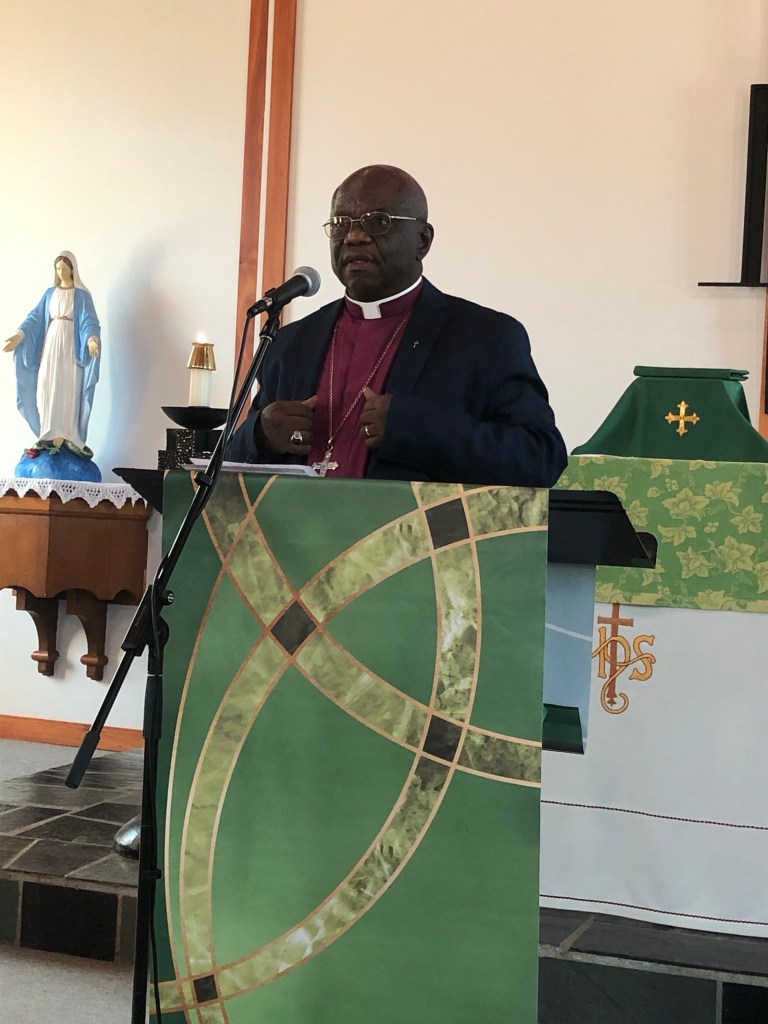
We are having a delightful in-person Anglican Mission Clergy Retreat at Richmond Emmanuel Church for the first time since COViD 19. Archbishop Masimango, the Anglican Primate of the Congo who licenses us and is doing ordinations, is here for both the Clergy Retreat and the AMIC Summit.

 Three addresses were given at St. Paul’s Church, Bloor Street, Toronto, on May 1, 1999 at a special event organized by
 by
by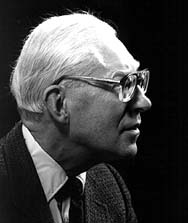
 More than ever, we need to discover afresh what it means to be filled with the knowledge of God’s will and given the power to carry out that will. As J. John at the Canterbury ‘98 Conference put it, “We only have enough time to do the will of God”. So many of us in the Church are like Martha whom Jesus said was distracted by many things, but missing the main one of sitting at Jesus’ feet.
 Methodist missionary to India put it, “there can be no great spiritual awakening either in the individual or in the group unless and until the individual or the group give themselves to prayer.”3 Dr. Jones goes on to say: “When we feel that there is something wrong and that it is all ending in futility, instead of giving ourselves to prayer, we appoint a committee! If a monument”, says Dr. Jones, “were erected over the dead situations in Christendom, we might inscribe on it ‘Committeed to Death’. We call a committee instead of calling to prayer.” It has been said that the 16th century Reformation began in Luther’s prayer closet. The truth is that all reformation, all renewal, all restoration begins in someone’s prayer closet. Quoting Dr. Jones again, “we find sooner or later that in prayer we either abandon ourselves or we abandon prayer. Prayer will keep us from self-withholding or self-withholding will keep us from prayer.”4
 Paul is writing here to a formerly great and flourishing city that had been in a recession for the last three to four hundred years. Colossae, whose name means “Monstrosity”, had become a backwater no-name town that had been left behind in the busy pace of 1st century Greek life. Its neighbouring towns, Laodicea and Hierapolis were well-known respectively for their financial and administrative prowess, and for their burgeoning tourist and hot springs industry. They, like Colossae, were located on the River Lycus, a river famous for overlaying its surrounding river banks with thick deposits of chalk. As Bishop J.B. Lightfoot put it, “Ancient monuments are buried; fertile land is overlaid; river beds choked up and streams diverted; fantastic grottoes and cascades and archways of stone are formed, by this strange, capricious power, at once destructive and creative, working silently throughout the ages. Fatal to vegetation, these incrustations spread like a stony shroud over the ground. Gleaming like glaciers on the hillside, they attract the eye of the traveller at a distance of twenty miles, and form a singularly striking feature in scenery of more than common beauty and impressiveness.”5 In some ways, Bishop Lightfoot’s description seems like a parable of the Canadian Church … beautiful, impressive, but calcified and choked up by double-mindedness and fear.
 tells us that Paul was thankful because of the great triad of Christian graces: faith, hope, and love. So often when Paul prays, he prays according to the three-fold pattern of the only things that will remain in the end. Faith: their faith in Christ Jesus; Hope: hope stored up for us in heaven; and Love: love for all the saints. As Bishop J.B. Lightfoot put it, “faith rests on the past; love works in the present; hope looks to the future”.7 Does the Prayer Book Society, indeed does the Anglican Church have a future as we celebrate the 450th Anniversary of the Book of Common Prayer? I believe that the answer to both questions is yes, if we will ground our Christian life more and more on the three-fold graces of faith, hope and love.
 Lambeth ‘98 was a powerful reminder of that truth with the hundreds of Asian, African, and South American bishops making their presence felt in unforgettable ways. The gospel, as Bishop Lewis Radford put it, is both a transforming force and a travelling fire.9 It is a fire that cannot be stamped out no matter how hard secularists and revisionists may try. Verse 7 tells us about Epaphras, the founder of the Church at Colossae. Some early church traditions make him the first bishop of Colossae.10 Verse 7 describes him as “our dearly loved fellow servant”, as a faithful minister of Christ on our behalf. Both Paul and Epaphras were passionate that the Colossians should be filled with the knowledge of God’s will. Epaphras was so passionate about this that Paul commented in Colossians chapter 4, verse 2 that Epaphras was “always wrestling in prayer for you that you may stand firm in all the will of God, mature and fully assured.” The Greek word for wrestling is agonizomenos which means to agonize. It is God’s will that each of us agonize in prayer for the restoration of faithful Anglicanism in Canada. Wrestling in prayer is the key to being filled with the knowledge of God’s will.
 That is why the Rev. Samuel Shoemaker, the Anglican priest who wrote the “12 Steps” and helped to found Alcoholics Anonymous, quoted Colossians Chapter 1 in writing step 11. What does Step 11 encourage us to pray for: “… the knowledge of His will for us and power to carry that out.”
 Holy Spirit. If only they had just prayed for the bishop to be filled afresh or anew, the Dean might have kept his job. Why do all of us need to be filled with the Spirit again and again? (Eph. 5:18). The reason, as D.L. Moody put it, is that we leak. It is always touchy to pray for one’s bishop without sounding like one is trying to give his bishop advice. It is so easy for us to dump all our unmet dreams and frustrations on the back of our bishops. Yet God calls us to bless and not curse. God calls us in verse 9 to never give up praying for each other, and that certainly includes our bishops. Verse 9 is a wonderful way to pray for your bishop, your rector, and your wardens in a way that none of them could possibly object to. Just pray that God will fill them with the knowledge of His will through all spiritual wisdom and understanding. All of us need to be filled up, to be more full of God’s grace, peace, joy, hope, and faith so that we will be more full, more grace-full, more peace-full, more joy-full, more faith-full. The point of the fruit of the Spirit (Gal. 5:22) is to fill us up inside with more of the character of Jesus Christ.
 says that “You shall receive power when the Holy Spirit comes upon you and you shall be my witnesses … to the ends of the earth.”. That is why Colossians chapter 1 verse 11 talks about our being strengthened with all power: in the Greek, “being powered with all power”, with all dunamis, all dynamite. There are logjams in Anglicanism that nothing but the power, the dynamite, of the Holy Spirit can possibly remove. All of us know many faithful Anglicans who have given up in despair and left our church, perhaps returning occasionally for their Communion “fixes”. When we think of the mother/father God/Goddess apostasy that the new ACC “Common Praise” hymn book is leading us into, only the power of the Holy Spirit will be able to lead us out of that syncretistic swamp. Yet with God, nothing is impossible! Would anyone like to become the founders of a Blue Hymn Book Society of Canada?
 Bible are rivers. The new Common Praise hymn book in contrast is a gracious and kindly swamp. The river that is the Holy Spirit confines Himself to His central purpose, which is to fill us with the knowledge of the Father’s will and to give us the power to carry that out. The Colossian Christians were a tiny, faithful minority living in a “new-age” spiritual scene. As with the original Colossian church, one of the greatest challenges facing our Anglican Church is well-meaning interfaith syncretism. In our worship of newness and inclusiveness, we are rushing to replace the riverbanks of our BCP with the neo-gnostic swamp of centering prayer/mantra yoga, enneagram workshops, labyrinths, Jungian-based MBTI personality tests, and invocations of “God our Father and our Mother”.13 Lord, forgive us for our naïve worship of the seemingly new and trendy, and for our disrespect for the wisdom of our Anglican forebears. Genuine renewal is actually about renewing the riches of our inheritance in Christ Jesus, not about uncovering secret “new revelations”. (Eph. 1:18)
 As Dr. Bard Thompson put it, “It was the way of John Wesley to espouse extempore prayer, yet esteem the prayer book; to give free expression to evangelical power, yet prize the structures of the church …”18 Yet sadly Wesley’s wisdom was largely ignored. His followers decided that they could pray better and with more devotion when their eyes were shut, than they could with their eyes open, praying from a book.19 So they cast aside the Prayer Book and produced the United Church of Canada instead. Wesley drew the balance between the stability of tradition and the dynamism of the Spirit. His followers, however, became progressively less rooted generation after generation. It is so easy to cast aside “the riches of our inheritance”. It is much harder to humble ourselves enough to go back home and start afresh. I remember how hard I tried to convince my Grandma Allen to “get with it” and give up on the Book of Common Prayer. But she was so “stubborn and inflexible” that she died with the Bible and the Prayer Book by her bedside.
 But God’s will for us as clergy is not merely for us to preserve the peace or to be keepers of ecclesiastical aquariums, but rather to be fishers of men and women. Our greatest desire as Anglican leaders must be our desire to be filled with the knowledge of God’s will and to have the power of the Holy Spirit to carry it out. Why else do we pray every day “Thy kingdom come, Thy will be done”. What is God’s will? The Bible is clear that God’s will, among other things, is that we go into all the world, preaching the gospel to all creation, and that we make disciples of all nations (Mark 16:15, Matthew 28:19). 1 Timothy chapter 2, verses 4 and 5 tells us clearly that God’s will is that all people be saved and come to a knowledge of the truth, and that there is only one mediator, one bridge between God and humanity, the man Christ Jesus, who gave himself as a ransom for all.
 those raised in the church or in the west, we will not have the power to carry out this great and lasting commission. As Dr. John Stott put it at an Vancouver Anglican Essentials gathering, we claim uniqueness and finality in Christ alone.
 Sandy Brown and her family have just moved to Spokane, Washington where her husband, Scott, is pastoring a new church. With a fresh start, Sandy is determined to devote more time to her four children. But, within weeks of settling in their new life, the Brown family is plunged into turmoil.


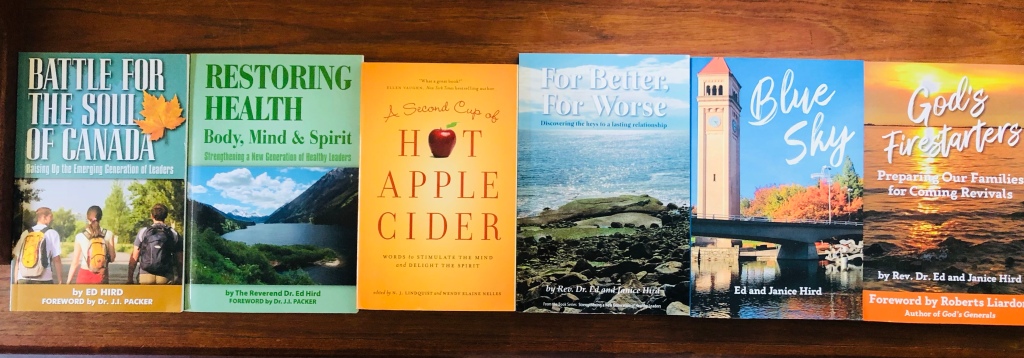
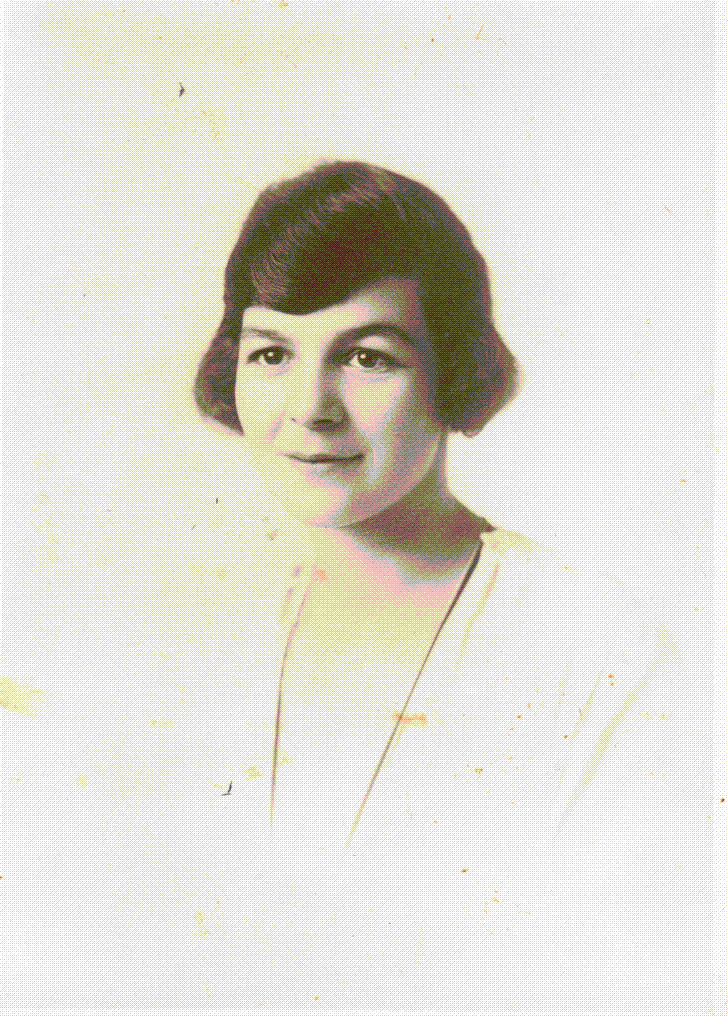
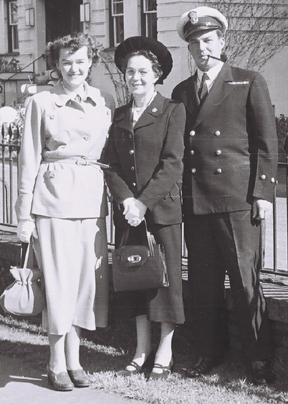 Why am I an Anglican priest today? I believe in my heart of hearts that I am a priest because of my Nana’s powerful prayers and personal witness to a biblically faithful Anglicanism. Nana’s life embodied to me the heart and soul of genuine Anglican Christianity. Sadly most of the faithful congregations that my Nana attended have since been swallowed by other agendas.
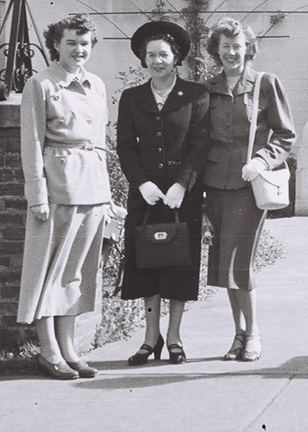 Canada. Our Canadian passivity has made us vulnerable to serious cultural meltdown of everything that made Canada great. My grandparents’ and parents’ generation put everything on the line to defend our great nation in World War I and World War II. How can we do any less in the current battle for the soul of Canada?
 Sandy Brown and her family have just moved to Spokane, Washington where her husband, Scott, is pastoring a new church. With a fresh start, Sandy is determined to devote more time to her four children. But, within weeks of settling in their new life, the Brown family is plunged into turmoil.
Seek wisdom leading to life and peace.
a supportive and encouraging community that helps equip and develop one another to write for God's glory
 Edhird's Blog