A number of years ago, my middle son Mark graduated from Simon Fraser University in Chemistry. SFU was named in 1963 by Leslie Peterson, the Provincial Minister of Education, because SFU overlooks the very river where Simon Fraser made his historic journey to the Pacific Coast.
My earliest memory of SFU was walking through the beautiful new plazas in the 1960’s, and then hearing about the student protests that paralyzed the university. One of the most puzzling demands of the students was that SFU be renamed Louie Riel University. What is it about Simon Fraser the Explorer that seems to both repel and attract people? Why is it that he is the least well known of all Canadian explorers?
The Greater Vancouver Book holds that Simon Fraser could be called the founding father of British Columbia because he built the first colonial trading posts west of the Rockies. Fraser, however, is best known for his bold exploration of the great river which bears his name. On the Canadian Peace Tower in Ottawa is the verse “He shall have dominion from sea to sea” (Psalm 72:8) By Simon Fraser’s heroic journey to the Pacific Coast, he made it possible for the Dominion of Canada to stretch from sea to sea. Fraser’s was the third expedition to span the continent of North America: after Alexander Mackenzie and Lewis & Clarke. Simon Fraser felt like a total failure when he reached the Pacific Coast. Yet his remarkable quest kept Canada from remaining land-locked at the Alberta border. Simon Fraser was one of the most successful failures that Canada has ever known.
Descended from a well-known Scottish Highland family, the Lovat Frasers, Simon ‘Jr.’ was the youngest son of Simon Fraser of Culbokie and Isabel Grant of Duldreggan. In September 1773 the family joined a celebrated migration of Highlanders who travelled to America on the SS Pearl to seek their fortunes in the New World. In 1775, the year before the birth of their ninth child Simon, the first shots in the American Revolution were fired. Simon’s Pro-British father was captured at the Battle of Bennington. Every time he and his older son refused to join the rebels, his wife was fined another farm animal. Simon Sr. died thirteen months later from harsh treatment as a prisoner in the Albany jail. Mrs. Fraser fled as a United Empire Loyalist with her family to Canada in 1784.
When Simon turned 16, his Uncle John Fraser, a Montreal judge found him a seven-year clerical apprenticeship with the famous North West Company of Montreal. In 1793 Simon was sent to the Athabascan wilderness to learn his trade at the secluded Peace River posts. By 1802 he was selected as one of the company’s youngest partners.
In 1805 Simon was chosen for the important role of expanding the company’s trade to the land west of the Rocky Mountains from 1805-1808. His mandate from the North West Company was to cross the Rockies and establish trading relations with the Indigenous people in the interior of what is now British Columbia, but which Fraser named New Caledonia. According to family tradition, Fraser selected the name New Caledonia because the country reminded him of his mother’s description of Caledonia, the ancient Roman name for the Scottish Highlands. Between 1805 and 1807 Fraser set up the first four forts west of the Rockies at McLeod, Stuart and Fraser Lakes and Fort George, making himself the pioneer of permanent settlement, in what is now the mainland of BC.
What mattered now above all else to the Nor’Westers was the search for a route to the Pacific that would reduce the enormous cost of the long canoe-haul from Montreal. Only then would they be able to survive the competition from the Hudson’s Bay Company with its monopoly on all shipping to England via the Hudson’s Bay area.
On May 22, 1808, Fraser left Fort George (Modern-day Prince George) with two clerks, John Stuart and Jules Quesnel, 19 voyageurs and two Indian guides. Simon Fraser named his lead canoe, Perseverance, which was also the motto of the North West Company and one of the greatest strengths of the Scottish people. Fittingly, Fraser wrote at the worst of his Fraser River journey: “Our situation is critical and highly unpleasant; however we shall endeavour to make the best of it; what cannot be cured, must be endured.” As he explored one of the world’s most difficult and dangerous rivers, Fraser showed remarkable courage, stamina, and firmness tempered with restraint. In the midst of enormous strain, he never lost his temper nor acted unfairly.
Simon Fraser travelled during the springtime flood, the most dangerous time of the year on the Fraser. After surviving numerous near-drownings and upset canoes, Fraser was at last persuaded that it was impossible to make the entire journey by water. ‘Our situation was really dangerous’, Fraser wrote on June 5th, ‘being constantly between steep and high banks where there was no possibility of stopping the canoe.’ At the Black Canyon, they were forced to follow native guides as they climbed jagged cliffs using intricate scaffolds, bridges and ladders hundreds of feet above the raging water. One missed step would be their last. Simon Fraser commented in his journal: “I have been for a long period among the Rocky Mountains, but have never seen anything to equal this country, for I cannot find words to describe our situation at times. We had to pass where no human beings should venture.” Every bend threatened new dangers –perilous rapids, treacherous portages, and impassible whirlpools.
Despite incurring a serious groin injury, Fraser completed the journey in 36 days (May 28th-July 2nd) and made the return trip in one day less (July 3rd to August 6th). He and his voyageurs had travelled more than a 1,000 miles of uncharted territory on the largest salmon-spawning river in the world.
Sadly this greatest adventure of his life won him little fame and less reward, for the Fraser River was useless as a canoe Highway for fur traders. Even worse, this river which Fraser so successfully navigated turned out not to be the prized Columbia, but rather an unknown river which fellow Nor’wester David Thompson would later name the Fraser River. Before Fraser died in poverty and obscurity in 1862, he learned of the BC Gold rush with hundreds of prospectors rushing up the Fraser River, past the Fraser Valley, and through the Fraser Canyon.
Over two hundred years later, I give thanks to God for the perseverance of Simon Fraser who ‘ran with perseverance the race marked out for him’. (Hebrews 12:1) May Jesus strengthen us this day to never, ever, ever give up in our journeys of life.
-previously published in the North Shore News/Deep Cove Crier
P. S. Click this Amazon link to view for free the first two chapters of our new novel Blue Sky.
“I’m afraid there’s been an accident…”
Sandy Brown and her family have just moved to Spokane, Washington where her husband, Scott, is pastoring a new church. With a fresh start, Sandy is determined to devote more time to her four children. But, within weeks of settling in their new life, the Brown family is plunged into turmoil.
Sandy receives shocking news that her children aren’t safe, which brings back haunting memories of the trauma she experienced as a girl. Then, the unthinkable happens…
A brutal attack puts Sandy on the brink of losing everything she’s loved. Her faith in God and the family she cherishes are pushed to the ultimate limit.
Is healing possible when so many loved ones are hurt? Are miracles really possible through the power of prayer? Can life return to the way it was before?
Blue Sky reveals how a mother’s most basic instinct isn’t for survival… but for family.
If you’re a fan of Karen Kingsbury, then you’ll love Blue Sky. Get your copy today on paperback or kindle.
-The sequel book Restoring Health: body, mind and spirit is available online with Amazon.com in both paperback and ebook form. Dr. JI Packer wrote the foreword, saying “I heartily commend what he has written.” The book focuses on strengthening a new generation of healthy leaders. Drawing on examples from Titus’ healthy leadership in the pirate island of Crete, it shows how we can embrace a holistically healthy life.
To receive a signed copy within North America, just etransfer at ed_hird@telus.net, giving your address. Cheques are also acceptable.
-Click to purchase the Companion Bible Study by Jan Cox (for the Battle of the Soul of Canada) in both paperback and Kindle on Amazon.com and Amazon.ca
-Click to purchase the Companion Bible Study by Jan Cox (for the Battle of the Soul of Canada) in both paperback and Kindle on Amazon.com and Amazon.ca
To purchase any of our six books in paperback or ebook on Amazon, just click on this link.
North Vancouver District…North Vancouver City…West Vancouver… Vancouver City…Vancouver, Washington….How did so many local cities get a Dutch name like Vancouver?
The name goes back to when the Canadian Pacific Railway came to Port Moody in 1886, and then to Vancouver in 1887. Vancouver was first called Gastown, before being changed to Granville after Lord Granville for his part in birthing the Canadian Confederation. Some key ‘movers-and-shakers’ wanted to name Vancouver ‘The City of Liverpool’. The ‘Railway General’, William Van Horne, then vice-president of the CPR, felt that this newly incorporated city deserved a famous name to go with its famous future. “This is destined”, said Van Horne, ” to become a great city, perhaps the greatest city in Canada. We must see to it that it has a name commensurate with its dignity and importance, and Vancouver it shall be, if I have the ultimate decision.”
Since William Van Horne had been the driving force behind CPR’s rapid completion of the CPR line through the Prairies and onto Port Moody; he was listened to most carefully. Sir William Van Horne went on to become the President of the CPR in 1888; before being knighted in 1894. Both the Vancouver, Washington citizens and the Vancouver Island residents were upset that Van Horne had stolen their name given to them by Captain George Vancouver himself. Fort Vancouver, Washington was established in 1824 as the first British Settlement on the West Coast. The Victoria merchants were so upset by this ‘theft’ that they organized a boycott of all Eastern Canada companies who did business with Van Horne’s Vancouver.
Robert Beaven of Victoria complained how wrong it was that Van Horne, being an American citizen, could take so much control after only two years in Vancouver. It is highly ironic that the CPR coast-to-coast railway, which kept BC from joining the USA, was to a very large extent managed and built by Americans. Pierre Burton notes how upset some people were that Van Horne hired more Americans than Canadians to accomplish this nationalist task of uniting Canada by rail.
Why did Van Horne choose Vancouver?? Perhaps part of Van Horne’s attraction to Captain George Vancouver is that they were both of Dutch ancestors, and that both as orphans had ‘made good’ despite enormous obstacles. Vancouver’s paternal family had once been the van Coevordens in the Province of Drenkte, Holland.
Captain Vancouver led one of the greatest expeditions ever undertaken. His mandate came from a sudden threat of war with Spain. British ships had been seized, the flag had been insulted, rights of British subjects had been violated, all in that distant port of Nootka on what came to be called Vancouver Island. Captain Vancouver was sent to receive Nootka back from the Spanish, and to map the Pacific Coast. He and his men, squeezed into two ninety-nine foot sloops, covered 65,000 miles in only four years. Vancouver had meticulously mapped the continental shore line from latitude 56 degrees north, in southeastern Alaska, to his assigned southern limit. He proved once and for all that there was no mythical Northwest Passage. It was a remarkable accomplishment, a tribute to Vancouver’s perseverance, drive, and energy. Without Vancouver’s monumental work, it is conceivable that the northern boundary of Oregon might have been fixed at latitude 54/40 North and Canada today would have no Pacific shores.
Vancouver learnt well from his mentor Captain Cook in the methods of warding off the dreaded illness called scurvy. The seamen detested and grumbled at the strange dishes he made sure were included in their daily diet. They only wanted salt pork, beef, and dried peas –their usual fare. However, Vancouver provided them with extras in the form of pickled cabbage, malt, a peculiar-tasting beer, lime-juice, and something officially described as carrot marmalade. They either ate their foods or were given the lash. British sailors got the nickname ‘limey’ from this ‘peculiar’ practice of daily lime-juice. Vancouver’s ‘limeys’ stayed alive and healthy when, in almost any other vessel afloat, perhaps half of them would be dead inside two years at sea.
Along the way to Vancouver Island, Captain Vancouver learnt many native languages with ease. At one point, he used this skill to do successful marriage counseling that reconciled the King and Queen of Hawaii. In a remarkably contemporary tone, King Tamaahmaah denied his wife’s accusations of adultery, pleading, however, ‘that his high rank and supreme authority was a sort of license for such indulgences.’ The Hawaiian King was so grateful for Vancouver’s marital and political advice that he ceded all of the Hawaiian Islands over to the British Crown. Shortsightedly the British government didn’t want another obscure little colony, and so refused the offer. Just think…if we’d played our cards right, Hawaii could have become the 11th province of Canada!
Captain Vancouver inscribed the names of every officer he had ever respected up and down the coast. : All in all, Vancouver discovered and named more than two hundred places. As a young child, I remembered my mother commenting rapturously about Mt. Baker. I had no idea that Mom was invoking the memory of Vancouver’s third lieutenant. Burrard Inlet was named by Vancouver for an old shipmate of Europa and Expedition days in the Caribbean, Sir Harry Burrard of the navy. Point Grey was named as a compliment to Vancouver’s friend Captain George Grey.
Many BCers don’t realize that the Spanish once ‘owned’ the BC Coast. In honour of his cordial relations with the Captain Quadra who relinquished the Spanish claim to BC, Captain Vancouver gave to Vancouver Island the full name of ‘Quadra & Vancouver Island’.
Four years at sea began to wear down Vancouver’s spirit. Near the end, he commented: “I am once more entrapped in this infernal Ocean, and am totally at a loss to say when I shall be able to quit it.” To his brother Van, he wrote complaining about ‘these remote and uncouth regions’. He never heard one word from his superiors in all of the four years. After his heroic journey around the world, Vancouver received little acclaim and less money. The admiralty took four years to pay the wages they owed Vancouver; the small amount they allowed barely covered his debts. With the horrific Napoleonic wars breaking out, no one had the time to worry about some obscure little settlements on the Northwest coast of what Queen Victoria eventually named as British Columbia.
Vancouver died broken-hearted and rejected at age 40. His tombstone in Petersham was only a plain common grave that was soon forgotten about. Years later, it is well-tended and is remembered annually by the people of British Columbia, who helped rebuild St. Peter’s Church after the Second World War. On this 212th Anniversary of Vancouver’s death, may we each choose to be courageous on our journeys of life. May Jesus the Captain of our souls keep our sails aloft and trimmed.
-previously published in the North Shore News/Deep Cove Crier
P. S. Click this Amazon link to view for free the first two chapters of our new novel Blue Sky.
“I’m afraid there’s been an accident…”
Sandy Brown and her family have just moved to Spokane, Washington where her husband, Scott, is pastoring a new church. With a fresh start, Sandy is determined to devote more time to her four children. But, within weeks of settling in their new life, the Brown family is plunged into turmoil.
Sandy receives shocking news that her children aren’t safe, which brings back haunting memories of the trauma she experienced as a girl. Then, the unthinkable happens…
A brutal attack puts Sandy on the brink of losing everything she’s loved. Her faith in God and the family she cherishes are pushed to the ultimate limit.
Is healing possible when so many loved ones are hurt? Are miracles really possible through the power of prayer? Can life return to the way it was before?
Blue Sky reveals how a mother’s most basic instinct isn’t for survival… but for family.
If you’re a fan of Karen Kingsbury, then you’ll love Blue Sky. Get your copy today on paperback or kindle.
-The sequel book Restoring Health: body, mind and spirit is available online with Amazon.com in both paperback and ebook form. Dr. JI Packer wrote the foreword, saying “I heartily commend what he has written.” The book focuses on strengthening a new generation of healthy leaders. Drawing on examples from Titus’ healthy leadership in the pirate island of Crete, it shows how we can embrace a holistically healthy life.
To receive a signed copy within North America, just etransfer at ed_hird@telus.net, giving your address. Cheques are also acceptable.
-Click to purchase the Companion Bible Study by Jan Cox (for the Battle of the Soul of Canada) in both paperback and Kindle on Amazon.com and Amazon.ca
-Click to purchase the Companion Bible Study by Jan Cox (for the Battle of the Soul of Canada) in both paperback and Kindle on Amazon.com and Amazon.ca
To purchase any of our six books in paperback or ebook on Amazon, just click on this link.
Reflecting on what makes a marriage work, I was struck by how vital is the gift of forgiveness. My wife, by the way, is very gifted at forgiving, probably because I have given her so much practice. My wife is also very patient and persevering, as I have noticed that often in our marriage, it has taken me a while to really grow and change. The fact that she never gives up on me, and that she keeps on believing the best for me, is a wonderful gift indeed.
I recently read a fascinating book entitled ‘Men & Women: Enjoying the Differences’ by the best-selling author Dr. Larry Crabb. He commented that ‘self-centered living is the real culprit in marriages with problems. Other-centered living is the answer.’ Many of us enter marriage thinking that our spouse will meet our deepest needs. We then feel cheated when they don’t, and begin to close our hearts. How many of us enter marriage with the view that we are there to serve our spouse? How many of us see marriage as a way of serving God? A marriage where both partners are committed to serving one another, to ‘washing one another’s feet’ is a marriage in which self-centeredness gets sidelined. What will it take, says Dr. Crabb, to realize that our selfishness is without excuse and that our first job, in our friendships and marriages, is to recognize our selfishness and learn how we can change?
One thing that men and women have equally in common is that we are all equally self-centered and selfish. Little growth in marriages take place, says Dr. Crabb, until we realize that the disease of self-centeredness is fatal to our souls and marriages. Nothing exposes our self-centeredness more clearly than anger. Because our hearts are deceitful (Jeremiah 17:9), we have an amazing ability to justify our own anger and bitterness towards our spouse, while simultaneously excusing our own bad attitudes. Being angry at our spouses can be very attractive, because it makes us feel both powerful and self-righteous. Having counseled dozens of couples over the years, I am continually amazed at the self-deception of many who convince themselves that the problem is their spouse, and that their personal faults are far more minor and merely reactive. Self-centeredness is a cancer that blinds us from seeing that the problem is not merely our spouse; the problem is ourselves.
Our culture is saturated with excuses for everything. It is not my fault. It’s my spouse’s, my parent’s, my government’s, or my boss’ fault. A.A. calls that ‘stinking thinking’. Few of us are willing to do a thorough moral inventory of our own personal faults. The bible uses a short, unpopular word for self-centeredness. It calls it ‘sin’. Sin doesn’t mean that we are axe-murderers or child molesters. The heart of the word ‘sin’ is the ‘I’ at the middle. The heart of most marriage problems is self-centered sin.
Dr. E. Stanley Jones, founder of the Christian Ashram, once said that ‘there can be no love between a husband and wife unless there is mutual self-surrender. Love simply cannot spring up without that self-surrender to each other. If either withholds the self, love cannot exist.’ A man and his wife were having painful marriage difficulties. The wife went away to a Christian Ashram, and surrendered her marriage to the Lord. When she returned home, her husband said to her: ‘Well, Miss High and Mighty, what did you learn at the Ashram?’ She replied: ‘I’ve learned that I’ve been the cause of all our troubles.’ She got up from her chair, came around beside him and knelt, folded her hands and said: ‘Please forgive me. I’m the cause of all our troubles.’ At that moment, her husband nearly upset the kitchen table, while getting down on his knees beside her. He blurted out, ‘You’re not the cause of all our troubles — I am.’ There they met each other — and God. Each surrendered to Jesus, then they surrendered to each other and were free. Now this couple, instead of continually criticizing each other, are one in love and forgiveness.
My prayer for those reading this article is that many may find victory through surrender.
Dial in today to check out the online July 10th to 12th North American Christian Ashram. There is no registration cost. Donations are welcome. (If you have any trouble using Google Chrome to register, just use your mouse’s scroll button.)
The Rev. Dr. Ed Hird, BSW, MDiv, DMin
-previously published in the North Shore News/Deep Cove Crier
P. S. Click this Amazon link to view for free the first two chapters of our new novel Blue Sky.
“I’m afraid there’s been an accident…”
Sandy Brown and her family have just moved to Spokane, Washington where her husband, Scott, is pastoring a new church. With a fresh start, Sandy is determined to devote more time to her four children. But, within weeks of settling in their new life, the Brown family is plunged into turmoil.
Sandy receives shocking news that her children aren’t safe, which brings back haunting memories of the trauma she experienced as a girl. Then, the unthinkable happens…
A brutal attack puts Sandy on the brink of losing everything she’s loved. Her faith in God and the family she cherishes are pushed to the ultimate limit.
Is healing possible when so many loved ones are hurt? Are miracles really possible through the power of prayer? Can life return to the way it was before?
Blue Sky reveals how a mother’s most basic instinct isn’t for survival… but for family.
If you’re a fan of Karen Kingsbury, then you’ll love Blue Sky. Get your copy today on paperback or kindle.
-The sequel book Restoring Health: body, mind and spirit is available online with Amazon.com in both paperback and ebook form. Dr. JI Packer wrote the foreword, saying “I heartily commend what he has written.” The book focuses on strengthening a new generation of healthy leaders. Drawing on examples from Titus’ healthy leadership in the pirate island of Crete, it shows how we can embrace a holistically healthy life.
To receive a signed copy within North America, just etransfer at ed_hird@telus.net, giving your address. Cheques are also acceptable.
-Click to purchase the Companion Bible Study by Jan Cox (for the Battle of the Soul of Canada) in both paperback and Kindle on Amazon.com and Amazon.ca
-Click to purchase the Companion Bible Study by Jan Cox (for the Battle of the Soul of Canada) in both paperback and Kindle on Amazon.com and Amazon.ca
Many of our books include references to and stories about E. Stanley Jones. To purchase any of our six books in paperback or ebook on Amazon, just click on this link.
To receive a personally signed copy of any of our books within North America, just etransfer at ed_hird@telus.net, giving your address. Cheques are also acceptable.
There is a time in every life, comments Stephen Lawson, when all hell breaks loose. Suddenly. Unexpectedly. Cataclysmically. All hell breaks loose. One day, life is sunny. Calm. Clear. Predictable. Your job is secure. Your children behave. Your health is good. Then out of the blue, like a violent, angry thunderstorm blowing across your landscape, tragedy strikes. You’re hit hard. All hell breaks loose.
Why do bad things happen to good people? Why does tragedy strike those who love God the most? Why do the good die young? One of the most famous sufferers on Planet Earth asked all these questions. He suffered so deeply that his wife couldn’t stand it anymore. She said to her husband Job: “Curse God and die”. In other words, get it over with. It’s no use. There is no future. You could almost see Job’s wife as the first Euthanasia advocate. Yet rather than choosing suicide, Job clung tenaciously to life. Often human tragedies like the loss of career, family, or home leads to an even greater tragedy – the denial of any meaning to life. This was the great temptation that faced Job, and that faces each of us at least once every 18 months on average.
Job went through horrendous suffering for 42 chapters, and yet he never once gave up. He was tormented by insults from his friends, harrassed by their insensitive advice and browbeaten into admitting wrongdoing that he never committed. Under attack, Job groaned, he wailed, he doubted and fell into deep depression, he lashed out like an infuriated animal….but he never cursed God. No matter how discouraged he was, he clung to his integrity. He never gave up his rock-bed conviction that he was not to blame for his terrible illness. Thousands of years later, we modern, scientifically-sophisticated people are still often blaming people when they become sick. Even in 1997, we can too easily be just like Job’s three comforters who just made their friend feel worse. “Oh, you’re sick in hospital with cancer…Obviously you are not thinking enough positive mental thoughts, or jogging enough, or eating enough granola.” One way or another, we can slip into psychosomatically blaming others for their illnesses.
Job was covered from head to toe with putrid boils that never stopped itching. His feverish body hung limp on its frame, his eyes sank back into his head, and his ribs protruded from his skin. Job’s three friends lacked the courage to feel Job’s pain, and respond rather than just react. Job didn’t need a lecture from his three friends; he needed love. He didn’t need a sermon; he needed sympathy. He didn’t need criticism; he needed comfort. When we are struck down by tragedy, we need to know that our friends really care. And we need to know that God cares, God really listens, and God will never leave us.
Why is it that so many famous writers, poets, philosophers, and scientists have turned time and again to the book of Job? Perhaps because it easily takes its place among the masterpieces of the world’s literature. The author of Job was a poet of rare genius who powerfully expressed our deepest feelings and thoughts. Sooner or later, we all identify with Job because suffering is part and parcel of life. We are bonded to Job through our common experience of pain. Many reject God, but no one rejects Job. Simply by suffering so greatly and hanging on for dear life through it all, Job has won our hearts.
As Stephen Lawson puts it, heaven is often silent. In such times, the only answer God gives is a deeper revelation of Himself. We learn that He is the answer we seek. Ultimately we must not trust a plan, but a Person. There is something about our questioning minds that longs for answers. If we only knew, we reason, we could handle our pain. Yet placing God’s infinite wisdom into our finite brains would be like trying to pour the Atlantic Ocean into a Dixie Cup. It just wouldn’t fit. It’s too vast and deep.
Job’s faith wavered. He mourned. He cried. He protested. He questioned. He even cursed the day of his birth. But he never cursed God. In the face of adversity, he remained firm in his only hope – God. When our world falls apart unexpectedly, we must not dwell on why but on who. Only God’s disclosure of Himself is powerful enough to heal the heart and relieve the pain.
Job in his sufferings, said Mike Mason, resembled Jesus on the cross. The only person who has ever endured more than Job was Jesus of Nazareth. We do not need to have nails driven into our hands and feet to know what a cross is. A cross is a cross. To be crushed is to be crushed, and we all have had a taste of this. Job in his suffering was looking for what could only be found in a manger, on a cross, in an empty tomb. The key to Job’s sufferings, and indeed to life itself, is the cross. Jesus did not rise above suffering; he went through it. Jesus let himself be captured by soldiers, tried by legalists and bureaucrats, condemned by a mob, scourged by mockers, and finally pinned and exhibited like a specimen insect… No amount of suffering could shake either Jesus or Job from their rock-bottom clinging to God. Though he slay me, said Job, yet will I trust in Him. We can either curse God and die, or bless God and live. May we choose Life today that we and our children may live.
The Rev. Dr. Ed Hird, BSW, MDiv, DMin
-previously published in the North Shore News/Deep Cove Crier
P. S. Click this Amazon link to view for free the first two chapters of our new novel Blue Sky.
“I’m afraid there’s been an accident…”
Sandy Brown and her family have just moved to Spokane, Washington where her husband, Scott, is pastoring a new church. With a fresh start, Sandy is determined to devote more time to her four children. But, within weeks of settling in their new life, the Brown family is plunged into turmoil.
Sandy receives shocking news that her children aren’t safe, which brings back haunting memories of the trauma she experienced as a girl. Then, the unthinkable happens…
A brutal attack puts Sandy on the brink of losing everything she’s loved. Her faith in God and the family she cherishes are pushed to the ultimate limit.
Is healing possible when so many loved ones are hurt? Are miracles really possible through the power of prayer? Can life return to the way it was before?
Blue Sky reveals how a mother’s most basic instinct isn’t for survival… but for family.
If you’re a fan of Karen Kingsbury, then you’ll love Blue Sky. Get your copy today on paperback or kindle.
-The sequel book Restoring Health: body, mind and spirit is available online with Amazon.com in both paperback and ebook form. Dr. JI Packer wrote the foreword, saying “I heartily commend what he has written.” The book focuses on strengthening a new generation of healthy leaders. Drawing on examples from Titus’ healthy leadership in the pirate island of Crete, it shows how we can embrace a holistically healthy life.
To receive a signed copy within North America, just etransfer at ed_hird@telus.net, giving your address. Cheques are also acceptable.
-Click to purchase the Companion Bible Study by Jan Cox (for the Battle of the Soul of Canada) in both paperback and Kindle on Amazon.com and Amazon.ca
-Click to purchase the Companion Bible Study by Jan Cox (for the Battle of the Soul of Canada) in both paperback and Kindle on Amazon.com and Amazon.ca
To purchase any of our six books in paperback or ebook on Amazon, just click on this link.
The only thing worse than not getting your own way is actually getting it! Being both successful and miserable is one of life’s worst curses. You may remember the famous song “I Did It My Way”. There is something inside all of us that wants to do things our own way, that doesn’t like to be controlled by others. But getting my own way too often usually means winning the battle but losing the war, winning the argument but losing the intimacy, winning the contract but losing the friendship. It is legendary how many good business friendships have been sacrificed on the altar of corporate success.
All of us need close friendships, but too often our task orientation leaves us feeling detached. All of us, if married, need intimacy and vulnerability in our marriages, but our desire to “have our own space” can leave us feeling very empty and alone. All of us, if parents, want joyful, open relationships with our children, but our fear to “loosen the reins a bit” when appropriate can often drive them far away. All of us want closeness and caring in our relationships, but our need to do it our way so often leaves us in the H.A.L.T. position (H.A.L.T. – hungry, angry, lonely or tired). At such times, we are particularly vulnerable to discouragement, to wondering what it’s all about. We may be saying to ourselves, “why beat myself to be successful and accomplish all these objectives if there is no one to share it with at a really intimate, caring level?” At such a point we realize in the words of the old 1960’s song that “Freedom Is Just Another Word For Nothing Left to Lose.”
Conference speaker Patrick Tomter said a while ago that our fundamental enemy is fear (fear of losing control). This is why we tend to say “My will be done” instead of the alternative “Thy will be done”.
Tomter believes that our mission in such situations is to identify the enemy (fear) and learn to embrace it, so that it becomes a tool for our growth. Embracing fear means to stop running from our fears and start accepting fear as part of ourselves. True friendships emerge when we finally accept the other just as they are, without preconditions or stipulations. To surrender our need for our own way is to finally stop, see and hear the other person for who they really are. There is no greater gift than to be truly listened to by someone who truly accepts and cares for you. That is why people have always been so attracted to Jesus, even if they couldn’t stand the church. They have sensed that here is a friend who truly understands, truly listens, and truly cares. Friendship is about giving our heart away to another. Friendship is about the willingness to not have our own way. Friendship is about being vulnerable enough to even let the one we love, hurt us without striking back.
That is what the world’s most famous individual did as he hung on an executioner’s cross in unspeakable agony and simultaneously said “Father, forgive them for they know not what they do.” If you feel led to pray the Lord’s prayer this week, remember that to pray “Thy will be done” is both the death of the need to get your own way and the birth of a new level of friendship. Friendship in life is our deepest need: Friendship with others, and with Jesus the Source of life.
My prayer is that those reading this article may experience a new depth and reality to their friendships in the days ahead.
The Rev. Dr. Ed Hird, BSW, MDiv, DMin
-previously published in the North Shore News/Deep Cove Crier
P. S. Click this Amazon link to view for free the first two chapters of our new novel Blue Sky.
“I’m afraid there’s been an accident…”
Sandy Brown and her family have just moved to Spokane, Washington where her husband, Scott, is pastoring a new church. With a fresh start, Sandy is determined to devote more time to her four children. But, within weeks of settling in their new life, the Brown family is plunged into turmoil.
Sandy receives shocking news that her children aren’t safe, which brings back haunting memories of the trauma she experienced as a girl. Then, the unthinkable happens…
A brutal attack puts Sandy on the brink of losing everything she’s loved. Her faith in God and the family she cherishes are pushed to the ultimate limit.
Is healing possible when so many loved ones are hurt? Are miracles really possible through the power of prayer? Can life return to the way it was before?
Blue Sky reveals how a mother’s most basic instinct isn’t for survival… but for family.
If you’re a fan of Karen Kingsbury, then you’ll love Blue Sky. Get your copy today on paperback or kindle.
-The sequel book Restoring Health: body, mind and spirit is available online with Amazon.com in both paperback and ebook form. Dr. JI Packer wrote the foreword, saying “I heartily commend what he has written.” The book focuses on strengthening a new generation of healthy leaders. Drawing on examples from Titus’ healthy leadership in the pirate island of Crete, it shows how we can embrace a holistically healthy life.
To receive a signed copy within North America, just etransfer at ed_hird@telus.net, giving your address. Cheques are also acceptable.
-Click to purchase the Companion Bible Study by Jan Cox (for the Battle of the Soul of Canada) in both paperback and Kindle on Amazon.com and Amazon.ca
-Click to purchase the Companion Bible Study by Jan Cox (for the Battle of the Soul of Canada) in both paperback and Kindle on Amazon.com and Amazon.ca
To purchase any of our six books in paperback or ebook on Amazon, just click on this link.
One of the best loved Christmas Carols is the 19th century carol: Good King Wenceslas. In 1853, John Mason Neale chose Wenceslas as the subject for a children’s song to exemplify generosity. It quickly became a Christmas favorite, even though its words clearly indicate that Wenceslas ‘looked out’ on St. Stephen’s Day, the day after Christmas. So Good King Wenceslas is actually a Boxing Day carol! For a tune, Neale picked up a spring carol, originally sung with the Latin text ‘Tempus adest floridum’ or ‘Spring has unwrapped her flowers’. This original spring tune was first published in 1582 in a collection of Swedish church and school songs.
Wenceslas was the Duke of Bohemia who was murdered in 929 AD by his wicked younger brother, Boleslav. As the song indicates, he was a good, honest, and strongly principled man. The song expresses his high moral character in describing King Wenceslas braving a fierce storm in order to help feed a poor neighbour. Wenceslas believed that his Christian faith needed to be put into action in practical ways. Wenceslas was brought up with a strong Christian faith by his grandmother St. Ludmila. Wenceslas’ own mother Drahomira, however, joined forces with an anti-Christian group that murdered Wenceslas’ grandmother, and seized power in Bohemia. Two years later in 922 AD, the evil Drahomira was deposed, and Good King Wenceslas became the ruler. He became Bohemia’s most famous martyr and patron saint. His picture appeared on Bohemian coins, and the Crown of Wenceslas became the symbol of Czech independence.
Even as a young child, I remember feeling moved as I sung this unusual carol. Why does Good King Wenceslas have such a deep and lasting impact on its hearers? Perhaps it is because there are so many levels of meaning to this carol. A child may hear one thing, an adult may hear another. I find that I can sing it again and again, and new meaning continues to pour forth from the carol. Recently the phrase ‘Fails my heart, I know not how, I can go no longer’ really spoke to me. It reminded me that sometimes there are times in our lives when life and its stresses seem to overwhelm us, and we feel that ‘we can go no longer.’ The response of Good King Wenceslas was most interesting. He said: ‘Mark my footsteps, my good page, Tread thou in them boldly: Thou shalt find the winter’s rage freeze thy blood less coldly.’ Wenceslas reminds us that when we are all alone, life can feel very bleak. It is at such times that solidarity with another human being can help ‘our blood freeze less coldly’. Wenceslas affirms that we are not alone, and subtly points to the basic Christmas message that Jesus our Master will never leave us in the cold.
In His Master’s Steps
In the last verse are the memorable words: ‘In his master’s steps he trod, where the snow lay dinted.’ The author John Neale, an Anglican priest, shows us here that the essence of true living is learning to walk in our Master’s steps. All of us need a Higher Power to help guide us along our journey. Jesus said: “If anyone would come after me (and tread in my steps), he must deny himself and take up his cross and follow me.” Our challenge each Christmas is to look beyond the toys and tinsel, to see ‘the Master’s steps.’
-previously published in the Deep Cove Crier/North Shore News
P. S. Click this Amazon link to view for free the first two chapters of our new novel Blue Sky.
“I’m afraid there’s been an accident…”
Sandy Brown and her family have just moved to Spokane, Washington where her husband, Scott, is pastoring a new church. With a fresh start, Sandy is determined to devote more time to her four children. But, within weeks of settling in their new life, the Brown family is plunged into turmoil.
Sandy receives shocking news that her children aren’t safe, which brings back haunting memories of the trauma she experienced as a girl. Then, the unthinkable happens…
A brutal attack puts Sandy on the brink of losing everything she’s loved. Her faith in God and the family she cherishes are pushed to the ultimate limit.
Is healing possible when so many loved ones are hurt? Are miracles really possible through the power of prayer? Can life return to the way it was before?
Blue Sky reveals how a mother’s most basic instinct isn’t for survival… but for family.
If you’re a fan of Karen Kingsbury, then you’ll love Blue Sky. Get your copy today on paperback or kindle.
-The sequel book Restoring Health: body, mind and spirit is available online with Amazon.com in both paperback and ebook form. Dr. JI Packer wrote the foreword, saying “I heartily commend what he has written.” The book focuses on strengthening a new generation of healthy leaders. Drawing on examples from Titus’ healthy leadership in the pirate island of Crete, it shows how we can embrace a holistically healthy life.
To receive a signed copy within North America, just etransfer at ed_hird@telus.net, giving your address. Cheques are also acceptable.
-Click to purchase the Companion Bible Study by Jan Cox (for the Battle of the Soul of Canada) in both paperback and Kindle on Amazon.com and Amazon.ca
-Click to purchase the Companion Bible Study by Jan Cox (for the Battle of the Soul of Canada) in both paperback and Kindle on Amazon.com and Amazon.ca
To purchase any of our six books in paperback or ebook on Amazon, just click on this link.
Ever since Coca-Cola decided to promote Santa Claus as part of their soft drink campaign, Santa or St. Nicholas became a household name in North America. Santa is from the Dutch word for Saint. Claus is again a Dutch contraction for Nicholas.
Do you remember back when John Lennon said that the Beatles were bigger than Jesus Christ? Do you remember the controversy? John, of course, was right. The Beatles were for a while more popular and more central for millions. So too is Santa Claus bigger than the baby Jesus at Christmas. As a young boy, St. Nicholas for me was the heart of Christmas. The fact that my mother insisted on dragging me to church on Christmas seemed to me like a horrible religious intrusion into an otherwise good holiday.
When I was 5 years old, though, I became suspicious when Santa kept appearing at all the different shopping centres. I calculated that no reindeer could fly that fast and be in so many places at once. Once I shared my conclusions with my five year old friends, I was amazed that some of my friends’ mothers were not as excited about my “findings” as I was!
Many years later I was surprised to discover that “yes Virginia, there really is a Santa Claus” History tells us that there was a real, live Santa Claus or St. Nicholas in the country of Turkey during the early 4th Century. St. Nicholas was the Bishop of Myra. He was a very faithful Christian who endured terrible suffering and imprisonment during the great persecution by the Roman Emperor Diocletian in 303 A.D.
During this time, many church buildings were destroyed, bibles were burnt, and priests were murdered. As a result of his faithful suffering, Nicholas ended up being made Saint, the Patron Saint of sailors, Russia, and children. His symbol became 3 bags of gold, the dowry he was supposed to have given to three girls to save them from embarrassment. That, of course, is the origin of Santa bringing presents at Christmas.
The musician Randy Stonehill wrote in a Christmas song that “I know that if St. Nicholas was here, he would agree that Jesus gave the greatest gift of all to you and me” It is quite clear that the real Santa Claus (Nicholas) loved Jesus very much, and was willing to suffer for his faith. I believe that if Santa Claus were here today, he would say “Don’t just leave Jesus in the Manger. Make room for Him in your heart, not only at Christmas, but all year round”
This Christmas may we all remember the words of that famous carol Oh Little Town of Bethlehem. “O Holy Child of Bethlehem descend to us, we pray. Cast out our sin and enter in, be born in us today..”
P. S. Click this Amazon link to view for free the first two chapters of our new novel Blue Sky.
“I’m afraid there’s been an accident…”
Sandy Brown and her family have just moved to Spokane, Washington where her husband, Scott, is pastoring a new church. With a fresh start, Sandy is determined to devote more time to her four children. But, within weeks of settling in their new life, the Brown family is plunged into turmoil.
Sandy receives shocking news that her children aren’t safe, which brings back haunting memories of the trauma she experienced as a girl. Then, the unthinkable happens…
A brutal attack puts Sandy on the brink of losing everything she’s loved. Her faith in God and the family she cherishes are pushed to the ultimate limit.
Is healing possible when so many loved ones are hurt? Are miracles really possible through the power of prayer? Can life return to the way it was before?
Blue Sky reveals how a mother’s most basic instinct isn’t for survival… but for family.
If you’re a fan of Karen Kingsbury, then you’ll love Blue Sky. Get your copy today on paperback or kindle.
-The sequel book Restoring Health: body, mind and spirit is available online with Amazon.com in both paperback and ebook form. Dr. JI Packer wrote the foreword, saying “I heartily commend what he has written.” The book focuses on strengthening a new generation of healthy leaders. Drawing on examples from Titus’ healthy leadership in the pirate island of Crete, it shows how we can embrace a holistically healthy life.
To receive a signed copy within North America, just etransfer at ed_hird@telus.net, giving your address. Cheques are also acceptable.
-Click to purchase the Companion Bible Study by Jan Cox (for the Battle of the Soul of Canada) in both paperback and Kindle on Amazon.com and Amazon.ca
-Click to purchase the Companion Bible Study by Jan Cox (for the Battle of the Soul of Canada) in both paperback and Kindle on Amazon.com and Amazon.ca
To purchase any of our six books in paperback or ebook on Amazon, just click on this link.
Struck by cancer, Sandra Crawford never let it defeat her. In this very succinct and transparent book, she explains from the beginning of the journey till the end what it is like to go through all the emotional and physical experiences of breast cancer. By reading this remarkable book, friends and family can better understand the different stages of this journey.
One of her tools for defeating cancer was to keep a daily journal in which she recorded her thoughts, feelings, and prayers. This journal later proved invaluable in writing her remarkable book ‘In the Arms of My Beloved: A Journey through Breast Cancer’*.
Cancer is devastating not only to the person but to the family. It was helpful to read and understand how much someone with cancer needs encouragement from their loved ones. Sandra’s way of writing motivates you to want to come alongside her and be one of her cheerleaders. It made us want to be more caring as a friend and family member to those who are hurting.
Sandra writes: “In my small village of Deep
Deep Cov
Cove, we see many rainbows in the spring. Carrying on the tradition of my mum, whenever I see one, I run to the window to take in the wonder of God’s beauty…” Deep Cove rainbows represented for Sandra victory over cancer.
The suggestions for those going through treatment were very practical. Her down-to-earth way of describing chemotherapy and radiation treatment gave the reader an understanding of what cancer patients really go through. It also removes much of the fear and mystery that surrounds this often taboo area.
Dr. Ruth Demian, MD, commented: “Throughout her journey with breast cancer, Sandra has refused to stay down or be embittered, but has overcome every challenge with faith, courage and determination. Her inspiring story offers hope and practical wisdom to those who are walking through difficult times, especially when faced with serious or life threatening illnesses.”
Sandra is a fighter. She never let cancer defeat her and steal her reason to live. Her sense of humour even in the midst of great challenges was inspiring. Her humour reminded us of her late mother Jackie Crawford. As a young girl, Sandra often sat on the floor of her mother’s office, pecking out cheerful letters to “Mummy” on an old Underwood typewriter.
Coming from a long line of letter writers, she soon demonstrated a natural ability to lift even the saddest heart with a simple note of encouragement or a heart-felt poem. Pastor Lina Gabeli commented: “As you read the pages of this book, you will be strengthened in your faith and fall more in love with Jesus, knowing that with God all things are possible when you believe in His promises and appropriate His word. This is a must read for everyone who is facing sickness or a personal crisis.” In the Arms of My Beloved can be purchased at your local Christian bookstore or ordered online. We give thanks to God for raising up Sandra Crawford to give hope to others facing cancer.
P. S. Click this Amazon link to view for free the first two chapters of our new novel Blue Sky.
“I’m afraid there’s been an accident…”
Sandy Brown and her family have just moved to Spokane, Washington where her husband, Scott, is pastoring a new church. With a fresh start, Sandy is determined to devote more time to her four children. But, within weeks of settling in their new life, the Brown family is plunged into turmoil.
Sandy receives shocking news that her children aren’t safe, which brings back haunting memories of the trauma she experienced as a girl. Then, the unthinkable happens…
A brutal attack puts Sandy on the brink of losing everything she’s loved. Her faith in God and the family she cherishes are pushed to the ultimate limit.
Is healing possible when so many loved ones are hurt? Are miracles really possible through the power of prayer? Can life return to the way it was before?
Blue Sky reveals how a mother’s most basic instinct isn’t for survival… but for family.
If you’re a fan of Karen Kingsbury, then you’ll love Blue Sky. Get your copy today on paperback or kindle.
-The sequel book Restoring Health: body, mind and spirit is available online with Amazon.com in both paperback and ebook form. Dr. JI Packer wrote the foreword, saying “I heartily commend what he has written.” The book focuses on strengthening a new generation of healthy leaders. Drawing on examples from Titus’ healthy leadership in the pirate island of Crete, it shows how we can embrace a holistically healthy life.
To receive a signed copy within North America, just etransfer at ed_hird@telus.net, giving your address. Cheques are also acceptable.
-Click to purchase the Companion Bible Study by Jan Cox (for the Battle of the Soul of Canada) in both paperback and Kindle on Amazon.com and Amazon.ca
-Click to purchase the Companion Bible Study by Jan Cox (for the Battle of the Soul of Canada) in both paperback and Kindle on Amazon.com and Amazon.ca
To purchase any of our six books in paperback or ebook on Amazon, just click on this link.
DPM 929 ( a doctoral paper for Dr James Ponzetti submitted to Carey Theological
College)
St Jerome, translator of the Vulgate, agonized over how anger destroyed his relationship with his aunt. He wrote: “Tell me, how are we two going to face the Day of Judgement? The sun is witness that it has gone down on our anger not one day, but for many a long year.” (Ketterman, 2000) While St Jerome was obviously not married, his impassioned letter alluding to Ephesians 4:26 shows how vital it is to manage anger in marital and family conflicts.
Segrin, C. & Hanzal, A. (2009) observe that “no marital communication process has generated more scholarly interest than conflict.” This is probably because as Garland (1998) puts it, “Whatever a family’s style of communication, conflict and anger are inevitable.”
The social sciences and seminaries often function in an academic apartheid. Never the twain shall meet. Both are poorer for it. My aim with this paper is to integrate the best of the social science and theological research in how we can help our families more effectively manage anger in martial conflict situations.
It was noted in the DPM 929 class how marital conflict has had more social science attention than the anger component in marriage. Yet marital conflict involves many emotions, including both ‘hot and cold’ anger. Hebrews 12:15 describes cold anger as ‘the root of bitterness which defiles and harasses many’. Garland (1998) says that we must avoid allowing anger to take up permanent residence in our hearts. That is why anger, while encouraged in Ephesians 4:26, must be without sin or harming of others, and must not be taken to bed. Wisely Ephesians 4:26 suggests that going to sleep with unresolved anger gives a foothold for the negativity which sacramental Christians would describe in their baptism as ‘the world, the flesh and the devil.’
We know that anger can be expressed without sin because even the sinless Son of God in Mark 3:5 was legitimately angry at people’s insensitivity to others. The challenge is how in the words of James 1:19 to be slow to anger. Anger can easily take on a life of its own. Waddell (Browning, D. & Evison, I.,1998) wisely comments: “Nothing kills marital love more than hardness of heart.”
In preparing to write this essay, fifty-five books on anger and martial conflict from the Regent/Carey and the Public Libraries were either read or scanned. The overall impression is that there are a lot of angry people stuck in conflictual marriages. Greeff, A. and De Bruyne, T. (2000) observe that the ability of couples to manage marital conflict is key to the success of healthy marriages. Some of the solutions in the books were creative, but many of them after a while seemed rather repetitive and predictable. As well, around one thousand social science articles on anger and marital conflict were scanned through the UBC Library, of which one hundred and two were downloaded for closer examination. It became clear that not all articles are created equal.
Managing conflict, says Gottman (Garland, 1999), is one of the central tasks of maintaining a marriage. Gottman’s research was described both in class and in an article as the ‘Gold Standard’ of marriage research. The Gottmans (2006) recommend that we husbands need to embrace our wife’s anger and learn the meaning behind the emotion. We need to rediscover anger as a healthy emotion that has its own wisdom if we will stop being so defensive. Gottman’s evocative phrase is “Look for the longing in each other’s complaint.” Brain scans have shown us that we experience anger on the right side of the brain, unlike fear and sadness which is on the left side. While fear causes us to withdraw, anger can actually stir us to make a difference and bring constructive change. The challenge is how to harness the power of anger, much like people in BC harness the power of our mighty rivers for electricity.
Dr Gil Stieglitz, our past Coach for the Anglican Coalition in Canada, has been a major influence in helping our congregation become more proactive in strengthening and building marriages. Reminiscent of social exchange theories, Stieglitz (2004) says that love is meeting needs and that each marriage partner needs to aim to out-give the other at a 70/30 ratio. We have found his ‘Five Problems of Marriage’ videos and books to be very practical in helping our couples manage anger in marital conflicts.
Thirty-four years of ordained Anglican ministry have taught me that alcohol abuse has a huge effect on anger and marital life. Johns, A & Newcomb, M (2007) draw a strong research correlation between alcohol problems and anger-related marital conflict. Alcohol abuse has been scientifically linked with a much higher rate of physical violence during anger in marital conflict. One study quoted by Johns (2007) showed that the rate of verbal aggression was 5 to 7 times higher among such couples experiencing marital conflict. Since 1982, I have been privileged to do many AA ‘Fifth Steps’ which has convinced me that supporting people’s recovery from addiction is a key to helping them manage anger better in marital conflict. When feelings and pain are suppressed through substance abuse, the checks and balances around anger in marital conflict often disappear. The Bible describes this phenomenon in 1 Timothy 4:2 as ‘the searing of the conscience’. One of the reasons I strongly value the Twelve-Step process is not only for its helping people stop abusing substances, but also for its value in helping people manage anger and repair the damage done to marriages through past inappropriate anger.
It was reported by Vogel, D and Werner-Wilson, R (2008) that men are more likely than women to withdraw during marital conflict which results in wives feeling rejected. This withdrawal (Gottman, 2006) causes emotional distance, loneliness, and a lack of romance. Ironically this is not about the husband not caring but because his over-caring makes him so anxious (Garland, 1998). The husband’s withdrawal is associated with increases in the wife’s blood pressure, norepinephrine and cortisol, all of which are linked to poorer cardiovascular and immune outcomes (Loving, T., & Heffner, K., 2004) Cortisol is a useful hormone in the short-term ‘fight or flight’ response, but is very destructive long-term to the white T cells which fight off cancer.
Stonewalling in marital conflict (Gottman, 1999) is one of the more serious indicators of future marital collapse. Faulkner, R., & Davey, M. (2005) observe that “women have considerable tolerance for physiological arousal and, thus, can maintain high levels of engagement. Men, in contrast, experience this arousal as being highly aversive and act to dissipate it by withdrawing from the conflict”. The tendency for men to withdraw seems to be linked with the higher tendency for men to physiologically ‘flood’ during marital conflict. When the heart rate goes above 100, the ability to rationally process marital conflict significantly decreases (Gottman, 2006). Gottman recommends the strategy of an agreed-upon ‘Time-out’ until the spouses can emotionally de-escalate. This gives the wife more security and hope for resolution rather than when the husband just shuts down and goes away without any context for readdressing the conflict later. Thomas Jefferson wisely said: “When angry, count ten before you speak; if very angry, an hundred.” (Tavris, 1992)
Marital anger for women (Cox, D & Clair, S, 2005) is often experienced as a threat to intimacy and connection. This results in many women internalizing their anger in the form of self-hate, obsessive thoughts, and guilt, which paralyzes their ability to constructively make use of the emotion.
Anger, even when inappropriately processed in marital conflict, has a number of payoffs. When we are hurt or threatened by our spouse, we tend to feel helpless and weak. When the anger emotion clicks in, it can give us a surge of strength, power and control. This need for control has been linked with some of the worst of the physical violence in marriage. In the Twelve Step process, we reverse the control need by admitting in step 1 that we are powerless over our condition/addiction/marriage. ‘Letting go and letting God’ is at the heart of true recovery. I am reminded of Paul saying in 2 Corinthians 12: 9-10 that God’s grace is sufficient for him, enabling him to realizing that when he is weak, he is strong.
Anger is associated with physiological and biological transitions, with the increase of our heart rate, blood pressure, adrenaline, and noradrenaline. The instinctive, natural way to express anger, says Spielberger (APA, 2009), is to respond aggressively. Assertiveness training has been developed as a more effective way of managing marital anger than either stuffing one’s anger or dumping it on others. I have read many books on assertiveness training over the years which have been helpful but sometimes lack the needed gentleness of the ‘soft startup’ recommended by Gottman.
Much of the 1960’s counselling encouraged couples to let it all hang out and dump our anger on the other spouse. Research has shown that this actually makes things worse. Garland(1999) comments that “anger expressed in venting becomes the first step toward murder, not toward reconciliation (Matthew 5:22).” Neither blowing up or clamming up really helps us manage anger in marital conflict (Cosgrove, 1988). Tavris (1982) found that “aggression frequently has precisely the opposite effect of catharsis: instead of exorcising the anger, it can inflame it.” Many people are afraid of marital anger because of its tendency to get away on us. Plato wrote “[when reason] is asleep, then the wild beast within us, gorged on meat or drink, starts up and having shaken off sleep, goes forth to satisfy his desires; and there is no conceivable folly or crime it won’t commit.”
Lambert, N. & Dollahite, D. (2006) reported that spirituality, especially practices such as prayer between a couple, is closely linked with reduced marital conflict. The shared vision and relation virtues such as selflessness and unconditional love have been linked with better marital functioning in times of anger and conflict. Couples indicated that their involvement in scripture reading and regular church attendance increased their commitment to relational permanence. Marsh, R. and Dallos, R. (2000) found that couples were able to increase their sense of interpersonal space by detouring their anger to God in marital conflict. In my pastoral work, I have found that praying together can really help a couple, though most find such activity too intimate. It is vital that the couple do not use prayer or the bible as weapons to win a fight, but rather as a way to resolve conflict and build a healthier marriage.
Mahoney, A. & Pargament, K. ( 1999) found the benefits of spiritual involvement as a couple to include greater global marital adjustment, more perceived benefits from marriage, less marital conflict, more verbal collaboration, and less use of verbal aggression and stalemate to discuss disagreements for both wives and husbands. Before my spiritual breakthrough at age 17, I viewed marriage as just ‘a piece of paper’. Marsh, R. and Dallos, R. (2000) observe that couples who view their marriage as being a sanctified object (whom God has joined together) are more likely to act and think in ways that protect their marriage. Part of the improved handling of anger in marital conflict comes out of the religious couple’s allegiance to their meta-narrative and their God’s ethical expectations. Even after thirty-two years of marriage, I still have to resist my tendencies to selfishness and irritability. My faith is a major motivator to keep working on myself.
Lambert, N. & Dollahite, D. listed studies showing that the value of forgiveness is linked with better managing anger in marital conflict. Gordon, K. & Hughes, F. (2009) identified three elements of forgiveness:
(a) regaining a more balanced and compassionate view of the offender and the event,
(b) decreasing negative affect towards and avoidance of the offender, and
(c) giving up the right to seek revenge or lash out toward the offender.
Ketterman (2000) observes that couples who refuse to forgive pay a heavy price:
“The physical costs of unforgiveness may include hypertension, chronic headaches, high blood pressure, cardiovascular ailments, and gastrointestinal disorders, to name just a handful. Because negative emotions have a depressive effect and can suppress immune function, unforgiveness may even have an indirect link to major and severe disorders like rheumatoid arthritis and cancer.”
Jesus’ words ‘forgive and you will be forgiven’, say Ketterman, lie at the heart of marital harmony and health. She speaks both as a psychiatrist of the Christian faith and as a victim of infidelity who remarried her husband. Forgiveness is indeed a practical proven key to managing anger in martial conflict.
Another key to managing anger in marital conflict is the reduction of blaming behaviour. Gottman (1999) calls this learning how to complain without criticizing. Gottman (1999, 2006) talks about the Four Horsemen of the Apocalypse (criticism, defensiveness, contempt, and stonewalling) which are greater long-term indicators of divorce than mere anger. Research by Madden, M. & Janoff-Bulman, R. (1981) showed that blaming one’s spouse for marital conflict is negatively associated with marital satisfaction. Couples that habitually blame one another are some of the most difficult to help.
Contempt has a major impact on how we manage anger in marital conflict. Day (2003) noted how “Husbands who were more extroverted were more likely to express anger and contempt during times of relational difficulty.” Gottman (2006) defines contempt as including “hostility or disgust (rolling their eyes). Contempt often involves sarcasm, mocking, name-calling or belligerence.” Contempt is the opposite of honour and respect. Steiglitz (2004) teaches extensively in his books and videos on the need for husbands to honour their wives daily, which he defines as ‘adding value’ and ‘putting them first above our other priorities’. He also emphasizes the need for wives to respect their husbands, which he defines as ‘acknowledging value’ by ‘finding and affirming his strengths in the sea of his weaknesses.” Such acts of love go a long way in repairing the damage done through what he calls our S.A.D. (Selfish, Angry, Demanding) behaviours that we may slip into when our needs are not being met.
One of the more recent emphases in marriage research has been to study not only dysfunctional couples, but also long-term successful couples. Matthews, A. and Hubbard, M. (2004) noted one study of 576 couples who had been married for 50 years or more. The three qualities attributed to such long-term success were trust (82 percent), loving relationship (81 percent), and willingness to compromise (80 percent).
Matthews and Hubbard also noted that the individualism of North American culture militates against healthy anger management in marriage conflict. They suggest that the way forward is to rediscover a theology of marriage that focuses on the common good, the value of community, discipleship and missional orientation. Marriage, said Matthews and Hubbard, ‘must have a purpose, a goal, a task beyond ‘being together’.
Osborne (1988) insightfully noted that “Marriage is the most rewarding and the most difficult relationship known to man.” As Gottman and others have observed, no married couples have been found to be free from anger in marital conflict. Gottman (2009) commented: “when Julie and I do our workshops with couples, one of the main messages we give is that we’ve found that really good marriages, people who are really happy, have terrible fights, where they’re thinking at the end of the fight: Why did I marry this person?” Some marital problems never go away, but the wise couple doesn’t get gridlocked on these unsolvable problems. The AA Serenity Prayer expresses this wisdom of ‘the serenity to accept the things that cannot be changed.” David Mace, in Ridenour, F. (1989) notes how the Lauers studied three hundred marriages lasting fifteen years or longer. All the couples had times of anger and marital conflict. The key to these marriages was that they chose not to attack each other, but rather work on the anger. Mace (1986) compares anger to the squeak in your car’s engine that tells you it’s time for a tune-up. Anger can be your family smoke-alarm. In our DPM 929 Class, I was reminded how healthy marriages and families are foundational to the health and stability of our society
How we interpret the meaning of anger in marital conflict is just as important as the conflict itself. Lester (2003) holds that
“the hermeneutical process is central to the experience of anger. Individuals and communities decide what is threatening as they interpret life situations through the lens of their own narratives – their values, meanings, and beliefs.”
Our values and hopes for the future profoundly affect how we navigate the challenges of marital conflict. This is why Gottman, J. & Silver, N. (1999) encourage couples to explore each others’ dreams and hopes, with an aim to create shared meaning. It is important that couples in conflict do not give up on their ideals and dreams. Higher expectations for romance and passion have been linked with increased marital satisfaction. Sometimes in a desire to get along, spouses give up something essential that actually fuels the romance and passion of their lives.
Positive affect (such as humour or affection) during marital conflict was the only predictor of both marital stability and marital satisfaction 6 years after the wedding. This has also shown to be true for long-term couples dealing with conflict (Gottman, J. and Driver, J., 2004). Positive affect cannot be faked but rather cultivated over time with a series of enjoyable events. As suggested in DPM 929, a healthy marriage has learnt to celebrate the ordinary not just the extraordinary. My wife and I handle anger in marital conflict better when we take regular time together for peaceful walks, for chatting and listening, and for physical exercise.
In Gottman’s interview with Wyatt, R. (2009), he emphasizes the value of a soft-startup in managing anger in marital conflict. Many couples, commented Gottman, say to their spouses “The problem is you, and your personality, your character; you’re a screw-up.” Such personal “you message” attacks do not help couples manage anger better. Garland (1999) says the “I and we’ messages of a soft start-up are “the difference between speaking the truth (Eph 4:25) and the judging of others that Jesus warned against (Mt 7:1). Carl Roger’s active listening model has not born up under clinical research with married couples. It seems to be too demanding to expect one’s spouse to act as a detached Rogerian therapist in the midst of marital conflict (Gottman, 2006).
Anger in marital conflict is handled better when there are approximately five times as many positive behaviours as negative behaviours. Couples in crisis usually only show a corresponding ratio of 1:1 (Gottman, 1999, 2006). The need for a five to one ratio seems to come from the greater emotional impact of negative behaviours on a marriage. Garland (1998) poignantly notes that “truth, especially when it leads to conflict, must be wrapped in words and actions that build rather than tear down love for one another.”
Another well-researched principle for managing anger in marital conflict is the willingness to accept influence from one’s spouse. Gottman (2009) says “If you don’t accept some influence, then you become an obstacle and people find a way around you and you have no power.” This is an area that I have had to work on our thirty-two years of marriage. My wife reports that I have improved in this area. Sometimes it is hard to recognize our own stubbornness and defensiveness because it may be hidden in strengths like perseverance. Going for marriage counselling from time to time can be a real strength, though it is challenging to motivate both partners to be willing to go. We have many couples in our congregation whose marriages have been deeply restored through a willingness to do the hard work of going to a professional marriage counsellor. The particular clinical counsellor that we make the most use of in our church is Bonnie Chatwin who is both a nurse and a clinical counsellor trained at Trinity Western University. I have been invited in a number of times by Bonnie and the couple to co-counsel in particularly challenging situations. One of my greatest joys each Sunday is to see couples in church whose marriages were over, but they did the hard work with a counsellor that enabled them to find new ways to rebuild their marriages and to handle anger more effectively.
We have one couple in our previous congregation who were divorced for six years after an angry misunderstanding. The man kept on serving his wife in practical ways. The wife kept saying to me: “Some day I would like to marry my husband again”. Finally on Father’s Day 2002, they were both kneeling to receive communion and she said to me: “I would like to marry him again some day.” We married them that Sunday at the end of the service, and then remarried them legally later that week. I have followed up that couple with the Dr. Gil DVDs on marriage, and they are still together seven years later. This remarriage not only affected the couple but also their extended family and friends. Every restored marriage give hope to many others, especially to the younger generation that often lives together in a misguided attempt to avoid the pain of divorce.
I have seen some couples who refused counselling because they thought that it would be too expensive, only to spend far more on a divorce settlement. I can think of a case where a successful entrepreneur was so devastated by the divorce that years later, he is still trying to rebuild his life and his career. Bray, J. & Jouriles, E. (1996) confirmed that marriage counselling actually saves couples money compared to the costs of divorce and the medical costs associated with the reduced health of couples involved in marriage breakdowns. Sadly though marital counselling is cost-efficient, many insurance plans do not reimburse for martial therapy. Several couples I know have initially experienced great resistance from their insurance company over the area of paying for marriage counselling. Thankfully this was often positively resolved.
Sometimes Christian couples on the North Shore are suspicious of counselling in general, based on horror stories that they may have heard from others. Not all counselors have the same professional competence or sensitivity to the Judeo-Christian values. By the time that a man may be ready to go for counselling, the woman may have already emotionally detached years before. She may not have physically moved out, but she is no longer there. Both husbands and wives on the North Shore often stonewall each other as to whether they are willing to try out marriage counselling. Many men see counselling as an admission of weakness, neediness and failure. I see it as an act of great courage that will reap great benefits if the couple does not give up. Sometimes just when the couple are making progress in their counselling and the woman feels safe enough to finally open up, the man will pull the plug and claim that the counsellor is biased towards the wife. “I will never go back to counselling”, a man told me. “We will just live as roommates”. I encouraged this individual to rethink his stance. Because many people on the North Shore are wealthy and successful, they are used to getting their own way all the time. Dominating their spouse from a power position does not work these days, especially as women have the ability nowadays to be financially independent.
In conclusion, I am grateful for the work of Dr. Gottman and others who are offering practical social science insights as to how we can better manage our anger in marital conflict. The irony is that many of these research-based insights such as soft-startups, accepting influence, forgiveness, and positive affection all take us back to the historic Judeo-Christian teaching on marriage and healthy relationships.
Bray, J. & Jouriles, E. (1996) Treatment of Marital conflict and prevention of divorce. The American Journal of Family Therapy. 24, 461-473.
Browning, D. & Evison, I., Series Editors (1998) The Family Handbook. Louisville, Westminster John Knox Press.
Cosgrove, M. (1988) Counselling for Anger. Dallas, Word Incorporated.
Cox, D. & Clair, S. (2005).A New Perspective on Women’s Anger: Therapy Through the Lens of Anger Diversion, Women & Therapy, 28, 77-90.
Day, R. (2003) Introduction to Family Processes, New Jersey, Lawrence Earlbaum Associates.
Gottman, J. and Silver, N. (1999) The Seven Principles for Making Marriage Work. New York, Crown Publishers.
Faulkner, R., Davey, M., Davey, A. (2005) Gender-Related Predictors of Change in Marital Satisfaction and Marital Conflict. The American Journal of Family Therapy. 33, 61–83.
Garland, D. (1999) Family Ministry: a Comprehensive Guide. Downers Grove, IVP Academic.
Greeff, A. and De Bruyne, T. (2000) Conflict Management Style and Marital Satisfaction. Journal of Sex & Marital Therapy, 26, 321–334
Gordon, K., Hughes, F., Tomcik, N.,. Dixon, L., and Litzinger, S. (2009) Widening Spheres of Impact: The Role of Forgiveness in Marital and Family Functioning. Journal of Family Psychology, 23, 1–13.
Gottman, J. & Driver, J. (2004) Daily Marital Interactions and Positive Affect During
Marital Conflict Among Newlywed Couples. Seattle, Family Process, Vol. 43, 301-304
Gottman, J., Gottman, J., & DeClaire, J. (2006) 10 Lessons to Transform Your Marriage. New York, Crown Publishers.
Gottman, J. & Silver, N. (1999) The Seven Principles for Making Marriage Work. New York, Crown Publishers Inc.
Johns, A., Newcomb, M., Johnson, M., & Bradbury, T. (2007) Alcohol-related problems, anger, and marital satisfaction in monoethnic Latino, biethnic Latino, and European American newlywed couples, Journal of Social and Personal Relationships, 24, 255–275,
Ketterman, G and Hazard, D. (2000). When I can’t say “I Forgive You”, Colorado Springs, NavPress,
Lambert, N. & Dollahite, D. (2006) How Religiosity Helps Couples Prevent, Resolve, and Overcome Marital Conflict. Family Relations, 55, 439–449.
Lester, A. (2003) The Angry Christian: A Theology for Care and Counselling. Louisville,Westminster John Knox Press.
Loving, T., Heffner, K., Kiecolt-Glaser, J., Glaser, R., & Malarkey, W. (2004) Stress Hormone Changes and Marital Conflict: Spouses’ Relative Power Makes a Difference. Journal of Marriage and Family. 66, 595–612
Mace, D. & V. (1986) The Sacred Fire: Christian Marriage Through the Ages. Nashville, Abingdon Press
Madden, M. & Janoff-Bulman, R. (1981) Blame, Control, and Marital Satisfaction: Wives’ Attributions for Conflict in Marriage. Journal of Marriage and the Family, 663-674.
Mahoney, A., Pargament, K., Jewell, T., Swank, A., Scott, E., Emery, E., and Rye, M. ( 1999) Marriage and the Spiritual Realm: The Role of Proximal and Distal Religious Constructs in Marital Functioning. Journal of Family Psychology. 13, 321-338
Marsh, R. and Dallos, R. (2000)Religious Beliefs and Practices and Catholic Couples’ Management of Anger and Conflict, Clinical Psychology and Psychotherapy, 7, 22-36
Mathews, A. and Hubbard, M. (2004) Marriage Made in Eden. Grand Rapids, Baker Books.
Osborne, O. (1988) The Art of Understanding Your Mate. Grand Rapids, Zondervan.
Ridenour, F. (1989) The Marriage Collection. Grand Rapids, Zondervan.
Segrin, C., Hanzal, A., & Domschke, T. (2009) Accuracy and Bias in Newlywed Couples’ Perceptions of Conflict Styles and the Association with Marital Satisfaction. Communication Monographs. 76 , 207 — 233.
Steigltiz, G (2004) The Five Problems of Marriage, Sacramento: Faith Productions.
Tavris, C. (1982). Anger: The Misunderstood Emotion. New York: Touchstone Books.
Vogel, D., Werner-Wilson, R., Liang, K., Cutrona, C., Seeman, J., & Hackler, A. (2008)
The Relationship of Physiological Arousal with Demand and Withdraw Behavior: Examining the Accuracy of the Escape-Conditioning Hypothesis. Sex Roles, 59, 871–879.
P. S. Click this Amazon link to view for free the first two chapters of our new novel Blue Sky.
“I’m afraid there’s been an accident…”
Sandy Brown and her family have just moved to Spokane, Washington where her husband, Scott, is pastoring a new church. With a fresh start, Sandy is determined to devote more time to her four children. But, within weeks of settling in their new life, the Brown family is plunged into turmoil.
Sandy receives shocking news that her children aren’t safe, which brings back haunting memories of the trauma she experienced as a girl. Then, the unthinkable happens…
A brutal attack puts Sandy on the brink of losing everything she’s loved. Her faith in God and the family she cherishes are pushed to the ultimate limit.
Is healing possible when so many loved ones are hurt? Are miracles really possible through the power of prayer? Can life return to the way it was before?
Blue Sky reveals how a mother’s most basic instinct isn’t for survival… but for family.
If you’re a fan of Karen Kingsbury, then you’ll love Blue Sky. Get your copy today on paperback or kindle.
-The sequel book Restoring Health: body, mind and spirit is available online with Amazon.com in both paperback and ebook form. Dr. JI Packer wrote the foreword, saying “I heartily commend what he has written.” The book focuses on strengthening a new generation of healthy leaders. Drawing on examples from Titus’ healthy leadership in the pirate island of Crete, it shows how we can embrace a holistically healthy life.
To receive a signed copy within North America, just etransfer at ed_hird@telus.net, giving your address. Cheques are also acceptable.
-Click to purchase the Companion Bible Study by Jan Cox (for the Battle of the Soul of Canada) in both paperback and Kindle on Amazon.com and Amazon.ca
-Click to purchase the Companion Bible Study by Jan Cox (for the Battle of the Soul of Canada) in both paperback and Kindle on Amazon.com and Amazon.ca
To purchase any of our six books in paperback or ebook on Amazon, just click on this link.
My wife and I recently celebrated our Wedding Anniversary. How good are you at forgiving your spouse?
Reflecting on what makes a marriage work, I was struck by how vital is the gift of forgiveness. My wife, by the way, is very gifted at forgiving, probably because I have given her so much practice. My wife is also very patient and persevering, as I have noticed that often in our marriage, it has taken me a while to really grow and change. The fact that she never gives up on me, and that she keeps on believing the best for me, is a wonderful gift indeed.
A while back, I read a fascinating book entitled ‘Men & Women: Enjoying the Differences’ by the best-selling author Dr. Larry Crabb. He commented that ‘self-centered living is the real culprit in marriages with problems. Other-centered living is the answer.’
Many of us enter marriage thinking that our spouse will meet our deepest needs. We then feel cheated when they don’t, and begin to close our hearts. How many of us enter marriage with the view that we are there to serve our spouse? How many of us see marriage as a way of serving God?
A marriage where both partners are committed to serving one another, to ‘washing one another’s feet’ is a marriage in which self-centeredness gets sidelined. What will it take, says Dr. Crabb, to realize that our selfishness is without excuse and that our first job, in our friendships and marriages, is to recognize our selfishness and learn how we can change?
One thing that men and women have equally in common is that we are all equally self-centered and selfish. Little growth in marriages take place, says Dr. Crabb, until we realize that the disease of self-centeredness is fatal to our souls and marriages.
Nothing exposes our self-centeredness more clearly than anger. Because our hearts are deceitful (Jeremiah 17:9), we have an amazing ability to justify our own anger and bitterness towards our spouse, while simultaneously excusing our own bad attitudes. Being angry at our spouses can be very attractive, because it makes us feel both powerful and self-righteous.
Having coached dozens of couples over the years, I am continually amazed at the self-deception of many who convince themselves that the problem is their spouse, and that their personal faults are far more minor and merely reactive. Self-centeredness is a cancer that blinds us from seeing that the problem is not merely our spouse; the problem is ourselves. Our culture is saturated with excuses for everything. It is not my fault. It’s my spouse’s, my parent’s, my government’s, or my boss’ fault. A.A. calls that ‘stinking thinking’.
Few of us are willing to do a thorough moral inventory of our own personal faults. The bible uses a short, unpopular word for self-centeredness. It calls it ‘sin’. Sin doesn’t mean that we are axe-murderers or child molesters. The heart of the word ‘sin’ is the ‘I’ at the middle. The heart of most marriage problems is self-centered sin.
Dr. E. Stanley Jones, founder of the Christian Ashram, once said that ‘there can be no love between a husband and wife unless there is mutual self-surrender. Love simply cannot spring up without that self-surrender to each other. If either withholds the self, love cannot exist.’
A man and his wife were having painful marriage difficulties. The wife went away to a Christian Ashram, and surrendered her marriage to the Lord. When she returned home, her husband said to her: ‘Well, Miss High and Mighty, what did you learn at the Ashram?’ She replied: ‘I’ve learned that I’ve been the cause of all our troubles.’ She got up from her chair, came around beside him and knelt, folded her hands and said: ‘Please forgive me. I’m the cause of all our troubles.’
At that moment, her husband nearly upset the kitchen table, while getting down on his knees beside her. He blurted out, ‘You’re not the cause of all our troubles — I am.’ There they met each other — and God. Each surrendered to Jesus, then they surrendered to each other and were free. Now this couple, instead of continually criticizing each other, are one in love and forgiveness.
My prayer for those reading this article is that many may find victory through surrender.
-The sequel book Restoring Health: body, mind and spirit is available online with Amazon.com in both paperback and ebook form. In Canada, Amazon.ca has the book available in paperback and ebook.
To receive a signed copy within North America, just etransfer at ed_hird@telus.net, giving your address. Cheques are also acceptable.
-Click to purchase the Companion Bible Study by Jan Cox (for the Battle of the Soul of Canada) in both paperback and Kindle on Amazon.com and Amazon.ca
To purchase any of our six books in paperback or ebook on Amazon, just click on this link.


 The Greater Vancouver Book holds that Simon Fraser could be called the founding father of British Columbia because he built the first colonial trading posts west of the Rockies. Fraser, however, is best known for his bold exploration of the great river which bears his name. On the Canadian Peace Tower in Ottawa is the verse “He shall have dominion from sea to sea” (Psalm 72:8) By Simon Fraser’s heroic journey to the Pacific Coast, he made it possible for the Dominion of Canada to stretch from sea to sea. Fraser’s was the third expedition to span the continent of North America: after Alexander Mackenzie and Lewis & Clarke. Simon Fraser felt like a total failure when he reached the Pacific Coast. Yet his remarkable quest kept Canada from remaining land-locked at the Alberta border. Simon Fraser was one of the most successful failures that Canada has ever known.
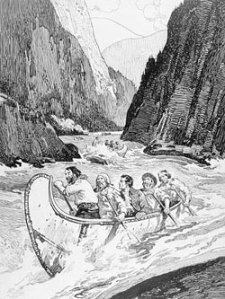 with her family to Canada in 1784.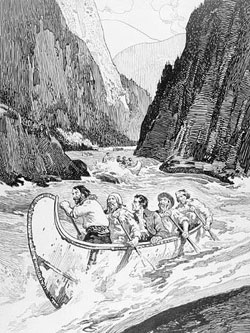
 Photo by Stephen Rees
 28th-July 2nd) and made the return trip in one day less (July 3rd to August 6th). He and his voyageurs had travelled more than a 1,000 miles of uncharted territory on the largest salmon-spawning river in the world.
 Sandy Brown and her family have just moved to Spokane, Washington where her husband, Scott, is pastoring a new church. With a fresh start, Sandy is determined to devote more time to her four children. But, within weeks of settling in their new life, the Brown family is plunged into turmoil.


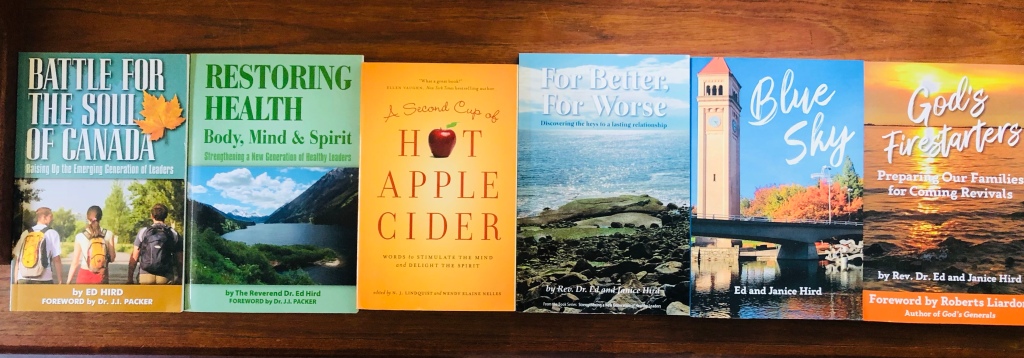


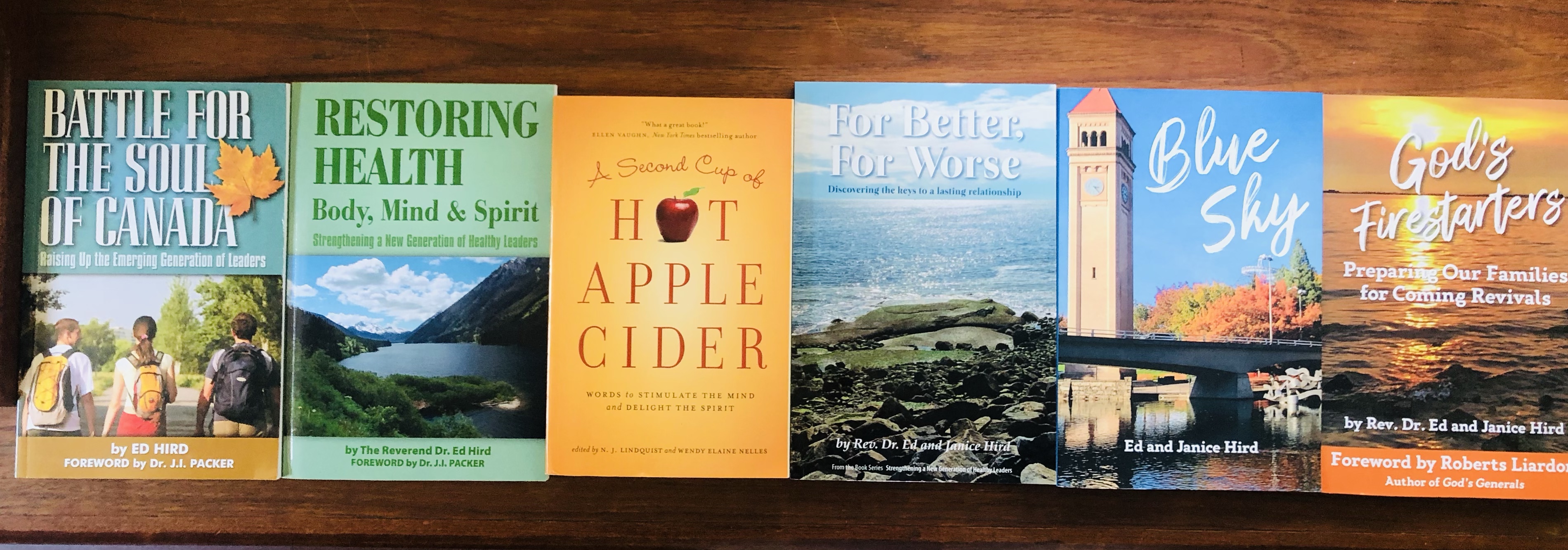

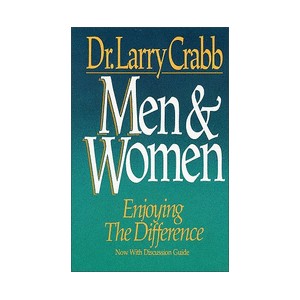
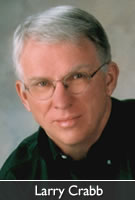







 Sandy Brown and her family have just moved to Spokane, Washington where her husband, Scott, is pastoring a new church. With a fresh start, Sandy is determined to devote more time to her four children. But, within weeks of settling in their new life, the Brown family is plunged into turmoil.

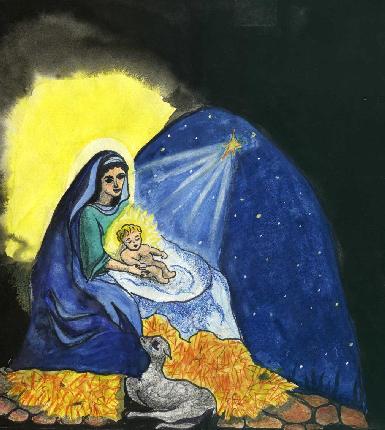

 remarkable book ‘
 Pastor Lina Gabeli commented: “As you read the pages of this book, you will be strengthened in your faith and fall more in love with Jesus, knowing that with God all things are possible when you believe in His promises and appropriate His word. This is a must read for everyone who is facing sickness or a personal crisis.” In the Arms of My Beloved can be purchased at your local Christian bookstore or ordered
 permanent residence in our hearts. That is why anger, while encouraged in Ephesians 4:26, must be without sin or harming of others, and must not be taken to bed. Wisely Ephesians 4:26 suggests that going to sleep with unresolved anger gives a foothold for the negativity which sacramental Christians would describe in their baptism as ‘the world, the flesh and the devil.’
 was described both in class and in an article as the ‘Gold Standard’ of marriage research. The Gottmans (2006) recommend that we husbands need to embrace our wife’s anger and learn the meaning behind the emotion. We need to rediscover anger as a healthy emotion that has its own wisdom if we will stop being so defensive. Gottman’s evocative phrase is “Look for the longing in each other’s complaint.” Brain scans have shown us that we experience anger on the right side of the brain, unlike fear and sadness which is on the left side. While fear causes us to withdraw, anger can actually stir us to make a difference and bring constructive change. The challenge is how to harness the power of anger, much like people in BC harness the power of our mighty rivers for electricity.
 causes emotional distance, loneliness, and a lack of romance. Ironically this is not about the husband not caring but because his over-caring makes him so anxious (Garland, 1998). The husband’s withdrawal is associated with increases in the wife’s blood pressure, norepinephrine and cortisol, all of which are linked to poorer cardiovascular and immune outcomes (Loving, T., & Heffner, K., 2004) Cortisol is a useful hormone in the short-term ‘fight or flight’ response, but is very destructive long-term to the white T cells which fight off cancer.
 and letting God’ is at the heart of true recovery. I am reminded of Paul saying in 2 Corinthians 12: 9-10 that God’s grace is sufficient for him, enabling him to realizing that when he is weak, he is strong.
 vision and relation virtues such as selflessness and unconditional love have been linked with better marital functioning in times of anger and conflict. Couples indicated that their involvement in scripture reading and regular church attendance increased their commitment to relational permanence. Marsh, R. and Dallos, R. (2000) found that couples were able to increase their sense of interpersonal space by detouring their anger to God in marital conflict. In my pastoral work, I have found that praying together can really help a couple, though most find such activity too intimate. It is vital that the couple do not use prayer or the bible as weapons to win a fight, but rather as a way to resolve conflict and build a healthier marriage.
 forgiven’, say Ketterman, lie at the heart of marital harmony and health. She speaks both as a psychiatrist of the Christian faith and as a victim of infidelity who remarried her husband. Forgiveness is indeed a practical proven key to managing anger in martial conflict.
 individualism of North American culture militates against healthy anger management in marriage conflict. They suggest that the way forward is to rediscover a theology of marriage that focuses on the common good, the value of community, discipleship and missional orientation. Marriage, said Matthews and Hubbard, ‘must have a purpose, a goal, a task beyond ‘being together’.
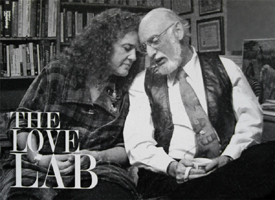 challenges of marital conflict. This is why Gottman, J. & Silver, N. (1999) encourage couples to explore each others’ dreams and hopes, with an aim to create shared meaning. It is important that couples in conflict do not give up on their ideals and dreams. Higher expectations for romance and passion have been linked with increased marital satisfaction. Sometimes in a desire to get along, spouses give up something essential that actually fuels the romance and passion of their lives.
 many positive behaviours as negative behaviours. Couples in crisis usually only show a corresponding ratio of 1:1 (Gottman, 1999, 2006). The need for a five to one ratio seems to come from the greater emotional impact of negative behaviours on a marriage. Garland (1998) poignantly notes that “truth, especially when it leads to conflict, must be wrapped in words and actions that build rather than tear down love for one another.”
 make the most use of in our church is
  avoid the pain of divorce.
 Many of us enter marriage thinking that our spouse will meet our deepest needs. We then feel cheated when they don’t, and begin to close our hearts. How many of us enter marriage with the view that we are there to serve our spouse? How many of us see marriage as a way of serving God?
 clearly than anger. Because our hearts are deceitful (Jeremiah 17:9), we have an amazing ability to justify our own anger and bitterness towards our spouse, while simultaneously excusing our own bad attitudes. Being angry at our spouses can be very attractive, because it makes us feel both powerful and self-righteous.
 Dr. E. Stanley Jones, founder of the Christian Ashram, once said that ‘there can be no love between a husband and wife unless there is mutual self-surrender. Love simply cannot spring up without that self-surrender to each other. If either withholds the self, love cannot exist.’
 -Click to check out our marriage book
 Edhird's Blog