I often notice car bumper stickers saying ‘One Day at a Time’, and ‘Take it Easy’. One of my favorite bumper stickers is ‘Letting Go and Letting God’.
Popularized by the 12-step movements. this phrase reminds us that excessive striving and drivenness is damaging to our health, our families, and our inner lives.
Our North American culture is becoming more and more frantic and fear-bound, especially in our shaky economic and political context. Is it little wonder that A.A. teaches us that the first step to sanity is to admit that we are powerless over our problems and that our lives have become unmanageable? This admission of powerlessness is very humbling to our ego. It is a real death to our illusions of grandiosity and immortality
The 3rd Step to sanity is making a decision to turn our will and our lives over to the care of God. The heart of Step 3 is ‘Letting Go and Letting God’. Most of us put enormous energy into remaining in control of our own private lives. The idea of surrendering control to anyone, let alone God, can be enormously threatening. Yet the act of surrender can be the most healing step that we may ever take.
The heart of spirituality, in fact, is surrendering our will and lives to God who really cares for us. As Jesus was hanging in agony on the cross, he cried out, “Father, into your hands I commit my spirit”. Such a surrender can be our choice one day at a time. Either we commit our lives daily into God’s hands, or we commit our lives into our own hands. Either God ends up at the centre of our lives, or our self ends up at the centre. There is no greater disease than finding one’s self at the centre, the essence of self-centeredness. As Dr. E. Stanley Jones puts it, anything that leaves you at the centre is off-centre.
Self-centeredness is rather like bad breath or body odor. Everyone knows about it but yourself, though you can certainly detect in other people. I have discovered that the heart of my problems in life is not usually other people. Rather it is my own self-centeredness. As a teenager, I tried to live life seeking my own personal happiness. I was never unhappier. I have learnt the hard way that happiness is a by-product of serving others and caring for others in a Christ-like way.
The A.A. Big Book has a passion for honesty as a key to sanity and sobriety. In one section, it ironically comments that blaming others and anger is a luxury that alcoholics cannot afford. You cannot indulge bitterness and finger-pointing and stay sober. The truth, of course, is that none of us can indulge self-centered blaming of others, and stay healthy. Bitterness always eats the bitter person alive.
“The deepest necessity of human nature”, says Dr. E. Stanley Jones, “is to surrender itself to something, or someone, beyond itself. Your self in your own hands is a problem and pain; your self in the hands of God is a possibility and power.” Why is it so hard to let go and let God? Why does our ego so often fight self-surrender with all its might? Because self-surrender is choosing to die to the false self, the self-centered way of living, that the true self might live for the sake of others. “Fears, worries, anxieties, and resentments”, says Dr. Jones, “are all roots in the unsurrendered self.”
Letting go is to surrender to creative love. Letting go is to align ourselves with God’s healing peace in our lives. Letting go is learning to stop and smell the coffee, enjoy the sunsets, rejoice in our children. Letting go is all about learning to slow down in our pressure-cooker world. Dr. Jones comments that ‘the surrendered are quietly creative and actually produce twice as much as the unsurrendered with all their fussy activity.” You may have heard of the old expression: ‘The hurrieder I go, the behinder I get’.
As Bob Dylan once wrote, ‘you gotta serve somebody…It may be the devil, it may be the Lord, but you gotta serve somebody’. The choice is ours one day at a time. We may choose to surrender to fear, to pride, to money, to resentment, to popularity, or we can choose to surrender to God who really cares for us. My prayer for those reading this article is that each of us may learn to slow down, let go, and let God.
-previously published in the North Shore News/Deep Cove Crier
P. S. Click this Amazon link to view for free the first two chapters of our new novel Blue Sky.
“I’m afraid there’s been an accident…”
Sandy Brown and her family have just moved to Spokane, Washington where her husband, Scott, is pastoring a new church. With a fresh start, Sandy is determined to devote more time to her four children. But, within weeks of settling in their new life, the Brown family is plunged into turmoil.
Sandy receives shocking news that her children aren’t safe, which brings back haunting memories of the trauma she experienced as a girl. Then, the unthinkable happens…
A brutal attack puts Sandy on the brink of losing everything she’s loved. Her faith in God and the family she cherishes are pushed to the ultimate limit.
Is healing possible when so many loved ones are hurt? Are miracles really possible through the power of prayer? Can life return to the way it was before?
Blue Sky reveals how a mother’s most basic instinct isn’t for survival… but for family.
If you’re a fan of Karen Kingsbury, then you’ll love Blue Sky. Get your copy today on paperback or kindle.
-The sequel book Restoring Health: body, mind and spirit is available online with Amazon.com in both paperback and ebook form. Dr. JI Packer wrote the foreword, saying “I heartily commend what he has written.” The book focuses on strengthening a new generation of healthy leaders. Drawing on examples from Titus’ healthy leadership in the pirate island of Crete, it shows how we can embrace a holistically healthy life.
To receive a signed copy within North America, just etransfer at ed_hird@telus.net, giving your address. Cheques are also acceptable.
-Click to purchase the Companion Bible Study by Jan Cox (for the Battle of the Soul of Canada) in both paperback and Kindle on Amazon.com and Amazon.ca
-Click to purchase the Companion Bible Study by Jan Cox (for the Battle of the Soul of Canada) in both paperback and Kindle on Amazon.com and Amazon.ca
To purchase any of our six books in paperback or ebook on Amazon, just click on this link.
I remember when I lost my voice for 18 months back in 1980. I will never forget resigning my job, going on sick leave, driving to the Employment Insurance office only to find out that my company did not have any long-term disability insurance.
In the midst of those devastating experiences, my strongest feeling was that I was disappointing my father. However my dad was not feeling that way at all. He was just concerned that I recover my voice and get back on track. Deep within most of us is this inexpressible desire to please our fathers.
In the early 1980’s, I spent almost five years in Abbotsford, during which time we had our second child. Each week I went to visit the sick in the local hospital. While visiting the psychiatric ward, I met a man who had Anglican and Roman Catholic parents. He said to me that he hadn’t seen a priest in thirty years. Out of the blue, he told me that he never prayed to God. ‘God was too angry’, he said. ‘You just couldn’t talk to him. He would always blow up.’ The man went on to say that he only prayed to the Virgin Mary. ‘She was kind, loving, gentle, and would always listen’, he said.
I said to the man, ‘Does God ever remind you of your earthly father?’. ‘Funny you should say that’, he said. ‘ They are just the same. They never listen and they always blow up at me.’ I went on to say, ‘What about your own mother? Does she remind you of the Virgin Mary?’ His eyes brightened up, and he said to me, ‘You must know my parents. My mother is just like the Virgin Mary. She always listens to me’.
I said to the man, ‘Your problem is not with God. It is with your earthly father. If you are willing to deal with the pain of your relationship to your dad, you will find that you will be able to talk to God.’ A week later, a local psychiatrist phoned me up and informed me that this patient had experienced a major breakthrough in his counseling as a result.
In A.A., they say that you are as healthy as your (lack of) secrets. I would agree, but also add that we are as healthy as our relationship with our fathers. So many men nowadays are caught in painful ambivalence and confusion, because they have never really felt affirmed and blessed by their own fathers.
The gift of a healthy father is the gift of courage. The gift of a healthy father is the gift of being willing to lay down our lives, if necessary, for our families. In this age of compromise, I give thanks for my own father who has not been afraid to stand up for his family and his convictions.
Without a father who believes in you, it may be very hard as a teenager to feel that you are going to make it through. They say that teenagers experience most things far more intensely than many adults. Their highs are twice as high and their lows are twice as low. That is why premature sexual intimacy and the usual relational breakups are so deeply devastating for our teenagers.
A courageous father does more than just give a condom to his kid. He explains to him the real risk of broken hearts and diseased bodies, as well of the benefits of waiting for real commitment. By our faithfulness to our wives, despite the ups and down of life, we give our children courage to believe that they too can enter faithful lasting relationships.
The concept of future marriage for many teenagers and young adults has become filled with so much fear and uncertainty. Yet as Dr. Laura put it, ‘Without commitment, there is no future.’ Courageous fathers give to their sons and daughters the courage to commit to the unknown future.
One of the things I love the most about the North Shore is the beautiful trails that are woven throughout our area. While out walking in the trails, I asked a neighbour, ‘What is a courageous father?’ He said, ‘Someone who holds down a job and cares for his children’. Simple words, but very true.
In this age of compromise, in this pressure-cooker world, so many fathers are tempted to run away from it all. The stress just becomes too much. I thank God for my own father who never ran from our family during good times and bad, during sickness and health, for better or for worse. I thank God for being the father of the fatherless, the one who gives me courage to not run from stress, who gives me the courage to stand my ground when everything else is falling apart, to stand for truth when many seem to be compromising.
-previously published in the North Shore News/Deep Cove Crier
P. S. Click this Amazon link to view for free the first two chapters of our new novel Blue Sky.
“I’m afraid there’s been an accident…”
Sandy Brown and her family have just moved to Spokane, Washington where her husband, Scott, is pastoring a new church. With a fresh start, Sandy is determined to devote more time to her four children. But, within weeks of settling in their new life, the Brown family is plunged into turmoil.
Sandy receives shocking news that her children aren’t safe, which brings back haunting memories of the trauma she experienced as a girl. Then, the unthinkable happens…
A brutal attack puts Sandy on the brink of losing everything she’s loved. Her faith in God and the family she cherishes are pushed to the ultimate limit.
Is healing possible when so many loved ones are hurt? Are miracles really possible through the power of prayer? Can life return to the way it was before?
Blue Sky reveals how a mother’s most basic instinct isn’t for survival… but for family.
If you’re a fan of Karen Kingsbury, then you’ll love Blue Sky. Get your copy today on paperback or kindle.
-The sequel book Restoring Health: body, mind and spirit is available online with Amazon.com in both paperback and ebook form. Dr. JI Packer wrote the foreword, saying “I heartily commend what he has written.” The book focuses on strengthening a new generation of healthy leaders. Drawing on examples from Titus’ healthy leadership in the pirate island of Crete, it shows how we can embrace a holistically healthy life.
To receive a signed copy within North America, just etransfer at ed_hird@telus.net, giving your address. Cheques are also acceptable.
-Click to purchase the Companion Bible Study by Jan Cox (for the Battle of the Soul of Canada) in both paperback and Kindle on Amazon.com and Amazon.ca
-Click to purchase the Companion Bible Study by Jan Cox (for the Battle of the Soul of Canada) in both paperback and Kindle on Amazon.com and Amazon.ca
To purchase any of our six books in paperback or ebook on Amazon, just click on this link.
Most men are ‘experts’ on women, until we marry one. Experience can be rather humbling to our most treasured pre-conceptions.
Flowers are, by far, the most popular gift that men like to give to women, followed by chocolates, candies, and other such delicacies. But perhaps the most valuable and most dangerous gift that we can give the women in our lives is the gift of listening.
Heartfelt, non-critical listening is a rare phenomenon in our fast-paced, analytical culture. Listening takes time. Listening takes energy. Listening takes courage. To be honest, it often seems a lot easier just to give them chocolates. Most of us as men know that we need to grow in the area of listening.
The most offensive thing about listening is how helpless it can make us feel. Very few of us as men either like to feel weak or admit our weaknesses. Despite the male consciousness-raising of the last thirty years, such radical vulnerability does not come easy.
I well remember the first year of our marriage as a great time. My wife however has somewhat different memories…‘little things’ like our living on a shoe-string budget so that we could go on vacation in Europe, and my spending all my time studying for my Master’s Degree.
Years later, she finally told me that the first year wasn’t a bed of roses. I said: “Why didn’t you tell me?” “Well, Ed”, she said, “You weren’t listening”. Sadly, she was right. One of the dangers of listening to women is that we just might hear something that we don’t want to hear. Our equilibrium may be so unsettled that it will take us quite a while to recover.
The key women in our lives usually have a remarkable ability to impact our sense of inner calm, in a way that our male acquaintances rarely do. When a male upsets another man, we often just ‘write them off’ and carry on. But when a key woman ‘gets under our skin’, we have to deal with it, or our life begins to shrink.
One of the key signs of a man going through a marriage breakup is the radical energy loss, and the consequent impact on his work. As men, we are usually so ‘thick’ that when a marriage breakup hits us, we rarely see it coming. It’s like being hit by a Mac Truck. So many men say: “I had no idea”. Exactly. More than any other offense, the action that most drives our wives to the Courts (and I don’t mean ‘tennis’) is our unwillingness to listen.
Another danger of listening to women is that we might have to change. None of us like being controlled. We certainly don’t like being treated like children by the key women in our lives. Sometimes we confuse our fear of change with our fear of being controlled. Without change, there is no growth. Without change, there is no future. I have found that if I am willing to change the things that I can change (which is me), then the rest of life begins to make more sense.
The famous A.A. Serenity prayer asks God for the serenity to accept the things that we cannot change ( which includes anyone else, especially the women in our lives). When we finally wake up and realize that women are ‘unfixable’ (that is, by us), then we can stop trying to change them, and start actually listening. Genuine listening to women can be unnerving, because to listen is to change.
Most of us as men have an amazing ability to block out parts of conversations that make us feel uncomfortable. Ever wonder why women get so irritated with us, as so many men are forever flicking on the TV channel changer. This filtering ability can make men look like their memories are extremely selective. As the old saying goes, the problem with men is that they never remember, and the problem with women is that they never forget.
I remember when a former secretary in another city came up to me and courageously shared some concerns with me about our work environment. My ‘walls’ were down that day, and so I actually heard what she was saying. I said to her, “Why have you taken so long to tell me?” She said, “Because until now you would have never listened. You would have just explained it away.” I felt stunned and challenged. Here I was, a trained Social Worker and Priest, and I couldn’t even see my own ‘walls’.
The Good Book says that our hearts are deceitful, and that no one can really understand them. (Jeremiah 17:9) We have an amazing ability to fool ourselves. Have you noticed how often we judge our spouses by their actions, and ourselves by our good intentions. That is why Jesus challenged each of us to first remove the log from our eyes, before we try to do surgery on the splinter in someone else’s eye.
Courageous listening is choosing to remove that log of defensiveness, and actually give the women in our lives our full, uncompromised attention. I have found that my wife is virtually always right even when she is wrong. She, and most other women, have a God-given intuitive ability that functions like a radar system in discerning basic truth. Sometimes she can’t even tell me why she is feeling so uncomfortable about some area, but in hindsight, my listening to her has saved me a lot of grief. That doesn’t mean that she is always right on all the details, but she usually intuitively grasps the core of issues.
That is why the famous author Gary Smalley says that every woman has a built-in marriage manual, if we men would only have the courage to listen and not reject It has taken me a long time to fully benefit from this ‘dangerous’ gift of my wife.
Have you ever wondered why Jesus after his resurrection turned up to women first? Perhaps it’s because women are so spiritually open. No one in that 1st century culture listened to women, except Jesus. So Jesus, after rising again, broke all the rules and showed up to rejected, despised, ignored women. Did the male disciples initially believe the women when they shared about the risen Jesus? Not in your life. Like so many of us men today, they wrote off the women’s stories as “old wives’ tales”.
I pray that we men may have the courage to listen to the stories of women, especially their stories of Jesus’ love.
-previously published in the North Shore News/Deep Cove Crier
P. S. Click this Amazon link to view for free the first two chapters of our new novel Blue Sky.
“I’m afraid there’s been an accident…”
Sandy Brown and her family have just moved to Spokane, Washington where her husband, Scott, is pastoring a new church. With a fresh start, Sandy is determined to devote more time to her four children. But, within weeks of settling in their new life, the Brown family is plunged into turmoil.
Sandy receives shocking news that her children aren’t safe, which brings back haunting memories of the trauma she experienced as a girl. Then, the unthinkable happens…
A brutal attack puts Sandy on the brink of losing everything she’s loved. Her faith in God and the family she cherishes are pushed to the ultimate limit.
Is healing possible when so many loved ones are hurt? Are miracles really possible through the power of prayer? Can life return to the way it was before?
Blue Sky reveals how a mother’s most basic instinct isn’t for survival… but for family.
If you’re a fan of Karen Kingsbury, then you’ll love Blue Sky. Get your copy today on paperback or kindle.
-The sequel book Restoring Health: body, mind and spirit is available online with Amazon.com in both paperback and ebook form. Dr. JI Packer wrote the foreword, saying “I heartily commend what he has written.” The book focuses on strengthening a new generation of healthy leaders. Drawing on examples from Titus’ healthy leadership in the pirate island of Crete, it shows how we can embrace a holistically healthy life.
To receive a signed copy within North America, just etransfer at ed_hird@telus.net, giving your address. Cheques are also acceptable.
-Click to purchase the Companion Bible Study by Jan Cox (for the Battle of the Soul of Canada) in both paperback and Kindle on Amazon.com and Amazon.ca
-Click to purchase the Companion Bible Study by Jan Cox (for the Battle of the Soul of Canada) in both paperback and Kindle on Amazon.com and Amazon.ca
To purchase any of our six books in paperback or ebook on Amazon, just click on this link.
How do you feel about the world-famous Mr. Van Rijn’s paintings?
Rembrandt Harmenszoon van Rijn is one of the few men or women in history recognizable from just his first name. Others are Napoleon, Michaelangelo, and Cleopatra. Today Rembrandt is known to hundreds of millions of people in all parts of the world. Many art experts see him as the greatest of all Dutch painters, indeed as one of the greatest artists who ever lived.
By his subtle contrasts of light and dark, Rembrandt caused the people he painted to seem alive. Theatre people often call Rembrandt the Shakespeare of painting –for his capacity to probe personality, his compassion for each person he depicts, and his feeling for grasping the dramatic moment and displaying it with moving effect.
On July 15, 1606, Rembrandt was born as the ninth child of a well-to-do couple in Leiden, Holland. While in his early 20’s, he developed an overnight celebrity status somewhat akin to the rise of the Beatles. This brief time of prosperity and popularity,however, was followed by much sorrow and rejection. Championed as the Netherlands alternative to Peter Paul Ruben in Belgium, Rembrandt became very wealthy and over-extended. Taking out an enormous mortgage on a beautiful house, he was accused of wasting his inheritance and living an indulgent lifestyle.
Rembrandt responded by painting himself with his wife Saskia, as a Prodigal Son/wealthy playboy with his latest female conquest. As a young person, Rembrandt had all the attributes of the Prodigal Son: brash, overconfident, spendthrift, hedonistic, and very arrogant. Money dominated and crippled much of his life. He earned a lot; he consumed a lot; he wasted a lot. Sadly, much of his energy and talent was depleted in protracted court cases about financial disputes and bankruptcy affairs.
Rembrandt’s best-known painting, the so-called Night Watch, was both his greatest success artistically and his worst failure relationally. While painting the Night Watch, he made many people angry who would no longer buy his paintings. The soldiers, who paid to be in the picture, all wanted to be front and centre. Instead of painting a typical group portrait, Rembrandt created a masterpiece where some soldiers were prominent and others were hardly visible.
Around that time, his wealthy heiress wife Saskia, whom he deeply loved and admired, died, leaving Rembrandt to care for his nine-month-old son, Titus. Rembrandt had already lost his son Rumbartus in 1635, his first daughter Cornelia in 1638, and his second daughter Cornelia in 1640. Ten days before Saskia died, she changed her will so that Rembrandt would never be able to remarry without being disinherited.
After Saskia’s death, things worsened. Rembrandt became involved in a very unhappy relationship with his housekeeper, Geertje Dircx. When he refused to marry her, she took Rembrandt to court and won a settlement. In response, Rembrandt and Geertje’s own brother had Geertje confined to an insane asylum for the next five years.
Unable to marry, he then became involved in another scandal with his new housekeeper, Hendrickje Stoffels, whose pregnancy scared off even more of his Dutch customers. His financial problems became so severe that in 1656 Rembrandt was declared insolvent. All of Rembrandt’s possessions, his large collection of artwork, and his house in Amsterdam were sold in three auctions during 1657 and 1658. In 1663, Hendrickje, who has been described as ‘one of the noblest souls to serve a troubled genius’, died. Five years later, Rembrandt’s hopes were again raised and then dashed when he celebrated his son Titus’ wedding, only to see him buried that same year. Only his daughter Cornelia, his daughter-in-law Magdalene van Loo, and his granddaughter Titia survived him.
Rembrandt became more and more fascinated with painting ‘old age’, as he felt that it often revealed the most about human nature. Bludgeoned by tragedies that might have crushed a weaker man, Rembrandt achieved a new depth to his art. Rembrandt was close to his death when he painted his Prodigal Son, seen by many as the last will and testament of a turbulent and troubled life.
In his Prodigal Son painting, the essence of love was concentrated in the hands. When the famous author Henri Nouwen saw the Prodigal Son painting in the St Petersburg Hermitage, he was struck by the sight of “a man in a great red cloak tenderly touching the shoulders of a disheveled boy kneeling before him. I could not take my eyes away. I felt drawn by the intimacy between the two figures, the warm red of the man’s cloak, the golden yellow of the boy’s tunic, and the mysterious light engulfing them both. But, most of all, it was the hands –the old man’s hands–as they touched the boy’s shoulders that reached me in a place where I had never been reached before. …” Nouwen realized that Rembrandt must have shed many tears and died many deaths before he could have so exquisitely painted the father’s heart for his lost son. Rembrandt had once again painted himself as the Prodigal Son, but this time coming back home to his Father.
Instead of the rich apparel with which the youthful Rembrandt painted himself in younger days, he now wore only a tattered undertunic covering his wasted body. The Prodigal Son, like Rembrandt, returned to the Father with nothing: his money, his health, his honour, his self-respect, his reputation…everything had been squandered (Luke 15). Yet the good news of Rembrandt’s painting was that the Father still loved him and welcomed him home unconditionally.
Rembrandt indeed saw himself as the Prodigal Painter coming home to the true Father. Rembrandt knew that he had wandered a long way, but that it was never too late to return home. My prayer is that many of us may have the courage, like Rembrandt, to turn our hearts towards Home, where love and forgiveness are waiting.
The Rev. Dr. Ed Hird, BSW, MDiv, DMin
-author of the award-winning Battle for the Soul of Canada
-previously published in the North Shore News/Deep Cove Crier
P. S. Click this Amazon link to view for free the first two chapters of our new novel Blue Sky.
“I’m afraid there’s been an accident…”
Sandy Brown and her family have just moved to Spokane, Washington where her husband, Scott, is pastoring a new church. With a fresh start, Sandy is determined to devote more time to her four children. But, within weeks of settling in their new life, the Brown family is plunged into turmoil.
Sandy receives shocking news that her children aren’t safe, which brings back haunting memories of the trauma she experienced as a girl. Then, the unthinkable happens…
A brutal attack puts Sandy on the brink of losing everything she’s loved. Her faith in God and the family she cherishes are pushed to the ultimate limit.
Is healing possible when so many loved ones are hurt? Are miracles really possible through the power of prayer? Can life return to the way it was before?
Blue Sky reveals how a mother’s most basic instinct isn’t for survival… but for family.
If you’re a fan of Karen Kingsbury, then you’ll love Blue Sky. Get your copy today on paperback or kindle.
-The sequel book Restoring Health: body, mind and spirit is available online with Amazon.com in both paperback and ebook form. Dr. JI Packer wrote the foreword, saying “I heartily commend what he has written.” The book focuses on strengthening a new generation of healthy leaders. Drawing on examples from Titus’ healthy leadership in the pirate island of Crete, it shows how we can embrace a holistically healthy life.
-Click to purchase the Companion Bible Study by Jan Cox (for the Battle of the Soul of Canada) in both paperback and Kindle on Amazon.com and Amazon.ca
-Click to purchase the Companion Bible Study by Jan Cox (for the Battle of the Soul of Canada) in both paperback and Kindle on Amazon.com and Amazon.ca
To purchase any of our six books in paperback or ebook on Amazon, just click on this link.
According to the International Committee of the Red Cross, approximately 60 to 100 million mines are still scattered throughout 69 countries. These weapons kill or maim more than 25,000 people a year –equivalent to a victim every 22 minutes. Thanks to the tragic death of Princess Diana in 1997, the evil effects of land mines finally received centre stage.
It is quite ironic that the 1997 Nobel Peace Prize went to campaigners against landmines. A Nobel Peace Prize is worth over a million dollars, and is one of the world’s top awards. Yet the founder of the Peace Prize, Alfred Nobel, earned his multi-millions by selling armaments and explosives throughout the world.
Alfred Nobel has been described as the Lord of Dynamite, because he both invented and named Dynamite, taking it from the Greek word ‘dynamos’, meaning ‘power’. World War One and Two devoured millions of lives, indirectly due to the technological advances in Alfred Nobel’s laboratories. In the past, the gunsmoke from cannons used to stop battles, because the massive clouds of smoke blocked the view of the generals.
Alfred Nobel, however, invented smokeless gunpowder, enabling the slaughter at Flanders Fields to go on hour after hour without ceasing. In many ways, Alfred was just following in his father Immanuel’s footsteps. Immanuel Nobel, a loyal Swede, invented land and sea mines as a cost-effective means of protecting Sweden’s roads and beaches. The Swedish government, however, showed no interest; so he moved to Russia, where he helped the Russians beat back the English and French fleets with the use of mines. English Admiral Napier recorded in his famous diary: ‘The Gulf of Finland is full of infernal machines.’
How ironic that the Nobel fortune is now being used this year to combat the spread of these very mines! The Nobel family made millions by manufacturing nitroglycerin, a useful but unstable explosive. After Alfred’s 20 year-old brother Emil was tragically killed in a nitroglycerin explosion, their father Immanuel had a crippling stroke.
In response, Alfred devoted himself to discovering a new safe explosive. By combining nitroglycerin with kieselguhr clay, Alfred created a stable, transportable explosive, which he called dynamite. England, being cultural conservative, would have nothing to do with dynamite. So instead the Scots cornered the dynamite market.
North America, which always loves a new fad, went crazy over dynamite. At one point, North Americans were even using dynamite as a new ‘humane way’ of killing cattle for the meat industry! In the 1880’s, the great railway engineer William Cornelius Van Horne built three Nobel Dynamite factories in Canada. That very dynamite made it possible for the Canadian Pacific Railway to be blasted through the mighty Rockies all the way to the West Coast. It would not be far off to say that without Nobel’s dynamite, B.C. would probably be part of the United States today.
Alfred Nobel never wanted dynamite to be used for other than peaceful purposes. He was thrilled when his dynamite blasted a path for the Panama Canal in 1914. Sadly enough, his dynamite also blasted countless lives from 1914- to 1918, including the lives of my great-uncles William and Harry.
All his life, Alfred Nobel loathed war. He considered war to be ‘the horror of horrors and the greatest of all crimes’. “For my part,” Nobel said, “I wish all guns with their belongings and everything could be sent to hell, which is the proper place for their exhibition and use.”
In many ways, Alfred Nobel is a symbol of the fact that it is never too late to change, never too late to start again. When Alfred’s older brother Ludwig died, one newspaper accidentally printed Alfred’s obituary instead. The obituary described Alfred as a man who became rich by enabling people to kill each other in unprecedented numbers.
Deeply shaken by this assessment, Alfred Nobel resolved, from then on, to use his fortune in awarding accomplishments that benefited humanity. In his will, Alfred designated five annual awards to benefit leaders in physics, chemistry,medicine, literature, and peace. The Nobel Peace award was for ‘the person who shall have done the most or the best work to promote fraternity between nations, for the abolition of standing armies and for the holding and promotion of peace congresses…’
Twelve out of his twenty relatives were so incensed that they launched lawsuits to try to reverse the terms of his philanthropic will. In contrast, Emanuel Nobel, the spokesman for the Russian branch of the family, supported the generous intentions of the will. King Oscar II of Sweden, in a personal audience with Emanuel, said: “Your Uncle Alfred has been influenced by peace fanatics, and particularly by women.” Emanuel replied that he would not care to expose his sisters and brothers to the risk of being reproached in the future by distinguished scientists for having appropriated funds that properly belonged to them. After his bold comments to the king, Emanuel followed his lawyer’s advice and immediately fled from Sweden back to Russia, to avoid arrest by the disgruntled king.
It’s remarkable when you think of all the intriguing people who have received the Nobel Peace Prize, and whose lives have been radically changed by that very act. The names have become part and parcel of our recent history, names like Martin Luther King Jr, Nelson Mandela, F.W. De Klerk, Albert Schweitzer, Theodore Roosevelt, Woodrow Wilson, Andrei Sakharov, Yitzhak Rabin, Mikhail Gorbachev, Elie Wiesel, Lech Walesa, Mother Teresa, Anwar Sadat, and Menachim Begin. The first Canadian to ever receive the Nobel Peace Prize was the much-loved Prime Minister Lester Pearson, for his role in helping to end the Suez Canal crisis. The first person ever to receive the Nobel Peace Prize was Jean Henri Dunant, the founder of the International Red Cross Society, back in 1901.
My prayer is that Jesus the Prince of Peace may raise up many such Champions of Peace in the 21st Century. Blessed indeed are the Nobel Peace-makers (Matthew 5:9).
-previously published in the North Shore News/Deep Cove Crier
P. S. Click this Amazon link to view for free the first two chapters of our new novel Blue Sky.
“I’m afraid there’s been an accident…”
Sandy Brown and her family have just moved to Spokane, Washington where her husband, Scott, is pastoring a new church. With a fresh start, Sandy is determined to devote more time to her four children. But, within weeks of settling in their new life, the Brown family is plunged into turmoil.
Sandy receives shocking news that her children aren’t safe, which brings back haunting memories of the trauma she experienced as a girl. Then, the unthinkable happens…
A brutal attack puts Sandy on the brink of losing everything she’s loved. Her faith in God and the family she cherishes are pushed to the ultimate limit.
Is healing possible when so many loved ones are hurt? Are miracles really possible through the power of prayer? Can life return to the way it was before?
Blue Sky reveals how a mother’s most basic instinct isn’t for survival… but for family.
If you’re a fan of Karen Kingsbury, then you’ll love Blue Sky. Get your copy today on paperback or kindle.
-The sequel book Restoring Health: body, mind and spirit is available online with Amazon.com in both paperback and ebook form. Dr. JI Packer wrote the foreword, saying “I heartily commend what he has written.” The book focuses on strengthening a new generation of healthy leaders. Drawing on examples from Titus’ healthy leadership in the pirate island of Crete, it shows how we can embrace a holistically healthy life.
To receive a signed copy within North America, just etransfer at ed_hird@telus.net, giving your address. Cheques are also acceptable.
-Click to purchase the Companion Bible Study by Jan Cox (for the Battle of the Soul of Canada) in both paperback and Kindle on Amazon.com and Amazon.ca
-Click to purchase the Companion Bible Study by Jan Cox (for the Battle of the Soul of Canada) in both paperback and Kindle on Amazon.com and Amazon.ca
To purchase any of our six books in paperback or ebook on Amazon, just click on this link.
“Nothing exceeds halitosis as a social offense. Nothing equals Listerine® as a remedy.” Such was the claim of a 1928 advertisement for Listerine ® mouthwash. Listerine® Antiseptic mouthwash, wasn’t born in the bathroom, however, but in the operating room.
Back in 1865, Dr. Joseph Lister, the son of a well-known physicist, first demonstrated the use of an antiseptic in surgery. Later, Dr. Joseph Lawrence refined his product and named it Listerine® after Dr. Lister. History is uncertain whether Lister appreciated the favour.
One hundred and thirty years ago, almost 50% of the patients undergoing major surgery died from infection. As the famous saying went, “The operation was a success, but the patient died.” In the 1870’s, Lister was the first to treat wounds with dressings soaked in carbolic acid. Lister, in agreement with Dr. Louis Pasteur, suggested surgeons wash their hands and sterilize their instruments before operating. After significant resistance, British and American hospitals gradually adopted the sterile procedures promoted by Lister.
Lister and Pasteur were personal friends who supported each other when viciously attacked by the medical establishment. When Pasteur was publicly honoured at age 70 by his medical peers, he turned and bowed his head towards Lister, saying: “the future belongs to him who has done the most for suffering humanity.”
Lister has been described as the greatest man of the nineteenth century. Even the common Bandaid, created by Johnson and Johnson, can be directly traced to Lister’s influence.
In the days before Lister, the death rate from amputation, the most frequent ‘major’ operation in his day, was forty percent. By 1910, thanks to Lister’s influence, the death rate from amputation had dropped to less than three percent. How many of us had relatives who were injured in World War One or Two, relatives who might not had survived without Lister’s contributions?
One of the most feared accidents a hundred years ago was the compound fracture, where the sharp end of the broken bone pierced the skin. Because it so often resulted in death from infection, most doctors would immediately amputate the victim’s arms and legs. When I think about how many of our teens have come back from Mount Seymour and Grouse with compound fractures from skiing or snowboarding, I give thanks for Joseph Lister.
Back then, surgeons did not wear gowns or gloves, nor did they cover their hair with caps or their noses and their mouths with masks. The result was that the patient was in danger of infection, not from ‘bad air’ as they thought, but from the surgeon’s hands, his clothes, his breath, and his hair. Lister had heard that ‘carbolic acid,’ a coal-tar derivative used to preserve railway tracks and ships’ timbers, was effective in treating sewage in Carlise, and in curing cattle of parasites. By cleaning wounds and dressing his patients with carbolic acid, Lister was able to keep his hospital ward in Glasgow free of infection for nine months. Lister’s cloud of carbolic spray drenched the whole area, surgeon and all, and so killed the bacteria before they had a chance to invade the wound.
Carbolic spray, however, was caustic to the skin and body tissues, and sometimes caused poisoning. The surgeon’s skin would become bleached and numb, his nails cracked, and his lungs sore as he breathed in large quantities of carbolic. Some surgeons became so ill that they had to give up using the spray entirely. Even Lister described it as ‘a necessary evil incurred to attain a greater good.’ After many experiments, he found that boracic acid was a better antiseptic.
Because of his new fame, Lister was invited to leave Edinburgh and join the prestigious King’s College Hospital in London. The newspapers reported Lister as saying that it was his duty to go to King’s because the teaching of surgery in London was very bad. Such publicity did not go down well with his future London colleagues. “Who is this ignorant professor from an insignificant Scottish University,” they said, “that he should dare to criticize the great London teaching-schools?”
Lister also made himself unpopular by insisting for hygienic reasons that his wards should be separated from all other wards, and that they should not be shared by any other surgeon. He even had the nerve to bring his own personally trained staff with him from Edinburgh. Little by little however, Lister won the English over.
Dr. Frederick Cartwright, a Fellow in the Royal College of Surgeons, holds that Lister “was a humble servant of God, and that he always asked for His guidance in moments of difficulty. There is no doubt that he believed himself to be directly inspired by God…To Lister, the operating-theatre was a temple.” Lister was very humble, but also very brave and determined. In spite of all the opposition that he faced, he never gave up because he knew that God was guiding him to help humanity.
My prayer for those reading this article is that the ‘Great Physician’ Jesus may empower each of you, like Joseph Lister, to be ‘revolutionaries’ for the healing of our homes and families.
-previously published in the North Shore News/Deep Cove Crier
P. S. Click this Amazon link to view for free the first two chapters of our new novel Blue Sky.
“I’m afraid there’s been an accident…”
Sandy Brown and her family have just moved to Spokane, Washington where her husband, Scott, is pastoring a new church. With a fresh start, Sandy is determined to devote more time to her four children. But, within weeks of settling in their new life, the Brown family is plunged into turmoil.
Sandy receives shocking news that her children aren’t safe, which brings back haunting memories of the trauma she experienced as a girl. Then, the unthinkable happens…
A brutal attack puts Sandy on the brink of losing everything she’s loved. Her faith in God and the family she cherishes are pushed to the ultimate limit.
Is healing possible when so many loved ones are hurt? Are miracles really possible through the power of prayer? Can life return to the way it was before?
Blue Sky reveals how a mother’s most basic instinct isn’t for survival… but for family.
If you’re a fan of Karen Kingsbury, then you’ll love Blue Sky. Get your copy today on paperback or kindle.
-The sequel book Restoring Health: body, mind and spirit is available online with Amazon.com in both paperback and ebook form. Dr. JI Packer wrote the foreword, saying “I heartily commend what he has written.” The book focuses on strengthening a new generation of healthy leaders. Drawing on examples from Titus’ healthy leadership in the pirate island of Crete, it shows how we can embrace a holistically healthy life.
To receive a signed copy within North America, just etransfer at ed_hird@telus.net, giving your address. Cheques are also acceptable.
-Click to purchase the Companion Bible Study by Jan Cox (for the Battle of the Soul of Canada) in both paperback and Kindle on Amazon.com and Amazon.ca
-Click to purchase the Companion Bible Study by Jan Cox (for the Battle of the Soul of Canada) in both paperback and Kindle on Amazon.com and Amazon.ca
To purchase any of our six books in paperback or ebook on Amazon, just click on this link.
My family and I watched an Academy Award-winning movie which reminded me that every one of us owes an enormous debt to Dr. Louis Pasteur.
Just think of pasteurized milk and honey, making food safe for our families to eat and drink, thanks to Louis Pasteur.
Think of our children whose lives are safe from rabies transmitted by ‘mad dogs’, thanks to Louis Pasteur. Think of our wives and mothers who need not fear death from infection during childbirth, thanks to Louis Pasteur. Think of the sheep, cattle and chickens that we can safely rely on for our food supply, thanks to Louis Pasteur. No wonder that Pasteur’s name is better known than any other scientist who has ever lived.
Louis Pasteur is a living reminder that anyone who wants to make a difference in life is bound to face bigotry and opposition. The most narrow-minded usually turn out to be those who pretend to be the most open-minded and inclusive. Pasteur was maligned as a murderer and a menace to science. He was even challenged to a duel by an angry physician.
His ‘criminal’ behaviour was none other than publishing a pamphlet urging doctors to wash their hands before surgery and to sterilize their instruments. Thirty percent of pregnant women in Paris were needlessly dying from infection during childbirth. One grief-struck husband, whose wife had just died from childbirth fever, went on a rampage and shot his doctor dead. Medical doctors rallied against Dr. Pasteur, blaming his pamphlet for the murder and claiming that Pasteur was making the practice of medicine unsafe for physicians and surgeons. “Who did Pasteur think that he was?” They said. “He isn’t even a medical doctor…just a lowly chemist”.
The Emperor’s wife invited Pasteur to the French Court to explain his radical ideas. Pasteur had the nerve to tell the Emperor that the hospitals of Paris were death houses, and that there was hardly a doctor who didn’t carry death on his hands. After accurately predicting the death of the Emperor’s sister-in-law from childbirth infection, Pasteur was condemned as a fraud and banned by the Emperor from ever speaking out publicly again about medicine.
Having been banished into obscurity in the countryside of Arbois, Pasteur spent the next decade researching the causes of anthrax, the black plague ravaging the sheep across France. Miraculously Pasteur invented an anthrax vaccine, which he gave freely to all farmers’ sheep in Arbois.
When the French government needed more sheep to pay the 5 million francs War indemnity to Germany, they came to Arbois to find out why Pasteur’s sheep were healthy. Telling them of his vaccine, Pasteur was again mocked as a fool and charlatan by the Academy of Medicine. Only after a rigorous test where infected Anthrax Blood was injected in 50 sheep, was Pasteur finally vindicated. To everyone’s amazement, the only sheep that survived were the 25 sheep which Pasteur had injected with his vaccine.
Was Pasteur then accepted by the medical establishment? Not on your life! When Pasteur had the nerve to look for a rabies cure, again he was vilified and humiliated without mercy. Pasteur was such a servant of all humanity that he even risked facing prison or guillotine to save the life of a rabies-infected ten-year old boy, Joseph Meister. Joseph Meister was later made the caretaker of Pasteur’s tomb at the world-famous Pasteur Institute in Paris. When the Nazis tried to force him to open Pasteur’s tomb in 1940, Joseph tragically committed suicide rather than defile the grave of his hero.
The ‘great physician’ Jesus once said that if anyone wants to be first, he must become the very last, and the servant of all. Louis Pasteur was indeed the servant of all, who sacrificed his time, energy, and health so that others might live. Pasteur selflessly taught that the benefits of science are not for the scientist, but for all of humanity.
Though he has saved millions of lives through his discoveries, Pasteur was unable to save the three out of his four daughters who died from typhoid fever. In his unceasing striving to cure rabies, he suffered a crippling stroke at age 46. Yet even that setback did not stop him from successfully finding a rabies cure.
Near the end of his life, Pasteur was finally honoured by the French Academy of Medicine. He graciously said to them: ‘Doctors and scientists of the future, do not let yourselves be tainted by a barren skepticism nor discouraged by sadness of certain hours that creep over every nation. Do not become angry at your opponents for no scientific theory has ever been accepted without opposition.’
In so many ways, Pasteur embodied the true meaning of Christ-likeness. My prayer for those reading this article is that we may never let opposition embitter us as we seek to be the servants of all.
-previously published in the North Shore News/Deep Cove Crier
P. S. Click this Amazon link to view for free the first two chapters of our new novel Blue Sky.
“I’m afraid there’s been an accident…”
Sandy Brown and her family have just moved to Spokane, Washington where her husband, Scott, is pastoring a new church. With a fresh start, Sandy is determined to devote more time to her four children. But, within weeks of settling in their new life, the Brown family is plunged into turmoil.
Sandy receives shocking news that her children aren’t safe, which brings back haunting memories of the trauma she experienced as a girl. Then, the unthinkable happens…
A brutal attack puts Sandy on the brink of losing everything she’s loved. Her faith in God and the family she cherishes are pushed to the ultimate limit.
Is healing possible when so many loved ones are hurt? Are miracles really possible through the power of prayer? Can life return to the way it was before?
Blue Sky reveals how a mother’s most basic instinct isn’t for survival… but for family.
If you’re a fan of Karen Kingsbury, then you’ll love Blue Sky. Get your copy today on paperback or kindle.
-The sequel book Restoring Health: body, mind and spirit is available online with Amazon.com in both paperback and ebook form. Dr. JI Packer wrote the foreword, saying “I heartily commend what he has written.” The book focuses on strengthening a new generation of healthy leaders. Drawing on examples from Titus’ healthy leadership in the pirate island of Crete, it shows how we can embrace a holistically healthy life.
To receive a signed copy within North America, just etransfer at ed_hird@telus.net, giving your address. Cheques are also acceptable.
-Click to purchase the Companion Bible Study by Jan Cox (for the Battle of the Soul of Canada) in both paperback and Kindle on Amazon.com and Amazon.ca
-Click to purchase the Companion Bible Study by Jan Cox (for the Battle of the Soul of Canada) in both paperback and Kindle on Amazon.com and Amazon.ca
To purchase any of our six books in paperback or ebook on Amazon, just click on this link.
Every financial decision is a life decision. As someone once said, “Measure wealth not by the things you have, but by the things you have for which you would not take money.” True prosperity, according to the original Webster’s Dictionary, is “advance or gain in anything good or desirable.” True prosperity is found in our posterity, not in our portfolio. As J.W. Whitehead put it, “Children are the living messages we send to a time we will not see.”
Investing in the development of our children’s character is the most strategic kind of investing on earth. What greater reward is there for us than to see our children develop character qualities such as integrity, honesty, teachability, loyalty, responsibility, courage, determination, endurance, hospitality, generosity, and humility? That is why Albert Einstein once said, “Try not to become a man of success but rather try to become a man of value.”
Russ Crosson, financial planner and author of A Life Well Spent, holds that the only mark that will truly last is our posterity. He defines posterity first of all as our descendants, and secondly as those individuals in whom we have significant influence. The best way, he says, to get a higher return on life is to invest in our posterity.
The root of the word “business” is busy-ness. So often in our frantically busy world of business, our children get squeezed out of our day-timer. Lack of time is the greatest block to strategic investing in our posterity. Time is our most finite and irreplacable resource. Time is the best gift we can give our children. As Dr. James Dobson, Founder of Focus on the Family, puts it, “If a couple lose our kids, they have nothing.”
Russ Crosson points out four time-stealers that rob our investment in our posterity:
our inability to say no
our inability to slow down
our inability to turn off the television
our inability to control our desire for possessions.
Richard Swenson commented: “to be able to say no without guilt is to be freed from one of the biggest monsters in our overburdened lives.” Many of us unfortunately, in our desire to be positive, keep adding more and more onto our schedules. It is usually our time with our children that bears the brunt. Russ suggests that we should only say yes if it replaces something else that’s already in our schedule.
The second time-stealer is our inability to slow down. Crosson comments that in today’s world everything goes fast, and we strive constantly to see if we can make it go faster. If the computer makes us wait seconds for data, we want a new computer. If the fast-food line takes more than two minutes, we get impatient and visit another fast-food place the next time.
Richard Swenson holds that our relationships are being starved to death by velocity. No one has time to listen, let alone love. Our children lay wounded on the ground, run over by our high-speed intentions.
Perhaps symptomatic of this tragic busyness is how many families no longer have time to even eat together at dinner. Investing in our posterity means taking the radical step of slowing down our frantic pace and taking time to actually listen to each other.
Jane Fonda, the famous actress said: “The few things I regret in my life are.not having put enough time into mothering, wiving, taking care of the inner life.”
The late Billy Graham, Christian statesman and communicator, said: “The greatest mistake was taking too many speaking engagements and not spending enough time with my family.”. Life is just too short. Life is too sudden.
My prayer for those reading this article is that we may become strategic investors in the things that last forever.
-previously published in the Deep Cove Crier/North Shore News
P. S. Click this Amazon link to view for free the first two chapters of our new novel Blue Sky.
“I’m afraid there’s been an accident…”
Sandy Brown and her family have just moved to Spokane, Washington where her husband, Scott, is pastoring a new church. With a fresh start, Sandy is determined to devote more time to her four children. But, within weeks of settling in their new life, the Brown family is plunged into turmoil.
Sandy receives shocking news that her children aren’t safe, which brings back haunting memories of the trauma she experienced as a girl. Then, the unthinkable happens…
A brutal attack puts Sandy on the brink of losing everything she’s loved. Her faith in God and the family she cherishes are pushed to the ultimate limit.
Is healing possible when so many loved ones are hurt? Are miracles really possible through the power of prayer? Can life return to the way it was before?
Blue Sky reveals how a mother’s most basic instinct isn’t for survival… but for family.
If you’re a fan of Karen Kingsbury, then you’ll love Blue Sky. Get your copy today on paperback or kindle.
-The sequel book Restoring Health: body, mind and spirit is available online with Amazon.com in both paperback and ebook form. Dr. JI Packer wrote the foreword, saying “I heartily commend what he has written.” The book focuses on strengthening a new generation of healthy leaders. Drawing on examples from Titus’ healthy leadership in the pirate island of Crete, it shows how we can embrace a holistically healthy life.
To receive a signed copy within North America, just etransfer at ed_hird@telus.net, giving your address. Cheques are also acceptable.
-Click to purchase the Companion Bible Study by Jan Cox (for the Battle of the Soul of Canada) in both paperback and Kindle on Amazon.com and Amazon.ca
-Click to purchase the Companion Bible Study by Jan Cox (for the Battle of the Soul of Canada) in both paperback and Kindle on Amazon.com and Amazon.ca
To purchase any of our six books in paperback or ebook on Amazon, just click on this link.
One of my favorite authors is Dr. A.W. Tozer. I appreciate him because he stirs me to think, to feel, to hope, and to search. In this information age of ever-increasing data, Tozer gave us more than just more knowledge; he gave us wisdom to live by. He believed that the widest thing in the universe is not space: it is the potential of the human heart.
Tozer saw it as one of the world’s worst tragedies that we allow our hearts to shrink until there is room in them for little besides ourselves. There are times in my life when my heart has shrunk and hardened. Dr Tozer has been like a ‘heart surgeon’ to me, performing spiritual angioplasty when I have needed it the most. He has helped me keep my heart open and soft towards my family, my community, and my God.
Tozer’s final years of life were spent in Toronto. On May 12, 1963, he died of a heart attack at age 66. Some wonder why Tozer’s writings are as fresh today as when he was alive. It is because, as one friend commented, “He left the superficial, the obvious and the trivial for others to toss around. . . . His books reach deep into the heart.”
Tozer’s love for words also pervaded his family life. He quizzed his children on what they read and made up bedtime stories for them. “The thing I remember most about my father,” reflects his daughter Rebecca, “was those marvelous stories he would tell.”
His humor, written and spoken, has been compared to that of Will Rogers–honest and homespun. People could one moment be swept by gales of laughter and the next sit in a holy hush. Tozer believed that the essence of true religion is spontaneity.
Tozer held that one way society destroys people is by preventing them from thinking their own thoughts. As Canadians with our emphasis on accepting all views, we are particularly susceptible to being programmed by our media. Our ‘vastly improved methods of communication’ of which the shortsighted boast so loudly now enable a few people in strategic centers to feed into millions of minds alien thought-stuff, ready-made and pre-digested. A little effortless assimilation of these borrowed ideas and the average person has done all the thinking he will or can do. Tozer believed that the mind should be an eye to see with rather than a bin to store facts in. Every time I read Tozer, I feel like the fog has lifted from the tops of the forests, and I can see clearly again.
In Greater Vancouver, there are many very successful people. Sometimes the most successful outwardly are the most wounded inwardly, especially in one’s primary relationships. “Not the educators nor the legislators nor the scientists can give us tranquillity of heart, and without tranquillity, whatever else they give us is useless at best.” Tozer commented that in this world people are rated by what they do. They are rated according to the distance they have come up the hill of achievement.
Tozer believed that excessive preoccupation with the struggle to win narrows the mind, hardens the heart, and blots out a thousand bright visions that might be enjoyed if there were only leisure to notice them. No one, said Tozer, is worthy to succeed unless he is willing to fail. Jesus died an apparent failure, discredited by the leaders of established religion, rejected by society, and forsaken by his friends. We can afford to follow Jesus to failure. Faith, says Tozer, dares to fail. Jesus’ resurrection is the ultimate reason why failure and crosses need not intimidate us.
One hundred and twelve years after his birth, Dr. A.W. Tozer still serves as a symbol of resurrected hope and wisdom in our fragmented age.
-previously published in the Deep Cove Crier/North Shore News
P. S. Click this Amazon link to view for free the first two chapters of our new novel Blue Sky.
“I’m afraid there’s been an accident…”
Sandy Brown and her family have just moved to Spokane, Washington where her husband, Scott, is pastoring a new church. With a fresh start, Sandy is determined to devote more time to her four children. But, within weeks of settling in their new life, the Brown family is plunged into turmoil.
Sandy receives shocking news that her children aren’t safe, which brings back haunting memories of the trauma she experienced as a girl. Then, the unthinkable happens…
A brutal attack puts Sandy on the brink of losing everything she’s loved. Her faith in God and the family she cherishes are pushed to the ultimate limit.
Is healing possible when so many loved ones are hurt? Are miracles really possible through the power of prayer? Can life return to the way it was before?
Blue Sky reveals how a mother’s most basic instinct isn’t for survival… but for family.
If you’re a fan of Karen Kingsbury, then you’ll love Blue Sky. Get your copy today on paperback or kindle.
-The sequel book Restoring Health: body, mind and spirit is available online with Amazon.com in both paperback and ebook form. Dr. JI Packer wrote the foreword, saying “I heartily commend what he has written.” The book focuses on strengthening a new generation of healthy leaders. Drawing on examples from Titus’ healthy leadership in the pirate island of Crete, it shows how we can embrace a holistically healthy life.
To receive a signed copy within North America, just etransfer at ed_hird@telus.net, giving your address. Cheques are also acceptable.
-Click to purchase the Companion Bible Study by Jan Cox (for the Battle of the Soul of Canada) in both paperback and Kindle on Amazon.com and Amazon.ca
-Click to purchase the Companion Bible Study by Jan Cox (for the Battle of the Soul of Canada) in both paperback and Kindle on Amazon.com and Amazon.ca
To purchase any of our six books in paperback or ebook on Amazon, just click on this link.
I enjoyed reading ‘Laugh Again’ by the best-selling author and radio communicator, Dr. Chuck Swindoll. He tells the story of a cute Peanuts cartoon where Lucy says to Snoopy: ‘There are times when you really bug me, but I must admit there are also times when I feel like giving you a big hug.’ Snoopy replies: ‘That’s the way I am…huggable and buggable.’
Chuck’s book gives practical tips on how to take ourselves less seriously, and how to fall more in love with life. Too many adults, says Chuck, have become so serious and overly responsible that they have lost one of God’s best gifts: a sense of humour.
Dr. Swindoll met a man who told Chuck of his need to work hard at being happier. He said that he had been reared in an ultraserious home. “We didn’t talk about our feelings…we worked…Funny thing…in my sixty-plus years I have achieved about everything I dreamed of doing and I have been awarded for it. My problem is that I don’t know how to have fun and enjoy these things hard work has brought me. I cannot remember the last time I laughed–I mean really laughed.”
As he turned to walk away, he dropped this ‘bomb’: “I suppose I now need to work harder at being happier.” Chuck reached over, took him by the arm, and said: “Trust me on this one- a happy heart is not achieved by hard work and long hours. If it were, the happiest people on earth would be the workaholics…and I have never met a workaholic whose sense of humour balanced out his intensity.”
Dr. Swindoll goes on to talk about the up-side and downside of our drive to achieve. Jokingly speaking of an ‘elite club’ High Achievers Anonymous, Chuck spoke compassionately about the high cost that our work addictions play in our primary relationships. The tragedy is, enough is never enough. Life becomes reduced to work, tasks, effort, an endless list of shoulds and musts…minus the necessary fun and laughter that keeps everything in perspective. Chuck says that there is always one telltale sign when pride takes charge of our life: the fun leaves.
Deep within, the overachiever begans to think that life is much too busy, much too serious to waste it on silly things like relaxation and laughter. Why has our 20th century suffered so terribly from laughless dictators like Hitler, Stalin, and Mussolini? G.K. Chesterton comments: ‘Madmen are always serious; they go mad from lack of humour.’
G.K. Chesterton also commented: “I’m all in favour of laughing. Laughter has something in common in it with the ancient winds of faith and inspiration; it unfreezes pride and unwinds secrecy; it makes men forget themselves in the presence of something greater than themselves; something that they cannot resist.”
Dr. Swindoll had a deep fear that if he became ordained, he would have to become ultra-serious and sour-faced. One day God said to him: “You can faithfully serve Me, but you can still be yourself. Being my servant doesn’t require you to stop laughing.”
Laughter is hope’s last weapon. As Dr.Swindoll puts it, only those who are firm in their faith can laugh in the face of tragedy. A young woman had booked herself into a motel in order to do herself in. She had endured numerous failed relationships with men and had had several abortions. She was empty, angry, and could see no reason to go on. Finally, just before dawn, she reached into her purse and pulled out a loaded pistol. Trembling, she stuck it into her mouth and closed her eyes. Suddenly the clock alarm snapped on with the message of new hope from Dr. Swindoll. Before the thirty-minute broadcast was over, she gave her life to Jesus Christ. When she phoned Dr. Swindoll’s office to share what had happened, she said that she could still taste the cold steel from the gun barrel she had pulled from her mouth.
My prayer for those reading this article is that each of us may discover an unshakable reason to keep on living and an unshakable love of our Creator.
P. S. Click this Amazon link to view for free the first two chapters of our new novel Blue Sky.
“I’m afraid there’s been an accident…”
Sandy Brown and her family have just moved to Spokane, Washington where her husband, Scott, is pastoring a new church. With a fresh start, Sandy is determined to devote more time to her four children. But, within weeks of settling in their new life, the Brown family is plunged into turmoil.
Sandy receives shocking news that her children aren’t safe, which brings back haunting memories of the trauma she experienced as a girl. Then, the unthinkable happens…
A brutal attack puts Sandy on the brink of losing everything she’s loved. Her faith in God and the family she cherishes are pushed to the ultimate limit.
Is healing possible when so many loved ones are hurt? Are miracles really possible through the power of prayer? Can life return to the way it was before?
Blue Sky reveals how a mother’s most basic instinct isn’t for survival… but for family.
If you’re a fan of Karen Kingsbury, then you’ll love Blue Sky. Get your copy today on paperback or kindle.
-The sequel book Restoring Health: body, mind and spirit is available online with Amazon.com in both paperback and ebook form. Dr. JI Packer wrote the foreword, saying “I heartily commend what he has written.” The book focuses on strengthening a new generation of healthy leaders. Drawing on examples from Titus’ healthy leadership in the pirate island of Crete, it shows how we can embrace a holistically healthy life.
To receive a signed copy within North America, just etransfer at ed_hird@telus.net, giving your address. Cheques are also acceptable.
-Click to purchase the Companion Bible Study by Jan Cox (for the Battle of the Soul of Canada) in both paperback and Kindle on Amazon.com and Amazon.ca
-Click to purchase the Companion Bible Study by Jan Cox (for the Battle of the Soul of Canada) in both paperback and Kindle on Amazon.com and Amazon.ca
To purchase any of our six books in paperback or ebook on Amazon, just click on this link.


 The heart of spirituality, in fact, is surrendering our will and lives to God who really cares for us. As Jesus was hanging in agony on the cross, he cried out, “Father, into your hands I commit my spirit”. Such a surrender can be our choice one day at a time. Either we commit our lives daily into God’s hands, or we commit our lives into our own hands. Either God ends up at the centre of our lives, or our self ends up at the centre. There is no greater disease than finding one’s self at the centre, the essence of self-centeredness. As Dr. E. Stanley Jones puts it, anything that leaves you at the centre is off-centre.
 itself to something, or someone, beyond itself. Your self in your own hands is a problem and pain; your self in the hands of God is a possibility and power.” Why is it so hard to let go and let God? Why does our ego so often fight self-surrender with all its might? Because self-surrender is choosing to die to the false self, the self-centered way of living, that the true self might live for the sake of others. “Fears, worries, anxieties, and resentments”, says Dr. Jones, “are all roots in the unsurrendered self.”
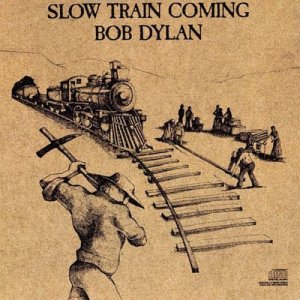 As Bob Dylan once wrote, ‘you gotta serve somebody…It may be the devil, it may be the Lord, but you gotta serve somebody’. The choice is ours one day at a time. We may choose to surrender to fear, to pride, to money, to resentment, to popularity, or we can choose to surrender to God who really cares for us. My prayer for those reading this article is that each of us may learn to slow down, let go, and let God.
 Sandy Brown and her family have just moved to Spokane, Washington where her husband, Scott, is pastoring a new church. With a fresh start, Sandy is determined to devote more time to her four children. But, within weeks of settling in their new life, the Brown family is plunged into turmoil.




 I said to the man, ‘Does God ever remind you of your earthly father?’. ‘Funny you should say that’, he said. ‘ They are just the same. They never listen and they always blow up at me.’ I went on to say, ‘What about your own mother? Does she remind you of the Virgin Mary?’ His eyes brightened up, and he said to me, ‘You must know my parents. My mother is just like the Virgin Mary. She always listens to me’.
 courage. The gift of a healthy father is the gift of being willing to lay down our lives, if necessary, for our families. In this age of compromise, I give thanks for my own father who has not been afraid to stand up for his family and his convictions.
 One of the things I love the most about the North Shore is the beautiful trails that are woven throughout our area. While out walking in the trails, I asked a neighbour, ‘What is a courageous father?’ He said, ‘Someone who holds down a job and cares for his children’. Simple words, but very true.
 By the Rev. Dr. Ed Hird
 Heartfelt, non-critical listening is a rare phenomenon in our fast-paced, analytical culture. Listening takes time. Listening takes energy. Listening takes courage. To be honest, it often seems a lot easier just to give them chocolates. Most of us as men know that we need to grow in the area of listening.
 you tell me?” “Well, Ed”, she said, “You weren’t listening”. Sadly, she was right. One of the dangers of listening to women is that we just might hear something that we don’t want to hear. Our equilibrium may be so unsettled that it will take us quite a while to recover.
 Another danger of listening to women is that we might have to change. None of us like being controlled. We certainly don’t like being treated like children by the key women in our lives. Sometimes we confuse our fear of change with our fear of being controlled. Without change, there is no growth. Without change, there is no future. I have found that if I am willing to change the things that I can change (which is me), then the rest of life begins to make more sense.
 block out parts of conversations that make us feel uncomfortable. Ever wonder why women get so irritated with us, as so many men are forever flicking on the TV channel changer. This filtering ability can make men look like their memories are extremely selective. As the old saying goes, the problem with men is that they never remember, and the problem with women is that they never forget.
 their actions, and ourselves by our good intentions. That is why Jesus challenged each of us to first remove the log from our eyes, before we try to do surgery on the splinter in someone else’s eye.
 the women when they shared about the risen Jesus? Not in your life. Like so many of us men today, they wrote off the women’s stories as “old wives’ tales”.
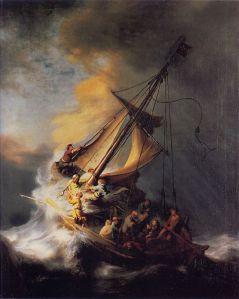 ninth child of a well-to-do couple in Leiden, Holland. While in his early 20’s, he developed an overnight celebrity status somewhat akin to the rise of the Beatles. This brief time of prosperity and popularity,however, was followed by much sorrow and rejection. Championed as the Netherlands alternative to Peter Paul Ruben in Belgium, Rembrandt became very wealthy and over-extended. Taking out an enormous mortgage on a beautiful house, he was accused of wasting his inheritance and living an indulgent lifestyle.
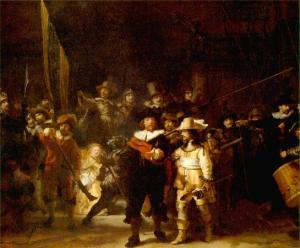 called Night Watch, was both his greatest success artistically and his worst failure relationally. While painting the Night Watch, he made many people angry who would no longer buy his paintings. The soldiers, who paid to be in the picture, all wanted to be front and centre. Instead of painting a typical group portrait, Rembrandt created a masterpiece where some soldiers were prominent and others were hardly visible.
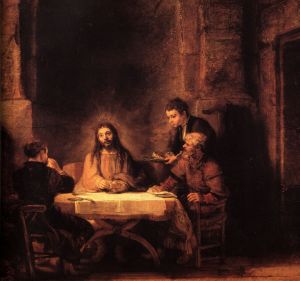 another scandal with his new housekeeper, Hendrickje Stoffels, whose pregnancy scared off even more of his Dutch customers. His financial problems became so severe that in 1656 Rembrandt was declared insolvent. All of Rembrandt’s possessions, his large collection of artwork, and his house in Amsterdam were sold in three auctions during 1657 and 1658. In 1663, Hendrickje, who has been described as ‘one of the noblest souls to serve a troubled genius’, died. Five years later, Rembrandt’s hopes were again raised and then dashed when he celebrated his son Titus’ wedding, only to see him buried that same year. Only his daughter Cornelia, his daughter-in-law Magdalene van Loo, and his granddaughter Titia survived him.
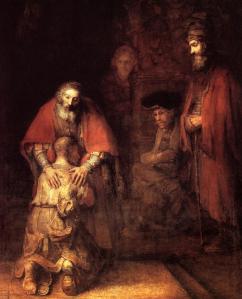 love was concentrated in the hands. When the famous author Henri Nouwen saw the Prodigal Son painting in the St Petersburg Hermitage, he was struck by the sight of “a man in a great red cloak tenderly touching the shoulders of a disheveled boy kneeling before him. I could not take my eyes away. I felt drawn by the intimacy between the two figures, the warm red of the man’s cloak, the golden yellow of the boy’s tunic, and the mysterious light engulfing them both. But, most of all, it was the hands –the old man’s hands–as they touched the boy’s shoulders that reached me in a place where I had never been reached before. …” Nouwen realized that Rembrandt must have shed many tears and died many deaths before he could have so exquisitely painted the father’s heart for his lost son. Rembrandt had once again painted himself as the Prodigal Son, but this time coming back home to his Father.
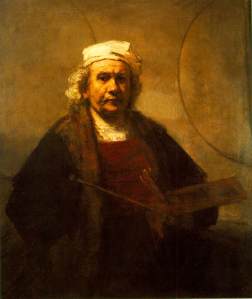 Prodigal Painter coming home to the true Father. Rembrandt knew that he had wandered a long way, but that it was never too late to return home. My prayer is that many of us may have the courage, like Rembrandt, to turn our hearts towards Home, where love and forgiveness are waiting.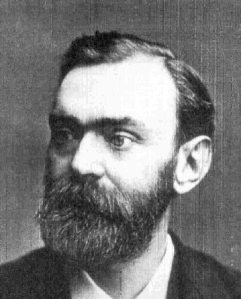
 named Dynamite, taking it from the Greek word ‘dynamos’, meaning ‘power’. World War One and Two devoured millions of lives, indirectly due to the technological advances in Alfred Nobel’s laboratories. In the past, the gunsmoke from cannons used to stop battles, because the massive clouds of smoke blocked the view of the generals.
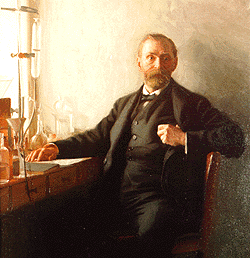 combining nitroglycerin with kieselguhr clay, Alfred created a stable, transportable explosive, which he called dynamite. England, being cultural conservative, would have nothing to do with dynamite. So instead the Scots cornered the dynamite market.
 for the Panama Canal in 1914. Sadly enough, his dynamite also blasted countless lives from 1914- to 1918, including the lives of my great-uncles William and Harry.
 fact that it is never too late to change, never too late to start again. When Alfred’s older brother Ludwig died, one newspaper accidentally printed Alfred’s obituary instead. The obituary described Alfred as a man who became rich by enabling people to kill each other in unprecedented numbers.
 intriguing people who have received the Nobel Peace Prize, and whose lives have been radically changed by that very act. The names have become part and parcel of our recent history, names like Martin Luther King Jr, Nelson Mandela, F.W. De Klerk, Albert Schweitzer, Theodore Roosevelt, Woodrow Wilson, Andrei Sakharov, Yitzhak Rabin, Mikhail Gorbachev, Elie Wiesel, Lech Walesa, Mother Teresa, Anwar Sadat, and Menachim Begin. The first Canadian to ever receive the Nobel Peace Prize was the much-loved Prime Minister Lester Pearson, for his role in helping to end the Suez Canal crisis. The first person ever to receive the Nobel Peace Prize was Jean Henri Dunant, the founder of the International Red Cross Society, back in 1901.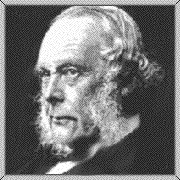
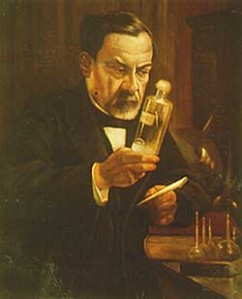 by the medical establishment. When Pasteur was publicly honoured at age 70 by his medical peers, he turned and bowed his head towards Lister, saying: “the future belongs to him who has done the most for suffering humanity.”
 gloves, nor did they cover their hair with caps or their noses and their mouths with masks. The result was that the patient was in danger of infection, not from ‘bad air’ as they thought, but from the surgeon’s hands, his clothes, his breath, and his hair. Lister had heard that ‘carbolic acid,’ a coal-tar derivative used to preserve railway tracks and ships’ timbers, was effective in treating sewage in Carlise, and in curing cattle of parasites. By cleaning wounds and dressing his patients with carbolic acid, Lister was able to keep his hospital ward in Glasgow free of infection for nine months. Lister’s cloud of carbolic spray drenched the whole area, surgeon and all, and so killed the bacteria before they had a chance to invade the wound.
 insisting for hygienic reasons that his wards should be separated from all other wards, and that they should not be shared by any other surgeon. He even had the nerve to bring his own personally trained staff with him from Edinburgh. Little by little however, Lister won the English over.
 His ‘criminal’ behaviour was none other than publishing a pamphlet urging doctors to wash their hands before surgery and to sterilize their instruments. Thirty percent of pregnant women in Paris were needlessly dying from infection during childbirth. One grief-struck husband, whose wife had just died from childbirth fever, went on a rampage and shot his doctor dead. Medical doctors rallied against Dr. Pasteur, blaming his pamphlet for the murder and claiming that Pasteur was making the practice of medicine unsafe for physicians and surgeons. “Who did Pasteur think that he was?” They said. “He isn’t even a medical doctor…just a lowly chemist”.
 countryside of Arbois, Pasteur spent the next decade researching the causes of anthrax, the black plague ravaging the sheep across France. Miraculously Pasteur invented an anthrax vaccine, which he gave freely to all farmers’ sheep in Arbois.
 The ‘great physician’ Jesus once said that if anyone wants to be first, he must become the very last, and the servant of all. Louis Pasteur was indeed the servant of all, who sacrificed his time, energy, and health so that others might live. Pasteur selflessly taught that the benefits of science are not for the scientist, but for all of humanity.
 let yourselves be tainted by a barren skepticism nor discouraged by sadness of certain hours that creep over every nation. Do not become angry at your opponents for no scientific theory has ever been accepted without opposition.’
 By the Rev. Dr. Ed Hird
 Russ Crosson, financial planner and author of A Life Well Spent, holds that the only mark that will truly last is our posterity. He defines posterity first of all as our descendants, and secondly as those individuals in whom we have significant influence. The best way, he says, to get a higher return on life is to invest in our posterity.
 that rob our investment in our posterity:
 Richard Swenson holds that our relationships are being starved to death by velocity. No one has time to listen, let alone love. Our children lay wounded on the ground, run over by our high-speed intentions.
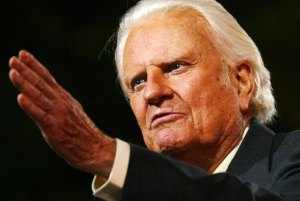 communicator, said: “The greatest mistake was taking too many speaking engagements and not spending enough time with my family.”. Life is just too short. Life is too sudden.
 family life. He quizzed his children on what they read and made up bedtime stories for them. “The thing I remember most about my father,” reflects his daughter Rebecca, “was those marvelous stories he would tell.”
 successful people. Sometimes the most successful outwardly are the most wounded inwardly, especially in one’s primary relationships. “Not the educators nor the legislators nor the scientists can give us tranquillity of heart, and without tranquillity, whatever else they give us is useless at best.” Tozer commented that in this world people are rated by what they do. They are rated according to the distance they have come up the hill of achievement.
 Sandy Brown and her family have just moved to Spokane, Washington where her husband, Scott, is pastoring a new church. With a fresh start, Sandy is determined to devote more time to her four children. But, within weeks of settling in their new life, the Brown family is plunged into turmoil.
 Dr. Swindoll met a man who told Chuck of his need to work hard at being happier. He said that he had been reared in an ultraserious home. “We didn’t talk about our feelings…we worked…Funny thing…in my sixty-plus years I have achieved about everything I dreamed of doing and I have been awarded for it. My problem is that I don’t know how to have fun and enjoy these things hard work has brought me. I cannot remember the last time I laughed–I mean really laughed.”
 and downside of our drive to achieve. Jokingly speaking of an ‘elite club’ High Achievers Anonymous, Chuck spoke compassionately about the high cost that our work addictions play in our primary relationships. The tragedy is, enough is never enough. Life becomes reduced to work, tasks, effort, an endless list of shoulds and musts…minus the necessary fun and laughter that keeps everything in perspective. Chuck says that there is always one telltale sign when pride takes charge of our life: the fun leaves.
 G.K. Chesterton also commented: “I’m all in favour of laughing. Laughter has something in common in it with the ancient winds of faith and inspiration; it unfreezes pride and unwinds secrecy; it makes men forget themselves in the presence of something greater than themselves; something that they cannot resist.”
 Edhird's Blog