I never imagined that we can grow through conflict, that we can discover greater intimacy through facing the conflicts in our lives. Many of us are conflict-phobic. Through taking a course with my doctoral advisor Dr Paddy Ducklow, I learned that conflict is not something to be avoided but rather to be celebrated. Many of us have learned from our families of origin to emotionally cut ourselves off whenever anxious situations emerge. But avoidance and emotional cutoff just make things worse.
It takes courage to face painful situations in our life, courage to listen, and courage to confront. Dr Ducklow modeled on this course a non-anxious presence that cared but did not get swallowed by people’s issues. It takes a lot of inner resilience to be able to stay present and calm when the storms of life blow in.
Jesus modeled this by how he acted on a Galilean boat during a storm. Rather than panic, he was totally relaxed and challenged his disciples to have more faith and inner peace. Then he spoke to the wind and storms, saying ‘Peace. Be still’. In the midst of our storms, Jesus is still saying ‘Peace. Be still.’
I first met Paddy Ducklow in 1972 during the Jesus Movement when millions of young people came to a personal faith in Jesus Christ. Paddy at that time was leading the youth ministry at West Vancouver Baptist Church which had between 800 to 1,000 young people attending their Sunday evening service Salt Circus. I remember attending Salt Circus. The place was electric. Paddy later founded the Burnaby Counselling Group before becoming the Senior Pastor of Burnaby Christian Fellowship. Wherever Paddy has gone, he has had a lasting impact on the lives of many, helping them to know greater intimacy and peace through Jesus Christ.
In more recent years, Paddy became the Senior Pastor of Capilano Christian Community on the North Shore, before stepping down to become the Professor of Marriage and Family at Carey Theological College on the UBC Campus. Over two years ago, I began to once again feel the call to do a part-time doctorate. E-mailing Paddy, I asked his advice as to where I might go to do my doctorate. Paddy responded, saying that he was being inducted at West Vancouver Baptist Church that very night Feb 26th 2009 as Carey Professor of Marriage and Family. I attended his induction, during which Paddy gave a hilarious talk on ‘Marriage for Dummies’. God spoke to me that evening, convincing me that I was to ‘step out of the boat’ and move forward on my doctorate. The exciting thing about the Carey Doctorate is that it is a part-time program designed specifically for full-time pastors.
I have learned and grown in so many ways at Carey. Paddy’s own Doctoral Thesis was on how we process conflict. Paddy is passionate about conflict. I did my Doctoral thesis on Strengthening Marriages, particularly looking at couple conflict and family systems theory. My vision is that many marriages will become more intimate, more life-giving as couples learn to embrace and celebrate the inevitable conflicts in their lives. I dream of couples who, instead of emotionally cutting off and running, choose to hang in there and learn how to really be present to each other in ways that do not take each out.
Marriages and families are worth fighting for. Marriages and families are building blocks of our very communities. It is so easy for us to take each other out and then give up on each other. My prayer for those reading this article is that we will find the strength to be ourselves, to embrace the gift of family and community, to forgive and reconcile at the deepest level.
The Rev. Dr. Ed Hird, BSW, MDiv, DMin
-previously published in the Deep Cove Crier/North Shore News
P. S. Click this Amazon link to view for free the first two chapters of our new novel Blue Sky.
“I’m afraid there’s been an accident…”
Sandy Brown and her family have just moved to Spokane, Washington where her husband, Scott, is pastoring a new church. With a fresh start, Sandy is determined to devote more time to her four children. But, within weeks of settling in their new life, the Brown family is plunged into turmoil.
Sandy receives shocking news that her children aren’t safe, which brings back haunting memories of the trauma she experienced as a girl. Then, the unthinkable happens…
A brutal attack puts Sandy on the brink of losing everything she’s loved. Her faith in God and the family she cherishes are pushed to the ultimate limit.
Is healing possible when so many loved ones are hurt? Are miracles really possible through the power of prayer? Can life return to the way it was before?
Blue Sky reveals how a mother’s most basic instinct isn’t for survival… but for family.
If you’re a fan of Karen Kingsbury, then you’ll love Blue Sky. Get your copy today on paperback or kindle.
-The sequel book Restoring Health: body, mind and spirit is available online with Amazon.com in both paperback and ebook form. Dr. JI Packer wrote the foreword, saying “I heartily commend what he has written.” The book focuses on strengthening a new generation of healthy leaders. Drawing on examples from Titus’ healthy leadership in the pirate island of Crete, it shows how we can embrace a holistically healthy life.
To receive a personally signed copy within North America, just etransfer at ed_hird@telus.net, giving your address. Cheques are also acceptable.
-Click to purchase the Companion Bible Study by Jan Cox (for the Battle of the Soul of Canada) in both paperback and Kindle on Amazon.com and Amazon.ca
-Click to purchase the Companion Bible Study by Jan Cox (for the Battle of the Soul of Canada) in both paperback and Kindle on Amazon.com and Amazon.ca
To purchase any of our six books in paperback or ebook on Amazon, just click on this link.
What a blessing to be part of our first of three Mission Trips to Rwanda. We have read so much about Rwanda, but it is another thing to actually be there.
After some initial confusion at the Kigali airport, we took a taxi to the Kigali Cathedral where we were greeted by Pastor Samuel (left), Dean of St Etienne’s Anglican Cathedral and his staff.
My wife Janice and I visited the Kigali Cathedral, the home of so many remarkable times of ministry with Archbishop Emmanuel Kolini and the new Rwandan Primate, Archbishop Onesphore Rwaje.
St Etienne’s Anglican Cathedral has been the context for many key ordinations and consecrations over the years.
As well as the seats in the Cathedral, they have an outside speaker system for overflow crowds.
Coming to Rwanda was a dream come true.
Looking out on the St Etienne’s Anglican Cathedral grounds.
Looking out on the diocesan offices.
Kigali Diocesan staff and clergy.
Touring the Milles Colline Hotel, made famous by the inaccurate ‘Hotel Rwanda’ movie.
Peace the Director of the Mothers’ Union at the Kigali Cathedral complex.
It was great to be welcomed to the Diocese of Kigali by Bishop Louis Muvunyi
On the first night in Rwanda, we stayed at the Kigali Cathedral Guest House. Being deeply jetlagged, our time clock was way out of wack, waking up at all times of the day/night.
The meals provided were very tasty. We were very careful to not eat any uncooked vegetables. I did not need a repeat of the food poisoning that I had experienced on the last day of being in Hawaii.
Pastor Samuel, the Dean of Kigali Cathedral, took us on a brief tour of Kigali City, and moved us from the more ‘rustic’ guest house on the upper Cathedral grounds to the much nicer guest house on the lower Cathedral grounds. The Cathedral grounds were relatively expansive, covering both sides of a busy University area road.
This is not an attack from an octopus from outer space, just our first mosquito net at the Kigali Cathedral guest house. As it is hotter in Kigali, I had to kill 6 buzzing mosquitoes that night just to sleep. In Kigeme,being of a higher altitude, there were many less mosquitoes.
I had a very strong sense from God that we were to purchase a guitar, then use it in the music workshops that Janice would teach, before donating it to the Kigali Cathedral. The problem was that we already had way too much luggage, including a massive duffle bag of baby clothes. The solution was to purchase it in Kigali just before we went on a ‘sardine-packed’ bus to Kigeme. A man working at the Kigali Station agreed to take me five blocks so that I could purchase this guitar for 70,000 Francs (around $105 Canadian/US). Unfortunately I forgot to purchase extra strings which I did later in Kikongoro many days later, after breaking a string on my first day in Kigeme! I was also pleased to see the Cathedral’s other guitar which had been donated by the Rev Barclay Mayo on their Mission Trip six years ago. Sadly the E-string was totally dead. But after new strings, Barclay’s guitar was in fine form. In the workshop, we taught the participants how to tune a guitar. It is amazing the difference between a guitar in tune or almost in tune.
The Cathedral had a third guitar but it was literally in three pieces. All in all, this felt as if we had obeyed the promptings of God’s still small voice. It is sometimes hard to tell whether it is God or just us.
Given the tragic genocide in Rwanda 17 years ago, it was wonderful to see how peaceful the country has become, how it is being rebuilt, and how much reconciliation has happened among people who have suffered so deeply and lost so many family and friends. It inspires me to keep short accounts with others, as we are so easily offended as Canadians, and not that good at forgiving even petty offences. “…as we forgive those who trespass against us.”
P. S. Click this Amazon link to view for free the first two chapters of our new novel Blue Sky.
“I’m afraid there’s been an accident…”
Sandy Brown and her family have just moved to Spokane, Washington where her husband, Scott, is pastoring a new church. With a fresh start, Sandy is determined to devote more time to her four children. But, within weeks of settling in their new life, the Brown family is plunged into turmoil.
Sandy receives shocking news that her children aren’t safe, which brings back haunting memories of the trauma she experienced as a girl. Then, the unthinkable happens…
A brutal attack puts Sandy on the brink of losing everything she’s loved. Her faith in God and the family she cherishes are pushed to the ultimate limit.
Is healing possible when so many loved ones are hurt? Are miracles really possible through the power of prayer? Can life return to the way it was before?
Blue Sky reveals how a mother’s most basic instinct isn’t for survival… but for family.
If you’re a fan of Karen Kingsbury, then you’ll love Blue Sky. Get your copy today on paperback or kindle.
-The sequel book Restoring Health: body, mind and spirit is available online with Amazon.com in both paperback and ebook form. Dr. JI Packer wrote the foreword, saying “I heartily commend what he has written.” The book focuses on strengthening a new generation of healthy leaders. Drawing on examples from Titus’ healthy leadership in the pirate island of Crete, it shows how we can embrace a holistically healthy life.
To receive a personally signed copy within North America, just etransfer at ed_hird@telus.net, giving your address. Cheques are also acceptable.
-Click to purchase the Companion Bible Study by Jan Cox (for the Battle of the Soul of Canada) in both paperback and Kindle on Amazon.com and Amazon.ca
-Click to purchase the Companion Bible Study by Jan Cox (for the Battle of the Soul of Canada) in both paperback and Kindle on Amazon.com and Amazon.ca
To purchase any of our six books in paperback or ebook on Amazon, just click on this link.
Davin and Riel were perhaps our most famous Western Canadian pioneers. Louis Riel called for the creation of a new Canadian province. Nicholas Flood Davin called for the hanging of Louis Riel. “Riel is not a hero,”[1] said Davin. “…If Riel is not hanged, then capital punishment should be abolished.”[2] Both died tragically, Riel on the end of a noose, Davin by his own hands.
Born in Kilfinane, Ireland, Davin served as a journalist in the Franco-Prussian war, seeing bodies piled six-deep.[3] Reporters in those days were often arrested as spies, being required by the governments to print false information in order to throw off the enemy. This is one of the reasons why reporters in England were not given bylines, so as to protect the freedom of the press.[4] Davin then became the editor of the new Belfast Times, but was dismissed after being so drunk that he reused his previous article from the Sheffield Times. Davin was so offended that he sued them for wrongful dismissal, demanding 5,000 pounds and being awarded only 50 pounds by the courts.[5]
Being a keen observer of social interactions, Davin surprisingly commented that ‘the pulpit occupied almost the whole ground occupied by the newspaper today…The Editor has superseded the preacher.”[6] After being commissioned by Prime Minister John A MacDonald to study the American residential schools, Davin the future federal MP wrote the infamous confidential Davin Report which resulted in our First Nations being subjected to the Residential School tragedy.[7] The indigenous people already went to day-schools run by various churches, but Davin was not satisfied, racistly saying “The child, again, who goes to a day school learns little, and what little he learns is soon forgotten, while his tastes are fashioned at home, and his inherited aversion to toil is in no way combated.”[8] Sadly both the Canadian government and the Canadian churches uncritically accepted the Davin Report claim that “it was found that the day-school did not work, because the influence of the wigwam was stronger than the influence of the school. (p. 1)”
By hastily imitating the apparent success of the American native residential schools, great and lasting harm was done. The Davin Report patronizingly said: “The experience of the United States is the same as our own as far as the adult Indian is concerned. Little can be done with him. He can be taught to do a little at farming, and at stock-raising, and to dress in a more civilized manner, but that is all.”[9] The Davin Report is ground zero to the deep wound that we inflicted on the First Nations. With Prime Minister Harper’s apology two years ago, our First Nations have only begun to recover from decades of residential school-inflicted trauma.[10] The impressive new ‘People of the Inlet’ film by the local Tsleil Waututh First Nation shows what great courage people like the late Chief Dan George showed in rebuilding his devastated people.
After serving as a reporter in Toronto, Davin became editor in 1883 of the brand-new Regina Leader newspaper.[11] My great-grandmother Mary Anderton McLean, after taking journalism at a women’s college in Kirkland Ontario, served as one of Davin’s reporters covering the Louis Riel crisis. My late Uncle Don Allen, who was passionate about history, often told us about this period, noting how sympathetic his grandmother was to Riel’s plight. Davin carried on the British tradition of not listing as a byline the names of the reporters who wrote for the Regina Leader. This was helpful for my great-grandmother Mary in protecting her from arrest by the RCMP when she snuck in disguised as a Roman Catholic priest confessor to obtain an interview with Louis Riel. Mary McLean quotes Davin “the officer in command of the LEADER (saying) ‘An interview must be had with Riel if you have to outwit the whole police force of the North-West’.”[12] Because Davin protected her anonymity, some writers like CB Koester and his fellow playwright Ken Mitchell have popularized the myth that Davin himself disguised himself as that priest.[13] While waiting for my throat operation in May 1982, I spent a week with my late Uncle Don Allen who carefully explained to me about his grandmother’s interview with Louis Riel. “When I first saw you on the trial, I loved you” was said by Riel to Mary McLean, not to the man Davin who was calling for his hanging.[14]
The November 19th 1885 edition of the Regina Leader could not be clearer that Davin himself was not the reporter who was disguised as a Roman Catholic priest. Instead Davin is described several times by the reporter as the proprietor and the editor in chief, both terms prominently displayed by Davin’s name in editions of the Regina Leader.[15] Mary McLean also writes in the article about another female reporter (code-named Saphronica) who earlier failed to get entrance, most likely referring to Kate Simpson-Hayes, Davin’s mistress.[16]
This confusing of Mary McLean’s Riel interview with Davin forced CB Koester to ‘contort himself into knots’ suggesting that for Davin, there was two Riels, one the rebel who Davin wanted to hang, and another Riel to whom Davin was compassionate.[17] Such verbal gymnastics were entirely unnecessary if one simply acknowledge that it was the female reporter, not the male editor-in-chief/proprietor, who did Riel’s final interview.
After having two children with Davin, his mistress Kate Simpson-Hayes gave the children away and became a reporter in Winnipeg.[18] When Davin then married Eliza Reid, he brought his six-year-old son Henry to live with him as a ‘nephew’, but was unable to locate his daughter.[19] In Davin and Kate’s final argument over the daughter, Kate said to him: “You go your way. I’ll go mine”, symbolically pointing to the Winnipeg Free Press building.[20] Davin was so crushed that he bought a gun and shot himself on Oct 18th 1901 at the Winnipeg Clarendon Hotel.[21]
The tragic ending to the lives of both Riel and Davin reminds us that our Canadian history has much pain and trauma which can only be resolved through reconciliation and forgiveness. May the Prince of Peace bring deep restoration to the painful wounds left by Canada’s residential school tragedy.
The Rev. Dr. Ed Hird, BSW, MDiv, DMin
-an article previously published in the Deep Cove Crier/North Shore News
-Award-winning author of Battle for the Soul of Canada (which includes five pages on Louis Riel and Mary MacFadyen McLean).
P. S. Click this Amazon link to view for free the first two chapters of our new novel Blue Sky.
“I’m afraid there’s been an accident…”
Sandy Brown and her family have just moved to Spokane, Washington where her husband, Scott, is pastoring a new church. With a fresh start, Sandy is determined to devote more time to her four children. But, within weeks of settling in their new life, the Brown family is plunged into turmoil.
Sandy receives shocking news that her children aren’t safe, which brings back haunting memories of the trauma she experienced as a girl. Then, the unthinkable happens…
A brutal attack puts Sandy on the brink of losing everything she’s loved. Her faith in God and the family she cherishes are pushed to the ultimate limit.
Is healing possible when so many loved ones are hurt? Are miracles really possible through the power of prayer? Can life return to the way it was before?
Blue Sky reveals how a mother’s most basic instinct isn’t for survival… but for family.
If you’re a fan of Karen Kingsbury, then you’ll love Blue Sky. Get your copy today on paperback or kindle.
-The sequel book Restoring Health: body, mind and spirit is available online with Amazon.com in both paperback and ebook form. Dr. JI Packer wrote the foreword, saying “I heartily commend what he has written.” The book focuses on strengthening a new generation of healthy leaders. Drawing on examples from Titus’ healthy leadership in the pirate island of Crete, it shows how we can embrace a holistically healthy life.
To receive a personally signed copy within North America, just etransfer at ed_hird@telus.net, giving your address. Cheques are also acceptable.
-Click to purchase the Companion Bible Study by Jan Cox (for the Battle of the Soul of Canada) in both paperback and Kindle on Amazon.com and Amazon.ca
-Click to purchase the Companion Bible Study by Jan Cox (for the Battle of the Soul of Canada) in both paperback and Kindle on Amazon.com and Amazon.ca
To purchase any of our six books in paperback or ebook on Amazon, just click on this link.
[1] CB Koester, Mr Davin, M.P.: a Biography of Nicholas Flood Davin, Western Producer Prairie Books, Saskatoon, Saskatchewan, 1980, p. 64
[2] Koester, p. 65, quoting the Daily Regina Leader, “Riel Agitation”, August 15th 1885
[4] Koester, p.11 “Neither of these appointments (by Davin to the Irish Times and the London Standard) can be substantiated by external evidence…it was the accepted practice for the newspapers to preserve their correspondents in dignified anonymity.”
[5] Koester, p. 16, Davin sued them for wrongful dismissal and settled for six weeks salary…He vented his anger in a letter to the News-Letter editor. Clarke, Davin’s former boss, brought a libel suit against Henderson of the News-Letter for 5000 pounds, given 50 pounds by court. Davin left unemployed at almost age 33, with his pride severely wounded.
[6] Koester, p. 31 Davin comments “No one can read the sermons of Chrysostom or Hugh Latimer, or follow the life and times of John Knox, without seeing that each of these divines was the journalist of his day. The pulpit occupied, in addition to its legitmate sphere, almost the whole ground occupied by the newspaper today…All business of life was the preacher’s domain.”
[7]http://www.canadianshakespeares.ca/a_grit.cfm “Davin also authored the invidious (and confidential) Davin Report of 1879, a study of the way in which Americans socialized young Natives in residential schools ( see http://www.turtleisland.org/resources/resources001.htm and http://www.irsr-rqpi.gc.ca/english/) . The study paved the way for Canada’s scandalously racist policies towards Native youth and their mistreatment in the Canadian Residential School system, which effectively destroyed familial relations by virtually kidnapping children to be socialized into so-called civil society, a policy that led to generations of cultural damage to First Nations peoples throughout Canada.” To read first-hand the tragic Davin Report, click on The Davin Report .
[8]http://www.canadianshakespeares.ca/a_grit.cfm “The report, archived in its entirety in the CASP Essays and Documents section, takes note of the American policy of “aggressive civilization” towards its indigenous populations, a policy implemented by the hypocritically named “Peace Commission” (after a law passed by Congress in 1869), which sought to abolish “tribal relation[s]” and to do away with communal lands while consolidating Native populations “on few reservations.”
[9] In rushing into starting native residential schools, Davin disregarded advice not only from the local Catholic hierarchy, but also from the Anglican Bishops and Metis elders. They also said ‘no’. Davin’s exploration in the USA of the allegedly successful American Carlisle School with Carl Shurz and Pratt lasted less than 72 hours before he went back by train to Winnipeg. http://www.turtleisland.org/resources/resources001.htm
[11] Koester, p. 55; p. 58 “On September 24th 1885, he was appointed a Justice of the Peace, and on January 11th 1886, he became an advocate of the North-West Territories.”
“(…)The Leader merged with another paper, the Regina Evening Post, and continued to publish daily editions of both before consolidating them under the title The Leader-Post. Other newspapers absorbed in due course by the L-P include the Regina Daily Star and The Province.” (note from Ed: Mary appeared to have also worked for the Regina Star before it was absorbed by the Regina Leader-Post); The interview published in the Nov 19th 1885 Regina Leader took place some time during the week preceding Riel’s execution on Monday, Nov 16th 1885. In ‘Execution of Riel’, Saskatchewan Herald (Battleford), Nov 23rd 1885, it is reported that the Nov 19th Regina Leader interview was held two days before the execution. (This corresponds with Louis Riel’s death on Nov 14th 1885)
[13] Koester, p. 65, p. 215; Davin the Politician, a play by Ken Mitchell, NeWest Press, Edmonton,1979, p. 7 “After smuggling himself into the condemned man’s cell dressed as a priest – a most enterprising journalistic exercise – Davin wrote of Riel as a man of ‘genius manque’ who, had he been gifted with a finer sense of judgement, might have done much for his people and for the West. On the other hand, Davin had no sympathy whatsoever with those who advocated the commutation of Riel’s sentence…” (note: CB Koester wrote this foreword to the play); Mitchell, p. 37 (excerpt from the play) “Davin puts on a dark black coat and a cross. He holds up a Bible to Saunders. Davin: Je suis Pere Andrew. L’ancien confesseur. Oui? “If I do return, we will have the interview of the century.”; Mitchell, p. 38-39 (another excerpt from the play): “Davin appears in the robe and hat, but with the addition of a false beard and a large silver crucifix…Riel: (clasping his hand): Your name is Davin!”; Mitchell, p. 42 (excerpt from the play: the final imaginary conversation as if Davin the proprietor/editor-in-chief had been the disguised ‘priest’) “Kate (to Davin): ‘The whole town can talk of nothing but your interview. The Mounties are probably on their way to arrest you.’ Davin: Let ‘em come!”
[15] Regina Leader, Nov 19th 1885, http://bit.ly/eitTWy ; In the March 31st 1885 Regina Leader Newspaper, the heading is ‘The Leader, then below it NICHOLAS FLOOD DAVIN, Editor-in-Chief’. http://bit.ly/eUhMU3 In the heading of the Thursday August 6th 1885 Leader newspaper (and every other date of which I have a zeroxed copy), it says “Nicholas Flood Davin, Proprietor and Editor”. http://bit.ly/gZvuBp The evidence is clear that Nicholas Flood Davin, being the proprietor, editor, and Editor-in-Chief, could not be the very reporter whom he commissioned to get the interview.
[16] Regina Leader, Nov 19th 1885, http://bit.ly/eitTWy ; As to why Kate Simpson-Hayes (a.k.a Mary Markwell) was code-named as Saphronica, it is quite likely a reflection of both Kate and Davin’s common involvement in plays like those by Shakespeare.
[17] Koester, p. 66 “Yet for Davin there were two Riels: the one, the rebel, the cause of death and anguish to white and Metis alike, he had condemned in the strongest language; for the other, the strange man who was the victim of his own undisciplined imagination, he felt compassion.” (quoting the Nov 18th interview as if it was done by Davin).
[18] Koester, p.122 “Davin was now in his fifties, and Kate was some fifteen years younger….Consequently the daughter (born Jan 11th 1892) was placed with a private nurse and when this proved unsatisfactory, given over to the care of nuns in a Roman Catholic orphanage at Saint Boniface, Manitoba.
[19] Koester, p. 129 “On July 25th 1895, he married Eliza Jane Reid of Ottawa…shortly after the marriage, Mr Davin’s six-year old ‘nephew’ Henry Arthur entered the Davin household. …Davin’s daughter could not be found.”
I have been planning on writing this ‘Mañana’ article for several months, but I never got around to it. Manana is a Spanish word for ‘tomorrow’. There is an old saying “Why do today what you can put off ‘till tomorrow?” Some have coined the expression “mañana disease”, which means to procrastinate and put things off until tomorrow. The term ‘procrastinate’ is literally Latin “for tomorrow (crastinus)”.
Once a year in January, many of us take time to make New Year’s Resolutions. Many of us vow to finish certain important tasks that we have been putting off. For some of us, it may be finding a new job, getting married, having a child, buying a house, earning a University degree, or restoring a broken relationship.
King Solomon 3,000 years ago had this advice for people struggling with the mañana disease: “Go to the ant, you sluggard; consider her ways and be wise.” (Proverbs 6:6)
Solomon challenges each of us to not let fear hold us back: “The sluggard says ‘there is a lion in the road, a fierce lion roaming in the streets.’ (Proverbs 26:13)
Solomon encourages us to not be arrogant and unteachable: “The sluggard is wiser in his own eyes than seven men who answer discreetly.” (Proverbs 26:16). Solomon cautions us not to become addicted to our pillows: “As a door turns on its hinges, so a sluggard turns on his bed.” (Proverbs 26:14). The ancient word for procrastination is sloth, one of the seven deadly sins. Solomon humorously points out that sloth can become so addictive that nothing gets done: “The sluggard buries his hand in the dish; he is too lazy to bring it back to his mouth.” (Proverbs 26:15).
Why do we procrastinate? I procrastinated for years in writing my second book “Battle for the Soul of Canada.”* Sometimes conquering procrastination seems like too much stress, too much work. I believe that the rise of the ‘living together’ phenomenon in our culture has a lot to do with marital procrastination, especially for men. The average age for men to be married is now 34; for women, it is 31. Many people are waiting for the perfect time to tie the knot, the perfect financial situation, perfect educational situation, perfect housing situation, perfect emotional connectedness. Perfectionism is at the core of the mañana disease. Our grandparents rarely experienced perfect lives. Somehow they were able to get married and get on with their lives.
For many men, the concept of having children is even more threatening than being married. The imagined weight of responsibility can be overwhelming. It is interesting that in the most affluent parts of the world, we are having fewer children and at a much later stage of life. The biological clock is on a collision course with the mañana disease. The irony of Quebec is that its fear of cultural extinction is now becoming a biological reality. Quebec, which had the highest birthrate, now has the lowest birthrate in North America. Mañana has real consequences.
I love the poster I saw recently of a huge polar bear lying prone on an iceberg. The caption goes: “When I get the feeling to do something, I lie down until the feeling goes away.” Charles Dickens in his famous novel David Copperfield wisely observed: “Procrastination is the thief of time.” I have found that later often means never. Life moves on. People die. People move away. Nothing on this earth is permanent.
We all mean very well in our hearts. Sometimes we fail to show it to our spouses, our children, our parents, our siblings. It is so easy to put off saying “I’m sorry. I was wrong. How can I make it up to you? I’ll try not to do that again. Will you please forgive me”. It is so easy to let relationships die because of the mañana disease.
When I first came to St. Simon’s North Vancouver, I said to our congregation: “If I haven’t offended you yet, you don’t know me well enough.” They all laughed at the time, but later found out that I was dead serious. All of us have the ability to offend others. We even have the ability to offend ourselves. Sometimes the hardest person to forgive is ourselves. Women especially are often the hardest on themselves, turning their anger inward. Perhaps conquering the mañana disease may involve looking yourself in the mirror, and with God’s help, forgiving yourself. Many people, who have been through a painful divorce or an abortion, secretly condemn themselves for years. God knows and God forgives, if we will only open our hearts to Him. Say no to the mañana disease.
In this New Year, my challenge for those reading this article to seize the day, redeem the time, forgive those who need forgiving, and get on with our life both now and for eternity. Are you ready yet to meet your Maker?
The Rev. Dr. Ed Hird, BSW, MDiv, DMin
-previously published in the North Shore News/Deep Cove Crier
P. S. Click this Amazon link to view for free the first two chapters of our new novel Blue Sky.
“I’m afraid there’s been an accident…”
Sandy Brown and her family have just moved to Spokane, Washington where her husband, Scott, is pastoring a new church. With a fresh start, Sandy is determined to devote more time to her four children. But, within weeks of settling in their new life, the Brown family is plunged into turmoil.
Sandy receives shocking news that her children aren’t safe, which brings back haunting memories of the trauma she experienced as a girl. Then, the unthinkable happens…
A brutal attack puts Sandy on the brink of losing everything she’s loved. Her faith in God and the family she cherishes are pushed to the ultimate limit.
Is healing possible when so many loved ones are hurt? Are miracles really possible through the power of prayer? Can life return to the way it was before?
Blue Sky reveals how a mother’s most basic instinct isn’t for survival… but for family.
If you’re a fan of Karen Kingsbury, then you’ll love Blue Sky. Get your copy today on paperback or kindle.
-The sequel book Restoring Health: body, mind and spirit is available online with Amazon.com in both paperback and ebook form. Dr. JI Packer wrote the foreword, saying “I heartily commend what he has written.” The book focuses on strengthening a new generation of healthy leaders. Drawing on examples from Titus’ healthy leadership in the pirate island of Crete, it shows how we can embrace a holistically healthy life.
To receive a signed copy within North America, just etransfer at ed_hird@telus.net, giving your address. Cheques are also acceptable.
-Click to purchase the Companion Bible Study by Jan Cox (for the Battle of the Soul of Canada) in both paperback and Kindle on Amazon.com and Amazon.ca
-Click to purchase the Companion Bible Study by Jan Cox (for the Battle of the Soul of Canada) in both paperback and Kindle on Amazon.com and Amazon.ca
To purchase any of our six books in paperback or ebook on Amazon, just click on this link.
Fighting makes us feel strong. Prayer reminds us that we are vulnerable. Fighting makes us feel in control. Prayer reminds us to let go and let God. Fighting feeds on anger and bitterness. Prayer feeds on forgiveness and peace.
I became a Christian 46 years ago, after 17 years of spiritual hide-and-seek. Being raised in church, I was taught to pray as a child but never really understood the intimacy of a real relationship. As a teenager, my prayer life gradually faded into non-existence. I never rejected God. I just kept God at a convenient distance without even realizing it.
God to me was not untrue, but rather irrelevant. I never rejected prayer. It just slipped off my radar screen into oblivion. I never rejected the Church. I just found it painfully boring and obscure. Though I was desperately seeking for the meaning of life, I had no idea that the Church would have anything to offer in that area.
When I was brutally attacked as a teenager by a gang member, I turned to martial arts in a secret desire for both self-defense and revenge. Fighting made me feel strong. I had no idea that prayer might turn out to be a more powerful weapon. Within a year, I came to know Jesus Christ on a personal basis, and lost the desire to get even. A few years later, I discovered that this bully had gone after someone larger than him who had kicked this bully’s teeth in and twisted a broken beer bottle in his face. Hearing that story taught me that violence always breeds violence. It was better to forgive because there is always ‘a faster gunfighter just waiting around the corner.’ Even with that realization, it still took me twenty years before I finally parted company with martial arts.
When I met Jesus Christ 46 years ago, I was flabbergasted that someone was actually listening. Prayer no longer felt like talking to the ceiling plaster. It felt personal, real, and infectious. I couldn’t get enough of connecting to this new best-friend. There had been an emptiness inside me that skiing, golfing, and parties couldn’t fill. Through prayer, I felt a new inner peace and warmth that even my former drinking buddies noticed.
Going back to church, I noticed that church wasn’t as boring as it used to be. While it may have changed, the big thing was that I had changed from the inside out. I developed a new love and concern for people that I used to avoid and even look down on. Instead of resenting life, I began to wake up looking forward to the next adventure that was ahead of me.
One of the things that troubled me though, as a new Christian, was the infighting between all the different denominations. Why couldn’t the Anglicans, Baptists, Pentecostals, Mennonites, Presbyterians, etc learn to get along and stop competing? Sometimes Christians reminded me of my old life as a non-Christian when I would rather fight than pray.
One of the wonderful gifts of serving on the North Shore from 1987 to 2018 is that denominational bickering is at an all-time low. Clergy and pastors speak well of each other’s congregations and even freely send parishioners to attend other churches. There is a generosity among North Shore pastors that allows them to bless each other instead of cursing each other.
This hasn’t happened by accident. It is the fruit of forty years of weekly prayer by the North Shore clergy, first at Hillside Baptist, then at Valley Church, and now at Sutherland Church. By praying together on the second Wednesday of each month, God has been teaching the North Shore pastors how much we need each other. North Shore Clergy have been learning that they are too busy not to pray. By focusing on Jesus Christ, they have been rediscovering that we are on the same team. Denominations are second. Jesus is first.
Every denomination has its own strengths and weaknesses. Instead of putting down another group for their flaws, we are learning to hold them up in prayer that they may become all that they are meant to be. Presbyterians don’t need to become Anglicans, and Anglicans don’t need to become Baptists. Our real calling is to love each other with the life-changing love of Jesus Christ. Many churches have formed because someone was hurt. We have been learning that it is time to forgive, time to heal, time to pray. Why fight when we can pray? My prayer for those reading this article is that we may rediscover the deep truth that the family that prays together stays together.
The Rev. Dr. Ed Hird, BSW, MDiv, DMin
-previously published in the North Shore News/Deep Cove Crier
P. S. Click this Amazon link to view for free the first two chapters of our new novel Blue Sky.
“I’m afraid there’s been an accident…”
Sandy Brown and her family have just moved to Spokane, Washington where her husband, Scott, is pastoring a new church. With a fresh start, Sandy is determined to devote more time to her four children. But, within weeks of settling in their new life, the Brown family is plunged into turmoil.
Sandy receives shocking news that her children aren’t safe, which brings back haunting memories of the trauma she experienced as a girl. Then, the unthinkable happens…
A brutal attack puts Sandy on the brink of losing everything she’s loved. Her faith in God and the family she cherishes are pushed to the ultimate limit.
Is healing possible when so many loved ones are hurt? Are miracles really possible through the power of prayer? Can life return to the way it was before?
Blue Sky reveals how a mother’s most basic instinct isn’t for survival… but for family.
If you’re a fan of Karen Kingsbury, then you’ll love Blue Sky. Get your copy today on paperback or kindle.
-The sequel book Restoring Health: body, mind and spirit is available online with Amazon.com in both paperback and ebook form. Dr. JI Packer wrote the foreword, saying “I heartily commend what he has written.” The book focuses on strengthening a new generation of healthy leaders. Drawing on examples from Titus’ healthy leadership in the pirate island of Crete, it shows how we can embrace a holistically healthy life.
To receive a signed copy within North America, just etransfer at ed_hird@telus.net, giving your address. Cheques are also acceptable.
-Click to purchase the Companion Bible Study by Jan Cox (for the Battle of the Soul of Canada) in both paperback and Kindle on Amazon.com and Amazon.ca
-Click to purchase the Companion Bible Study by Jan Cox (for the Battle of the Soul of Canada) in both paperback and Kindle on Amazon.com and Amazon.ca
To purchase any of our six books in paperback or ebook on Amazon, just click on this link.
Reflecting on what makes a marriage work, I was struck by how vital is the gift of forgiveness. My wife, by the way, is very gifted at forgiving, probably because I have given her so much practice. My wife is also very patient and persevering, as I have noticed that often in our marriage, it has taken me a while to really grow and change. The fact that she never gives up on me, and that she keeps on believing the best for me, is a wonderful gift indeed.
I recently read a fascinating book entitled ‘Men & Women: Enjoying the Differences’ by the best-selling author Dr. Larry Crabb. He commented that ‘self-centered living is the real culprit in marriages with problems. Other-centered living is the answer.’ Many of us enter marriage thinking that our spouse will meet our deepest needs. We then feel cheated when they don’t, and begin to close our hearts. How many of us enter marriage with the view that we are there to serve our spouse? How many of us see marriage as a way of serving God? A marriage where both partners are committed to serving one another, to ‘washing one another’s feet’ is a marriage in which self-centeredness gets sidelined. What will it take, says Dr. Crabb, to realize that our selfishness is without excuse and that our first job, in our friendships and marriages, is to recognize our selfishness and learn how we can change?
One thing that men and women have equally in common is that we are all equally self-centered and selfish. Little growth in marriages take place, says Dr. Crabb, until we realize that the disease of self-centeredness is fatal to our souls and marriages. Nothing exposes our self-centeredness more clearly than anger. Because our hearts are deceitful (Jeremiah 17:9), we have an amazing ability to justify our own anger and bitterness towards our spouse, while simultaneously excusing our own bad attitudes. Being angry at our spouses can be very attractive, because it makes us feel both powerful and self-righteous. Having counseled dozens of couples over the years, I am continually amazed at the self-deception of many who convince themselves that the problem is their spouse, and that their personal faults are far more minor and merely reactive. Self-centeredness is a cancer that blinds us from seeing that the problem is not merely our spouse; the problem is ourselves.
Our culture is saturated with excuses for everything. It is not my fault. It’s my spouse’s, my parent’s, my government’s, or my boss’ fault. A.A. calls that ‘stinking thinking’. Few of us are willing to do a thorough moral inventory of our own personal faults. The bible uses a short, unpopular word for self-centeredness. It calls it ‘sin’. Sin doesn’t mean that we are axe-murderers or child molesters. The heart of the word ‘sin’ is the ‘I’ at the middle. The heart of most marriage problems is self-centered sin.
Dr. E. Stanley Jones, founder of the Christian Ashram, once said that ‘there can be no love between a husband and wife unless there is mutual self-surrender. Love simply cannot spring up without that self-surrender to each other. If either withholds the self, love cannot exist.’ A man and his wife were having painful marriage difficulties. The wife went away to a Christian Ashram, and surrendered her marriage to the Lord. When she returned home, her husband said to her: ‘Well, Miss High and Mighty, what did you learn at the Ashram?’ She replied: ‘I’ve learned that I’ve been the cause of all our troubles.’ She got up from her chair, came around beside him and knelt, folded her hands and said: ‘Please forgive me. I’m the cause of all our troubles.’ At that moment, her husband nearly upset the kitchen table, while getting down on his knees beside her. He blurted out, ‘You’re not the cause of all our troubles — I am.’ There they met each other — and God. Each surrendered to Jesus, then they surrendered to each other and were free. Now this couple, instead of continually criticizing each other, are one in love and forgiveness.
My prayer for those reading this article is that many may find victory through surrender.
Dial in today to check out the online July 10th to 12th North American Christian Ashram. There is no registration cost. Donations are welcome. (If you have any trouble using Google Chrome to register, just use your mouse’s scroll button.)
The Rev. Dr. Ed Hird, BSW, MDiv, DMin
-previously published in the North Shore News/Deep Cove Crier
P. S. Click this Amazon link to view for free the first two chapters of our new novel Blue Sky.
“I’m afraid there’s been an accident…”
Sandy Brown and her family have just moved to Spokane, Washington where her husband, Scott, is pastoring a new church. With a fresh start, Sandy is determined to devote more time to her four children. But, within weeks of settling in their new life, the Brown family is plunged into turmoil.
Sandy receives shocking news that her children aren’t safe, which brings back haunting memories of the trauma she experienced as a girl. Then, the unthinkable happens…
A brutal attack puts Sandy on the brink of losing everything she’s loved. Her faith in God and the family she cherishes are pushed to the ultimate limit.
Is healing possible when so many loved ones are hurt? Are miracles really possible through the power of prayer? Can life return to the way it was before?
Blue Sky reveals how a mother’s most basic instinct isn’t for survival… but for family.
If you’re a fan of Karen Kingsbury, then you’ll love Blue Sky. Get your copy today on paperback or kindle.
-The sequel book Restoring Health: body, mind and spirit is available online with Amazon.com in both paperback and ebook form. Dr. JI Packer wrote the foreword, saying “I heartily commend what he has written.” The book focuses on strengthening a new generation of healthy leaders. Drawing on examples from Titus’ healthy leadership in the pirate island of Crete, it shows how we can embrace a holistically healthy life.
To receive a signed copy within North America, just etransfer at ed_hird@telus.net, giving your address. Cheques are also acceptable.
-Click to purchase the Companion Bible Study by Jan Cox (for the Battle of the Soul of Canada) in both paperback and Kindle on Amazon.com and Amazon.ca
-Click to purchase the Companion Bible Study by Jan Cox (for the Battle of the Soul of Canada) in both paperback and Kindle on Amazon.com and Amazon.ca
Many of our books include references to and stories about E. Stanley Jones. To purchase any of our six books in paperback or ebook on Amazon, just click on this link.
To receive a personally signed copy of any of our books within North America, just etransfer at ed_hird@telus.net, giving your address. Cheques are also acceptable.
The only thing worse than not getting your own way is actually getting it! Being both successful and miserable is one of life’s worst curses. You may remember the famous song “I Did It My Way”. There is something inside all of us that wants to do things our own way, that doesn’t like to be controlled by others. But getting my own way too often usually means winning the battle but losing the war, winning the argument but losing the intimacy, winning the contract but losing the friendship. It is legendary how many good business friendships have been sacrificed on the altar of corporate success.
All of us need close friendships, but too often our task orientation leaves us feeling detached. All of us, if married, need intimacy and vulnerability in our marriages, but our desire to “have our own space” can leave us feeling very empty and alone. All of us, if parents, want joyful, open relationships with our children, but our fear to “loosen the reins a bit” when appropriate can often drive them far away. All of us want closeness and caring in our relationships, but our need to do it our way so often leaves us in the H.A.L.T. position (H.A.L.T. – hungry, angry, lonely or tired). At such times, we are particularly vulnerable to discouragement, to wondering what it’s all about. We may be saying to ourselves, “why beat myself to be successful and accomplish all these objectives if there is no one to share it with at a really intimate, caring level?” At such a point we realize in the words of the old 1960’s song that “Freedom Is Just Another Word For Nothing Left to Lose.”
Conference speaker Patrick Tomter said a while ago that our fundamental enemy is fear (fear of losing control). This is why we tend to say “My will be done” instead of the alternative “Thy will be done”.
Tomter believes that our mission in such situations is to identify the enemy (fear) and learn to embrace it, so that it becomes a tool for our growth. Embracing fear means to stop running from our fears and start accepting fear as part of ourselves. True friendships emerge when we finally accept the other just as they are, without preconditions or stipulations. To surrender our need for our own way is to finally stop, see and hear the other person for who they really are. There is no greater gift than to be truly listened to by someone who truly accepts and cares for you. That is why people have always been so attracted to Jesus, even if they couldn’t stand the church. They have sensed that here is a friend who truly understands, truly listens, and truly cares. Friendship is about giving our heart away to another. Friendship is about the willingness to not have our own way. Friendship is about being vulnerable enough to even let the one we love, hurt us without striking back.
That is what the world’s most famous individual did as he hung on an executioner’s cross in unspeakable agony and simultaneously said “Father, forgive them for they know not what they do.” If you feel led to pray the Lord’s prayer this week, remember that to pray “Thy will be done” is both the death of the need to get your own way and the birth of a new level of friendship. Friendship in life is our deepest need: Friendship with others, and with Jesus the Source of life.
My prayer is that those reading this article may experience a new depth and reality to their friendships in the days ahead.
The Rev. Dr. Ed Hird, BSW, MDiv, DMin
-previously published in the North Shore News/Deep Cove Crier
P. S. Click this Amazon link to view for free the first two chapters of our new novel Blue Sky.
“I’m afraid there’s been an accident…”
Sandy Brown and her family have just moved to Spokane, Washington where her husband, Scott, is pastoring a new church. With a fresh start, Sandy is determined to devote more time to her four children. But, within weeks of settling in their new life, the Brown family is plunged into turmoil.
Sandy receives shocking news that her children aren’t safe, which brings back haunting memories of the trauma she experienced as a girl. Then, the unthinkable happens…
A brutal attack puts Sandy on the brink of losing everything she’s loved. Her faith in God and the family she cherishes are pushed to the ultimate limit.
Is healing possible when so many loved ones are hurt? Are miracles really possible through the power of prayer? Can life return to the way it was before?
Blue Sky reveals how a mother’s most basic instinct isn’t for survival… but for family.
If you’re a fan of Karen Kingsbury, then you’ll love Blue Sky. Get your copy today on paperback or kindle.
-The sequel book Restoring Health: body, mind and spirit is available online with Amazon.com in both paperback and ebook form. Dr. JI Packer wrote the foreword, saying “I heartily commend what he has written.” The book focuses on strengthening a new generation of healthy leaders. Drawing on examples from Titus’ healthy leadership in the pirate island of Crete, it shows how we can embrace a holistically healthy life.
To receive a signed copy within North America, just etransfer at ed_hird@telus.net, giving your address. Cheques are also acceptable.
-Click to purchase the Companion Bible Study by Jan Cox (for the Battle of the Soul of Canada) in both paperback and Kindle on Amazon.com and Amazon.ca
-Click to purchase the Companion Bible Study by Jan Cox (for the Battle of the Soul of Canada) in both paperback and Kindle on Amazon.com and Amazon.ca
To purchase any of our six books in paperback or ebook on Amazon, just click on this link.
DPM 929 ( a doctoral paper for Dr James Ponzetti submitted to Carey Theological
College)
St Jerome, translator of the Vulgate, agonized over how anger destroyed his relationship with his aunt. He wrote: “Tell me, how are we two going to face the Day of Judgement? The sun is witness that it has gone down on our anger not one day, but for many a long year.” (Ketterman, 2000) While St Jerome was obviously not married, his impassioned letter alluding to Ephesians 4:26 shows how vital it is to manage anger in marital and family conflicts.
Segrin, C. & Hanzal, A. (2009) observe that “no marital communication process has generated more scholarly interest than conflict.” This is probably because as Garland (1998) puts it, “Whatever a family’s style of communication, conflict and anger are inevitable.”
The social sciences and seminaries often function in an academic apartheid. Never the twain shall meet. Both are poorer for it. My aim with this paper is to integrate the best of the social science and theological research in how we can help our families more effectively manage anger in martial conflict situations.
It was noted in the DPM 929 class how marital conflict has had more social science attention than the anger component in marriage. Yet marital conflict involves many emotions, including both ‘hot and cold’ anger. Hebrews 12:15 describes cold anger as ‘the root of bitterness which defiles and harasses many’. Garland (1998) says that we must avoid allowing anger to take up permanent residence in our hearts. That is why anger, while encouraged in Ephesians 4:26, must be without sin or harming of others, and must not be taken to bed. Wisely Ephesians 4:26 suggests that going to sleep with unresolved anger gives a foothold for the negativity which sacramental Christians would describe in their baptism as ‘the world, the flesh and the devil.’
We know that anger can be expressed without sin because even the sinless Son of God in Mark 3:5 was legitimately angry at people’s insensitivity to others. The challenge is how in the words of James 1:19 to be slow to anger. Anger can easily take on a life of its own. Waddell (Browning, D. & Evison, I.,1998) wisely comments: “Nothing kills marital love more than hardness of heart.”
In preparing to write this essay, fifty-five books on anger and martial conflict from the Regent/Carey and the Public Libraries were either read or scanned. The overall impression is that there are a lot of angry people stuck in conflictual marriages. Greeff, A. and De Bruyne, T. (2000) observe that the ability of couples to manage marital conflict is key to the success of healthy marriages. Some of the solutions in the books were creative, but many of them after a while seemed rather repetitive and predictable. As well, around one thousand social science articles on anger and marital conflict were scanned through the UBC Library, of which one hundred and two were downloaded for closer examination. It became clear that not all articles are created equal.
Managing conflict, says Gottman (Garland, 1999), is one of the central tasks of maintaining a marriage. Gottman’s research was described both in class and in an article as the ‘Gold Standard’ of marriage research. The Gottmans (2006) recommend that we husbands need to embrace our wife’s anger and learn the meaning behind the emotion. We need to rediscover anger as a healthy emotion that has its own wisdom if we will stop being so defensive. Gottman’s evocative phrase is “Look for the longing in each other’s complaint.” Brain scans have shown us that we experience anger on the right side of the brain, unlike fear and sadness which is on the left side. While fear causes us to withdraw, anger can actually stir us to make a difference and bring constructive change. The challenge is how to harness the power of anger, much like people in BC harness the power of our mighty rivers for electricity.
Dr Gil Stieglitz, our past Coach for the Anglican Coalition in Canada, has been a major influence in helping our congregation become more proactive in strengthening and building marriages. Reminiscent of social exchange theories, Stieglitz (2004) says that love is meeting needs and that each marriage partner needs to aim to out-give the other at a 70/30 ratio. We have found his ‘Five Problems of Marriage’ videos and books to be very practical in helping our couples manage anger in marital conflicts.
Thirty-four years of ordained Anglican ministry have taught me that alcohol abuse has a huge effect on anger and marital life. Johns, A & Newcomb, M (2007) draw a strong research correlation between alcohol problems and anger-related marital conflict. Alcohol abuse has been scientifically linked with a much higher rate of physical violence during anger in marital conflict. One study quoted by Johns (2007) showed that the rate of verbal aggression was 5 to 7 times higher among such couples experiencing marital conflict. Since 1982, I have been privileged to do many AA ‘Fifth Steps’ which has convinced me that supporting people’s recovery from addiction is a key to helping them manage anger better in marital conflict. When feelings and pain are suppressed through substance abuse, the checks and balances around anger in marital conflict often disappear. The Bible describes this phenomenon in 1 Timothy 4:2 as ‘the searing of the conscience’. One of the reasons I strongly value the Twelve-Step process is not only for its helping people stop abusing substances, but also for its value in helping people manage anger and repair the damage done to marriages through past inappropriate anger.
It was reported by Vogel, D and Werner-Wilson, R (2008) that men are more likely than women to withdraw during marital conflict which results in wives feeling rejected. This withdrawal (Gottman, 2006) causes emotional distance, loneliness, and a lack of romance. Ironically this is not about the husband not caring but because his over-caring makes him so anxious (Garland, 1998). The husband’s withdrawal is associated with increases in the wife’s blood pressure, norepinephrine and cortisol, all of which are linked to poorer cardiovascular and immune outcomes (Loving, T., & Heffner, K., 2004) Cortisol is a useful hormone in the short-term ‘fight or flight’ response, but is very destructive long-term to the white T cells which fight off cancer.
Stonewalling in marital conflict (Gottman, 1999) is one of the more serious indicators of future marital collapse. Faulkner, R., & Davey, M. (2005) observe that “women have considerable tolerance for physiological arousal and, thus, can maintain high levels of engagement. Men, in contrast, experience this arousal as being highly aversive and act to dissipate it by withdrawing from the conflict”. The tendency for men to withdraw seems to be linked with the higher tendency for men to physiologically ‘flood’ during marital conflict. When the heart rate goes above 100, the ability to rationally process marital conflict significantly decreases (Gottman, 2006). Gottman recommends the strategy of an agreed-upon ‘Time-out’ until the spouses can emotionally de-escalate. This gives the wife more security and hope for resolution rather than when the husband just shuts down and goes away without any context for readdressing the conflict later. Thomas Jefferson wisely said: “When angry, count ten before you speak; if very angry, an hundred.” (Tavris, 1992)
Marital anger for women (Cox, D & Clair, S, 2005) is often experienced as a threat to intimacy and connection. This results in many women internalizing their anger in the form of self-hate, obsessive thoughts, and guilt, which paralyzes their ability to constructively make use of the emotion.
Anger, even when inappropriately processed in marital conflict, has a number of payoffs. When we are hurt or threatened by our spouse, we tend to feel helpless and weak. When the anger emotion clicks in, it can give us a surge of strength, power and control. This need for control has been linked with some of the worst of the physical violence in marriage. In the Twelve Step process, we reverse the control need by admitting in step 1 that we are powerless over our condition/addiction/marriage. ‘Letting go and letting God’ is at the heart of true recovery. I am reminded of Paul saying in 2 Corinthians 12: 9-10 that God’s grace is sufficient for him, enabling him to realizing that when he is weak, he is strong.
Anger is associated with physiological and biological transitions, with the increase of our heart rate, blood pressure, adrenaline, and noradrenaline. The instinctive, natural way to express anger, says Spielberger (APA, 2009), is to respond aggressively. Assertiveness training has been developed as a more effective way of managing marital anger than either stuffing one’s anger or dumping it on others. I have read many books on assertiveness training over the years which have been helpful but sometimes lack the needed gentleness of the ‘soft startup’ recommended by Gottman.
Much of the 1960’s counselling encouraged couples to let it all hang out and dump our anger on the other spouse. Research has shown that this actually makes things worse. Garland(1999) comments that “anger expressed in venting becomes the first step toward murder, not toward reconciliation (Matthew 5:22).” Neither blowing up or clamming up really helps us manage anger in marital conflict (Cosgrove, 1988). Tavris (1982) found that “aggression frequently has precisely the opposite effect of catharsis: instead of exorcising the anger, it can inflame it.” Many people are afraid of marital anger because of its tendency to get away on us. Plato wrote “[when reason] is asleep, then the wild beast within us, gorged on meat or drink, starts up and having shaken off sleep, goes forth to satisfy his desires; and there is no conceivable folly or crime it won’t commit.”
Lambert, N. & Dollahite, D. (2006) reported that spirituality, especially practices such as prayer between a couple, is closely linked with reduced marital conflict. The shared vision and relation virtues such as selflessness and unconditional love have been linked with better marital functioning in times of anger and conflict. Couples indicated that their involvement in scripture reading and regular church attendance increased their commitment to relational permanence. Marsh, R. and Dallos, R. (2000) found that couples were able to increase their sense of interpersonal space by detouring their anger to God in marital conflict. In my pastoral work, I have found that praying together can really help a couple, though most find such activity too intimate. It is vital that the couple do not use prayer or the bible as weapons to win a fight, but rather as a way to resolve conflict and build a healthier marriage.
Mahoney, A. & Pargament, K. ( 1999) found the benefits of spiritual involvement as a couple to include greater global marital adjustment, more perceived benefits from marriage, less marital conflict, more verbal collaboration, and less use of verbal aggression and stalemate to discuss disagreements for both wives and husbands. Before my spiritual breakthrough at age 17, I viewed marriage as just ‘a piece of paper’. Marsh, R. and Dallos, R. (2000) observe that couples who view their marriage as being a sanctified object (whom God has joined together) are more likely to act and think in ways that protect their marriage. Part of the improved handling of anger in marital conflict comes out of the religious couple’s allegiance to their meta-narrative and their God’s ethical expectations. Even after thirty-two years of marriage, I still have to resist my tendencies to selfishness and irritability. My faith is a major motivator to keep working on myself.
Lambert, N. & Dollahite, D. listed studies showing that the value of forgiveness is linked with better managing anger in marital conflict. Gordon, K. & Hughes, F. (2009) identified three elements of forgiveness:
(a) regaining a more balanced and compassionate view of the offender and the event,
(b) decreasing negative affect towards and avoidance of the offender, and
(c) giving up the right to seek revenge or lash out toward the offender.
Ketterman (2000) observes that couples who refuse to forgive pay a heavy price:
“The physical costs of unforgiveness may include hypertension, chronic headaches, high blood pressure, cardiovascular ailments, and gastrointestinal disorders, to name just a handful. Because negative emotions have a depressive effect and can suppress immune function, unforgiveness may even have an indirect link to major and severe disorders like rheumatoid arthritis and cancer.”
Jesus’ words ‘forgive and you will be forgiven’, say Ketterman, lie at the heart of marital harmony and health. She speaks both as a psychiatrist of the Christian faith and as a victim of infidelity who remarried her husband. Forgiveness is indeed a practical proven key to managing anger in martial conflict.
Another key to managing anger in marital conflict is the reduction of blaming behaviour. Gottman (1999) calls this learning how to complain without criticizing. Gottman (1999, 2006) talks about the Four Horsemen of the Apocalypse (criticism, defensiveness, contempt, and stonewalling) which are greater long-term indicators of divorce than mere anger. Research by Madden, M. & Janoff-Bulman, R. (1981) showed that blaming one’s spouse for marital conflict is negatively associated with marital satisfaction. Couples that habitually blame one another are some of the most difficult to help.
Contempt has a major impact on how we manage anger in marital conflict. Day (2003) noted how “Husbands who were more extroverted were more likely to express anger and contempt during times of relational difficulty.” Gottman (2006) defines contempt as including “hostility or disgust (rolling their eyes). Contempt often involves sarcasm, mocking, name-calling or belligerence.” Contempt is the opposite of honour and respect. Steiglitz (2004) teaches extensively in his books and videos on the need for husbands to honour their wives daily, which he defines as ‘adding value’ and ‘putting them first above our other priorities’. He also emphasizes the need for wives to respect their husbands, which he defines as ‘acknowledging value’ by ‘finding and affirming his strengths in the sea of his weaknesses.” Such acts of love go a long way in repairing the damage done through what he calls our S.A.D. (Selfish, Angry, Demanding) behaviours that we may slip into when our needs are not being met.
One of the more recent emphases in marriage research has been to study not only dysfunctional couples, but also long-term successful couples. Matthews, A. and Hubbard, M. (2004) noted one study of 576 couples who had been married for 50 years or more. The three qualities attributed to such long-term success were trust (82 percent), loving relationship (81 percent), and willingness to compromise (80 percent).
Matthews and Hubbard also noted that the individualism of North American culture militates against healthy anger management in marriage conflict. They suggest that the way forward is to rediscover a theology of marriage that focuses on the common good, the value of community, discipleship and missional orientation. Marriage, said Matthews and Hubbard, ‘must have a purpose, a goal, a task beyond ‘being together’.
Osborne (1988) insightfully noted that “Marriage is the most rewarding and the most difficult relationship known to man.” As Gottman and others have observed, no married couples have been found to be free from anger in marital conflict. Gottman (2009) commented: “when Julie and I do our workshops with couples, one of the main messages we give is that we’ve found that really good marriages, people who are really happy, have terrible fights, where they’re thinking at the end of the fight: Why did I marry this person?” Some marital problems never go away, but the wise couple doesn’t get gridlocked on these unsolvable problems. The AA Serenity Prayer expresses this wisdom of ‘the serenity to accept the things that cannot be changed.” David Mace, in Ridenour, F. (1989) notes how the Lauers studied three hundred marriages lasting fifteen years or longer. All the couples had times of anger and marital conflict. The key to these marriages was that they chose not to attack each other, but rather work on the anger. Mace (1986) compares anger to the squeak in your car’s engine that tells you it’s time for a tune-up. Anger can be your family smoke-alarm. In our DPM 929 Class, I was reminded how healthy marriages and families are foundational to the health and stability of our society
How we interpret the meaning of anger in marital conflict is just as important as the conflict itself. Lester (2003) holds that
“the hermeneutical process is central to the experience of anger. Individuals and communities decide what is threatening as they interpret life situations through the lens of their own narratives – their values, meanings, and beliefs.”
Our values and hopes for the future profoundly affect how we navigate the challenges of marital conflict. This is why Gottman, J. & Silver, N. (1999) encourage couples to explore each others’ dreams and hopes, with an aim to create shared meaning. It is important that couples in conflict do not give up on their ideals and dreams. Higher expectations for romance and passion have been linked with increased marital satisfaction. Sometimes in a desire to get along, spouses give up something essential that actually fuels the romance and passion of their lives.
Positive affect (such as humour or affection) during marital conflict was the only predictor of both marital stability and marital satisfaction 6 years after the wedding. This has also shown to be true for long-term couples dealing with conflict (Gottman, J. and Driver, J., 2004). Positive affect cannot be faked but rather cultivated over time with a series of enjoyable events. As suggested in DPM 929, a healthy marriage has learnt to celebrate the ordinary not just the extraordinary. My wife and I handle anger in marital conflict better when we take regular time together for peaceful walks, for chatting and listening, and for physical exercise.
In Gottman’s interview with Wyatt, R. (2009), he emphasizes the value of a soft-startup in managing anger in marital conflict. Many couples, commented Gottman, say to their spouses “The problem is you, and your personality, your character; you’re a screw-up.” Such personal “you message” attacks do not help couples manage anger better. Garland (1999) says the “I and we’ messages of a soft start-up are “the difference between speaking the truth (Eph 4:25) and the judging of others that Jesus warned against (Mt 7:1). Carl Roger’s active listening model has not born up under clinical research with married couples. It seems to be too demanding to expect one’s spouse to act as a detached Rogerian therapist in the midst of marital conflict (Gottman, 2006).
Anger in marital conflict is handled better when there are approximately five times as many positive behaviours as negative behaviours. Couples in crisis usually only show a corresponding ratio of 1:1 (Gottman, 1999, 2006). The need for a five to one ratio seems to come from the greater emotional impact of negative behaviours on a marriage. Garland (1998) poignantly notes that “truth, especially when it leads to conflict, must be wrapped in words and actions that build rather than tear down love for one another.”
Another well-researched principle for managing anger in marital conflict is the willingness to accept influence from one’s spouse. Gottman (2009) says “If you don’t accept some influence, then you become an obstacle and people find a way around you and you have no power.” This is an area that I have had to work on our thirty-two years of marriage. My wife reports that I have improved in this area. Sometimes it is hard to recognize our own stubbornness and defensiveness because it may be hidden in strengths like perseverance. Going for marriage counselling from time to time can be a real strength, though it is challenging to motivate both partners to be willing to go. We have many couples in our congregation whose marriages have been deeply restored through a willingness to do the hard work of going to a professional marriage counsellor. The particular clinical counsellor that we make the most use of in our church is Bonnie Chatwin who is both a nurse and a clinical counsellor trained at Trinity Western University. I have been invited in a number of times by Bonnie and the couple to co-counsel in particularly challenging situations. One of my greatest joys each Sunday is to see couples in church whose marriages were over, but they did the hard work with a counsellor that enabled them to find new ways to rebuild their marriages and to handle anger more effectively.
We have one couple in our previous congregation who were divorced for six years after an angry misunderstanding. The man kept on serving his wife in practical ways. The wife kept saying to me: “Some day I would like to marry my husband again”. Finally on Father’s Day 2002, they were both kneeling to receive communion and she said to me: “I would like to marry him again some day.” We married them that Sunday at the end of the service, and then remarried them legally later that week. I have followed up that couple with the Dr. Gil DVDs on marriage, and they are still together seven years later. This remarriage not only affected the couple but also their extended family and friends. Every restored marriage give hope to many others, especially to the younger generation that often lives together in a misguided attempt to avoid the pain of divorce.
I have seen some couples who refused counselling because they thought that it would be too expensive, only to spend far more on a divorce settlement. I can think of a case where a successful entrepreneur was so devastated by the divorce that years later, he is still trying to rebuild his life and his career. Bray, J. & Jouriles, E. (1996) confirmed that marriage counselling actually saves couples money compared to the costs of divorce and the medical costs associated with the reduced health of couples involved in marriage breakdowns. Sadly though marital counselling is cost-efficient, many insurance plans do not reimburse for martial therapy. Several couples I know have initially experienced great resistance from their insurance company over the area of paying for marriage counselling. Thankfully this was often positively resolved.
Sometimes Christian couples on the North Shore are suspicious of counselling in general, based on horror stories that they may have heard from others. Not all counselors have the same professional competence or sensitivity to the Judeo-Christian values. By the time that a man may be ready to go for counselling, the woman may have already emotionally detached years before. She may not have physically moved out, but she is no longer there. Both husbands and wives on the North Shore often stonewall each other as to whether they are willing to try out marriage counselling. Many men see counselling as an admission of weakness, neediness and failure. I see it as an act of great courage that will reap great benefits if the couple does not give up. Sometimes just when the couple are making progress in their counselling and the woman feels safe enough to finally open up, the man will pull the plug and claim that the counsellor is biased towards the wife. “I will never go back to counselling”, a man told me. “We will just live as roommates”. I encouraged this individual to rethink his stance. Because many people on the North Shore are wealthy and successful, they are used to getting their own way all the time. Dominating their spouse from a power position does not work these days, especially as women have the ability nowadays to be financially independent.
In conclusion, I am grateful for the work of Dr. Gottman and others who are offering practical social science insights as to how we can better manage our anger in marital conflict. The irony is that many of these research-based insights such as soft-startups, accepting influence, forgiveness, and positive affection all take us back to the historic Judeo-Christian teaching on marriage and healthy relationships.
Bray, J. & Jouriles, E. (1996) Treatment of Marital conflict and prevention of divorce. The American Journal of Family Therapy. 24, 461-473.
Browning, D. & Evison, I., Series Editors (1998) The Family Handbook. Louisville, Westminster John Knox Press.
Cosgrove, M. (1988) Counselling for Anger. Dallas, Word Incorporated.
Cox, D. & Clair, S. (2005).A New Perspective on Women’s Anger: Therapy Through the Lens of Anger Diversion, Women & Therapy, 28, 77-90.
Day, R. (2003) Introduction to Family Processes, New Jersey, Lawrence Earlbaum Associates.
Gottman, J. and Silver, N. (1999) The Seven Principles for Making Marriage Work. New York, Crown Publishers.
Faulkner, R., Davey, M., Davey, A. (2005) Gender-Related Predictors of Change in Marital Satisfaction and Marital Conflict. The American Journal of Family Therapy. 33, 61–83.
Garland, D. (1999) Family Ministry: a Comprehensive Guide. Downers Grove, IVP Academic.
Greeff, A. and De Bruyne, T. (2000) Conflict Management Style and Marital Satisfaction. Journal of Sex & Marital Therapy, 26, 321–334
Gordon, K., Hughes, F., Tomcik, N.,. Dixon, L., and Litzinger, S. (2009) Widening Spheres of Impact: The Role of Forgiveness in Marital and Family Functioning. Journal of Family Psychology, 23, 1–13.
Gottman, J. & Driver, J. (2004) Daily Marital Interactions and Positive Affect During
Marital Conflict Among Newlywed Couples. Seattle, Family Process, Vol. 43, 301-304
Gottman, J., Gottman, J., & DeClaire, J. (2006) 10 Lessons to Transform Your Marriage. New York, Crown Publishers.
Gottman, J. & Silver, N. (1999) The Seven Principles for Making Marriage Work. New York, Crown Publishers Inc.
Johns, A., Newcomb, M., Johnson, M., & Bradbury, T. (2007) Alcohol-related problems, anger, and marital satisfaction in monoethnic Latino, biethnic Latino, and European American newlywed couples, Journal of Social and Personal Relationships, 24, 255–275,
Ketterman, G and Hazard, D. (2000). When I can’t say “I Forgive You”, Colorado Springs, NavPress,
Lambert, N. & Dollahite, D. (2006) How Religiosity Helps Couples Prevent, Resolve, and Overcome Marital Conflict. Family Relations, 55, 439–449.
Lester, A. (2003) The Angry Christian: A Theology for Care and Counselling. Louisville,Westminster John Knox Press.
Loving, T., Heffner, K., Kiecolt-Glaser, J., Glaser, R., & Malarkey, W. (2004) Stress Hormone Changes and Marital Conflict: Spouses’ Relative Power Makes a Difference. Journal of Marriage and Family. 66, 595–612
Mace, D. & V. (1986) The Sacred Fire: Christian Marriage Through the Ages. Nashville, Abingdon Press
Madden, M. & Janoff-Bulman, R. (1981) Blame, Control, and Marital Satisfaction: Wives’ Attributions for Conflict in Marriage. Journal of Marriage and the Family, 663-674.
Mahoney, A., Pargament, K., Jewell, T., Swank, A., Scott, E., Emery, E., and Rye, M. ( 1999) Marriage and the Spiritual Realm: The Role of Proximal and Distal Religious Constructs in Marital Functioning. Journal of Family Psychology. 13, 321-338
Marsh, R. and Dallos, R. (2000)Religious Beliefs and Practices and Catholic Couples’ Management of Anger and Conflict, Clinical Psychology and Psychotherapy, 7, 22-36
Mathews, A. and Hubbard, M. (2004) Marriage Made in Eden. Grand Rapids, Baker Books.
Osborne, O. (1988) The Art of Understanding Your Mate. Grand Rapids, Zondervan.
Ridenour, F. (1989) The Marriage Collection. Grand Rapids, Zondervan.
Segrin, C., Hanzal, A., & Domschke, T. (2009) Accuracy and Bias in Newlywed Couples’ Perceptions of Conflict Styles and the Association with Marital Satisfaction. Communication Monographs. 76 , 207 — 233.
Steigltiz, G (2004) The Five Problems of Marriage, Sacramento: Faith Productions.
Tavris, C. (1982). Anger: The Misunderstood Emotion. New York: Touchstone Books.
Vogel, D., Werner-Wilson, R., Liang, K., Cutrona, C., Seeman, J., & Hackler, A. (2008)
The Relationship of Physiological Arousal with Demand and Withdraw Behavior: Examining the Accuracy of the Escape-Conditioning Hypothesis. Sex Roles, 59, 871–879.
P. S. Click this Amazon link to view for free the first two chapters of our new novel Blue Sky.
“I’m afraid there’s been an accident…”
Sandy Brown and her family have just moved to Spokane, Washington where her husband, Scott, is pastoring a new church. With a fresh start, Sandy is determined to devote more time to her four children. But, within weeks of settling in their new life, the Brown family is plunged into turmoil.
Sandy receives shocking news that her children aren’t safe, which brings back haunting memories of the trauma she experienced as a girl. Then, the unthinkable happens…
A brutal attack puts Sandy on the brink of losing everything she’s loved. Her faith in God and the family she cherishes are pushed to the ultimate limit.
Is healing possible when so many loved ones are hurt? Are miracles really possible through the power of prayer? Can life return to the way it was before?
Blue Sky reveals how a mother’s most basic instinct isn’t for survival… but for family.
If you’re a fan of Karen Kingsbury, then you’ll love Blue Sky. Get your copy today on paperback or kindle.
-The sequel book Restoring Health: body, mind and spirit is available online with Amazon.com in both paperback and ebook form. Dr. JI Packer wrote the foreword, saying “I heartily commend what he has written.” The book focuses on strengthening a new generation of healthy leaders. Drawing on examples from Titus’ healthy leadership in the pirate island of Crete, it shows how we can embrace a holistically healthy life.
To receive a signed copy within North America, just etransfer at ed_hird@telus.net, giving your address. Cheques are also acceptable.
-Click to purchase the Companion Bible Study by Jan Cox (for the Battle of the Soul of Canada) in both paperback and Kindle on Amazon.com and Amazon.ca
-Click to purchase the Companion Bible Study by Jan Cox (for the Battle of the Soul of Canada) in both paperback and Kindle on Amazon.com and Amazon.ca
To purchase any of our six books in paperback or ebook on Amazon, just click on this link.
My wife and I recently celebrated our Wedding Anniversary. How good are you at forgiving your spouse?
Reflecting on what makes a marriage work, I was struck by how vital is the gift of forgiveness. My wife, by the way, is very gifted at forgiving, probably because I have given her so much practice. My wife is also very patient and persevering, as I have noticed that often in our marriage, it has taken me a while to really grow and change. The fact that she never gives up on me, and that she keeps on believing the best for me, is a wonderful gift indeed.
A while back, I read a fascinating book entitled ‘Men & Women: Enjoying the Differences’ by the best-selling author Dr. Larry Crabb. He commented that ‘self-centered living is the real culprit in marriages with problems. Other-centered living is the answer.’
Many of us enter marriage thinking that our spouse will meet our deepest needs. We then feel cheated when they don’t, and begin to close our hearts. How many of us enter marriage with the view that we are there to serve our spouse? How many of us see marriage as a way of serving God?
A marriage where both partners are committed to serving one another, to ‘washing one another’s feet’ is a marriage in which self-centeredness gets sidelined. What will it take, says Dr. Crabb, to realize that our selfishness is without excuse and that our first job, in our friendships and marriages, is to recognize our selfishness and learn how we can change?
One thing that men and women have equally in common is that we are all equally self-centered and selfish. Little growth in marriages take place, says Dr. Crabb, until we realize that the disease of self-centeredness is fatal to our souls and marriages.
Nothing exposes our self-centeredness more clearly than anger. Because our hearts are deceitful (Jeremiah 17:9), we have an amazing ability to justify our own anger and bitterness towards our spouse, while simultaneously excusing our own bad attitudes. Being angry at our spouses can be very attractive, because it makes us feel both powerful and self-righteous.
Having coached dozens of couples over the years, I am continually amazed at the self-deception of many who convince themselves that the problem is their spouse, and that their personal faults are far more minor and merely reactive. Self-centeredness is a cancer that blinds us from seeing that the problem is not merely our spouse; the problem is ourselves. Our culture is saturated with excuses for everything. It is not my fault. It’s my spouse’s, my parent’s, my government’s, or my boss’ fault. A.A. calls that ‘stinking thinking’.
Few of us are willing to do a thorough moral inventory of our own personal faults. The bible uses a short, unpopular word for self-centeredness. It calls it ‘sin’. Sin doesn’t mean that we are axe-murderers or child molesters. The heart of the word ‘sin’ is the ‘I’ at the middle. The heart of most marriage problems is self-centered sin.
Dr. E. Stanley Jones, founder of the Christian Ashram, once said that ‘there can be no love between a husband and wife unless there is mutual self-surrender. Love simply cannot spring up without that self-surrender to each other. If either withholds the self, love cannot exist.’
A man and his wife were having painful marriage difficulties. The wife went away to a Christian Ashram, and surrendered her marriage to the Lord. When she returned home, her husband said to her: ‘Well, Miss High and Mighty, what did you learn at the Ashram?’ She replied: ‘I’ve learned that I’ve been the cause of all our troubles.’ She got up from her chair, came around beside him and knelt, folded her hands and said: ‘Please forgive me. I’m the cause of all our troubles.’
At that moment, her husband nearly upset the kitchen table, while getting down on his knees beside her. He blurted out, ‘You’re not the cause of all our troubles — I am.’ There they met each other — and God. Each surrendered to Jesus, then they surrendered to each other and were free. Now this couple, instead of continually criticizing each other, are one in love and forgiveness.
My prayer for those reading this article is that many may find victory through surrender.
-The sequel book Restoring Health: body, mind and spirit is available online with Amazon.com in both paperback and ebook form. In Canada, Amazon.ca has the book available in paperback and ebook.
To receive a signed copy within North America, just etransfer at ed_hird@telus.net, giving your address. Cheques are also acceptable.
-Click to purchase the Companion Bible Study by Jan Cox (for the Battle of the Soul of Canada) in both paperback and Kindle on Amazon.com and Amazon.ca
To purchase any of our six books in paperback or ebook on Amazon, just click on this link.
How do you feel about the world-famous Mr. Van Rijn’s paintings?
Rembrandt Harmenszoon van Rijn is one of the few men or women in history recognizable from just his first name. Others are Napoleon, Michaelangelo, and Cleopatra. Today Rembrandt is known to hundreds of millions of people in all parts of the world. Many art experts see him as the greatest of all Dutch painters, indeed as one of the greatest artists who ever lived.
By his subtle contrasts of light and dark, Rembrandt caused the people he painted to seem alive. Theatre people often call Rembrandt the Shakespeare of painting –for his capacity to probe personality, his compassion for each person he depicts, and his feeling for grasping the dramatic moment and displaying it with moving effect.
On July 15, 1606, Rembrandt was born as the ninth child of a well-to-do couple in Leiden, Holland. While in his early 20’s, he developed an overnight celebrity status somewhat akin to the rise of the Beatles. This brief time of prosperity and popularity,however, was followed by much sorrow and rejection. Championed as the Netherlands alternative to Peter Paul Ruben in Belgium, Rembrandt became very wealthy and over-extended. Taking out an enormous mortgage on a beautiful house, he was accused of wasting his inheritance and living an indulgent lifestyle.
Rembrandt responded by painting himself with his wife Saskia, as a Prodigal Son/wealthy playboy with his latest female conquest. As a young person, Rembrandt had all the attributes of the Prodigal Son: brash, overconfident, spendthrift, hedonistic, and very arrogant. Money dominated and crippled much of his life. He earned a lot; he consumed a lot; he wasted a lot. Sadly, much of his energy and talent was depleted in protracted court cases about financial disputes and bankruptcy affairs.
Rembrandt’s best-known painting, the so-called Night Watch, was both his greatest success artistically and his worst failure relationally. While painting the Night Watch, he made many people angry who would no longer buy his paintings. The soldiers, who paid to be in the picture, all wanted to be front and centre. Instead of painting a typical group portrait, Rembrandt created a masterpiece where some soldiers were prominent and others were hardly visible.
Around that time, his wealthy heiress wife Saskia, whom he deeply loved and admired, died, leaving Rembrandt to care for his nine-month-old son, Titus. Rembrandt had already lost his son Rumbartus in 1635, his first daughter Cornelia in 1638, and his second daughter Cornelia in 1640. Ten days before Saskia died, she changed her will so that Rembrandt would never be able to remarry without being disinherited.
After Saskia’s death, things worsened. Rembrandt became involved in a very unhappy relationship with his housekeeper, Geertje Dircx. When he refused to marry her, she took Rembrandt to court and won a settlement. In response, Rembrandt and Geertje’s own brother had Geertje confined to an insane asylum for the next five years.
Unable to marry, he then became involved in another scandal with his new housekeeper, Hendrickje Stoffels, whose pregnancy scared off even more of his Dutch customers. His financial problems became so severe that in 1656 Rembrandt was declared insolvent. All of Rembrandt’s possessions, his large collection of artwork, and his house in Amsterdam were sold in three auctions during 1657 and 1658. In 1663, Hendrickje, who has been described as ‘one of the noblest souls to serve a troubled genius’, died. Five years later, Rembrandt’s hopes were again raised and then dashed when he celebrated his son Titus’ wedding, only to see him buried that same year. Only his daughter Cornelia, his daughter-in-law Magdalene van Loo, and his granddaughter Titia survived him.
Rembrandt became more and more fascinated with painting ‘old age’, as he felt that it often revealed the most about human nature. Bludgeoned by tragedies that might have crushed a weaker man, Rembrandt achieved a new depth to his art. Rembrandt was close to his death when he painted his Prodigal Son, seen by many as the last will and testament of a turbulent and troubled life.
In his Prodigal Son painting, the essence of love was concentrated in the hands. When the famous author Henri Nouwen saw the Prodigal Son painting in the St Petersburg Hermitage, he was struck by the sight of “a man in a great red cloak tenderly touching the shoulders of a disheveled boy kneeling before him. I could not take my eyes away. I felt drawn by the intimacy between the two figures, the warm red of the man’s cloak, the golden yellow of the boy’s tunic, and the mysterious light engulfing them both. But, most of all, it was the hands –the old man’s hands–as they touched the boy’s shoulders that reached me in a place where I had never been reached before. …” Nouwen realized that Rembrandt must have shed many tears and died many deaths before he could have so exquisitely painted the father’s heart for his lost son. Rembrandt had once again painted himself as the Prodigal Son, but this time coming back home to his Father.
Instead of the rich apparel with which the youthful Rembrandt painted himself in younger days, he now wore only a tattered undertunic covering his wasted body. The Prodigal Son, like Rembrandt, returned to the Father with nothing: his money, his health, his honour, his self-respect, his reputation…everything had been squandered (Luke 15). Yet the good news of Rembrandt’s painting was that the Father still loved him and welcomed him home unconditionally.
Rembrandt indeed saw himself as the Prodigal Painter coming home to the true Father. Rembrandt knew that he had wandered a long way, but that it was never too late to return home. My prayer is that many of us may have the courage, like Rembrandt, to turn our hearts towards Home, where love and forgiveness are waiting.
The Rev. Dr. Ed Hird, BSW, MDiv, DMin
-author of the award-winning Battle for the Soul of Canada
-previously published in the North Shore News/Deep Cove Crier
P. S. Click this Amazon link to view for free the first two chapters of our new novel Blue Sky.
“I’m afraid there’s been an accident…”
Sandy Brown and her family have just moved to Spokane, Washington where her husband, Scott, is pastoring a new church. With a fresh start, Sandy is determined to devote more time to her four children. But, within weeks of settling in their new life, the Brown family is plunged into turmoil.
Sandy receives shocking news that her children aren’t safe, which brings back haunting memories of the trauma she experienced as a girl. Then, the unthinkable happens…
A brutal attack puts Sandy on the brink of losing everything she’s loved. Her faith in God and the family she cherishes are pushed to the ultimate limit.
Is healing possible when so many loved ones are hurt? Are miracles really possible through the power of prayer? Can life return to the way it was before?
Blue Sky reveals how a mother’s most basic instinct isn’t for survival… but for family.
If you’re a fan of Karen Kingsbury, then you’ll love Blue Sky. Get your copy today on paperback or kindle.
-The sequel book Restoring Health: body, mind and spirit is available online with Amazon.com in both paperback and ebook form. Dr. JI Packer wrote the foreword, saying “I heartily commend what he has written.” The book focuses on strengthening a new generation of healthy leaders. Drawing on examples from Titus’ healthy leadership in the pirate island of Crete, it shows how we can embrace a holistically healthy life.
-Click to purchase the Companion Bible Study by Jan Cox (for the Battle of the Soul of Canada) in both paperback and Kindle on Amazon.com and Amazon.ca
-Click to purchase the Companion Bible Study by Jan Cox (for the Battle of the Soul of Canada) in both paperback and Kindle on Amazon.com and Amazon.ca
To purchase any of our six books in paperback or ebook on Amazon, just click on this link.


 Jesus modeled this by how he acted on a Galilean boat during a storm. Rather than panic, he was totally relaxed and challenged his disciples to have more faith and inner peace. Then he spoke to the wind and storms, saying ‘Peace. Be still’. In the midst of our storms, Jesus is still saying ‘Peace. Be still.’
 how to really be present to each other in ways that do not take each out.
 Sandy Brown and her family have just moved to Spokane, Washington where her husband, Scott, is pastoring a new church. With a fresh start, Sandy is determined to devote more time to her four children. But, within weeks of settling in their new life, the Brown family is plunged into turmoil.




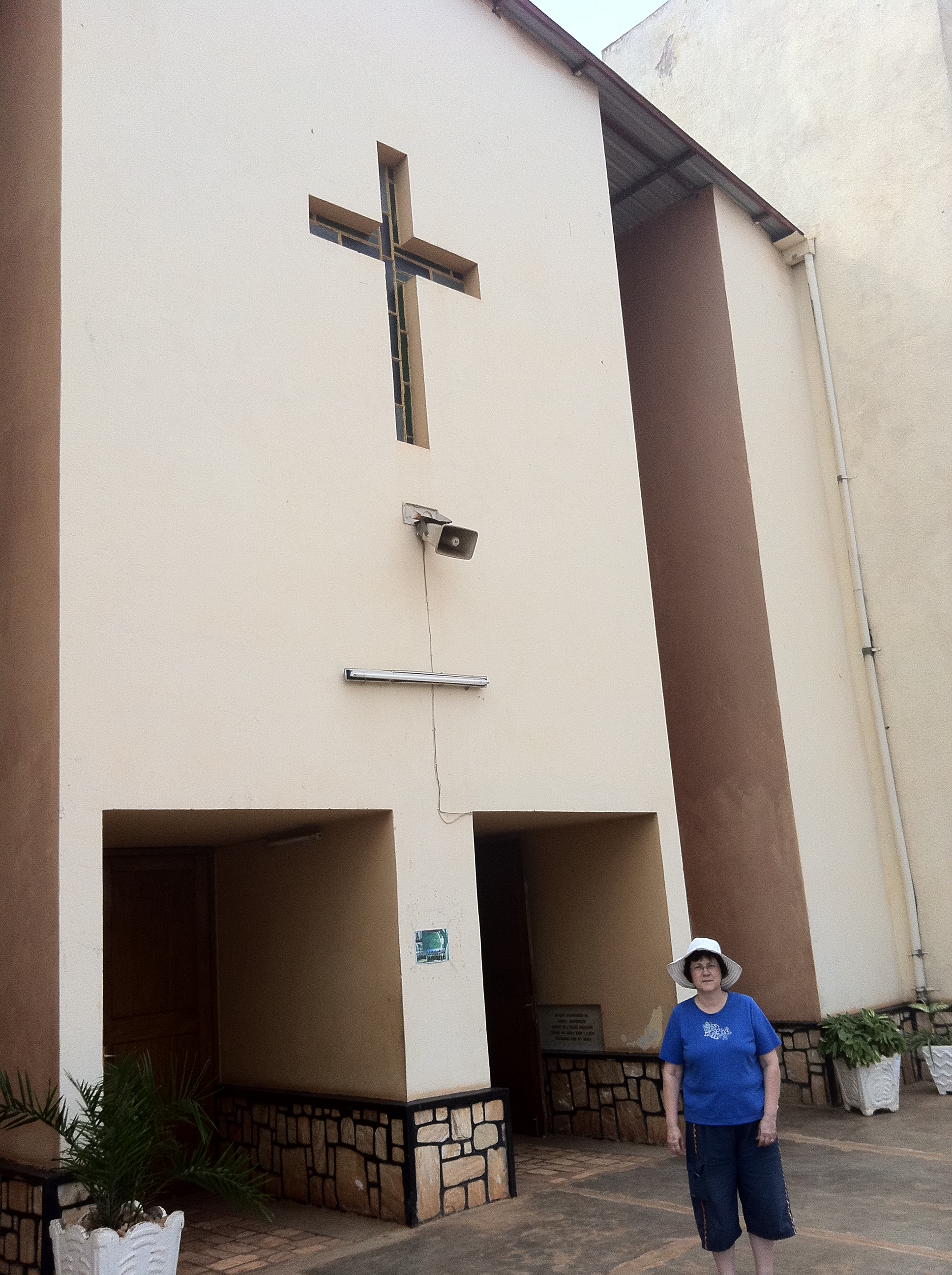

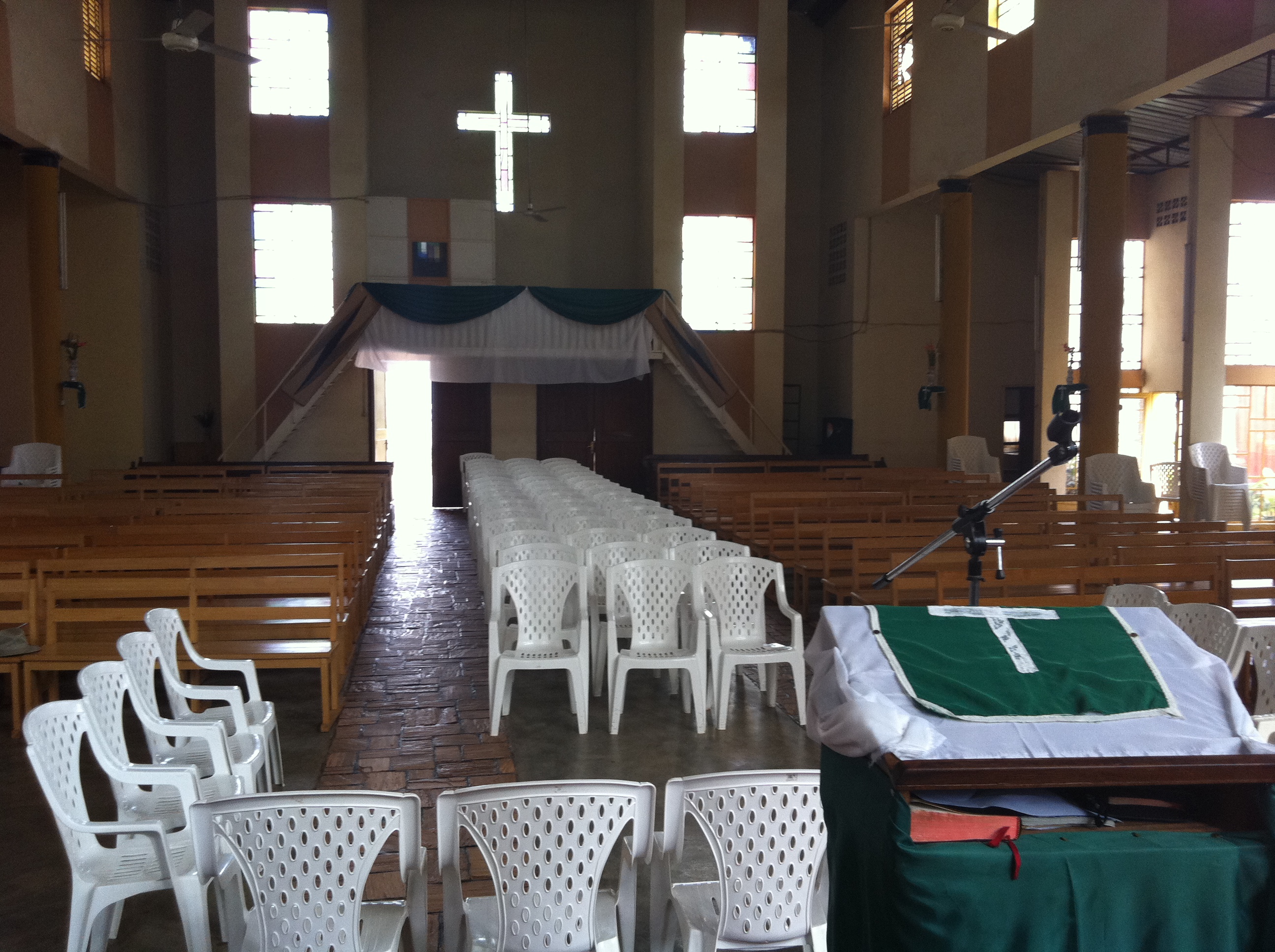
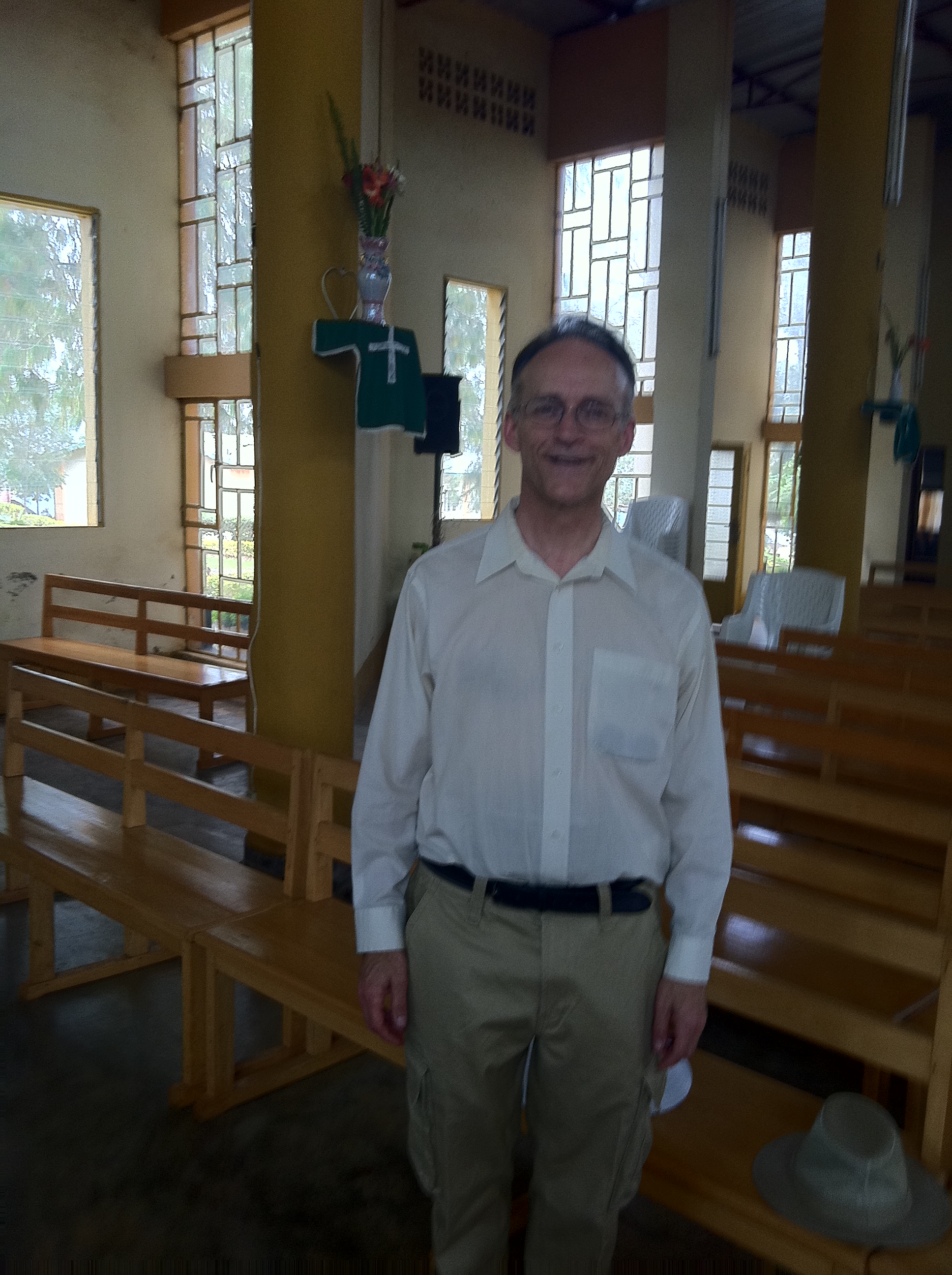




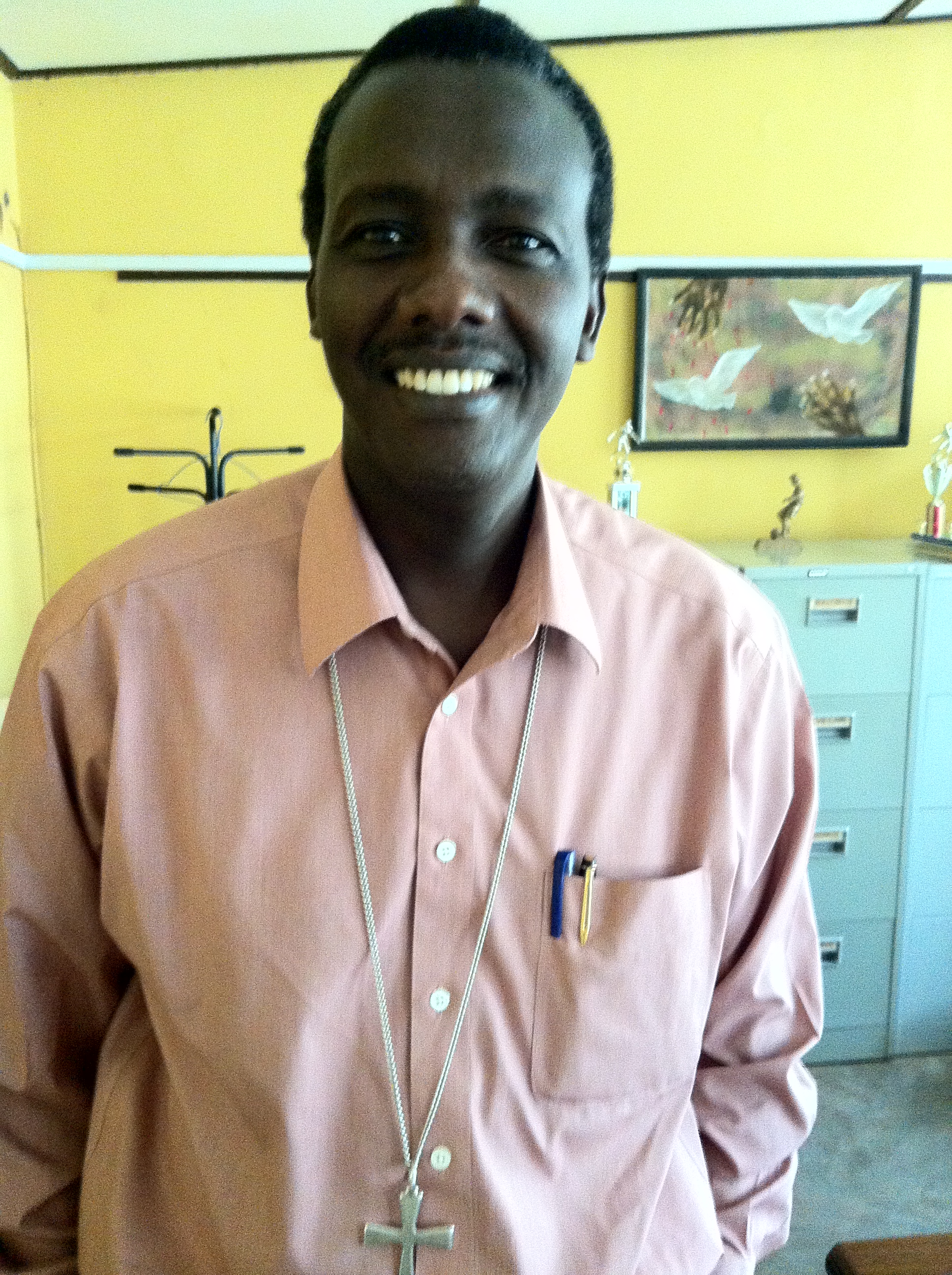







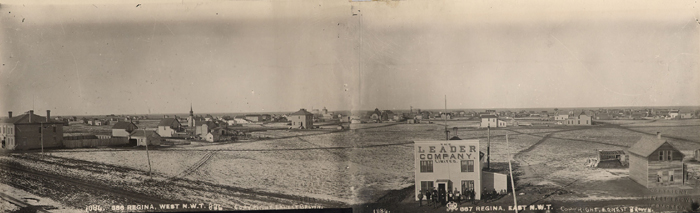
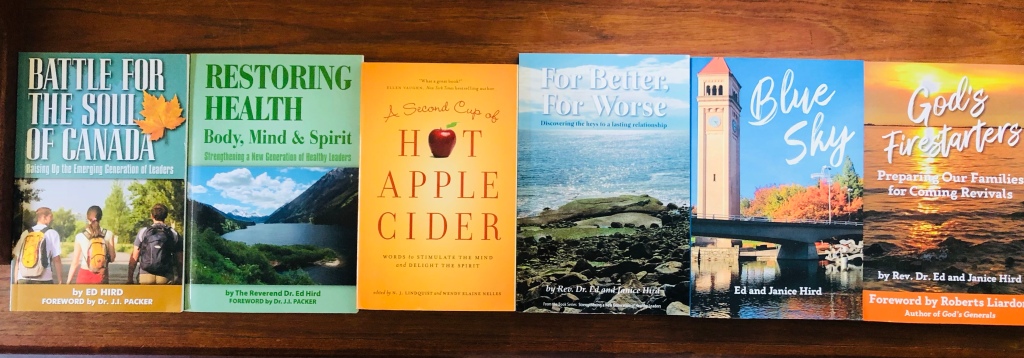




 Sandy Brown and her family have just moved to Spokane, Washington where her husband, Scott, is pastoring a new church. With a fresh start, Sandy is determined to devote more time to her four children. But, within weeks of settling in their new life, the Brown family is plunged into turmoil.


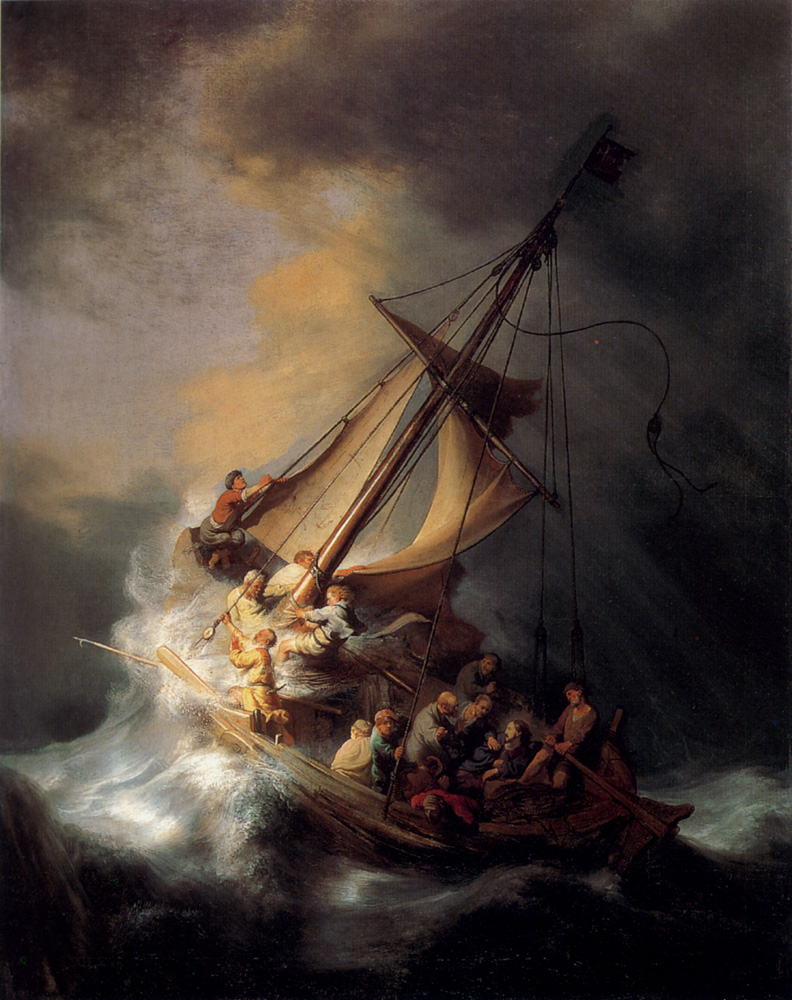

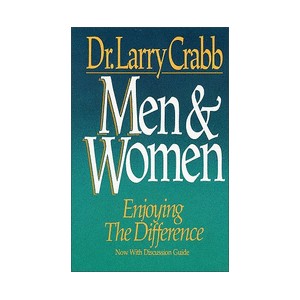
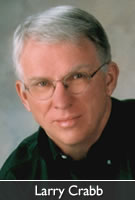

 permanent residence in our hearts. That is why anger, while encouraged in Ephesians 4:26, must be without sin or harming of others, and must not be taken to bed. Wisely Ephesians 4:26 suggests that going to sleep with unresolved anger gives a foothold for the negativity which sacramental Christians would describe in their baptism as ‘the world, the flesh and the devil.’
 was described both in class and in an article as the ‘Gold Standard’ of marriage research. The Gottmans (2006) recommend that we husbands need to embrace our wife’s anger and learn the meaning behind the emotion. We need to rediscover anger as a healthy emotion that has its own wisdom if we will stop being so defensive. Gottman’s evocative phrase is “Look for the longing in each other’s complaint.” Brain scans have shown us that we experience anger on the right side of the brain, unlike fear and sadness which is on the left side. While fear causes us to withdraw, anger can actually stir us to make a difference and bring constructive change. The challenge is how to harness the power of anger, much like people in BC harness the power of our mighty rivers for electricity.
 causes emotional distance, loneliness, and a lack of romance. Ironically this is not about the husband not caring but because his over-caring makes him so anxious (Garland, 1998). The husband’s withdrawal is associated with increases in the wife’s blood pressure, norepinephrine and cortisol, all of which are linked to poorer cardiovascular and immune outcomes (Loving, T., & Heffner, K., 2004) Cortisol is a useful hormone in the short-term ‘fight or flight’ response, but is very destructive long-term to the white T cells which fight off cancer.
 and letting God’ is at the heart of true recovery. I am reminded of Paul saying in 2 Corinthians 12: 9-10 that God’s grace is sufficient for him, enabling him to realizing that when he is weak, he is strong.
 vision and relation virtues such as selflessness and unconditional love have been linked with better marital functioning in times of anger and conflict. Couples indicated that their involvement in scripture reading and regular church attendance increased their commitment to relational permanence. Marsh, R. and Dallos, R. (2000) found that couples were able to increase their sense of interpersonal space by detouring their anger to God in marital conflict. In my pastoral work, I have found that praying together can really help a couple, though most find such activity too intimate. It is vital that the couple do not use prayer or the bible as weapons to win a fight, but rather as a way to resolve conflict and build a healthier marriage.
 forgiven’, say Ketterman, lie at the heart of marital harmony and health. She speaks both as a psychiatrist of the Christian faith and as a victim of infidelity who remarried her husband. Forgiveness is indeed a practical proven key to managing anger in martial conflict.
 individualism of North American culture militates against healthy anger management in marriage conflict. They suggest that the way forward is to rediscover a theology of marriage that focuses on the common good, the value of community, discipleship and missional orientation. Marriage, said Matthews and Hubbard, ‘must have a purpose, a goal, a task beyond ‘being together’.
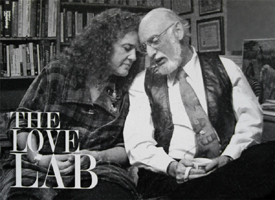 challenges of marital conflict. This is why Gottman, J. & Silver, N. (1999) encourage couples to explore each others’ dreams and hopes, with an aim to create shared meaning. It is important that couples in conflict do not give up on their ideals and dreams. Higher expectations for romance and passion have been linked with increased marital satisfaction. Sometimes in a desire to get along, spouses give up something essential that actually fuels the romance and passion of their lives.
 many positive behaviours as negative behaviours. Couples in crisis usually only show a corresponding ratio of 1:1 (Gottman, 1999, 2006). The need for a five to one ratio seems to come from the greater emotional impact of negative behaviours on a marriage. Garland (1998) poignantly notes that “truth, especially when it leads to conflict, must be wrapped in words and actions that build rather than tear down love for one another.”
 make the most use of in our church is
  avoid the pain of divorce.
 Many of us enter marriage thinking that our spouse will meet our deepest needs. We then feel cheated when they don’t, and begin to close our hearts. How many of us enter marriage with the view that we are there to serve our spouse? How many of us see marriage as a way of serving God?
 clearly than anger. Because our hearts are deceitful (Jeremiah 17:9), we have an amazing ability to justify our own anger and bitterness towards our spouse, while simultaneously excusing our own bad attitudes. Being angry at our spouses can be very attractive, because it makes us feel both powerful and self-righteous.
 Dr. E. Stanley Jones, founder of the Christian Ashram, once said that ‘there can be no love between a husband and wife unless there is mutual self-surrender. Love simply cannot spring up without that self-surrender to each other. If either withholds the self, love cannot exist.’
 -Click to check out our marriage book

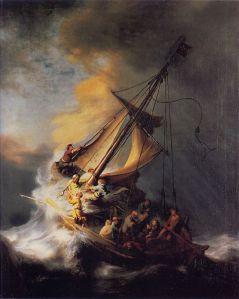 ninth child of a well-to-do couple in Leiden, Holland. While in his early 20’s, he developed an overnight celebrity status somewhat akin to the rise of the Beatles. This brief time of prosperity and popularity,however, was followed by much sorrow and rejection. Championed as the Netherlands alternative to Peter Paul Ruben in Belgium, Rembrandt became very wealthy and over-extended. Taking out an enormous mortgage on a beautiful house, he was accused of wasting his inheritance and living an indulgent lifestyle.
 called Night Watch, was both his greatest success artistically and his worst failure relationally. While painting the Night Watch, he made many people angry who would no longer buy his paintings. The soldiers, who paid to be in the picture, all wanted to be front and centre. Instead of painting a typical group portrait, Rembrandt created a masterpiece where some soldiers were prominent and others were hardly visible.
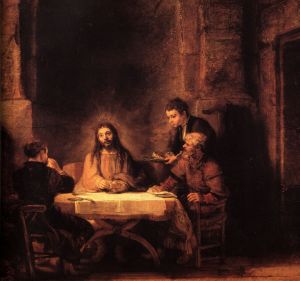 another scandal with his new housekeeper, Hendrickje Stoffels, whose pregnancy scared off even more of his Dutch customers. His financial problems became so severe that in 1656 Rembrandt was declared insolvent. All of Rembrandt’s possessions, his large collection of artwork, and his house in Amsterdam were sold in three auctions during 1657 and 1658. In 1663, Hendrickje, who has been described as ‘one of the noblest souls to serve a troubled genius’, died. Five years later, Rembrandt’s hopes were again raised and then dashed when he celebrated his son Titus’ wedding, only to see him buried that same year. Only his daughter Cornelia, his daughter-in-law Magdalene van Loo, and his granddaughter Titia survived him.
 love was concentrated in the hands. When the famous author Henri Nouwen saw the Prodigal Son painting in the St Petersburg Hermitage, he was struck by the sight of “a man in a great red cloak tenderly touching the shoulders of a disheveled boy kneeling before him. I could not take my eyes away. I felt drawn by the intimacy between the two figures, the warm red of the man’s cloak, the golden yellow of the boy’s tunic, and the mysterious light engulfing them both. But, most of all, it was the hands –the old man’s hands–as they touched the boy’s shoulders that reached me in a place where I had never been reached before. …” Nouwen realized that Rembrandt must have shed many tears and died many deaths before he could have so exquisitely painted the father’s heart for his lost son. Rembrandt had once again painted himself as the Prodigal Son, but this time coming back home to his Father.
 Prodigal Painter coming home to the true Father. Rembrandt knew that he had wandered a long way, but that it was never too late to return home. My prayer is that many of us may have the courage, like Rembrandt, to turn our hearts towards Home, where love and forgiveness are waiting.
 Edhird's Blog