There is a time in every life, comments Stephen Lawson, when all hell breaks loose. Suddenly. Unexpectedly. Cataclysmically. All hell breaks loose. One day, life is sunny. Calm. Clear. Predictable. Your job is secure. Your children behave. Your health is good. Then out of the blue, like a violent, angry thunderstorm blowing across your landscape, tragedy strikes. You’re hit hard. All hell breaks loose.
Why do bad things happen to good people? Why does tragedy strike those who love God the most? Why do the good die young? One of the most famous sufferers on Planet Earth asked all these questions. He suffered so deeply that his wife couldn’t stand it anymore. She said to her husband Job: “Curse God and die”. In other words, get it over with. It’s no use. There is no future. You could almost see Job’s wife as the first Euthanasia advocate.
Yet rather than choosing suicide, Job clung tenaciously to life. Often human tragedies like the loss of career, family, or home leads to an even greater tragedy – the denial of any meaning to life. This was the great temptation that faced Job, and that faces each of us at least once every 18 months on average.
Job went through horrendous suffering for 42 chapters, and yet he never once gave up. He was tormented by insults from his friends, harrassed by their insensitive advice and browbeaten into admitting wrongdoing that he never committed. Under attack, Job groaned, he wailed, he doubted and fell into deep depression, he lashed out like an infuriated animal….but he never cursed God. No matter how discouraged he was, he clung to his integrity. He never gave up his rock-bed conviction that he was not to blame for his terrible illness.
Thousands of years later, we contemporary, scientifically-sophisticated people are still often blaming people when they become sick. Even in the 21st century, we can too easily be just like Job’s three comforters who just made their friend feel worse. “Oh, you’re sick in hospital with cancer…Obviously you are not thinking enough positive mental thoughts, or jogging enough, or eating enough granola.” One way or another, we can slip into psychosomatically blaming others for their illnesses.
Job was covered from head to toe with putrid boils that never stopped itching. His feverish body hung limp on its frame, his eyes sank back into his head, and his ribs protruded from his skin. Job’s three friends lacked the courage to feel Job’s pain, and respond rather than just react. Job didn’t need a lecture from his three friends; he needed love. He didn’t need a sermon; he needed sympathy. He didn’t need criticism; he needed comfort. When we are struck down by tragedy, we need to know that our friends really care. And we need to know that God cares, God really listens, and God will never leave us.
Why is it that so many famous writers, poets, philosophers, and scientists have turned time and again to the book of Job? Perhaps because it easily takes its place among the masterpieces of the world’s literature.
The author of Job was a poet of rare genius who powerfully expressed our deepest feelings and thoughts. Sooner or later, we all identify with Job because suffering is part and parcel of life. We are bonded to Job through our common experience of pain. Many reject God, but no one rejects Job. Simply by suffering so greatly and hanging on for dear life through it all, Job has won our hearts.
As Stephen Lawson puts it, heaven is often silent. In such times, the only answer God gives is a deeper revelation of Himself. We learn that He is the answer we seek. Ultimately we must not trust a plan, but a Person. There is something about our questioning minds that longs for answers. If we only knew, we reason, we could handle our pain. Yet placing God’s infinite wisdom into our finite brains would be like trying to pour the Atlantic Ocean into a Dixie Cup. It just wouldn’t fit. It’s too vast and deep.
Job’s faith wavered. He mourned. He cried. He protested. He questioned. He even cursed the day of his birth. But he never cursed God. In the face of adversity, he remained firm in his only hope – God. When our world falls apart unexpectedly, we must not dwell on why but on who. Only God’s disclosure of Himself is powerful enough to heal the heart and relieve the pain.
Job in his sufferings, said Mike Mason, resembled Jesus on the cross. The only person who has ever endured more than Job was Jesus of Nazareth. We do not need to have nails driven into our hands and feet to know what a cross is. A cross is a cross. To be crushed is to be crushed, and we all have had a taste of this. Job in his suffering was looking for what could only be found in a manger, on a cross, in an empty tomb. The key to Job’s sufferings, and indeed to life itself, is the cross. Jesus did not rise above suffering; he went through it. Jesus let himself be captured by soldiers, tried by legalists and bureaucrats, condemned by a mob, scourged by mockers, and finally pinned and exhibited like a specimen insect.
No amount of suffering could shake either Jesus or Job from their rock-bottom clinging to God. Though he slay me, said Job, yet will I trust in Him This very day we can either curse God and die, or bless God and live. May we choose Life today.
-previously published in the Deep Cove Crier/North Shore News
P. S. Click this Amazon link to view for free the first two chapters of our new novel Blue Sky.
“I’m afraid there’s been an accident…”
Sandy Brown and her family have just moved to Spokane, Washington where her husband, Scott, is pastoring a new church. With a fresh start, Sandy is determined to devote more time to her four children. But, within weeks of settling in their new life, the Brown family is plunged into turmoil.
Sandy receives shocking news that her children aren’t safe, which brings back haunting memories of the trauma she experienced as a girl. Then, the unthinkable happens…
A brutal attack puts Sandy on the brink of losing everything she’s loved. Her faith in God and the family she cherishes are pushed to the ultimate limit.
Is healing possible when so many loved ones are hurt? Are miracles really possible through the power of prayer? Can life return to the way it was before?
Blue Sky reveals how a mother’s most basic instinct isn’t for survival… but for family.
If you’re a fan of Karen Kingsbury, then you’ll love Blue Sky. Get your copy today on paperback or kindle.
-The sequel book Restoring Health: body, mind and spirit is available online with Amazon.com in both paperback and ebook form. Dr. JI Packer wrote the foreword, saying “I heartily commend what he has written.” The book focuses on strengthening a new generation of healthy leaders. Drawing on examples from Titus’ healthy leadership in the pirate island of Crete, it shows how we can embrace a holistically healthy life.
To receive a signed copy within North America, just etransfer at ed_hird@telus.net, giving your address. Cheques are also acceptable.
-Click to purchase the Companion Bible Study by Jan Cox (for the Battle of the Soul of Canada) in both paperback and Kindle on Amazon.com and Amazon.ca
-Click to purchase the Companion Bible Study by Jan Cox (for the Battle of the Soul of Canada) in both paperback and Kindle on Amazon.com and Amazon.ca
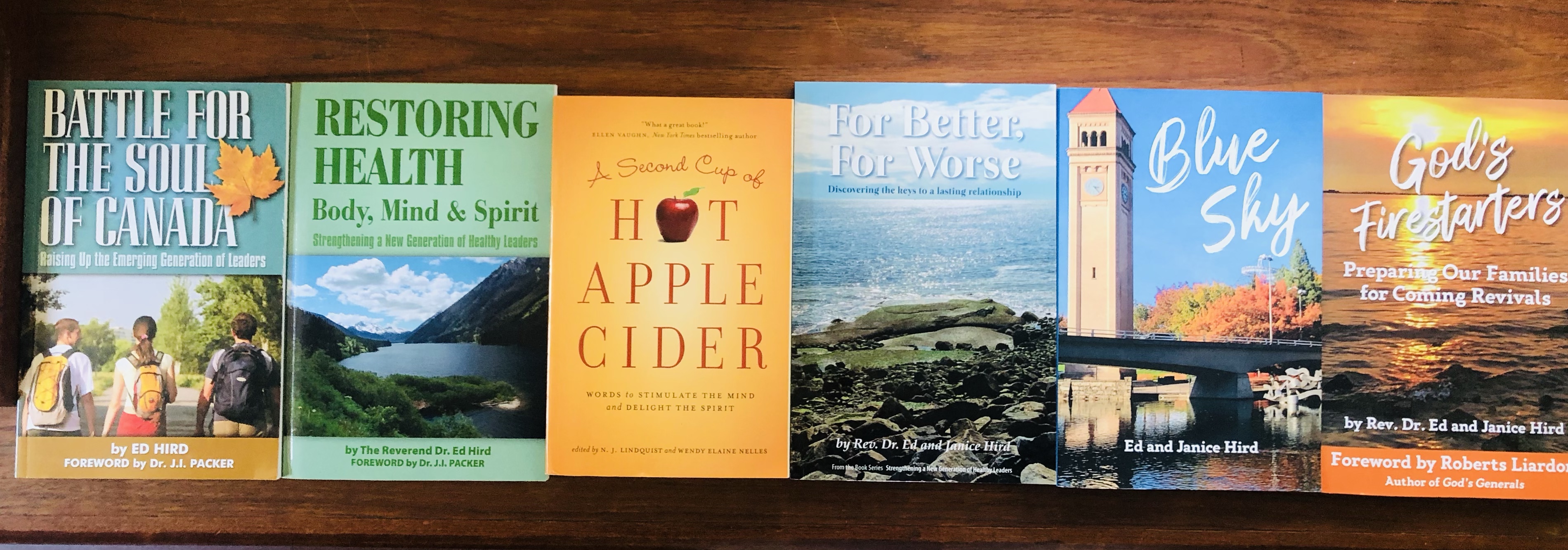
To purchase any of our six books in paperback or ebook on Amazon, just click on this link.
As a child, I read a comic book version of Don Quixote, and concluded that he was a total fool to go chasing after windmills. Years later, I’ve observed that many of us as adults end up chasing after windmills in business, politics, relationships, or sports.
One of those windmills is twisting ourselves into a knot, trying to have the perfect marriage relationship. Anne Wilson Shaef, a well-known 12-Step writer, comments that relationships are always better in the abstract, and that reality is the stuff that ruins what dreams are made of. Her counsel is that when we let go of what marriage should be and let marriage be what it is, we can have a chance for marriage to be what it can be.
If you’ve never seen the award-winning Broadway musical and Hollywood movie Man of La Mancha, I recommend that you and your spouse rent or borrow it in the near future. There is something about those songs that stir me every time I hear them, especially To Dream the Impossible Dream, Dulcinea, and Aldonza.
Peter O’toole does a brilliant performance as Don Quixote, a skinny old gentleman with wispy white hair and a care-worn face, a seeming mad-man who dreams the impossible dream of restoring love and gallantry to everyday relationships. Sophia Loren memorably lives out the character of Aldonza, a sullen and abused kitchen-wench, who is transformed into Dulcinea by Quixote’s unfailing respect.
The so-called sexual revolution of the 1960’s was supposed to remove barriers that kept people from reaching their full potential. Instead it slowly eroded an appreciation for the sanctity of the marriage relationship, and often left women more vulnerable to abuse and abandonment.
Don Quixote symbolizes a recovery of chivalry and mutual respect in the male-female relationship. Upon encountering Aldonza, Don Quixote sings: “I have dreamed thee too long, never seen thee or touched thee but know thee with all of my heart. Half a prayer, half a song, thou has always been with me, though we have always been apart, Dulcinea…Dulcinea”. Don Quixote repeatedly speaks blessing into Aldonza’s life, calling her Dulcinea (meaning sweetness).
Despite her rejection of his love, Don Quixote still keeps speaking into her life with patience and gentleness. Again and again Quixote reaffirms that the male-female marriage relationship is far more than just physical: it is a spiritual reality, an experience of one flesh intimacy.
That is why Quixote, the Man of La Mancha, sings: “I see heaven when I see thee, and thy name is like a prayer an angel whispers, Dulcinea…I have sought thee, sung thee, dreamed thee, Dulcinea”. Because of how deeply Aldonza has been hurt by other men, it seems almost impossible that she could ever learn to trust again. She struggles between the fear that Don Quixote is just an old fool and the faint hope that he might indeed be her knight in shining armour.
At one point in the movie, Quixote’s relatives try to take him away from Aldonza, claiming that he is mad. The priest pauses and says: “One might say that Jesus was mad, or St. Francis.” In one sense, Don Quixote functions as a Christ-figure, one who gives his life for others, even though dismissed as insane by his own family (Mark 3:21). In another sense, Don Quixote symbolizes the faithful pilgrim, like Francis of Assisi, who saw so clearly through the hypocrisy of his age that he was rejected as a “fool for Christ”(1 Corinthians 4:10). Either way, Don Quixote reminds us as men that sometimes we have to humble ourselves and look foolish, if we really want our marriages to blossom.
Don Quixote was shameless in his affirming of Dulcinea. In response, she cynically said: “Your heart doesn’t know much about women”. Instead of giving up, Quixote gently responded: “Woman is the soul of man, the radiance that lights his way. Woman is glory”. Dulcinea was deeply afraid that he would just use her and discard her, like all the rest. She said to him: “What do you want of me?”
As a true errant knight, Quixote said: “I ask of my lady that I may be allowed to serve her, that I may hold her in my heart, that to her I may dedicate each victory and call upon her in defeat, and if at last I give my life, I give it in the sacred name of Dulcinea.”
Gradually Dulcinea melts in the face of Don Quixote’s gentleness and patience. She sings: “Can’t you see what your gentle insanities do to me? Rob me of anger and give me despair. Blows and abuse I can take and give back again, Tenderness I cannot bear.”
Tenderness is what we most need in our marriages today. Tenderness is what will heal the deepest wounds. Tenderness is a gift of love from the heart of Jesus himself. May Don Quixote’s gentle insanities give each of us hope for our marriages in the days and years ahead.
-previously published in the Deep Cove Crier/North Shore News
P. S. Click this Amazon link to view for free the first two chapters of our new novel Blue Sky.
“I’m afraid there’s been an accident…”
Sandy Brown and her family have just moved to Spokane, Washington where her husband, Scott, is pastoring a new church. With a fresh start, Sandy is determined to devote more time to her four children. But, within weeks of settling in their new life, the Brown family is plunged into turmoil.
Sandy receives shocking news that her children aren’t safe, which brings back haunting memories of the trauma she experienced as a girl. Then, the unthinkable happens…
A brutal attack puts Sandy on the brink of losing everything she’s loved. Her faith in God and the family she cherishes are pushed to the ultimate limit.
Is healing possible when so many loved ones are hurt? Are miracles really possible through the power of prayer? Can life return to the way it was before?
Blue Sky reveals how a mother’s most basic instinct isn’t for survival… but for family.
If you’re a fan of Karen Kingsbury, then you’ll love Blue Sky. Get your copy today on paperback or kindle.
-The sequel book Restoring Health: body, mind and spirit is available online with Amazon.com in both paperback and ebook form. Dr. JI Packer wrote the foreword, saying “I heartily commend what he has written.” The book focuses on strengthening a new generation of healthy leaders. Drawing on examples from Titus’ healthy leadership in the pirate island of Crete, it shows how we can embrace a holistically healthy life.
To receive a signed copy within North America, just etransfer at ed_hird@telus.net, giving your address. Cheques are also acceptable.
-Click to purchase the Companion Bible Study by Jan Cox (for the Battle of the Soul of Canada) in both paperback and Kindle on Amazon.com and Amazon.ca
-Click to purchase the Companion Bible Study by Jan Cox (for the Battle of the Soul of Canada) in both paperback and Kindle on Amazon.com and Amazon.ca
To purchase any of our six books in paperback or ebook on Amazon, just click on this link.
When England was facing an impossible future in 1941, Winston Churchill emerged as the dynamic visionary leader who gave the English people the courage to see their way through to victory.
Churchill has been described as the greatest statesman of the past 100 years. Others have called him the last truly great man of the western world. As Commentator Peter Graves notes, “His record of wartime heroism and peacetime leadership may never be equalled …” Churchill was born into the privileged world of British aristocracy. His father, Lord Randolph Churchill was the youngest son of the Duke of Malborough. His mother Jenny Jerome was the vivacious daughter of an American financier.
Churchill was a rising star in the Conservative Party at just age 26. He landed in hot water however for supporting free trade, at a time when the Conservatives were in a protectionist mood. Churchill then switched to the Liberal Party, becoming one of the youngest cabinet ministers ever. As president of the Board of Trade, he introduced many social reforms. Notably he eliminated sweat labour, set up labour exchanges for the unemployed, and brought in a nationwide minum wage, along with compulsory meal breaks at work. Many people don’t realize that the British owe their traditional tea breaks to Churchill!
Churchill was blamed for a disastrous WWI military expedition to the Dardanelles in Turkey, which cost the British many lives and ships. Cold-shouldered by his colleagues, he decided to fight on the Western Front. His frontline heroism earned him a reputation as a real man’s man. Churchill was then brought back into the Liberal Cabinet, until in 1924 he changed parties a second time. He returned to the Conservatives, becoming Chancellor of the Exchequer. But once again Churchill fell out of favour, and spent the next 10 years out of political office. Peter Graves commented that Churchill led a life of spectacular victories and spectacular failures.
Even in serious setbacks, however, Churchill had an amazing ability to find something encouraging. While lecturing in the States, he looked the wrong way and was run over by a New York taxicab. Instead of feeling sorry for himself, be made $5,000, while in hospital, by writing an article about what it is like to be run over by a car. A most prolific writer, Churchill once humorously commented: “I’ve written very many books. I think that by the time I was 25 years old, I’d written as many books as Moses.” His six-volume series on the 2nd World war earned him the Nobel Prize of Literature.
Written off as a has-been and a warmonger, Churchill was largely ignored as he warned England of Hitler’s aggressive military intentions. Yet as Neville Chamberlain’s appeasement policy collapsed, a nationwide campaign emerged to bring Churchill back.
On the day Chamberlain appointed him as the First Lord of the Admiralty, Churchill said: “We are fighting to save the whole world from the pestilence of Nazi tyranny.” In six months with Churchill, there were five years worth of change. He cut through all the red tape and doubled the production of aircraft needed to defend Britain.
On becoming Prime Minister, Churchill uttered those immortal words: “I have nothing to offer but blood, toil, tears and sweat .You ask what is our policy. I will say: it is to wage war by sea, land and air, with all our might and with all the strength that God can give us to wage war against a monstrous tyranny never surpassed in the darkened, lamentable catalogue of human crime …”
Churchill had an amazing gift of being able to reinspire and reinvigorate people who were close to giving up. The people of England trusted him because be didn’t hide the painful truth from them. He never gave them the impression that defeating Hitler would be quick and easy. Instead, Churchill said clearly that the English people had before them “many, many long months of struggle and of suffering.” For Churchill, the British people were a tough, robust people who would rather face an ugly truth than a beautiful deception.
His finest hour, said Martin Gilbert, was the leadership Churchill gave to Britain when it was most isolated, most threatened and most weak. Churchill’s strong dislike of bullying, unfairness and victimization helped to fuel his ironclad opposition to tyranny Peter Graves commented that if ever a man was matched to a moment, then such a man was Winston Churchill in 1940.
All around, Europe had been overrun by the Nazi warmachine, and only England still resisted. Bombarded night after night in fierce air raid attacks, Churchill the Leader ignited his country with new hope that they really had a future.
As the late Phyllis Beck, former Seniors Columnist for the Deep Cove Crier, once put it, “Churchill swayed us tremendously into believing that we were doing the right thing … that every person was needed by his country.”
May the perseverance of Winston Churchill be an inspiration to each of us in our daily struggles to do the right thing.
-previously published in the Deep Cove Crier/North Shore News
P. S. Click this Amazon link to view for free the first two chapters of our new novel Blue Sky.
“I’m afraid there’s been an accident…”
Sandy Brown and her family have just moved to Spokane, Washington where her husband, Scott, is pastoring a new church. With a fresh start, Sandy is determined to devote more time to her four children. But, within weeks of settling in their new life, the Brown family is plunged into turmoil.
Sandy receives shocking news that her children aren’t safe, which brings back haunting memories of the trauma she experienced as a girl. Then, the unthinkable happens…
A brutal attack puts Sandy on the brink of losing everything she’s loved. Her faith in God and the family she cherishes are pushed to the ultimate limit.
Is healing possible when so many loved ones are hurt? Are miracles really possible through the power of prayer? Can life return to the way it was before?
Blue Sky reveals how a mother’s most basic instinct isn’t for survival… but for family.
If you’re a fan of Karen Kingsbury, then you’ll love Blue Sky. Get your copy today on paperback or kindle.
-The sequel book Restoring Health: body, mind and spirit is available online with Amazon.com in both paperback and ebook form. Dr. JI Packer wrote the foreword, saying “I heartily commend what he has written.” The book focuses on strengthening a new generation of healthy leaders. Drawing on examples from Titus’ healthy leadership in the pirate island of Crete, it shows how we can embrace a holistically healthy life.
To receive a signed copy within North America, just etransfer at ed_hird@telus.net, giving your address. Cheques are also acceptable.
-Click to purchase the Companion Bible Study by Jan Cox (for the Battle of the Soul of Canada) in both paperback and Kindle on Amazon.com and Amazon.ca
-Click to purchase the Companion Bible Study by Jan Cox (for the Battle of the Soul of Canada) in both paperback and Kindle on Amazon.com and Amazon.ca
To purchase any of our six books in paperback or ebook on Amazon, just click on this link.
What is Love, said one anonymous blogger? “It is a wildly misunderstood although highly desirable malfunction of the heart which weakens the brain, causes eyes to sparkle, cheeks to glow, blood pressure to rise and the lips to pucker.”
Shakespeare wrote: “Love is a smoke made with the fume of sighs. Being purged, a fire sparkling in lovers’ eyes. Being vexed, a sea nourished with lovers tears. What is it else? A madness most discreet, a choking gall and a preserving sweet.”
The famous Pirate Captain Blackbeard was a firm believer in marriage. Some say that he had fourteen wives in different ports. Howard Hughes as a modern-day pirate reportedly had over 250 partners/girlfriends stashed in different locations, many which falsely believed that they were married to Hughes. Perhaps this is why Marilyn Monroe sadly commented: “A wise girl kisses but doesn’t love, listens but doesn’t believe, and leaves before she is left.”
Despite all the cynicism and marital meltdown, North Americans still spend $13 billion on Valentines Day gifts, including 200 million roses, 40 million heart-shaped candy boxes, and $3 billion on jewelry.
We live in an age when many couples wake up with each other, and then try to figure out whether or not they want a commitment. Given the ambivalent procrastination of our post-modern culture, it is not surprising that some couples are still stuck on the way to the altar even after their second child. Some want to be completely financially secure first, even to the point of having all the money for their dream Hawaii honeymoon. Without that, they say, marital commitment is just unthinkable.
The biblical position is that ‘true love waits’. The confusion of our culture does make true love wait, not for sex, but for marriage. When God’s standards for intimacy are disregarded, the look-alike solutions become more and more ambivalent. Even living together is now seen as too committed by some young couples. All this leaves many young people jaded and detached, with ever higher standards of who might ever qualify as their future marital partner.
In the movie Romancing the Stone, Joan Wilder a romance writer meets Jack Colton who violates every one of her imaginary ideas of what a real man will act like. Romancing the Stone reminds us that real romance involves the messiness and disappointments of everyday life. Dr Karl Menninger, the famous psychiatrist, said: “Love cures people, both the ones who give it and the ones who receive it.”
Years ago, I wrote a Deep Cove Crier article about Marriage Encounter in which I wrote the following words: “Inside the heart of each and every one of us there is a longing to be understood by someone who really cares. When a person is understood, he or she can put up with almost anything in the world.” Recently I discovered that those words have now been posted on hundreds of Romance websites. Why would so many Romance websites be posting my words?
My hunch, as Dr Gil Stieglitz puts it, is that one of the deepest needs of wives is to be truly understood by their husbands. Many men mistakenly think that this is impossible. It is our job as husbands to carefully study our wives that we know them even better than they may know themselves.
Dr Gil Stieglitz tells us in his video series ‘The Five Problems of Marriage’ that one of the top needs of wives is for romance, to be nurtured and pursued. Some husbands don’t realize that they still need to date their wives, even after they are finally married to them. To some men, dating their wives is unthinkable. It would be like trying to get on a bus that they are already on.
Alfred Lord Tennyson romantically wrote: “If I had a flower for every time I thought of you, I could walk in my garden forever.” Romance is not an option. It is fundamental in any healthy marriage. If we have not been romancing our wife lately, she may be suspicious of our initial efforts. It may feel like we are romancing a stone, a stony heart. That is where perseverance and gentleness are so vital in the pursuit.
My wife finds it very romantic when I take out the garbage and do the dishes. Your wife needs to know that she is the most beautiful woman on earth, that she is a precious gift of God to you. Romance is saying, like Robert Browning, to your wife: “Grow old along with me; the best is yet to be.”
The Great Physician of our souls said: “This is my commandment that you love one another. No greater love has anyone than to lay your life down for your friends. The Good Book says that he that does not love doesn’t know God, because God is love. Pearl Buck the famous novelist wrote: “Love alone could waken love.”
Why are women spending so many billions of dollars each year on romance novels? Largely because there is an unmet need in their life that only you as their husband can fully meet. Your wife is waiting for you to romance her, to win her, to woo her. What are you waiting for?
-previously published in the Deep Cove Crier/North Shore News
P. S. Click this Amazon link to view for free the first two chapters of our new novel Blue Sky.
“I’m afraid there’s been an accident…”
Sandy Brown and her family have just moved to Spokane, Washington where her husband, Scott, is pastoring a new church. With a fresh start, Sandy is determined to devote more time to her four children. But, within weeks of settling in their new life, the Brown family is plunged into turmoil.
Sandy receives shocking news that her children aren’t safe, which brings back haunting memories of the trauma she experienced as a girl. Then, the unthinkable happens…
A brutal attack puts Sandy on the brink of losing everything she’s loved. Her faith in God and the family she cherishes are pushed to the ultimate limit.
Is healing possible when so many loved ones are hurt? Are miracles really possible through the power of prayer? Can life return to the way it was before?
Blue Sky reveals how a mother’s most basic instinct isn’t for survival… but for family.
If you’re a fan of Karen Kingsbury, then you’ll love Blue Sky. Get your copy today on paperback or kindle.
-The sequel book Restoring Health: body, mind and spirit is available online with Amazon.com in both paperback and ebook form. Dr. JI Packer wrote the foreword, saying “I heartily commend what he has written.” The book focuses on strengthening a new generation of healthy leaders. Drawing on examples from Titus’ healthy leadership in the pirate island of Crete, it shows how we can embrace a holistically healthy life.
To receive a signed copy within North America, just etransfer at ed_hird@telus.net, giving your address. Cheques are also acceptable.
-Click to purchase the Companion Bible Study by Jan Cox (for the Battle of the Soul of Canada) in both paperback and Kindle on Amazon.com and Amazon.ca
-Click to purchase the Companion Bible Study by Jan Cox (for the Battle of the Soul of Canada) in both paperback and Kindle on Amazon.com and Amazon.ca
To purchase any of our six books in paperback or ebook on Amazon, just click on this link.
I remember as a young child being taught Benjamin Franklin’s proverb: ‘Early to bed, early to rise, makes a person healthy, wealthy and wise.’ As my father and I were both early to bed, early to rise, I have a lot of happy memories of time spent together around the breakfast table together at 6am.
Benjamin Franklin had the common touch. As a brilliant philosopher, he shared wisdom through short pithy sayings like ‘He that lies down with dogs shall rise up with fleas.’ Many of Franklin’s sayings are so well known that people confuse them as coming from the Bible. ‘God helps those who help themselves’ is from Benjamin Franklin, not from Jesus.
Many of his sayings were published in Poor Richard’s Almanack, a book series that has had a profound impact on North American culture and identity. Some would say that the middle class dreams and ideals can be traced back directly to Benjamin Franklin’s homespun philosophy. Many of us unknowingly quote Benjamin Franklin on a regular basis: haste makes waste; no pain, no gain; and nothing is certain but death and taxes. Most of Franklin’s sayings were about encouraging diligence, honesty, industry and temperance. Franklin saw the Judeo-Christian ethic as “the best the world ever saw or is likely to see.”
Not everyone liked Benjamin Franklin. DH Lawrence said: “I do not like him….that barbed wire moral enclosure that Poor Richard rigged up….Benjamin Franklin tried to take away my wholeness and my dark forest, my freedom.”
Benjamin Franklin’s father had intended that his son Benjamin train to be a clergyman, but lacked the resources to do so. Instead Benjamin became a printer and an inventor. Benjamin Franklin is world-famous for his kite experiments with lightning, proving that lightning was made up of electricity. Some see him as the world’s first electrician. While visiting England, he attached his latest invention, the lightning rod, to St Paul’s Cathedral. He also created hot-water pipes to warm up the chilly British House of Commons. Other significant Franklin inventions were bifocals and the Franklin stove.
Benjamin Franklin was far ahead of his time in terms of understanding workplace toxicity. As a printer, he discovered that newspaper workers were being poisoned through handling hot lead type, causing stiffness and paralysis. Franklin found out that this lead poisoning was also affecting glazers, type-founders, plumbers, potters, white-lead makers and painters.
Benjamin Franklin was so successful in business that he retired at age 42 and devoted the rest of his life to public service. He moved to England twice in order to help the relationship between England and its American colonies. While in England, Franklin wrote most of his autobiography at the home of the Bishop of St. Asaph, Jonathan Shipley. His book became the world’s most popular autobiography, and has been translated into most major languages. Franklin’s autobiography was the one book which Davy Crockett had when slaughtered at the Alamo.
Despite his being a strong Royalist, Benjamin Franklin ended up being resented by the British House of Lords who publicly humiliated him for his efforts to bring reconciliation between England and its American colonies. This was Franklin’s tipping point where he became a strong advocate for Independence. As America’s first postmaster general, Franklin was also put in charge of establishing the first US currency. In the aftermath of the Boston Tea Party, Franklin recommended that Americans give up tea drinking as a way to fund their new government. The constitution’s phrase ‘We hold these truths to be self-evident’ was the direct result of Franklin’s editing. Franklin was the only one to sign all four of the USA’s founding papers: the Declaration of Independence, the treaty with France, the peace accord with Britain, and the Constitution. His unsuccessful proposal for the American Great Seal was to have Pharaoh being swallowed by the Red Sea, along with the words ‘Rebellion to Tyrants is Obedience to God.’
Franklin’s greatest popularity was among the French who lined the streets when he entered Paris as the USA’s first foreign diplomat. The French saw him as a simple frontier sage, and promptly put his likeness everywhere, causing the French King to become very jealous. Without Franklin’s winning the moral and financial support of the French, it is doubtful that the United States would have survived.
Franklin was a very complicated, even tragic individual with strong approach/avoidance tendencies. He loved the United States but spent most of his last years in England and then France. His relations with the opposite sex were muddled and confused. He loved his wife and family but was away more than at home and suffered a painful split with his son William over politics.
Despite Franklin’s reputation as a religious skeptic, he went out of his way in his newspaper to promote the Rev George Whitfield who led North America’s first Great Awakening in 1739-1741. As a scientist, he was amazed that Whitfield’s voice could be heard without amplification by over 30,000 people at one time. Franklin published all of Whitfield’s books and posted his sermons on the front page of his Philadelphia Gazette. Whitfield wrote to Franklin, saying: “As you have made a pretty considerable progress in the mysteries of electricity, I would now humbly recommend to your diligent unprejudiced pursuit and study the mystery of the new-birth. It is a most important, interesting study, and when mastered, will richly answer and repay you for all your pains.”
After jealous clergy closed their pulpits to Whitfield, Franklin and other trustees built a large hall where Whitfield could preach. Franklin commented: “It was wonderful to see the change soon made in the manners of our inhabitants.” After the revival ended, Franklin converted the hall into the Academy of Philadelphia which later became the University of Pennsylvania.
As Governor of Pennsylvania, Franklin in 1748 proposed a day of fasting and prayer. In 1778, Franklin wrote to the French Government, saying: “Whoever shall introduce into public affairs the principals of primitive Christianity will change the face of the world.”, recommending that every French home have a Bible and newspaper, and a good school in every district.
At the 1787 American Constitutional Convention, Franklin commented: “the longer I live, the more convincing proofs I see of this truth — that God governs in the affairs of men. And if a sparrow cannot fall to the ground without His notice, is it probable that an empire can rise without His aid?” On that basis, Franklin arranged that prayers led by local clergy would be held each morning before Assembly business. Franklin said: “If I had ever before been an atheist, I should now have been convinced of the Being and government of a Deity!”
Franklin memorably commented: “Think of three things: Whence you came, where you are going, and to whom you must give account.” May each of us, like Benjamin Franklin, be willing to be accountable to God in the midst of life’s challenges.
-previously published in the Deep Cove Crier/North Shore News
P. S. Click this Amazon link to view for free the first two chapters of our new novel Blue Sky.
“I’m afraid there’s been an accident…”
Sandy Brown and her family have just moved to Spokane, Washington where her husband, Scott, is pastoring a new church. With a fresh start, Sandy is determined to devote more time to her four children. But, within weeks of settling in their new life, the Brown family is plunged into turmoil.
Sandy receives shocking news that her children aren’t safe, which brings back haunting memories of the trauma she experienced as a girl. Then, the unthinkable happens…
A brutal attack puts Sandy on the brink of losing everything she’s loved. Her faith in God and the family she cherishes are pushed to the ultimate limit.
Is healing possible when so many loved ones are hurt? Are miracles really possible through the power of prayer? Can life return to the way it was before?
Blue Sky reveals how a mother’s most basic instinct isn’t for survival… but for family.
If you’re a fan of Karen Kingsbury, then you’ll love Blue Sky. Get your copy today on paperback or kindle.
-The sequel book Restoring Health: body, mind and spirit is available online with Amazon.com in both paperback and ebook form. Dr. JI Packer wrote the foreword, saying “I heartily commend what he has written.” The book focuses on strengthening a new generation of healthy leaders. Drawing on examples from Titus’ healthy leadership in the pirate island of Crete, it shows how we can embrace a holistically healthy life.
To receive a signed copy within North America, just etransfer at ed_hird@telus.net, giving your address. Cheques are also acceptable.
-Click to purchase the Companion Bible Study by Jan Cox (for the Battle of the Soul of Canada) in both paperback and Kindle on Amazon.com and Amazon.ca
-Click to purchase the Companion Bible Study by Jan Cox (for the Battle of the Soul of Canada) in both paperback and Kindle on Amazon.com and Amazon.ca
To purchase any of our six books in paperback or ebook on Amazon, just click on this link.
Over the last number of years, I have written several articles about Baden-Powell, the remarkable founder of the world-wide Scouting and Guiding movements. Both Lord and Lady Baden-Powell were born on February 22nd, a coincidence which has led to the widespread celebrating of their lives every February with events like Parent-son banquets, church parades, and thinking days.
In thinking about Lord Baden Powell, I was struck by the unexpected similarities between Baden Powell and Winston Churchill. Both, for example, came into international recognition through their miraculous escapes and bravery in the South African Boer War. Both were courageous, determined men who inspired millions of others to try their best and to never, never give up. Admittedly, they had many differences as well. For example, Churchill lived in the world of politics and power, while Baden-Powell lived in the world of boys and backpacks. As well, Baden-Powell clearly warned against the dangers of smoking and drinking, while Churchill was famous for his cigar and glass of brandy.
At a deeper level however, their common determination and perseverance has had remarkable impact on the character development of millions. Churchill once went to a meeting of students, where he stood up and said: “Never, ever, ever, ever, ever, ever, ever, give up. Never give up. Never give up. Never give up.”. Then he sat down. In his 1937 book Great Contemporaries, Churchill included one whole chapter on Baden Powell. In describing Baden-Powell’s Scouting movement, Churchill said: “It is difficult to exaggerate the moral and mental health which our nation had derived from this profound and simple conception.” Churchill described Baden-Powell (B.P.) as one of the three most famous generals he had ever known.
Churchill first met Baden-Powell while B.P. was acting as an Austrian Hussar in an amateur vaudeville entertainment, given for the British Army in India. Three years later, Churchill interviewed B.P. for a newspaper article about B.P.’s famous 217-day defence of Mafeking in South Africa. Churchill said of this interview: “…once B.P. got talking, he was magnificent.” Churchill commented: “In those days, B.P.’s fame as a soldier eclipsed almost all popular reputations. The other B.P. – the British Public – looked upon him as the outstanding hero of the War. Even those who disapproved of the War, and derided the triumphs of large, organized armies over the Boer farmers, could not (help but) cheer the long, spirited, tenacious defence of Mafeking by barely eight hundred men against a beleaguering force ten or twelve times their number.”
“No one”, said Churchill, ” had ever believed that Mafeking would hold out half as long. A dozen times, as the siege dragged on, the watching nation had emerged from apprehension and despondency into renewed hope, and had been cast down again.” By the end of the siege, Mafeking had become so famous that it turned into a verb: “to Mafeking meant to celebrate uproariously”. Churchill noted that “when finally the news of Mafeking’s relief was flashed throughout the world, the streets of London became impassable, and the floods of sterling cockney patriotism was released in such deluge of unbridled, delirious, childish joy as was never witnessed again until Armistice Night in 1918.”
Churchill, too, became an instant hero through his adventures in South Africa. On May 15th in 1899, Winston Churchill the newspaper journalist was accompanying 150 soldiers on an armoured train, when suddenly it was ambushed and derailed. Churchill took command in clearing the lines, and took 60 men, many of them wounded, away to safety. Upon returning to help the other troops, Winston was captured, despite his protest that he was just a journalist. After 3 weeks in captivity, Churchill escaped over the prison wall, jumped a train, hid in a mine, and finally escaped by train. In the afterglow of his amazing adventure, Churchill was elected to the British Parliament at the young age of 25.
Neither B.P. nor Churchill were particularly successful in their early school days. B.P.’s school reports read:
1) Classics: Seems to take very little interest in his work
2) Mathematics: Has to all intent given up the study of mathematics
3) Science: Pays not the slightest attention, except in one week at the beginning of the quarter
4) French: Could do well, but has become very lazy; often sleeps in school.
Churchill was described by one of his teachers as “the naughtiest small boy in the world”. His father warned him: “I am certain that if you cannot prevent yourself from leading the idle unprofitable life you have had during your school days, you will become a mere social wastrel, one of the hundreds of public school failures, and you will degenerate into a shabby and futile existence.” Both B.P. and Churchill preferred to learn their lessons from nature than from a classroom.
Baden-Powell once said: “Say your prayers regularly, read that wonderful old book, the Bible, and read that other wonderful old book, the Book of nature, and see and study all that you can of the wonders and beauties that nature provides for your enjoyment. Then turn your mind to how you can best serve God while you still have the life that He has lent you.” Churchill loved animals and loved to paint the beauties of nature. After his crushing election defeat right after V-Day, Churchill went to the Mediterranean where he said: “I paint all day and every day, and have banished care and disillusionment to the shades.”
Despite the many setbacks and defeats in both B.P.’s and Churchill’s life, neither of them ever gave up the struggle to fulfill their visions. Churchill described B.P. as a “man of character, vision, and enthusiasm.” Winston described what he saw as the marks of a scout: sturdiness, neighbourliness, practical competence, love of country and , above all in these times, indomitable resolve, daring and enterprise in the face of the enemy. “BE PREPARED”, said Churchill, ” to stand up faithfully for Right and Truth, however the winds may blow.”
Similarly, Baden-Powell said that it is the stickability of the man that really counts. Stickability for B.P. was “that mixture of pluck, patience, and strength which we call endurance.” Stickability “…will pull a person out of many a bad place when everything seems to be going wrong for him.”
As I think of Baden-Powell’s and Churchill’s stickability, I am reminded of the words of wisdom: “Consider him who endured such opposition from sinful men, so that you will not grow weary and lose heart.” May the God of endurance fill each of us with stickability as we face life’s challenges.
-previously published in the Deep Cove Crier/North Shore News
P. S. Click this Amazon link to view for free the first two chapters of our new novel Blue Sky.
“I’m afraid there’s been an accident…”
Sandy Brown and her family have just moved to Spokane, Washington where her husband, Scott, is pastoring a new church. With a fresh start, Sandy is determined to devote more time to her four children. But, within weeks of settling in their new life, the Brown family is plunged into turmoil.
Sandy receives shocking news that her children aren’t safe, which brings back haunting memories of the trauma she experienced as a girl. Then, the unthinkable happens…
A brutal attack puts Sandy on the brink of losing everything she’s loved. Her faith in God and the family she cherishes are pushed to the ultimate limit.
Is healing possible when so many loved ones are hurt? Are miracles really possible through the power of prayer? Can life return to the way it was before?
Blue Sky reveals how a mother’s most basic instinct isn’t for survival… but for family.
If you’re a fan of Karen Kingsbury, then you’ll love Blue Sky. Get your copy today on paperback or kindle.
-The sequel book Restoring Health: body, mind and spirit is available online with Amazon.com in both paperback and ebook form. Dr. JI Packer wrote the foreword, saying “I heartily commend what he has written.” The book focuses on strengthening a new generation of healthy leaders. Drawing on examples from Titus’ healthy leadership in the pirate island of Crete, it shows how we can embrace a holistically healthy life.
To receive a signed copy within North America, just etransfer at ed_hird@telus.net, giving your address. Cheques are also acceptable.
-Click to purchase the Companion Bible Study by Jan Cox (for the Battle of the Soul of Canada) in both paperback and Kindle on Amazon.com and Amazon.ca
-Click to purchase the Companion Bible Study by Jan Cox (for the Battle of the Soul of Canada) in both paperback and Kindle on Amazon.com and Amazon.ca
To purchase any of our six books in paperback or ebook on Amazon, just click on this link.
Pecos Higgins was born on the Gulf Coast of Texas in 1883. At age 6, some of his associates got him “dog drunk”. While still small, he began to work on cattle ranches up and down the Pecos River. He only had 8 months of actual schooling, but became one of the most colourful cowboy poets in the history of the Wild West.
After two terms in the Texas State penitentiary, Pecos was invited by the Miller Brothers in 1907 to join their “101 Ranch Wild West Show’ on a tour of North America. and Europe. There he met numerous royalty, and was personally invited to have a drink with King Edward 7th of England.
Unfortunately, Pecos Higgins drank enough whisky over the next few years to, as he put it, fill up the Texas Dam. He married and divorced 5 times, bootlegged, cussed, gambled and shot his way through half a century. He even devised his own six-shooter before anyone in Texas had seen one.
At age 71 Pecos ended as a battered, hopeless drunken wreck, lying abandoned in a deserted Arizona Ranch. The Christians that found him said that he looked as if every bone in his body had been broken. Through the practical caring of his new friends, Pecos met Jesus Christ on a personal basis, and was filled up inside with a new attitude of thanksgiving and joy. Pecos never lost that new attitude of gratitude over the concluding 16 years of his life. Here is how he described this new-found joy: “I feel now like I imagine a little hound pup does -When his eyes first come open … I’m as happy as a fed pig in the sunshine.”
The 19th century Cambridge resident, Charles Simeon, once said: “What ingratitude there is in the human heart.” It is so easy to end up as a complaining, grumbling person when things don’t go our way. The best therapy for a complaining or fearful attitude is to switch from grumbling to thankfulness, from moaning to praising, from bellyaching to belly laughing.
Dr. Patrick Dixon commented that someone who can never laugh is as emotionally imprisoned as someone who can never cry. Dr. Dixon notes that laughter alters the levels of various “stress” hormones such as cortisol, dopamine, adrenaline and growth hormone – all hormones released when we are tense, working hard, worried or afraid. In typical office stress, all the hormones are released but no exercise follows and the body suffers. We develop stomach ulcers, arteries clog up, we become irritable and develop a host of other problems – all because the body is pumping out hormones we don’t need. Laughter, says Dr. Dixon, shuts down these hormone levels, keeping them low. Interestingly, endorphin levels (natural morphine-like substances) seem to remain the same following laughter.
More and more research is coming to the forefront, showing that gratitude and joyful laughter are connected with healthy living, while grumbling is connected with diseased living. Dr. E. Stanley Jones once said: “If you are unhappy at home, you should try to find out if your wife hasn’t married a grouch.” Worry, fear, and anger are the greatest disease causers. We need to prune from our lives all tendencies to fault, find, blame and put down others. Instead we need to daily practice the healing therapy of “counting our blessings.”
I would encourage you to take 10 minutes today to write down 10 gifts that you have received in your life that you are thankful for. It might be your children, your work, your sense of humour, your spouse, your parents, the trees and mountains, the country of Canada. Then practice saying thank you” for these wonderful gifts. It always helps to have someone say “thank you” to. That is where God comes in. As the source of all good gifts, it only makes sense to express appreciation to the Creator of this mysterious universe. As someone once said, happiness is seeing a sunset and knowing who to thank.
I am more convinced than ever that I was born to be thankful. Ingratitude is like putting sawdust into my car engine. Through an attitude of gratitude, I am protecting myself from countless diseases that could otherwise come my way. Our immune system is a remarkably delicate mechanism that just cannot handle acidic emotions like bitterness, rage, or malice. I challenge you therefore to find out for yourself whether an attitude of gratitude will improve your emotional and physical health. Over our kitchen table is a wall plaque with the words: “in everything, give thanks.”
May God give you the strength, like Pecos Higgins, to develop an attitude of gratitude.
-previously published in the Deep Cove Crier/North Shore News
P. S. Click this Amazon link to view for free the first two chapters of our new novel Blue Sky.
“I’m afraid there’s been an accident…”
Sandy Brown and her family have just moved to Spokane, Washington where her husband, Scott, is pastoring a new church. With a fresh start, Sandy is determined to devote more time to her four children. But, within weeks of settling in their new life, the Brown family is plunged into turmoil.
Sandy receives shocking news that her children aren’t safe, which brings back haunting memories of the trauma she experienced as a girl. Then, the unthinkable happens…
A brutal attack puts Sandy on the brink of losing everything she’s loved. Her faith in God and the family she cherishes are pushed to the ultimate limit.
Is healing possible when so many loved ones are hurt? Are miracles really possible through the power of prayer? Can life return to the way it was before?
Blue Sky reveals how a mother’s most basic instinct isn’t for survival… but for family.
If you’re a fan of Karen Kingsbury, then you’ll love Blue Sky. Get your copy today on paperback or kindle.
-The sequel book Restoring Health: body, mind and spirit is available online with Amazon.com in both paperback and ebook form. Dr. JI Packer wrote the foreword, saying “I heartily commend what he has written.” The book focuses on strengthening a new generation of healthy leaders. Drawing on examples from Titus’ healthy leadership in the pirate island of Crete, it shows how we can embrace a holistically healthy life.
To receive a signed copy within North America, just etransfer at ed_hird@telus.net, giving your address. Cheques are also acceptable.
-Click to purchase the Companion Bible Study by Jan Cox (for the Battle of the Soul of Canada) in both paperback and Kindle on Amazon.com and Amazon.ca
-Click to purchase the Companion Bible Study by Jan Cox (for the Battle of the Soul of Canada) in both paperback and Kindle on Amazon.com and Amazon.ca
To purchase any of our six books in paperback or ebook on Amazon, just click on this link.
Again and again when people are buried, their family so often asks for Psalm 23. Regardless of whether they have been in church for years, Psalm 23 seems to have a comforting power that touches people again and again. Why is Psalm 23 so meaningful to so many people?
When the late Dr. Billy Graham preached in a Russian Synagogue, what was his topic? None other than Psalm 23. Whether Jewish or Christian, Churchgoer or NonChurchgoer, Right Wing or Left Wing politically, Psalm 23 seems to speak to all of us. All of us can find strength in knowing that the Lord is our Shepherd.
There is an extremely popular book written by a Canadian agrologist entitled “A Shepherd Looks at Psalm 23”. Philip Keller, unlike most of us, is an actual modern-day shepherd, who has spent many years in agricultural research, land management, and ranch development in British Columbia.
From Keller’s first-hand experience, Psalm 23 has burst open with many new insights and surprises. For example, what does it really mean to say “I shall not want”? Keller says that this is a picture of “a sheep utterly satisfied with its owner..utterly contented in the Good Shepherd’s care and consequently not craving or desiring anything more.” Does this describe our personal day-to-day lives? I remember seeing a poster which read: “Happiness is not having what you want, but wanting what you have.”
Why does Psalm 23 talk about “lying down in green pastures”? Keller tells us that sheep will never lie down until four conditions are met:
1) they must be free of all fear
2) They must be free of torment by flies or parasites
3) They must have a full belly
4) They must be in harmony with their fellow sheep.
Green pastures did not just happen by accident. A good shepherd would put tremendous labour into clearing rough rocky ground into lush pasture land. Psalm 23 tells us that Jesus the Good Shepherd desires to take away our fear and disharmony so that we can find the inner peace that we have always been looking for.
What about “leading us beside still waters”? What difference does that make? Keller tells us that sheep are made up of about 70% water on average. Without a clean water source, sheep become restless and dehydrated. As well, sheep will not drink from fast, flowing waters, but rather from still calm waters. So too the Good Shepherd desires to fill each of us with calmness and stillness, with living water that can quench our deepest thirst.
Psalm 23 reminds us that the Good Shepherd desires to “restore our soul”. When a death has just occurred in our family, we often feel heavy and burdened inside, even down cast. Jesus said: “Come to me, all you who are weary and burdened, and I will give you rest”. All of us need that inner rest from time to time. Sheep, from time to time, may fall on their backs, and be unable to get up again by themselves. When a sheep becomes “down cast”, it can quickly become a casualty to sun stroke, or attack from wild animals. A Good Shepherd will restore his sheep when they become cast down.
Perhaps most familiar of all is the phrase: “though I walk through the valley of the shadow of death , I will fear no evil, for You are with me”. Think of funerals you have been to, and what comfort these words have been. Keller tells us that the only way to the mountainous green pastures is through the dangerous mountain valleys where wolves and coyotes are in hiding, waiting for their next victim. Psalm 23 reminds us that the Good Shepherd is also a warrior who will fight for us and protect us, even in times of death and tragedy.
All of us want to be loved and cared for by significant others. Most of us believe that there is a God out there. The good news of Psalm 23 is that God really cares about each of us in a way beyond our wildest imagining. That is the meaning of the poetic language speaking of the Shepherd preparing a table before us, anointing our head with oil, and our cup overflowing. All of this means that God personally cares for you.
No matter how tough life gets, and how many setbacks you face, Psalm 23 tell us that God is there for you, and will never give up on you.
-previously published in the Deep Cove Crier/North Shore News
P. S. Click this Amazon link to view for free the first two chapters of our new novel Blue Sky.
“I’m afraid there’s been an accident…”
Sandy Brown and her family have just moved to Spokane, Washington where her husband, Scott, is pastoring a new church. With a fresh start, Sandy is determined to devote more time to her four children. But, within weeks of settling in their new life, the Brown family is plunged into turmoil.
Sandy receives shocking news that her children aren’t safe, which brings back haunting memories of the trauma she experienced as a girl. Then, the unthinkable happens…
A brutal attack puts Sandy on the brink of losing everything she’s loved. Her faith in God and the family she cherishes are pushed to the ultimate limit.
Is healing possible when so many loved ones are hurt? Are miracles really possible through the power of prayer? Can life return to the way it was before?
Blue Sky reveals how a mother’s most basic instinct isn’t for survival… but for family.
If you’re a fan of Karen Kingsbury, then you’ll love Blue Sky. Get your copy today on paperback or kindle.
-The sequel book Restoring Health: body, mind and spirit is available online with Amazon.com in both paperback and ebook form. Dr. JI Packer wrote the foreword, saying “I heartily commend what he has written.” The book focuses on strengthening a new generation of healthy leaders. Drawing on examples from Titus’ healthy leadership in the pirate island of Crete, it shows how we can embrace a holistically healthy life.
To receive a signed copy within North America, just etransfer at ed_hird@telus.net, giving your address. Cheques are also acceptable.
-Click to purchase the Companion Bible Study by Jan Cox (for the Battle of the Soul of Canada) in both paperback and Kindle on Amazon.com and Amazon.ca
-Click to purchase the Companion Bible Study by Jan Cox (for the Battle of the Soul of Canada) in both paperback and Kindle on Amazon.com and Amazon.ca
To purchase any of our six books in paperback or ebook on Amazon, just click on this link.
Baden-Powell, the founder of the world-wide Scouting movement, preferred to learn his lessons from nature rather from a classroom. B.P. was not an academic success. His school reports read:
1) Classics: Seems to me to take very little interest in his work
2) Mathematics: Has to all intent given up the study of mathematics
3) Science: Pays not the slightest attention, except in one week at the beginning of the quarter
4) French: Could do well, but has become very lazy; often sleeps in school.
Baden-Powell was a bit of a loner in school, somewhat reserved though never unpopular. Given a choice, he preferred the solitary pursuits of exploring the woods round the Charterhouse school in Surrey, England. There he learnt how to snare rabbits and cook them in secret with a smokeless fire, how to use an axe, how to creep silently through the bush, how to hide his tracks, how to identify the different kinds of animals and plants, and how to climb a tree and hide from the school authorities. B.P. said that it was in those woods that he gained most of what helped him later in life to find the joy of living.
It is no wonder that years later Baden-Powell that the object in Scouting “was to wean (the boys) from indoors and to make the outdoors attractive to them.” B.P. described Scouting as a school of the outdoors. Scouting, said B.P., was not a science, nor a military code. Rather “it is a jolly game in the outdoors, where boy-men can go adventuring together as older and younger brother, picking up health and happiness, handicraft and helpfulness.”
As Scouting was first developing, B.P said to his adult leaders: “… give your boys all you can of woodcraft and Nature study…The Nature study should be a real close touch with Nature, far beyond the academic dipping into the subject which passes under the name in school. Collecting, whether of plants or bugs, and investigation, whether of beasts or birds, are all-absorbing studies for the boy and mighty good for him.”
Why was Baden-Powell so exciting about Nature study and Outdoor camping? Because B.P. saw it as a “golden chance to bring the boy to God through the direct appeal of Nature and her store of wonders.” Nature study for B.P. was a character-building, and spiritual exercise. Nature study, said B.P., “gives the best means of opening out the minds and thoughts of boys, and at the same time…gives them the power of appreciating beauty in Nature and consequently in art…” Nature study helped “the realization of God, the Creator, through His wonderous work, and the active performance of His will in service for others.”
I believe that Baden-Powell might have really enjoyed living on the North Shore with its unforgettable beauty of mountain, forests, and sea. B.P. would have reminded us that “the mystery of the sea and the heavens, and the fascination of the colouring of the scene, and the modelling of the scene” all point to God’s handiwork. Baden-Powell saw all of nature as gifts from God. We all teach our children to say “thank you” for birthday and Christmas presents. How much more should we say “thank you” for God’s gifts of nature? B.P. said “We teach the boy that a gift is not his till he has expressed his gratitude for it. His attitude to God is, therefore, thankfulness for benefits received; and his method for expressing this is through service, in behalf of God, to his fellow-men.
To Baden-Powell, the question was not what can I get from life, but what can I give in life. When dealing with conflicts in the Scouting movement, B.P. recommended that people “…ask themselves the simple question, `What would Christ have done under the circumstances?’ and be guided accordingly”.
In a last message found among B.P.’s papers after he had died, he said: “Dear Scouts,…I believe that God put us in this jolly world to be happy and enjoy life. Happiness doesn’t come from being rich, not merely from being successful in your career, not by self-indulgence. One step towards happiness is to make yourself healthy and strong while you are a boy, so that you can be useful and so can enjoy life when you are a man. Nature study will show you how full of beautiful and wonderful things God has made the world for you to enjoy. Be contented with what you have got and make the best of it…”
My prayer is that we too, like Baden-Powell, may be filled with gratitude to God our Creator for the wonderful gift of Nature.
P. S. Click this Amazon link to view for free the first two chapters of our new novel Blue Sky.
“I’m afraid there’s been an accident…”
Sandy Brown and her family have just moved to Spokane, Washington where her husband, Scott, is pastoring a new church. With a fresh start, Sandy is determined to devote more time to her four children. But, within weeks of settling in their new life, the Brown family is plunged into turmoil.
Sandy receives shocking news that her children aren’t safe, which brings back haunting memories of the trauma she experienced as a girl. Then, the unthinkable happens…
A brutal attack puts Sandy on the brink of losing everything she’s loved. Her faith in God and the family she cherishes are pushed to the ultimate limit.
Is healing possible when so many loved ones are hurt? Are miracles really possible through the power of prayer? Can life return to the way it was before?
Blue Sky reveals how a mother’s most basic instinct isn’t for survival… but for family.
If you’re a fan of Karen Kingsbury, then you’ll love Blue Sky. Get your copy today on paperback or kindle.
-The sequel book Restoring Health: body, mind and spirit is available online with Amazon.com in both paperback and ebook form. Dr. JI Packer wrote the foreword, saying “I heartily commend what he has written.” The book focuses on strengthening a new generation of healthy leaders. Drawing on examples from Titus’ healthy leadership in the pirate island of Crete, it shows how we can embrace a holistically healthy life.
To receive a signed copy within North America, just etransfer at ed_hird@telus.net, giving your address. Cheques are also acceptable.
-Click to purchase the Companion Bible Study by Jan Cox (for the Battle of the Soul of Canada) in both paperback and Kindle on Amazon.com and Amazon.ca
-Click to purchase the Companion Bible Study by Jan Cox (for the Battle of the Soul of Canada) in both paperback and Kindle on Amazon.com and Amazon.ca
To purchase any of our six books in paperback or ebook on Amazon, just click on this link.
My eldest son James and I did a little bit of “male bonding” by taking time to watch the classic Star Trek movie: STAR TREK: GENERATIONS. It was lots of fun to watch as the U.S.S. Enterprise seems to be getting faster and larger all the time.
I can remember watching the original STAR TREK episodes, as a teenager, with good old Captain James Kirk and the irreplacable Mr. Spock. My son James wanted to know if I used to watch the STAR TREK episodes in “black & white”. He finds it hard to imagine that we had colour “back in my day”. James and I both like the future orientation of the episodes: doors opening by voice, food appearing whenever you want it. Maybe it appeals to our lazy side.
Both James and I really enjoyed STAR TREK: GENERATIONS. The highlights of the movie for us were the explosion and then subsequent saving of the distant planet, as well as the remarkable crash-landing of the massive U.S.S. Enterprise.
Why has STAR TREK appealed to so many generations of viewers? We believe that there is more to STAR TREK than just the action. The greatest drawing card is the continual search for something beyond. The STAR TREK motto is: “To Boldly Go Where No Man has Gone Before”. A Deep Cove friend of mine said to me a while back: “People are searching, more than you would imagine”.
To me, STAR TREK is an outer and visible symbol of the inner and invisible searching that is going on in most of our hearts even right now. Most of us wonder from time to time what life is all about. We wonder where we came from. We wonder where we are going to.
In STAR TREK: GENERATIONS., Captains James Kirk and his successor Jean Luc Picard are both blasted into a hi-tech equivalent of heaven, called the Nexus. Nexus in the dictionary means: bond, link, connexion. In the Nexus, all one’s wishes and dreams are fulfilled, and a person is filled with continual overflowing joy, so much so that one never wants to leave. Even death the “great stalker” cannot touch you there, as the concept of time does not apply in the Nexus.
Significantly what both James Kirk and Jean Luc Picard wanted in the Nexus was “home and family”. Both Captains had sacrificed the opportunity to have a family life in order to pursue their careers. And now that they were older and retired, they just had an empty house to come to. Their deepest desire was to come back home, but there was no home to come back to.
There’s something deep within us that wants to be “home” — and especially “home for the holidays.” Much of our annual Christmas celebrations, and particularly carols like “Chestnuts roasting on an open fire”, has to do with recapturing that sense of “home”. But “you can never go home again,” as Carlos Wilton commented recently.
There’s a sense of incompleteness, of open-endedness, about much of our lives. If only we could return to that sense of security we knew as children (or dreamed about, if we were children who lived in foster homes, or for whatever other reason didn’t know a stable home life)! That’s what James Kirk and Jean Luc Picard were searching for.
Jesus himself knew homelessness. He was born homeless — in a manger, in a stable near an inn where there was no room for him. “Foxes have holes, the birds of the air have nests,” he would one day tell his disciples, “but the son of man has nowhere to lay his head.” By the end of the movie, Captain James Kirk reminded me a lot of Jesus Christ. Both gave up their home in Nexus (heaven) in order to lay down their lives to save others.
‘Coming Home’ is the heart of what Star Trek and life itself is really all about. May we come home to the goodness of the homes we once knew — to make amends, to rebuild broken relationships. May we come home to the Lord we once knew, and yearn to know again. May we come home to the church we once knew, and need once again to have as part of our lives. May we come home to the manger — his home, and the home of us all.
-previously published in the Deep Cove Crier/North Shore News
P. S. Click this Amazon link to view for free the first two chapters of our new novel Blue Sky.
“I’m afraid there’s been an accident…”
Sandy Brown and her family have just moved to Spokane, Washington where her husband, Scott, is pastoring a new church. With a fresh start, Sandy is determined to devote more time to her four children. But, within weeks of settling in their new life, the Brown family is plunged into turmoil.
Sandy receives shocking news that her children aren’t safe, which brings back haunting memories of the trauma she experienced as a girl. Then, the unthinkable happens…
A brutal attack puts Sandy on the brink of losing everything she’s loved. Her faith in God and the family she cherishes are pushed to the ultimate limit.
Is healing possible when so many loved ones are hurt? Are miracles really possible through the power of prayer? Can life return to the way it was before?
Blue Sky reveals how a mother’s most basic instinct isn’t for survival… but for family.
If you’re a fan of Karen Kingsbury, then you’ll love Blue Sky. Get your copy today on paperback or kindle.
-The sequel book Restoring Health: body, mind and spirit is available online with Amazon.com in both paperback and ebook form. Dr. JI Packer wrote the foreword, saying “I heartily commend what he has written.” The book focuses on strengthening a new generation of healthy leaders. Drawing on examples from Titus’ healthy leadership in the pirate island of Crete, it shows how we can embrace a holistically healthy life.
To receive a signed copy within North America, just etransfer at ed_hird@telus.net, giving your address. Cheques are also acceptable.
-Click to purchase the Companion Bible Study by Jan Cox (for the Battle of the Soul of Canada) in both paperback and Kindle on Amazon.com and Amazon.ca
-Click to purchase the Companion Bible Study by Jan Cox (for the Battle of the Soul of Canada) in both paperback and Kindle on Amazon.com and Amazon.ca
To purchase any of our six books in paperback or ebook on Amazon, just click on this link.

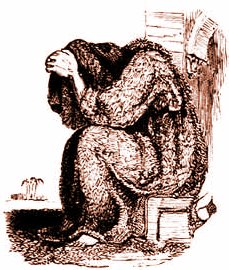
 Yet rather than choosing suicide, Job clung tenaciously to life. Often human tragedies like the loss of career, family, or home leads to an even greater tragedy – the denial of any meaning to life. This was the great temptation that faced Job, and that faces each of us at least once every 18 months on average.
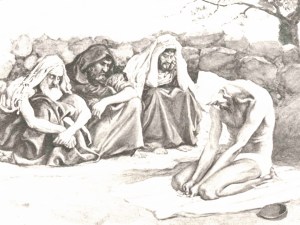 scientifically-sophisticated people are still often blaming people when they become sick. Even in the 21st century, we can too easily be just like Job’s three comforters who just made their friend feel worse. “Oh, you’re sick in hospital with cancer…Obviously you are not thinking enough positive mental thoughts, or jogging enough, or eating enough granola.” One way or another, we can slip into psychosomatically blaming others for their illnesses.
 through our common experience of pain. Many reject God, but no one rejects Job. Simply by suffering so greatly and hanging on for dear life through it all, Job has won our hearts.
 had a taste of this. Job in his suffering was looking for what could only be found in a manger, on a cross, in an empty tomb. The key to Job’s sufferings, and indeed to life itself, is the cross. Jesus did not rise above suffering; he went through it. Jesus let himself be captured by soldiers, tried by legalists and bureaucrats, condemned by a mob, scourged by mockers, and finally pinned and exhibited like a specimen insect.
 Sandy Brown and her family have just moved to Spokane, Washington where her husband, Scott, is pastoring a new church. With a fresh start, Sandy is determined to devote more time to her four children. But, within weeks of settling in their new life, the Brown family is plunged into turmoil.



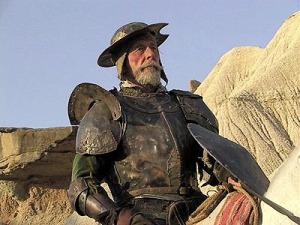 If you’ve never seen the award-winning Broadway musical and Hollywood movie Man of La Mancha, I recommend that you and your spouse rent or borrow it in the near future. There is something about those songs that stir me every time I hear them, especially To Dream the Impossible Dream, Dulcinea, and Aldonza.
 and mutual respect in the male-female relationship. Upon encountering Aldonza, Don Quixote sings: “I have dreamed thee too long, never seen thee or touched thee but know thee with all of my heart. Half a prayer, half a song, thou has always been with me, though we have always been apart, Dulcinea…Dulcinea”. Don Quixote repeatedly speaks blessing into Aldonza’s life, calling her Dulcinea (meaning sweetness).
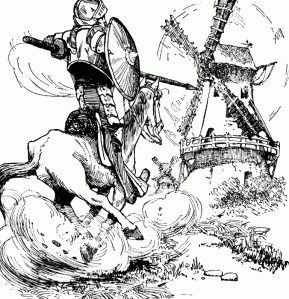 At one point in the movie, Quixote’s relatives try to take him away from Aldonza, claiming that he is mad. The priest pauses and says: “One might say that Jesus was mad, or St. Francis.” In one sense, Don Quixote functions as a Christ-figure, one who gives his life for others, even though dismissed as insane by his own family (Mark 3:21). In another sense, Don Quixote symbolizes the faithful pilgrim, like Francis of Assisi, who saw so clearly through the hypocrisy of his age that he was rejected as a “fool for Christ”(1 Corinthians 4:10). Either way, Don Quixote reminds us as men that sometimes we have to humble ourselves and look foolish, if we really want our marriages to blossom.
 Quixote’s gentleness and patience. She sings: “Can’t you see what your gentle insanities do to me? Rob me of anger and give me despair. Blows and abuse I can take and give back again, Tenderness I cannot bear.”
 By the Rev. Dr. Ed Hird
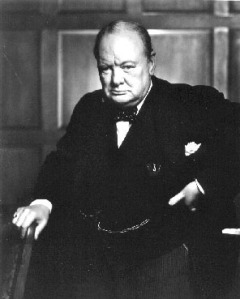 Churchill was a rising star in the Conservative Party at just age 26. He landed in hot water however for supporting free trade, at a time when the Conservatives were in a protectionist mood. Churchill then switched to the Liberal Party, becoming one of the youngest cabinet ministers ever. As president of the Board of Trade, he introduced many social reforms. Notably he eliminated sweat labour, set up labour exchanges for the unemployed, and brought in a nationwide minum wage, along with compulsory meal breaks at work. Many people don’t realize that the British owe their traditional tea breaks to Churchill!
 had an amazing ability to find something encouraging. While lecturing in the States, he looked the wrong way and was run over by a New York taxicab. Instead of feeling sorry for himself, be made $5,000, while in hospital, by writing an article about what it is like to be run over by a car. A most prolific writer, Churchill once humorously commented: “I’ve written very many books. I think that by the time I was 25 years old, I’d written as many books as Moses.” His six-volume series on the 2nd World war earned him the Nobel Prize of Literature.
 On becoming Prime Minister, Churchill uttered those immortal words: “I have nothing to offer but blood, toil, tears and sweat .You ask what is our policy. I will say: it is to wage war by sea, land and air, with all our might and with all the strength that God can give us to wage war against a monstrous tyranny never surpassed in the darkened, lamentable catalogue of human crime …”
 Nazi warmachine, and only England still resisted. Bombarded night after night in fierce air raid attacks, Churchill the Leader ignited his country with new hope that they really had a future.
 reportedly had over 250 partners/girlfriends stashed in different locations, many which falsely believed that they were married to Hughes. Perhaps this is why Marilyn Monroe sadly commented: “A wise girl kisses but doesn’t love, listens but doesn’t believe, and leaves before she is left.”
 Romancing the Stone, Joan Wilder a romance writer meets Jack Colton who violates every one of her imaginary ideas of what a real man will act like. Romancing the Stone reminds us that real romance involves the messiness and disappointments of everyday life. Dr Karl Menninger, the famous psychiatrist, said: “Love cures people, both the ones who give it and the ones who receive it.”
 Dr Gil Stieglitz tells us in his video series ‘The Five Problems of Marriage’ that one of the top needs of wives is for romance, to be nurtured and pursued. Some husbands don’t realize that they still need to date their wives, even after they are finally married to them. To some men, dating their wives is unthinkable. It would be like trying to get on a bus that they are already on.
 The Good Book says that he that does not love doesn’t know God, because God is love. Pearl Buck the famous novelist wrote: “Love alone could waken love.”
 By the Rev. Dr. Ed Hird
 temperance. Franklin saw the Judeo-Christian ethic as “the best the world ever saw or is likely to see.”
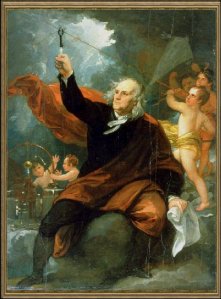 that this lead poisoning was also affecting glazers, type-founders, plumbers, potters, white-lead makers and painters.
 peace accord with Britain, and the Constitution. His unsuccessful proposal for the American Great Seal was to have Pharaoh being swallowed by the Red Sea, along with the words ‘Rebellion to Tyrants is Obedience to God.’
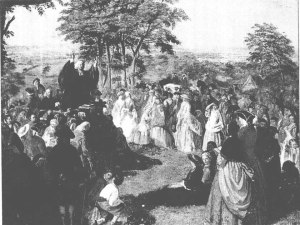 heard without amplification by over 30,000 people at one time. Franklin published all of Whitfield’s books and posted his sermons on the front page of his Philadelphia Gazette. Whitfield wrote to Franklin, saying: “As you have made a pretty considerable progress in the mysteries of electricity, I would now humbly recommend to your diligent unprejudiced pursuit and study the mystery of the new-birth. It is a most important, interesting study, and when mastered, will richly answer and repay you for all your pains.”
 At the 1787 American Constitutional Convention, Franklin commented: “the longer I live, the more convincing proofs I see of this truth — that God governs in the affairs of men. And if a sparrow cannot fall to the ground without His notice, is it probable that an empire can rise without His aid?” On that basis, Franklin arranged that prayers led by local clergy would be held each morning before Assembly business. Franklin said: “If I had ever before been an atheist, I should now have been convinced of the Being and government of a Deity!”
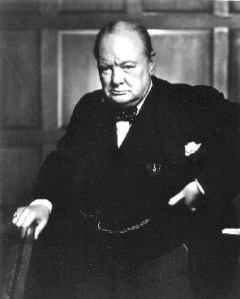 At a deeper level however, their common determination and perseverance has had remarkable impact on the character development of millions. Churchill once went to a meeting of students, where he stood up and said: “Never, ever, ever, ever, ever, ever, ever, give up. Never give up. Never give up. Never give up.”. Then he sat down. In his 1937 book Great Contemporaries, Churchill included one whole chapter on Baden Powell. In describing Baden-Powell’s Scouting movement, Churchill said: “It is difficult to exaggerate the moral and mental health which our nation had derived from this profound and simple conception.” Churchill described Baden-Powell (B.P.) as one of the three most famous generals he had ever known.
 that Mafeking would hold out half as long. A dozen times, as the siege dragged on, the watching nation had emerged from apprehension and despondency into renewed hope, and had been cast down again.” By the end of the siege, Mafeking had become so famous that it turned into a verb: “to Mafeking meant to celebrate uproariously”. Churchill noted that “when finally the news of Mafeking’s relief was flashed throughout the world, the streets of London became impassable, and the floods of sterling cockney patriotism was released in such deluge of unbridled, delirious, childish joy as was never witnessed again until Armistice Night in 1918.”
 Neither B.P. nor Churchill were particularly successful in their early school days. B.P.’s school reports read:
 By the Rev. Dr. Ed Hird
 At age 71 Pecos ended as a battered, hopeless drunken wreck, lying abandoned in a deserted Arizona Ranch. The Christians that found him said that he looked as if every bone in his body had been broken. Through the practical caring of his new friends, Pecos met Jesus Christ on a personal basis, and was filled up inside with a new attitude of thanksgiving and joy. Pecos never lost that new attitude of gratitude over the concluding 16 years of his life. Here is how he described this new-found joy: “I feel now like I imagine a little hound pup does -When his eyes first come open … I’m as happy as a fed pig in the sunshine.”
 all hormones released when we are tense, working hard, worried or afraid. In typical office stress, all the hormones are released but no exercise follows and the body suffers. We develop stomach ulcers, arteries clog up, we become irritable and develop a host of other problems – all because the body is pumping out hormones we don’t need. Laughter, says Dr. Dixon, shuts down these hormone levels, keeping them low. Interestingly, endorphin levels (natural morphine-like substances) seem to remain the same following laughter.
 an attitude of gratitude, I am protecting myself from countless diseases that could otherwise come my way. Our immune system is a remarkably delicate mechanism that just cannot handle acidic emotions like bitterness, rage, or malice. I challenge you therefore to find out for yourself whether an attitude of gratitude will improve your emotional and physical health. Over our kitchen table is a wall plaque with the words: “in everything, give thanks.”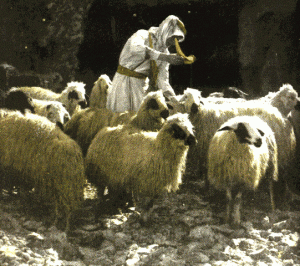
 ranch development in British Columbia.
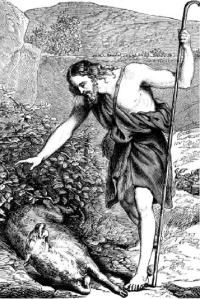 accident. A good shepherd would put tremendous labour into clearing rough rocky ground into lush pasture land. Psalm 23 tells us that Jesus the Good Shepherd desires to take away our fear and disharmony so that we can find the inner peace that we have always been looking for.
 Perhaps most familiar of all is the phrase: “though I walk through the valley of the shadow of death , I will fear no evil, for You are with me”. Think of funerals you have been to, and what comfort these words have been. Keller tells us that the only way to the mountainous green pastures is through the dangerous mountain valleys where wolves and coyotes are in hiding, waiting for their next victim. Psalm 23 reminds us that the Good Shepherd is also a warrior who will fight for us and protect us, even in times of death and tragedy.
 the school authorities. B.P. said that it was in those woods that he gained most of what helped him later in life to find the joy of living.
 with Nature, far beyond the academic dipping into the subject which passes under the name in school. Collecting, whether of plants or bugs, and investigation, whether of beasts or birds, are all-absorbing studies for the boy and mighty good for him.”
 Christmas presents. How much more should we say “thank you” for God’s gifts of nature? B.P. said “We teach the boy that a gift is not his till he has expressed his gratitude for it. His attitude to God is, therefore, thankfulness for benefits received; and his method for expressing this is through service, in behalf of God, to his fellow-men.
 after he had died, he said: “Dear Scouts,…I believe that God put us in this jolly world to be happy and enjoy life. Happiness doesn’t come from being rich, not merely from being successful in your career, not by self-indulgence. One step towards happiness is to make yourself healthy and strong while you are a boy, so that you can be useful and so can enjoy life when you are a man. Nature study will show you how full of beautiful and wonderful things God has made the world for you to enjoy. Be contented with what you have got and make the best of it…”
 Both James and I really enjoyed STAR TREK: GENERATIONS. The highlights of the movie for us were the explosion and then subsequent saving of the distant planet, as well as the remarkable crash-landing of the massive U.S.S. Enterprise.
 James Kirk and his successor Jean Luc Picard are both blasted into a hi-tech equivalent of heaven, called the Nexus. Nexus in the dictionary means: bond, link, connexion. In the Nexus, all one’s wishes and dreams are fulfilled, and a person is filled with continual overflowing joy, so much so that one never wants to leave. Even death the “great stalker” cannot touch you there, as the concept of time does not apply in the Nexus.
 Edhird's Blog