Have you noticed that some are teaching, even in our school systems in North America, that being male and female are just interchangeable social constructs? Does undergoing genital surgery and taking hormones really change one’s gender, as many are suggesting? Can a man ever become a woman, or a woman become a man? Is not one’s XY DNA as a male and XX DNA as a female essentially unchangeable? No one should be bullied over their perceived gender identity. Likewise no one should be bullied and coercively silenced if they raise thoughtful questions about what it means to be male or female, particularly from a historic Judeo-Christian perspective.
What if I told you that the current gender confusion particularly in the younger generation goes back to Dr. Carl Jung’s mixing up of gender opposites? Leanne Payne wrote an unforgettable book in 1995 entitled ‘Crisis in Masculinity’. We live in an age where equality is equated with sameness, where men and women are deeply confused about their gender identity, about what really is authentic male and authentic female. I believe that this gnostic Reconciliation of gender opposites, this gender-blending about authentic maleness and femaleness, is the direct result of our culture’s unconsciously embracing of the Jungian agenda.
A good friend’s mother said that she cried at her daughter’s birth. This caused my friend to dislike her mother and try to act like a boy, in order to be accepted. After being sexually abused as a teenager, she had even more difficulty in accepting and celebrating her gender identity. Through reading Leanne Payne’s books and going to her School of Pastoral Care, her mother repented to her in tears, resulting in reconciliation between my friend and her mother. As a result, my friend has been able to accept and celebrate her gender identity as a woman, even ministering to others who have felt the same gender rejection from their parents.
I, like many North Americans, used to be very naïve about the impact of Carl Jung on our culture. In 1991, I had the wonderful privilege of attending the Episcopal Renewal Ministries(ERM) Leadership Training Institute (LTI) in Evergreen, Colorado. Following that, I encouraged Anglican Renewal Ministries Canada to endorse the LTI approach, including the use of the MBTI (Myers-Briggs Temperament Indicator). However, as I later listened to tapes by Leanne Payne and Dr. Jeffrey Satinover[1], I rethought the Jungian nature of the MBTI, writing a report entitled Carl Jung, Neo-gnosticism, and the MBTI. After much prayer and reflection, ARM Canada decided unanimously in November 1997 to no longer use the MBTI in the Clergy and Lay Leadership Training Institutes.
Over two and a half million people are ‘initiated’ each year into the MBTI process. [2] It is now the most extensively used personality instrument in history. [3] There is even an MBTI version for children, called the MMTIC (Murphy-Meisgeier Type Indicator for Children)[4], and a simplified adult MBTI-like tool for the general public, known as the Keirsey-Bates Indicator. Rev. Robert Innes, of St. John’s College, Durham identifies “the two indicators most widely used by Christian groups – Myers-Briggs and the Enneagram.”[5] One of the key questions is whether the MBTI is an integral part of Jungian neo-gnosticism or alternately a detachable benevolent portion of Jung’s philosophy in an otherwise questionable context. To use a visual picture, is the MBTI the ‘marijuana’, the low-level entry drug that potentially opens the door to the more hard-core Jungian involvement, or is it just a harmless sugar tablet?
Researching the roots of the MBTI showed me Jung’s far-reaching influence in our culture, particularly in the area of gender confusion. In 1946, Jung said: “Biographies should show people in their undershirts…This way of looking at people is better than false hero worship!”[6] In this essay, we are looking at Carl Jung in his undershirt. Stripped down, we see aspects of Jung and his work which some good church people refuse to acknowledge. You could call this article my search for the historical Jung, looking past the Jung Myth for the real Jungian undershirt. Carl Jung is described by Merill Berger, a Jungian psychologist, as “the psychologist of the 21st century”.[7] Dr. Satinover says “The moral relativism that released upon us the sexual revolution is rooted in an outlook of which (Jung) is the most brilliant contemporary expositor.”[8] Leaders of the 1960’s hippie movement like Timothy Leary were heavily influenced by Jungian teaching[9]. One could say without overstatement that Carl Jung is the Father of Neo-Gnosticism & the New Age Movement. That is why Satinover comments that “One of the most powerful modern forms of Gnosticism is without question Jungian psychology, both within or without the Church”.[10] Dr. Satinover notes that “the ultimate aim…of all Gnostic systems is a mystical vision of the union of good and evil.”[11]
Gnosticism, which is the exalting of esoteric knowledge and experience, is rooted in monism[12]. Monism, the claim that all is one, is the major competing worldview to Judeo-Christian Monotheism. Monotheism of course holds that there is one God. Carl Jung advocated monism, a philosophy that treats all differences as ‘maya’, as illusion.[13] The monistic worldview in Hinduism and the New Age sees the earth and ourselves as the Lord God Almighty. It holds that all is God, including light and darkness, good and evil, right and wrong. Jung’s monism was the core of his advocacy of the reconciliation of opposites, including gender opposites of male and female.
Jung held that our ‘central problem was of course the coniunctio’, the alchemical symbol for the union of opposites.[14] Dr. Satinover notes that Jung “devoted most of his adult life to a study of alchemy…”[15] Alchemy is the search for the Philosopher’s Stone that transmutes lead into gold, a search which Jung resymbolized as psychic and psychological transmutation and wholeness.[16]
In 1929, Jung wrote a commentary on the Secret of the Golden Flower, which he said was “not only a Taoist text concerned with Chinese Yoga, but is also an alchemical treatise.”[17] He comments that “…it was the text of the Golden Flower that first put me on the right track. For in medieval alchemy we have the long-sought connecting link between Gnosis (i.e. of the Gnostics) and the processes of the collective unconscious that can be observed in modern man…”[18] Jung comments: “…a large part of my life work has revolved around the problem of opposites and especially their alchemical symbolism…”[19] Tracy Cuotto comments that “Alchemy involves the uniting of opposites…the fusion of male and female, good and evil, life and death — whose union eventually creates the perfected and completed, ideal personality called Self.”[20]
Many people are not aware that Jung collected one of the largest amassing of spiritualistic writings found on the European continent. Jung wrote the first introduction to Zen Buddhism and the first western commentary on the Tibetan Book of the Dead.[21]Dr. Richard Noll comments that “the divinatory methods of the I Ching, used often by Jung in the 1920s and 1930s, were a part of the initial training program of the C.G. Jung Institute of Zurich in 1948, and its use is widely advocated today in Jungian Analytic-Training Institutes throughout the world.”[22] Jung was also a strong promoter of the occultic mandala, a circular picture with a sun or star usually at the centre. Sun worship, as personified in the mandala, is perhaps the key to fully understanding Jung.[23] Jung taught that the mandala [Sanskrit for ‘circle’] was “the simplest model of a concept of wholeness, and one which spontaneously arises in the mind as a representation of the struggle and reconciliation of opposites.”[24]
During the hippie movement of the 1960’s, the Rock Opera Hair boldly proclaimed the alleged dawning of the Age of Aquarius. Once again Carl Jung foreshadowed this emphasis in a 1940 letter to his former assistant, Godwin Baynes: “1940 is the year when we approach the meridian of the first star in Aquarius. It is the premonitory earthquake of the New Age.”[25] In a letter written by Jung to Sigmund Freud, he said: “My evenings are taken up very largely with astrology. I made horoscopic calculations in order to find a clue to the core of psychological truth…I dare say that we shall one day discover in astrology a good deal of knowledge which has been intuitively projected into the heavens.”[26] In the 1950’s, Jung began to use Tarot reading as part of his astrological psychologizing. [27] Jung was known among his intimate colleagues as the ‘Warlock” (Hexenmeister) of Zurich.[28]
Jung’s family had occult linkage on both sides, from his paternal grandfather’s Freemasonry[29] involvement as Grandmaster of the Swiss Lodge[30], and his maternal family’s long-term involvement with séances and ghosts. Jung was heavily involved for many years with his mother and two female cousins in hypnotically induced séances.[31] They ‘used a primitive, homemade Ouija board and a glass that moved over the letters to spell out answers to questions.”[32] Jung eventually wrote up the séances as his 1902 medical dissertation entitled “On the Psychology and Pathology of So-called Occult Phenomena”.[33] His Preiswerk relatives were outraged that they were ‘shamefully’ included, and blamed Carl Jung for the inability of several of his cousins to find husbands.[34] James A Herrick notes that Jung’s mother ‘introduced him as a child to Hindu gods, for which he maintained a life-long fascination.’[35] After the death of three babies in a row before Carl Jung’s birth, his mother “Emilie withdrew, taking refuge in the private interior visions of the spirits.”[36] Emilie often had to be hospitalized, leaving Carl Jung with the feeling of the feminine as ‘natural unreliability, one can never rely on it’ and the term ‘father’ as ‘reliability and powerlessness.’[37]
Jung’s maternal Grandfather Samuel Preiswerk, a Basel pastor, had weekly séances attempting to contact his deceased first wife in the presence of his second wife, (Jung’s grandmother) and his daughter (Jung’s mother).[38] Jung acquired a spirit guide and guru named ‘Philemon’ [who was described by Jung as ‘an old man with the horns of a bull…and the wings of a fisher’]. Before being Philemon, this creature appeared to Jung as ‘Elijah’, and then finally mutated to ‘Ka’, an Egyptian earth-soul that ‘came from below’.[39] It may be worth reflecting upon why Jung designated his Bollingen Tower as the Shrine of Philemon.[40] Carl Jung commented: “Philemon represented a force which was not myself. In my fantasies I held conversations with him, and he said things which I had not consciously thought. For I observed clearly that it was he who spoke, not I. . . . Psychologically, Philemon represented superior insight. He was a mysterious figure to me. At times he seemed to me quite real, as if he were a living personality. I went walking up and down the garden with him, and to me he was what the Indians call a guru.”[41]
Jung’s fascination with the occult (the hidden) was at the root of his painful break in 1913 with his mentor Sigmund Freud.[42] Freud saw everything through the lens of sexual obsessions, and described the occult as ‘a sea of black mud’ which he feared would compromise the respectability of psychoanalysis.[43]
Jung’s “family was steeped in religion – he had eight uncles in the clergy as well as his maternal grandfather and his earliest playgrounds were churches and graveyards.”[44] The famous Ulysses author James Joyce disparagingly referred to Carl Jung as the Reverend Dr. Jung[45], hinting that Jungianism was really a religion. Carl Jung’s pastor-father loved theological school reflections, but deeply disliked rural congregational life and was losing his faith.[46] The famous Liberal German theologian Friedrich Schleiermacher had converted and baptized Carl Jung’s grandfather. Carl Jung was deeply aware of and damaged by his father’s spiritual emptiness, saying “What he said sounded stale and hollow, like a tale told by someone who knows it only by hearsay and cannot quite believe it himself.”[47] Carl Jung’s first and only time of taking Holy Communion was a devastating experience for him: “Slowly I came to understand that this communion had been a fatal experience for me. It had proved hollow; more than that, it had proved to be a total loss. I knew that I would never again be able to participate in this ceremony. ‘Why, that is not religion at all,’ I thought. ‘It is the absence of God; the church is a place I should not go to. It is not life which is there, but death.’”[48]
When younger, Carl Jung had a life-changing dream of a subterranean phallic god which reappeared “whenever anyone spoke too emphatically about Lord Jesus.”[49] Jung commented that “…the ‘man-eater’ in general was symbolized by the phallus, so that the dark Lord Jesus, the Jesuit and the phallus were identical.”[50] This “initiation into the realm of darkness”[51] radically shaped Jung’s approach to Jesus: “Lord Jesus never became quite real for me, never quite acceptable, never quite lovable, for again and again I would think of his underground counterpart…Lord Jesus seemed to me in some ways a god of death…Secretly, his love and kindness, which I always heard praised, appeared doubtful to me…”[52] Jung later confessed to Sigmund Freud that as a boy he had been ‘the victim of a sexual assault.’[53] To what degree, I wonder, was Jung’s ‘revelation’ of the phallus god a fruit of childhood sexual abuse? The next major ‘spiritual breakthrough’ in his life was what Jung described as a “blasphemous vision”[54] of God dropping his dung on the local Cathedral. This vision, said Jung, gave him an intense “experience of divine grace”.[55] These early experiences birthed what many see as a new religion, clothed in a psychological undershirt. Dr Richard Noll notes that “in his December 1913 vision, Jung assumed the stance of the crucified Christ and then was transformed into the lion-headed god.”[56]
How serious, you may wonder, is the Jungian Reconciliation of Good and Evil? Leanne Payne says of Dr. Jeffrey Satinover that “like (C.S.) Lewis, he knows that this synthesis or reconciliation is the greatest threat facing not only Christendom but all mankind today.”[57] “For Jung”, says Satinover, “good and evil evolved into two equal, balanced, cosmic principles that belong together in one overarching synthesis.”[58]
Jung believed that the “dark side” of human nature needed to be “integrated” into a single, overarching “wholeness” in order to form a less strict and difficult definition of goodness.[59] Jung significantly said: “I would rather be whole than good.”[60] Wholeness for Jung is really the gnostic reconciliation of opposites.
“If Christ means anything to me,” said Jung, “it is only as a symbol…I do not find the historical Jesus edifying at all, merely interesting because controversial.”[61] Jung believed that “the Christ-symbol lacks wholeness in the modern psychological sense, since it does not include the dark side of things…”[62] For Jung, it was regrettable that Christ in his goodness lacked a shadow side, and God the Father, who is the Light, lacked darkness.[63] Jung sought a solution to this dilemma in the Holy Spirit who allegedly united the split in the moral opposites symbolized by Christ and Satan.[64] “Looked at from a quaternary standpoint”, writes Jung, “the Holy Ghost is a reconciliation of opposites and hence the answer to the suffering in the Godhead which Christ personifies.”[65] Jung believed that Satan and Jesus, as spiritual opposites, were gnostically reconciled through the Holy Spirit. “It is possible”, said Jung, “for a man to attain totality, to become whole, only with the co-operation of the spirit of darkness…”[66]
After experiencing Goethe’s Faust, Jung came to believe in the ‘universal power’ of evil and “its mysterious role it played in delivering man from darkness and suffering.”[67] “Most of all”, said Jung, “(Faust) awakened in me the problem of opposites, of good and evil, of mind and matter, of light and darkness.”[68]
In post-modern culture, the Judeo-Christian worldview is often dismissed as too narrow-minded and dogmatic. Jung saw the reconciliation of opposites as a sign of great cultural sophistication: “(Chinese philosophy) never failed to acknowledge the polarity and paradoxity (sic) of all life. The opposites always balanced one another – a sign of high culture. One-sidedness, though it lends momentum, is a sign of barbarism.”[69] It would not be too far off to describe Jung as a gnostic Taoist. “The book on types (PT)”, says Jung, “yielded the view that every judgment made by an individual is conditioned by his personality type and that every point of view is necessarily relative. This raised the question of the unity which must compensate this diversity, and it led me directly to the Chinese concept of Tao.”[70] Being influenced by the Yin-Yang of Taoism, Jung believed that “Everything requires for its existence its opposite, or it fades into nothingness.”[71] The Batman movie ‘Dark Knight’ has a very Jungian moment where the Joker says to Batman: “I don’t want to kill you! What would I do without you? Go back to ripping off mob dealers? No, no, NO! No. You… you… complete me.”[72] George Lucas’ ‘dark side of the Force’ in the Star Wars series is another epic Jungian moment that conditions post-moderns to see spirituality as a reconciliation of light and darkness.
In the book Psychological Types, Jung comments that “Yoga is a method by which the libido is systematically ‘drawn in’ and thereby released from the bondage of opposites.”[73] Jung entitled an entire section in PT: “Concerning the Brahmanic Conception of the Reconciling Symbol”. Jung notes: “Brahman therefore must signify the irrational union of the opposites – hence their final overcoming…These quotations show that Brahman is the reconciliation and dissolution of the opposites – hence standing beyond them as an irrational factor.”[74]
While in India in 1938, Jung says that he “was principally concerned with the question of the psychological nature of evil.”[75] He was “impressed again and again by the fact that these people were able to integrate so-called ‘evil’ without ‘losing face’…To the oriental, good and evil are meaningfully contained in nature, and are merely varying degrees of the same thing. I saw that Indian spirituality contains as much of evil as of good…one does not really believe in evil, and one does not really believe in good.”[76]
In a comment reminiscent of our post-modern relativistic culture, Jung said of Hindu thought: “Good or evil are then regarded at most as my good or my evil, as whatever seems to me good or evil”.[77] “We must beware”, said Jung, “of thinking of good and evil as absolute opposites…The criterion of ethical action can no longer consist in the simple view that good has the force of a categorical imperative, while so -called evil can resolutely be shunned. Recognition of the reality of evil necessarily relativizes the good, and the evil likewise, converting both into halves of a paradoxical whole.”
“This work Psychological Types (1921), said Jung, “sprung originally from my need to define the way in which my outlook differs from Freud’s and Adler’s. In attempting to answer this question, I came across the problem of types, for it is one’s psychological type which from the outset determines and limits a person’s judgment.”[78] Freud called Jung’s Psychological Types book ‘the work of a snob and a mystic’.[79] Jung was deeply traumatized by his split with Freud, and used the Psychological Types book to rationalize the Jung/Freud split. Jung saw himself as the so-called introvert, focusing on thinking, in contrast to Freud who was allegedly the extrovert, focused on feeling.[80] Many are unaware that the terms ‘introvert’ and ‘extrovert’ were invented by Carl Jung, and mean far more conceptually than simply being outgoing or shy.[81]
Dr. Gordon Lawrence, a strong Jungian/MBTI supporter, teaches that “In Jung’s theory, the two kinds of perception – sensing and intuition – are polar opposites of each other. Similarly, thinking judgment and feeling judgment are polar opposites.”[82] It seems to me that the setting up of the psychological polar opposites in PT functions as a useful prelude for gnostic reconciliation of all opposites. The MBTI helps condition our minds into thinking about the existence of polar opposites, and their alleged barriers to perfect wholeness. To accept the eight polarities within the MBTI predisposes one to embrace Jung’s teaching that the psyche “cannot set up any absolute truths, for its own polarity determines the relativity of its statements.”[83]
Jung was accused of anti-Semitism because the Zentralblatt für Psychotherapie journal, which Jung edited, endorsed Mein Kampf as required reading for all psychoanalysts.[84] His defense was that he was trying to save psychoanalysis from being obliterated by the Nazis as a ‘Jewish science.[85] In 1936, Jung said of Hitler: “[Hitler] is a medium, German policy is not made; it is revealed through Hitler. He is the mouthpiece of the Gods of old… He is the Sybil, the Delphic oracle.”[86] The influence of Germanic anti-Semitism on Jungianism can now be seen in a secret quota clause designed to limit Jewish membership to 10% in the Analytical Psychology Club of Zurich. Jung’s secret Jewish quota was in effect from 1916 to 1950, and only came to public light in 1989.[87] While it would be a mistake to paint Jung as an outright Nazi sympathizer, there was much confusion, almost a gnostic reconciliation of good and evil, in how Jung responded to Hitler’s Germany.[88] The Rev Charles Raven, Director of SPREAD, comments that “Jung’s confused response to Nazi Germany and anti-Semitism contrasts sharply with the clear-sightedness of Karl Barth and the Confessing Church expressed in the Barmen Declaration in 1933. This helps to underline the way that Jungian psychology saps the ability to recognise and resist evil.”[89]
Two of Jung’s ‘most influential archetypes’ are the anima & animus, described by Jung as “psychological bisexuality”.[90] Jung teaches in PT that every man has a female soul (anima) and every woman has a male soul (animus).[91] Noll comments that “Jung’s first encounter with the feminine entity he later called the anima seems to have begun with his use of mediumistic techniques…”[92] Based on the recently discovered personal diary of Sabina Spielrein, John Kerr claims that Jung’s so-called anima “the woman within” which he spoke to, was none other than his idealized image of his former mistress, patient, and fellow therapist, Sabina Spielrein.[93] After breaking with both Spielrein and Freud, Jung felt his own soul vanish as if it had flown away to the land of the dead. Shortly after, while his children were plagued by nightmares and the house was seemingly haunted, Jung heard a chorus of spirits cry out demanding: ‘We have come back from Jerusalem where we have not found what we sought.’[94]
Jung’s next mistress Toni Wolff also started as Jung’s patient and became a Jungian analyst. Toni Wolff was hugely influential in the forming of Jungian Psychology. Jungian Analyst Dr. C.A. Maier holds that ‘when it comes to psychological types, (Toni Wolff) played a very important role there.’[95] “In this unfamiliar, terrifying underground of the collective unconscious, (Toni Wolff) was Jung’s guide to such an extent that she lived with him…She reflected his anima in a way that Mrs Jung didn’t.”[96] Baroness Vera von der Heydt comments that “It was (Toni Wolff) who introduced him to all the Eastern things, Eastern spirituality, Eastern philosophy and so on.”[97]
Part of the gender-bending and gender-blending of our post-modern culture is rooted in Jung’s androgynous teaching about the so-called anima and animus.[98] In the Jungian ‘Matter of the Heart’ video series, Dr Joseph (Jane) Wheelwright comments: “This is built into the heart of Jung’s whole psychology that one should develop one’s contrasexual components, as Margaret Mead so quaintly phrases it. Jung prefers to talk about the anima and the animus…All of us who are really committed and involved in the Jungian world are very busy trying to develop our animuses or our animas….This androgynous, or almost androgynous, state of being, is the way that one hopes to be before they throw the switch.”[99] Dr Richard Noll comments about Jung’s pansexual practices: “Emma Jung did not choose polygamy freely. The situation was presented to her by her husband. At best, she freely chose to adapt to it”[100] In a letter to Freud dated January 30, 1910, Jung wrote: “The prerequisite for a good marriage, it seems to me, is the license to be unfaithful.”[101]
Jung’s sexual views were profoundly influenced by the German physician and psychoanalyst Otto Gross (1877-1920). Otto Gross advocated the “life-enhancing value of eroticism which is so great that it must remain free from extraneous considerations in laws, and above all, from any integration into everyday life…. Husbands and wives should not begrudge each other whatever erotic stimuli may present themselves. Jealousy is something mean. Just as one has several people for friends, one can also have sexual union with several people at any given period and be ‘faithful’ to each one…. Free love will save the world.”[102] As a child of the 1960’s and ‘70’s, I cannot read Otto Gross without thinking of Haight-Ashbury. Is it merely a co-incidence that Timothy Leary was psychoanalyzed by Joseph Henderson, a California Jungian analyst, before he birthed the hippie/drug movement?[103]
Otto Gross and Jung sometimes psychoanalyzed each other for up to twelve hours non-stop. Speaking of Gross’ sexual/religious orgies, Jung commented: “The existence of a phallic or orgiastic cult does not indicate a particularly lascivious life any more than the ascetic symbolism of Christianity means an especially moral life.”[104] Jung’s patient/mistress Sabina Spielrein comments: “I sat there waiting in great depression. Now he [Jung] arrives, beaming with great pleasure, and tells me with strong emotion about Gross, about the great insight he had just received [i.e. about polygamy]; he no longer wants to suppress his feelings about me…”[105] Gross’ motto was ‘Nichts verdraengen!’ (repress nothing!)[106]
After being haunted by ghosts, Jung wrote his Seven Sermons to the Dead book in 1917. In these seven messages, Jung ‘reveals’, in agreement with the 2nd century Gnostic writer Basilides, that the True and Ultimate God is Abraxas, who combines Jesus and Satan, good and evil all in one.[107] This is why Jung held that “Light is followed by shadow, the other side of the Creator.”[108] Richard and Linda Nathan, long-term ex-Jungians, commented that “In true Gnostic fashion, Jung shared the Seven Sermons to the Dead book with close friends but hid it from the public.[109]
You may be asking yourself: “How much influence does Jungianism actually have on the Church and postmodern culture? The answer is that there is an enormous and sometimes subtle influence. “Jung’s direct and indirect impact on mainstream Christianity – and thus on Western culture,” says Dr. Satinover, “has been incalculable. It is no exaggeration to say that the theological positions of most mainstream denominations in their approach to pastoral care, as well as in their doctrines and liturgy – have become more or less identical with Jung’s psychological/symbolic theology.”[110]
There are key individuals promoting the Jungian gospel to the Church, such as Morton Kelsey, John Sanford (not John & Paula Sandford), Thomas Moore, Joseph Campbell, and Bishop John Spong. Thomas Moore, a former Roman Catholic monk, became widely popular through his best-seller: Care of the Soul. John Sanford, the son of the late Agnes Sanford, is an Episcopal Priest and Jungian analyst, with several books promoting the Jungian way. Morton Kelsey is another Episcopal Priest who has subtly woven the Jungian gospel through virtually every one of his books, especially those aimed for the Charismatic renewal constituency. Satinover describes Kelsey as having “made a career of such compromise”, noting that Kelsey has now proceeded in his latest book Sacrament of Sexuality to approve of the normalization of homosexuality.[111]
Joseph Campbell, cited by Satinover as a disciple of Jung, is famous for his public TV series on “The Power of Myth”.[112] Bishop John Spong, who has written two books (Resurrection: Myth or Reality & The Easter Moment) denying the physical resurrection of Jesus Christ, gives Joseph Campbell credit for shaping his views on Jesus’ resurrection. “I was touched by Campbell’s ability to seek the truth of myths while refusing to literalize the rational explanation of those myths…Campbell allowed me to appreciate such timeless themes as virgin births, incarnations, physical resurrections, and cosmic ascensions…Slowly, ever so slowly, but equally ever so surely, a separation began to occur for me between the experience captured for us Christians in the word Easter and the interpretation of that experience found in both the Christian Scriptures and the developing Christian traditions…”[113] Few people have realized that Bishop Spong’s spiritual grandfather is none other than Carl Jung.
While in theological school, I became aware of the strong influence of Dr. Paul Tillich on many modern clergy. In recently reading C.G. Jung & Paul Tillich [written by John Dourley, a Jungian analyst & Roman priest from Ottawa], I came to realize that Tillich and Jung are ‘theological twins’. In a tribute given at a Memorial for Jung’s death, Tillich gave to Jung’s thought the status of an ontology because its depth and universality constituted a ‘doctrine of being’.[114] It turns out that Tillich is heavily in debt in Jung for his view of God as the supposed “Ground of Being”. As well, both Tillich and Jung, says Dourley, “understand the self to be that centering force within the psyche which brings together the opposites or polarities, whose dynamic interplay makes up life itself.”[115] As a Jungian popularizer, Tillich saw life as “made up of the flow of energy between opposing poles or opposites.”[116]
So many current theological emphases in today’s church can be traced directly back to Carl Jung. For example, with the loss of confidence in the Missionary imperative, many mainline church administrators today sound remarkably like Jung when he said: “What we from our point of view call colonization, missions to the heathen, spread of civilization, etc, has another face – the face of a bird of prey seeking with cruel intentness for distant quarry – a face worthy of a race of pirates and highwaymen.”[117] In speaking of Buddhism and Christianity, Jung taught the now familiar inter-faith dialogue line, that “Both paths are right.”[118] Jung spoke of Jesus, Mani, Buddha, and Lao-Tse as ‘pillars of the spirit’, saying “I could give none preference over the other.”[119] The English Theologian Don Cupitt says that Jung pioneered the multi-faith approach now widespread in the Church.[120]
In light of the current controversies around “Mother Goddess” hymnbooks, it is interesting to read in the MBTI source book Psychological Types about the “Gnostic prototype, viz, Sophia, an immensely significant symbol for the Gnosis.”[121] You are probably well aware that in the best-selling book The Shack, God the Father is portrayed as an Aunt Jemima/Oprah Winfrey blend named Elouisa, and the Holy Spirit becomes Sarayu, an eclectic woman of Asian descent. While I personally enjoyed reading much of the popular Shack novel, I have unresolved concerns about how The Shack may be used, even unintentionally, to deconstruct people’s classical understandings of the Trinity and replace it with mother/father god/dess worship.[122] Postmodern thinking, even among evangelicals, is remarkably subjectivist and fluid, easily leading to a gnostic reconciliation of gender opposites even in the Godhead.[123]
I have another friend who watched her mother being raped in the back seat of their car. This so traumatized her that she rejected her female gender identity, deciding to become the gentleman that the male rapist should have been. Just before her scheduled gender reassignment surgery, my friend had a powerful encounter with the Lord Jesus Christ that enabled her to cancel her surgery and accept her female gender identity, that she was fearfully and wonderfully made as a woman. She has gone on to help hundreds of other people struggling with sexual and gender confusion.
My challenge to those reading this is to seek the Lord about where God may be calling you to renounce any false gods, any secret idolatry, any gnostic reconciliation of opposites, particularly in the area of Jungianism and the New Age. May we never forget the warning of the prophet Isaiah, “Woe to those who call evil good and good evil, who put darkness for light and light for darkness” (Isaiah 5:29)[124].
You may not like your DNA gender. You may have sadly been bullied over your gender ambivalence. Some of you reading this may have even been sexually abused. What if you chose to radically embrace rather than reject your God-given gender? What if God did not make a mistake in the XX male or XY female DNA that he gave you? What would it take for you to thank God for how he has made you?
What might happen if we stood up and affirmed the authentic male and authentic female in an age of Jungian-inspired gender confusion? Will you join me?
The Rev. Dr. Ed Hird, BSW, MDiv, DMin
-previously presented and published at the Think Tank Conference in San Diego, California
[1] Dr. Jeffrey Satinover’s critique of Jungianism came with unique credibility, given his background as an eminent Jungian scholar, analyst, and past President of the C.G. Jung Foundation. [2] Isabel Briggs Myers with Peter B. Myers, Gifts Differing, Palo Alto, CA: Consulting Press, Inc., 1980,p. xvii. Many charismatics have a soft spot for this book, because it quotes portions of scripture from Romans 12 and 1 Corinthians 12. The actual link, however, between those bible passages, and the Jung/Myers-Briggs theories is rather questionable.
In an October 29th, 1996 letter from Rev. Fred Goodwin, Rector of National Ministries for ERM, Fred Goodwin commented: “I would suggest that in light of your concerns, you drop the MBTI and use some of the material out on small group ministry and discipling instead—which we find are desperate needs for leadership training in the church.” [3] Ibid., p.210; also Dr. Gordon Lawrence, People Types & Tiger Stripes, p. xi; A book Prayer & Temperament written by Msgr. Chester Michael and Marie Norrisey in 1984 has been very effective in winning Roman Catholics and Anglicans to the MBTI. The book claims that the MBTI designations will make you either oriented to Ignatian prayer (if you are SJ), Augustinian prayer (if you are NF), Franciscan prayer(if you are SP), or Thomistic prayer(if you are NT). In the MBTI, the four sets of types are Extravert(E) & Introvert(I), Sensate(S) & Intuitive(N), Thinking(T) & Feeling(F), and Judging(J) & Perceiving(P). None of these 8 innocuous-sounding type names mean what they sound like. Instead each of the 8 type names has unique and mysterious, perhaps even occultic, definitions given by Jung himself in a massive section at the back of Psychological Types. [4] Dr. Gordon Lawrence, People Types & Tiger Stripes, Gainesville, FL: Center for Applications of Psychological Types, 1979, p. 222 [5] Robert Innes, Personality Indicators and The Spiritual Life, Grove Books Ltd., Cambridge, 1996, p.3; The Enneagram is significantly occultic in nature and origin, coming from Sufi, numerology, and Arica New-Age sources. George Gurideff, Oscar Ichazo of Esalen Institute, and Claudio Naranjo are the prominent New Agers who have popularized it, and then introduced it, through Fr. Bob Oschs SJ, into the Christian Church. For more information, I recommend Robert Innes’ booklet and Mitchell Pacwa SJ article’s “Tell Me Who I Am, O Ennegram” Christian Research Journal, Fall 1991, pp. 14ff. My article on ‘George Gurdjieff and the Enigmatic Enneagram’ can be read at http://www3.telus.net/st_simons/arm04.htm [6] CG Jung, 1946 http://www.youtube.com/watch?v=sJhblm4KUmo [7] Merill Berger & Stephen Segaller, The Wisdom of the Dreams, C.G. Jung Foundation, New York, NY, Shamballa Publications, Front Cover [8] Dr. Jeffrey Satinover, Homosexuality and the Politics of Truth, Baker Book House Co., 1996, p. 238 “Because of his great influence in propagating gnostic philosophy and morals in churches & synagogues, Jung deserves a closer look. The moral relativism that released upon us the sexual revolution is rooted in an outlook of which (Jung) is the most brilliant contemporary expositor.” [9] Robert Greenfield, Timothy Leary: a Biography, Harcourt Books, 2006, p. 86; Robert C Fuller, Stairways to Heaven: drugs in religious history, Westview Press, Boulder, Colorado, 2000, p. 126, “That is why Carl Jung, Joseph Campbell, and mystics like Allan Watts or Aldous Huxley were important to the spiritual underground; they were purveyors of the alternate myths and pathways to spiritual experience.” [10] Jeffrey Satinover, The Empty Self, p. 27. Jung has “blended psychological reductionism with gnostic spirituality to produce a modern variant of mystical, pagan polytheism in which the multiple ‘images of the instincts’ (his ‘archetypes’) are worshipped as gods”, Satinover, Homosexuality and the Politics of Truth, p. 238: Carl Jung “explicitly identified depth psychology, especially his own, as heir to the apostolic tradition, especially in what he considered its superior handling of the problem of evil.” [11] Jeffrey Satinover, The Empty Self, p. 23 Jung claimed that “In the ancient world, the Gnostics, whose arguments were very much influenced by psychic experience, tackled the problem of evil on a broader basis than the Church Fathers.” “Whatever the system, and however the different stages are purportedly marked, the ultimate aim, the innermost circle of all Gnostic systems, is a mystical vision of the union of good and evil.” [12] Monism: “a view that there is only one kind of ultimate substance b: the view that reality is one unitary organic whole with no independent parts” http://www.merriam-webster.com/dictionary/monism [13] Walter Shelburne, Mythos and Logos in the Thought of Carl Jung, 1988, Sunny Press, Albany, New York, p. 18 [14] Bair, Ibid., p. 526 [15] Ibid., p. 27, Ft. 28 [16] Carl Jung & Aniela Jaffe, Memories, Dreams, Reflections, translated from the German by Richard & Clara Winston, Vintage Books-Random House, 1961/1989, p. 205 “The possibility of a comparison with alchemy, and the uninterrupted intellectual chain back to Gnosticism, gave substance to my psychology.” [17] Carl Jung, Psychology & the East, London & New York: Ark Paper Back, 1978/1986, p. 3 [18] Ibid., p. 6 [19] MDR, p. 233 [20] “Psychology, Astrology and Carl Jung”, Metamorphosis Newsletter, August 2004, by Tracy Cuotto, http://consciousevolution.com/metamorphosis/0408/jung0408.htm [21] Jeffrey Satinover, The Empty Self, p. 28 Dr. James Hillman, the former director for the Jungian Institute in Zurich, commented, “(Jung) wrote the first introduction to Zen Buddhism, he…brought in (Greek Mythology), the gods and the goddesses, the myths,…he was interested in astrology…” The Wisdom of the Dreams: Carl Gustav Jung: a Stephen Segaller Video, Vol. 3, “ A World of Dreams”. Jung also wrote the first western commentary on the Tibetan Book of the Dead.( Psychology & the East, p. 60) [22] Dr. Richard Noll, The Jung Cult.: Origins of a Charismatic Movement, Princeton, New Jersey: Princeton University Press, 1994, p. 333 [23] Noll, The Jung Cult, p. 137 [24] MDR, p. 335 [25] Merill Berger & Stephen Segaller, The Wisdom of the Dreams, p. 162; Jung & Jaffe, Memories, Dreams, Reflections, p. 340; In Jung’s book Aion, he holds that “…the appearance of Christ coincided with the beginning of a new aeon, the age of the Fishes. A sychronicity exists between the life of Christ and the objective astronomical event, the entrance of the spring equinox into the sign of Pisces.” p. 221 [26] Richard Webster, Why Freud Was Wrong: Sin, Science, & Psychoanalysis, Basic Books: Harper Collins, 1995, p. 385. Jung comments: “For instance, it appears that the signs of the zodiac are character pictures, in other words, libido symbols which depict the typical qualities of the libido at a given moment…” [27] Bair, ibid., p. 549 “Both Hanni and Gret used several different sets of cards when they taught (Jung) how to consult the Tarot, before they settled on the Grimaud cards of Antoine Court de Gebelin, the Ancien Tarot de Marseilles. Jung thought it was the only deck that possessed the properties and fulfilled the requirements of metaphor that he gleaned from within the alchemical texts.” [28] The Gnostic Jung and The Seven Sermons to the Dead By Stephan A. Hoeller, A Quest book, The Theosophical Publishing House , 1982. p. xiii http://books.google.ca/books?id=XDSSXDezdBMC&pg=PR13&lpg=PR13&dq=Hexenmeister+of+Zurich&source=web&ots=aXYRkrGcqp&sig=z1rtge0YGGQdgYNNEoxQFugI2i8&hl=en&sa=X&oi=book_result&resnum=2&ct=result ; Carl G. Jung: Man of Science or Modern Shaman?, By Richard and Linda Nathan http://www.crossroad.to/articles2/08/nathan/jung.htm [29] Dr George Puritch, a Prayer Ministry leader, commented recently to me: “I have felt for a long time that many of the false beliefs within the church had their foundations in the occultism of Free Masonry. Your research that Jung’s grandfather was a Grand Master of the Lodge reveals the roots of his deep occultism, not to mention his occultic roots on his mother’s side.” All the occultic practices of Masonry as described by Ankerberg and Weldon (1990. The Secret Teachings of the Masonic. A Christian Perspective. Moody Press Chicago) are revealed in Jung’s philosophies, the relativism of good and evil, the denial of the deity of Jesus, universalism, worship of the dead, deification of man, etc.” [30] Jung & Jaffe, Memories, Dreams, Reflections, p.232 [31] John Kerr, A Most Dangerous Method: the Story of Jung, Freud, & Sabina Spielrein, New York, Alfred Knopf Books, 1993, p. 50 & 54 [32] Deirdre Bair, Jung: a Biography, Little, Brown and Company, Boston, p. 46 [33] John Kerr, ibid., p. 50 & 54; The New Encyclopedia of the Occult, by John Michael, Llewellyn Worldwide Publisher, p. 250 [34] Bair, ibid., p. 64 “Later generations held Jung’s dissertation directly responsible for the fact that many of the younger Preiswerk daughters in Helly’s generation did not marry.” [35] James A Herrick, The Making of a New Spirituality, Intervarsity Press, 204, p. 191; Campbell, Portable Jung, p. viii; Deirdre Bair, Jung: a Biography, Little, Brown and Company, Boston, 2003, p. 18 http://books.google.ca/books?id=KzbobUhvpf4C&pg=PA191&lpg=PA191&dq=Carl+Jung+Occult&source=bl&ots=JVx6vwaVug&sig=OCZs_AGb9shRQJyjzSzL2ojQ2AU&hl=en&sa=X&oi=book_result&resnum=5&ct=result [36] Bair, ibid., p. 18 [37] Bair, ibid., p. 21 [38] “Session 11: Jung and Pagan Psychology”, Temple of the Sacred Spiral, http://www.fortunecity.com/victorian/palette/187/session11.html [39] Satinover, The Empty Self, p. 37; The spirit guide Philemon/Elijah later mutated into Salome, who addressed Jung in a self-directed trance vision as Christ. Jung ‘saw’ himself assume the posture of a victim of crucifixion, with a snake coiled around him, and his face transformed into that of a lion from the Mithraic mystery religion.(C.G. Jung, Analytical Psychology :Princeton University Press, 1989:, p. 96, 98) [40] Jung & Jaffe, Memories, Dreams, Reflections, p.223. “Shrine of Philemon: Repentance of Faust” was the inscription carved in stone by Jung over the entrance of the Bollingen Tower, where he lived and wrote. [41] MDR, p. 183 [42] The final straw was when Jung published Wandlungen und Symbole der Libido (translated as Psychology of the Unconscious.) http://everything2.com/title/Carl%20Jung [43] Alex Owen, The Place of Enchantment: British Occultism and the Culture of the Modern, University of Chicago Press, 2004, p. 143 [44] “Session 11: Jung and Pagan Psychology”, Temple of the Sacred Spiral, http://www.fortunecity.com/victorian/palette/187/session11.html [45] Bair, ibid., p. 407 [46] Joel Ryce-Menuhin, Jung and the Monotheisms, Routledge Publisher, p. 183 [47] MDR, p. 42-43 [48] Ibid, p. 55 [49] Ibid., p. 12 [50] Ibid., p. 12 [51] Ibid., p. 15 [52] Ibid., p. 13 [53] Bair, ibid, p. 70 [54] MDR, Ibid., p. 58. Jung concluded from this ‘Cathedral’ experience that “God Himself can…condemn a person to blasphemy” Memories, Dreams, Reflections, p. 74 [55] Ibid., p. 55 [56] Dr Richard Noll, The Aryan Christ, Random House,1997, p.138. [57] Satinover, The Empty Self, p. 3; Dr. Satinover sees the temptation facing our generation that”…on a theological plane, we succumb to the dangerous fantasy that Good and Evil will be reunited in a higher oneness.” Satinover, Homosexuality and the Politics of Truth, p. 238 [58] Satinover, Ibid., p 240. “…This relativization of good and evil by their reconciliation is the heart of the ancient doctrines of gnosticism, which also located spirituality, hence morality, within man himself. Hence ‘the union of opposites’.” Keirsey & Bates, authors of Please Understand Me, and creators of the more popularized Keirsey-Bates adaptation of the MBTI, teach openly in their book on the Jungian “shadow…It’s as if, in being attracted to our opposite, we grope around for that rejected, abandoned, or unlived half of ourselves…(p.68)” [59] Satinover, Ibid., p. 240 [60]http://www.trans4mind.com/jamesharveystout/jung.htm ; Spirituality and Psychological Health By Richard H. Cox, Betty Ervin-Cox, Louis Hoffman, COSSP Press, p. 199 [61] Bair, ibid., p. 526; Carl G Jung to Adolf Keller, CL-2, March 20th, 1951, p. 10 [62] Jung, Aion, Collected Works, p. 41 [63] John P. Dourley, C.G. Jung & Paul Tillich: The Psyche as Sacrament, Inner City Books, 1981, p. 63 “(Jung) also feels that it is questionable in that (the Christ symbol) contains no trace of the shadow side of life.” Fr. Dourley, a Jungian analyst, also comments on p. 63 about Jung’s “criticism of the Christian conception of a God in who there is no darkness.” [64] Dourley, C.G. Jung & Paul Tillich, p. 70 [65] Carl Jung, ‘A Psychological Approach to The Trinity’, CW11, para. 260 “Thus for Jung, says John Dourley, the Spirit unites the exclusively spiritual reality of Christ with that which is identified with the devil, including ‘the dark world of nature-bound man’, the chthonic side of nature excluded by Christianity from the Christ image.” para. 263; In a similar vein, Jung saw the alchemical figure of Mercurius as a compensation for the one-sideness of the symbol of Christ. Carl Jung, ‘The Spirit Mercurius’, Alchemical Studies, CW13, para. 295. Jung comments, “As early as 1944, in Psychology and Alchemy, I had been able to demonstrate the parallelism between the Christ figure and the central concept of the alchemists, the lapis or stone.” MDR, p.210 [66] C.G. Jung, ‘The Phenomenology of the Spirit in Fairy Tales, CW9, para. 453 [67] MDR, Ibid., p. 60 [68] MDR, Ibid., p. 235 [69] Jung, Psychology & The East, p. 11 [70] Jung, MDR p. 207; Carl Jung, Psychology & the East, p. 15 “The wise Chinese would say in the words of the I Ching: ‘When Yang has reached its greatest strength, the dark power of yin is born within its depths, for night begins at midday when yang breaks up and begins to change into yin.” [71] Jung, Psychology & the East, p. 184 [72] Dark Knight movie, http://www.imdb.com/title/tt0468569/quotes [73] Jung, Psychological Types, p. 149-50 “The Indian (Brahman-Atman teaching) conception teaches liberation from the opposites, by which every sort of affective style and emotional hold to the object is understood…” [74] Jung, Psychological Types, p. 245-46 [75] MDR, p. 275 [76] Ibid., p. 275 [77] Ibid., p. 275 [78] Berger & Segaller, Wisdom of the Dreams; p. 103, MDR, p. 207 [79] Bair, Ibid., p. 286 [80] Bair, ibid., p. 286 [81] The Old Wise Man, By HP-Time.com, Monday, Feb. 14, 1955 http://www.time.com/time/magazine/article/0,9171,807036-3,00.html ; “According to Carl Jung, introversion and extraversion refer to the direction of psychic energy. If a person’s energy usually flows outwards, he or she is an extravert, while if this energy normally flows inwards, this person is an introvert.” http://en.wikipedia.org/wiki/Introvert [82] Lawrence, People Types & Tiger Stripes, p. 113 [83] MDR, Ibid., p.350 [84]http://www.answers.com/topic/carl-jung#Response_to_Nazism [85] “Carl Jung”, Crystalinks, http://www.crystalinks.com/jung.html [86] C.G Jung Speaking, Interviews and Encounters, Princeton University Press, 1977, p. 93 http://en.wikipedia.org/wiki/Carl_Jung [87] Noll, Ibid., p. 259 [88] Dr. Richard Noll, The Aryan Christ: the secret life of Carl Jung, Random House, 1997 http://www.amazon.com/Aryan-Christ-Secret-Life-Carl/dp/0679449450 [89] SPREAD, http://www.anglicanspread.org/ [90] Ibid., p. 391; Henri F. Ellenberger makes a strong case that Jung borrowed his matriarchy and anima/animus theories from Bachofen, an academic likened by some to the scientific credibility of Erik Von Daniken of The Chariots of the Gods and Maharishi Mahesh Yogi of TM and its Yogic Flying. (Ellenberger, The Discovery of the Unconscious, Penguin Press, 1970, pp. 218-223); Philip Davis, “The Swiss Maharishi”, Touchstone Issue 92, Spring 1996, p.13); Richard Noll, The Jung Cult, p. 188-90 [91] Jung, Psychological Types, p. 595 [92] Noll, The Jung Cult, p. 202-203; Philip Davis comments: “Jung’s therapeutic technique of ‘active imagination’ is now revealed as a sanitized version of the sort of trance employed by spiritualistic mediums and Theosophical travelers, with whom Jung was personally familiar.” (Philip Davis,”The Swiss Maharishi”, Touchstone Issue 92, Spring 1996, p.14) [93] John Kerr, A Most Dangerous Method, p. 12; 49;191; 498 “…there (the Russian-born Spielrein) remained (in almost complete obscurity) until the publication of the Freud/Jung correspondence in 1974.”; p. 502;503: After the collapse of the Spielrein affair, John Kerr notes that “Jung’s condition had so deteriorated that his wife allowed Toni Wolff openly to become his mistress, and a sometime member of the household, simply because she was the only person who could calm him down.”; p. 507- Jung’s stone bear carving in his Bollingen Tower specifically symbolized the anima . Curiously the inscription said: “Russia gets the ball rolling” [94] Kerr, Ibid., p. 503; MDR, p.190 [95] Carl Jung- Matters of the Heart Video – Part 6, http://www.youtube.com/watch?v=c3nKlA-Z-P0 [96] Matters of the Heart Video – Part 6, ibid. [97] Matters of the Heart Video – Part 6, ibid. [98] Matters of the Heart Video, Part 3 http://www.youtube.com/watch?v=sJhblm4KUmo [99] Dr Joseph Wheelwright, San Francisco Jungian Analyst, Matters of the Heart Video, Part 3 http://www.youtube.com/watch?v=sJhblm4KUmo [100] Dr. Richard Noll, The Aryan Christ: The Secret Life of Carl Jung, New York: Random House, 1997, p, 96; “The Erring Christ”, by the Richard Kew, Touchstone Magazine, July /August 1998, http://www.touchstonemag.com/archives/article.php?id=11-04-052-b [101] Sigmund Freud/Carl Jung Letters, edited by William McGuire, 1974, p. 289 [102] “The Jung Cult . . .” by Paul Likoudis, The Wanderer Magazine, December 29, 1994, St. Paul, MN http://www.ewtn.org/library/NEWAGE/JUNGCUL1.TXT [103] Robert Greenfield, Timothy Leary: a Biography, Harcourt Books, 2006, p. 86 [104] Likoudis, ibid., http://www.ewtn.org/library/NEWAGE/JUNGCUL1.TXT ; Carl Jung, Transformations and Symbols of the Libido, Collected Works of CG Jung, Volume 5 http://www.archive.org/stream/psychologyoftheu011802mbp/psychologyoftheu011802mbp_djvu.txt [105] Seduction of Unreason, by Richard Wolin, Princeton University Press, 2004 p. 79; Wolin notes that ‘Gross met an untimely if foreseeable end on the streets of Berlin where he was discovered starving and homeless in 1920’, p. 78. [106] Frank, Links wo das Herz ist, p. 49; Bair, ibid., p. 136; Gross’ motto reminds me of the 1960’s slogan ‘if it feels good, do it.’ [107] MDR, p. 378 [108] MDR, p. 328 [109] “Carl G Jung: Man of Science or Modern Shaman?”, by Richard and Linda Nathan, 2008, http://www.crossroad.to/articles2/08/nathan/jung.htm When a famous Jewish theologian, Martin Buber, happened upon it, he accused Jung of being a modern Gnostic. Jung vehemently denied it, claiming the book was only a “youthful frivolity,” but in other places he called it central to all his later work.” [110] Satinover, Homosexuality and the Politics of Truth, p.240. Satinover dryly comments that “in the United States, the Episcopal Church has more or less become a branch of Jungian psychology, theologically and liturgically.” (Empty Self ,p. 27, Footnote. 27) [111] Satinover, Homosexuality and the Politics of Truth, p. 241 [112] Satinover, The Empty Self, p. 9; Joseph Campbell in fact worked personally with Jung and published through the Jungian-controlled Bollingen Foundation , ( Philip Davis, “The Swiss Maharishi”, Touchstone Issue 92, Spring 1996, p.11) [113] The Right Reverend John Spong, Resurrection: Reality or Myth, Harper, 1994, p. xi. His parallel book is The Easter Moment. [114] A Memorial Meeting : New York, Analytical Psychology Club, 1962, p. 31 [115] Dourley, C.G. Jung & Paul Tillich, p. 17 [116] Dourley, Ibid., p. 48 The persistent modern emphasis on the so-called ‘inner child’ makes a lot more sense when seen as a spin-off from Jung’s teaching that the symbol of the child is “that final goal that reconciles the opposites.” (Dourley, p. 83) [117] Ibid., p. 248; www.thejungiansociety.org/Jung%20Society/Conferences/Conference-2004/Colonial-Postcolonial-Context.html [118] Ibid., p. 279 [119] Dourley, C.G. Jung & Paul Tillich, p. 65 [120] The Wisdom of the Dream, p. 99 [121] Carl Jung, Psychological Types: or the Psychology of Individuation, Princeton University Press, 1921/1971, p. 290. Dr. Jeffrey Satinover memorably comments as a former Jungian that ‘Goddess worship’ is not the cure for misogyny, but it is its precondition, whether overtly or unconsciously. (The Empty Self, p. 9); Marija Bimbutas, the late professor of archeology at UCLA, included Jung and more than a half dozen of his noted disciples in the bibliographies to her books on the alleged matriarchies of the Balkans:The Language of the Goddess(1989)and The Civilization of the Goddess(1991),(Philip Davis,”The Swiss Maharishi”, Touchstone Issue 92, Spring 1996, p.13) [122] Ed Hird, Battle for the Soul of Canada, 2006, p. 44, “It is not by accident that virtually every new-age fad, including the DaVinci Code deception, sooner or later draws people into mother/father god/dess worship and sexual immorality. I have found that idolatry and immorality are identical twins that always hang out together, especially around god/desses… I know of Anglican Cathedrals in Canada that both endorse the pan-sexual agenda and twist Jesus’ own words to pray “Our Father/Mother in Heaven, Hallowed be Your Name”. As Jesus clearly taught us, God’s name is Father, and He likes His name.” [123] In the key Montreal Declaration of Anglican Essentials, section 1 says: “The Triune God: There is one God, self-revealed as three persons, “of one substance, power and eternity,” the Father, the Son, and the Holy Spirit. For the sake of the Gospel, we decline proposals to modify or marginalize these names and we affirm their rightful place in prayer, liturgy, and hymnody.” For those wishing to study further on the mother/father god/dess issue, I commend ‘Speaking the Christian God’ edited by Alvin F. Kimel, Dr. Donald Bloesch ‘The Battle for the Trinity’ and John W Miller’s ‘Biblical Faith and Fathering: why we call God ‘Father'”. http://www.anglicanessentials.ca/pdf/montreal_declaration_aec.pdf [124] The Apostle Paul cautioned: “See to it that no one takes you captive through hollow and deceptive philosophy which depends on human tradition and the basic principles of this world rather than on Christ.” (Colossians 2:8)
P. S. Click this Amazon link to view for free the first two chapters of our new novel Blue Sky.
“I’m afraid there’s been an accident…”
Sandy Brown and her family have just moved to Spokane, Washington where her husband, Scott, is pastoring a new church. With a fresh start, Sandy is determined to devote more time to her four children. But, within weeks of settling in their new life, the Brown family is plunged into turmoil.
Sandy receives shocking news that her children aren’t safe, which brings back haunting memories of the trauma she experienced as a girl. Then, the unthinkable happens…
A brutal attack puts Sandy on the brink of losing everything she’s loved. Her faith in God and the family she cherishes are pushed to the ultimate limit.
Is healing possible when so many loved ones are hurt? Are miracles really possible through the power of prayer? Can life return to the way it was before?
Blue Sky reveals how a mother’s most basic instinct isn’t for survival… but for family.
If you’re a fan of Karen Kingsbury, then you’ll love Blue Sky. Get your copy today on paperback or kindle.
-The sequel book Restoring Health: body, mind and spirit is available online with Amazon.com in both paperback and ebook form. Dr. JI Packer wrote the foreword, saying “I heartily commend what he has written.” The book focuses on strengthening a new generation of healthy leaders. Drawing on examples from Titus’ healthy leadership in the pirate island of Crete, it shows how we can embrace a holistically healthy life.
To receive a signed copy within North America, just etransfer at ed_hird@telus.net, giving your address. Cheques are also acceptable.
-Click to purchase the Companion Bible Study by Jan Cox (for the Battle of the Soul of Canada) in both paperback and Kindle on Amazon.com and Amazon.ca
-Click to purchase the Companion Bible Study by Jan Cox (for the Battle of the Soul of Canada) in both paperback and Kindle on Amazon.com and Amazon.ca
To purchase any of our six books in paperback or ebook on Amazon, just click on this link.
As New York and Washington reeled in 2001 from 9/11, the Red Cross flew into action, saving lives and bringing hope. Thank God for the Red Cross who time and again make a difference in times of great tragedy.
Great organizations invariably are birthed from great people. The Red Cross was birthed from the vision and drive of Jean Henri Dunant, who received the world’s first Nobel Peace Prize. Dunant was a Swiss businessman who ‘happened’ to be on hand to see the carnage and horror of the battle of Solferino, Italy, in 1858. Forty thousand wounded lay in their death throes under a blazing sun, in suffocating heat, helpless and unattended. Amid the anguished cries of the wounded, in an atmosphere of panic and confusion, he gathered together a team of volunteers to relieve the ‘inexpressible sufferings’ of war.
Four days after the battle, Dunant discovered five hundred wounded who had been overlooked. Dunant commented: “I succeeded in getting together a certain number of women who helped me as best as they could to aid the wounded…Food, and above all drink, had to be taken around to these men. Then their wounds could be dressed and their bleeding, muddy, vermin-covered bodies washed. All this took place in a scorching, filthy atmosphere, in the midst of vile, nauseating odors, with lamentations and cries of anguish all around!” From this courageous action by Dunant at Solferino, the International Red Cross was born.
Dunant returned to Geneva but was so preoccupied with what he has seen at Solferino that he wrote a book at his own expense in 1862 entitled ‘ A Memory of Solferino’. He wrote at length about the wounds and suffering he had seen and the shambles in which urgently necessary surgery was done. “Would it not be possible”, he pleaded, “in time of peace and quiet to form relief societies for the purpose of having care given to the wounded in wartime by zealous, devoted and thoroughly qualified volunteers?”
On August 22nd 1864, through the impetus of Dunant’s book, the historic First Geneva Convention was birthed. It provided for the alleviation of the sufferings of soldiers wounded on the battlefield. It gave neutral status to the military hospitals and medical personnel of the armies of the signing countries. As an identifying symbol, the Geneva Convention decided that these non-combatants should wear a red cross on a white field, a reversal of the colours in the Swiss national flag. In 1865 Great Britain and Canada added their names to the first ten European countries who signed the Geneva Convention treaty.
Tragically, Jean Henri Dunant subsequently suffered from business failure and deep depression. Resigning from the Red Cross in 1867, he virtually disappeared from sight. In 1895, Dunant was discovered in Heiden, Switzerland by a newspaper reporter. By then the Red Cross had become famous, and financial assistance to assist Dunant began to pour in from all around the world. In 1901 Dunant shared with Frederick Passy, a French internationalist, the first Nobel Peace Prize. From Geneva, his old home, came this message from the International Committee of the Red Cross: “There is no man who more deserves this honour, for it was you, forty years ago, who set on foot the international organization for the relief of the wounded on the battlefield. Without you, the Red Cross, the supreme humanitarian achievement of the nineteenth century would probably have never been undertaken.” Dunant gave all of the Nobel Peace Prize money away to charity, and died peacefully in his sleep on October 30th 1910.
Few people realize that Jean Henri Dunant also helped co-found the International Young Men’s Christian Association (YMCA). Dunant started very humbly by inviting a few friends to meet regularly at his house to study the Bible, to encourage each other in good works, and to bring about a spiritual awakening among young people.
Jean Henri Dunant proved that one person can make a difference. One person can change this world. Jean Henri Dunant knew Jesus Christ as his Bridge over Troubled Water. My prayer during this time of great uncertainty is that many of us may turn to the Bridge who will give us the strength to care for our neighbours for better for worse, in sickness and in health, for richer for poor.
The Rev. Dr. Ed Hird, BSW, MDiv, DMin
-previously published in the North Shore News/Deep Cove Crier
P. S. Click this Amazon link to view for free the first two chapters of our new novel Blue Sky.
“I’m afraid there’s been an accident…”
Sandy Brown and her family have just moved to Spokane, Washington where her husband, Scott, is pastoring a new church. With a fresh start, Sandy is determined to devote more time to her four children. But, within weeks of settling in their new life, the Brown family is plunged into turmoil.
Sandy receives shocking news that her children aren’t safe, which brings back haunting memories of the trauma she experienced as a girl. Then, the unthinkable happens…
A brutal attack puts Sandy on the brink of losing everything she’s loved. Her faith in God and the family she cherishes are pushed to the ultimate limit.
Is healing possible when so many loved ones are hurt? Are miracles really possible through the power of prayer? Can life return to the way it was before?
Blue Sky reveals how a mother’s most basic instinct isn’t for survival… but for family.
If you’re a fan of Karen Kingsbury, then you’ll love Blue Sky. Get your copy today on paperback or kindle.
-The sequel book Restoring Health: body, mind and spirit is available online with Amazon.com in both paperback and ebook form. Dr. JI Packer wrote the foreword, saying “I heartily commend what he has written.” The book focuses on strengthening a new generation of healthy leaders. Drawing on examples from Titus’ healthy leadership in the pirate island of Crete, it shows how we can embrace a holistically healthy life.
To receive a signed copy within North America, just etransfer at ed_hird@telus.net, giving your address. Cheques are also acceptable.
-Click to purchase the Companion Bible Study by Jan Cox (for the Battle of the Soul of Canada) in both paperback and Kindle on Amazon.com and Amazon.ca
-Click to purchase the Companion Bible Study by Jan Cox (for the Battle of the Soul of Canada) in both paperback and Kindle on Amazon.com and Amazon.ca
To purchase any of our six books in paperback or ebook on Amazon, just click on this link.
Growing waiting-lists for needed surgeries remind us of the crisis in our current health system. One doctor summarized the essence of modern medicine as either removing something (surgery) or putting something in (medication). All of us want to be healthy. But do we want to be healthy badly enough to radically change our lifestyles? Are we willing to give up junk food and start heading to the gym on a regular basis? Perhaps true health begins when we get out of denial and admit, as the BCP puts it, that ‘there is no health in us.
The Concise Oxford Dictionary defines ‘health’ as ‘soundness of body, from the West Germanic ‘hailitha’ (whole). The ‘Canadian Global Almanac 2001’ notes that 25% of Canadians see themselves as having excellent health. Only 44% of Canadians age 20-64 were an acceptable weight for their height, according to the ‘Statistical Report of Health of Canadians’. I was sobered to read that twice as many baby-boomers have a weight problem compared to Canadians age 20-24.
The percentage of overweight Canadian men has gone from 27% to 35% (and from 14% to 23% for women). I remember having lunch with another man who told me that, in contrast to women, being overweight looked good on men. Perhaps this kind of rationalization explains why Canadian men are almost twice as likely to have a weight problem as women. Health Canada research has shown that ‘overweight and obesity are linked to a wide range of health problems, especially cardiovascular disease, diabetes, and some forms of cancer’.
There are many other health challenges faced by Canadians than just being overweight. Twenty-six percent suffer from high chronic stress. Twenty-eight percent still smoke and despite years of cancer education, smoking tragically seems to be on the rise among female teens. Nine percent of Canadians consume 14+ drinks per week.
In the face of all these health challenges, only 21% of Canadians are physically active. Our physical inactivity as Canadians is bearing a huge toll on our health system with each Canadian costing $2,512 in annual health expenditures.
The good news is that it is never too late to turn this around. I have personally experienced considerable benefits in pain and stress reduction by consistently going to the gym for the past ten years. Statistics Canada reported that “there is accumulating evidence that indicates physical activity may have multiple beneficial physiological and metabolic effects on heart health. These include ‘advantageous effects on atherosclerosis, plasma lipid/lipoprotein profiles, blood pressure, availability of oxygenated blood for heart muscle needs (ischemia), blood clotting (thrombosis), and heart rhythm disturbances (arrhythmia).” There are also indications that increased physical activity can help reduce depression through “exercise-induced changes in brain neuroreceptor concentrations of monoamines (norepinephrine, dopamine, or serotonin) or endogenous opiates (endorphins and enkephalins)”.
Thank God for the wonderful array of weight rooms and gyms available on the North Shore, especially at Ron Andrews and Parkgate Rec Centres. The clean, spacious, well-stocked facilities are a tremendous encouragement when one is struggling to get to the gym.
One of my favorite workout machines is the stationary bike. I enjoy it because it produces a good warmup and also allows me to read without crashing! I enjoy doing Morning Prayer on the stationary bike. I have found a real wholeness through this experience by bringing health to my whole person: body, mind, and spirit. Silently reading the Book of Common Prayer not only makes the workout go much quicker, but also brings my spirit more alive. It has shown me that both in the physical and the spiritual, we can ‘dissemble and cloke’ our laziness and ‘follow too much the devices and desires of our own hearts’. Perhaps that is why the Bible says that ‘workouts in the gymnasium are useful, but a disciplined life in God is far more so, making you fit both today and forever.’ (1 Timothy 4:4 Message Translation) It’s time to say no to being a spiritual and physical couch-potato!
My prayer for those reading this article is that each of us may find fresh encouragement to get up off our couches and begin a healthy workout of our bodies, minds, and spirits.
The Rev. Dr. Ed Hird, BSW, MDiv, DMin
-previously published in the North Shore News/Deep Cove Crier
P. S. Click this Amazon link to view for free the first two chapters of our new novel Blue Sky.
“I’m afraid there’s been an accident…”
Sandy Brown and her family have just moved to Spokane, Washington where her husband, Scott, is pastoring a new church. With a fresh start, Sandy is determined to devote more time to her four children. But, within weeks of settling in their new life, the Brown family is plunged into turmoil.
Sandy receives shocking news that her children aren’t safe, which brings back haunting memories of the trauma she experienced as a girl. Then, the unthinkable happens…
A brutal attack puts Sandy on the brink of losing everything she’s loved. Her faith in God and the family she cherishes are pushed to the ultimate limit.
Is healing possible when so many loved ones are hurt? Are miracles really possible through the power of prayer? Can life return to the way it was before?
Blue Sky reveals how a mother’s most basic instinct isn’t for survival… but for family.
If you’re a fan of Karen Kingsbury, then you’ll love Blue Sky. Get your copy today on paperback or kindle.
-The sequel book Restoring Health: body, mind and spirit is available online with Amazon.com in both paperback and ebook form. Dr. JI Packer wrote the foreword, saying “I heartily commend what he has written.” The book focuses on strengthening a new generation of healthy leaders. Drawing on examples from Titus’ healthy leadership in the pirate island of Crete, it shows how we can embrace a holistically healthy life.
To receive a signed copy within North America, just etransfer at ed_hird@telus.net, giving your address. Cheques are also acceptable.
-Click to purchase the Companion Bible Study by Jan Cox (for the Battle of the Soul of Canada) in both paperback and Kindle on Amazon.com and Amazon.ca
-Click to purchase the Companion Bible Study by Jan Cox (for the Battle of the Soul of Canada) in both paperback and Kindle on Amazon.com and Amazon.ca
To purchase any of our six books in paperback or ebook on Amazon, just click on this link.
I recently came across a pillow with an embroidered message saying: ‘Mirror , mirror on the wall, I’ve become my mother after all.” Many of us as men realize that we’ve ‘become our father after all’. For many of us, that discovery is a much more pleasant realization than it might have been 20 or 30 years ago.
As a sixteen-year old, I was moving away from my desire to be just like my dad. For the previous ten years (grade 3-10), I was convinced that I would become an electrical engineer, just like my father. After taking several electronics courses at High School however, I came to the painful realization that electrical engineering was not to be my chosen path. This left me with a challenging career crisis: just who and what was I called to be? I remember fearing that I might choose the wrong career and end up 20 years later bored and trapped in a dead-end job.
In our family, we loved to surprise our parents, and so Ed the potential engineer became Ed the Social Worker, and my younger sister the potential artist and basket-weaver became a sheep-genetics scientist instead.
I give my father credit that whatever career choices I embarked upon, he was always supportive. It is only years later looking back that I see how much my father was rooting for me as I wandered my way through eight years of life at University. My father’s example has taught me regarding my 3 adult sons that I can encourage them and root for them, but I can’t live their life for them. They too have to go through the painful choices of mapping out their future career and lifestyle choices.
With all my sons having transitioned from their teens to their twenties, it brings back for me so many memories of my own teenage and young adult struggles for identity and success. I remember how convinced I was that I was very different than my father, and would certainly never become like him.
So how have I become ‘like Father, like Son’? In a way that I never expected, I became like my father in his interest in writing and journalism. I have written over 280 articles for the Deep Cove Crier and other North Shore papers for over 22 years. Similarly my father was a writer and then the editor of the Telecom Advisor for 14 years. The Telecom Advisor is a telecommunications magazine distributed to all large businesses in Western Canada.
Why is it that both my father and I have written over so many articles over the years? Could it be ‘like father, like son?’ Is it in the blood? Granted, my topics of writing are often different than my father’s topics about microprocessors and satellite systems. But even so, the basic impulse to communicate is there in a God-given way.
Back in 1971, when I was sixteen years old, none of my classmates would have guessed that I would have ended up as an Anglican priest. That was the farthest thing from my mind. God is always full of surprises.
My mother, not my father, was the strong church-goer. You can imagine my shock as a 17-year-old when my 48-year-old father decided to become confirmed by Archbishop David Somerville. What a strange thing to do! For better or worse, many teens tend to imitate their father’s behaviour and distance themselves from their mother’s example. Within three months of my father’s confirmation, I gave my life to Jesus Christ and never looked back. ‘Like Father, like Son’
The most famous person who ever lived on planet earth once said: “If you have seen me, you have seen the Father”. Like Father, Like Son. He also said: “Whatever the Father does, the Son does”. Like Father, Like Son. Jesus also said: “He who does not honour the Son does not honour the Father who sent him.” Like Father, Like Son. My prayer for those reading this article is that all of us may honour both our earthly Fathers and our heavenly Father, revealed in his beautiful Son.
The Rev. Dr. Ed Hird, BSW, MDiv, DMin
-previously published in the North Shore News/Deep Cove Crier
P. S. Click this Amazon link to view for free the first two chapters of our new novel Blue Sky.
“I’m afraid there’s been an accident…”
Sandy Brown and her family have just moved to Spokane, Washington where her husband, Scott, is pastoring a new church. With a fresh start, Sandy is determined to devote more time to her four children. But, within weeks of settling in their new life, the Brown family is plunged into turmoil.
Sandy receives shocking news that her children aren’t safe, which brings back haunting memories of the trauma she experienced as a girl. Then, the unthinkable happens…
A brutal attack puts Sandy on the brink of losing everything she’s loved. Her faith in God and the family she cherishes are pushed to the ultimate limit.
Is healing possible when so many loved ones are hurt? Are miracles really possible through the power of prayer? Can life return to the way it was before?
Blue Sky reveals how a mother’s most basic instinct isn’t for survival… but for family.
If you’re a fan of Karen Kingsbury, then you’ll love Blue Sky. Get your copy today on paperback or kindle.
-The sequel book Restoring Health: body, mind and spirit is available online with Amazon.com in both paperback and ebook form. Dr. JI Packer wrote the foreword, saying “I heartily commend what he has written.” The book focuses on strengthening a new generation of healthy leaders. Drawing on examples from Titus’ healthy leadership in the pirate island of Crete, it shows how we can embrace a holistically healthy life.
To receive a signed copy within North America, just etransfer at ed_hird@telus.net, giving your address. Cheques are also acceptable.
-Click to purchase the Companion Bible Study by Jan Cox (for the Battle of the Soul of Canada) in both paperback and Kindle on Amazon.com and Amazon.ca
-Click to purchase the Companion Bible Study by Jan Cox (for the Battle of the Soul of Canada) in both paperback and Kindle on Amazon.com and Amazon.ca
To purchase any of our six books in paperback or ebook on Amazon, just click on this link.
My late mother never forgot the time that she opened up her Mother’s Day card and read the words: ‘You’ve Been Like a Mother To Me’. “But I am your real mother!”, she said. “Exactly”, I responded. “That’s why I chose the card. It’s wonderful that you were not only my birth-mother but also have been so genuinely motherly to me’.
I have been so blessed to have a mother who has been so full of care and compassion through the good times and the bad. But not everyone has been so fortunate. Some people have been raised by their birth-mothers who were so wounded that they were unable to express love and nurture during the formative years. This can leave people with a big hole in their hearts and a sense of loneliness that is hard to express.
Drs. Dennis Cloud & John Townsend, best-selling authors of ‘Boundaries’ and ‘The Mother Factor’, believe that ‘mothering is the most significant, demanding and underpaid profession around.’ When they interviewed people about their definitions of true mothering, certain words came up again and again: nurture, care, bondedness, cookies, and trust. Drs. Cloud and Townsend were able to name five basic needs that must be met by a mother, in order for us to be healthy and secure:
Safety
Nurture
Basic Trust
Belonging and Invitation
Someone to Love.
Safety, says Cloud & Townsend, comes in the form of a person who is predictable, stable, and danger-free. Without this person, the child remains in a state of panic or anxiety, unable to love or learn. I give thanks for my mother who gave me this gift of personal safety. I always knew intuitively that whether I was a success or a failure, obedient or rebellious, my mother would always be there for me.
The second need that mothers meet is ‘to nurture’. Webster’s Dictionary says that to nurture is to ‘feed or nourish’. When I was troubled at school by bullies or exams, my mother was always there to feed me, with cookies, milk, and a listening ear. I remember going through deep struggles as a teenager about the meaning of life and career choices. Mom was always there to listen. True, I often rejected her advice and was closed to her deep spirituality. But most important, her nurturing and food were always there when I was struggling.
The third need that mothers meet is ‘basic trust’. Drs. Cloud & Townsend teach that basic trust is the ability to invest oneself in a relationship. Healthy people let themselves need and depend on others without fear. We live in a high-tech disposable age where everything is up for grabs.
There is an enormous fear of commitment and long-term intimacy. Yet simultaneously many of us ache from the absence of such relational rootedness. My wife and I have been happily married for 41 years. I believe that a big part of why I have not self-destructed my own marriage is because of how healthy my mother was. My mother modeled for me the value of hanging in there through the thick and the thin. My mother demonstrated a deep faith and trust that good would always come out of even the most tragic situations. With the help of her favorite comic writer Erma Bombeck, my mother could always find something to smile about, even when life was not ‘a bowl of cherries’.
The fourth need that mothers meet is ‘belonging and invitation’. All of us, say Drs. Cloud & Townsend, have the need to belong to someone and to something bigger than ourselves. Belonging and love are at the root of our humanness. My mother, as a gifted chauffeur, was forever driving me to endless soccer, baseball, hockey, chess, swimming, & skiing lessons. She knew that I had a deep need to belong and to grow. My mom also did her best to involve me in Sunday school, confirmation classes, youth groups, and summer camps. I had no idea how much I really needed the church family to be my ‘spiritual mother’. Like many in our individualistic age, I figured that I could do any spirituality better on my own. My mother never forced religion down my throat, but the door was always wide open. Thank God for my mother introducing me to God’s family.
The fifth need that mothers meet is ‘someone to love’. There is perhaps no greater wound in a child than having a mother who just can’t love you. We know intuitively that everything about true motherhood is about love and caring. Yet some moms have been so damaged that they are what Drs. Cloud & Townsend would call ‘Phantom Moms’: moms who are not really there in any tangible sense. Others have moms who Drs. Cloud & Townsend call ‘China Doll Moms’: moms who are so fragile and stressed out that no one can get too close for fear of shattering them. Without a mom who can show us real love, we end up feeling unwanted at a deep level and estranged from our true identity. Thank you, Mom, that once again you came through for me in a very practical way. For 62 years, my mom showed me time and time again that I mattered to her, and that she really care. The love of Christ that I saw in my mom allows me to show that same love to others.
The best news of all is that even if our mothers couldn’t fully meet these five basic needs, God can make up for any love deficit. As the Good Book puts it, ‘though your father and mother forsake you, I the Lord will receive you.’ My prayer for for those reading this article is that each of us may discover afresh the amazing love of God, especially as seen in the loving arms of our mothers.
The Rev. Dr. Ed Hird, BSW, MDiv, DMin
-previously published in the North Shore News/Deep Cove Crier
P. S. Click this Amazon link to view for free the first two chapters of our new novel Blue Sky.
“I’m afraid there’s been an accident…”
Sandy Brown and her family have just moved to Spokane, Washington where her husband, Scott, is pastoring a new church. With a fresh start, Sandy is determined to devote more time to her four children. But, within weeks of settling in their new life, the Brown family is plunged into turmoil.
Sandy receives shocking news that her children aren’t safe, which brings back haunting memories of the trauma she experienced as a girl. Then, the unthinkable happens…
A brutal attack puts Sandy on the brink of losing everything she’s loved. Her faith in God and the family she cherishes are pushed to the ultimate limit.
Is healing possible when so many loved ones are hurt? Are miracles really possible through the power of prayer? Can life return to the way it was before?
Blue Sky reveals how a mother’s most basic instinct isn’t for survival… but for family.
If you’re a fan of Karen Kingsbury, then you’ll love Blue Sky. Get your copy today on paperback or kindle.
-The sequel book Restoring Health: body, mind and spirit is available online with Amazon.com in both paperback and ebook form. Dr. JI Packer wrote the foreword, saying “I heartily commend what he has written.” The book focuses on strengthening a new generation of healthy leaders. Drawing on examples from Titus’ healthy leadership in the pirate island of Crete, it shows how we can embrace a holistically healthy life.
To receive a signed copy within North America, just etransfer at ed_hird@telus.net, giving your address. Cheques are also acceptable.
-Click to purchase the Companion Bible Study by Jan Cox (for the Battle of the Soul of Canada) in both paperback and Kindle on Amazon.com and Amazon.ca
-Click to purchase the Companion Bible Study by Jan Cox (for the Battle of the Soul of Canada) in both paperback and Kindle on Amazon.com and Amazon.ca
To purchase any of our six books in paperback or ebook on Amazon, just click on this link.
I vividly remember my father coming home from work on Fridays, and calling out ‘TGIF!!’ Often such announcements would be followed by our whole family going out to celebrate at Nat Bailey’s White Spot restaurant. The White Spot, like A&W, used to be famous for its tradition of eating dinner in one’s car. No self-respecting Vancouverite would dream of eating fish and chips anywhere else.
TGIF was also a pressure that I experienced as an older teenager: a pressure to make my Friday nights very exciting and sensational. If I wasn’t experiencing an adrenaline rush on Friday night, I would feel guilty as if I had failed the invisible TGIF law of the universe.
More recently, I have discovered another meaning to TGIF. TGIF also means facing our fears, facing our anxieties, facing our grief. Friday is a symbol of the ending of the week and also the ending of life. Friday is both an ending and a new beginning, a dying and a potential rising. Very few of us want to face our own personal mortality. Yet our fears of dying are actually our fears of living.
TGIF also makes me think of the most important Friday in the year: Good Friday. Thank God It’s (Good) Friday! Many of us avoid Good Friday like the plague, because like a plague, Good Friday reminds us of death, of pain, and of our own personal mortality. Sometimes we wonder: what in the world is Good about Good Friday? What’s so good about someone going through the worst torture and most agonizing death ever invented?
Many of us are tempted to switch TGIF to TGIS: Thank God It’s Sunday (Easter Sunday in particular). Everybody loves Easter: bunnies, chocolate, eggs, bonnets, lilies, flower crosses, and joyful singing. Everybody loves victory and resurrection and new life. No wonder every church is packed with visitors on Resurrection Sunday. But very few of us love Good Friday. Good Friday just seems too morbid, too deadly, too bloody. It just seems too hard to say TGIF about Good Friday.
I remember as a boy when I first watched a movie about Good Friday. I was struck by the hatred of the soldiers towards Jesus, the brutality that he endured, the whippings and the nails driven in his hands and feet. It all seemed so unfair, so unnecessary. What in the world was good about such a Good Friday? I wanted to drag Jesus down from the cross and save him from his agony. I knew that he had the power to call a legion of angels to save him. Yet he didn’t. I felt very disappointed in Jesus. My other hero Superman always got away when the green Kryptonite was about to kill him. But Jesus let me down and ‘wimped out’ by dying on me. For years, Easter made no sense to me, because I thought it was about remembering a dead Jesus. I had no idea that Jesus was alive and well, and just waiting to change my life.
As a teenager, I became convinced that there was no life after death, and that nothing awaited me but extinction and returning to dust. I began to fear the power of death and the meaninglessness and emptiness of life. I even began to secretly wonder if life itself was worth living. TGIF began to lose its effect on me.
One day in Grade 12, I met some fellow students who seemed different: happier, more peaceful, more focused in their life. They had a joy that seemed to bubble over. I knew that whatever they had, I wanted it too. So I asked them what made them ‘tick’. They said with a smile that their secret was a personal relationship with Jesus Christ. They told me that Jesus had broken the power of death on the Cross, that he had taken my sin and guilt on Good Friday, and rose to new life on Resurrection Sunday. They told me that I could live forever if I would turn from my self-centeredness and let Jesus become the centre of my life.
I was hungry and curious. So I ‘opened the door of my life’ and let Jesus come in. It felt like rivers of liquid love filling me from the inside out. I experienced joy in a whole new way. I felt whole and peaceful in an unexpected way. Most importantly, I lost my fear of death. I knew that my life had meaning and purpose because of Jesus taking my place on Good Friday 2000 years ago. TGIF!
The Rev. Dr. Ed Hird, BSW, MDiv, DMin
-previously published in the North Shore News/Deep Cove Crier
P. S. Click this Amazon link to view for free the first two chapters of our new novel Blue Sky.
“I’m afraid there’s been an accident…”
Sandy Brown and her family have just moved to Spokane, Washington where her husband, Scott, is pastoring a new church. With a fresh start, Sandy is determined to devote more time to her four children. But, within weeks of settling in their new life, the Brown family is plunged into turmoil.
Sandy receives shocking news that her children aren’t safe, which brings back haunting memories of the trauma she experienced as a girl. Then, the unthinkable happens…
A brutal attack puts Sandy on the brink of losing everything she’s loved. Her faith in God and the family she cherishes are pushed to the ultimate limit.
Is healing possible when so many loved ones are hurt? Are miracles really possible through the power of prayer? Can life return to the way it was before?
Blue Sky reveals how a mother’s most basic instinct isn’t for survival… but for family.
If you’re a fan of Karen Kingsbury, then you’ll love Blue Sky. Get your copy today on paperback or kindle.
-The sequel book Restoring Health: body, mind and spirit is available online with Amazon.com in both paperback and ebook form. Dr. JI Packer wrote the foreword, saying “I heartily commend what he has written.” The book focuses on strengthening a new generation of healthy leaders. Drawing on examples from Titus’ healthy leadership in the pirate island of Crete, it shows how we can embrace a holistically healthy life.
To receive a signed copy within North America, just etransfer at ed_hird@telus.net, giving your address. Cheques are also acceptable.
-Click to purchase the Companion Bible Study by Jan Cox (for the Battle of the Soul of Canada) in both paperback and Kindle on Amazon.com and Amazon.ca
-Click to purchase the Companion Bible Study by Jan Cox (for the Battle of the Soul of Canada) in both paperback and Kindle on Amazon.com and Amazon.ca
To purchase any of our six books in paperback or ebook on Amazon, just click on this link.
My wife, like many loving wives, wants her husband healthy. She had been encouraging me to get back on the treadmill. I enjoy walking, especially throughout the spectacular trails interwoven through our local community. But I had a lot of prejudice towards the idea of spending time on a seemingly never-ending treadmill at the local gym.
Even though I don’t want to be controlled by my wife, I do want to be healthy. So I took the ‘plunge’ and became a ‘convert’ regarding the benefits of Rec Centre treadmills. As a result, I feel healthier, stronger, and more peaceful inside. I actually look forward now to doing the very thing that I once dreaded. Lifting weights, maybe. Stretching, perhaps. But working out on the treadmill, never!
Part of what changed my mind was being ‘reared ended’ by a taxi. I started going for various treatments to loosen up my neck and shoulders, but nothing seemed to really last. The neck spasms and headaches had a nasty habit of sapping a lot of my energy needed for work and family. Finally while having my aching back adjusted, I was told: ‘You need a personal trainer’. My immediate reaction was to try to graciously change the subject. The next thing I knew, I was meeting with a personal trainer at the local Rec Centre. I have been involved in many sports and exercise programs over the years. Sooner or later I usually would push it too far and too fast, and injure myself. Once injured and ‘humbled’, I often thought twice before ‘getting back in the ring’.
Thanks to six sessions with a personal trainer, I have finally learned how to pace myself, and as a result, I have only injured myself once since getting back to the gym. I have learnt that the secret to virtually all the gym equipment is going ‘one step at a time’. Patience, while not my strongest characteristic, is definitely a virtue in the weight room!
Sometimes the daily routines of life like work, taking our children to school, etc, can seem like a never-ending treadmill. Many suffer from exhaustion and feel like crying out: ‘Stop the treadmill! I want to get off.’ Those of us who work out on Rec Centre treadmills know how dangerous it can be to get off a treadmill before it actually stops. As I was working out this morning on a Rec Centre treadmill, I sensed that perhaps there are two different treadmills in our lives: treadmills of life and treadmills of death. Treadmills of life bring strength, encouragement and renewed hope. Treadmills of death bring weariness, discouragement, and monotony. Many medieval treadmills were even designed as punishment for prisoners who would be given no rest.
What helps me keep going on the Rec Centre treadmill is the practice of silently lifting up names of people I care for. Rather than worry about these people, I have been learning how to give them back to the Lord, and trust that they are safe in his hands. Working out on the treadmill teaches me that I am not called to worry about tomorrow, but rather to just take one step at a time, one day at a time. Even though it may feel like my time on the treadmill is endless, experience has taught me that sooner or later it comes to an end. So too, the treadmill of life is over far more suddenly than many of us expect. Every funeral that I attend reminds me that even the best vitamins, the best sports workout, the best vacations can only delay temporarily the inevitable day of my last step on the treadmill of planet earth.
Jesus dismantled the treadmill of death by his death and resurrection on Good Friday and Easter Sunday. As a result, I no longer am chained to that ‘medieval treadmill’ of decay. I choose to take ‘one step at a time’ on the treadmill of life, life that is abundant, exciting, and eternal. See you at God’s Gym!
The Rev. Dr. Ed Hird, BSW, MDiv, DMin
-previously published in the North Shore News/Deep Cove Crier
P. S. Click this Amazon link to view for free the first two chapters of our new novel Blue Sky.
“I’m afraid there’s been an accident…”
Sandy Brown and her family have just moved to Spokane, Washington where her husband, Scott, is pastoring a new church. With a fresh start, Sandy is determined to devote more time to her four children. But, within weeks of settling in their new life, the Brown family is plunged into turmoil.
Sandy receives shocking news that her children aren’t safe, which brings back haunting memories of the trauma she experienced as a girl. Then, the unthinkable happens…
A brutal attack puts Sandy on the brink of losing everything she’s loved. Her faith in God and the family she cherishes are pushed to the ultimate limit.
Is healing possible when so many loved ones are hurt? Are miracles really possible through the power of prayer? Can life return to the way it was before?
Blue Sky reveals how a mother’s most basic instinct isn’t for survival… but for family.
If you’re a fan of Karen Kingsbury, then you’ll love Blue Sky. Get your copy today on paperback or kindle.
-The sequel book Restoring Health: body, mind and spirit is available online with Amazon.com in both paperback and ebook form. Dr. JI Packer wrote the foreword, saying “I heartily commend what he has written.” The book focuses on strengthening a new generation of healthy leaders. Drawing on examples from Titus’ healthy leadership in the pirate island of Crete, it shows how we can embrace a holistically healthy life.
To receive a signed copy within North America, just etransfer at ed_hird@telus.net, giving your address. Cheques are also acceptable.
-Click to purchase the Companion Bible Study by Jan Cox (for the Battle of the Soul of Canada) in both paperback and Kindle on Amazon.com and Amazon.ca
-Click to purchase the Companion Bible Study by Jan Cox (for the Battle of the Soul of Canada) in both paperback and Kindle on Amazon.com and Amazon.ca
To purchase any of our six books in paperback or ebook on Amazon, just click on this link.
With millions set free from the ravages of uncontrollable drinking, who among us cannot be thankful for the gift of Alcoholics Anonymous? Many of us have friends, family, and co-workers who are alive and well today because of the miracle of the 12 Steps. Over the years, I have had the privilege of doing a number of ‘5th Steps’ with people in recovery. I have always come away from those experiences with a deepened sense of gratitude for the amazing gift of life.
One of the perhaps unexpected spin-offs of AA has been the dozens of recovery groups who apply the 12 Steps to all kinds of addictions and challenges, including overeating, narcotics, sexual brokenness, emotional dysfunctions, and gambling dependencies. One of the fastest-growing spin-offs is the ACOA movement for Adult Children of Alcoholics. There is even a specifically Christ-centered expression based on the beatitudes called ‘Celebrate Recovery’ that over five million people have already participated in over 35,000 host churches.
Where did these amazing 12 Steps come from, in the first place? They were written by Bill W who had been mentored towards a life-changing faith by the Rev. Samuel Shoemaker. Dr. Sam, as he was known affectionately in AA circles, had a profound impact on the spiritual awakening of Bill W.
As Bill W tells it in ‘AA Comes of Age’, he went with his friend Ebby to Dr. Sam’s Calvary Church Mission. “There were some hymns and prayers. Then Tex, the leader, exhorted us. Only Jesus could save, he said. Somehow this statement did not jar me. Certain men got up and gave testimonials. Numb as I was, I felt interest and excitement rising. Then came the call. Some men were starting forward to the rail. Unaccountably impelled, I started too…I knelt among the shaking penitents. Maybe then and there, for the first time, I was penitent too. Something touched me. I guess it was more than that. I was hit. I felt a wild impulse to talk. Jumping to my feet, I began…Ebby, who at first had been embarrassed to death, told me with relief that I had done all right and had ‘given my life to God.’”
Bill W said that ‘It was from Sam that co-founder Dr. Bob and I in the beginning absorbed most of the principles that were afterwards embodied in the Twelve Steps of Alcoholics Anonymous, steps that express the heart of AA’s way of life.’ Bill W went on to say that Dr. Sam ‘gave us the concrete knowledge of about what we could do about (alcoholism)’ and that Dr. Sam ‘passed on the spiritual keys by which we were liberated’. Dr Sam, according to Bill W, ‘has been the connecting link’. Dr Sam even hosted the first AA meetings in his Calvary Episcopal (Anglican) Church Hall in New York.
Even though Dr. Sam was not an alcoholic, he had unusual insights into the human condition that drew alcoholics to him. Reminiscing about the first time that he met Dr. Sam, Bill W said: ‘I can still see him standing there before the lectern. His utter honesty, his tremendous forthrightness, struck me deep. I shall never forget it.’ According to Bill W, Dr. Sam ‘always called a spade a spade, and his blazing eagerness, earnestness, and crystal clarity drove home his message point by point…Here was a man quite as willing to talk about his own sins as about anybody else’s.’
The author of twenty-eight books, Dr. Sam was named as one of the ten greatest preachers in North America. He challenged all of the backward failings of humanity with fierceness, wit and relevancy. But Dr. Sam was never pessimistic or despairing.
Upon Dr. Sam’s death, the late Billy Graham said: ‘Words cannot express adequately the sense of personal loss I have felt at the home-coming of our beloved Sam. What a blessing it has been for me to talk and especially pray with this giant among men. I doubt that any man in our generation has made a greater impact for God on the Christian world than did Sam Shoemaker’.
Many 12 Step groups around the world pray both the Serenity Prayer and the Lord’s prayer. Both prayers are about ‘letting Go and letting God’. According to Bill W, breakthroughs happen when “…we can surrender and truly feel, ‘Thy will, not mine, be done’”. It is so hard to let go. Yet as we work the twelve steps, as we admit our powerlessness, as we turn our lives and will over to the care of God, as we seek only for the knowledge of God’s will, then miracles can happen.
As Dr. Sam said to the 20th Anniversary AA Convention, “Prayer is not trying to get God to change His will. It is trying to find out what His will is, to align ourselves or realign ourselves with His purpose for the world and for us. When we let willfulness cool out of us, God can get His will across to us as far as we need to see ahead of us. Dante said, ‘In His will is our peace’.”
Dr. Sam concluded his address to the 20th Anniversary AA Convention by saying: “I thank God that the church has so widely associated itself with AA, because I think AA people need the church for personal stabilization and growth, but also because I think that the church needs AA as a continuous spur to greater aliveness and expectation and power.” “Perhaps the time has come”, said Dr. Sam, “for the church to be reawakened and revitalized by the insights and practices found in AA.”
My prayer for those reading this article is that as with Bill W and Dr. Sam, God may make each of us a channel of his peace, his serenity and his sobriety.
The Rev. Dr. Ed Hird, BSW, MDiv, DMin
-previously published in the North Shore News/Deep Cove Crier
P. S. Click this Amazon link to view for free the first two chapters of our new novel Blue Sky.
“I’m afraid there’s been an accident…”
Sandy Brown and her family have just moved to Spokane, Washington where her husband, Scott, is pastoring a new church. With a fresh start, Sandy is determined to devote more time to her four children. But, within weeks of settling in their new life, the Brown family is plunged into turmoil.
Sandy receives shocking news that her children aren’t safe, which brings back haunting memories of the trauma she experienced as a girl. Then, the unthinkable happens…
A brutal attack puts Sandy on the brink of losing everything she’s loved. Her faith in God and the family she cherishes are pushed to the ultimate limit.
Is healing possible when so many loved ones are hurt? Are miracles really possible through the power of prayer? Can life return to the way it was before?
Blue Sky reveals how a mother’s most basic instinct isn’t for survival… but for family.
If you’re a fan of Karen Kingsbury, then you’ll love Blue Sky. Get your copy today on paperback or kindle.
-The sequel book Restoring Health: body, mind and spirit is available online with Amazon.com in both paperback and ebook form. Dr. JI Packer wrote the foreword, saying “I heartily commend what he has written.” The book focuses on strengthening a new generation of healthy leaders. Drawing on examples from Titus’ healthy leadership in the pirate island of Crete, it shows how we can embrace a holistically healthy life.
To receive a signed copy within North America, just etransfer at ed_hird@telus.net, giving your address. Cheques are also acceptable.
-Click to purchase the Companion Bible Study by Jan Cox (for the Battle of the Soul of Canada) in both paperback and Kindle on Amazon.com and Amazon.ca
-Click to purchase the Companion Bible Study by Jan Cox (for the Battle of the Soul of Canada) in both paperback and Kindle on Amazon.com and Amazon.ca
To purchase any of our six books in paperback or ebook on Amazon, just click on this link.
Regarding your June 25th 2010 Editorial “Tough Call’, I would agree that the North Vancouver District Council decision regarding the proposed Seymour Seniors Residence will be a tough call indeed. No matter what they decide, some will be disappointed. It is significant though that speakers at the NVDC Public Hearing supported the Seymour Seniors Residence by a 2-1 ratio.
In your editorial, you commented that “Rev. Ed Hird is correct when he suggests an OCP, unlike the Ten Commandments, is not written in stone. A municipality’s vision for its future evolves as it matures, external and statistical factors affecting planning.” Somehow this 10 Commandment/OCP contrast has struck a chord with many, even being re-quoted in your sister newspaper The Delta Optimist. As the massive population of North Shore babyboomers begins to hit age 65 as of 2012, something needs to change. Some at District Council argued that the OCP was an unchangeable covenant. Perhaps it’s time for a New Covenant, a fresh beginning that makes room for our valued Seymour seniors.
In your editorial, you stated that “…the excellent services envisioned by Pacific Arbour might justify breaking existing zoning height in Lynn Valley where there are more seniors and more available services…”. I fully agree with you that Pacific Arbour offers excellent services and is ‘a respected company’. The demographics of Seymour/Deep Cove where I have served for 23 years clearly show a significant increase of seniors, tripling since the OCP plan. The Seymour seniors love their Seymour community. They don’t want to be forced to relocate to Lynn Valley. They need and deserve real options in their own backyard, where they can walk to their own Parkgate seniors centre, to the Parkgate Rec Centre, Shopping Centre, Library and other amenities.
When Mary and Joseph turned up in Bethlehem, they were told to go away. There is no room in the inn for you. Fortunately one innkeeper made room for them in a manger. Let’s not kick our seniors out of Seymour. Let’s tell them that there is room at the inn for Seymour seniors, even when their health changes.
As stated by some several very involved citizens, people must come before plans. This is exactly what would occur if the Seymour Seniors Residence was approved by Mayor and Council. A good plan would become a great plan as it allows an much needed amendment. Community leaders see this. Let’s trust that Mayor and Council will reflect this in their upcoming deliberations.
Sincerely,
Rev. Dr. Ed Hird
*Note: The District of North Vancouver Council ended up voting unanimously 7-0 in favour of the Cedarsprings Residence which is now nearing completion.
P. S. Click this Amazon link to view for free the first two chapters of our new novel Blue Sky.
“I’m afraid there’s been an accident…”
Sandy Brown and her family have just moved to Spokane, Washington where her husband, Scott, is pastoring a new church. With a fresh start, Sandy is determined to devote more time to her four children. But, within weeks of settling in their new life, the Brown family is plunged into turmoil.
Sandy receives shocking news that her children aren’t safe, which brings back haunting memories of the trauma she experienced as a girl. Then, the unthinkable happens…
A brutal attack puts Sandy on the brink of losing everything she’s loved. Her faith in God and the family she cherishes are pushed to the ultimate limit.
Is healing possible when so many loved ones are hurt? Are miracles really possible through the power of prayer? Can life return to the way it was before?
Blue Sky reveals how a mother’s most basic instinct isn’t for survival… but for family.
If you’re a fan of Karen Kingsbury, then you’ll love Blue Sky. Get your copy today on paperback or kindle.
-The sequel book Restoring Health: body, mind and spirit is available online with Amazon.com in both paperback and ebook form. Dr. JI Packer wrote the foreword, saying “I heartily commend what he has written.” The book focuses on strengthening a new generation of healthy leaders. Drawing on examples from Titus’ healthy leadership in the pirate island of Crete, it shows how we can embrace a holistically healthy life.
To receive a signed copy within North America, just etransfer at ed_hird@telus.net, giving your address. Cheques are also acceptable.
-Click to purchase the Companion Bible Study by Jan Cox (for the Battle of the Soul of Canada) in both paperback and Kindle on Amazon.com and Amazon.ca
-Click to purchase the Companion Bible Study by Jan Cox (for the Battle of the Soul of Canada) in both paperback and Kindle on Amazon.com and Amazon.ca
To purchase any of our six books in paperback or ebook on Amazon, just click on this link.
Did you know that suicide has become the No. 2 killer of teenagers in North America? Suicide is a taboo subject that no one wants to talk about. It may frighten us; yet it has to be faced. In North America the suicide rate for male teens aged 15 to 19 has increased to 3 times the 1967 rate (2 ½ times increase for females).
So what can we do about teen suicide? How can we get the help to teens who really need it? Well, first of all, we need to know what the causes of suicide are. Why do people do it? Experts say that there are five main causes of suicide:
Severe feelings of guilt and hostility towards others
Punishing others through suicide
Emotional illness (35% of suicides involve severe depression and temporary insanity)
Physical illness such as cancer (40% of men who commit suicide and 20% of women)
Losses such as death of loved ones, or financial ruin
Camus, the famous philosopher, once said that there is but one philosophic problem and that is suicide. It revolves around life’s apparent meaninglessness, despair, and absurdity.
I think Camus has a point. You see, life sometimes can feel very unfair, very abusive, and very cruel. Life can often destroy your dreams, and make you wish that you’d never been born. For some people, they never feel any suicide temptation. Some others feel it very infrequently. There are others who feel these emotions on a regular basis. They may have never acted on those feelings, but the feelings still haunt them.
Every time those feelings come, it becomes a major struggle to once again choose life and renounce the powers of death. The suicide temptation is often an addiction. Anything becomes an addiction when it controls our lives, when no matter how much we dislike the activity, we seem to return to it again and again. I believe that Jesus Christ, through counseling and prayer, can break the power of any addiction. But it’s not easy. There’s no such thing as a quickie cure.
The root of addiction is none other than fear and guilt. All addictions, whether to suicide or whatever, are fed by bondage to fear and guilt. The more fearful we become, the guiltier we become, the greater control the addiction to suicide gets over us.
The cycle may go like this. Say you’ve had a very depressing week, your teacher flunked you, your parents grounded you, your girlfriend dropped you, your baseball coach cut you, and your car died on you. In the midst of this depression, you may begin to feel; “What’s the use? I wish I wasn’t alive”.
Suicide addiction can easily set in at this point. First of all, you feel guilty that you just felt that way. Secondly, you may feel fear that those feelings will become worse. So you just try to avoid these suicide feelings and shut them out of your mind. But it doesn’t work and you just feel more guilty. Winning over temptation by mental avoidance never works.
Another thing that increases the suicide addiction is that when we feel guilty about these feelings, we’re too embarrassed to have God around. We feel too unclean, too unspiritual; so without fully realizing it, we ask God to leave the room and wait outside until the temptation is over.
This, of course, makes us feel even more rejected and guilty. Then we feel abandoned by God just when we need him. The old saying, “If you don’t feel close to God, guess who moved?” is still true. But we tend to say to ourselves; If God abandons me when I really need him, why bother to fight it. I’m not worth it. Why resist it?”
So then we take the other step of self-abandonment. We abandon ourselves to the hopelessness of wallowing in our suicide feelings, and to an ever-increasing vicious cycle of fear and guilt.
How then does Jesus break the addiction of suicide? Jesus breaks the addiction by breaking the power of guilt and fear. By dying on the cross as the forsaken one, as the abandoned one, He exchanges His cleanness for our uncleanness. He was abandoned and forsaken so that we need never feel abandoned or forsaken. You may remember that He died on the cross, saying ” My God, my God, why have you forsaken me?”
In the Garden of Gethsemane, Jesus became grieved and distressed, saying “My soul is deeply grieved to the point of death”. In Gethsemane and on the cross, he took our agony, our guilt, our depression, our fear, so that we don’t have to be stuck with that garbage any more.
The Bible says that Jesus has been tempted in all things as we are, yet without sin (Hebrews 4:15). That means that Jesus allowed Himself to feel the awful pull to death and suicide, and then he broke its power on the Cross. In an allegorical sense, you could say that Jesus “committed suicide” on the cross so that we don’t have to.
As a result you don’t need to punish yourself anymore. Jesus took your punishment. You don’t need to condemn yourself anymore. “Now there is no condemnation for those in Christ Jesus.” (Romans 8:1). You don’t need to be consumed with fear any more. “Perfect Love casts out all fear.” (I John 4:18)
Some of you reading this may be secretly struggling with suicide feelings. Some of you feel very guilty and fearful about it. I challenge you to give these feelings to Jesus and accept his offer of forgiveness.
I challenge you to seek professional counseling and really give Christ a chance to do some long-term personal healing. “Choose life that you may live in the love of the Lord.”
The Rev. Dr. Ed Hird, Rector, BSW, MDiv, DMin
-previously published in the Abbotsford News and the North Shore News/Deep Cove Crier
P. S. Click this Amazon link to view for free the first two chapters of our new novel Blue Sky.
“I’m afraid there’s been an accident…”
Sandy Brown and her family have just moved to Spokane, Washington where her husband, Scott, is pastoring a new church. With a fresh start, Sandy is determined to devote more time to her four children. But, within weeks of settling in their new life, the Brown family is plunged into turmoil.
Sandy receives shocking news that her children aren’t safe, which brings back haunting memories of the trauma she experienced as a girl. Then, the unthinkable happens…
A brutal attack puts Sandy on the brink of losing everything she’s loved. Her faith in God and the family she cherishes are pushed to the ultimate limit.
Is healing possible when so many loved ones are hurt? Are miracles really possible through the power of prayer? Can life return to the way it was before?
Blue Sky reveals how a mother’s most basic instinct isn’t for survival… but for family.
If you’re a fan of Karen Kingsbury, then you’ll love Blue Sky. Get your copy today on paperback or kindle.
-The sequel book Restoring Health: body, mind and spirit is available online with Amazon.com in both paperback and ebook form. Dr. JI Packer wrote the foreword, saying “I heartily commend what he has written.” The book focuses on strengthening a new generation of healthy leaders. Drawing on examples from Titus’ healthy leadership in the pirate island of Crete, it shows how we can embrace a holistically healthy life.
To receive a signed copy within North America, just etransfer at ed_hird@telus.net, giving your address. Cheques are also acceptable.
-Click to purchase the Companion Bible Study by Jan Cox (for the Battle of the Soul of Canada) in both paperback and Kindle on Amazon.com and Amazon.ca
-Click to purchase the Companion Bible Study by Jan Cox (for the Battle of the Soul of Canada) in both paperback and Kindle on Amazon.com and Amazon.ca
To purchase any of our six books in paperback or ebook on Amazon, just click on this link.

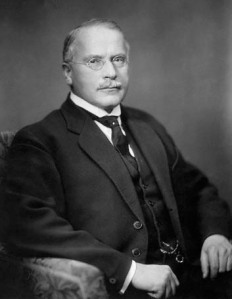 culture, particularly in the area of gender confusion. In 1946, Jung said: “Biographies should show people in their undershirts…This way of looking at people is better than false hero worship!”[6] In this essay, we are looking at Carl Jung in his undershirt. Stripped down, we see aspects of Jung and his work which some good church people refuse to acknowledge. You could call this article my search for the historical Jung, looking past the Jung Myth for the real Jungian undershirt. Carl Jung is described by Merill Berger, a Jungian psychologist, as “the psychologist of the 21st century”.[7] Dr. Satinover says “The moral relativism that released upon us the sexual revolution is rooted in an outlook of which (Jung) is the most brilliant contemporary expositor.”[8] Leaders of the 1960’s hippie movement like Timothy Leary were heavily influenced by Jungian teaching[9]. One could say without overstatement that Carl Jung is the Father of Neo-Gnosticism & the New Age Movement. That is why Satinover comments that “One of the most powerful modern forms of Gnosticism is without question Jungian psychology, both within or without the Church”.[10] Dr. Satinover notes that “the ultimate aim…of all Gnostic systems is a mystical vision of the union of good and evil.”[11]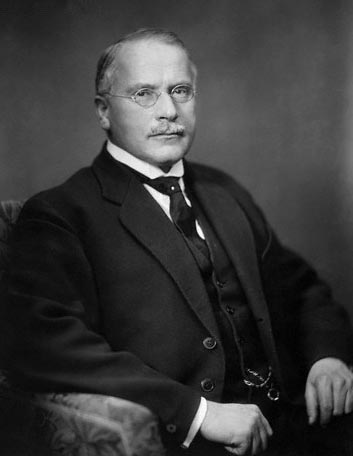
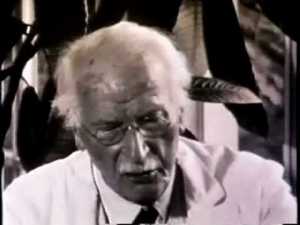 notes that Jung “devoted most of his adult life to a study of alchemy…”[15] Alchemy is the search for the Philosopher’s Stone that transmutes lead into gold, a search which Jung resymbolized as psychic and psychological transmutation and wholeness.[16]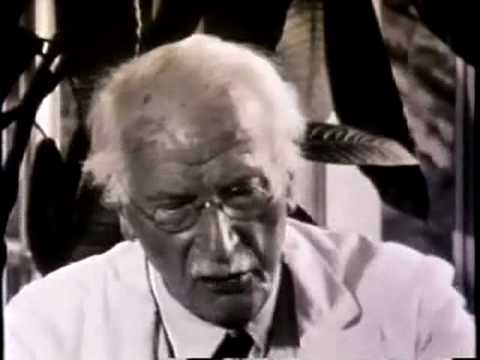
 alleged dawning of the Age of Aquarius. Once again Carl Jung foreshadowed this emphasis in a 1940 letter to his former assistant, Godwin Baynes: “1940 is the year when we approach the meridian of the first star in Aquarius. It is the premonitory earthquake of the New Age.”[25] In a letter written by Jung to Sigmund Freud, he said: “My evenings are taken up very largely with astrology. I made horoscopic calculations in order to find a clue to the core of psychological truth…I dare say that we shall one day discover in astrology a good deal of knowledge which has been intuitively projected into the heavens.”[26] In the 1950’s, Jung began to use Tarot reading as part of his astrological psychologizing. [27] Jung was known among his intimate colleagues as the ‘Warlock” (Hexenmeister) of Zurich.[28]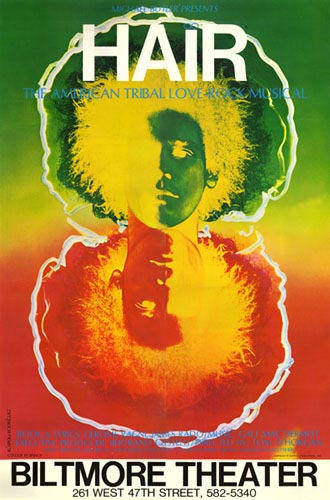
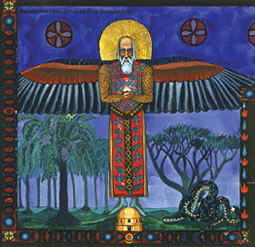 bull…and the wings of a fisher’]. Before being Philemon, this creature appeared to Jung as ‘Elijah’, and then finally mutated to ‘Ka’, an Egyptian earth-soul that ‘came from below’.[39] It may be worth reflecting upon why Jung designated his Bollingen Tower as the Shrine of Philemon.[40] Carl Jung commented: “Philemon represented a force which was not myself. In my fantasies I held conversations with him, and he said things which I had not consciously thought. For I observed clearly that it was he who spoke, not I. . . . Psychologically, Philemon represented superior insight. He was a mysterious figure to me. At times he seemed to me quite real, as if he were a living personality. I went walking up and down the garden with him, and to me he was what the Indians call a guru.”[41]
 Friedrich Schleiermacher had converted and baptized Carl Jung’s grandfather. Carl Jung was deeply aware of and damaged by his father’s spiritual emptiness, saying “What he said sounded stale and hollow, like a tale told by someone who knows it only by hearsay and cannot quite believe it himself.”[47] Carl Jung’s first and only time of taking Holy Communion was a devastating experience for him: “Slowly I came to understand that this communion had been a fatal experience for me. It had proved hollow; more than that, it had proved to be a total loss. I knew that I would never again be able to participate in this ceremony. ‘Why, that is not religion at all,’ I thought. ‘It is the absence of God; the church is a place I should not go to. It is not life which is there, but death.’”[48]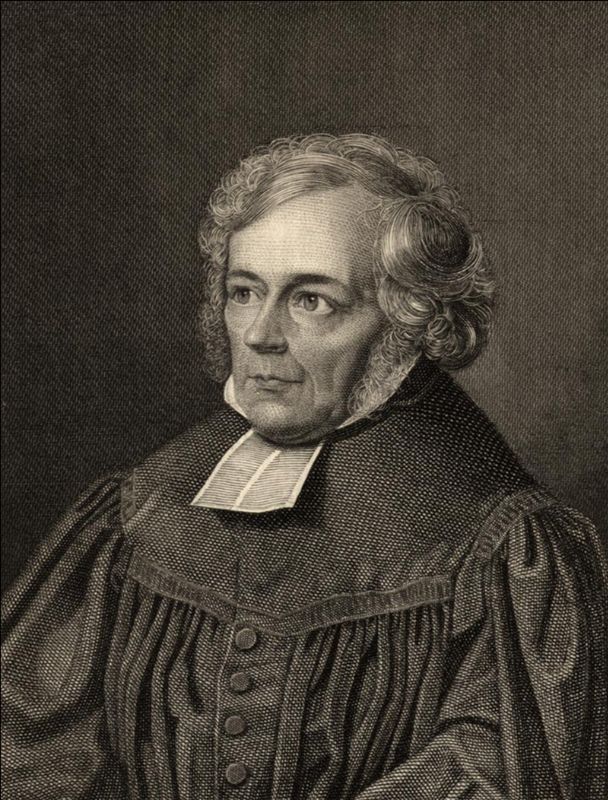
 Payne says of Dr. Jeffrey Satinover that “like (C.S.) Lewis, he knows that this synthesis or reconciliation is the greatest threat facing not only Christendom but all mankind today.”[57] “For Jung”, says Satinover, “good and evil evolved into two equal, balanced, cosmic principles that belong together in one overarching synthesis.”[58]
 of all”, said Jung, “(Faust) awakened in me the problem of opposites, of good and evil, of mind and matter, of light and darkness.”[68]
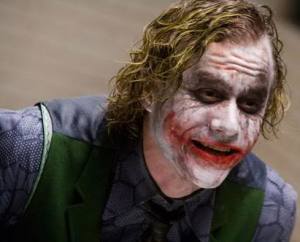 don’t want to kill you! What would I do without you? Go back to ripping off mob dealers? No, no, NO! No. You… you… complete me.”[72] George Lucas’ ‘dark side of the Force’ in the Star Wars series is another epic Jungian moment that conditions post-moderns to see spirituality as a reconciliation of light and darkness.
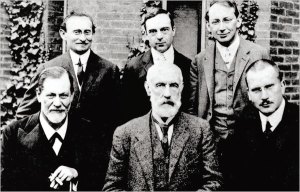 “This work Psychological Types (1921), said Jung, “sprung originally from my need to define the way in which my outlook differs from Freud’s and Adler’s. In attempting to answer this question, I came across the problem of types, for it is one’s psychological type which from the outset determines and limits a person’s judgment.”[78] Freud called Jung’s Psychological Types book ‘the work of a snob and a mystic’.[79] Jung was deeply traumatized by his split with Freud, and used the Psychological Types book to rationalize the Jung/Freud split. Jung saw himself as the so-called introvert, focusing on thinking, in contrast to Freud who was allegedly the extrovert, focused on feeling.[80] Many are unaware that the terms ‘introvert’ and ‘extrovert’ were invented by Carl Jung, and mean far more conceptually than simply being outgoing or shy.[81]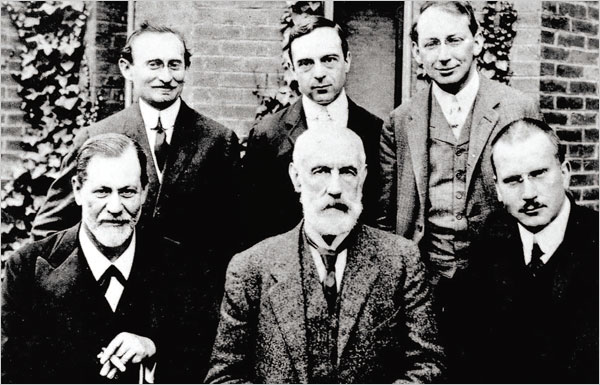
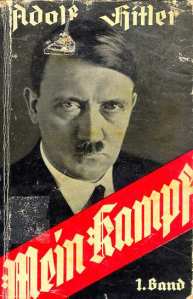 which Jung edited, endorsed Mein Kampf as required reading for all psychoanalysts.[84] His defense was that he was trying to save psychoanalysis from being obliterated by the Nazis as a ‘Jewish science.[85] In 1936, Jung said of Hitler: “[Hitler] is a medium, German policy is not made; it is revealed through Hitler. He is the mouthpiece of the Gods of old… He is the Sybil, the Delphic oracle.”[86] The influence of Germanic anti-Semitism on Jungianism can now be seen in a secret quota clause designed to limit Jewish membership to 10% in the Analytical Psychology Club of Zurich. Jung’s secret Jewish quota was in effect from 1916 to 1950, and only came to public light in 1989.[87] While it would be a mistake to paint Jung as an outright Nazi sympathizer, there was much confusion, almost a gnostic reconciliation of good and evil, in how Jung responded to Hitler’s Germany.[88] The Rev Charles Raven, Director of SPREAD, comments that “Jung’s confused response to Nazi Germany and anti-Semitism contrasts sharply with the clear-sightedness of Karl Barth and the Confessing Church expressed in the Barmen Declaration in 1933. This helps to underline the way that Jungian psychology saps the ability to recognise and resist evil.”[89]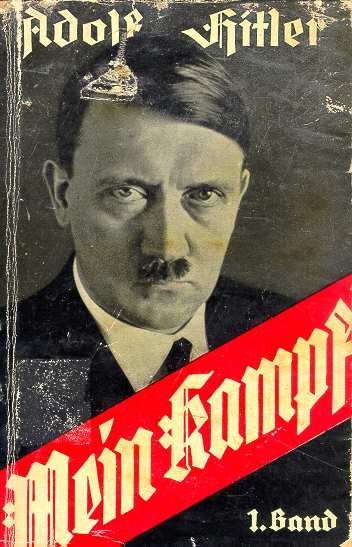
 Jung’s next mistress Toni Wolff also started as Jung’s patient and became a Jungian analyst. Toni Wolff was hugely influential in the forming of Jungian Psychology. Jungian Analyst Dr. C.A. Maier holds that ‘when it comes to psychological types, (Toni Wolff) played a very important role there.’[95] “In this unfamiliar, terrifying underground of the collective unconscious, (Toni Wolff) was Jung’s guide to such an extent that she lived with him…She reflected his anima in a way that Mrs Jung didn’t.”[96] Baroness Vera von der Heydt comments that “It was (Toni Wolff) who introduced him to all the Eastern things, Eastern spirituality, Eastern philosophy and so on.”[97]
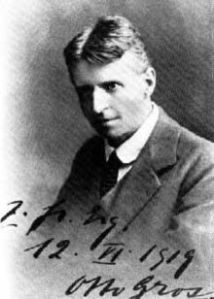 Gross advocated the “life-enhancing value of eroticism which is so great that it must remain free from extraneous considerations in laws, and above all, from any integration into everyday life…. Husbands and wives should not begrudge each other whatever erotic stimuli may present themselves. Jealousy is something mean. Just as one has several people for friends, one can also have sexual union with several people at any given period and be ‘faithful’ to each one…. Free love will save the world.”[102] As a child of the 1960’s and ‘70’s, I cannot read Otto Gross without thinking of Haight-Ashbury. Is it merely a co-incidence that Timothy Leary was psychoanalyzed by Joseph Henderson, a California Jungian analyst, before he birthed the hippie/drug movement?[103]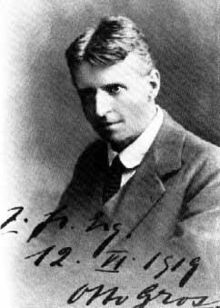
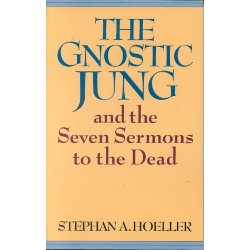 these seven messages, Jung ‘reveals’, in agreement with the 2nd century Gnostic writer Basilides, that the True and Ultimate God is Abraxas, who combines Jesus and Satan, good and evil all in one.[107] This is why Jung held that “Light is followed by shadow, the other side of the Creator.”[108] Richard and Linda Nathan, long-term ex-Jungians, commented that “In true Gnostic fashion, Jung shared the Seven Sermons to the Dead book with close friends but hid it from the public.[109]
 disciple of Jung, is famous for his public TV series on “The Power of Myth”.[112] Bishop John Spong, who has written two books (Resurrection: Myth or Reality & The Easter Moment) denying the physical resurrection of Jesus Christ, gives Joseph Campbell credit for shaping his views on Jesus’ resurrection. “I was touched by Campbell’s ability to seek the truth of myths while refusing to literalize the rational explanation of those myths…Campbell allowed me to appreciate such timeless themes as virgin births, incarnations, physical resurrections, and cosmic ascensions…Slowly, ever so slowly, but equally ever so surely, a separation began to occur for me between the experience captured for us Christians in the word Easter and the interpretation of that experience found in both the Christian Scriptures and the developing Christian traditions…”[113] Few people have realized that Bishop Spong’s spiritual grandfather is none other than Carl Jung.
 well, both Tillich and Jung, says Dourley, “understand the self to be that centering force within the psyche which brings together the opposites or polarities, whose dynamic interplay makes up life itself.”[115] As a Jungian popularizer, Tillich saw life as “made up of the flow of energy between opposing poles or opposites.”[116]
 descent. While I personally enjoyed reading much of the popular Shack novel, I have unresolved concerns about how The Shack may be used, even unintentionally, to deconstruct people’s classical understandings of the Trinity and replace it with mother/father god/dess worship.[122] Postmodern thinking, even among evangelicals, is remarkably subjectivist and fluid, easily leading to a gnostic reconciliation of gender opposites even in the Godhead.[123]
 Sandy Brown and her family have just moved to Spokane, Washington where her husband, Scott, is pastoring a new church. With a fresh start, Sandy is determined to devote more time to her four children. But, within weeks of settling in their new life, the Brown family is plunged into turmoil.



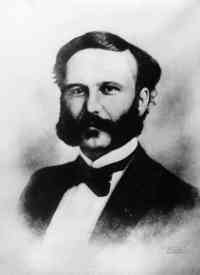


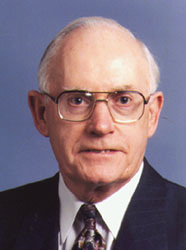






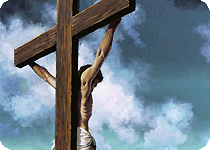






 Edhird's Blog