Three addresses were given at St. Paul’s Church, Bloor Street, Toronto, on May 1, 1999 at a special event organized by the Prayer Book Society of Canada, Toronto Branch, in celebration of the 450th anniversary of the Book of Common Prayer
by
The (late) Revd. Dr. Robert Crouse, retired Professor of Classics at King’s College, Halifax;
The (late) Revd. Dr. James Packer, Professor of Systematic Theology at Regent College, Vancouver
The Revd. Dr. Ed Hird, rector of St. Simon’s Church North Vancouver (1987-2018)
“FILLED WITH THE KNOWLEDGE OF HIS WILL” (Col. 1:1-14)
The Revd. Dr. Ed Hird, BSW, MDiv, DMin
The Revd. Ed Hird was ordained in 1980. He served in the parishes of St. Philip’s, Vancouver, and St. Matthew’s, Abbotsford, before becoming the rector of St. Simon’s Church in North Vancouver in 1987. Ed is the past National Chair of Anglican Renewal Ministries Canada, and has spoken at Renewal, Essentials and Prayer Book Society conferences in Honduras and in various locations across Canada. Inspired by the Essentials movement, he re-introduced the Prayer Book as one of the two main Sunday services in his congregation.
We live in an age in which the knowledge of God’s will is deemed by many to be either unknowable or irrelevant. Our society reminds me of the story of the roving TV reporter who was sent out to the shopping malls on Saturday morning to investigate the problem of teenage apathy and ignorance. Every teenager had the same response: “I don’t know and I don’t care”! And to be fair, teenagers are not the only Canadians suffering from spiritual ignorance and apathy. I remember an adult coming up to me after a sermon I preached in a previous parish. This person said, “I’m totally shocked. I have never made it before to the end of a sermon. I would always just doze off and wake up at the end of the message. But this time I actually heard it through to the end.”
This problem of apathy and ignorance can be traced back to the ancient disease of Pyrrhonism. Pyrrhonism is a system of skeptical philosophy, expounded in 300 BC by the Greek thinker, Pyrrho of Elis.1 The heart of Pyrrhonism is the denial of all possibility of attaining certainty in knowledge. All one is left with is the classic west-coast phrase: “Well, whatever works for you”. With the collapse of confidence in objective truth, our Canadian culture is sinking in intellectual subjectivism and moral anarchy. We have seen a Canadian judge strike down child pornography laws while claiming that our Canadian Constitution and our Charter of Rights somehow protect the possession of child pornography. We live in an age where there “is no king and everyone does as they see fit.” (Judg. 21:25). We live in an age of leadership crisis. It is not just our politicians, our police officers, our school teachers, our military leaders. Even in the Church, yes, in the Anglican Church, there is a profound leadership crisis that is crippling our corporate ability to get on with the task of making disciples of all nations. Perhaps the never-ending “sexual politics” in the Anglican Church of Canada is really a symptom of a deeper leadership crisis.
More than ever, we need to discover afresh what it means to be filled with the knowledge of God’s will and given the power to carry out that will. As J. John at the Canterbury ‘98 Conference put it, “We only have enough time to do the will of God”. So many of us in the Church are like Martha whom Jesus said was distracted by many things, but missing the main one of sitting at Jesus’ feet.
One of the many things I appreciate about the Prayer Book Society is the clarion call to prayer. The Prayer Book Society is not a Colonel Blimp English Memorial Society.2 Rather it constitutes a mobilization of God’s troops to the sacred calling of spiritual warfare through sustained and intensive prayer. If there is anything that we know about God’s will, it is that God wills that we “pray without ceasing”. Let’s be honest. How many of us need to cut back on our prayer life, because it is getting in the way of doing God’s will? Despite any fears that prayer will make us so heavenly-minded that we are no earthly good, the truth of the matter is that only the prayerful and heavenly-minded are ultimately any earthly good. The late Mother Teresa of Calcutta was a living testimony to the intimate relationship between prayer and resulting action.
It is not without reason that the Apostle Paul calls us again and again to “devote ourselves to prayer, being watchful and thankful” (Col. 4:2). Prayer is the backbone of all lasting renewal. As Dr. E. Stanley Jones, the famous Methodist missionary to India put it, “there can be no great spiritual awakening either in the individual or in the group unless and until the individual or the group give themselves to prayer.”3 Dr. Jones goes on to say: “When we feel that there is something wrong and that it is all ending in futility, instead of giving ourselves to prayer, we appoint a committee! If a monument”, says Dr. Jones, “were erected over the dead situations in Christendom, we might inscribe on it ‘Committeed to Death’. We call a committee instead of calling to prayer.” It has been said that the 16th century Reformation began in Luther’s prayer closet. The truth is that all reformation, all renewal, all restoration begins in someone’s prayer closet. Quoting Dr. Jones again, “we find sooner or later that in prayer we either abandon ourselves or we abandon prayer. Prayer will keep us from self-withholding or self-withholding will keep us from prayer.”4
I would encourage you, if you have your Bibles with you, to turn in the book of Colossians to Chapter One, which deals with one of the greatest prayers in the New Testament. I believe that it would be presumptuous to try to improve on the New Testament prayers. Rather, our goal as 21st Century Anglicans should be to model all of our prayers on the biblical pattern of prayer shown especially by Jesus and the Apostle Paul. I remember my rector, Ernie Eldridge, telling me that one of the great strengths of the Book of Common Prayer is that something like 80% of it is straight from the Bible. The prayers in the BCP were written by people who were steeped in the biblical thought forms, and so produced biblically sound and lasting prayers.
Paul is writing here to a formerly great and flourishing city that had been in a recession for the last three to four hundred years. Colossae, whose name means “Monstrosity”, had become a backwater no-name town that had been left behind in the busy pace of 1st century Greek life. Its neighbouring towns, Laodicea and Hierapolis were well-known respectively for their financial and administrative prowess, and for their burgeoning tourist and hot springs industry. They, like Colossae, were located on the River Lycus, a river famous for overlaying its surrounding river banks with thick deposits of chalk. As Bishop J.B. Lightfoot put it, “Ancient monuments are buried; fertile land is overlaid; river beds choked up and streams diverted; fantastic grottoes and cascades and archways of stone are formed, by this strange, capricious power, at once destructive and creative, working silently throughout the ages. Fatal to vegetation, these incrustations spread like a stony shroud over the ground. Gleaming like glaciers on the hillside, they attract the eye of the traveller at a distance of twenty miles, and form a singularly striking feature in scenery of more than common beauty and impressiveness.”5 In some ways, Bishop Lightfoot’s description seems like a parable of the Canadian Church … beautiful, impressive, but calcified and choked up by double-mindedness and fear.
Paul had never personally visited Colossae. Rather, he preached extensively in the coastal city of Ephesus, with the result that his new converts spread the gospel extensively to many lesser-known cities and towns that were further inland. There is a remarkable similarity between the books of Ephesians and Colossians, especially in the structure of Paul’s prayers in both epistles. In both Colossians and Ephesians, Paul centres his prayer in thanksgiving. You will notice in verse 3 how Paul says: “We always thank God the Father of our Lord Jesus Christ, when we pray for you …”. In a structure similar to that of the Lord’s Prayer, Paul pays the debt of gratitude before he moves into his personal requests. “Thy kingdom come” needs to come before “Give us this day our daily bread.” In the Alpha Course, Nicky Gumbel says that the three key prayers that we can pray are “thank you”, “please”, and “sorry”. Back in 1931, Bishop Lewis Radford of Goulbourn, Australia commented regarding this passage that “a survey of the grounds for thanksgiving revives the spirit of hope, and provides fresh material for petition.”6 The Christian life is not a life of Pollyanna-style positive thinking, but rather that of eucharistic thanksgiving in all circumstances, trusting that God can turn everything that is against us to our advantage, that all things work to the good for those who love him.
Why was Paul so thankful? Verses 4 and 5 tells us that Paul was thankful because of the great triad of Christian graces: faith, hope, and love. So often when Paul prays, he prays according to the three-fold pattern of the only things that will remain in the end. Faith: their faith in Christ Jesus; Hope: hope stored up for us in heaven; and Love: love for all the saints. As Bishop J.B. Lightfoot put it, “faith rests on the past; love works in the present; hope looks to the future”.7 Does the Prayer Book Society, indeed does the Anglican Church have a future as we celebrate the 450th Anniversary of the Book of Common Prayer? I believe that the answer to both questions is yes, if we will ground our Christian life more and more on the three-fold graces of faith, hope and love.
I will always remember Dr. Robert Crouse’s presentation at the Montreal Essentials ‘94 Conference when he spoke of “despair, that most dangerous of all sins.”8 Satan, the ultimate deceiver and seducer of God’s people, is a past master at the use of discouragement and despair in crippling the saints. He would love us to believe that Anglicanism is beyond hope, that there is no point in praying and working for the restoration of biblical orthodoxy. We can thank our Lord Jesus Christ that he will always have a faithful Anglican witness in Canada, even if someday it may require missionaries from Africa and Asia to come and re-establish the gospel in our own homeland.
The good news found in verse 6 of Chapter 1 of Colossians is that “all over the world the gospel is producing fruit and growing”. Lambeth ‘98 was a powerful reminder of that truth with the hundreds of Asian, African, and South American bishops making their presence felt in unforgettable ways. The gospel, as Bishop Lewis Radford put it, is both a transforming force and a travelling fire.9 It is a fire that cannot be stamped out no matter how hard secularists and revisionists may try. Verse 7 tells us about Epaphras, the founder of the Church at Colossae. Some early church traditions make him the first bishop of Colossae.10 Verse 7 describes him as “our dearly loved fellow servant”, as a faithful minister of Christ on our behalf. Both Paul and Epaphras were passionate that the Colossians should be filled with the knowledge of God’s will. Epaphras was so passionate about this that Paul commented in Colossians chapter 4, verse 2 that Epaphras was “always wrestling in prayer for you that you may stand firm in all the will of God, mature and fully assured.” The Greek word for wrestling is agonizomenos which means to agonize. It is God’s will that each of us agonize in prayer for the restoration of faithful Anglicanism in Canada. Wrestling in prayer is the key to being filled with the knowledge of God’s will.
That is why the Rev. Samuel Shoemaker, the Anglican priest who wrote the “12 Steps” and helped to found Alcoholics Anonymous, quoted Colossians Chapter 1 in writing step 11. What does Step 11 encourage us to pray for: “… the knowledge of His will for us and power to carry that out.”
What is the use of knowing what to do, if we haven’t the power to do it? What is the use of studying the Bible if we never do the Bible? What is the use of praying the Prayer Book if we never live out the Prayer Book? The key to doing the Bible and living the Prayer Book is Colossians chapter 1, verse 8: “love in the Spirit”. It is not the love of power that will set the Anglican Church free, but rather the power of love. Dr. Gordon Fee, the well known New Testament Scholar from Regent College, notes that virtually everywhere that the word “power” is used in the New Testament, it is referring to the power of the Holy Spirit.11 Only the Holy Spirit can give us the power to change. Only the Holy Spirit can give us the power to love. Only the Holy Spirit can give us the power to forgive. Verse 8 tells us the secret of lasting renewal: “love in the Spirit”.
In the early days of Anglican renewal, a bishop in northern B.C. fired his dean because some of his parishioners had had the nerve to pray that the bishop be filled with the Holy Spirit. If only they had just prayed for the bishop to be filled afresh or anew, the Dean might have kept his job. Why do all of us need to be filled with the Spirit again and again? (Eph. 5:18). The reason, as D.L. Moody put it, is that we leak. It is always touchy to pray for one’s bishop without sounding like one is trying to give his bishop advice. It is so easy for us to dump all our unmet dreams and frustrations on the back of our bishops. Yet God calls us to bless and not curse. God calls us in verse 9 to never give up praying for each other, and that certainly includes our bishops. Verse 9 is a wonderful way to pray for your bishop, your rector, and your wardens in a way that none of them could possibly object to. Just pray that God will fill them with the knowledge of His will through all spiritual wisdom and understanding. All of us need to be filled up, to be more full of God’s grace, peace, joy, hope, and faith so that we will be more full, more grace-full, more peace-full, more joy-full, more faith-full. The point of the fruit of the Spirit (Gal. 5:22) is to fill us up inside with more of the character of Jesus Christ.
What will being filled with the knowledge of God’s will really do for us? Paul tells us in verse 10 that such filling will result in our walking worthy of God, in our pleasing the Lord in every way, in our bearing fruit in every good work, in our growing in the knowledge of God. Being filled with the knowledge of His will is the key not only to living in the Spirit but also to walking in the Spirit (Gal. 5:25). As our AA friends remind us, it is not enough to talk the talk; we also need to walk the walk.
Yet all of us are powerless in ourselves to change our lives. In fact, no change is possible until we admit in the words of Step 1 that “We are powerless over our (addictions and sins) and our lives have become unmanageable”. The reason why “12 Step” people talk so much about a Higher Power is that our own power, our own resources, are never enough to make a lasting difference. We need, in the words of Luke 24:49, to be clothed with power from on high, the very power of the Holy Spirit. That is why Acts 1:8 says that “You shall receive power when the Holy Spirit comes upon you and you shall be my witnesses … to the ends of the earth.”. That is why Colossians chapter 1 verse 11 talks about our being strengthened with all power: in the Greek, “being powered with all power”, with all dunamis, all dynamite. There are logjams in Anglicanism that nothing but the power, the dynamite, of the Holy Spirit can possibly remove. All of us know many faithful Anglicans who have given up in despair and left our church, perhaps returning occasionally for their Communion “fixes”. When we think of the mother/father God/Goddess apostasy that the new ACC “Common Praise” hymn book is leading us into, only the power of the Holy Spirit will be able to lead us out of that syncretistic swamp. Yet with God, nothing is impossible! Would anyone like to become the founders of a Blue Hymn Book Society of Canada?
Dr. E. Stanley Jones holds that “the difference between a river and a swamp is that one has banks and the other has none. The swamp is very gracious and kindly, it spreads over everything, hence it is a swamp. Some of us are moral and spiritual swamps. We are so broad and liberal that we take in everything from the shady to the sacred. Hence we are swamps. A river has banks – it confines itself to its central purpose. The civilizations of the world organize themselves not around swamps, but around rivers.”12
To me, the Book of Common Prayer and the Bible are rivers. The new Common Praise hymn book in contrast is a gracious and kindly swamp. The river that is the Holy Spirit confines Himself to His central purpose, which is to fill us with the knowledge of the Father’s will and to give us the power to carry that out. The Colossian Christians were a tiny, faithful minority living in a “new-age” spiritual scene. As with the original Colossian church, one of the greatest challenges facing our Anglican Church is well-meaning interfaith syncretism. In our worship of newness and inclusiveness, we are rushing to replace the riverbanks of our BCP with the neo-gnostic swamp of centering prayer/mantra yoga, enneagram workshops, labyrinths, Jungian-based MBTI personality tests, and invocations of “God our Father and our Mother”.13 Lord, forgive us for our naïve worship of the seemingly new and trendy, and for our disrespect for the wisdom of our Anglican forebears. Genuine renewal is actually about renewing the riches of our inheritance in Christ Jesus, not about uncovering secret “new revelations”. (Eph. 1:18)
Most renewal movements in the past few centuries, including the various holiness, pentecostal, charismatic, and third-wave expressions, can be traced back to the influence of two Anglican priests, John and Charles Wesley, the founders of Methodism. Canadian Methodism was the largest of the bodies which came together to form the United Church of Canada in 1925. Few people realize what a high view the Wesleys had of the Anglican prayer book and of the Anglican Church in general. Even on the verge of being forced to ordain his own preachers, John Wesley commended the Church of England to his leaders as “the best constituted national church in the world”.14 John Wesley also taught his followers that “there is no LITURGY in the World, either in ancient or modern language, which breathes more of a solid, scriptural, rational Piety, than the COMMON PRAYER of the CHURCH of ENGLAND”.15 John Wesley did not just appreciate the Prayer Book theology. He even loved its language, language which he described as “not only pure, but strong and elegant in the highest degree.”16 John and Charles Wesley experienced manifestations of the Holy Spirit that would make the Toronto Airport Fellowship look tame, yet the Wesleys still held up the Prayer Book as a vital tool for orthodoxy and renewal. And John Wesley was even radical enough that he advised all his clergy to administer the Lord’s Supper every Sunday at the main service.17
As Dr. Bard Thompson put it, “It was the way of John Wesley to espouse extempore prayer, yet esteem the prayer book; to give free expression to evangelical power, yet prize the structures of the church …”18 Yet sadly Wesley’s wisdom was largely ignored. His followers decided that they could pray better and with more devotion when their eyes were shut, than they could with their eyes open, praying from a book.19 So they cast aside the Prayer Book and produced the United Church of Canada instead. Wesley drew the balance between the stability of tradition and the dynamism of the Spirit. His followers, however, became progressively less rooted generation after generation. It is so easy to cast aside “the riches of our inheritance”. It is much harder to humble ourselves enough to go back home and start afresh. I remember how hard I tried to convince my Grandma Allen to “get with it” and give up on the Book of Common Prayer. But she was so “stubborn and inflexible” that she died with the Bible and the Prayer Book by her bedside.
Our parish of St. Simon’s had not used the Book of Common Prayer at its main service for over 25 years. When I came back from the Montreal ‘94 Essentials Conference and suggested that we might try doing the Prayer Book on fifth Sundays, some of my leadership secretly wondered if I might have lost my mind. But eventually they came to see in unity what I was talking about.
Reintroducing the Prayer Book as one of our two main services has brought 30% growth in average Sunday attendance over the next two years. I am not saying that it was easy to reintroduce the Book of Common Prayer. Many Anglicans don’t like change, even if it means restoring the riches of their inheritance. There are many well-meaning Anglican clergy out there who would rather die than admit they may have made a mistake in abandoning the classic Book of Common Prayer. Many clergy have battle scars from liturgy wars in the 1970’s and early 80’s. They have finally achieved relative liturgical calm in their parishes and they are reluctant to “open up old wounds”, and disturb the relative truce.
But God’s will for us as clergy is not merely for us to preserve the peace or to be keepers of ecclesiastical aquariums, but rather to be fishers of men and women. Our greatest desire as Anglican leaders must be our desire to be filled with the knowledge of God’s will and to have the power of the Holy Spirit to carry it out. Why else do we pray every day “Thy kingdom come, Thy will be done”. What is God’s will? The Bible is clear that God’s will, among other things, is that we go into all the world, preaching the gospel to all creation, and that we make disciples of all nations (Mark 16:15, Matthew 28:19). 1 Timothy chapter 2, verses 4 and 5 tells us clearly that God’s will is that all people be saved and come to a knowledge of the truth, and that there is only one mediator, one bridge between God and humanity, the man Christ Jesus, who gave himself as a ransom for all.
The leadership crisis in Anglicanism is directly linked to a growing fuzziness of vision regarding God’s will that the lost be found. Many church leaders are beginning to publicly question whether the lost are really lost after all, and whether God really wants to find them. Unless we are convinced that the man Christ Jesus is the only mediator between God and humanity, and that he really gave himself as a ransom for all, not just for those raised in the church or in the west, we will not have the power to carry out this great and lasting commission. As Dr. John Stott put it at an Vancouver Anglican Essentials gathering, we claim uniqueness and finality in Christ alone.
If all we do is squabble about liturgical preferences and do not reach the lost, we are a people most to be pitied. The Book of Common Prayer is not an ingrown book. It is a book with a passion that the lost might be found. In contrast to the BAS, the BCP is clear that God wants us to win the world for Christ. The BAS, if you read it carefully, is written in a way that it can either encourage you to do evangelistic mission work for Christ or merely to affirm God in all cultures. The BCP, however, is uncompromising in its biblical stance that “God is not willing that any should perish but that all may come to repentance.” (2 Peter 3:9) As the former Archbishop of Canterbury, George Carey, said at Kanuga, “Evangelism is not a matter to be debated but a command to be obeyed.” God’s will, as expressed in Colossians 1 verse 13, is that he might rescue (many) from the dominion of darkness and bring (them) into the kingdom of his beloved Son, in whom we might have redemption, the forgiveness of sins. We say each Sunday in the Creed that we believe in the forgiveness of sins. Are you sharing that forgiveness with your lost neighbour, family member, co-worker?
I pray in conclusion that God may fill each of us with the knowledge of His will, that none should perish, that all may come to repentance, and that God may give us the power of the Holy Spirit to carry out his will to the very ends of the earth, in Jesus’ name. Amen.
The Oxford Dictionary of the Church, F.L. Cross, ed. (Oxford University Press, 1957), p. 1128.
Colonel Blimp was a humorous anachronistic figure in the British WW2-based television series “Dad’s Army”.
Dr. E. Stanley Jones, Pentecost: the Christ of Every Road, (Nashville: Abingdon Press, 1930), p. 247.
Ibid., p. 248.
The Rt. Revd. Dr. J.B. Lightfoot, as quoted in Dr. William Barclay’s The Daily Study Bible: the Letters to the Philippians, Colossians, and Thessalonians (Toronto: G.R. Welch Co. Ltd.), p. 91.
The Rt. Revd. Dr. Lewis B. Radford, Colossians (London: Methuen & Co. Ltd, 1931), p. 3.
Ibid., p. 151.
Anglican Essentials, George Egerton, ed. (Toronto: Anglican Book Centre, 1995), p. 289.
Radford, op. cit., p. 153.
Ibid., p. 154.
Dr. Gordon Fee, God’s Empowering Presence (Massachusetts: Hendrickson Publishers, 1994), p. 35.
Dr E. Stanley Jones, op. cit., p. 227.
As done in the Canadian Anglican “Common Praise” hymn book (1999), which tragically alters the much-loved “Joyful, Joyful, We Adore Thee” hymn from “God our Father, Christ our Brother” to “God our Father and our Mother”.
Liturgies of the Western Church, “The Sunday Service”, ed. Bard Thompson, (Cleveland and New York, Meridan Books, The World Publishing Company, 1961), p. 416.
Ibid., p. 416.
Ibid., p. 416.
Ibid., p. 416.
Ibid., p. 416.
Ibid., p. 410.
This booklet is published by the Toronto Branch of the Prayer Book Society of Canada. Additional copies can be ordered at a cost of $2 each from Dr. Diana Verseghy, 16 Capilano Court, Concord, Ontario, L4K 1L2. E-mail: Diana.Verseghy@ec.gc.ca
P. S. Click this Amazon link to view for free the first two chapters of our new novel Blue Sky.
“I’m afraid there’s been an accident…”
Sandy Brown and her family have just moved to Spokane, Washington where her husband, Scott, is pastoring a new church. With a fresh start, Sandy is determined to devote more time to her four children. But, within weeks of settling in their new life, the Brown family is plunged into turmoil.
Sandy receives shocking news that her children aren’t safe, which brings back haunting memories of the trauma she experienced as a girl. Then, the unthinkable happens…
A brutal attack puts Sandy on the brink of losing everything she’s loved. Her faith in God and the family she cherishes are pushed to the ultimate limit.
Is healing possible when so many loved ones are hurt? Are miracles really possible through the power of prayer? Can life return to the way it was before?
Blue Sky reveals how a mother’s most basic instinct isn’t for survival… but for family.
If you’re a fan of Karen Kingsbury, then you’ll love Blue Sky. Get your copy today on paperback or kindle.
-The sequel book Restoring Health: body, mind and spirit is available online with Amazon.com in both paperback and ebook form. Dr. JI Packer wrote the foreword, saying “I heartily commend what he has written.” The book focuses on strengthening a new generation of healthy leaders. Drawing on examples from Titus’ healthy leadership in the pirate island of Crete, it shows how we can embrace a holistically healthy life.
To receive a signed copy within North America, just etransfer at ed_hird@telus.net, giving your address. Cheques are also acceptable.
-Click to purchase the Companion Bible Study by Jan Cox (for the Battle of the Soul of Canada) in both paperback and Kindle on Amazon.com and Amazon.ca
-Click to purchase the Companion Bible Study by Jan Cox (for the Battle of the Soul of Canada) in both paperback and Kindle on Amazon.com and Amazon.ca
To purchase any of our six books in paperback or ebook on Amazon, just click on this link.
Sir Samuel Leonard Tilley, a Father of Canadian Confederation and twice the Lt. Governor of New Brunswick, rose each morning to start his day with prayer and Scripture reading. As the 33 founding Fathers gathered in 1864 at Charlottetown, PEI, there were many suggestions on what to call this new nation. That morning, as Tilley read from Psalm 72:8, he became so convinced that Canada should be a nation under God, that when he came down to the Conference session, he presented the inspired name “Dominion of Canada”. Our National Motto on our Coat of Arms “A Mari Usque Ad Mare” (from sea to sea) was drawn once again straight from Psalm 72:8. “He shall have dominion from sea to sea.”
Tilley came to a personal knowledge of Jesus Christ in 1839 through his Anglican rector, the Reverend William Harrison. His life was so dramatically transformed that he even became an Anglican Sunday School teacher and a Church Warden (Elder). Tilley’s son Harrison became a well-known Anglican priest.
One day, an 11-year old girl ran to Tilley for help, after her drunken father brutally stabbed her mother to death. Because of this tragedy, Tilley went from being a quiet pharmacist to becoming the Premier of New Brunswick in his campaign for alcohol reform. When Tilley brought in actual alcohol legislation, he was burned in effigy, his house was attacked, and his family’s lives were threatened.
Tilley the ‘dry’ Anglican was good friends with Sir Charles Tupper the ‘drinking’ Baptist Premier of Nova Scotia. Both shared a passion for railways which they believed were the key to the Maritimes’ future. Sir Charles Tupper eventually became the Federal Minister of Railways, bringing the CPR railway line to Vancouver, and BC into Confederation. Before the arrival of the railway, traveling to Vancouver would take all summer by riverboat and stagecoach.
The 1864 Charlottetown meeting was originally intended to bring a Maritime Union of New Brunswick and Nova Scotia, to defend against the threat of American invasion. But Tupper and Tilley dreamed bigger, inviting Ontario and Quebec to join them in a new Confederation. Tupper believed in the greatness of Canada, saying: “The human mind naturally adapts itself to the position it occupies. The most gigantic intellect may be dwarfed by being cabin’d, cribbed and confined. It requires a great country and great circumstances to develop great men.”
Tupper read the Bible fully from cover to cover by the age of eight. His father Charles Tupper Senior, a prohibitionist, was one of the founding fathers of the fast-growing Maritime Baptist Churches. While training as a medical doctor in Edinburgh, Charles Jr discovered Scotch from which he never recovered. Tupper served as first president of the Canadian Medical Association.
In 1867 the Halifax Morning Chronicle had described Tupper as “the most despicable politician within the bounds of British North America.” Throughout his career Tupper was variously described as “the Boodle Knight,” the “Great Stretcher” (of the truth), “the old tramp,” the “Arch-Corruptionist,” and “the old wretch.”.
Tupper has the distinction of being the shortest-serving Prime Minister in Canadian history, even beating out Joe Clark and Kim Campbell (67 days!). His marriage, despite allegations of philandering, lasted longer than any other Prime Minister: 66 years!
Tupper, the longest-surviving Father of Confederation, served in six federal cabinet portfolios. If there was something that was really difficult to get done, somebody who needed to be won over, Macdonald often said: ‘Call Tupper.’ Tupper could make things happen.
In 1883 a British Columbia contractor close to Tupper was awarded a two million dollar job, even though rivals submitted lower bids. The opposition suspected a payoff. Tupper faced a legal challenge and demands for a full inquiry. He promptly left his retirement home in Vancouver and sailed for London, far from the cry of scandal, to take a diplomatic posting.
Sir Charles Tupper and Sir Leonard Tilley remind us that God can use the most unlikely people in building a nation.
P. S. Click this Amazon link to view for free the first two chapters of our new novel Blue Sky.
“I’m afraid there’s been an accident…”
Sandy Brown and her family have just moved to Spokane, Washington where her husband, Scott, is pastoring a new church. With a fresh start, Sandy is determined to devote more time to her four children. But, within weeks of settling in their new life, the Brown family is plunged into turmoil.
Sandy receives shocking news that her children aren’t safe, which brings back haunting memories of the trauma she experienced as a girl. Then, the unthinkable happens…
A brutal attack puts Sandy on the brink of losing everything she’s loved. Her faith in God and the family she cherishes are pushed to the ultimate limit.
Is healing possible when so many loved ones are hurt? Are miracles really possible through the power of prayer? Can life return to the way it was before?
Blue Sky reveals how a mother’s most basic instinct isn’t for survival… but for family.
If you’re a fan of Karen Kingsbury, then you’ll love Blue Sky. Get your copy today on paperback or kindle.
-The sequel book Restoring Health: body, mind and spirit is available online with Amazon.com in both paperback and ebook form. Dr. JI Packer wrote the foreword, saying “I heartily commend what he has written.” The book focuses on strengthening a new generation of healthy leaders. Drawing on examples from Titus’ healthy leadership in the pirate island of Crete, it shows how we can embrace a holistically healthy life.
To receive a signed copy within North America, just etransfer at ed_hird@telus.net, giving your address. Cheques are also acceptable.
-Click to purchase the Companion Bible Study by Jan Cox (for the Battle of the Soul of Canada) in both paperback and Kindle on Amazon.com and Amazon.ca
-Click to purchase the Companion Bible Study by Jan Cox (for the Battle of the Soul of Canada) in both paperback and Kindle on Amazon.com and Amazon.ca
To purchase any of our six books in paperback or ebook on Amazon, just click on this link.
Doctors make a difference. Prayer makes a difference. There is no competition between medicine and prayer. They fit together, hand in glove.
I wrote an article in the Feb 1994 Deep Cove Crier about the medical condition “Spasmodic Dysphonia” that I have successfully battled with.
An article in a North Shore-wide newspaper commented about myself: “He seems to be always smiling and is said to be ‘very funny’, despite a serious speech impediment.” As many of you know, I lost my voice 38 years ago in 1980 for 18 months in the early days of ordained ministry. The condition is called ‘spasmodic dysphonia’ . It was caused by a rare viral throat infection which happens statistically to one in five million people, something like winning the lottery in reverse. Spasmodic Dysphonia causes the vocal chords to overadduct (overshut) on a spasmodic or intermittent basis, cutting off words or parts of sentences. Spasmodic Dysphonia is not caused by stress, but sometimes is more noticeable under stress.
Thirty-six years ago, I had surgery at VGH by Dr. Murray Morrison in a successful operation that allowed me to speak again and go back preaching after being off for a year. My GP thought that I would never preach again, and he would have been correct, except for having had this surgery on May 25th 1982. They cut the left laryngeal nerve of the left vocal chord, which stopped the adducting/shutting of that chord. As the right chord still overadducted/overshut, it balanced out. After my surgery, my voice was free of the spasms, but was initially much quieter and more breathy.
This successful surgery was still proving effective until August 2003 when I developed laryngitis that wouldn’t go away. To deal with the laryngitis, I took nine months of helpful speech therapy with Margy Smith, a very gifted speech therapist on the North Shore. She took me a long way along the road of recovery, but finally my otolaryngologist (ear, nose & throat specialist) Dr. Murray Morrison recommended that I take the botox treatment to loosen the overtightness of the vocal chords. Dr. Morrison’s investigation showed that my left laryngeal nerve has re-enervated or regenerated itself and thereby contributed to an overshutting of the vocal chords once again. This was the reason for my susceptibility to laryngitis over the past year. The overshutting of the vocal chords is like a door continually slamming shut.
After careful research, prayer, and reflection, I went ahead with the botox treatment at VGH (Vancouver General Hospital). It took about 5 minutes! The botox treatment by Dr. Murray Morrison allowed a fine-tuning of the benefits of my previous 1982 surgery. The botox was injected into both laryngeal nerves, thereby loosening the vocal chord shutting (adducting) on both sides. When I told people that I had a botox treatment, some people assumed that I was worried about middle-age wrinkles! But in fact botox is primarily a medical therapy to deal with a range of dystonias, including vocal chord spasming.
My wife and parents were thrilled by the elimination of the spasming through the botox treatment. My mother didn’t initially recognize my voice on the phone. The botox treatment lasts for three months, and then is redone by Dr. Morrison at VGH. It initially overloosens the vocal chords a bit, with the result that my voice will be somewhat breathy and quieter to start with. The treatment greatly enhances my ability to read out loud the liturgy and scriptures, which has been more difficult than spontaneous preaching. Over the next few weeks, the vocal chords are gradually tightening again, resulting in a less breathy voice and less quiet voice.
I am so grateful to God for advances in modern medical science that help people like myself in such practical ways. I am so grateful to God for people like you reading this article, many of whom I know have been praying for me. I have had several people specifically pray: “Ed Hird will not be silenced”. I am very happy with this new medical step. It is so exciting to be able to speak freely without being cut off in mid-sentence. Thank God that prayer and medicine can be best friends.
The Rev. Dr. Ed Hird, BSW, MDiv, DMin
-previously published in the North Shore News/Deep Cove Crier
P. S. Click this Amazon link to view for free the first two chapters of our new novel Blue Sky.
“I’m afraid there’s been an accident…”
Sandy Brown and her family have just moved to Spokane, Washington where her husband, Scott, is pastoring a new church. With a fresh start, Sandy is determined to devote more time to her four children. But, within weeks of settling in their new life, the Brown family is plunged into turmoil.
Sandy receives shocking news that her children aren’t safe, which brings back haunting memories of the trauma she experienced as a girl. Then, the unthinkable happens…
A brutal attack puts Sandy on the brink of losing everything she’s loved. Her faith in God and the family she cherishes are pushed to the ultimate limit.
Is healing possible when so many loved ones are hurt? Are miracles really possible through the power of prayer? Can life return to the way it was before?
Blue Sky reveals how a mother’s most basic instinct isn’t for survival… but for family.
If you’re a fan of Karen Kingsbury, then you’ll love Blue Sky. Get your copy today on paperback or kindle.
-The sequel book Restoring Health: body, mind and spirit is available online with Amazon.com in both paperback and ebook form. Dr. JI Packer wrote the foreword, saying “I heartily commend what he has written.” The book focuses on strengthening a new generation of healthy leaders. Drawing on examples from Titus’ healthy leadership in the pirate island of Crete, it shows how we can embrace a holistically healthy life.
To receive a signed copy within North America, just etransfer at ed_hird@telus.net, giving your address. Cheques are also acceptable.
-Click to purchase the Companion Bible Study by Jan Cox (for the Battle of the Soul of Canada) in both paperback and Kindle on Amazon.com and Amazon.ca
-Click to purchase the Companion Bible Study by Jan Cox (for the Battle of the Soul of Canada) in both paperback and Kindle on Amazon.com and Amazon.ca
To purchase any of our six books in paperback or ebook on Amazon, just click on this link.
How often do we give thanks for Governor James Douglas, Father of BC? BC still bears the mark of Douglas’ vision. Douglas had little to work with in terms of men, money and materials; the only thing not lacking was Douglas’ determination. Governor Douglas prophetically said: ‘It is the bold, resolute, strong, self-reliant man, who fights his own way through every obstacle and wins the confidence and respect of his fellows. As with men, so it is with nations.’
Douglas had a vision of a great highway of commerce down the centre of the mainland colony. In little more than two years, he was to achieve what seems almost a miracle: a wagon road, eighteen feet wide and four hundred miles long, connecting the wealthy new gold fields of the Cariboo to the older coastal settlements
Douglas was born in Guyana. His mom Martha Ann Ritchie, originally from Barbados, was a free Creole whose family moved to Guyana for better employment in the late 1790’s. His father John Douglas, a Scottish merchant planter, took James and his brother to Scotland at age nine. James never saw his mom again, never returning to Guyana. After schooling, James moved at age sixteen to Canada and apprenticed with the Northwest Company, which eventually merged with the rival Hudson’s Bay Company. James spoke French so well that he was even able to lead Prayer Book worship services in French with the other voyageurs.
At Fort St. James he married Amelia Connolly, whose father was an Irish-French fur trader and whose mother was a Cree Chief’s daughter. The Douglas family moved to Fort Vancouver, Washington where James quickly became the Hudson Bay Company Chief Factor in 1839. While still at Fort Vancouver, he had set down in a notebook four tasks that he hoped to achieve. These were: “The moral renovation of this place; Abolition of slavery within our limits; Lay down a principle and act upon it with confidence; The building of a church of Christ in this place.”
As it became more obvious that everything below the 49th Parallel would become American territory, James Douglas was sent to Vancouver Island to relocate the Hudson’s Bay Fort. On March 14, 1843 Douglas founded the new capital Fort Victoria. In 1851 Douglas was appointed the second Governor of the Colony of Vancouver Island.
When the 1858 Gold rush struck BC, Douglas noted: “this country and Fraser’s River have gained an increase of 10,000 inhabitants within the last six weeks, and the tide of immigration continues to roll onward without any prospect of abatement.” Writing to Lord Stanley, Douglas predicted that ‘in the course of a few months there may be one hundred thousand people in the country.’
James Douglas preserved BC from absolute chaos during the 1858 Gold rush. With tens of thousands of American gold miners descending upon BC, James Douglas held back a avalanche that would have irrevocably swept BC out of any Canadian orbit. As historian Derek Pethick commented, “It is in the hour of crisis, when all but the bravest would have abandoned the unequal struggle, one man stood up and was counted. That man was James Douglas.” There is no doubt that Canada as we know it ‘from sea to shining sea’, would not exist today without Governor Douglas, one of the greatest of the Fathers of Confederation.
Governor Douglas had an outer exterior of implacability, but in his private family life he showed great depths of feeling. Upon the death of his daughter Cecilia, Douglas lamented: ‘She was the joy of my eyes, the light of my life; her ear was ever open to the calls of distress; the poor and afflicted never appealed to her in vain; they will miss her sympathizing heart and helping hand.’
Douglas deeply loved nature as seen in a letter to his daughter Martha: ‘The sweet little robin is pouring out his heart in melody, making the welkin ring with his morning song of praise and thanksgiving. Would that we were equally grateful to the Author of all good.” In giving advice to his son James, Douglas commented: “We are all poor frail creatures when left to ourselves; our sufficiency is of the Lord; we must look to him for strength and guidance in the hour of trial. His power is sufficient for us…”
The Rev. Dr. Ed Hird, BSW, MDiv, DMin
-previously published in the North Shore News/Deep Cove Crier
P. S. Click this Amazon link to view for free the first two chapters of our new novel Blue Sky.
“I’m afraid there’s been an accident…”
Sandy Brown and her family have just moved to Spokane, Washington where her husband, Scott, is pastoring a new church. With a fresh start, Sandy is determined to devote more time to her four children. But, within weeks of settling in their new life, the Brown family is plunged into turmoil.
Sandy receives shocking news that her children aren’t safe, which brings back haunting memories of the trauma she experienced as a girl. Then, the unthinkable happens…
A brutal attack puts Sandy on the brink of losing everything she’s loved. Her faith in God and the family she cherishes are pushed to the ultimate limit.
Is healing possible when so many loved ones are hurt? Are miracles really possible through the power of prayer? Can life return to the way it was before?
Blue Sky reveals how a mother’s most basic instinct isn’t for survival… but for family.
If you’re a fan of Karen Kingsbury, then you’ll love Blue Sky. Get your copy today on paperback or kindle.
-The sequel book Restoring Health: body, mind and spirit is available online with Amazon.com in both paperback and ebook form. Dr. JI Packer wrote the foreword, saying “I heartily commend what he has written.” The book focuses on strengthening a new generation of healthy leaders. Drawing on examples from Titus’ healthy leadership in the pirate island of Crete, it shows how we can embrace a holistically healthy life.
To receive a signed copy within North America, just etransfer at ed_hird@telus.net, giving your address. Cheques are also acceptable.
-Click to purchase the Companion Bible Study by Jan Cox (for the Battle of the Soul of Canada) in both paperback and Kindle on Amazon.com and Amazon.ca
-Click to purchase the Companion Bible Study by Jan Cox (for the Battle of the Soul of Canada) in both paperback and Kindle on Amazon.com and Amazon.ca
To purchase any of our six books in paperback or ebook on Amazon, just click on this link.
Fighting makes us feel strong. Prayer reminds us that we are vulnerable. Fighting makes us feel in control. Prayer reminds us to let go and let God. Fighting feeds on anger and bitterness. Prayer feeds on forgiveness and peace.
I became a Christian 46 years ago, after 17 years of spiritual hide-and-seek. Being raised in church, I was taught to pray as a child but never really understood the intimacy of a real relationship. As a teenager, my prayer life gradually faded into non-existence. I never rejected God. I just kept God at a convenient distance without even realizing it.
God to me was not untrue, but rather irrelevant. I never rejected prayer. It just slipped off my radar screen into oblivion. I never rejected the Church. I just found it painfully boring and obscure. Though I was desperately seeking for the meaning of life, I had no idea that the Church would have anything to offer in that area.
When I was brutally attacked as a teenager by a gang member, I turned to martial arts in a secret desire for both self-defense and revenge. Fighting made me feel strong. I had no idea that prayer might turn out to be a more powerful weapon. Within a year, I came to know Jesus Christ on a personal basis, and lost the desire to get even. A few years later, I discovered that this bully had gone after someone larger than him who had kicked this bully’s teeth in and twisted a broken beer bottle in his face. Hearing that story taught me that violence always breeds violence. It was better to forgive because there is always ‘a faster gunfighter just waiting around the corner.’ Even with that realization, it still took me twenty years before I finally parted company with martial arts.
When I met Jesus Christ 46 years ago, I was flabbergasted that someone was actually listening. Prayer no longer felt like talking to the ceiling plaster. It felt personal, real, and infectious. I couldn’t get enough of connecting to this new best-friend. There had been an emptiness inside me that skiing, golfing, and parties couldn’t fill. Through prayer, I felt a new inner peace and warmth that even my former drinking buddies noticed.
Going back to church, I noticed that church wasn’t as boring as it used to be. While it may have changed, the big thing was that I had changed from the inside out. I developed a new love and concern for people that I used to avoid and even look down on. Instead of resenting life, I began to wake up looking forward to the next adventure that was ahead of me.
One of the things that troubled me though, as a new Christian, was the infighting between all the different denominations. Why couldn’t the Anglicans, Baptists, Pentecostals, Mennonites, Presbyterians, etc learn to get along and stop competing? Sometimes Christians reminded me of my old life as a non-Christian when I would rather fight than pray.
One of the wonderful gifts of serving on the North Shore from 1987 to 2018 is that denominational bickering is at an all-time low. Clergy and pastors speak well of each other’s congregations and even freely send parishioners to attend other churches. There is a generosity among North Shore pastors that allows them to bless each other instead of cursing each other.
This hasn’t happened by accident. It is the fruit of forty years of weekly prayer by the North Shore clergy, first at Hillside Baptist, then at Valley Church, and now at Sutherland Church. By praying together on the second Wednesday of each month, God has been teaching the North Shore pastors how much we need each other. North Shore Clergy have been learning that they are too busy not to pray. By focusing on Jesus Christ, they have been rediscovering that we are on the same team. Denominations are second. Jesus is first.
Every denomination has its own strengths and weaknesses. Instead of putting down another group for their flaws, we are learning to hold them up in prayer that they may become all that they are meant to be. Presbyterians don’t need to become Anglicans, and Anglicans don’t need to become Baptists. Our real calling is to love each other with the life-changing love of Jesus Christ. Many churches have formed because someone was hurt. We have been learning that it is time to forgive, time to heal, time to pray. Why fight when we can pray? My prayer for those reading this article is that we may rediscover the deep truth that the family that prays together stays together.
The Rev. Dr. Ed Hird, BSW, MDiv, DMin
-previously published in the North Shore News/Deep Cove Crier
P. S. Click this Amazon link to view for free the first two chapters of our new novel Blue Sky.
“I’m afraid there’s been an accident…”
Sandy Brown and her family have just moved to Spokane, Washington where her husband, Scott, is pastoring a new church. With a fresh start, Sandy is determined to devote more time to her four children. But, within weeks of settling in their new life, the Brown family is plunged into turmoil.
Sandy receives shocking news that her children aren’t safe, which brings back haunting memories of the trauma she experienced as a girl. Then, the unthinkable happens…
A brutal attack puts Sandy on the brink of losing everything she’s loved. Her faith in God and the family she cherishes are pushed to the ultimate limit.
Is healing possible when so many loved ones are hurt? Are miracles really possible through the power of prayer? Can life return to the way it was before?
Blue Sky reveals how a mother’s most basic instinct isn’t for survival… but for family.
If you’re a fan of Karen Kingsbury, then you’ll love Blue Sky. Get your copy today on paperback or kindle.
-The sequel book Restoring Health: body, mind and spirit is available online with Amazon.com in both paperback and ebook form. Dr. JI Packer wrote the foreword, saying “I heartily commend what he has written.” The book focuses on strengthening a new generation of healthy leaders. Drawing on examples from Titus’ healthy leadership in the pirate island of Crete, it shows how we can embrace a holistically healthy life.
To receive a signed copy within North America, just etransfer at ed_hird@telus.net, giving your address. Cheques are also acceptable.
-Click to purchase the Companion Bible Study by Jan Cox (for the Battle of the Soul of Canada) in both paperback and Kindle on Amazon.com and Amazon.ca
-Click to purchase the Companion Bible Study by Jan Cox (for the Battle of the Soul of Canada) in both paperback and Kindle on Amazon.com and Amazon.ca
To purchase any of our six books in paperback or ebook on Amazon, just click on this link.
Did you know that suicide has become the No. 2 killer of teenagers in North America? Suicide is a taboo subject that no one wants to talk about. It may frighten us; yet it has to be faced. In North America the suicide rate for male teens aged 15 to 19 has increased to 3 times the 1967 rate (2 ½ times increase for females).
So what can we do about teen suicide? How can we get the help to teens who really need it? Well, first of all, we need to know what the causes of suicide are. Why do people do it? Experts say that there are five main causes of suicide:
Severe feelings of guilt and hostility towards others
Punishing others through suicide
Emotional illness (35% of suicides involve severe depression and temporary insanity)
Physical illness such as cancer (40% of men who commit suicide and 20% of women)
Losses such as death of loved ones, or financial ruin
Camus, the famous philosopher, once said that there is but one philosophic problem and that is suicide. It revolves around life’s apparent meaninglessness, despair, and absurdity.
I think Camus has a point. You see, life sometimes can feel very unfair, very abusive, and very cruel. Life can often destroy your dreams, and make you wish that you’d never been born. For some people, they never feel any suicide temptation. Some others feel it very infrequently. There are others who feel these emotions on a regular basis. They may have never acted on those feelings, but the feelings still haunt them.
Every time those feelings come, it becomes a major struggle to once again choose life and renounce the powers of death. The suicide temptation is often an addiction. Anything becomes an addiction when it controls our lives, when no matter how much we dislike the activity, we seem to return to it again and again. I believe that Jesus Christ, through counseling and prayer, can break the power of any addiction. But it’s not easy. There’s no such thing as a quickie cure.
The root of addiction is none other than fear and guilt. All addictions, whether to suicide or whatever, are fed by bondage to fear and guilt. The more fearful we become, the guiltier we become, the greater control the addiction to suicide gets over us.
The cycle may go like this. Say you’ve had a very depressing week, your teacher flunked you, your parents grounded you, your girlfriend dropped you, your baseball coach cut you, and your car died on you. In the midst of this depression, you may begin to feel; “What’s the use? I wish I wasn’t alive”.
Suicide addiction can easily set in at this point. First of all, you feel guilty that you just felt that way. Secondly, you may feel fear that those feelings will become worse. So you just try to avoid these suicide feelings and shut them out of your mind. But it doesn’t work and you just feel more guilty. Winning over temptation by mental avoidance never works.
Another thing that increases the suicide addiction is that when we feel guilty about these feelings, we’re too embarrassed to have God around. We feel too unclean, too unspiritual; so without fully realizing it, we ask God to leave the room and wait outside until the temptation is over.
This, of course, makes us feel even more rejected and guilty. Then we feel abandoned by God just when we need him. The old saying, “If you don’t feel close to God, guess who moved?” is still true. But we tend to say to ourselves; If God abandons me when I really need him, why bother to fight it. I’m not worth it. Why resist it?”
So then we take the other step of self-abandonment. We abandon ourselves to the hopelessness of wallowing in our suicide feelings, and to an ever-increasing vicious cycle of fear and guilt.
How then does Jesus break the addiction of suicide? Jesus breaks the addiction by breaking the power of guilt and fear. By dying on the cross as the forsaken one, as the abandoned one, He exchanges His cleanness for our uncleanness. He was abandoned and forsaken so that we need never feel abandoned or forsaken. You may remember that He died on the cross, saying ” My God, my God, why have you forsaken me?”
In the Garden of Gethsemane, Jesus became grieved and distressed, saying “My soul is deeply grieved to the point of death”. In Gethsemane and on the cross, he took our agony, our guilt, our depression, our fear, so that we don’t have to be stuck with that garbage any more.
The Bible says that Jesus has been tempted in all things as we are, yet without sin (Hebrews 4:15). That means that Jesus allowed Himself to feel the awful pull to death and suicide, and then he broke its power on the Cross. In an allegorical sense, you could say that Jesus “committed suicide” on the cross so that we don’t have to.
As a result you don’t need to punish yourself anymore. Jesus took your punishment. You don’t need to condemn yourself anymore. “Now there is no condemnation for those in Christ Jesus.” (Romans 8:1). You don’t need to be consumed with fear any more. “Perfect Love casts out all fear.” (I John 4:18)
Some of you reading this may be secretly struggling with suicide feelings. Some of you feel very guilty and fearful about it. I challenge you to give these feelings to Jesus and accept his offer of forgiveness.
I challenge you to seek professional counseling and really give Christ a chance to do some long-term personal healing. “Choose life that you may live in the love of the Lord.”
The Rev. Dr. Ed Hird, Rector, BSW, MDiv, DMin
-previously published in the Abbotsford News and the North Shore News/Deep Cove Crier
P. S. Click this Amazon link to view for free the first two chapters of our new novel Blue Sky.
“I’m afraid there’s been an accident…”
Sandy Brown and her family have just moved to Spokane, Washington where her husband, Scott, is pastoring a new church. With a fresh start, Sandy is determined to devote more time to her four children. But, within weeks of settling in their new life, the Brown family is plunged into turmoil.
Sandy receives shocking news that her children aren’t safe, which brings back haunting memories of the trauma she experienced as a girl. Then, the unthinkable happens…
A brutal attack puts Sandy on the brink of losing everything she’s loved. Her faith in God and the family she cherishes are pushed to the ultimate limit.
Is healing possible when so many loved ones are hurt? Are miracles really possible through the power of prayer? Can life return to the way it was before?
Blue Sky reveals how a mother’s most basic instinct isn’t for survival… but for family.
If you’re a fan of Karen Kingsbury, then you’ll love Blue Sky. Get your copy today on paperback or kindle.
-The sequel book Restoring Health: body, mind and spirit is available online with Amazon.com in both paperback and ebook form. Dr. JI Packer wrote the foreword, saying “I heartily commend what he has written.” The book focuses on strengthening a new generation of healthy leaders. Drawing on examples from Titus’ healthy leadership in the pirate island of Crete, it shows how we can embrace a holistically healthy life.
To receive a signed copy within North America, just etransfer at ed_hird@telus.net, giving your address. Cheques are also acceptable.
-Click to purchase the Companion Bible Study by Jan Cox (for the Battle of the Soul of Canada) in both paperback and Kindle on Amazon.com and Amazon.ca
-Click to purchase the Companion Bible Study by Jan Cox (for the Battle of the Soul of Canada) in both paperback and Kindle on Amazon.com and Amazon.ca
To purchase any of our six books in paperback or ebook on Amazon, just click on this link.
How often do we celebrate the gift of our mothers-in-law? Marriage counselors tell us that there are three primary areas of stress in marriages: money, marital intimacy, and in-laws. Mother-in-law jokes tend to express the ambivalent nature of this most important relationship. I would like to state uncategorically that I have been blessed with the gift of the mother-in-law that God gave me. It has been twenty-two years now since Vera went home to heaven in 2,000, but her impact is still deeply felt.
My mother-in-law found me before my wife did. By God-incidence, we met each other at a 1974 weekend conference. She was quite impressed with me, despite my 1970’s longish hair and embroidered overalls. My mother-in-law really enjoyed the movie ‘Fiddler on the Roof’, and could sing ‘Matchmaker, matchmaker, make me a match’ by heart. Unfortunately, when my future mother-law/matchmatcher commended me to my future wife, the assessment was not mutual. My wife and I had been in the same High School for Grade 12. We all know what familiarity can breed. My wife did remember however that even in Grade 12, I had nice eyes.
When I reconnected with my future wife at UBC in 1975, I also rediscovered my future mother-in-law. I was most impressed by the warm hospitality that I always felt in my future mother-in-law’s home. Some people make you feel stressed by how they fuss over you as a guest. With my mother-in-law, it all felt very natural and relaxed. She had that gift of making one feel right at home.
When I lost my voice for 18 months back in 1980, my mother-in-law was one of the people who stood with me in practical and prayerful ways. She introduced me to the Order of St. Luke the Physician where I learned how to combine the dual benefits of medicine and prayer. When I am tempted to be cynical about the power of prayer, I think of my mother-in-law who never gave up praying for seemingly hopeless situations. Once when my wife’s sister was running from the Lord, my mother-in-law recruited people from all around the world to pray without ceasing for her daughter. As a result of that passionate prayer, the prodigal daughter ‘returned home’ and became a Christ-like example to other seekers. My mother-in-law symbolizes the call to ‘never, never give up.’
“Like mother, like daughter” goes the familiar saying. Forty-one years into my marriage, I am now more aware than ever how much a mother influences her daughter. I have counseled various women whose experiences with their mothers have left them emotionally crippled and unable to share love. I give thanks to God that my mother-in-law raised my wife in an atmosphere of love and caring. I know that without that foundational nurturing, my last 41 years of marriage would have been a very different experience indeed. I am grateful to be married to a loving wife and mother who learned mother-love from someone who really cares.
My mother-in-law has had some real setbacks in her life over the years, but she never let it defeat her. She always bounced back. Family and faith mean the world to her. Day in and day out, she was always looking for ways to comfort and encourage other people, both young and old. Even on her hospital bed near the end of her life, she was still counselling people. Rather than moaning about her own problems, she was remarkably other-centered, truly loving her neighbours as herself in a very Christ-like way.
One of her greatest contributions in my life has been her encouraging my involvement in the Christian Ashram retreat movement. For 45 years now, I have attended the BC Christian Ashram each summer spending time learning how to be a healthier and more whole person. I can honestly say that the renewal that I have experienced in the 45 Christian Ashram retreats that I have attended have made me more peaceful, more forgiving, and more restful.*
What more can I say except ‘thank you’ for my irreplaceable mother-in-law? My prayer for those married couples reading this article is that we will take time to express our gratitude to our mothers-in-law. Life is shorter than we think.
-previously published in the North Shore News/Deep Cove Crier
P. S. Click this Amazon link to view for free the first two chapters of our new novel Blue Sky.
“I’m afraid there’s been an accident…”
Sandy Brown and her family have just moved to Spokane, Washington where her husband, Scott, is pastoring a new church. With a fresh start, Sandy is determined to devote more time to her four children. But, within weeks of settling in their new life, the Brown family is plunged into turmoil.
Sandy receives shocking news that her children aren’t safe, which brings back haunting memories of the trauma she experienced as a girl. Then, the unthinkable happens…
A brutal attack puts Sandy on the brink of losing everything she’s loved. Her faith in God and the family she cherishes are pushed to the ultimate limit.
Is healing possible when so many loved ones are hurt? Are miracles really possible through the power of prayer? Can life return to the way it was before?
Blue Sky reveals how a mother’s most basic instinct isn’t for survival… but for family.
If you’re a fan of Karen Kingsbury, then you’ll love Blue Sky. Get your copy today on paperback or kindle.
-The sequel book Restoring Health: body, mind and spirit is available online with Amazon.com in both paperback and ebook form. Dr. JI Packer wrote the foreword, saying “I heartily commend what he has written.” The book focuses on strengthening a new generation of healthy leaders. Drawing on examples from Titus’ healthy leadership in the pirate island of Crete, it shows how we can embrace a holistically healthy life.
To receive a signed copy within North America, just etransfer at ed_hird@telus.net, giving your address. Cheques are also acceptable.
-Click to purchase the Companion Bible Study by Jan Cox (for the Battle of the Soul of Canada) in both paperback and Kindle on Amazon.com and Amazon.ca
-Click to purchase the Companion Bible Study by Jan Cox (for the Battle of the Soul of Canada) in both paperback and Kindle on Amazon.com and Amazon.ca
Many of our books include references to and stories about E. Stanley Jones. To purchase any of our six books in paperback or ebook on Amazon, just click on this link.
To receive a personally signed copy of any of our books within North America, just etransfer at ed_hird@telus.net, giving your address. Cheques are also acceptable.
One of the best things that ever happened to the famous BC explorer David Thompson was when a large log rolled from a sleigh and crushed his leg. All things really did work for the good through that tragedy (Romans 8:28). His broken leg gave him time to learn math, science, and instruments of surveying, how to keep field notes and journal-keeping. As a result, David Thompson learned the necessary skills which enabled him to put Western Canada on the map.
The early 19th century Western Canada map was essentially blank until Thompson filled it in. Thompson was one of the master-builders of Canada and possibly the greatest geographer the world has known. As a land geographer, Thompson was the peer of Captain James Cook, the great sea geographer of the oceans. Thompson has been described as a great surveyor disguised as a fur trader, as a marvelous scientist with the sensitive soul of a prophet.
By his own initiative and industry, he explored and surveyed more than a million and a half square kilometres of wilderness, accomplishing the staggering feat of mapping half a continent. Even Alexander Mackenzie, the renowned explorer, was quite astounded and remarked that Thompson had performed more in ten months than he expected could have been done in two years. Thompson’s map, his greatest achievement, was so accurate that 100 years later it remained the basis for many of the maps issued by the Canadian government and the railway companies. We can even credit David Thompson with the exacting survey of much of the Canadian/US 49th Boundary.
Thompson’s written ‘Travels Journal’ shows his multifaceted gifts as scientific explorer, geographer, cartographer, and naturalist. Some scholars have described Thompson’s Journal as one of the finest works in Canadian literature. His directness in prose, his modesty and ability to see himself and others, his sharp powers of observation and intense practicality all contribute to a vivid glimpse of early Canadian pioneering. His account of his adventures has also been described as one of the world’s greatest travel books.
When David was only two years old, his father died and his mother moved to London, changing their Welsh name ApThomas to the more easily spoken Thompson. When David moved to Canada, he never saw either his family or London town again. In his journal, David wrote movingly of a ‘long and sad farewell to my noble, my sacred country, an exile for ever’.
Thompson the Canadian immigrant grew to love ‘the forest and the white water, the shadow and the silence, the evening fire, the stories and the singing and a high heart.’ He was modest, talented and deeply spiritual. The First Nations people gave him the name Koo-Koo-Sint, which means ‘Star-Gazer’, in recognition of his star-based map work. It wasn’t that he was a starry-eyed dreamer, but rather a dedicated scientist using the best mapping technology of his day.
David Thompson apprenticed with the Hudson’s Bay Company, but later switched to the competitors, the North West Company, because the Hudson’s Bay Company wanted him to focus on furs, not map-making. The North West Company appointed Thompson as their official ‘Surveyor and Map Maker’, and proudly displayed his finished map of Canada on their boardroom wall.
Thompson’s brother-in-law, John McDonald, considered Thompson a good trader, a fearless traveler, and a man who was liked and respected by the First Nations. His few criticisms of his brother-in-law had to do with his spirituality, his passion for surveying, and his total unwillingness to drink or to sell liquor when dealing with customers. Thompson had seen so many First Nations people harmed by the liquor trade that he had acquired a strong aversion to such profiteering.
Unlike many Nor-Westers, Thompson did not abandon his wife Charlotte and his family when he finally became wealthy. David and Charlotte Thompson, who had seven sons and six daughters, were only parted by his death fifty-eight years after their marriage.
Thompson tried in vain for years to find a profitable trade route to the Pacific. Upon hearing that the American Jacob Astor had sent out his sea and land expedition to the Oregon country, the Canadians sent David Thompson to try once again. Thompson and his voyageurs bravely made their way down the Columbia River. They were continually wet up to the middle, and exposed to cold highwinds. The glacier water deprived them of all feeling in their limbs. Despite such hardships, Thompson never gave up, instead writing in his Journal that they ‘continued under the mercy of the Almighty and at sunset put up, each of us thankful for our preservation’.
When they finally reached the Pacific watershed, Thompson knelt on the banks of the Blueberry Creek and prayed aloud: ‘May God in his mercy give me to see where these waters flow into the ocean, and let us return in safety.’ He and his voyageurs eventually did make it to the mouth of the Columbia River, but unfortunately arrived there after Jacob Astor. One can speculate that if David Thompson had been a little quicker, the name ‘British Columbia’ might have been a more accurate description of our province.
Despite Thompson’s great success in canoeing to the mouth of the Columbia and in mapping most of Western Canada, he died in extreme poverty and obscurity, even having to pawn his beloved surveying equipment and his overcoat to buy food for his family. Yet throughout the hardships, Thompson never stopped gazing at the Morning Star, Jesus Christ. I give thanks for David Thompson the Star-Gazer who did so much for every one of us as Canadians and British Columbians.
-previously published in the North Shore News/Deep Cove Crier and the Light Magazine
P. S. Click this Amazon link to view for free the first two chapters of our new novel Blue Sky.
“I’m afraid there’s been an accident…”
Sandy Brown and her family have just moved to Spokane, Washington where her husband, Scott, is pastoring a new church. With a fresh start, Sandy is determined to devote more time to her four children. But, within weeks of settling in their new life, the Brown family is plunged into turmoil.
Sandy receives shocking news that her children aren’t safe, which brings back haunting memories of the trauma she experienced as a girl. Then, the unthinkable happens…
A brutal attack puts Sandy on the brink of losing everything she’s loved. Her faith in God and the family she cherishes are pushed to the ultimate limit.
Is healing possible when so many loved ones are hurt? Are miracles really possible through the power of prayer? Can life return to the way it was before?
Blue Sky reveals how a mother’s most basic instinct isn’t for survival… but for family.
If you’re a fan of Karen Kingsbury, then you’ll love Blue Sky. Get your copy today on paperback or kindle.
-The sequel book Restoring Health: body, mind and spirit is available online with Amazon.com in both paperback and ebook form. Dr. JI Packer wrote the foreword, saying “I heartily commend what he has written.” The book focuses on strengthening a new generation of healthy leaders. Drawing on examples from Titus’ healthy leadership in the pirate island of Crete, it shows how we can embrace a holistically healthy life.
To receive a signed copy within North America, just etransfer at ed_hird@telus.net, giving your address. Cheques are also acceptable.
-Click to purchase the Companion Bible Study by Jan Cox (for the Battle of the Soul of Canada) in both paperback and Kindle on Amazon.com and Amazon.ca
-Click to purchase the Companion Bible Study by Jan Cox (for the Battle of the Soul of Canada) in both paperback and Kindle on Amazon.com and Amazon.ca
To purchase any of our six books in paperback or ebook on Amazon, just click on this link.
With the tragic helicopter death of superstar Kobe Bryant, there has been a lot of people thinking about basketball’s impact on our lives. Almost every North American has played basketball, even if only shooting a few baskets at the local park. At my high school ‘Winston Churchill’, we had a passion for basketball. In Grade Eight, my dream was to become a basketball star. My only limitations were getting the ball in the hoop and the fact that I was only five foot two. Back then, I had no idea that basketball was invented by James Naismith, a Canadian on loan to the United States. I was also unaware that basketball had deeply spiritual roots.
Dr. Naismith had a rough life growing up. When he was only eight, his parents died from typhoid fever. Earlier the family sawmill in Almonte, Ontario, had burned down. Having visited the Naismith museum in Almonte, it gave me a deeper appreciation of the many challenges that James had to overcome. After leaving school at age fifteen, James worked for five years as a lumberjack. During his lumberjack phase, he had a powerful encounter with Jesus Christ which led him to attend McGill University in order to become an ordained minister. Naismith commented: “Finally I decided that the only real satisfaction that I would ever derive from life was to help my fellow beings….”
Naismith studied so hard at McGill that he neglected regular physical exercise. His friends convinced him that involvement in sports would make him a better student. He grew to love football, rugby, baseball, field hockey, and lacrosse. Naismith discovered that his passion for sports helped him connect with young people when he shared the gospel with them. His sister however was deeply disappointed that James chose sports ministry instead of looking after a local congregation. Sadly she never attended any of his later basketball games.
To pursue his sports ministry, James Naismith moved to the International YMCA Training School in Springfield, Massachusetts. The YMCA was a pioneer in the ‘muscular Christianity’ movement, being among the first to integrate prayer and bible study with athletics. By 1905, almost 50,000 men took part in YMCA college Bible studies, including 1,000 at Yale University. Naismith greatly admired Coach Stagg who made a point in the dressing room of saying “Let’s ask God’s blessing on our game.” Naismith noted that Coach Stagg “did not pray for victory but he prayed that each man should do his best and show the true Christian spirit.”
James was asked by another coach Dr Guilick to create an indoor winter game for bored students. Calesthenics, involving sit-ups and marching, was not exciting enough for them. Alluding to Ecclesiastes, Dr. Guilick had made the statement: “There is nothing new under the sun. All so-called new things are simply recombinations of the factors of things that are now in existence.” James responded by saying: “All that we have to do is to take the factors of our known games and then recombine them, and we will have the new game we are looking for.” Two weeks later on December 21st 1891, basketball was invented. The thirteen rules of basketball which James drew up have remained as the foundation of the game. Drawing on another game called ‘duck on the rock’, Naismith had the students throw soccer balls into baskets. Initially they used real peach baskets and there were no backboards to bounce off. James intentionally invented a game that would encourage less violence and more sportsmanship. By placing the goal way up in a basket, the participants were less likely to harm each other near the goal as in hockey. By not allowing players to run with the ball, he also eliminated the violent tackling found in rugby and football. Even today basketball has far less group violence than other active sports.
William Baker said that basketball was first spread around the world by believers using the YMCA gospel of godliness and good games. Canada was the first country outside of the United States to start playing basketball. Ironically because British women were the first to start playing basketball, British men saw it as a women’s game and initially refused to play it. Basketball did not enjoy instant success at first. But now over 300 million play basketball around the world.
Both Canada and the United States claim James Naismith, with both nations dedicating special postage stamps to his memory. Though Naismith is honoured in eight Canadian and American Halls of Fame, he never profited from his invention of basketball, even losing two houses to foreclosure. Unlike basketball players today, Naismith did not endorse sports equipment, or sell products in ads. In contrast to the twenty-three million dollar top-NBA salaries today, Naismith saw basketball as being for fun, not for profit. James’ stated vision was “to win men for the Master through the gym.”
Naismith was not just the inventor of basketball. After his brother Robbie died unexpectedly from infection, James decided to also become a medical doctor. As a minister, coach and medical doctor, he was able to minister to the body, mind and spirit. The Journal of Health and Physical Education eulogized Naismith as “a physician who encouraged healthful living through participation through vigorous activities” and a builder of “character in the hearts of young men.” As one of his students mentioned, “With him, questions of physical development inevitably led to questions of moral development, and vice versa.” Naismith challenged the National Collegiate Athletic Association to “use every means to put basketball (as) a factor in the moulding of character…”
With good coaching, said Naismith, basketball could produce the following results: “initiative, agility, accuracy, alertness, co-operation, skill, reflex judgement, speed, self-confidence, self-sacrifice, self-control, and sportsmanship.” James saw self-sacrifice as “a willingness to place the good of the team above one’s personal ambitions”, saying ‘There is no place in basketball for the egotist.’ Sportmanship was described by Naismith as ‘playing the game vigorously, observing the rules definitely, accepting defeat gracefully, and winning courteously.’ In short, James wanted athletes to play by the Golden Rule and to love their neighbour. May Naismith’s vision continue to inspire our young athletes to greatness and godliness.
The Rev. Dr. Ed Hird, BSW, MDiv, DMin
-previously published in the North Shore News/Deep Cove Crier
P. S. Click this Amazon link to view for free the first two chapters of our new novel Blue Sky.
“I’m afraid there’s been an accident…”
Sandy Brown and her family have just moved to Spokane, Washington where her husband, Scott, is pastoring a new church. With a fresh start, Sandy is determined to devote more time to her four children. But, within weeks of settling in their new life, the Brown family is plunged into turmoil.
Sandy receives shocking news that her children aren’t safe, which brings back haunting memories of the trauma she experienced as a girl. Then, the unthinkable happens…
A brutal attack puts Sandy on the brink of losing everything she’s loved. Her faith in God and the family she cherishes are pushed to the ultimate limit.
Is healing possible when so many loved ones are hurt? Are miracles really possible through the power of prayer? Can life return to the way it was before?
Blue Sky reveals how a mother’s most basic instinct isn’t for survival… but for family.
If you’re a fan of Karen Kingsbury, then you’ll love Blue Sky. Get your copy today on paperback or kindle.
-The sequel book Restoring Health: body, mind and spirit is available online with Amazon.com in both paperback and ebook form. Dr. JI Packer wrote the foreword, saying “I heartily commend what he has written.” The book focuses on strengthening a new generation of healthy leaders. Drawing on examples from Titus’ healthy leadership in the pirate island of Crete, it shows how we can embrace a holistically healthy life.
To receive a signed copy within North America, just etransfer at ed_hird@telus.net, giving your address. Cheques are also acceptable.
-Click to purchase the Companion Bible Study by Jan Cox (for the Battle of the Soul of Canada) in both paperback and Kindle on Amazon.com and Amazon.ca
-Click to purchase the Companion Bible Study by Jan Cox (for the Battle of the Soul of Canada) in both paperback and Kindle on Amazon.com and Amazon.ca
To purchase any of our six books in paperback or ebook on Amazon, just click on this link.

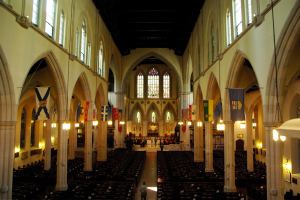 Three addresses were given at St. Paul’s Church, Bloor Street, Toronto, on May 1, 1999 at a special event organized by
 by
by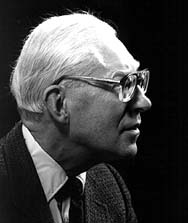
 More than ever, we need to discover afresh what it means to be filled with the knowledge of God’s will and given the power to carry out that will. As J. John at the Canterbury ‘98 Conference put it, “We only have enough time to do the will of God”. So many of us in the Church are like Martha whom Jesus said was distracted by many things, but missing the main one of sitting at Jesus’ feet.
 Methodist missionary to India put it, “there can be no great spiritual awakening either in the individual or in the group unless and until the individual or the group give themselves to prayer.”3 Dr. Jones goes on to say: “When we feel that there is something wrong and that it is all ending in futility, instead of giving ourselves to prayer, we appoint a committee! If a monument”, says Dr. Jones, “were erected over the dead situations in Christendom, we might inscribe on it ‘Committeed to Death’. We call a committee instead of calling to prayer.” It has been said that the 16th century Reformation began in Luther’s prayer closet. The truth is that all reformation, all renewal, all restoration begins in someone’s prayer closet. Quoting Dr. Jones again, “we find sooner or later that in prayer we either abandon ourselves or we abandon prayer. Prayer will keep us from self-withholding or self-withholding will keep us from prayer.”4
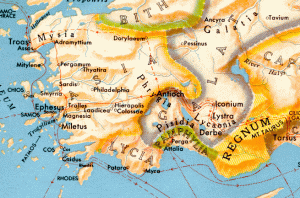 Paul is writing here to a formerly great and flourishing city that had been in a recession for the last three to four hundred years. Colossae, whose name means “Monstrosity”, had become a backwater no-name town that had been left behind in the busy pace of 1st century Greek life. Its neighbouring towns, Laodicea and Hierapolis were well-known respectively for their financial and administrative prowess, and for their burgeoning tourist and hot springs industry. They, like Colossae, were located on the River Lycus, a river famous for overlaying its surrounding river banks with thick deposits of chalk. As Bishop J.B. Lightfoot put it, “Ancient monuments are buried; fertile land is overlaid; river beds choked up and streams diverted; fantastic grottoes and cascades and archways of stone are formed, by this strange, capricious power, at once destructive and creative, working silently throughout the ages. Fatal to vegetation, these incrustations spread like a stony shroud over the ground. Gleaming like glaciers on the hillside, they attract the eye of the traveller at a distance of twenty miles, and form a singularly striking feature in scenery of more than common beauty and impressiveness.”5 In some ways, Bishop Lightfoot’s description seems like a parable of the Canadian Church … beautiful, impressive, but calcified and choked up by double-mindedness and fear.
 tells us that Paul was thankful because of the great triad of Christian graces: faith, hope, and love. So often when Paul prays, he prays according to the three-fold pattern of the only things that will remain in the end. Faith: their faith in Christ Jesus; Hope: hope stored up for us in heaven; and Love: love for all the saints. As Bishop J.B. Lightfoot put it, “faith rests on the past; love works in the present; hope looks to the future”.7 Does the Prayer Book Society, indeed does the Anglican Church have a future as we celebrate the 450th Anniversary of the Book of Common Prayer? I believe that the answer to both questions is yes, if we will ground our Christian life more and more on the three-fold graces of faith, hope and love.
 Lambeth ‘98 was a powerful reminder of that truth with the hundreds of Asian, African, and South American bishops making their presence felt in unforgettable ways. The gospel, as Bishop Lewis Radford put it, is both a transforming force and a travelling fire.9 It is a fire that cannot be stamped out no matter how hard secularists and revisionists may try. Verse 7 tells us about Epaphras, the founder of the Church at Colossae. Some early church traditions make him the first bishop of Colossae.10 Verse 7 describes him as “our dearly loved fellow servant”, as a faithful minister of Christ on our behalf. Both Paul and Epaphras were passionate that the Colossians should be filled with the knowledge of God’s will. Epaphras was so passionate about this that Paul commented in Colossians chapter 4, verse 2 that Epaphras was “always wrestling in prayer for you that you may stand firm in all the will of God, mature and fully assured.” The Greek word for wrestling is agonizomenos which means to agonize. It is God’s will that each of us agonize in prayer for the restoration of faithful Anglicanism in Canada. Wrestling in prayer is the key to being filled with the knowledge of God’s will.
 That is why the Rev. Samuel Shoemaker, the Anglican priest who wrote the “12 Steps” and helped to found Alcoholics Anonymous, quoted Colossians Chapter 1 in writing step 11. What does Step 11 encourage us to pray for: “… the knowledge of His will for us and power to carry that out.”
 Holy Spirit. If only they had just prayed for the bishop to be filled afresh or anew, the Dean might have kept his job. Why do all of us need to be filled with the Spirit again and again? (Eph. 5:18). The reason, as D.L. Moody put it, is that we leak. It is always touchy to pray for one’s bishop without sounding like one is trying to give his bishop advice. It is so easy for us to dump all our unmet dreams and frustrations on the back of our bishops. Yet God calls us to bless and not curse. God calls us in verse 9 to never give up praying for each other, and that certainly includes our bishops. Verse 9 is a wonderful way to pray for your bishop, your rector, and your wardens in a way that none of them could possibly object to. Just pray that God will fill them with the knowledge of His will through all spiritual wisdom and understanding. All of us need to be filled up, to be more full of God’s grace, peace, joy, hope, and faith so that we will be more full, more grace-full, more peace-full, more joy-full, more faith-full. The point of the fruit of the Spirit (Gal. 5:22) is to fill us up inside with more of the character of Jesus Christ.
 says that “You shall receive power when the Holy Spirit comes upon you and you shall be my witnesses … to the ends of the earth.”. That is why Colossians chapter 1 verse 11 talks about our being strengthened with all power: in the Greek, “being powered with all power”, with all dunamis, all dynamite. There are logjams in Anglicanism that nothing but the power, the dynamite, of the Holy Spirit can possibly remove. All of us know many faithful Anglicans who have given up in despair and left our church, perhaps returning occasionally for their Communion “fixes”. When we think of the mother/father God/Goddess apostasy that the new ACC “Common Praise” hymn book is leading us into, only the power of the Holy Spirit will be able to lead us out of that syncretistic swamp. Yet with God, nothing is impossible! Would anyone like to become the founders of a Blue Hymn Book Society of Canada?
 Bible are rivers. The new Common Praise hymn book in contrast is a gracious and kindly swamp. The river that is the Holy Spirit confines Himself to His central purpose, which is to fill us with the knowledge of the Father’s will and to give us the power to carry that out. The Colossian Christians were a tiny, faithful minority living in a “new-age” spiritual scene. As with the original Colossian church, one of the greatest challenges facing our Anglican Church is well-meaning interfaith syncretism. In our worship of newness and inclusiveness, we are rushing to replace the riverbanks of our BCP with the neo-gnostic swamp of centering prayer/mantra yoga, enneagram workshops, labyrinths, Jungian-based MBTI personality tests, and invocations of “God our Father and our Mother”.13 Lord, forgive us for our naïve worship of the seemingly new and trendy, and for our disrespect for the wisdom of our Anglican forebears. Genuine renewal is actually about renewing the riches of our inheritance in Christ Jesus, not about uncovering secret “new revelations”. (Eph. 1:18)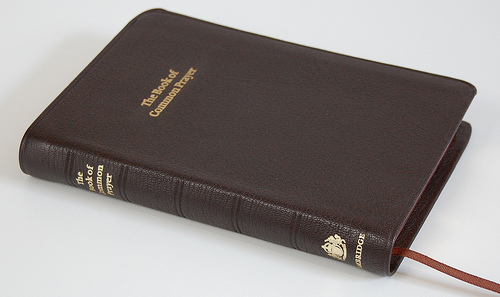
 As Dr. Bard Thompson put it, “It was the way of John Wesley to espouse extempore prayer, yet esteem the prayer book; to give free expression to evangelical power, yet prize the structures of the church …”18 Yet sadly Wesley’s wisdom was largely ignored. His followers decided that they could pray better and with more devotion when their eyes were shut, than they could with their eyes open, praying from a book.19 So they cast aside the Prayer Book and produced the United Church of Canada instead. Wesley drew the balance between the stability of tradition and the dynamism of the Spirit. His followers, however, became progressively less rooted generation after generation. It is so easy to cast aside “the riches of our inheritance”. It is much harder to humble ourselves enough to go back home and start afresh. I remember how hard I tried to convince my Grandma Allen to “get with it” and give up on the Book of Common Prayer. But she was so “stubborn and inflexible” that she died with the Bible and the Prayer Book by her bedside.
 But God’s will for us as clergy is not merely for us to preserve the peace or to be keepers of ecclesiastical aquariums, but rather to be fishers of men and women. Our greatest desire as Anglican leaders must be our desire to be filled with the knowledge of God’s will and to have the power of the Holy Spirit to carry it out. Why else do we pray every day “Thy kingdom come, Thy will be done”. What is God’s will? The Bible is clear that God’s will, among other things, is that we go into all the world, preaching the gospel to all creation, and that we make disciples of all nations (Mark 16:15, Matthew 28:19). 1 Timothy chapter 2, verses 4 and 5 tells us clearly that God’s will is that all people be saved and come to a knowledge of the truth, and that there is only one mediator, one bridge between God and humanity, the man Christ Jesus, who gave himself as a ransom for all.
 those raised in the church or in the west, we will not have the power to carry out this great and lasting commission. As Dr. John Stott put it at an Vancouver Anglican Essentials gathering, we claim uniqueness and finality in Christ alone.
 Sandy Brown and her family have just moved to Spokane, Washington where her husband, Scott, is pastoring a new church. With a fresh start, Sandy is determined to devote more time to her four children. But, within weeks of settling in their new life, the Brown family is plunged into turmoil.


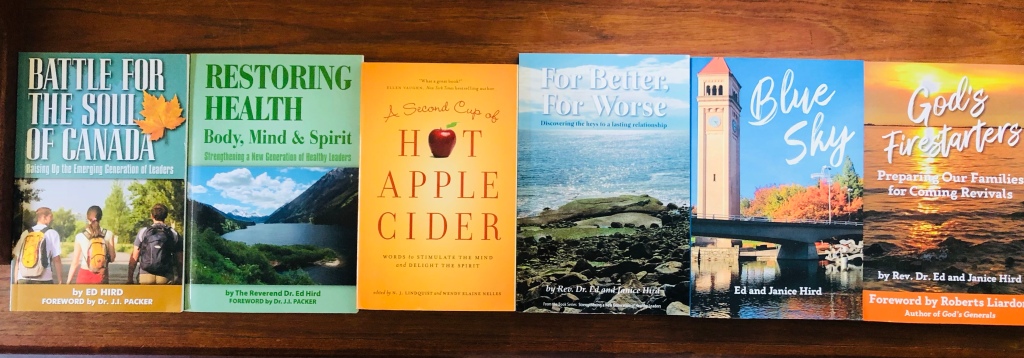
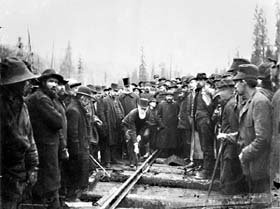

 Sandy Brown and her family have just moved to Spokane, Washington where her husband, Scott, is pastoring a new church. With a fresh start, Sandy is determined to devote more time to her four children. But, within weeks of settling in their new life, the Brown family is plunged into turmoil.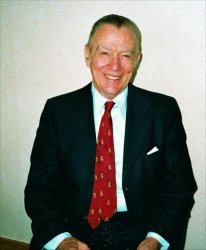
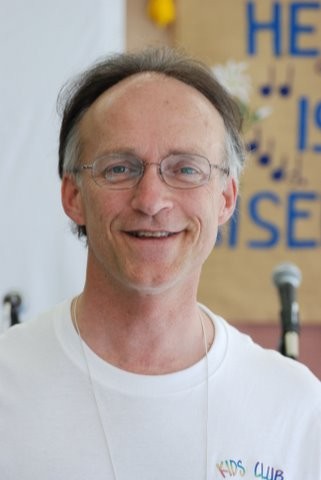
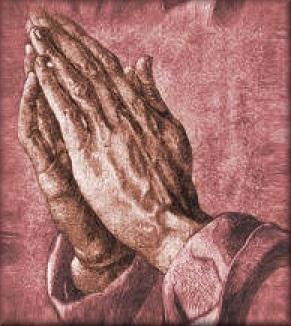

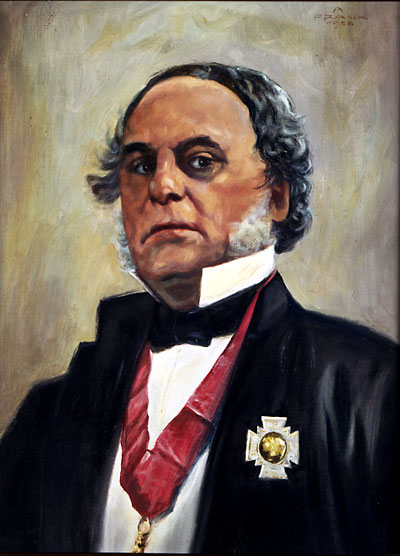










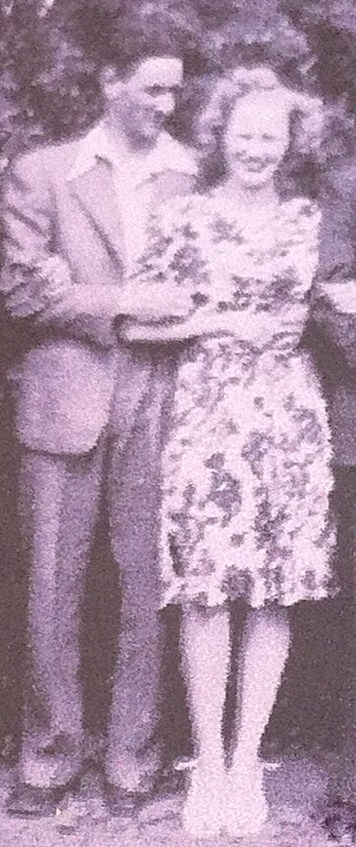


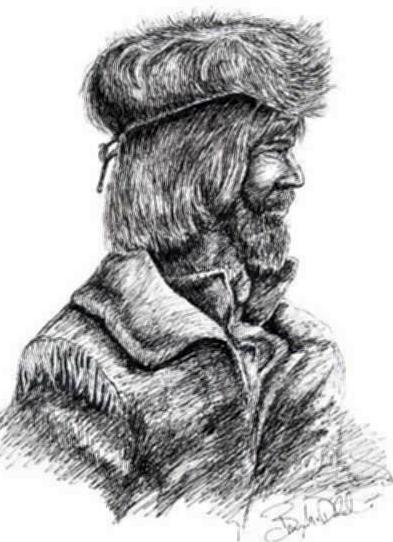


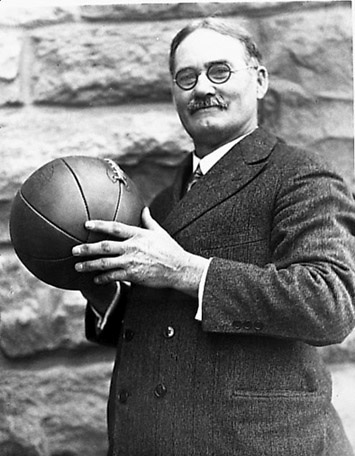
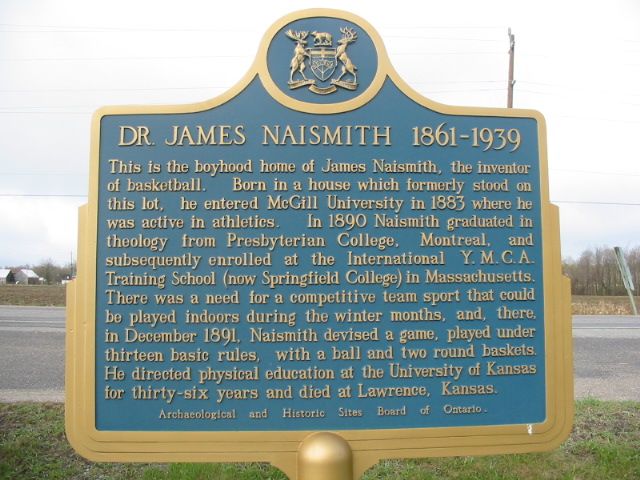
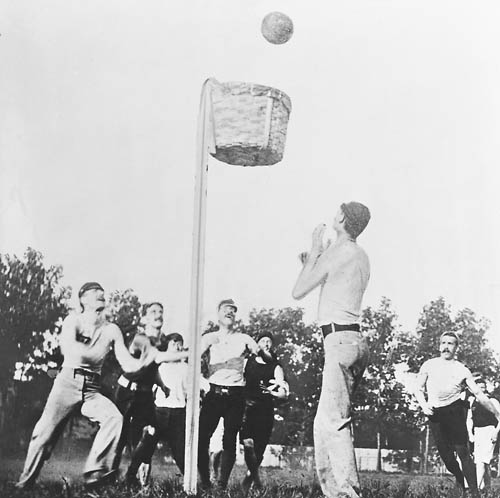


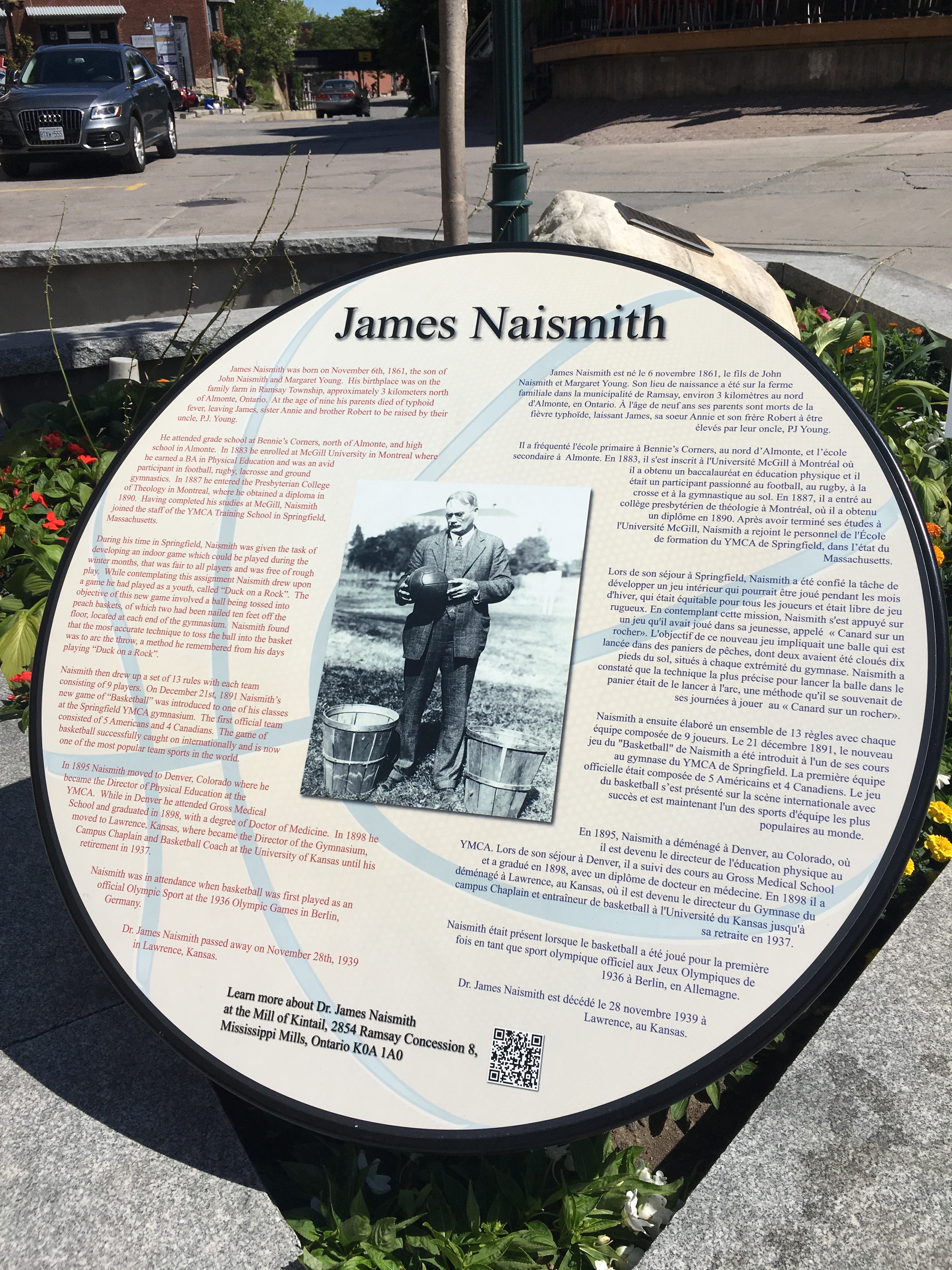
 Edhird's Blog