How is your work-out working out for you these days? Studies show that many people who start at the gym with every good intention are nowhere to be found within a few months. Why is it that so many well-intended people drop out and disappear from fitness? My hunch is that people drop out from going to the gym for similar reasons that they drop out from going to church. They may find the times inconvenient, the child care inadequate, the music too loud, too soft, too slow, or too fast, the temperature too hot or too cold, the people too cold or intrusive, the instructor/pastor too busy or controlling.
Virtually everyone that I know nowadays believes in the value of keeping physically fit. It has been drilled into us by our doctors, teachers, media, and family. Yet so many of us fall short of our personal health goals. I sense that a lot of people have transferred their guilt about not attending church enough to a new guilt about not attending the weight room enough. Guilt, shame, and fear paralyze us in our unhealthy procrastination and avoidance of physical and spiritual growth. Guilt, shame and fear feed our addictions and unhealthy life choices. I have known people who felt so guilty about not attending the gym or church that they have overeaten, over-drank, and over-indulged. More guilt is not the solution to our health issues.
So how can we be set free from our spiritual and physical couch-potato tendencies? Dr. Gil Stieglitz says that a great way to get healthy is to memorize the seven deadly sins and then daily measure our current behaviour by those seven criteria. The first deadly sin/challenge is Pride, which Dr. Gil defines as ‘feelings of superiority, self-absorption, and lack of teachability.’ Sometimes people don’t make it to the gym or church because we have become self-satisfied and unwilling to grow.
The second deadly sin is Envy which Dr. Gil defines as ‘the desire for what belongs to others’. I have been guilty of that sin many times at the gym. Why is it taking me so long to get in shape physically or spiritually when others around me seem so healthy? Sometimes the puny size of my weights or my prayer life can tempt me to not bother to try.
The third deadly sin is Anger which Dr. Gil defines as ‘being blocked from a goal, irritated, seething’. The person we usually feel most angry at is ourselves, angry that we are not losing weight quickly enough, not improving fast enough, angry that it is taking so long to become Christ-like and loving. You may have heard the angry comment that the church or gym is full of hypocrites, to which I say ‘there is always room for one more hypocrite’.
The fourth deadly sin is Lust, which is far more than just sexual. It is really about the need to have it all our way immediately. Many of us give up on the gym and church, because it is taking too long to achieve our goals. We want it all right now! Getting healthy takes time!
The fifth deadly sin is Sloth which Dr. Gil defines as ‘laziness, working with a minimum effort, procrastination’. Going to Church or the gym requires effort, time, and money. It is often tempting to give in to our feelings of tiredness, discouragement and fear. Why bother to try? The Tempter wants us to be physically and spiritually healthy, as long we do it next month, not this month.
The sixth deadly sin is Gluttony which Dr. Gil defines as ‘overindulgence, addiction, seeking comfort’. Many people feel so embarrassed about their body or soul that they won’t even try. It’s just too painful.
The seventh deadly sin is Greed which Dr. Gil defines as ‘longing after money and things’. Greedy people will refuse to go to church or the gym, claiming that ‘all the church/gym wants is your money’. In fact the gym and church are there for our health, and our health is worth every penny that we invest. What use is wealth without health? See you at God’s Gym!
P. S. Click this Amazon link to view for free the first two chapters of our new novel Blue Sky.
“I’m afraid there’s been an accident…”
Sandy Brown and her family have just moved to Spokane, Washington where her husband, Scott, is pastoring a new church. With a fresh start, Sandy is determined to devote more time to her four children. But, within weeks of settling in their new life, the Brown family is plunged into turmoil.
Sandy receives shocking news that her children aren’t safe, which brings back haunting memories of the trauma she experienced as a girl. Then, the unthinkable happens…
A brutal attack puts Sandy on the brink of losing everything she’s loved. Her faith in God and the family she cherishes are pushed to the ultimate limit.
Is healing possible when so many loved ones are hurt? Are miracles really possible through the power of prayer? Can life return to the way it was before?
Blue Sky reveals how a mother’s most basic instinct isn’t for survival… but for family.
If you’re a fan of Karen Kingsbury, then you’ll love Blue Sky. Get your copy today on paperback or kindle.
-The sequel book Restoring Health: body, mind and spirit is available online with Amazon.com in both paperback and ebook form. Dr. JI Packer wrote the foreword, saying “I heartily commend what he has written.” The book focuses on strengthening a new generation of healthy leaders. Drawing on examples from Titus’ healthy leadership in the pirate island of Crete, it shows how we can embrace a holistically healthy life.
To receive a signed copy within North America, just etransfer at ed_hird@telus.net, giving your address. Cheques are also acceptable.
-Click to purchase the Companion Bible Study by Jan Cox (for the Battle of the Soul of Canada) in both paperback and Kindle on Amazon.com and Amazon.ca
-Click to purchase the Companion Bible Study by Jan Cox (for the Battle of the Soul of Canada) in both paperback and Kindle on Amazon.com and Amazon.ca
To purchase any of our six books in paperback or ebook on Amazon, just click on this link.
Catharine Parr Traill and her sister Susanna Moodie were two of Canada’s most important 19th-century writers. Catharine Parr Traill College, a campus of Trent University in Peterborough, is named for her. Catharine was particularly famous for her books: The Backwoods of Canada (1836)and Canadian Crusoes (1852). A French edition of The Backwoods of Canada, Les forêts intérieures du Canada, was published in Paris in1843. It was not until 1929 that a Canadian edition of The Backwoods of Canada was published. She also wrote The Female Emigrant’s Guide, The Tell Tale, The Young Emigrants, and Hints on Canadian Housekeeping. As Lynn Westerhout put it, Catharine “wrote to earn money, but her work showed that wonder,courage and faith are most important in life.”
The Encyclopedia Britannica speaks of Catharine who, with richly detailed descriptions of frontier life, was one of the first to praise the beauties of the Canadian landscape. Catharine left England to pioneer with her new husband Thomas in the unknown Canadian backwoods. She wrote a farewell letter to a good friend, saying that “she (was) willing to lose all for the sake of one dear valued friend and husband to share with him all the changes and chances of a settler’s life.
Catharine faced dire poverty in the early pioneering days: “On examining the state of my purse, I find just $4.30. This is all the funds I have to begin the year with. It is true that I have half a barrel of flour,and some meat and I have often been without meat and money. God will provide as heretofore.” She wrote in 1852 to her sister Susanna: “`I feel it is a miserable state to be like a vessel without a pilot drifting before an overwhelming storm on every side rocks and shoals and no friendly port in sight, no beacon light to guide us on our perilous way. Do not think, dear sister, that I lose my faith in God’s gracious providence. I believe that he can in his good time bring all things to an end of these our troubles…”
Catharine’s husband Thomas was often downcast by the financial they faced. Catharine wrote: “I wish that he could look beyond the present and remember that the brightest of earthly prospects endure but for a season – and it is the same with the trials and sorrows of life –they too come to an end.” As Charlotte Gray notes, “Catherine at ninety-five was left virtually penniless…Without Catharine’s knowledge, an urgent plea was sent to the British Prime Minister, at 10 Downing Street, for help…” Over $1,000 was raised. Along with the money was sent a letter to Catherine saying: “We cannot forget the courage with which you endured the privations and trials of the backwoods in the early settlement of Ontario, and we rejoice to know that your useful life has been prolonged in health and vigour until you are now the oldest living author in her Majesty’s dominion.” Catharine responded by saying: “I can only adopt the hearty simple phrase used by the Indian women of Hiawatha village–‘I bless you in my heart.’
May Catharine Parr Traill’s deep pioneering faith and courage be an inspiration to a new generation of women and men who seek to break new ground in the twenty-first century.
The Rev. Dr. Ed Hird, BSW, MDiv, DMin
-previously published in the North Shore News/Deep Cove Crier
P. S. Click this Amazon link to view for free the first two chapters of our new novel Blue Sky.
“I’m afraid there’s been an accident…”
Sandy Brown and her family have just moved to Spokane, Washington where her husband, Scott, is pastoring a new church. With a fresh start, Sandy is determined to devote more time to her four children. But, within weeks of settling in their new life, the Brown family is plunged into turmoil.
Sandy receives shocking news that her children aren’t safe, which brings back haunting memories of the trauma she experienced as a girl. Then, the unthinkable happens…
A brutal attack puts Sandy on the brink of losing everything she’s loved. Her faith in God and the family she cherishes are pushed to the ultimate limit.
Is healing possible when so many loved ones are hurt? Are miracles really possible through the power of prayer? Can life return to the way it was before?
Blue Sky reveals how a mother’s most basic instinct isn’t for survival… but for family.
If you’re a fan of Karen Kingsbury, then you’ll love Blue Sky. Get your copy today on paperback or kindle.
-The sequel book Restoring Health: body, mind and spirit is available online with Amazon.com in both paperback and ebook form. Dr. JI Packer wrote the foreword, saying “I heartily commend what he has written.” The book focuses on strengthening a new generation of healthy leaders. Drawing on examples from Titus’ healthy leadership in the pirate island of Crete, it shows how we can embrace a holistically healthy life.
To receive a signed copy within North America, just etransfer at ed_hird@telus.net, giving your address. Cheques are also acceptable.
-Click to purchase the Companion Bible Study by Jan Cox (for the Battle of the Soul of Canada) in both paperback and Kindle on Amazon.com and Amazon.ca
-Click to purchase the Companion Bible Study by Jan Cox (for the Battle of the Soul of Canada) in both paperback and Kindle on Amazon.com and Amazon.ca
To purchase any of our six books in paperback or ebook on Amazon, just click on this link.
Catharine Parr Traill was a pioneer Canadian mother who made a phenomenal impact on the life of our nation.
England in the early 1830s was caught in a Canada-mania. In the aftermath of the Napoleonic wars, England was thrown into an economic depression. Thomas Strickland, the father of Catherine Parr Traill, was caught in the economic downturn, resulting in near-bankruptcy and his premature death. He left behind an impoverished widow and six unmarried daughters whose chances of marriage were seriously limited.
Both Catherine Parr Traill and her sister Susanna married economically-challenged Scottish soldiers who were offered land grants in the colonies. Canada began to be seen as the land of milk and honey! Altogether 655,747 people sailed away from British shores between 1831 and 1841 (almost three times as many as had moved abroad during the previous ten years).
The two key Canada-promoters William Cattermole and Captain Charles Stuart were being paid so much per head for every Brit that they could recruit for Canada. In their glowing description of Canada, Cattermole and Stuart forgot to mention the backbreaking work required to clear the forests, the total absence of household comforts, the aching loneliness, and the grinding poverty of most early Canadian pioneers. Catharine Parr Traill and her sister Susanna, being gifted writers, were able to record a vital part of our Canadian pioneering history. In Catherine Parr Traill’s book ‘The Canadian Settler’s Guide’, she insightfully wrote:
“In cases of emergency, it is folly to fold up one’s hands and sit down to bewail in abject terror: it is better to be up and doing.”
Catharine’s book The Backwoods of Canada quickly sold its first printing of eleven thousand copies, being translated into German in 1838 and French in 1843.
Of the six Strickland daughters including Catherine, five of them became published authors! Catharine’s older sister Agnes in England was the leading royal biographer of the 19th century. Sister Agnes caustically commented: “Who in England thinks anything of Canada?” and “Nothing that is first published in Canada will sell well in England”.
In Charlotte Grey’s book Sisters in the Wilderness, Catharine Parr Traill and her sister Susanna are described as laying “the foundation of a literary tradition that still endures in Canada: the pioneer woman who displays extraordinary courage, resourcefulness and humour. This ‘Canadian character type’, as critic Elizabeth Thompson calls her, is a pragmatist who discovers her own strength as she overcomes adversity.” Sir Sandford Fleming, inventor of one-hour time zones, and the engineering genius behind the Canadian Pacific Railway, said of Catharine: “She has rendered service of no ordinary kind in making known the advantages offered by Canada as a field for settlement, and by her very widely read writings she has been instrumental in inducing very many emigrants from the United Kingdom to find homes in the Dominion.”
Catharine Parr Trail had a remarkable ability to rise above adversity and make the best of every situation. Charlotte Grey: writes in her book about ‘the stamina, talent and determination that allowed two English ladies to overcome the hardships of pioneer life and leave a powerful legacy to Canadian culture.’ It is hard for us almost two hundred years later to fully imagine the miseries of hunger, disease, cold, and disappointment faced by our early Canadian pioneers. I was shocked to discover that both Catharine and her sister’s families came down with malaria, a widespread problem in Canada as pioneers were struggling to drain mosquito-infested swamps.
Catharine Parr Traill commented in the early days: “I have not seen a woman except those in our company for over five months….” As Charlotte Grey put it, “Being wrenched from one’s homeland leaves deep scars in the psyche of every emigrant in any era: Susanna and Catharine bore these scars for the rest of their lives.”
Catharine’s motto was ‘Hope! Resolution! And Perseverance!’. She would assure her relatives back home that Canada is the ‘land of hope.’ Her sister Sarah spoke of Catherine/Kate: “Her blue eyes always sparkled with happiness and curiosity about the world. She had a warm smile and an air of stolid contentment, and even as a baby, Catharine ‘never cried like other children –indeed we used to say that Katie never saw a sorrowful day – for if anything went wrong, she just shut her eyes and the tears fell from under the long lashes and rolled down her cheeks like pearls into her lap. We all adored her.”
Charlotte Grey commented how Catharine loved “the wild and picturesque rocks, trees, hill and valley, wild-flowers, ferns, shrubs and moss and the pure, sweet scent of pines over all, breathing health and strength.” Nature, for Catharine, was saturated with divine meaning – its splendor and concord displayed the authority and goodness of its Creator. That is why Catharine wrote many “books that reflected sheer love of nature’s bounty and admiration in God’s handiwork.” The flowers of the field, for her, were good reminders of the teachings of Christ. Catherine often illustrated her dried specimens with biblical quotes, particularly from the Psalms or the book of Revelation.
Charlotte Grey commented that in future years, Catharine would rely on her love of nature, the beauties of which she saw as the expression of God’s will, to carry her through one disaster after another:
“Strength was always given to me when it was needed.” As she dug and weeded in the kitchen garden, or lifted heavy cast-iron pans of porridge from the stove, she would pause briefly, straighten her aching back, close her eyes and utter silent prayers. She noted at the end of her life: “In great troubles and losses, God is very Good.”
In the midst of her very busy writing and pioneering, Catharine never neglected her family. As Charlotte Grey put it, “Motherhood came as naturally to Catharine as breathing. It was the most meaningful activity in her life. She was always prepared to give more love than she took, and she saw no conflict between her family and her impulse to write.”
My prayer is that every mother reading this article would receive that same strength as Catharine Parr Traill in the challenges of life.
The Rev. Dr. Ed Hird, BSW, MDiv, DMin
-previously published in the North Shore News/Deep Cove Crier
P. S. Click this Amazon link to view for free the first two chapters of our new novel Blue Sky.
“I’m afraid there’s been an accident…”
Sandy Brown and her family have just moved to Spokane, Washington where her husband, Scott, is pastoring a new church. With a fresh start, Sandy is determined to devote more time to her four children. But, within weeks of settling in their new life, the Brown family is plunged into turmoil.
Sandy receives shocking news that her children aren’t safe, which brings back haunting memories of the trauma she experienced as a girl. Then, the unthinkable happens…
A brutal attack puts Sandy on the brink of losing everything she’s loved. Her faith in God and the family she cherishes are pushed to the ultimate limit.
Is healing possible when so many loved ones are hurt? Are miracles really possible through the power of prayer? Can life return to the way it was before?
Blue Sky reveals how a mother’s most basic instinct isn’t for survival… but for family.
If you’re a fan of Karen Kingsbury, then you’ll love Blue Sky. Get your copy today on paperback or kindle.
-The sequel book Restoring Health: body, mind and spirit is available online with Amazon.com in both paperback and ebook form. Dr. JI Packer wrote the foreword, saying “I heartily commend what he has written.” The book focuses on strengthening a new generation of healthy leaders. Drawing on examples from Titus’ healthy leadership in the pirate island of Crete, it shows how we can embrace a holistically healthy life.
To receive a signed copy within North America, just etransfer at ed_hird@telus.net, giving your address. Cheques are also acceptable.
-Click to purchase the Companion Bible Study by Jan Cox (for the Battle of the Soul of Canada) in both paperback and Kindle on Amazon.com and Amazon.ca
-Click to purchase the Companion Bible Study by Jan Cox (for the Battle of the Soul of Canada) in both paperback and Kindle on Amazon.com and Amazon.ca
To purchase any of our six books in paperback or ebook on Amazon, just click on this link.
Once every year, billions of people on every continent of the globe stop whatever they are doing and remember the mystery of Easter. At the heart of that mystery is the old rugged cross. For those of us who have a soft spot for Western movies, the ‘Old Rugged Cross’ song invariably turns up somewhere, often by a windblown graveside.
“On a hill far away stood an Old Rugged Cross,
The emblem of suffering and shame;
And I love that old cross where the dearest and best
For a world of lost sinners was slain.”
‘The Old Rugged Cross’ song was written by George Bennard, who lived from 1873-1958. “The Old Rugged Cross” is still the most frequently requested hymn; and the most popular spiritual song of the past 100 years. Within thirty years of its original publication in 1913, more than twenty million copies of “The Old Rugged Cross” had been sold, outselling every other musical composition of any kind! What is it that makes this gospel song so popular?
‘The Old Rugged Cross’ was written in response to a deep personal need in Bennard’s own life. Born in Youngstown, Ohio, on February 4, 1873, George Bennard was raised in a loving coalminer family, the only son among four daughters. When George was only sixteen years old, his father died, leaving George to care for his mother and four sisters. After a period of time with the Salvation Army, George became a traveling speaker for the Methodist church, holding meetings in Canada and in the northern and central United States.
After a very painful time in New York, Bennard went back home in 1913 to Michigan. His mind returned again and again to Christ’s agony on the cross. During this time, Bennard read Galatians 6:14 in which the Apostle Paul states: “May I never boast except in the cross of our Lord Jesus Christ, through which the world has been crucified to me, and I to the world.” Bennard became convinced that the cross was not merely a symbol of Christianity, but the very heart of it. He realized that the cross was not gold-covered, but rather a rough, splintery thing, stained with gore.
The words, “the old rugged cross,” came into his mind and then the notes of a melody ran through his head. Several weeks later, after a period of prayer, the poetry of the verses began to flow from his pen almost unbidden. “I saw the Christ of the Cross as if I were seeing John 3:16 leave the printed page, take form and act out the meaning of redemption,” he said later.
After writing this hymn, George Bennard went on to travel and preach for another forty years.. Thanks to being chosen by Billy Sunday (the Billy Graham of those days), everyone began singing this unforgettable song. Years later, Johny Cash himself recorded this song. Although Bennard wrote 300 other hymns, none of them became as popular as his first.
Dr. Alistair McGrath of Oxford comments, “Those great old hymns — such as Rock of Ages, The Old Rugged Cross and When I survey — remain wonderful statements of the centrality of the cross…They express the power of the cross so much better than I can ever hope to do. As George Bennard put it in 1913:
“To the old rugged cross I will ever be true;
Its shame and reproach gladly bear;
Then he’ll call me some day to my home far away,
Where his glory forever I’ll share.”
The Rev. Dr. Ed Hird, BSW, MDiv, DMin
-previously published in the North Shore News/Deep Cove Crier
P. S. Click this Amazon link to view for free the first two chapters of our new novel Blue Sky.
“I’m afraid there’s been an accident…”
Sandy Brown and her family have just moved to Spokane, Washington where her husband, Scott, is pastoring a new church. With a fresh start, Sandy is determined to devote more time to her four children. But, within weeks of settling in their new life, the Brown family is plunged into turmoil.
Sandy receives shocking news that her children aren’t safe, which brings back haunting memories of the trauma she experienced as a girl. Then, the unthinkable happens…
A brutal attack puts Sandy on the brink of losing everything she’s loved. Her faith in God and the family she cherishes are pushed to the ultimate limit.
Is healing possible when so many loved ones are hurt? Are miracles really possible through the power of prayer? Can life return to the way it was before?
Blue Sky reveals how a mother’s most basic instinct isn’t for survival… but for family.
If you’re a fan of Karen Kingsbury, then you’ll love Blue Sky. Get your copy today on paperback or kindle.
-The sequel book Restoring Health: body, mind and spirit is available online with Amazon.com in both paperback and ebook form. Dr. JI Packer wrote the foreword, saying “I heartily commend what he has written.” The book focuses on strengthening a new generation of healthy leaders. Drawing on examples from Titus’ healthy leadership in the pirate island of Crete, it shows how we can embrace a holistically healthy life.
To receive a signed copy within North America, just etransfer at ed_hird@telus.net, giving your address. Cheques are also acceptable.
-Click to purchase the Companion Bible Study by Jan Cox (for the Battle of the Soul of Canada) in both paperback and Kindle on Amazon.com and Amazon.ca
-Click to purchase the Companion Bible Study by Jan Cox (for the Battle of the Soul of Canada) in both paperback and Kindle on Amazon.com and Amazon.ca
To purchase any of our six books in paperback or ebook on Amazon, just click on this link.
Many homes have beautiful dining rooms specially set apart for guests. My family always uses the dining room for Easter, Christmas, Thanksgiving, and birthdays. I have noticed that the dining room for most families has its own traditions. “Go to a fine home”, says Dr. Thomas Oden, “and you will see that there are two types of silverware- the good silver and the utensils for daily use. There are the beautiful articles that have been kept for generations and will be passed on as heirlooms…”
This distinction between utensils seems to be hardwired into us. To illustrate this point, just try your family’s silver punchbowl for scrubbing the floor, and see if you have any reaction from your wife or mother.
The Good Book says in 2nd Timothy 2:20 that ‘in a large house there are vessels not only of gold and silver, but also of wood and clay; some are for noble purposes and some for ignoble.” The Good Book also teaches that we can choose what kind of vessels that we are going to be, whether we are used for the dining room or scrubbing the floor
The key to being used in the dining room is catharsis, the Greek word for cleansing. The Hebrew word ‘Kosher’ simply means ‘clean’. Like my father, I actually enjoy cleaning the dishes, one of my few kitchen abilities! Raymond Collins commented that a person is like a dish insofar as both have to be clean in order to be put to another use. Have you ever been served food on a dish that was not cleansed from the last person who used it?
In the East African/Rwandan revival, people were thought of as each holding a water pot. Our heavenly Father wants to fill us with the water of life, but cannot or will not do so if our water pots are defiled by sin, anger, self-pity or impurity. As the famous song puts it, “Fill my cup Lord, I lift it up, Lord! Come and quench this thirsting of my soul.” The Good Book says in 2nd Timothy 2:21 that if a person cleanses himself, he will be fit for the Master.
Now is a great time to cleanse ourselves from anything that will keep us from being fit for the Master. Keeping fit is God’s better way, physically, mentally and spiritually. Many people go to Fitness classes. Have you ever thought of going to church as God’s fitness class, as God’s gym? God wants you fit as a fiddle, fit for the master, useful for every good work.
If each of us are willing to do the work of catharsis, cleansing ourselves from bitterness, self-pity, anger, guilt, shame, and fear, then God will invite us into his dining room and make use of us at his family meals. Can you think of a more fitting place to be?
P. S. Click this Amazon link to view for free the first two chapters of our new novel Blue Sky.
“I’m afraid there’s been an accident…”
Sandy Brown and her family have just moved to Spokane, Washington where her husband, Scott, is pastoring a new church. With a fresh start, Sandy is determined to devote more time to her four children. But, within weeks of settling in their new life, the Brown family is plunged into turmoil.
Sandy receives shocking news that her children aren’t safe, which brings back haunting memories of the trauma she experienced as a girl. Then, the unthinkable happens…
A brutal attack puts Sandy on the brink of losing everything she’s loved. Her faith in God and the family she cherishes are pushed to the ultimate limit.
Is healing possible when so many loved ones are hurt? Are miracles really possible through the power of prayer? Can life return to the way it was before?
Blue Sky reveals how a mother’s most basic instinct isn’t for survival… but for family.
If you’re a fan of Karen Kingsbury, then you’ll love Blue Sky. Get your copy today on paperback or kindle.
-The sequel book Restoring Health: body, mind and spirit is available online with Amazon.com in both paperback and ebook form. Dr. JI Packer wrote the foreword, saying “I heartily commend what he has written.” The book focuses on strengthening a new generation of healthy leaders. Drawing on examples from Titus’ healthy leadership in the pirate island of Crete, it shows how we can embrace a holistically healthy life.
To receive a signed copy within North America, just etransfer at ed_hird@telus.net, giving your address. Cheques are also acceptable.
-Click to purchase the Companion Bible Study by Jan Cox (for the Battle of the Soul of Canada) in both paperback and Kindle on Amazon.com and Amazon.ca
-Click to purchase the Companion Bible Study by Jan Cox (for the Battle of the Soul of Canada) in both paperback and Kindle on Amazon.com and Amazon.ca
To purchase any of our six books in paperback or ebook on Amazon, just click on this link.
Who can forget the classic 1993 comedy ‘Sleepless in Seattle’ where Sam Baldwin (Tom Hanks) and Annie Reed (Meg Ryan) find healing and romance through the delightful impetuosity of Jonah Baldwin (Ross Malinger ), Sam’s media-savy son? Seattle is a beautiful coastal city to visit that has much in common with Vancouver BC.
Fifty years later…
A few years ago, my family and a Christian Ashram team had the privilege of ministering at John and Holly Roddam’s Seattle congregation, the original epicentre of Anglican renewal which began fifty years ago in 1960 and continues to impact the world. I believe that the renewal birthed in Seattle is God’s wake-up call to a sleepy, self-absorbed Church. As Paul put it in Romans 13:11, “The hour has come for you to wake up from your sleep…”
You may remember St. Eutychus, the patron saint of teenagers, who was literally bored to death during the Apostle Paul’s all-night sermon (Acts 20:9). You may also remember how Jesus’ closest disciples couldn’t stay awake on the Mount of Transfiguration (Luke 9:32) and the Garden of Gethsemane. Jesus even had to say to them: “Why are you sleeping? Get up and pray so that you will not fall into temptation” (Luke 22:46).
Waking up…
I believe that God is blowing the Shofar of renewal across the Anglican Church saying “Wake up, wake up, before it is too late”. Why has so much confusion crept into much of the Anglican Church regarding sexual immorality, new-age syncretism, and mother/father god/dess worship? Clearly we, as clergy and laity, have been asleep at the switch, instead of being watchmen for our nation. “Let us not be like others who are asleep, but let us be alert and self-controlled.” (1 Thessalonians 5:11)
What is the calling of faithful Anglicans in these perilous times? It is the same calling that many christians parents have on Sunday mornings while attempting to get their teenagers ready for church: “Wake up O sleeper, rise from the dead, and Christ will shine on you!” (Ephesians 5:14) Wake up, O Canada; Wake up O Anglicans; rise from the dead and Christ will shine on you!
Awakenings…
It is little wonder that previous times of renewal (which means new-again) and revival (which means life-again) have been called ‘awakenings’. We think especially of the 18th century First Great Awakening with the Anglican priest George Whitfield and Congregational pastor Jonathan Edwards, and the 19th Century Second Great Awakening with Presbyterian clergyman Charles Finney and Yale President Timothy Dwight.
How deeply we Canadians need to wake up to righteousness (1 Corinthians 15:34). How deeply we Anglicans need to recover the discipline of morning prayer, exemplified in the heritage of our Book of Common Prayer. Then we can cry out like the Psalmist: “Awake my soul! Awake, harp and lyre! I will awaken the dawn.” (Psalm 57:8) Perhaps we can hear Proverbs 6:9-11 as a prophetic calling: “How long will you lie there, you sluggard? When will you get up from your sleep?…”God is saying to us: “Awake, awake, O Zion, clothe yourselves with strength. Put on your garments of splendor…Shake off your dust, rise up…Free yourself from the chains on your neck, O Captive Daughter of Zion.”
Being in Seattle for the Christian Ashram weekend was a wake-up call to me. Like many churches in renewal, the Roddam’s congregation had both a traditional and then a contemporary service on Sunday mornings. Their congregation proves that the traditional Prayer Book service doesn’t inhibit freedom in the Spirit. It was wonderful to see the gift of prophecy graciously exercised in both services. There is such an anointing on their people who have been soaking in the Spirit for fifty years. Being around such godly people helped me shake off my dust and free myself from the chains on my neck.
What a joy to know that a Canadian Anglican couple, the Rev. John and Holly Roddam, were serving the people of Seattle. Canada, through the ministry of the Rev. Dennis & Rita Bennett, has received so much through the Bennett’s extensive travels across Canada. Many Canadians Anglicans can date their awakening to the reading of the Bennett’s bestsellers like ‘Nine O’clock in the Morning and ‘The Holy Spirit and You’.
I believe that God sent Canadians servant-leaders to Seattle as a way of saying ‘thank you’ to Seattle for all that they have given to so many in Canada and around the world. I thank God that the Rev John and Holly Roddam were powerfully used in helping many to be ‘sleepless in Seattle’. While the Roddams have since move back to the Maritimes, they have left a significant imprint in the hearts and minds of many in Seattle. I pray that for the sake of the Anglican Church and our lost world, we sleepy believers will awaken and ‘not rest until righteousness shines out like the dawn and salvation like a blazing torch’ (Isaiah 62:1). Do it again Lord, wake us up for your glory and honour!
Note: The majority of the people at the Roddam’s congregation have now left the old St Luke’s building, re-aligned with the Global South Anglicans and formed a new congregation Emmanuel Anglican Church . You are encouraged to check out this vibrant congregation led by Rev Dan Rice.
-previously published in the Anglicans for Renewal Canada magazine
P. S. Click this Amazon link to view for free the first two chapters of our new novel Blue Sky.
“I’m afraid there’s been an accident…”
Sandy Brown and her family have just moved to Spokane, Washington where her husband, Scott, is pastoring a new church. With a fresh start, Sandy is determined to devote more time to her four children. But, within weeks of settling in their new life, the Brown family is plunged into turmoil.
Sandy receives shocking news that her children aren’t safe, which brings back haunting memories of the trauma she experienced as a girl. Then, the unthinkable happens…
A brutal attack puts Sandy on the brink of losing everything she’s loved. Her faith in God and the family she cherishes are pushed to the ultimate limit.
Is healing possible when so many loved ones are hurt? Are miracles really possible through the power of prayer? Can life return to the way it was before?
Blue Sky reveals how a mother’s most basic instinct isn’t for survival… but for family.
If you’re a fan of Karen Kingsbury, then you’ll love Blue Sky. Get your copy today on paperback or kindle.
-The sequel book Restoring Health: body, mind and spirit is available online with Amazon.com in both paperback and ebook form. Dr. JI Packer wrote the foreword, saying “I heartily commend what he has written.” The book focuses on strengthening a new generation of healthy leaders. Drawing on examples from Titus’ healthy leadership in the pirate island of Crete, it shows how we can embrace a holistically healthy life.
To receive a signed copy within North America, just etransfer at ed_hird@telus.net, giving your address. Cheques are also acceptable.
-Click to purchase the Companion Bible Study by Jan Cox (for the Battle of the Soul of Canada) in both paperback and Kindle on Amazon.com and Amazon.ca
-Click to purchase the Companion Bible Study by Jan Cox (for the Battle of the Soul of Canada) in both paperback and Kindle on Amazon.com and Amazon.ca
Many of our books include references to and stories about E. Stanley Jones.
To purchase any of our six books in paperback or ebook on Amazon, just click on this link.
To receive a personally signed copy of any of our books within North America, just etransfer at ed_hird@telus.net, giving your address. Cheques are also acceptable.
Born June 9th 1880, Dr. Purdie attended St. Paul’s Anglican Church on Prince Edward Island and was converted at age 19 through his mother’s oldest sister. Following his conversion, Dr. Purdie reported: “The call of ministry began to impress on me. I had to preach the gospel or die.” He moved to Toronto in 1902, where he studied for five years at Wycliffe College. Dr. Purdie saw Wycliffe faculty as “champions of the Evangelical truths of the Bible and the Reformed faith of the Reformation.” He called them “scholarly men who were out and out for God”, the highest compliment that Purdie could pay anyone. Wycliffe became the future model for Dr. Purdie’s own Western Bible College where he trained 600 clergy over twenty-five years. After pastoring three rural Anglican congregations in Manitoba, Dr. Purdie joined the staff of St Luke’s, a large Anglican congregation in St John New Brunswick where he led open-air meetings on Sunday night for as many as five thousand people.
In 1911, Dr. Purdie first heard of the renewal of the Holy Spirit through a booklet he received in the Maritimes. In 1917, Dr. Purdie moved to St James Anglican Church, Saskatoon, which had dwindled to just twenty-five people. When visiting renewal speakers Mr. and Mrs. Crouch visited St. James in August 1919, they prayed for Dr. Purdie in the rectory. Dr. Purdie was powerfully filled with God’s presence, resting in the Spirit, and beginning to pray in a supernatural language. In those early days, well before the impact of the Rev. Dennis Bennett author of Nine O’clock In The Morning, very few Anglican clergy were familiar with the charismatic gifts. This experience was described by Dr. Purdie as ‘a fresh refilling of the Spirit of Life’. Dr Purdie saw his release of the gift of tongues as very similar to that of Vicar A.A. Boddy of All Saints Anglican Church, Sunderland, in 1907 where the Holy Spirit powerfully impacted all of England. Before Dr. Purdie left St. James, it had the largest Sunday School and most generous giving in the entire diocese.
In August 1925, Dr. Purdie was contacted by R.E. McAllister, the PAOC (Pentecostal Assemblies of God) General Secretary http://www.paoc.org , informing him that he had been unanimously elected as founding Principal of Western Bible College in Winnipeg. Dr. Purdie took two months praying and reflecting before he accepted the offer. Tom Johnstone, PAOC General Superintendent, said that ‘there isn’t a man in all of Canada who contributed more of a lasting nature to the PAOC than J. Eustace Purdie. He has laid a foundation of biblical doctrines that has paid dividends.’ The Rev. Dr. Ronald Kydd of St Peter’s Anglican Church in Cobourg, Ontario, said that ‘the one who made the greatest individual theological contribution to the PAOC was undoubtedly J. Eustace Purdie.’ In 1950, Dr. Purdie was commissioned by the PAOC General Assembly to write their official Catechism, a 567-Questions & Answers Book entitled Concerning the Faith, a catechism that drew heavily from the 39 Articles and the Book of Common Prayer. In Question 86, Dr. Purdie asked: What is the most terrible of all sins recorded in the Bible? Dr. Purdie memorably answered: ‘The most terrible of all sins is unbelief.’
Dr. Purdie commented to the Saskatoon Bishop: ‘In my heart I never left the Anglican Church for one moment in all these years.’ The first Sunday of every month for over fifty years, Dr. Purdie would either preach or help celebrate Communion at St. Margaret’s Anglican Church, Winnipeg. Canon Jim Slater, the former St. Margaret’s Rector, commented that Dr. Purdie ‘was an Anglican till he died…he was a holy man and prayed for my ministry every day.” As an outstanding theologian, Dr. Purdie has been compared to Dr. JI Packer. Others would see him more as an early Dennis Bennett, another famous pioneer in Anglican renewal. Dr. Purdie is fondly remembered by many Pentecostals for his practice of always wearing his Anglican clerical collar and for using the Anglican lectionary/bible readings in his sermons. One of his early students George Griffin described Dr. Purdie this way: “As a man, he was a gentleman indeed with a great heart concern for each individual under his care. No unapproachable austerity, but a heart-warming friendliness…a sense of humour which enjoyed good wholesome fun. Who has not heard his hearty laugh echo along the way when we hiked through the woods or park with him? His presence was enough to settle a problem of discipline when other methods failed; so great was the esteem in which he was held.”
Dr. Purdie poignantly commented: “The failures throughout the history of the Christian Church are largely due to the fact that the Holy Spirit’s baptism has not been given its rightful place in the Church. To reject it is to reject the greatest asset for labour, service, and ministry that is the privilege of men to enjoy.” What a great challenge to renewal-oriented Canadian Anglicans in the early years of the 21st century!
At close to ninety-seven years of age, Dr. Purdie was ‘promoted to Glory’. He was still preaching over ninety times a year at the end of his life. Fittingly, Dr. Purdie’s funeral was conducted by both Pentecostal and Anglican clergy. Pastor Herb Barber who took his funeral at Calvary Temple said that Dr. Purdie established the PAOC on a solid theological and biblical basis. Pastor Ed Austin, a student of Dr. Purdie, said. “Dr. Purdie was a real prince, a great scholar, a tremendous teacher. We all loved him.”
P. S. Click this Amazon link to view for free the first two chapters of our new novel Blue Sky.
“I’m afraid there’s been an accident…”
Sandy Brown and her family have just moved to Spokane, Washington where her husband, Scott, is pastoring a new church. With a fresh start, Sandy is determined to devote more time to her four children. But, within weeks of settling in their new life, the Brown family is plunged into turmoil.
Sandy receives shocking news that her children aren’t safe, which brings back haunting memories of the trauma she experienced as a girl. Then, the unthinkable happens…
A brutal attack puts Sandy on the brink of losing everything she’s loved. Her faith in God and the family she cherishes are pushed to the ultimate limit.
Is healing possible when so many loved ones are hurt? Are miracles really possible through the power of prayer? Can life return to the way it was before?
Blue Sky reveals how a mother’s most basic instinct isn’t for survival… but for family.
If you’re a fan of Karen Kingsbury, then you’ll love Blue Sky. Get your copy today on paperback or kindle.
-The sequel book Restoring Health: body, mind and spirit is available online with Amazon.com in both paperback and ebook form. Dr. JI Packer wrote the foreword, saying “I heartily commend what he has written.” The book focuses on strengthening a new generation of healthy leaders. Drawing on examples from Titus’ healthy leadership in the pirate island of Crete, it shows how we can embrace a holistically healthy life.
To receive a signed copy within North America, just etransfer at ed_hird@telus.net, giving your address. Cheques are also acceptable.
-Click to purchase the Companion Bible Study by Jan Cox (for the Battle of the Soul of Canada) in both paperback and Kindle on Amazon.com and Amazon.ca
-Click to purchase the Companion Bible Study by Jan Cox (for the Battle of the Soul of Canada) in both paperback and Kindle on Amazon.com and Amazon.ca
I will never forget how I fell in love with my future wife Janice, disagreeing with her about the Holy Spirit. Both of us were attending the University of British Columbia and took the same bus home each day. Janice told me that she had been baptized in the Holy Spirit and received her prayer language the summer of 1974 at a Christian Ashram retreat. I could see a real difference in her. Her eyes sparkled and her face lit up. I was attracted by what I saw, but was determined to improve her theology. In short, I had the books and she had the experience. In my approach/avoidance relationship to the Holy Spirit, I had read dozens of books on charismatic renewal: pro, against, and muddle-of-the-road. My attempts to solve the Holy Spirit ‘problem’ from the ‘neck up’ had ended up in a ‘paralysis of analysis’.
Anything to do with the baptism of the Holy Spirit, as I saw it, was covered by one’s personal conversion. Tongues, of course, were only intended for a few Christians. Part of the reason that I was convinced that tongues were only for a few, was because I had asked for the baptism of the Spirit & tongues many times and nothing ever seemed to happen. So, like the fable of the fox and the sour grapes, I constructed my theology to fit my own experience.
During the historic Jesus movement, I was powerfully converted to Jesus Christ in February 1972, the same year that the Rev. Dennis Bennett’s landmark book ‘Nine O’Clock in the Morning’ was published. Being a good confirmed Anglican, I didn’t have the faintest idea who the Holy Spirit was. One of the fruits of conversion was that I started to read the bible voraciously. This formerly unintelligible book suddenly felt like reading the latest news from the morning paper. My sister who came to Christ a week later than myself, read ahead of me and stumbled upon the books of Acts and 1 Corinthians. ‘What is the world is all this stuff about tongues and the Holy Spirit?’, she asked me. Being the older mature Christian by a week, I responded by saying: ‘No idea. I haven’t read that far yet’.
That week I ran into a new friend, Christina Violini, who offered to pray with me on the girl’s field at our High School for the baptism of the Holy Spirit and tongues. She prayed up a storm for me on two occasions but nothing seemed to happen. I then checked with my youth minister who told me that tongues were of the devil. I momentarily felt glad then that the prayers hadn’t worked! After my youth pastor was fired, the next youth minister told me that tongues weren’t of the devil after all. They were just for a few.
Having reconnected with my original home parish St. Matthias & St Luke’s Vancouver, I became good friends with the rector (Rev Ernie Eldridge) who had a real hunger for spiritual renewal. Everybody but everybody in our parish was reading Dennis Bennett’s ‘Nine O’Clock in the Morning’. We were all very excited about the book but none of us knew how to break through. We soon concluded that it just wasn’t our gift. We were still so interested though in the Holy Spirit that we had the Rev. Jim Gunn lead us in a ‘Life in the Spirit’ Seminar. As the evening came for people to receive the power of the Holy Spirit and their prayer languages, I worked behind the scenes to ensure that the evening was watered down to offend no one. As a result, no one broke through.
After marrying Janice, I used to love to listen to her praying in tongues as we said our bedtime prayers. When Colin Urqhuart came to St. Margaret’s of Scotland in Burnaby, I fully expressed my approach/avoidance to renewal. Without realizing it, I had arranged it so that I would arrive at the meetings just as everyone was leaving. Janice said: ‘Let’s go home’. I said: ‘No, we’ve come all this way. I want to meet the speaker.’ So I walked into St. Margaret’s, shook Colin Urqhuart’s hand , and promptly went home!
Unable to forget about the Holy Spirit, I received a scholarship to attend the Billy Graham School of Evangelism in Seattle, Washington. I thought to myself: ‘Here is the perfect chance to settle the Holy Spirit issue once and for all. I can go anonymously to Dennis Bennett’s St. Luke Church in Seattle. That way if nothing works, I don’t have to tell anyone and I can forget about it.” Despite being deeply impressed with all that I saw at St Luke’s, I still had no breakthrough and promptly put the issue back on the shelf.
In the summer of 1979, our Rector the Rev. Ernie Eldridge became involved with the ‘Festival of Faith’ involving the late Rev. David Watson from St Michael’s Le-Belfrey in York. I very reluctantly attended one meeting, out of respect for Ernie Eldridge. Greatly to my surprise, David Watson wasn’t ‘swinging from the chandeliers’. Instead he was very down-to-earth and even a bit boring. This made me feel comfortable enough to come back for the rest of the meetings! Each evening, David became more and more interesting. By the end of the week, I said to myself: ‘I might as well give it another try’. So I went up and received prayer for the baptism/filling of the Holy Spirit. Once again, nothing seemed to happen. As I went home that night however, I started to hear a few words in my head. As Janice my wife prayed for me at home, I spoke out those words and began to speak in tongues.
Still suffering from paralysis of analysis, I didn’t decide for three weeks whether I would accept this new language. In the meantime, I was praying so much in tongues and receiving such a blessing that my wife the charismatic started to complain that I was ignoring her by praying too much. I soon got over that! After three weeks, through the discernment of a fellow social worker Penny Hicks, I accepted God’s gift and never looked back.
Through the release of the Holy Spirit in my life, God has been teaching me for over forty years that where the Spirit of the Lord is, there is freedom!
P. S. Click this Amazon link to view for free the first two chapters of our new novel Blue Sky.
“I’m afraid there’s been an accident…”
Sandy Brown and her family have just moved to Spokane, Washington where her husband, Scott, is pastoring a new church. With a fresh start, Sandy is determined to devote more time to her four children. But, within weeks of settling in their new life, the Brown family is plunged into turmoil.
Sandy receives shocking news that her children aren’t safe, which brings back haunting memories of the trauma she experienced as a girl. Then, the unthinkable happens…
A brutal attack puts Sandy on the brink of losing everything she’s loved. Her faith in God and the family she cherishes are pushed to the ultimate limit.
Is healing possible when so many loved ones are hurt? Are miracles really possible through the power of prayer? Can life return to the way it was before?
Blue Sky reveals how a mother’s most basic instinct isn’t for survival… but for family.
If you’re a fan of Karen Kingsbury, then you’ll love Blue Sky. Get your copy today on paperback or kindle.
-The sequel book Restoring Health: body, mind and spirit is available online with Amazon.com in both paperback and ebook form. Dr. JI Packer wrote the foreword, saying “I heartily commend what he has written.” The book focuses on strengthening a new generation of healthy leaders. Drawing on examples from Titus’ healthy leadership in the pirate island of Crete, it shows how we can embrace a holistically healthy life.
To receive a signed copy within North America, just etransfer at ed_hird@telus.net, giving your address. Cheques are also acceptable.
-Click to purchase the Companion Bible Study by Jan Cox (for the Battle of the Soul of Canada) in both paperback and Kindle on Amazon.com and Amazon.ca
-Click to purchase the Companion Bible Study by Jan Cox (for the Battle of the Soul of Canada) in both paperback and Kindle on Amazon.com and Amazon.ca
To purchase any of our six books in paperback or ebook on Amazon, just click on this link.
Three addresses were given at St. Paul’s Church, Bloor Street, Toronto, on May 1, 1999 at a special event organized by the Prayer Book Society of Canada, Toronto Branch, in celebration of the 450th anniversary of the Book of Common Prayer
by
The (late) Revd. Dr. Robert Crouse, retired Professor of Classics at King’s College, Halifax;
The (late) Revd. Dr. James Packer, Professor of Systematic Theology at Regent College, Vancouver
The Revd. Dr. Ed Hird, rector of St. Simon’s Church North Vancouver (1987-2018)
“FILLED WITH THE KNOWLEDGE OF HIS WILL” (Col. 1:1-14)
The Revd. Dr. Ed Hird, BSW, MDiv, DMin
The Revd. Ed Hird was ordained in 1980. He served in the parishes of St. Philip’s, Vancouver, and St. Matthew’s, Abbotsford, before becoming the rector of St. Simon’s Church in North Vancouver in 1987. Ed is the past National Chair of Anglican Renewal Ministries Canada, and has spoken at Renewal, Essentials and Prayer Book Society conferences in Honduras and in various locations across Canada. Inspired by the Essentials movement, he re-introduced the Prayer Book as one of the two main Sunday services in his congregation.
We live in an age in which the knowledge of God’s will is deemed by many to be either unknowable or irrelevant. Our society reminds me of the story of the roving TV reporter who was sent out to the shopping malls on Saturday morning to investigate the problem of teenage apathy and ignorance. Every teenager had the same response: “I don’t know and I don’t care”! And to be fair, teenagers are not the only Canadians suffering from spiritual ignorance and apathy. I remember an adult coming up to me after a sermon I preached in a previous parish. This person said, “I’m totally shocked. I have never made it before to the end of a sermon. I would always just doze off and wake up at the end of the message. But this time I actually heard it through to the end.”
This problem of apathy and ignorance can be traced back to the ancient disease of Pyrrhonism. Pyrrhonism is a system of skeptical philosophy, expounded in 300 BC by the Greek thinker, Pyrrho of Elis.1 The heart of Pyrrhonism is the denial of all possibility of attaining certainty in knowledge. All one is left with is the classic west-coast phrase: “Well, whatever works for you”. With the collapse of confidence in objective truth, our Canadian culture is sinking in intellectual subjectivism and moral anarchy. We have seen a Canadian judge strike down child pornography laws while claiming that our Canadian Constitution and our Charter of Rights somehow protect the possession of child pornography. We live in an age where there “is no king and everyone does as they see fit.” (Judg. 21:25). We live in an age of leadership crisis. It is not just our politicians, our police officers, our school teachers, our military leaders. Even in the Church, yes, in the Anglican Church, there is a profound leadership crisis that is crippling our corporate ability to get on with the task of making disciples of all nations. Perhaps the never-ending “sexual politics” in the Anglican Church of Canada is really a symptom of a deeper leadership crisis.
More than ever, we need to discover afresh what it means to be filled with the knowledge of God’s will and given the power to carry out that will. As J. John at the Canterbury ‘98 Conference put it, “We only have enough time to do the will of God”. So many of us in the Church are like Martha whom Jesus said was distracted by many things, but missing the main one of sitting at Jesus’ feet.
One of the many things I appreciate about the Prayer Book Society is the clarion call to prayer. The Prayer Book Society is not a Colonel Blimp English Memorial Society.2 Rather it constitutes a mobilization of God’s troops to the sacred calling of spiritual warfare through sustained and intensive prayer. If there is anything that we know about God’s will, it is that God wills that we “pray without ceasing”. Let’s be honest. How many of us need to cut back on our prayer life, because it is getting in the way of doing God’s will? Despite any fears that prayer will make us so heavenly-minded that we are no earthly good, the truth of the matter is that only the prayerful and heavenly-minded are ultimately any earthly good. The late Mother Teresa of Calcutta was a living testimony to the intimate relationship between prayer and resulting action.
It is not without reason that the Apostle Paul calls us again and again to “devote ourselves to prayer, being watchful and thankful” (Col. 4:2). Prayer is the backbone of all lasting renewal. As Dr. E. Stanley Jones, the famous Methodist missionary to India put it, “there can be no great spiritual awakening either in the individual or in the group unless and until the individual or the group give themselves to prayer.”3 Dr. Jones goes on to say: “When we feel that there is something wrong and that it is all ending in futility, instead of giving ourselves to prayer, we appoint a committee! If a monument”, says Dr. Jones, “were erected over the dead situations in Christendom, we might inscribe on it ‘Committeed to Death’. We call a committee instead of calling to prayer.” It has been said that the 16th century Reformation began in Luther’s prayer closet. The truth is that all reformation, all renewal, all restoration begins in someone’s prayer closet. Quoting Dr. Jones again, “we find sooner or later that in prayer we either abandon ourselves or we abandon prayer. Prayer will keep us from self-withholding or self-withholding will keep us from prayer.”4
I would encourage you, if you have your Bibles with you, to turn in the book of Colossians to Chapter One, which deals with one of the greatest prayers in the New Testament. I believe that it would be presumptuous to try to improve on the New Testament prayers. Rather, our goal as 21st Century Anglicans should be to model all of our prayers on the biblical pattern of prayer shown especially by Jesus and the Apostle Paul. I remember my rector, Ernie Eldridge, telling me that one of the great strengths of the Book of Common Prayer is that something like 80% of it is straight from the Bible. The prayers in the BCP were written by people who were steeped in the biblical thought forms, and so produced biblically sound and lasting prayers.
Paul is writing here to a formerly great and flourishing city that had been in a recession for the last three to four hundred years. Colossae, whose name means “Monstrosity”, had become a backwater no-name town that had been left behind in the busy pace of 1st century Greek life. Its neighbouring towns, Laodicea and Hierapolis were well-known respectively for their financial and administrative prowess, and for their burgeoning tourist and hot springs industry. They, like Colossae, were located on the River Lycus, a river famous for overlaying its surrounding river banks with thick deposits of chalk. As Bishop J.B. Lightfoot put it, “Ancient monuments are buried; fertile land is overlaid; river beds choked up and streams diverted; fantastic grottoes and cascades and archways of stone are formed, by this strange, capricious power, at once destructive and creative, working silently throughout the ages. Fatal to vegetation, these incrustations spread like a stony shroud over the ground. Gleaming like glaciers on the hillside, they attract the eye of the traveller at a distance of twenty miles, and form a singularly striking feature in scenery of more than common beauty and impressiveness.”5 In some ways, Bishop Lightfoot’s description seems like a parable of the Canadian Church … beautiful, impressive, but calcified and choked up by double-mindedness and fear.
Paul had never personally visited Colossae. Rather, he preached extensively in the coastal city of Ephesus, with the result that his new converts spread the gospel extensively to many lesser-known cities and towns that were further inland. There is a remarkable similarity between the books of Ephesians and Colossians, especially in the structure of Paul’s prayers in both epistles. In both Colossians and Ephesians, Paul centres his prayer in thanksgiving. You will notice in verse 3 how Paul says: “We always thank God the Father of our Lord Jesus Christ, when we pray for you …”. In a structure similar to that of the Lord’s Prayer, Paul pays the debt of gratitude before he moves into his personal requests. “Thy kingdom come” needs to come before “Give us this day our daily bread.” In the Alpha Course, Nicky Gumbel says that the three key prayers that we can pray are “thank you”, “please”, and “sorry”. Back in 1931, Bishop Lewis Radford of Goulbourn, Australia commented regarding this passage that “a survey of the grounds for thanksgiving revives the spirit of hope, and provides fresh material for petition.”6 The Christian life is not a life of Pollyanna-style positive thinking, but rather that of eucharistic thanksgiving in all circumstances, trusting that God can turn everything that is against us to our advantage, that all things work to the good for those who love him.
Why was Paul so thankful? Verses 4 and 5 tells us that Paul was thankful because of the great triad of Christian graces: faith, hope, and love. So often when Paul prays, he prays according to the three-fold pattern of the only things that will remain in the end. Faith: their faith in Christ Jesus; Hope: hope stored up for us in heaven; and Love: love for all the saints. As Bishop J.B. Lightfoot put it, “faith rests on the past; love works in the present; hope looks to the future”.7 Does the Prayer Book Society, indeed does the Anglican Church have a future as we celebrate the 450th Anniversary of the Book of Common Prayer? I believe that the answer to both questions is yes, if we will ground our Christian life more and more on the three-fold graces of faith, hope and love.
I will always remember Dr. Robert Crouse’s presentation at the Montreal Essentials ‘94 Conference when he spoke of “despair, that most dangerous of all sins.”8 Satan, the ultimate deceiver and seducer of God’s people, is a past master at the use of discouragement and despair in crippling the saints. He would love us to believe that Anglicanism is beyond hope, that there is no point in praying and working for the restoration of biblical orthodoxy. We can thank our Lord Jesus Christ that he will always have a faithful Anglican witness in Canada, even if someday it may require missionaries from Africa and Asia to come and re-establish the gospel in our own homeland.
The good news found in verse 6 of Chapter 1 of Colossians is that “all over the world the gospel is producing fruit and growing”. Lambeth ‘98 was a powerful reminder of that truth with the hundreds of Asian, African, and South American bishops making their presence felt in unforgettable ways. The gospel, as Bishop Lewis Radford put it, is both a transforming force and a travelling fire.9 It is a fire that cannot be stamped out no matter how hard secularists and revisionists may try. Verse 7 tells us about Epaphras, the founder of the Church at Colossae. Some early church traditions make him the first bishop of Colossae.10 Verse 7 describes him as “our dearly loved fellow servant”, as a faithful minister of Christ on our behalf. Both Paul and Epaphras were passionate that the Colossians should be filled with the knowledge of God’s will. Epaphras was so passionate about this that Paul commented in Colossians chapter 4, verse 2 that Epaphras was “always wrestling in prayer for you that you may stand firm in all the will of God, mature and fully assured.” The Greek word for wrestling is agonizomenos which means to agonize. It is God’s will that each of us agonize in prayer for the restoration of faithful Anglicanism in Canada. Wrestling in prayer is the key to being filled with the knowledge of God’s will.
That is why the Rev. Samuel Shoemaker, the Anglican priest who wrote the “12 Steps” and helped to found Alcoholics Anonymous, quoted Colossians Chapter 1 in writing step 11. What does Step 11 encourage us to pray for: “… the knowledge of His will for us and power to carry that out.”
What is the use of knowing what to do, if we haven’t the power to do it? What is the use of studying the Bible if we never do the Bible? What is the use of praying the Prayer Book if we never live out the Prayer Book? The key to doing the Bible and living the Prayer Book is Colossians chapter 1, verse 8: “love in the Spirit”. It is not the love of power that will set the Anglican Church free, but rather the power of love. Dr. Gordon Fee, the well known New Testament Scholar from Regent College, notes that virtually everywhere that the word “power” is used in the New Testament, it is referring to the power of the Holy Spirit.11 Only the Holy Spirit can give us the power to change. Only the Holy Spirit can give us the power to love. Only the Holy Spirit can give us the power to forgive. Verse 8 tells us the secret of lasting renewal: “love in the Spirit”.
In the early days of Anglican renewal, a bishop in northern B.C. fired his dean because some of his parishioners had had the nerve to pray that the bishop be filled with the Holy Spirit. If only they had just prayed for the bishop to be filled afresh or anew, the Dean might have kept his job. Why do all of us need to be filled with the Spirit again and again? (Eph. 5:18). The reason, as D.L. Moody put it, is that we leak. It is always touchy to pray for one’s bishop without sounding like one is trying to give his bishop advice. It is so easy for us to dump all our unmet dreams and frustrations on the back of our bishops. Yet God calls us to bless and not curse. God calls us in verse 9 to never give up praying for each other, and that certainly includes our bishops. Verse 9 is a wonderful way to pray for your bishop, your rector, and your wardens in a way that none of them could possibly object to. Just pray that God will fill them with the knowledge of His will through all spiritual wisdom and understanding. All of us need to be filled up, to be more full of God’s grace, peace, joy, hope, and faith so that we will be more full, more grace-full, more peace-full, more joy-full, more faith-full. The point of the fruit of the Spirit (Gal. 5:22) is to fill us up inside with more of the character of Jesus Christ.
What will being filled with the knowledge of God’s will really do for us? Paul tells us in verse 10 that such filling will result in our walking worthy of God, in our pleasing the Lord in every way, in our bearing fruit in every good work, in our growing in the knowledge of God. Being filled with the knowledge of His will is the key not only to living in the Spirit but also to walking in the Spirit (Gal. 5:25). As our AA friends remind us, it is not enough to talk the talk; we also need to walk the walk.
Yet all of us are powerless in ourselves to change our lives. In fact, no change is possible until we admit in the words of Step 1 that “We are powerless over our (addictions and sins) and our lives have become unmanageable”. The reason why “12 Step” people talk so much about a Higher Power is that our own power, our own resources, are never enough to make a lasting difference. We need, in the words of Luke 24:49, to be clothed with power from on high, the very power of the Holy Spirit. That is why Acts 1:8 says that “You shall receive power when the Holy Spirit comes upon you and you shall be my witnesses … to the ends of the earth.”. That is why Colossians chapter 1 verse 11 talks about our being strengthened with all power: in the Greek, “being powered with all power”, with all dunamis, all dynamite. There are logjams in Anglicanism that nothing but the power, the dynamite, of the Holy Spirit can possibly remove. All of us know many faithful Anglicans who have given up in despair and left our church, perhaps returning occasionally for their Communion “fixes”. When we think of the mother/father God/Goddess apostasy that the new ACC “Common Praise” hymn book is leading us into, only the power of the Holy Spirit will be able to lead us out of that syncretistic swamp. Yet with God, nothing is impossible! Would anyone like to become the founders of a Blue Hymn Book Society of Canada?
Dr. E. Stanley Jones holds that “the difference between a river and a swamp is that one has banks and the other has none. The swamp is very gracious and kindly, it spreads over everything, hence it is a swamp. Some of us are moral and spiritual swamps. We are so broad and liberal that we take in everything from the shady to the sacred. Hence we are swamps. A river has banks – it confines itself to its central purpose. The civilizations of the world organize themselves not around swamps, but around rivers.”12
To me, the Book of Common Prayer and the Bible are rivers. The new Common Praise hymn book in contrast is a gracious and kindly swamp. The river that is the Holy Spirit confines Himself to His central purpose, which is to fill us with the knowledge of the Father’s will and to give us the power to carry that out. The Colossian Christians were a tiny, faithful minority living in a “new-age” spiritual scene. As with the original Colossian church, one of the greatest challenges facing our Anglican Church is well-meaning interfaith syncretism. In our worship of newness and inclusiveness, we are rushing to replace the riverbanks of our BCP with the neo-gnostic swamp of centering prayer/mantra yoga, enneagram workshops, labyrinths, Jungian-based MBTI personality tests, and invocations of “God our Father and our Mother”.13 Lord, forgive us for our naïve worship of the seemingly new and trendy, and for our disrespect for the wisdom of our Anglican forebears. Genuine renewal is actually about renewing the riches of our inheritance in Christ Jesus, not about uncovering secret “new revelations”. (Eph. 1:18)
Most renewal movements in the past few centuries, including the various holiness, pentecostal, charismatic, and third-wave expressions, can be traced back to the influence of two Anglican priests, John and Charles Wesley, the founders of Methodism. Canadian Methodism was the largest of the bodies which came together to form the United Church of Canada in 1925. Few people realize what a high view the Wesleys had of the Anglican prayer book and of the Anglican Church in general. Even on the verge of being forced to ordain his own preachers, John Wesley commended the Church of England to his leaders as “the best constituted national church in the world”.14 John Wesley also taught his followers that “there is no LITURGY in the World, either in ancient or modern language, which breathes more of a solid, scriptural, rational Piety, than the COMMON PRAYER of the CHURCH of ENGLAND”.15 John Wesley did not just appreciate the Prayer Book theology. He even loved its language, language which he described as “not only pure, but strong and elegant in the highest degree.”16 John and Charles Wesley experienced manifestations of the Holy Spirit that would make the Toronto Airport Fellowship look tame, yet the Wesleys still held up the Prayer Book as a vital tool for orthodoxy and renewal. And John Wesley was even radical enough that he advised all his clergy to administer the Lord’s Supper every Sunday at the main service.17
As Dr. Bard Thompson put it, “It was the way of John Wesley to espouse extempore prayer, yet esteem the prayer book; to give free expression to evangelical power, yet prize the structures of the church …”18 Yet sadly Wesley’s wisdom was largely ignored. His followers decided that they could pray better and with more devotion when their eyes were shut, than they could with their eyes open, praying from a book.19 So they cast aside the Prayer Book and produced the United Church of Canada instead. Wesley drew the balance between the stability of tradition and the dynamism of the Spirit. His followers, however, became progressively less rooted generation after generation. It is so easy to cast aside “the riches of our inheritance”. It is much harder to humble ourselves enough to go back home and start afresh. I remember how hard I tried to convince my Grandma Allen to “get with it” and give up on the Book of Common Prayer. But she was so “stubborn and inflexible” that she died with the Bible and the Prayer Book by her bedside.
Our parish of St. Simon’s had not used the Book of Common Prayer at its main service for over 25 years. When I came back from the Montreal ‘94 Essentials Conference and suggested that we might try doing the Prayer Book on fifth Sundays, some of my leadership secretly wondered if I might have lost my mind. But eventually they came to see in unity what I was talking about.
Reintroducing the Prayer Book as one of our two main services has brought 30% growth in average Sunday attendance over the next two years. I am not saying that it was easy to reintroduce the Book of Common Prayer. Many Anglicans don’t like change, even if it means restoring the riches of their inheritance. There are many well-meaning Anglican clergy out there who would rather die than admit they may have made a mistake in abandoning the classic Book of Common Prayer. Many clergy have battle scars from liturgy wars in the 1970’s and early 80’s. They have finally achieved relative liturgical calm in their parishes and they are reluctant to “open up old wounds”, and disturb the relative truce.
But God’s will for us as clergy is not merely for us to preserve the peace or to be keepers of ecclesiastical aquariums, but rather to be fishers of men and women. Our greatest desire as Anglican leaders must be our desire to be filled with the knowledge of God’s will and to have the power of the Holy Spirit to carry it out. Why else do we pray every day “Thy kingdom come, Thy will be done”. What is God’s will? The Bible is clear that God’s will, among other things, is that we go into all the world, preaching the gospel to all creation, and that we make disciples of all nations (Mark 16:15, Matthew 28:19). 1 Timothy chapter 2, verses 4 and 5 tells us clearly that God’s will is that all people be saved and come to a knowledge of the truth, and that there is only one mediator, one bridge between God and humanity, the man Christ Jesus, who gave himself as a ransom for all.
The leadership crisis in Anglicanism is directly linked to a growing fuzziness of vision regarding God’s will that the lost be found. Many church leaders are beginning to publicly question whether the lost are really lost after all, and whether God really wants to find them. Unless we are convinced that the man Christ Jesus is the only mediator between God and humanity, and that he really gave himself as a ransom for all, not just for those raised in the church or in the west, we will not have the power to carry out this great and lasting commission. As Dr. John Stott put it at an Vancouver Anglican Essentials gathering, we claim uniqueness and finality in Christ alone.
If all we do is squabble about liturgical preferences and do not reach the lost, we are a people most to be pitied. The Book of Common Prayer is not an ingrown book. It is a book with a passion that the lost might be found. In contrast to the BAS, the BCP is clear that God wants us to win the world for Christ. The BAS, if you read it carefully, is written in a way that it can either encourage you to do evangelistic mission work for Christ or merely to affirm God in all cultures. The BCP, however, is uncompromising in its biblical stance that “God is not willing that any should perish but that all may come to repentance.” (2 Peter 3:9) As the former Archbishop of Canterbury, George Carey, said at Kanuga, “Evangelism is not a matter to be debated but a command to be obeyed.” God’s will, as expressed in Colossians 1 verse 13, is that he might rescue (many) from the dominion of darkness and bring (them) into the kingdom of his beloved Son, in whom we might have redemption, the forgiveness of sins. We say each Sunday in the Creed that we believe in the forgiveness of sins. Are you sharing that forgiveness with your lost neighbour, family member, co-worker?
I pray in conclusion that God may fill each of us with the knowledge of His will, that none should perish, that all may come to repentance, and that God may give us the power of the Holy Spirit to carry out his will to the very ends of the earth, in Jesus’ name. Amen.
The Oxford Dictionary of the Church, F.L. Cross, ed. (Oxford University Press, 1957), p. 1128.
Colonel Blimp was a humorous anachronistic figure in the British WW2-based television series “Dad’s Army”.
Dr. E. Stanley Jones, Pentecost: the Christ of Every Road, (Nashville: Abingdon Press, 1930), p. 247.
Ibid., p. 248.
The Rt. Revd. Dr. J.B. Lightfoot, as quoted in Dr. William Barclay’s The Daily Study Bible: the Letters to the Philippians, Colossians, and Thessalonians (Toronto: G.R. Welch Co. Ltd.), p. 91.
The Rt. Revd. Dr. Lewis B. Radford, Colossians (London: Methuen & Co. Ltd, 1931), p. 3.
Ibid., p. 151.
Anglican Essentials, George Egerton, ed. (Toronto: Anglican Book Centre, 1995), p. 289.
Radford, op. cit., p. 153.
Ibid., p. 154.
Dr. Gordon Fee, God’s Empowering Presence (Massachusetts: Hendrickson Publishers, 1994), p. 35.
Dr E. Stanley Jones, op. cit., p. 227.
As done in the Canadian Anglican “Common Praise” hymn book (1999), which tragically alters the much-loved “Joyful, Joyful, We Adore Thee” hymn from “God our Father, Christ our Brother” to “God our Father and our Mother”.
Liturgies of the Western Church, “The Sunday Service”, ed. Bard Thompson, (Cleveland and New York, Meridan Books, The World Publishing Company, 1961), p. 416.
Ibid., p. 416.
Ibid., p. 416.
Ibid., p. 416.
Ibid., p. 416.
Ibid., p. 410.
This booklet is published by the Toronto Branch of the Prayer Book Society of Canada. Additional copies can be ordered at a cost of $2 each from Dr. Diana Verseghy, 16 Capilano Court, Concord, Ontario, L4K 1L2. E-mail: Diana.Verseghy@ec.gc.ca
P. S. Click this Amazon link to view for free the first two chapters of our new novel Blue Sky.
“I’m afraid there’s been an accident…”
Sandy Brown and her family have just moved to Spokane, Washington where her husband, Scott, is pastoring a new church. With a fresh start, Sandy is determined to devote more time to her four children. But, within weeks of settling in their new life, the Brown family is plunged into turmoil.
Sandy receives shocking news that her children aren’t safe, which brings back haunting memories of the trauma she experienced as a girl. Then, the unthinkable happens…
A brutal attack puts Sandy on the brink of losing everything she’s loved. Her faith in God and the family she cherishes are pushed to the ultimate limit.
Is healing possible when so many loved ones are hurt? Are miracles really possible through the power of prayer? Can life return to the way it was before?
Blue Sky reveals how a mother’s most basic instinct isn’t for survival… but for family.
If you’re a fan of Karen Kingsbury, then you’ll love Blue Sky. Get your copy today on paperback or kindle.
-The sequel book Restoring Health: body, mind and spirit is available online with Amazon.com in both paperback and ebook form. Dr. JI Packer wrote the foreword, saying “I heartily commend what he has written.” The book focuses on strengthening a new generation of healthy leaders. Drawing on examples from Titus’ healthy leadership in the pirate island of Crete, it shows how we can embrace a holistically healthy life.
To receive a signed copy within North America, just etransfer at ed_hird@telus.net, giving your address. Cheques are also acceptable.
-Click to purchase the Companion Bible Study by Jan Cox (for the Battle of the Soul of Canada) in both paperback and Kindle on Amazon.com and Amazon.ca
-Click to purchase the Companion Bible Study by Jan Cox (for the Battle of the Soul of Canada) in both paperback and Kindle on Amazon.com and Amazon.ca
To purchase any of our six books in paperback or ebook on Amazon, just click on this link.
I was personally involved in Martial Arts, Karate in particular, for a number of years between the period of 1971 to 1991. My enthusiasm for martial arts even led me to successfully recruit other Christians to join me. Through the prayer ministry of the group Wholeness Through Christ, I chose to renounce my previous involvement in the martial arts. Previously, I was opposed to some of my friends dabbling in community centre yoga, but had rationalized my involvement in the martial arts as something innocuous.
In the spring of 1999, my sons discussed with me the expectation that they would take part in Taekwondo as part of their Christian school gym class. In discussing our concerns with their principal, it was agreed that my sons would be exempted from this expectation. It was also agreed that I would do some research regarding our concerns about Taekwondo, and present my findings in a paper to the principal and the school board.
As a renewal-oriented Anglican, I believe that it is vital that the charismatic gift of discernment (1 Corinthians 12:10) not be neglected in this neo-gnostic, confused age. As part of the discernment process, I carefully researched dozens of pro-martial arts books, with a special emphasis on taekwondo books. I also consulted extensively with a good number of taekwondo and Martial Arts instructors from North America and around the world. My research led me to believe that taekwondo and the Martial Arts (MA) are far more than just physical gym exercises. Rather Taekwondo and MA are Zen Buddhist meditational techniques designed to bring a person into the experience of satori or Buddhist enlightenment.[1] As Buddhism essentially is reformed Hinduism, so too the Martial Arts are essentially Martial Yoga. Few westerners have enough experience with Zen Buddhism to initially notice the hidden religious nature of martial arts. Chuck Norris, famous for his role as Walker on the TV show Texas Ranger, holds unreservedly that ‘the ancient system of Zen (is) the core philosophy behind the martial arts.’[2] It is no coincidence that the occult circular symbol of Ying-Yang constantly appears on even many innocuous-looking Taekwondo websites and brochures.[3] One of the goals of Taekwondo and other martial arts is to enter a zazen meditational state so that ‘the everyday experience of the dualism of subject and object vanishes.’[4]
In the Encyclopedia of New Age Beliefs , John Ankerberg and John Weldon state that “Because most (martial arts) methods incorporate eastern teaching and techniques, the martial arts are easy doorways into Taoism, Buddhism, Confucianism, and other non-Christian religions.”[5] They went on to comment that “Traditionally, martial arts are forms of spiritual education that function as means towards self-realization or self-enlightenment. It is true that the spiritual dimension of martial arts can be downplayed or ignored, but that is not consistent with their ultimate purpose historically.”[6]
Taekwondo and other martial arts can be traced to a 6th century Buddhist monk Bodhidharma who travelled from India to China and established Zen Buddhism at the Shaolin temple of Ko San So Rim. There he taught them both sitting meditation and the martial arts (moving meditation) to enable his disciples to free themselves from all conscious control in order to attain enlightenment.[7]
Since Taekwondo’s Olympic debut in 1988, its popularity has spread like wildfire across the world.[8] Taekwondo means ‘ Hand (Tae) and Foot (kwon) Way (do). According to the official WTF Taekwondo book, Taekwondo ‘is now the national sport of Korea.’[9] Eddie Ferrie holds that ‘every child in (Korean) school is compelled to practise Taekwondo…’[10] David Mitchell notes that Taekwondo ‘is taught to all members of the Korean armed forces’.[11] It is estimated that 20 –30 million people worldwide now have been initiated into Taekwondo.[12]
One of the major concerns by Christian researchers is the sitting meditation commonly done in Taekwondo and most Martial Arts. The Fighting Back Taekwondo book describes the Chung Shin Tomil or sitting meditation as ‘another essential part of your taekwondo training’.[13] “Before and after any taekwondo class, the students meditate…first, you may be asked to clear your mind of all thought and to relax completely…The 2nd method of meditation is related to visualization.”[14] Mitchell claims that ‘…the empty mind (is) needed to master taekwondo.’[15] Key to both Buddhist and Hindu occult meditation is manipulation of one’s breathing, which is described as Hohup chojul and Jiptung (synchronized breathing) in Taekwondo. In contrast, biblical meditation is meditating on God’s written Word the Bible, rather than meditating on the empty mind by using occult breathing and visualization techniques.
Another area of concern relates to the ritual forms or poomse used in Taekwondo. The karate equivalent to the poomse is the kata patterns. As the Taekwondo author and instructor Eddie Ferrie puts it, “Many of the patterns of taekwondo are rooted in semi-mystical Taoist philosophy and their deeper meaning is said to be far more important than the mere performance of a gymnastics series of exercises. This is not immediately obvious, either when performing or watching the poomse being performed…”[16] The eight Taegeuk poomses performed in taekwondo are derived from the eight triagrams of the occult I’Ching.[17] Richard Chun holds that ‘the forms of Taekwondo…are more than physical exercises: they are vehicles for active meditation.’[18]
One of the most questionable poomse patterns is the Ilyo or Ilyeo poomse. Ferrie teaches that the “Ilyo is a pattern which has a spiritual orientation containing 24 movements. The title of the pattern refers to the development of a state of spiritual enlightenment which is one of the ultimate aims of the disciple of taekwondo. The student who has attained Ilyo is capable of completely spontaneous reaction without any interference from the conscious mind.”[19] I was surprised to find out that the Ilyo poomse is done in the shape of an actual swastika. Hitler stole this ancient occult symbol from the Buddhists and Hindus who had used it for centuries as a symbol of monism (all is one, and all is God).[20] The Taekwondo Textbook teaches that ‘The line of poomse symbolizes the Buddhist mark (swastika) in commemoration of Saint Wonho (or Won Hyo), which means a state of perfect selflessness in Buddhism where origin, substance, and service come into congruity.’[21] The Buddhist swastika in Taekwondo ‘teaches that a point, a line, or a circle ends up after all in one. Therefore the poomse Ilyeo represents the harmonization of spirit and body which is the essence of martial arts.’[22] The swastika in Taekwondo has the occult (i.e. Hidden) purpose of teaching the higher-level students that all is one and all is God.
In conclusion, my research and personal experience has led me to the conviction that Taekwondo and the Martial Arts are not merely physical exercise, but in fact are Zen Buddhist meditational practices, both in their sitting and moving forms. Taekwondo and MA are a Trojan Horse in the House of the Lord, eroding the spiritual barriers between Zen Buddhism and the Christian Gospel, and potentially leading vulnerable children and teens into the early stages of eastern occultism. As a result of this research, our Christian School Board decided to no longer offer Taekwondo or other Martial Arts. The good news about religious syncretism is that it is never too late to repent and start afresh, serving one Master and one Master alone, Jesus Christ our Lord (Matthew 6:24)
[2] Chuck Norris, The Secret Power Within: Zen Solutions to Real Problems, Top Kick Productions, 1996, inside cover; ‘…Zen is integral to the Oriental martial arts…(p. 23)’
[3] Taekwondo Textbook, Oh Sung Publishing Company, Kukkiwon Edition, p. 235; The Complete Idiot’s Guide To Taekwondo, Karen Eden & Keith Yates, Alpha Books, New York, 1998, p. 22
[4] Encyclopedia Brittanica, 15th Edition, ‘Martial Arts’, p. 886
[5] John Ankerberg & John Weldon, Encyclopedia of New Age Beliefs, Harvest House, 1996, Oregon, p. 351
[21] Taekwondo Textbook, Op. Cit., p. 506 “Won Hyo is a 28 movement form or poomse which is named after the 7th century monk who purportedly introduced Zen Buddhism to Korea. (Ferrie, p. 101)”
P. S. Click this Amazon link to view for free the first two chapters of our new novel Blue Sky.
“I’m afraid there’s been an accident…”
Sandy Brown and her family have just moved to Spokane, Washington where her husband, Scott, is pastoring a new church. With a fresh start, Sandy is determined to devote more time to her four children. But, within weeks of settling in their new life, the Brown family is plunged into turmoil.
Sandy receives shocking news that her children aren’t safe, which brings back haunting memories of the trauma she experienced as a girl. Then, the unthinkable happens…
A brutal attack puts Sandy on the brink of losing everything she’s loved. Her faith in God and the family she cherishes are pushed to the ultimate limit.
Is healing possible when so many loved ones are hurt? Are miracles really possible through the power of prayer? Can life return to the way it was before?
Blue Sky reveals how a mother’s most basic instinct isn’t for survival… but for family.
If you’re a fan of Karen Kingsbury, then you’ll love Blue Sky. Get your copy today on paperback or kindle.
-The sequel book Restoring Health: body, mind and spirit is available online with Amazon.com in both paperback and ebook form. Dr. JI Packer wrote the foreword, saying “I heartily commend what he has written.” The book focuses on strengthening a new generation of healthy leaders. Drawing on examples from Titus’ healthy leadership in the pirate island of Crete, it shows how we can embrace a holistically healthy life.
To receive a signed copy within North America, just etransfer at ed_hird@telus.net, giving your address. Cheques are also acceptable.
-Click to purchase the Companion Bible Study by Jan Cox (for the Battle of the Soul of Canada) in both paperback and Kindle on Amazon.com and Amazon.ca
-Click to purchase the Companion Bible Study by Jan Cox (for the Battle of the Soul of Canada) in both paperback and Kindle on Amazon.com and Amazon.ca
To purchase any of our six books in paperback or ebook on Amazon, just click on this link.


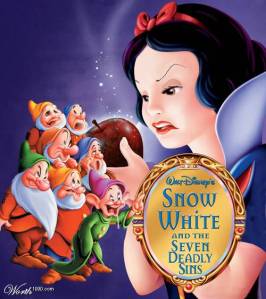 The second deadly sin is Envy which Dr. Gil defines as ‘the desire for what belongs to others’. I have been guilty of that sin many times at the gym. Why is it taking me so long to get in shape physically or spiritually when others around me seem so healthy? Sometimes the puny size of my weights or my prayer life can tempt me to not bother to try.
 defines as ‘overindulgence, addiction, seeking comfort’. Many people feel so embarrassed about their body or soul that they won’t even try. It’s just too painful.
 Sandy Brown and her family have just moved to Spokane, Washington where her husband, Scott, is pastoring a new church. With a fresh start, Sandy is determined to devote more time to her four children. But, within weeks of settling in their new life, the Brown family is plunged into turmoil.


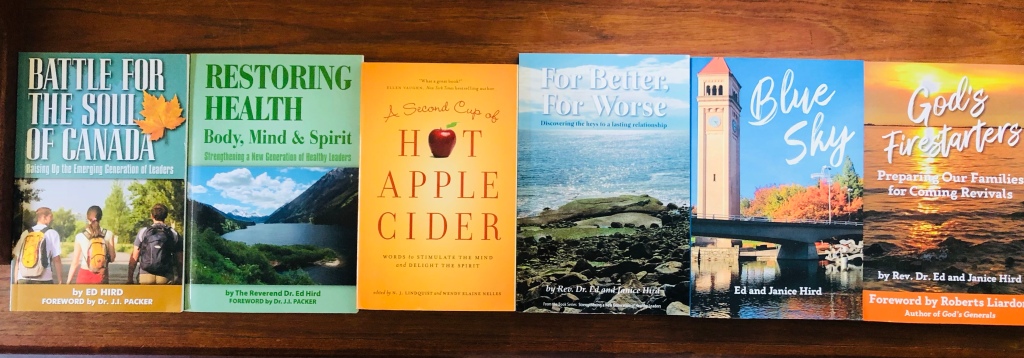


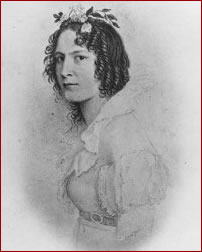


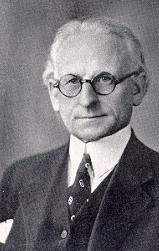



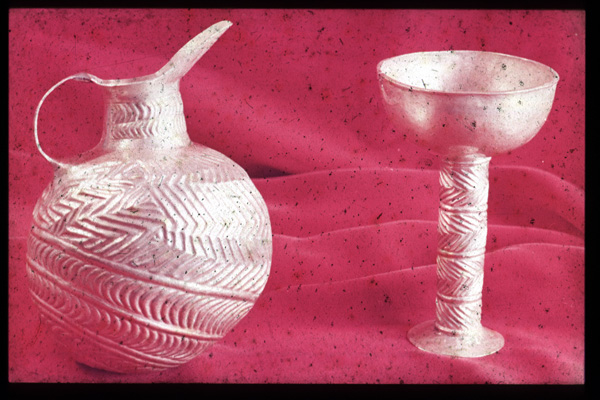

 What a joy to know that a Canadian Anglican couple, the Rev. John and Holly Roddam, were serving the people of Seattle. Canada, through the ministry of the Rev. Dennis & Rita Bennett, has received so much through the Bennett’s extensive travels across Canada. Many Canadians Anglicans can date their awakening to the reading of the Bennett’s bestsellers like ‘Nine O’clock in the Morning and ‘The Holy Spirit and You’.
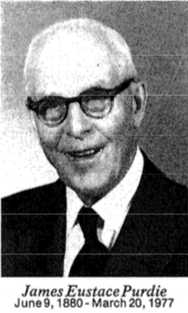

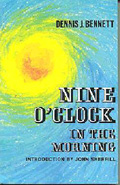


 Sandy Brown and her family have just moved to Spokane, Washington where her husband, Scott, is pastoring a new church. With a fresh start, Sandy is determined to devote more time to her four children. But, within weeks of settling in their new life, the Brown family is plunged into turmoil.

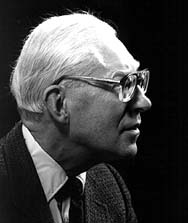



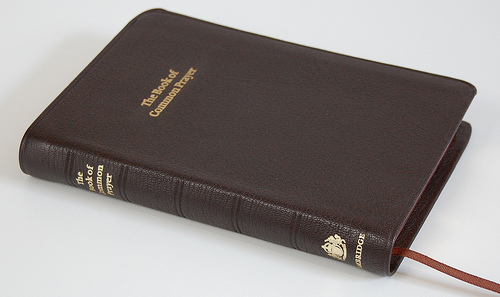





 Edhird's Blog