
 By the Rev. Dr. Ed Hird
Most men are ‘experts’ on women, until we marry one. Experience can be rather humbling to our most treasured pre-conceptions.
Flowers are, by far, the most popular gift that men like to give to women, followed by chocolates, candies, and other such delicacies. But perhaps the most valuable and most dangerous gift that we can give the women in our lives is the gift of listening.
 Heartfelt, non-critical listening is a rare phenomenon in our fast-paced, analytical culture. Listening takes time. Listening takes energy. Listening takes courage. To be honest, it often seems a lot easier just to give them chocolates. Most of us as men know that we need to grow in the area of listening.
The most offensive thing about listening is how helpless it can make us feel. Very few of us as men either like to feel weak or admit our weaknesses. Despite the male consciousness-raising of the last thirty years, such radical vulnerability does not come easy.
I well remember the first year of our marriage as a great time. My wife however has somewhat different memories…‘little things’ like our living on a shoe-string budget so that we could go on vacation in Europe, and my spending all my time studying for my Master’s Degree.
Years later, she finally told me that the first year wasn’t a bed of roses. I said: “Why didn’t you tell me?” “Well, Ed”, she said, “You weren’t listening”. Sadly, she was right. One of the dangers of listening to women is that we just might hear something that we don’t want to hear. Our equilibrium may be so unsettled that it will take us quite a while to recover.
The key women in our lives usually have a remarkable ability to impact our sense of inner calm, in a way that our male acquaintances rarely do. When a male upsets another man, we often just ‘write them off’ and carry on. But when a key woman ‘gets under our skin’, we have to deal with it, or our life begins to shrink.
One of the key signs of a man going through a marriage breakup is the radical energy loss, and the consequent impact on his work. As men, we are usually so ‘thick’ that when a marriage breakup hits us, we rarely see it coming. It’s like being hit by a Mac Truck. So many men say: “I had no idea”. Exactly. More than any other offense, the action that most drives our wives to the Courts (and I don’t mean ‘tennis’) is our unwillingness to listen.
 Another danger of listening to women is that we might have to change. None of us like being controlled. We certainly don’t like being treated like children by the key women in our lives. Sometimes we confuse our fear of change with our fear of being controlled. Without change, there is no growth. Without change, there is no future. I have found that if I am willing to change the things that I can change (which is me), then the rest of life begins to make more sense.
The famous A.A. Serenity prayer asks God for the serenity to accept the things that we cannot change ( which includes anyone else, especially the women in our lives). When we finally wake up and realize that women are ‘unfixable’ (that is, by us), then we can stop trying to change them, and start actually listening. Genuine listening to women can be unnerving, because to listen is to change.
Most of us as men have an amazing ability to  block out parts of conversations that make us feel uncomfortable. Ever wonder why women get so irritated with us, as so many men are forever flicking on the TV channel changer. This filtering ability can make men look like their memories are extremely selective. As the old saying goes, the problem with men is that they never remember, and the problem with women is that they never forget.
I remember when a former secretary in another city came up to me and courageously shared some concerns with me about our work environment. My ‘walls’ were down that day, and so I actually heard what she was saying. I said to her, “Why have you taken so long to tell me?” She said, “Because until now you would have never listened. You would have just explained it away.” I felt stunned and challenged. Here I was, a trained Social Worker and Priest, and I couldn’t even see my own ‘walls’.
The Good Book says that our hearts are deceitful, and that no one can really understand them. (Jeremiah 17:9) We have an amazing ability to fool ourselves. Have you noticed how often we judge our spouses by  their actions, and ourselves by our good intentions. That is why Jesus challenged each of us to first remove the log from our eyes, before we try to do surgery on the splinter in someone else’s eye.
Courageous listening is choosing to remove that log of defensiveness, and actually give the women in our lives our full, uncompromised attention. I have found that my wife is virtually always right even when she is wrong. She, and most other women, have a God-given intuitive ability that functions like a radar system in discerning basic truth. Sometimes she can’t even tell me why she is feeling so uncomfortable about some area, but in hindsight, my listening to her has saved me a lot of grief. That doesn’t mean that she is always right on all the details, but she usually intuitively grasps the core of issues.
That is why the famous author Gary Smalley says that every woman has a built-in marriage manual, if we men would only have the courage to listen and not reject It has taken me a long time to fully benefit from this ‘dangerous’ gift of my wife.
Have you ever wondered why Jesus after his resurrection turned up to women first? Perhaps it’s because women are so spiritually open. No one in that 1st century culture listened to women, except Jesus. So Jesus, after rising again, broke all the rules and showed up to rejected, despised, ignored women. Did the male disciples initially believe the women when they shared about the risen Jesus? Not in your life. Like so many of us men today, they wrote off the women’s stories as “old wives’ tales”.
I pray that we men may have the courage to listen to the stories of women, especially their stories of Jesus’ love.
The Rev. Dr. Ed Hird, BSW, MDiv, DMin
-author of the award-winning Battle for the Soul of Canada
-previously published in the North Shore News/Deep Cove Crier
P. S. Click this Amazon link to view for free the first two chapters of our new novel Blue Sky.
“I’m afraid there’s been an accident…”
 Sandy Brown and her family have just moved to Spokane, Washington where her husband, Scott, is pastoring a new church. With a fresh start, Sandy is determined to devote more time to her four children. But, within weeks of settling in their new life, the Brown family is plunged into turmoil.
Sandy receives shocking news that her children aren’t safe, which brings back haunting memories of the trauma she experienced as a girl. Then, the unthinkable happens…
A brutal attack puts Sandy on the brink of losing everything she’s loved. Her faith in God and the family she cherishes are pushed to the ultimate limit.
Is healing possible when so many loved ones are hurt? Are miracles really possible through the power of prayer? Can life return to the way it was before?
Blue Sky reveals how a mother’s most basic instinct isn’t for survival… but for family.
If you’re a fan of Karen Kingsbury, then you’ll love Blue Sky. Get your copy today on paperback or kindle.
-Click to check out our marriage book For Better For Worse: discovering the keys to a lasting relationship on Amazon. You can even read the first two chapters for free to see if the book speaks to you.

-The sequel book Restoring Health: body, mind and spirit is available online with Amazon.com in both paperback and ebook form. Dr. JI Packer wrote the foreword, saying “I heartily commend what he has written.” The book focuses on strengthening a new generation of healthy leaders. Drawing on examples from Titus’ healthy leadership in the pirate island of Crete, it shows how we can embrace a holistically healthy life.

In Canada, Amazon.ca has the book available in paperback and ebook. It is also posted on Amazon UK (paperback and ebook), Amazon France (paperback and ebook), and Amazon Germany (paperback and ebook).
Restoring Health is also available online on Barnes and Noble in both paperback and Nook/ebook form. Nook gives a sample of the book to read online.
Indigo also offers the paperback and the Kobo ebook version. You can also obtain it through ITunes as an IBook.
To receive a signed copy within North America, just etransfer at ed_hird@telus.net, giving your address. Cheques are also acceptable.
-Click to purchase the Companion Bible Study by Jan Cox (for the Battle of the Soul of Canada) in both paperback and Kindle on Amazon.com and Amazon.ca
Indigo also offers the paperback and the Kobo ebook version. You can also obtain it through ITunes as an IBook.

-Click to purchase the Companion Bible Study by Jan Cox (for the Battle of the Soul of Canada) in both paperback and Kindle on Amazon.com and Amazon.ca

To purchase any of our six books in paperback or ebook on Amazon, just click on this link.

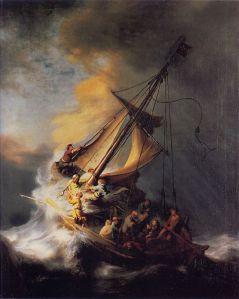 ninth child of a well-to-do couple in Leiden, Holland. While in his early 20’s, he developed an overnight celebrity status somewhat akin to the rise of the Beatles. This brief time of prosperity and popularity,however, was followed by much sorrow and rejection. Championed as the Netherlands alternative to Peter Paul Ruben in Belgium, Rembrandt became very wealthy and over-extended. Taking out an enormous mortgage on a beautiful house, he was accused of wasting his inheritance and living an indulgent lifestyle.
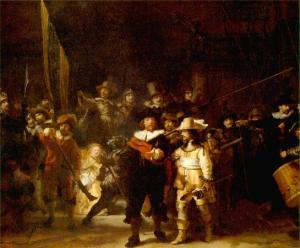 called Night Watch, was both his greatest success artistically and his worst failure relationally. While painting the Night Watch, he made many people angry who would no longer buy his paintings. The soldiers, who paid to be in the picture, all wanted to be front and centre. Instead of painting a typical group portrait, Rembrandt created a masterpiece where some soldiers were prominent and others were hardly visible.
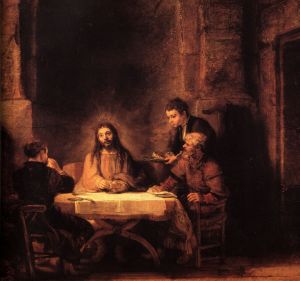 another scandal with his new housekeeper, Hendrickje Stoffels, whose pregnancy scared off even more of his Dutch customers. His financial problems became so severe that in 1656 Rembrandt was declared insolvent. All of Rembrandt’s possessions, his large collection of artwork, and his house in Amsterdam were sold in three auctions during 1657 and 1658. In 1663, Hendrickje, who has been described as ‘one of the noblest souls to serve a troubled genius’, died. Five years later, Rembrandt’s hopes were again raised and then dashed when he celebrated his son Titus’ wedding, only to see him buried that same year. Only his daughter Cornelia, his daughter-in-law Magdalene van Loo, and his granddaughter Titia survived him.
 love was concentrated in the hands. When the famous author Henri Nouwen saw the Prodigal Son painting in the St Petersburg Hermitage, he was struck by the sight of “a man in a great red cloak tenderly touching the shoulders of a disheveled boy kneeling before him. I could not take my eyes away. I felt drawn by the intimacy between the two figures, the warm red of the man’s cloak, the golden yellow of the boy’s tunic, and the mysterious light engulfing them both. But, most of all, it was the hands –the old man’s hands–as they touched the boy’s shoulders that reached me in a place where I had never been reached before. …” Nouwen realized that Rembrandt must have shed many tears and died many deaths before he could have so exquisitely painted the father’s heart for his lost son. Rembrandt had once again painted himself as the Prodigal Son, but this time coming back home to his Father.
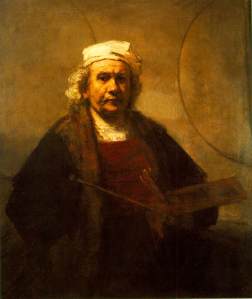 Prodigal Painter coming home to the true Father. Rembrandt knew that he had wandered a long way, but that it was never too late to return home. My prayer is that many of us may have the courage, like Rembrandt, to turn our hearts towards Home, where love and forgiveness are waiting.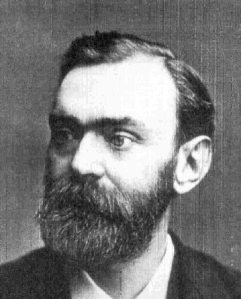
 named Dynamite, taking it from the Greek word ‘dynamos’, meaning ‘power’. World War One and Two devoured millions of lives, indirectly due to the technological advances in Alfred Nobel’s laboratories. In the past, the gunsmoke from cannons used to stop battles, because the massive clouds of smoke blocked the view of the generals.
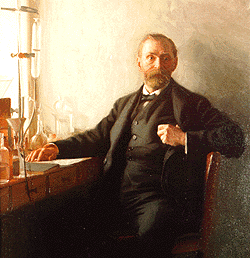 combining nitroglycerin with kieselguhr clay, Alfred created a stable, transportable explosive, which he called dynamite. England, being cultural conservative, would have nothing to do with dynamite. So instead the Scots cornered the dynamite market.
 for the Panama Canal in 1914. Sadly enough, his dynamite also blasted countless lives from 1914- to 1918, including the lives of my great-uncles William and Harry.
 fact that it is never too late to change, never too late to start again. When Alfred’s older brother Ludwig died, one newspaper accidentally printed Alfred’s obituary instead. The obituary described Alfred as a man who became rich by enabling people to kill each other in unprecedented numbers.
 intriguing people who have received the Nobel Peace Prize, and whose lives have been radically changed by that very act. The names have become part and parcel of our recent history, names like Martin Luther King Jr, Nelson Mandela, F.W. De Klerk, Albert Schweitzer, Theodore Roosevelt, Woodrow Wilson, Andrei Sakharov, Yitzhak Rabin, Mikhail Gorbachev, Elie Wiesel, Lech Walesa, Mother Teresa, Anwar Sadat, and Menachim Begin. The first Canadian to ever receive the Nobel Peace Prize was the much-loved Prime Minister Lester Pearson, for his role in helping to end the Suez Canal crisis. The first person ever to receive the Nobel Peace Prize was Jean Henri Dunant, the founder of the International Red Cross Society, back in 1901.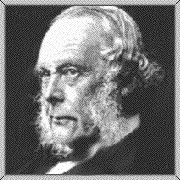
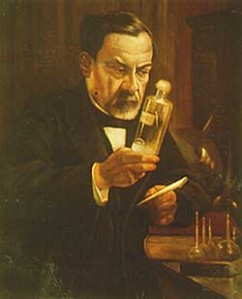 by the medical establishment. When Pasteur was publicly honoured at age 70 by his medical peers, he turned and bowed his head towards Lister, saying: “the future belongs to him who has done the most for suffering humanity.”
 gloves, nor did they cover their hair with caps or their noses and their mouths with masks. The result was that the patient was in danger of infection, not from ‘bad air’ as they thought, but from the surgeon’s hands, his clothes, his breath, and his hair. Lister had heard that ‘carbolic acid,’ a coal-tar derivative used to preserve railway tracks and ships’ timbers, was effective in treating sewage in Carlise, and in curing cattle of parasites. By cleaning wounds and dressing his patients with carbolic acid, Lister was able to keep his hospital ward in Glasgow free of infection for nine months. Lister’s cloud of carbolic spray drenched the whole area, surgeon and all, and so killed the bacteria before they had a chance to invade the wound.
 insisting for hygienic reasons that his wards should be separated from all other wards, and that they should not be shared by any other surgeon. He even had the nerve to bring his own personally trained staff with him from Edinburgh. Little by little however, Lister won the English over.
 His ‘criminal’ behaviour was none other than publishing a pamphlet urging doctors to wash their hands before surgery and to sterilize their instruments. Thirty percent of pregnant women in Paris were needlessly dying from infection during childbirth. One grief-struck husband, whose wife had just died from childbirth fever, went on a rampage and shot his doctor dead. Medical doctors rallied against Dr. Pasteur, blaming his pamphlet for the murder and claiming that Pasteur was making the practice of medicine unsafe for physicians and surgeons. “Who did Pasteur think that he was?” They said. “He isn’t even a medical doctor…just a lowly chemist”.
 countryside of Arbois, Pasteur spent the next decade researching the causes of anthrax, the black plague ravaging the sheep across France. Miraculously Pasteur invented an anthrax vaccine, which he gave freely to all farmers’ sheep in Arbois.
 The ‘great physician’ Jesus once said that if anyone wants to be first, he must become the very last, and the servant of all. Louis Pasteur was indeed the servant of all, who sacrificed his time, energy, and health so that others might live. Pasteur selflessly taught that the benefits of science are not for the scientist, but for all of humanity.
 let yourselves be tainted by a barren skepticism nor discouraged by sadness of certain hours that creep over every nation. Do not become angry at your opponents for no scientific theory has ever been accepted without opposition.’
 By the Rev. Dr. Ed Hird
 Russ Crosson, financial planner and author of A Life Well Spent, holds that the only mark that will truly last is our posterity. He defines posterity first of all as our descendants, and secondly as those individuals in whom we have significant influence. The best way, he says, to get a higher return on life is to invest in our posterity.
 that rob our investment in our posterity:
 Richard Swenson holds that our relationships are being starved to death by velocity. No one has time to listen, let alone love. Our children lay wounded on the ground, run over by our high-speed intentions.
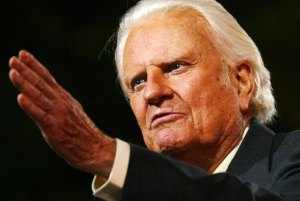 communicator, said: “The greatest mistake was taking too many speaking engagements and not spending enough time with my family.”. Life is just too short. Life is too sudden.
 family life. He quizzed his children on what they read and made up bedtime stories for them. “The thing I remember most about my father,” reflects his daughter Rebecca, “was those marvelous stories he would tell.”
 successful people. Sometimes the most successful outwardly are the most wounded inwardly, especially in one’s primary relationships. “Not the educators nor the legislators nor the scientists can give us tranquillity of heart, and without tranquillity, whatever else they give us is useless at best.” Tozer commented that in this world people are rated by what they do. They are rated according to the distance they have come up the hill of achievement.
 Sandy Brown and her family have just moved to Spokane, Washington where her husband, Scott, is pastoring a new church. With a fresh start, Sandy is determined to devote more time to her four children. But, within weeks of settling in their new life, the Brown family is plunged into turmoil.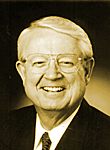
 Dr. Swindoll met a man who told Chuck of his need to work hard at being happier. He said that he had been reared in an ultraserious home. “We didn’t talk about our feelings…we worked…Funny thing…in my sixty-plus years I have achieved about everything I dreamed of doing and I have been awarded for it. My problem is that I don’t know how to have fun and enjoy these things hard work has brought me. I cannot remember the last time I laughed–I mean really laughed.”
 and downside of our drive to achieve. Jokingly speaking of an ‘elite club’ High Achievers Anonymous, Chuck spoke compassionately about the high cost that our work addictions play in our primary relationships. The tragedy is, enough is never enough. Life becomes reduced to work, tasks, effort, an endless list of shoulds and musts…minus the necessary fun and laughter that keeps everything in perspective. Chuck says that there is always one telltale sign when pride takes charge of our life: the fun leaves.
 G.K. Chesterton also commented: “I’m all in favour of laughing. Laughter has something in common in it with the ancient winds of faith and inspiration; it unfreezes pride and unwinds secrecy; it makes men forget themselves in the presence of something greater than themselves; something that they cannot resist.”
 As I thought about the enormous, lasting appeal of Perry Mason over the years, I realized that Perry Mason taps into that desire we all have for a father who is really willing to stick up for us. All of us need a father who will use his strength to protect and provide for his family. Some men are more known for their attacking and crushing, rather than for their protecting and providing. I am thankful for my father who defended me when I was being unfairly attacked, who believed in me when others turned their backs on me. Thank you, Dad, for being a Perry Mason to me.
 All of us want to believe that life is fair and good. Yet very often tragedy and injustice crush our hopes for our future. Perry Mason represents an outside force that cares and has the power to really change our lives. In the midst of horrendous tragedy and injustice, Job cried out in the words made famous by Handel’s Messiah: “I know that my Redeemer Liveth”. Having finished two years of studying Hebrew, I discovered that the word Redeemer(go’el) in the Hebrew actually means “Defense Attorney”. Job was really saying: “I know that my Perry Mason, my Defense Attorney, lives…I know that he will have the final word in court and set me free. I know that he will baffle the prosecuting attorney. I know that Perry Mason will have me vindicated, and proven innocent.”
 One of Dr. Brand’s greatest breakthroughs was the discovery that people with leprosy do not have ‘bad flesh’ that just rots away by itself. In fact, their flesh is just as healthy as yours or mine. They are usually not even contagious. What they lack is the ability to feel pain. As the blood flow is cut off from key parts of their body, their nerve endings die. With the death of their nerve endings comes the death of their ability to sense danger to their bodies. Leprous people live a virtually pain-free existence. Many of us would do anything to live a pain-free life. Yet in fact, the absence of pain is the greatest enemy of the leper. Again and again they wound and impale themselves. Yet they don’t feel a thing.
 remarkable ability to shut down pain in our lives. People in North America consume over thirty thousand tons of aspirin a year. North Americans, who only represent 5 percent of the world’s population, consume over 50% of all manufactured drugs, one-third of which work on the central nervous system. We are the most advanced society in the world in terms of suppressing pain. Yet the more we try to shut down pain, the more pain strikes back.
 As you are reading this article, you have probably blinked your eyes hundreds of times. Have you ever wondered why we blink? Dr. Brand discovered that leprous people go blind, because they don’t blink. Blinking functions like our car’s windshield wipers, washing away the impurities. It is pain that causes us to blink.
 now required to take cats with them, wherever they plan to sleep. I encourage you as you are reading this article to look down at your 10 fingers. How many of us as parents have ever thanked God for our hands that reach out to touch our children, and for the gift of pain that keeps them healthy?
 Edhird's Blog