
By the Rev. Dr. Ed & Janice Hird

Sandra Crawford
Struck by cancer, Sandra Crawford never let it defeat her. In this very succinct and transparent book, she explains from the beginning of the journey till the end what it is like to go through all the emotional and physical experiences of breast cancer. By reading this remarkable book, friends and family can better understand the different stages of this journey.
One of her tools for defeating cancer was to keep a daily journal in which she recorded her thoughts, feelings, and prayers. This journal later proved invaluable in writing her  remarkable book ‘In the Arms of My Beloved: A Journey through Breast Cancer’*.
Cancer is devastating not only to the person but to the family. It was helpful to read and understand how much someone with cancer needs encouragement from their loved ones. Sandra’s way of writing motivates you to want to come alongside her and be one of her cheerleaders. It made us want to be more caring as a friend and family member to those who are hurting.
Sandra writes: “In my small village of Deep

Deep Cov
Cove, we see many rainbows in the spring. Carrying on the tradition of my mum, whenever I see one, I run to the window to take in the wonder of God’s beauty…” Deep Cove rainbows represented for Sandra victory over cancer.
The suggestions for those going through treatment were very practical. Her down-to-earth way of describing chemotherapy and radiation treatment gave the reader an understanding of what cancer patients really go through. It also removes much of the fear and mystery that surrounds this often taboo area.
Dr. Ruth Demian, MD, commented: “Throughout her journey with breast cancer, Sandra has refused to stay down or be embittered, but has overcome every challenge with faith, courage and determination. Her inspiring story offers hope and practical wisdom to those who are walking through difficult times, especially when faced with serious or life threatening illnesses.”
Sandra is a fighter. She never let cancer defeat her and steal her reason to live. Her sense of humour even in the midst of great challenges was inspiring. Her humour reminded us of her late mother Jackie Crawford. As a young girl, Sandra often sat on the floor of her mother’s office, pecking out cheerful letters to “Mummy” on an old Underwood typewriter.
Coming from a long line of letter writers, she soon demonstrated a natural ability to lift even the saddest heart with a simple note of encouragement or a heart-felt poem.  Pastor Lina Gabeli commented: “As you read the pages of this book, you will be strengthened in your faith and fall more in love with Jesus, knowing that with God all things are possible when you believe in His promises and appropriate His word. This is a must read for everyone who is facing sickness or a personal crisis.” In the Arms of My Beloved can be purchased at your local Christian bookstore or ordered online. We give thanks to God for raising up Sandra Crawford to give hope to others facing cancer.
The Rev. Dr. Ed & Janice Hird, BSW, MDiv, DMin
-author of the award-winning Battle for the Soul of Canada
-originally published in the North Shore News/Deep Cove Crier
* http://www.sandracrawford.com
P. S. Click this Amazon link to view for free the first two chapters of our new novel Blue Sky.
“I’m afraid there’s been an accident…”
 Sandy Brown and her family have just moved to Spokane, Washington where her husband, Scott, is pastoring a new church. With a fresh start, Sandy is determined to devote more time to her four children. But, within weeks of settling in their new life, the Brown family is plunged into turmoil.
Sandy receives shocking news that her children aren’t safe, which brings back haunting memories of the trauma she experienced as a girl. Then, the unthinkable happens…
A brutal attack puts Sandy on the brink of losing everything she’s loved. Her faith in God and the family she cherishes are pushed to the ultimate limit.
Is healing possible when so many loved ones are hurt? Are miracles really possible through the power of prayer? Can life return to the way it was before?
Blue Sky reveals how a mother’s most basic instinct isn’t for survival… but for family.
If you’re a fan of Karen Kingsbury, then you’ll love Blue Sky. Get your copy today on paperback or kindle.
-Click to check out our marriage book For Better For Worse: discovering the keys to a lasting relationship on Amazon. You can even read the first two chapters for free to see if the book speaks to you.

-The sequel book Restoring Health: body, mind and spirit is available online with Amazon.com in both paperback and ebook form. Dr. JI Packer wrote the foreword, saying “I heartily commend what he has written.” The book focuses on strengthening a new generation of healthy leaders. Drawing on examples from Titus’ healthy leadership in the pirate island of Crete, it shows how we can embrace a holistically healthy life.

In Canada, Amazon.ca has the book available in paperback and ebook. It is also posted on Amazon UK (paperback and ebook), Amazon France (paperback and ebook), and Amazon Germany (paperback and ebook).
Restoring Health is also available online on Barnes and Noble in both paperback and Nook/ebook form. Nook gives a sample of the book to read online.
Indigo also offers the paperback and the Kobo ebook version. You can also obtain it through ITunes as an IBook.
To receive a signed copy within North America, just etransfer at ed_hird@telus.net, giving your address. Cheques are also acceptable.
-Click to purchase the Companion Bible Study by Jan Cox (for the Battle of the Soul of Canada) in both paperback and Kindle on Amazon.com and Amazon.ca
Indigo also offers the paperback and the Kobo ebook version. You can also obtain it through ITunes as an IBook

-Click to purchase the Companion Bible Study by Jan Cox (for the Battle of the Soul of Canada) in both paperback and Kindle on Amazon.com and Amazon.ca


 most rewarding and the most difficult relationship known to man.” Studies have shown that no marriages are free from occasional marital conflict. The famous marriage researcher Dr John Gottman commented recently: “when Julie and I do our workshops with couples, one of the main messages we give is that we’ve found that really good marriages, people who are really happy, have terrible fights, where they’re thinking at the end of the fight: Why did I marry this person?”
 One of the ways out of bitterness is through the use of gentle, self-effacing humour. Aggressive humour like sarcasm kills marriages. Blaming and mocking seals the coffin on your marriage. Dr Gottman found that successful marriages have on average five times more encouraging behaviours than negative behaviours.
 Before my spiritual breakthrough at age 17, I viewed marriage as just ‘a piece of paper’. Research shows that couples who view their marriage as something that God has joined together are more likely to act and think in ways that protect their marriage. I have discovered that God invented marriage and believes in it; therefore marriages are worth fighting for.
 Many of us enter marriage thinking that our spouse will meet our deepest needs. We then feel cheated when they don’t, and begin to close our hearts. How many of us enter marriage with the view that we are there to serve our spouse? How many of us see marriage as a way of serving God?
 clearly than anger. Because our hearts are deceitful (Jeremiah 17:9), we have an amazing ability to justify our own anger and bitterness towards our spouse, while simultaneously excusing our own bad attitudes. Being angry at our spouses can be very attractive, because it makes us feel both powerful and self-righteous.
 Dr. E. Stanley Jones, founder of the Christian Ashram, once said that ‘there can be no love between a husband and wife unless there is mutual self-surrender. Love simply cannot spring up without that self-surrender to each other. If either withholds the self, love cannot exist.’
 -Click to check out our marriage book

 The heart of spirituality, in fact, is surrendering our will and lives to God who really cares for us. As Jesus was hanging in agony on the cross, he cried out, “Father, into your hands I commit my spirit”. Such a surrender can be our choice one day at a time. Either we commit our lives daily into God’s hands, or we commit our lives into our own hands. Either God ends up at the centre of our lives, or our self ends up at the centre. There is no greater disease than finding one’s self at the centre, the essence of self-centeredness. As Dr. E. Stanley Jones puts it, anything that leaves you at the centre is off-centre.
 itself to something, or someone, beyond itself. Your self in your own hands is a problem and pain; your self in the hands of God is a possibility and power.” Why is it so hard to let go and let God? Why does our ego so often fight self-surrender with all its might? Because self-surrender is choosing to die to the false self, the self-centered way of living, that the true self might live for the sake of others. “Fears, worries, anxieties, and resentments”, says Dr. Jones, “are all roots in the unsurrendered self.”
 As Bob Dylan once wrote, ‘you gotta serve somebody…It may be the devil, it may be the Lord, but you gotta serve somebody’. The choice is ours one day at a time. We may choose to surrender to fear, to pride, to money, to resentment, to popularity, or we can choose to surrender to God who really cares for us. My prayer for those reading this article is that each of us may learn to slow down, let go, and let God.
 Sandy Brown and her family have just moved to Spokane, Washington where her husband, Scott, is pastoring a new church. With a fresh start, Sandy is determined to devote more time to her four children. But, within weeks of settling in their new life, the Brown family is plunged into turmoil.
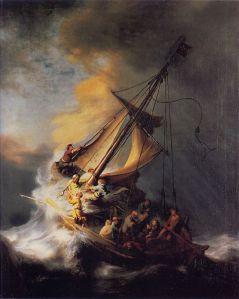 ninth child of a well-to-do couple in Leiden, Holland. While in his early 20’s, he developed an overnight celebrity status somewhat akin to the rise of the Beatles. This brief time of prosperity and popularity,however, was followed by much sorrow and rejection. Championed as the Netherlands alternative to Peter Paul Ruben in Belgium, Rembrandt became very wealthy and over-extended. Taking out an enormous mortgage on a beautiful house, he was accused of wasting his inheritance and living an indulgent lifestyle.
 called Night Watch, was both his greatest success artistically and his worst failure relationally. While painting the Night Watch, he made many people angry who would no longer buy his paintings. The soldiers, who paid to be in the picture, all wanted to be front and centre. Instead of painting a typical group portrait, Rembrandt created a masterpiece where some soldiers were prominent and others were hardly visible.
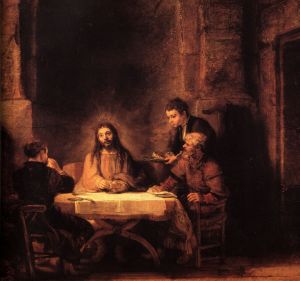 another scandal with his new housekeeper, Hendrickje Stoffels, whose pregnancy scared off even more of his Dutch customers. His financial problems became so severe that in 1656 Rembrandt was declared insolvent. All of Rembrandt’s possessions, his large collection of artwork, and his house in Amsterdam were sold in three auctions during 1657 and 1658. In 1663, Hendrickje, who has been described as ‘one of the noblest souls to serve a troubled genius’, died. Five years later, Rembrandt’s hopes were again raised and then dashed when he celebrated his son Titus’ wedding, only to see him buried that same year. Only his daughter Cornelia, his daughter-in-law Magdalene van Loo, and his granddaughter Titia survived him.
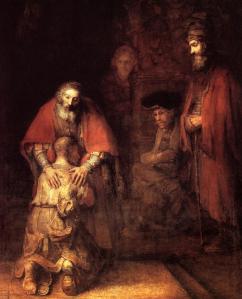 love was concentrated in the hands. When the famous author Henri Nouwen saw the Prodigal Son painting in the St Petersburg Hermitage, he was struck by the sight of “a man in a great red cloak tenderly touching the shoulders of a disheveled boy kneeling before him. I could not take my eyes away. I felt drawn by the intimacy between the two figures, the warm red of the man’s cloak, the golden yellow of the boy’s tunic, and the mysterious light engulfing them both. But, most of all, it was the hands –the old man’s hands–as they touched the boy’s shoulders that reached me in a place where I had never been reached before. …” Nouwen realized that Rembrandt must have shed many tears and died many deaths before he could have so exquisitely painted the father’s heart for his lost son. Rembrandt had once again painted himself as the Prodigal Son, but this time coming back home to his Father.
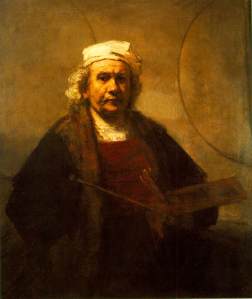 Prodigal Painter coming home to the true Father. Rembrandt knew that he had wandered a long way, but that it was never too late to return home. My prayer is that many of us may have the courage, like Rembrandt, to turn our hearts towards Home, where love and forgiveness are waiting.
 family life. He quizzed his children on what they read and made up bedtime stories for them. “The thing I remember most about my father,” reflects his daughter Rebecca, “was those marvelous stories he would tell.”
 successful people. Sometimes the most successful outwardly are the most wounded inwardly, especially in one’s primary relationships. “Not the educators nor the legislators nor the scientists can give us tranquillity of heart, and without tranquillity, whatever else they give us is useless at best.” Tozer commented that in this world people are rated by what they do. They are rated according to the distance they have come up the hill of achievement.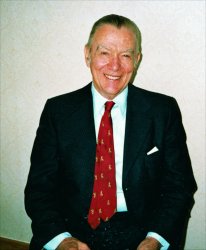
 One of Dr. Brand’s greatest breakthroughs was the discovery that people with leprosy do not have ‘bad flesh’ that just rots away by itself. In fact, their flesh is just as healthy as yours or mine. They are usually not even contagious. What they lack is the ability to feel pain. As the blood flow is cut off from key parts of their body, their nerve endings die. With the death of their nerve endings comes the death of their ability to sense danger to their bodies. Leprous people live a virtually pain-free existence. Many of us would do anything to live a pain-free life. Yet in fact, the absence of pain is the greatest enemy of the leper. Again and again they wound and impale themselves. Yet they don’t feel a thing.
 remarkable ability to shut down pain in our lives. People in North America consume over thirty thousand tons of aspirin a year. North Americans, who only represent 5 percent of the world’s population, consume over 50% of all manufactured drugs, one-third of which work on the central nervous system. We are the most advanced society in the world in terms of suppressing pain. Yet the more we try to shut down pain, the more pain strikes back.
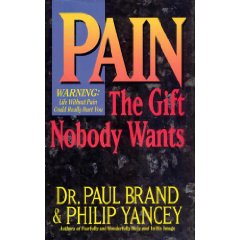 As you are reading this article, you have probably blinked your eyes hundreds of times. Have you ever wondered why we blink? Dr. Brand discovered that leprous people go blind, because they don’t blink. Blinking functions like our car’s windshield wipers, washing away the impurities. It is pain that causes us to blink.
 now required to take cats with them, wherever they plan to sleep. I encourage you as you are reading this article to look down at your 10 fingers. How many of us as parents have ever thanked God for our hands that reach out to touch our children, and for the gift of pain that keeps them healthy?
 reportedly had over 250 partners/girlfriends stashed in different locations, many which falsely believed that they were married to Hughes. Perhaps this is why Marilyn Monroe sadly commented: “A wise girl kisses but doesn’t love, listens but doesn’t believe, and leaves before she is left.”
 Romancing the Stone, Joan Wilder a romance writer meets Jack Colton who violates every one of her imaginary ideas of what a real man will act like. Romancing the Stone reminds us that real romance involves the messiness and disappointments of everyday life. Dr Karl Menninger, the famous psychiatrist, said: “Love cures people, both the ones who give it and the ones who receive it.”
 Dr Gil Stieglitz tells us in his video series ‘The Five Problems of Marriage’ that one of the top needs of wives is for romance, to be nurtured and pursued. Some husbands don’t realize that they still need to date their wives, even after they are finally married to them. To some men, dating their wives is unthinkable. It would be like trying to get on a bus that they are already on.
 The Good Book says that he that does not love doesn’t know God, because God is love. Pearl Buck the famous novelist wrote: “Love alone could waken love.”
 By the Rev. Dr. Ed Hird
 temperance. Franklin saw the Judeo-Christian ethic as “the best the world ever saw or is likely to see.”
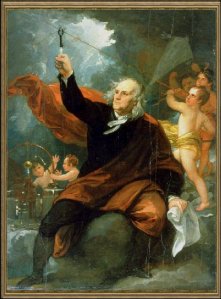 that this lead poisoning was also affecting glazers, type-founders, plumbers, potters, white-lead makers and painters.
 peace accord with Britain, and the Constitution. His unsuccessful proposal for the American Great Seal was to have Pharaoh being swallowed by the Red Sea, along with the words ‘Rebellion to Tyrants is Obedience to God.’
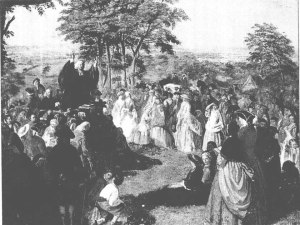 heard without amplification by over 30,000 people at one time. Franklin published all of Whitfield’s books and posted his sermons on the front page of his Philadelphia Gazette. Whitfield wrote to Franklin, saying: “As you have made a pretty considerable progress in the mysteries of electricity, I would now humbly recommend to your diligent unprejudiced pursuit and study the mystery of the new-birth. It is a most important, interesting study, and when mastered, will richly answer and repay you for all your pains.”
 At the 1787 American Constitutional Convention, Franklin commented: “the longer I live, the more convincing proofs I see of this truth — that God governs in the affairs of men. And if a sparrow cannot fall to the ground without His notice, is it probable that an empire can rise without His aid?” On that basis, Franklin arranged that prayers led by local clergy would be held each morning before Assembly business. Franklin said: “If I had ever before been an atheist, I should now have been convinced of the Being and government of a Deity!”
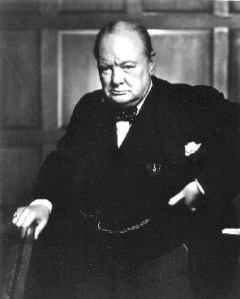 At a deeper level however, their common determination and perseverance has had remarkable impact on the character development of millions. Churchill once went to a meeting of students, where he stood up and said: “Never, ever, ever, ever, ever, ever, ever, give up. Never give up. Never give up. Never give up.”. Then he sat down. In his 1937 book Great Contemporaries, Churchill included one whole chapter on Baden Powell. In describing Baden-Powell’s Scouting movement, Churchill said: “It is difficult to exaggerate the moral and mental health which our nation had derived from this profound and simple conception.” Churchill described Baden-Powell (B.P.) as one of the three most famous generals he had ever known.
 that Mafeking would hold out half as long. A dozen times, as the siege dragged on, the watching nation had emerged from apprehension and despondency into renewed hope, and had been cast down again.” By the end of the siege, Mafeking had become so famous that it turned into a verb: “to Mafeking meant to celebrate uproariously”. Churchill noted that “when finally the news of Mafeking’s relief was flashed throughout the world, the streets of London became impassable, and the floods of sterling cockney patriotism was released in such deluge of unbridled, delirious, childish joy as was never witnessed again until Armistice Night in 1918.”
 Neither B.P. nor Churchill were particularly successful in their early school days. B.P.’s school reports read:
 Edhird's Blog