Ever since Coca-Cola decided to promote Santa Claus as part of their soft drink campaign, Santa or St. Nicholas became a household name in North America. Santa is from the Dutch word for Saint. Claus is again a Dutch contraction for Nicholas.
Do you remember back when John Lennon said that the Beatles were bigger than Jesus Christ? Do you remember the controversy? John, of course, was right. The Beatles were for a while more popular and more central for millions. So too is Santa Claus bigger than the baby Jesus at Christmas. As a young boy, St. Nicholas for me was the heart of Christmas. The fact that my mother insisted on dragging me to church on Christmas seemed to me like a horrible religious intrusion into an otherwise good holiday.
When I was 5 years old, though, I became suspicious when Santa kept appearing at all the different shopping centres. I calculated that no reindeer could fly that fast and be in so many places at once. Once I shared my conclusions with my five year old friends, I was amazed that some of my friends’ mothers were not as excited about my “findings” as I was!
Many years later I was surprised to discover that “yes Virginia, there really is a Santa Claus” History tells us that there was a real, live Santa Claus or St. Nicholas in the country of Turkey during the early 4th Century. St. Nicholas was the Bishop of Myra. He was a very faithful Christian who endured terrible suffering and imprisonment during the great persecution by the Roman Emperor Diocletian in 303 A.D.
During this time, many church buildings were destroyed, bibles were burnt, and priests were murdered. As a result of his faithful suffering, Nicholas ended up being made Saint, the Patron Saint of sailors, Russia, and children. His symbol became 3 bags of gold, the dowry he was supposed to have given to three girls to save them from embarrassment. That, of course, is the origin of Santa bringing presents at Christmas.
The musician Randy Stonehill wrote in a Christmas song that “I know that if St. Nicholas was here, he would agree that Jesus gave the greatest gift of all to you and me” It is quite clear that the real Santa Claus (Nicholas) loved Jesus very much, and was willing to suffer for his faith. I believe that if Santa Claus were here today, he would say “Don’t just leave Jesus in the Manger. Make room for Him in your heart, not only at Christmas, but all year round”
This Christmas may we all remember the words of that famous carol Oh Little Town of Bethlehem. “O Holy Child of Bethlehem descend to us, we pray. Cast out our sin and enter in, be born in us today..”
P. S. Click this Amazon link to view for free the first two chapters of our new novel Blue Sky.
“I’m afraid there’s been an accident…”
Sandy Brown and her family have just moved to Spokane, Washington where her husband, Scott, is pastoring a new church. With a fresh start, Sandy is determined to devote more time to her four children. But, within weeks of settling in their new life, the Brown family is plunged into turmoil.
Sandy receives shocking news that her children aren’t safe, which brings back haunting memories of the trauma she experienced as a girl. Then, the unthinkable happens…
A brutal attack puts Sandy on the brink of losing everything she’s loved. Her faith in God and the family she cherishes are pushed to the ultimate limit.
Is healing possible when so many loved ones are hurt? Are miracles really possible through the power of prayer? Can life return to the way it was before?
Blue Sky reveals how a mother’s most basic instinct isn’t for survival… but for family.
If you’re a fan of Karen Kingsbury, then you’ll love Blue Sky. Get your copy today on paperback or kindle.
-The sequel book Restoring Health: body, mind and spirit is available online with Amazon.com in both paperback and ebook form. Dr. JI Packer wrote the foreword, saying “I heartily commend what he has written.” The book focuses on strengthening a new generation of healthy leaders. Drawing on examples from Titus’ healthy leadership in the pirate island of Crete, it shows how we can embrace a holistically healthy life.
To receive a signed copy within North America, just etransfer at ed_hird@telus.net, giving your address. Cheques are also acceptable.
-Click to purchase the Companion Bible Study by Jan Cox (for the Battle of the Soul of Canada) in both paperback and Kindle on Amazon.com and Amazon.ca
-Click to purchase the Companion Bible Study by Jan Cox (for the Battle of the Soul of Canada) in both paperback and Kindle on Amazon.com and Amazon.ca
To purchase any of our six books in paperback or ebook on Amazon, just click on this link.
Struck by cancer, Sandra Crawford never let it defeat her. In this very succinct and transparent book, she explains from the beginning of the journey till the end what it is like to go through all the emotional and physical experiences of breast cancer. By reading this remarkable book, friends and family can better understand the different stages of this journey.
One of her tools for defeating cancer was to keep a daily journal in which she recorded her thoughts, feelings, and prayers. This journal later proved invaluable in writing her remarkable book ‘In the Arms of My Beloved: A Journey through Breast Cancer’*.
Cancer is devastating not only to the person but to the family. It was helpful to read and understand how much someone with cancer needs encouragement from their loved ones. Sandra’s way of writing motivates you to want to come alongside her and be one of her cheerleaders. It made us want to be more caring as a friend and family member to those who are hurting.
Sandra writes: “In my small village of Deep
Deep Cov
Cove, we see many rainbows in the spring. Carrying on the tradition of my mum, whenever I see one, I run to the window to take in the wonder of God’s beauty…” Deep Cove rainbows represented for Sandra victory over cancer.
The suggestions for those going through treatment were very practical. Her down-to-earth way of describing chemotherapy and radiation treatment gave the reader an understanding of what cancer patients really go through. It also removes much of the fear and mystery that surrounds this often taboo area.
Dr. Ruth Demian, MD, commented: “Throughout her journey with breast cancer, Sandra has refused to stay down or be embittered, but has overcome every challenge with faith, courage and determination. Her inspiring story offers hope and practical wisdom to those who are walking through difficult times, especially when faced with serious or life threatening illnesses.”
Sandra is a fighter. She never let cancer defeat her and steal her reason to live. Her sense of humour even in the midst of great challenges was inspiring. Her humour reminded us of her late mother Jackie Crawford. As a young girl, Sandra often sat on the floor of her mother’s office, pecking out cheerful letters to “Mummy” on an old Underwood typewriter.
Coming from a long line of letter writers, she soon demonstrated a natural ability to lift even the saddest heart with a simple note of encouragement or a heart-felt poem. Pastor Lina Gabeli commented: “As you read the pages of this book, you will be strengthened in your faith and fall more in love with Jesus, knowing that with God all things are possible when you believe in His promises and appropriate His word. This is a must read for everyone who is facing sickness or a personal crisis.” In the Arms of My Beloved can be purchased at your local Christian bookstore or ordered online. We give thanks to God for raising up Sandra Crawford to give hope to others facing cancer.
P. S. Click this Amazon link to view for free the first two chapters of our new novel Blue Sky.
“I’m afraid there’s been an accident…”
Sandy Brown and her family have just moved to Spokane, Washington where her husband, Scott, is pastoring a new church. With a fresh start, Sandy is determined to devote more time to her four children. But, within weeks of settling in their new life, the Brown family is plunged into turmoil.
Sandy receives shocking news that her children aren’t safe, which brings back haunting memories of the trauma she experienced as a girl. Then, the unthinkable happens…
A brutal attack puts Sandy on the brink of losing everything she’s loved. Her faith in God and the family she cherishes are pushed to the ultimate limit.
Is healing possible when so many loved ones are hurt? Are miracles really possible through the power of prayer? Can life return to the way it was before?
Blue Sky reveals how a mother’s most basic instinct isn’t for survival… but for family.
If you’re a fan of Karen Kingsbury, then you’ll love Blue Sky. Get your copy today on paperback or kindle.
-The sequel book Restoring Health: body, mind and spirit is available online with Amazon.com in both paperback and ebook form. Dr. JI Packer wrote the foreword, saying “I heartily commend what he has written.” The book focuses on strengthening a new generation of healthy leaders. Drawing on examples from Titus’ healthy leadership in the pirate island of Crete, it shows how we can embrace a holistically healthy life.
To receive a signed copy within North America, just etransfer at ed_hird@telus.net, giving your address. Cheques are also acceptable.
-Click to purchase the Companion Bible Study by Jan Cox (for the Battle of the Soul of Canada) in both paperback and Kindle on Amazon.com and Amazon.ca
-Click to purchase the Companion Bible Study by Jan Cox (for the Battle of the Soul of Canada) in both paperback and Kindle on Amazon.com and Amazon.ca
To purchase any of our six books in paperback or ebook on Amazon, just click on this link.
DPM 929 ( a doctoral paper for Dr James Ponzetti submitted to Carey Theological
College)
St Jerome, translator of the Vulgate, agonized over how anger destroyed his relationship with his aunt. He wrote: “Tell me, how are we two going to face the Day of Judgement? The sun is witness that it has gone down on our anger not one day, but for many a long year.” (Ketterman, 2000) While St Jerome was obviously not married, his impassioned letter alluding to Ephesians 4:26 shows how vital it is to manage anger in marital and family conflicts.
Segrin, C. & Hanzal, A. (2009) observe that “no marital communication process has generated more scholarly interest than conflict.” This is probably because as Garland (1998) puts it, “Whatever a family’s style of communication, conflict and anger are inevitable.”
The social sciences and seminaries often function in an academic apartheid. Never the twain shall meet. Both are poorer for it. My aim with this paper is to integrate the best of the social science and theological research in how we can help our families more effectively manage anger in martial conflict situations.
It was noted in the DPM 929 class how marital conflict has had more social science attention than the anger component in marriage. Yet marital conflict involves many emotions, including both ‘hot and cold’ anger. Hebrews 12:15 describes cold anger as ‘the root of bitterness which defiles and harasses many’. Garland (1998) says that we must avoid allowing anger to take up permanent residence in our hearts. That is why anger, while encouraged in Ephesians 4:26, must be without sin or harming of others, and must not be taken to bed. Wisely Ephesians 4:26 suggests that going to sleep with unresolved anger gives a foothold for the negativity which sacramental Christians would describe in their baptism as ‘the world, the flesh and the devil.’
We know that anger can be expressed without sin because even the sinless Son of God in Mark 3:5 was legitimately angry at people’s insensitivity to others. The challenge is how in the words of James 1:19 to be slow to anger. Anger can easily take on a life of its own. Waddell (Browning, D. & Evison, I.,1998) wisely comments: “Nothing kills marital love more than hardness of heart.”
In preparing to write this essay, fifty-five books on anger and martial conflict from the Regent/Carey and the Public Libraries were either read or scanned. The overall impression is that there are a lot of angry people stuck in conflictual marriages. Greeff, A. and De Bruyne, T. (2000) observe that the ability of couples to manage marital conflict is key to the success of healthy marriages. Some of the solutions in the books were creative, but many of them after a while seemed rather repetitive and predictable. As well, around one thousand social science articles on anger and marital conflict were scanned through the UBC Library, of which one hundred and two were downloaded for closer examination. It became clear that not all articles are created equal.
Managing conflict, says Gottman (Garland, 1999), is one of the central tasks of maintaining a marriage. Gottman’s research was described both in class and in an article as the ‘Gold Standard’ of marriage research. The Gottmans (2006) recommend that we husbands need to embrace our wife’s anger and learn the meaning behind the emotion. We need to rediscover anger as a healthy emotion that has its own wisdom if we will stop being so defensive. Gottman’s evocative phrase is “Look for the longing in each other’s complaint.” Brain scans have shown us that we experience anger on the right side of the brain, unlike fear and sadness which is on the left side. While fear causes us to withdraw, anger can actually stir us to make a difference and bring constructive change. The challenge is how to harness the power of anger, much like people in BC harness the power of our mighty rivers for electricity.
Dr Gil Stieglitz, our past Coach for the Anglican Coalition in Canada, has been a major influence in helping our congregation become more proactive in strengthening and building marriages. Reminiscent of social exchange theories, Stieglitz (2004) says that love is meeting needs and that each marriage partner needs to aim to out-give the other at a 70/30 ratio. We have found his ‘Five Problems of Marriage’ videos and books to be very practical in helping our couples manage anger in marital conflicts.
Thirty-four years of ordained Anglican ministry have taught me that alcohol abuse has a huge effect on anger and marital life. Johns, A & Newcomb, M (2007) draw a strong research correlation between alcohol problems and anger-related marital conflict. Alcohol abuse has been scientifically linked with a much higher rate of physical violence during anger in marital conflict. One study quoted by Johns (2007) showed that the rate of verbal aggression was 5 to 7 times higher among such couples experiencing marital conflict. Since 1982, I have been privileged to do many AA ‘Fifth Steps’ which has convinced me that supporting people’s recovery from addiction is a key to helping them manage anger better in marital conflict. When feelings and pain are suppressed through substance abuse, the checks and balances around anger in marital conflict often disappear. The Bible describes this phenomenon in 1 Timothy 4:2 as ‘the searing of the conscience’. One of the reasons I strongly value the Twelve-Step process is not only for its helping people stop abusing substances, but also for its value in helping people manage anger and repair the damage done to marriages through past inappropriate anger.
It was reported by Vogel, D and Werner-Wilson, R (2008) that men are more likely than women to withdraw during marital conflict which results in wives feeling rejected. This withdrawal (Gottman, 2006) causes emotional distance, loneliness, and a lack of romance. Ironically this is not about the husband not caring but because his over-caring makes him so anxious (Garland, 1998). The husband’s withdrawal is associated with increases in the wife’s blood pressure, norepinephrine and cortisol, all of which are linked to poorer cardiovascular and immune outcomes (Loving, T., & Heffner, K., 2004) Cortisol is a useful hormone in the short-term ‘fight or flight’ response, but is very destructive long-term to the white T cells which fight off cancer.
Stonewalling in marital conflict (Gottman, 1999) is one of the more serious indicators of future marital collapse. Faulkner, R., & Davey, M. (2005) observe that “women have considerable tolerance for physiological arousal and, thus, can maintain high levels of engagement. Men, in contrast, experience this arousal as being highly aversive and act to dissipate it by withdrawing from the conflict”. The tendency for men to withdraw seems to be linked with the higher tendency for men to physiologically ‘flood’ during marital conflict. When the heart rate goes above 100, the ability to rationally process marital conflict significantly decreases (Gottman, 2006). Gottman recommends the strategy of an agreed-upon ‘Time-out’ until the spouses can emotionally de-escalate. This gives the wife more security and hope for resolution rather than when the husband just shuts down and goes away without any context for readdressing the conflict later. Thomas Jefferson wisely said: “When angry, count ten before you speak; if very angry, an hundred.” (Tavris, 1992)
Marital anger for women (Cox, D & Clair, S, 2005) is often experienced as a threat to intimacy and connection. This results in many women internalizing their anger in the form of self-hate, obsessive thoughts, and guilt, which paralyzes their ability to constructively make use of the emotion.
Anger, even when inappropriately processed in marital conflict, has a number of payoffs. When we are hurt or threatened by our spouse, we tend to feel helpless and weak. When the anger emotion clicks in, it can give us a surge of strength, power and control. This need for control has been linked with some of the worst of the physical violence in marriage. In the Twelve Step process, we reverse the control need by admitting in step 1 that we are powerless over our condition/addiction/marriage. ‘Letting go and letting God’ is at the heart of true recovery. I am reminded of Paul saying in 2 Corinthians 12: 9-10 that God’s grace is sufficient for him, enabling him to realizing that when he is weak, he is strong.
Anger is associated with physiological and biological transitions, with the increase of our heart rate, blood pressure, adrenaline, and noradrenaline. The instinctive, natural way to express anger, says Spielberger (APA, 2009), is to respond aggressively. Assertiveness training has been developed as a more effective way of managing marital anger than either stuffing one’s anger or dumping it on others. I have read many books on assertiveness training over the years which have been helpful but sometimes lack the needed gentleness of the ‘soft startup’ recommended by Gottman.
Much of the 1960’s counselling encouraged couples to let it all hang out and dump our anger on the other spouse. Research has shown that this actually makes things worse. Garland(1999) comments that “anger expressed in venting becomes the first step toward murder, not toward reconciliation (Matthew 5:22).” Neither blowing up or clamming up really helps us manage anger in marital conflict (Cosgrove, 1988). Tavris (1982) found that “aggression frequently has precisely the opposite effect of catharsis: instead of exorcising the anger, it can inflame it.” Many people are afraid of marital anger because of its tendency to get away on us. Plato wrote “[when reason] is asleep, then the wild beast within us, gorged on meat or drink, starts up and having shaken off sleep, goes forth to satisfy his desires; and there is no conceivable folly or crime it won’t commit.”
Lambert, N. & Dollahite, D. (2006) reported that spirituality, especially practices such as prayer between a couple, is closely linked with reduced marital conflict. The shared vision and relation virtues such as selflessness and unconditional love have been linked with better marital functioning in times of anger and conflict. Couples indicated that their involvement in scripture reading and regular church attendance increased their commitment to relational permanence. Marsh, R. and Dallos, R. (2000) found that couples were able to increase their sense of interpersonal space by detouring their anger to God in marital conflict. In my pastoral work, I have found that praying together can really help a couple, though most find such activity too intimate. It is vital that the couple do not use prayer or the bible as weapons to win a fight, but rather as a way to resolve conflict and build a healthier marriage.
Mahoney, A. & Pargament, K. ( 1999) found the benefits of spiritual involvement as a couple to include greater global marital adjustment, more perceived benefits from marriage, less marital conflict, more verbal collaboration, and less use of verbal aggression and stalemate to discuss disagreements for both wives and husbands. Before my spiritual breakthrough at age 17, I viewed marriage as just ‘a piece of paper’. Marsh, R. and Dallos, R. (2000) observe that couples who view their marriage as being a sanctified object (whom God has joined together) are more likely to act and think in ways that protect their marriage. Part of the improved handling of anger in marital conflict comes out of the religious couple’s allegiance to their meta-narrative and their God’s ethical expectations. Even after thirty-two years of marriage, I still have to resist my tendencies to selfishness and irritability. My faith is a major motivator to keep working on myself.
Lambert, N. & Dollahite, D. listed studies showing that the value of forgiveness is linked with better managing anger in marital conflict. Gordon, K. & Hughes, F. (2009) identified three elements of forgiveness:
(a) regaining a more balanced and compassionate view of the offender and the event,
(b) decreasing negative affect towards and avoidance of the offender, and
(c) giving up the right to seek revenge or lash out toward the offender.
Ketterman (2000) observes that couples who refuse to forgive pay a heavy price:
“The physical costs of unforgiveness may include hypertension, chronic headaches, high blood pressure, cardiovascular ailments, and gastrointestinal disorders, to name just a handful. Because negative emotions have a depressive effect and can suppress immune function, unforgiveness may even have an indirect link to major and severe disorders like rheumatoid arthritis and cancer.”
Jesus’ words ‘forgive and you will be forgiven’, say Ketterman, lie at the heart of marital harmony and health. She speaks both as a psychiatrist of the Christian faith and as a victim of infidelity who remarried her husband. Forgiveness is indeed a practical proven key to managing anger in martial conflict.
Another key to managing anger in marital conflict is the reduction of blaming behaviour. Gottman (1999) calls this learning how to complain without criticizing. Gottman (1999, 2006) talks about the Four Horsemen of the Apocalypse (criticism, defensiveness, contempt, and stonewalling) which are greater long-term indicators of divorce than mere anger. Research by Madden, M. & Janoff-Bulman, R. (1981) showed that blaming one’s spouse for marital conflict is negatively associated with marital satisfaction. Couples that habitually blame one another are some of the most difficult to help.
Contempt has a major impact on how we manage anger in marital conflict. Day (2003) noted how “Husbands who were more extroverted were more likely to express anger and contempt during times of relational difficulty.” Gottman (2006) defines contempt as including “hostility or disgust (rolling their eyes). Contempt often involves sarcasm, mocking, name-calling or belligerence.” Contempt is the opposite of honour and respect. Steiglitz (2004) teaches extensively in his books and videos on the need for husbands to honour their wives daily, which he defines as ‘adding value’ and ‘putting them first above our other priorities’. He also emphasizes the need for wives to respect their husbands, which he defines as ‘acknowledging value’ by ‘finding and affirming his strengths in the sea of his weaknesses.” Such acts of love go a long way in repairing the damage done through what he calls our S.A.D. (Selfish, Angry, Demanding) behaviours that we may slip into when our needs are not being met.
One of the more recent emphases in marriage research has been to study not only dysfunctional couples, but also long-term successful couples. Matthews, A. and Hubbard, M. (2004) noted one study of 576 couples who had been married for 50 years or more. The three qualities attributed to such long-term success were trust (82 percent), loving relationship (81 percent), and willingness to compromise (80 percent).
Matthews and Hubbard also noted that the individualism of North American culture militates against healthy anger management in marriage conflict. They suggest that the way forward is to rediscover a theology of marriage that focuses on the common good, the value of community, discipleship and missional orientation. Marriage, said Matthews and Hubbard, ‘must have a purpose, a goal, a task beyond ‘being together’.
Osborne (1988) insightfully noted that “Marriage is the most rewarding and the most difficult relationship known to man.” As Gottman and others have observed, no married couples have been found to be free from anger in marital conflict. Gottman (2009) commented: “when Julie and I do our workshops with couples, one of the main messages we give is that we’ve found that really good marriages, people who are really happy, have terrible fights, where they’re thinking at the end of the fight: Why did I marry this person?” Some marital problems never go away, but the wise couple doesn’t get gridlocked on these unsolvable problems. The AA Serenity Prayer expresses this wisdom of ‘the serenity to accept the things that cannot be changed.” David Mace, in Ridenour, F. (1989) notes how the Lauers studied three hundred marriages lasting fifteen years or longer. All the couples had times of anger and marital conflict. The key to these marriages was that they chose not to attack each other, but rather work on the anger. Mace (1986) compares anger to the squeak in your car’s engine that tells you it’s time for a tune-up. Anger can be your family smoke-alarm. In our DPM 929 Class, I was reminded how healthy marriages and families are foundational to the health and stability of our society
How we interpret the meaning of anger in marital conflict is just as important as the conflict itself. Lester (2003) holds that
“the hermeneutical process is central to the experience of anger. Individuals and communities decide what is threatening as they interpret life situations through the lens of their own narratives – their values, meanings, and beliefs.”
Our values and hopes for the future profoundly affect how we navigate the challenges of marital conflict. This is why Gottman, J. & Silver, N. (1999) encourage couples to explore each others’ dreams and hopes, with an aim to create shared meaning. It is important that couples in conflict do not give up on their ideals and dreams. Higher expectations for romance and passion have been linked with increased marital satisfaction. Sometimes in a desire to get along, spouses give up something essential that actually fuels the romance and passion of their lives.
Positive affect (such as humour or affection) during marital conflict was the only predictor of both marital stability and marital satisfaction 6 years after the wedding. This has also shown to be true for long-term couples dealing with conflict (Gottman, J. and Driver, J., 2004). Positive affect cannot be faked but rather cultivated over time with a series of enjoyable events. As suggested in DPM 929, a healthy marriage has learnt to celebrate the ordinary not just the extraordinary. My wife and I handle anger in marital conflict better when we take regular time together for peaceful walks, for chatting and listening, and for physical exercise.
In Gottman’s interview with Wyatt, R. (2009), he emphasizes the value of a soft-startup in managing anger in marital conflict. Many couples, commented Gottman, say to their spouses “The problem is you, and your personality, your character; you’re a screw-up.” Such personal “you message” attacks do not help couples manage anger better. Garland (1999) says the “I and we’ messages of a soft start-up are “the difference between speaking the truth (Eph 4:25) and the judging of others that Jesus warned against (Mt 7:1). Carl Roger’s active listening model has not born up under clinical research with married couples. It seems to be too demanding to expect one’s spouse to act as a detached Rogerian therapist in the midst of marital conflict (Gottman, 2006).
Anger in marital conflict is handled better when there are approximately five times as many positive behaviours as negative behaviours. Couples in crisis usually only show a corresponding ratio of 1:1 (Gottman, 1999, 2006). The need for a five to one ratio seems to come from the greater emotional impact of negative behaviours on a marriage. Garland (1998) poignantly notes that “truth, especially when it leads to conflict, must be wrapped in words and actions that build rather than tear down love for one another.”
Another well-researched principle for managing anger in marital conflict is the willingness to accept influence from one’s spouse. Gottman (2009) says “If you don’t accept some influence, then you become an obstacle and people find a way around you and you have no power.” This is an area that I have had to work on our thirty-two years of marriage. My wife reports that I have improved in this area. Sometimes it is hard to recognize our own stubbornness and defensiveness because it may be hidden in strengths like perseverance. Going for marriage counselling from time to time can be a real strength, though it is challenging to motivate both partners to be willing to go. We have many couples in our congregation whose marriages have been deeply restored through a willingness to do the hard work of going to a professional marriage counsellor. The particular clinical counsellor that we make the most use of in our church is Bonnie Chatwin who is both a nurse and a clinical counsellor trained at Trinity Western University. I have been invited in a number of times by Bonnie and the couple to co-counsel in particularly challenging situations. One of my greatest joys each Sunday is to see couples in church whose marriages were over, but they did the hard work with a counsellor that enabled them to find new ways to rebuild their marriages and to handle anger more effectively.
We have one couple in our previous congregation who were divorced for six years after an angry misunderstanding. The man kept on serving his wife in practical ways. The wife kept saying to me: “Some day I would like to marry my husband again”. Finally on Father’s Day 2002, they were both kneeling to receive communion and she said to me: “I would like to marry him again some day.” We married them that Sunday at the end of the service, and then remarried them legally later that week. I have followed up that couple with the Dr. Gil DVDs on marriage, and they are still together seven years later. This remarriage not only affected the couple but also their extended family and friends. Every restored marriage give hope to many others, especially to the younger generation that often lives together in a misguided attempt to avoid the pain of divorce.
I have seen some couples who refused counselling because they thought that it would be too expensive, only to spend far more on a divorce settlement. I can think of a case where a successful entrepreneur was so devastated by the divorce that years later, he is still trying to rebuild his life and his career. Bray, J. & Jouriles, E. (1996) confirmed that marriage counselling actually saves couples money compared to the costs of divorce and the medical costs associated with the reduced health of couples involved in marriage breakdowns. Sadly though marital counselling is cost-efficient, many insurance plans do not reimburse for martial therapy. Several couples I know have initially experienced great resistance from their insurance company over the area of paying for marriage counselling. Thankfully this was often positively resolved.
Sometimes Christian couples on the North Shore are suspicious of counselling in general, based on horror stories that they may have heard from others. Not all counselors have the same professional competence or sensitivity to the Judeo-Christian values. By the time that a man may be ready to go for counselling, the woman may have already emotionally detached years before. She may not have physically moved out, but she is no longer there. Both husbands and wives on the North Shore often stonewall each other as to whether they are willing to try out marriage counselling. Many men see counselling as an admission of weakness, neediness and failure. I see it as an act of great courage that will reap great benefits if the couple does not give up. Sometimes just when the couple are making progress in their counselling and the woman feels safe enough to finally open up, the man will pull the plug and claim that the counsellor is biased towards the wife. “I will never go back to counselling”, a man told me. “We will just live as roommates”. I encouraged this individual to rethink his stance. Because many people on the North Shore are wealthy and successful, they are used to getting their own way all the time. Dominating their spouse from a power position does not work these days, especially as women have the ability nowadays to be financially independent.
In conclusion, I am grateful for the work of Dr. Gottman and others who are offering practical social science insights as to how we can better manage our anger in marital conflict. The irony is that many of these research-based insights such as soft-startups, accepting influence, forgiveness, and positive affection all take us back to the historic Judeo-Christian teaching on marriage and healthy relationships.
Bray, J. & Jouriles, E. (1996) Treatment of Marital conflict and prevention of divorce. The American Journal of Family Therapy. 24, 461-473.
Browning, D. & Evison, I., Series Editors (1998) The Family Handbook. Louisville, Westminster John Knox Press.
Cosgrove, M. (1988) Counselling for Anger. Dallas, Word Incorporated.
Cox, D. & Clair, S. (2005).A New Perspective on Women’s Anger: Therapy Through the Lens of Anger Diversion, Women & Therapy, 28, 77-90.
Day, R. (2003) Introduction to Family Processes, New Jersey, Lawrence Earlbaum Associates.
Gottman, J. and Silver, N. (1999) The Seven Principles for Making Marriage Work. New York, Crown Publishers.
Faulkner, R., Davey, M., Davey, A. (2005) Gender-Related Predictors of Change in Marital Satisfaction and Marital Conflict. The American Journal of Family Therapy. 33, 61–83.
Garland, D. (1999) Family Ministry: a Comprehensive Guide. Downers Grove, IVP Academic.
Greeff, A. and De Bruyne, T. (2000) Conflict Management Style and Marital Satisfaction. Journal of Sex & Marital Therapy, 26, 321–334
Gordon, K., Hughes, F., Tomcik, N.,. Dixon, L., and Litzinger, S. (2009) Widening Spheres of Impact: The Role of Forgiveness in Marital and Family Functioning. Journal of Family Psychology, 23, 1–13.
Gottman, J. & Driver, J. (2004) Daily Marital Interactions and Positive Affect During
Marital Conflict Among Newlywed Couples. Seattle, Family Process, Vol. 43, 301-304
Gottman, J., Gottman, J., & DeClaire, J. (2006) 10 Lessons to Transform Your Marriage. New York, Crown Publishers.
Gottman, J. & Silver, N. (1999) The Seven Principles for Making Marriage Work. New York, Crown Publishers Inc.
Johns, A., Newcomb, M., Johnson, M., & Bradbury, T. (2007) Alcohol-related problems, anger, and marital satisfaction in monoethnic Latino, biethnic Latino, and European American newlywed couples, Journal of Social and Personal Relationships, 24, 255–275,
Ketterman, G and Hazard, D. (2000). When I can’t say “I Forgive You”, Colorado Springs, NavPress,
Lambert, N. & Dollahite, D. (2006) How Religiosity Helps Couples Prevent, Resolve, and Overcome Marital Conflict. Family Relations, 55, 439–449.
Lester, A. (2003) The Angry Christian: A Theology for Care and Counselling. Louisville,Westminster John Knox Press.
Loving, T., Heffner, K., Kiecolt-Glaser, J., Glaser, R., & Malarkey, W. (2004) Stress Hormone Changes and Marital Conflict: Spouses’ Relative Power Makes a Difference. Journal of Marriage and Family. 66, 595–612
Mace, D. & V. (1986) The Sacred Fire: Christian Marriage Through the Ages. Nashville, Abingdon Press
Madden, M. & Janoff-Bulman, R. (1981) Blame, Control, and Marital Satisfaction: Wives’ Attributions for Conflict in Marriage. Journal of Marriage and the Family, 663-674.
Mahoney, A., Pargament, K., Jewell, T., Swank, A., Scott, E., Emery, E., and Rye, M. ( 1999) Marriage and the Spiritual Realm: The Role of Proximal and Distal Religious Constructs in Marital Functioning. Journal of Family Psychology. 13, 321-338
Marsh, R. and Dallos, R. (2000)Religious Beliefs and Practices and Catholic Couples’ Management of Anger and Conflict, Clinical Psychology and Psychotherapy, 7, 22-36
Mathews, A. and Hubbard, M. (2004) Marriage Made in Eden. Grand Rapids, Baker Books.
Osborne, O. (1988) The Art of Understanding Your Mate. Grand Rapids, Zondervan.
Ridenour, F. (1989) The Marriage Collection. Grand Rapids, Zondervan.
Segrin, C., Hanzal, A., & Domschke, T. (2009) Accuracy and Bias in Newlywed Couples’ Perceptions of Conflict Styles and the Association with Marital Satisfaction. Communication Monographs. 76 , 207 — 233.
Steigltiz, G (2004) The Five Problems of Marriage, Sacramento: Faith Productions.
Tavris, C. (1982). Anger: The Misunderstood Emotion. New York: Touchstone Books.
Vogel, D., Werner-Wilson, R., Liang, K., Cutrona, C., Seeman, J., & Hackler, A. (2008)
The Relationship of Physiological Arousal with Demand and Withdraw Behavior: Examining the Accuracy of the Escape-Conditioning Hypothesis. Sex Roles, 59, 871–879.
P. S. Click this Amazon link to view for free the first two chapters of our new novel Blue Sky.
“I’m afraid there’s been an accident…”
Sandy Brown and her family have just moved to Spokane, Washington where her husband, Scott, is pastoring a new church. With a fresh start, Sandy is determined to devote more time to her four children. But, within weeks of settling in their new life, the Brown family is plunged into turmoil.
Sandy receives shocking news that her children aren’t safe, which brings back haunting memories of the trauma she experienced as a girl. Then, the unthinkable happens…
A brutal attack puts Sandy on the brink of losing everything she’s loved. Her faith in God and the family she cherishes are pushed to the ultimate limit.
Is healing possible when so many loved ones are hurt? Are miracles really possible through the power of prayer? Can life return to the way it was before?
Blue Sky reveals how a mother’s most basic instinct isn’t for survival… but for family.
If you’re a fan of Karen Kingsbury, then you’ll love Blue Sky. Get your copy today on paperback or kindle.
-The sequel book Restoring Health: body, mind and spirit is available online with Amazon.com in both paperback and ebook form. Dr. JI Packer wrote the foreword, saying “I heartily commend what he has written.” The book focuses on strengthening a new generation of healthy leaders. Drawing on examples from Titus’ healthy leadership in the pirate island of Crete, it shows how we can embrace a holistically healthy life.
To receive a signed copy within North America, just etransfer at ed_hird@telus.net, giving your address. Cheques are also acceptable.
-Click to purchase the Companion Bible Study by Jan Cox (for the Battle of the Soul of Canada) in both paperback and Kindle on Amazon.com and Amazon.ca
-Click to purchase the Companion Bible Study by Jan Cox (for the Battle of the Soul of Canada) in both paperback and Kindle on Amazon.com and Amazon.ca
To purchase any of our six books in paperback or ebook on Amazon, just click on this link.
My wife and I recently celebrated our Wedding Anniversary. How good are you at forgiving your spouse?
Reflecting on what makes a marriage work, I was struck by how vital is the gift of forgiveness. My wife, by the way, is very gifted at forgiving, probably because I have given her so much practice. My wife is also very patient and persevering, as I have noticed that often in our marriage, it has taken me a while to really grow and change. The fact that she never gives up on me, and that she keeps on believing the best for me, is a wonderful gift indeed.
A while back, I read a fascinating book entitled ‘Men & Women: Enjoying the Differences’ by the best-selling author Dr. Larry Crabb. He commented that ‘self-centered living is the real culprit in marriages with problems. Other-centered living is the answer.’
Many of us enter marriage thinking that our spouse will meet our deepest needs. We then feel cheated when they don’t, and begin to close our hearts. How many of us enter marriage with the view that we are there to serve our spouse? How many of us see marriage as a way of serving God?
A marriage where both partners are committed to serving one another, to ‘washing one another’s feet’ is a marriage in which self-centeredness gets sidelined. What will it take, says Dr. Crabb, to realize that our selfishness is without excuse and that our first job, in our friendships and marriages, is to recognize our selfishness and learn how we can change?
One thing that men and women have equally in common is that we are all equally self-centered and selfish. Little growth in marriages take place, says Dr. Crabb, until we realize that the disease of self-centeredness is fatal to our souls and marriages.
Nothing exposes our self-centeredness more clearly than anger. Because our hearts are deceitful (Jeremiah 17:9), we have an amazing ability to justify our own anger and bitterness towards our spouse, while simultaneously excusing our own bad attitudes. Being angry at our spouses can be very attractive, because it makes us feel both powerful and self-righteous.
Having coached dozens of couples over the years, I am continually amazed at the self-deception of many who convince themselves that the problem is their spouse, and that their personal faults are far more minor and merely reactive. Self-centeredness is a cancer that blinds us from seeing that the problem is not merely our spouse; the problem is ourselves. Our culture is saturated with excuses for everything. It is not my fault. It’s my spouse’s, my parent’s, my government’s, or my boss’ fault. A.A. calls that ‘stinking thinking’.
Few of us are willing to do a thorough moral inventory of our own personal faults. The bible uses a short, unpopular word for self-centeredness. It calls it ‘sin’. Sin doesn’t mean that we are axe-murderers or child molesters. The heart of the word ‘sin’ is the ‘I’ at the middle. The heart of most marriage problems is self-centered sin.
Dr. E. Stanley Jones, founder of the Christian Ashram, once said that ‘there can be no love between a husband and wife unless there is mutual self-surrender. Love simply cannot spring up without that self-surrender to each other. If either withholds the self, love cannot exist.’
A man and his wife were having painful marriage difficulties. The wife went away to a Christian Ashram, and surrendered her marriage to the Lord. When she returned home, her husband said to her: ‘Well, Miss High and Mighty, what did you learn at the Ashram?’ She replied: ‘I’ve learned that I’ve been the cause of all our troubles.’ She got up from her chair, came around beside him and knelt, folded her hands and said: ‘Please forgive me. I’m the cause of all our troubles.’
At that moment, her husband nearly upset the kitchen table, while getting down on his knees beside her. He blurted out, ‘You’re not the cause of all our troubles — I am.’ There they met each other — and God. Each surrendered to Jesus, then they surrendered to each other and were free. Now this couple, instead of continually criticizing each other, are one in love and forgiveness.
My prayer for those reading this article is that many may find victory through surrender.
-The sequel book Restoring Health: body, mind and spirit is available online with Amazon.com in both paperback and ebook form. In Canada, Amazon.ca has the book available in paperback and ebook.
To receive a signed copy within North America, just etransfer at ed_hird@telus.net, giving your address. Cheques are also acceptable.
-Click to purchase the Companion Bible Study by Jan Cox (for the Battle of the Soul of Canada) in both paperback and Kindle on Amazon.com and Amazon.ca
To purchase any of our six books in paperback or ebook on Amazon, just click on this link.
I often notice car bumper stickers saying ‘One Day at a Time’, and ‘Take it Easy’. One of my favorite bumper stickers is ‘Letting Go and Letting God’.
Popularized by the 12-step movements. this phrase reminds us that excessive striving and drivenness is damaging to our health, our families, and our inner lives.
Our North American culture is becoming more and more frantic and fear-bound, especially in our shaky economic and political context. Is it little wonder that A.A. teaches us that the first step to sanity is to admit that we are powerless over our problems and that our lives have become unmanageable? This admission of powerlessness is very humbling to our ego. It is a real death to our illusions of grandiosity and immortality
The 3rd Step to sanity is making a decision to turn our will and our lives over to the care of God. The heart of Step 3 is ‘Letting Go and Letting God’. Most of us put enormous energy into remaining in control of our own private lives. The idea of surrendering control to anyone, let alone God, can be enormously threatening. Yet the act of surrender can be the most healing step that we may ever take.
The heart of spirituality, in fact, is surrendering our will and lives to God who really cares for us. As Jesus was hanging in agony on the cross, he cried out, “Father, into your hands I commit my spirit”. Such a surrender can be our choice one day at a time. Either we commit our lives daily into God’s hands, or we commit our lives into our own hands. Either God ends up at the centre of our lives, or our self ends up at the centre. There is no greater disease than finding one’s self at the centre, the essence of self-centeredness. As Dr. E. Stanley Jones puts it, anything that leaves you at the centre is off-centre.
Self-centeredness is rather like bad breath or body odor. Everyone knows about it but yourself, though you can certainly detect in other people. I have discovered that the heart of my problems in life is not usually other people. Rather it is my own self-centeredness. As a teenager, I tried to live life seeking my own personal happiness. I was never unhappier. I have learnt the hard way that happiness is a by-product of serving others and caring for others in a Christ-like way.
The A.A. Big Book has a passion for honesty as a key to sanity and sobriety. In one section, it ironically comments that blaming others and anger is a luxury that alcoholics cannot afford. You cannot indulge bitterness and finger-pointing and stay sober. The truth, of course, is that none of us can indulge self-centered blaming of others, and stay healthy. Bitterness always eats the bitter person alive.
“The deepest necessity of human nature”, says Dr. E. Stanley Jones, “is to surrender itself to something, or someone, beyond itself. Your self in your own hands is a problem and pain; your self in the hands of God is a possibility and power.” Why is it so hard to let go and let God? Why does our ego so often fight self-surrender with all its might? Because self-surrender is choosing to die to the false self, the self-centered way of living, that the true self might live for the sake of others. “Fears, worries, anxieties, and resentments”, says Dr. Jones, “are all roots in the unsurrendered self.”
Letting go is to surrender to creative love. Letting go is to align ourselves with God’s healing peace in our lives. Letting go is learning to stop and smell the coffee, enjoy the sunsets, rejoice in our children. Letting go is all about learning to slow down in our pressure-cooker world. Dr. Jones comments that ‘the surrendered are quietly creative and actually produce twice as much as the unsurrendered with all their fussy activity.” You may have heard of the old expression: ‘The hurrieder I go, the behinder I get’.
As Bob Dylan once wrote, ‘you gotta serve somebody…It may be the devil, it may be the Lord, but you gotta serve somebody’. The choice is ours one day at a time. We may choose to surrender to fear, to pride, to money, to resentment, to popularity, or we can choose to surrender to God who really cares for us. My prayer for those reading this article is that each of us may learn to slow down, let go, and let God.
-previously published in the North Shore News/Deep Cove Crier
P. S. Click this Amazon link to view for free the first two chapters of our new novel Blue Sky.
“I’m afraid there’s been an accident…”
Sandy Brown and her family have just moved to Spokane, Washington where her husband, Scott, is pastoring a new church. With a fresh start, Sandy is determined to devote more time to her four children. But, within weeks of settling in their new life, the Brown family is plunged into turmoil.
Sandy receives shocking news that her children aren’t safe, which brings back haunting memories of the trauma she experienced as a girl. Then, the unthinkable happens…
A brutal attack puts Sandy on the brink of losing everything she’s loved. Her faith in God and the family she cherishes are pushed to the ultimate limit.
Is healing possible when so many loved ones are hurt? Are miracles really possible through the power of prayer? Can life return to the way it was before?
Blue Sky reveals how a mother’s most basic instinct isn’t for survival… but for family.
If you’re a fan of Karen Kingsbury, then you’ll love Blue Sky. Get your copy today on paperback or kindle.
-The sequel book Restoring Health: body, mind and spirit is available online with Amazon.com in both paperback and ebook form. Dr. JI Packer wrote the foreword, saying “I heartily commend what he has written.” The book focuses on strengthening a new generation of healthy leaders. Drawing on examples from Titus’ healthy leadership in the pirate island of Crete, it shows how we can embrace a holistically healthy life.
To receive a signed copy within North America, just etransfer at ed_hird@telus.net, giving your address. Cheques are also acceptable.
-Click to purchase the Companion Bible Study by Jan Cox (for the Battle of the Soul of Canada) in both paperback and Kindle on Amazon.com and Amazon.ca
-Click to purchase the Companion Bible Study by Jan Cox (for the Battle of the Soul of Canada) in both paperback and Kindle on Amazon.com and Amazon.ca
To purchase any of our six books in paperback or ebook on Amazon, just click on this link.
Most men are ‘experts’ on women, until we marry one. Experience can be rather humbling to our most treasured pre-conceptions.
Flowers are, by far, the most popular gift that men like to give to women, followed by chocolates, candies, and other such delicacies. But perhaps the most valuable and most dangerous gift that we can give the women in our lives is the gift of listening.
Heartfelt, non-critical listening is a rare phenomenon in our fast-paced, analytical culture. Listening takes time. Listening takes energy. Listening takes courage. To be honest, it often seems a lot easier just to give them chocolates. Most of us as men know that we need to grow in the area of listening.
The most offensive thing about listening is how helpless it can make us feel. Very few of us as men either like to feel weak or admit our weaknesses. Despite the male consciousness-raising of the last thirty years, such radical vulnerability does not come easy.
I well remember the first year of our marriage as a great time. My wife however has somewhat different memories…‘little things’ like our living on a shoe-string budget so that we could go on vacation in Europe, and my spending all my time studying for my Master’s Degree.
Years later, she finally told me that the first year wasn’t a bed of roses. I said: “Why didn’t you tell me?” “Well, Ed”, she said, “You weren’t listening”. Sadly, she was right. One of the dangers of listening to women is that we just might hear something that we don’t want to hear. Our equilibrium may be so unsettled that it will take us quite a while to recover.
The key women in our lives usually have a remarkable ability to impact our sense of inner calm, in a way that our male acquaintances rarely do. When a male upsets another man, we often just ‘write them off’ and carry on. But when a key woman ‘gets under our skin’, we have to deal with it, or our life begins to shrink.
One of the key signs of a man going through a marriage breakup is the radical energy loss, and the consequent impact on his work. As men, we are usually so ‘thick’ that when a marriage breakup hits us, we rarely see it coming. It’s like being hit by a Mac Truck. So many men say: “I had no idea”. Exactly. More than any other offense, the action that most drives our wives to the Courts (and I don’t mean ‘tennis’) is our unwillingness to listen.
Another danger of listening to women is that we might have to change. None of us like being controlled. We certainly don’t like being treated like children by the key women in our lives. Sometimes we confuse our fear of change with our fear of being controlled. Without change, there is no growth. Without change, there is no future. I have found that if I am willing to change the things that I can change (which is me), then the rest of life begins to make more sense.
The famous A.A. Serenity prayer asks God for the serenity to accept the things that we cannot change ( which includes anyone else, especially the women in our lives). When we finally wake up and realize that women are ‘unfixable’ (that is, by us), then we can stop trying to change them, and start actually listening. Genuine listening to women can be unnerving, because to listen is to change.
Most of us as men have an amazing ability to block out parts of conversations that make us feel uncomfortable. Ever wonder why women get so irritated with us, as so many men are forever flicking on the TV channel changer. This filtering ability can make men look like their memories are extremely selective. As the old saying goes, the problem with men is that they never remember, and the problem with women is that they never forget.
I remember when a former secretary in another city came up to me and courageously shared some concerns with me about our work environment. My ‘walls’ were down that day, and so I actually heard what she was saying. I said to her, “Why have you taken so long to tell me?” She said, “Because until now you would have never listened. You would have just explained it away.” I felt stunned and challenged. Here I was, a trained Social Worker and Priest, and I couldn’t even see my own ‘walls’.
The Good Book says that our hearts are deceitful, and that no one can really understand them. (Jeremiah 17:9) We have an amazing ability to fool ourselves. Have you noticed how often we judge our spouses by their actions, and ourselves by our good intentions. That is why Jesus challenged each of us to first remove the log from our eyes, before we try to do surgery on the splinter in someone else’s eye.
Courageous listening is choosing to remove that log of defensiveness, and actually give the women in our lives our full, uncompromised attention. I have found that my wife is virtually always right even when she is wrong. She, and most other women, have a God-given intuitive ability that functions like a radar system in discerning basic truth. Sometimes she can’t even tell me why she is feeling so uncomfortable about some area, but in hindsight, my listening to her has saved me a lot of grief. That doesn’t mean that she is always right on all the details, but she usually intuitively grasps the core of issues.
That is why the famous author Gary Smalley says that every woman has a built-in marriage manual, if we men would only have the courage to listen and not reject It has taken me a long time to fully benefit from this ‘dangerous’ gift of my wife.
Have you ever wondered why Jesus after his resurrection turned up to women first? Perhaps it’s because women are so spiritually open. No one in that 1st century culture listened to women, except Jesus. So Jesus, after rising again, broke all the rules and showed up to rejected, despised, ignored women. Did the male disciples initially believe the women when they shared about the risen Jesus? Not in your life. Like so many of us men today, they wrote off the women’s stories as “old wives’ tales”.
I pray that we men may have the courage to listen to the stories of women, especially their stories of Jesus’ love.
-previously published in the North Shore News/Deep Cove Crier
P. S. Click this Amazon link to view for free the first two chapters of our new novel Blue Sky.
“I’m afraid there’s been an accident…”
Sandy Brown and her family have just moved to Spokane, Washington where her husband, Scott, is pastoring a new church. With a fresh start, Sandy is determined to devote more time to her four children. But, within weeks of settling in their new life, the Brown family is plunged into turmoil.
Sandy receives shocking news that her children aren’t safe, which brings back haunting memories of the trauma she experienced as a girl. Then, the unthinkable happens…
A brutal attack puts Sandy on the brink of losing everything she’s loved. Her faith in God and the family she cherishes are pushed to the ultimate limit.
Is healing possible when so many loved ones are hurt? Are miracles really possible through the power of prayer? Can life return to the way it was before?
Blue Sky reveals how a mother’s most basic instinct isn’t for survival… but for family.
If you’re a fan of Karen Kingsbury, then you’ll love Blue Sky. Get your copy today on paperback or kindle.
-The sequel book Restoring Health: body, mind and spirit is available online with Amazon.com in both paperback and ebook form. Dr. JI Packer wrote the foreword, saying “I heartily commend what he has written.” The book focuses on strengthening a new generation of healthy leaders. Drawing on examples from Titus’ healthy leadership in the pirate island of Crete, it shows how we can embrace a holistically healthy life.
To receive a signed copy within North America, just etransfer at ed_hird@telus.net, giving your address. Cheques are also acceptable.
-Click to purchase the Companion Bible Study by Jan Cox (for the Battle of the Soul of Canada) in both paperback and Kindle on Amazon.com and Amazon.ca
-Click to purchase the Companion Bible Study by Jan Cox (for the Battle of the Soul of Canada) in both paperback and Kindle on Amazon.com and Amazon.ca
To purchase any of our six books in paperback or ebook on Amazon, just click on this link.
How do you feel about the world-famous Mr. Van Rijn’s paintings?
Rembrandt Harmenszoon van Rijn is one of the few men or women in history recognizable from just his first name. Others are Napoleon, Michaelangelo, and Cleopatra. Today Rembrandt is known to hundreds of millions of people in all parts of the world. Many art experts see him as the greatest of all Dutch painters, indeed as one of the greatest artists who ever lived.
By his subtle contrasts of light and dark, Rembrandt caused the people he painted to seem alive. Theatre people often call Rembrandt the Shakespeare of painting –for his capacity to probe personality, his compassion for each person he depicts, and his feeling for grasping the dramatic moment and displaying it with moving effect.
On July 15, 1606, Rembrandt was born as the ninth child of a well-to-do couple in Leiden, Holland. While in his early 20’s, he developed an overnight celebrity status somewhat akin to the rise of the Beatles. This brief time of prosperity and popularity,however, was followed by much sorrow and rejection. Championed as the Netherlands alternative to Peter Paul Ruben in Belgium, Rembrandt became very wealthy and over-extended. Taking out an enormous mortgage on a beautiful house, he was accused of wasting his inheritance and living an indulgent lifestyle.
Rembrandt responded by painting himself with his wife Saskia, as a Prodigal Son/wealthy playboy with his latest female conquest. As a young person, Rembrandt had all the attributes of the Prodigal Son: brash, overconfident, spendthrift, hedonistic, and very arrogant. Money dominated and crippled much of his life. He earned a lot; he consumed a lot; he wasted a lot. Sadly, much of his energy and talent was depleted in protracted court cases about financial disputes and bankruptcy affairs.
Rembrandt’s best-known painting, the so-called Night Watch, was both his greatest success artistically and his worst failure relationally. While painting the Night Watch, he made many people angry who would no longer buy his paintings. The soldiers, who paid to be in the picture, all wanted to be front and centre. Instead of painting a typical group portrait, Rembrandt created a masterpiece where some soldiers were prominent and others were hardly visible.
Around that time, his wealthy heiress wife Saskia, whom he deeply loved and admired, died, leaving Rembrandt to care for his nine-month-old son, Titus. Rembrandt had already lost his son Rumbartus in 1635, his first daughter Cornelia in 1638, and his second daughter Cornelia in 1640. Ten days before Saskia died, she changed her will so that Rembrandt would never be able to remarry without being disinherited.
After Saskia’s death, things worsened. Rembrandt became involved in a very unhappy relationship with his housekeeper, Geertje Dircx. When he refused to marry her, she took Rembrandt to court and won a settlement. In response, Rembrandt and Geertje’s own brother had Geertje confined to an insane asylum for the next five years.
Unable to marry, he then became involved in another scandal with his new housekeeper, Hendrickje Stoffels, whose pregnancy scared off even more of his Dutch customers. His financial problems became so severe that in 1656 Rembrandt was declared insolvent. All of Rembrandt’s possessions, his large collection of artwork, and his house in Amsterdam were sold in three auctions during 1657 and 1658. In 1663, Hendrickje, who has been described as ‘one of the noblest souls to serve a troubled genius’, died. Five years later, Rembrandt’s hopes were again raised and then dashed when he celebrated his son Titus’ wedding, only to see him buried that same year. Only his daughter Cornelia, his daughter-in-law Magdalene van Loo, and his granddaughter Titia survived him.
Rembrandt became more and more fascinated with painting ‘old age’, as he felt that it often revealed the most about human nature. Bludgeoned by tragedies that might have crushed a weaker man, Rembrandt achieved a new depth to his art. Rembrandt was close to his death when he painted his Prodigal Son, seen by many as the last will and testament of a turbulent and troubled life.
In his Prodigal Son painting, the essence of love was concentrated in the hands. When the famous author Henri Nouwen saw the Prodigal Son painting in the St Petersburg Hermitage, he was struck by the sight of “a man in a great red cloak tenderly touching the shoulders of a disheveled boy kneeling before him. I could not take my eyes away. I felt drawn by the intimacy between the two figures, the warm red of the man’s cloak, the golden yellow of the boy’s tunic, and the mysterious light engulfing them both. But, most of all, it was the hands –the old man’s hands–as they touched the boy’s shoulders that reached me in a place where I had never been reached before. …” Nouwen realized that Rembrandt must have shed many tears and died many deaths before he could have so exquisitely painted the father’s heart for his lost son. Rembrandt had once again painted himself as the Prodigal Son, but this time coming back home to his Father.
Instead of the rich apparel with which the youthful Rembrandt painted himself in younger days, he now wore only a tattered undertunic covering his wasted body. The Prodigal Son, like Rembrandt, returned to the Father with nothing: his money, his health, his honour, his self-respect, his reputation…everything had been squandered (Luke 15). Yet the good news of Rembrandt’s painting was that the Father still loved him and welcomed him home unconditionally.
Rembrandt indeed saw himself as the Prodigal Painter coming home to the true Father. Rembrandt knew that he had wandered a long way, but that it was never too late to return home. My prayer is that many of us may have the courage, like Rembrandt, to turn our hearts towards Home, where love and forgiveness are waiting.
The Rev. Dr. Ed Hird, BSW, MDiv, DMin
-author of the award-winning Battle for the Soul of Canada
-previously published in the North Shore News/Deep Cove Crier
P. S. Click this Amazon link to view for free the first two chapters of our new novel Blue Sky.
“I’m afraid there’s been an accident…”
Sandy Brown and her family have just moved to Spokane, Washington where her husband, Scott, is pastoring a new church. With a fresh start, Sandy is determined to devote more time to her four children. But, within weeks of settling in their new life, the Brown family is plunged into turmoil.
Sandy receives shocking news that her children aren’t safe, which brings back haunting memories of the trauma she experienced as a girl. Then, the unthinkable happens…
A brutal attack puts Sandy on the brink of losing everything she’s loved. Her faith in God and the family she cherishes are pushed to the ultimate limit.
Is healing possible when so many loved ones are hurt? Are miracles really possible through the power of prayer? Can life return to the way it was before?
Blue Sky reveals how a mother’s most basic instinct isn’t for survival… but for family.
If you’re a fan of Karen Kingsbury, then you’ll love Blue Sky. Get your copy today on paperback or kindle.
-The sequel book Restoring Health: body, mind and spirit is available online with Amazon.com in both paperback and ebook form. Dr. JI Packer wrote the foreword, saying “I heartily commend what he has written.” The book focuses on strengthening a new generation of healthy leaders. Drawing on examples from Titus’ healthy leadership in the pirate island of Crete, it shows how we can embrace a holistically healthy life.
-Click to purchase the Companion Bible Study by Jan Cox (for the Battle of the Soul of Canada) in both paperback and Kindle on Amazon.com and Amazon.ca
-Click to purchase the Companion Bible Study by Jan Cox (for the Battle of the Soul of Canada) in both paperback and Kindle on Amazon.com and Amazon.ca
To purchase any of our six books in paperback or ebook on Amazon, just click on this link.
“Nothing exceeds halitosis as a social offense. Nothing equals Listerine® as a remedy.” Such was the claim of a 1928 advertisement for Listerine ® mouthwash. Listerine® Antiseptic mouthwash, wasn’t born in the bathroom, however, but in the operating room.
Back in 1865, Dr. Joseph Lister, the son of a well-known physicist, first demonstrated the use of an antiseptic in surgery. Later, Dr. Joseph Lawrence refined his product and named it Listerine® after Dr. Lister. History is uncertain whether Lister appreciated the favour.
One hundred and thirty years ago, almost 50% of the patients undergoing major surgery died from infection. As the famous saying went, “The operation was a success, but the patient died.” In the 1870’s, Lister was the first to treat wounds with dressings soaked in carbolic acid. Lister, in agreement with Dr. Louis Pasteur, suggested surgeons wash their hands and sterilize their instruments before operating. After significant resistance, British and American hospitals gradually adopted the sterile procedures promoted by Lister.
Lister and Pasteur were personal friends who supported each other when viciously attacked by the medical establishment. When Pasteur was publicly honoured at age 70 by his medical peers, he turned and bowed his head towards Lister, saying: “the future belongs to him who has done the most for suffering humanity.”
Lister has been described as the greatest man of the nineteenth century. Even the common Bandaid, created by Johnson and Johnson, can be directly traced to Lister’s influence.
In the days before Lister, the death rate from amputation, the most frequent ‘major’ operation in his day, was forty percent. By 1910, thanks to Lister’s influence, the death rate from amputation had dropped to less than three percent. How many of us had relatives who were injured in World War One or Two, relatives who might not had survived without Lister’s contributions?
One of the most feared accidents a hundred years ago was the compound fracture, where the sharp end of the broken bone pierced the skin. Because it so often resulted in death from infection, most doctors would immediately amputate the victim’s arms and legs. When I think about how many of our teens have come back from Mount Seymour and Grouse with compound fractures from skiing or snowboarding, I give thanks for Joseph Lister.
Back then, surgeons did not wear gowns or gloves, nor did they cover their hair with caps or their noses and their mouths with masks. The result was that the patient was in danger of infection, not from ‘bad air’ as they thought, but from the surgeon’s hands, his clothes, his breath, and his hair. Lister had heard that ‘carbolic acid,’ a coal-tar derivative used to preserve railway tracks and ships’ timbers, was effective in treating sewage in Carlise, and in curing cattle of parasites. By cleaning wounds and dressing his patients with carbolic acid, Lister was able to keep his hospital ward in Glasgow free of infection for nine months. Lister’s cloud of carbolic spray drenched the whole area, surgeon and all, and so killed the bacteria before they had a chance to invade the wound.
Carbolic spray, however, was caustic to the skin and body tissues, and sometimes caused poisoning. The surgeon’s skin would become bleached and numb, his nails cracked, and his lungs sore as he breathed in large quantities of carbolic. Some surgeons became so ill that they had to give up using the spray entirely. Even Lister described it as ‘a necessary evil incurred to attain a greater good.’ After many experiments, he found that boracic acid was a better antiseptic.
Because of his new fame, Lister was invited to leave Edinburgh and join the prestigious King’s College Hospital in London. The newspapers reported Lister as saying that it was his duty to go to King’s because the teaching of surgery in London was very bad. Such publicity did not go down well with his future London colleagues. “Who is this ignorant professor from an insignificant Scottish University,” they said, “that he should dare to criticize the great London teaching-schools?”
Lister also made himself unpopular by insisting for hygienic reasons that his wards should be separated from all other wards, and that they should not be shared by any other surgeon. He even had the nerve to bring his own personally trained staff with him from Edinburgh. Little by little however, Lister won the English over.
Dr. Frederick Cartwright, a Fellow in the Royal College of Surgeons, holds that Lister “was a humble servant of God, and that he always asked for His guidance in moments of difficulty. There is no doubt that he believed himself to be directly inspired by God…To Lister, the operating-theatre was a temple.” Lister was very humble, but also very brave and determined. In spite of all the opposition that he faced, he never gave up because he knew that God was guiding him to help humanity.
My prayer for those reading this article is that the ‘Great Physician’ Jesus may empower each of you, like Joseph Lister, to be ‘revolutionaries’ for the healing of our homes and families.
-previously published in the North Shore News/Deep Cove Crier
P. S. Click this Amazon link to view for free the first two chapters of our new novel Blue Sky.
“I’m afraid there’s been an accident…”
Sandy Brown and her family have just moved to Spokane, Washington where her husband, Scott, is pastoring a new church. With a fresh start, Sandy is determined to devote more time to her four children. But, within weeks of settling in their new life, the Brown family is plunged into turmoil.
Sandy receives shocking news that her children aren’t safe, which brings back haunting memories of the trauma she experienced as a girl. Then, the unthinkable happens…
A brutal attack puts Sandy on the brink of losing everything she’s loved. Her faith in God and the family she cherishes are pushed to the ultimate limit.
Is healing possible when so many loved ones are hurt? Are miracles really possible through the power of prayer? Can life return to the way it was before?
Blue Sky reveals how a mother’s most basic instinct isn’t for survival… but for family.
If you’re a fan of Karen Kingsbury, then you’ll love Blue Sky. Get your copy today on paperback or kindle.
-The sequel book Restoring Health: body, mind and spirit is available online with Amazon.com in both paperback and ebook form. Dr. JI Packer wrote the foreword, saying “I heartily commend what he has written.” The book focuses on strengthening a new generation of healthy leaders. Drawing on examples from Titus’ healthy leadership in the pirate island of Crete, it shows how we can embrace a holistically healthy life.
To receive a signed copy within North America, just etransfer at ed_hird@telus.net, giving your address. Cheques are also acceptable.
-Click to purchase the Companion Bible Study by Jan Cox (for the Battle of the Soul of Canada) in both paperback and Kindle on Amazon.com and Amazon.ca
-Click to purchase the Companion Bible Study by Jan Cox (for the Battle of the Soul of Canada) in both paperback and Kindle on Amazon.com and Amazon.ca
To purchase any of our six books in paperback or ebook on Amazon, just click on this link.
My family and I watched an Academy Award-winning movie which reminded me that every one of us owes an enormous debt to Dr. Louis Pasteur.
Just think of pasteurized milk and honey, making food safe for our families to eat and drink, thanks to Louis Pasteur.
Think of our children whose lives are safe from rabies transmitted by ‘mad dogs’, thanks to Louis Pasteur. Think of our wives and mothers who need not fear death from infection during childbirth, thanks to Louis Pasteur. Think of the sheep, cattle and chickens that we can safely rely on for our food supply, thanks to Louis Pasteur. No wonder that Pasteur’s name is better known than any other scientist who has ever lived.
Louis Pasteur is a living reminder that anyone who wants to make a difference in life is bound to face bigotry and opposition. The most narrow-minded usually turn out to be those who pretend to be the most open-minded and inclusive. Pasteur was maligned as a murderer and a menace to science. He was even challenged to a duel by an angry physician.
His ‘criminal’ behaviour was none other than publishing a pamphlet urging doctors to wash their hands before surgery and to sterilize their instruments. Thirty percent of pregnant women in Paris were needlessly dying from infection during childbirth. One grief-struck husband, whose wife had just died from childbirth fever, went on a rampage and shot his doctor dead. Medical doctors rallied against Dr. Pasteur, blaming his pamphlet for the murder and claiming that Pasteur was making the practice of medicine unsafe for physicians and surgeons. “Who did Pasteur think that he was?” They said. “He isn’t even a medical doctor…just a lowly chemist”.
The Emperor’s wife invited Pasteur to the French Court to explain his radical ideas. Pasteur had the nerve to tell the Emperor that the hospitals of Paris were death houses, and that there was hardly a doctor who didn’t carry death on his hands. After accurately predicting the death of the Emperor’s sister-in-law from childbirth infection, Pasteur was condemned as a fraud and banned by the Emperor from ever speaking out publicly again about medicine.
Having been banished into obscurity in the countryside of Arbois, Pasteur spent the next decade researching the causes of anthrax, the black plague ravaging the sheep across France. Miraculously Pasteur invented an anthrax vaccine, which he gave freely to all farmers’ sheep in Arbois.
When the French government needed more sheep to pay the 5 million francs War indemnity to Germany, they came to Arbois to find out why Pasteur’s sheep were healthy. Telling them of his vaccine, Pasteur was again mocked as a fool and charlatan by the Academy of Medicine. Only after a rigorous test where infected Anthrax Blood was injected in 50 sheep, was Pasteur finally vindicated. To everyone’s amazement, the only sheep that survived were the 25 sheep which Pasteur had injected with his vaccine.
Was Pasteur then accepted by the medical establishment? Not on your life! When Pasteur had the nerve to look for a rabies cure, again he was vilified and humiliated without mercy. Pasteur was such a servant of all humanity that he even risked facing prison or guillotine to save the life of a rabies-infected ten-year old boy, Joseph Meister. Joseph Meister was later made the caretaker of Pasteur’s tomb at the world-famous Pasteur Institute in Paris. When the Nazis tried to force him to open Pasteur’s tomb in 1940, Joseph tragically committed suicide rather than defile the grave of his hero.
The ‘great physician’ Jesus once said that if anyone wants to be first, he must become the very last, and the servant of all. Louis Pasteur was indeed the servant of all, who sacrificed his time, energy, and health so that others might live. Pasteur selflessly taught that the benefits of science are not for the scientist, but for all of humanity.
Though he has saved millions of lives through his discoveries, Pasteur was unable to save the three out of his four daughters who died from typhoid fever. In his unceasing striving to cure rabies, he suffered a crippling stroke at age 46. Yet even that setback did not stop him from successfully finding a rabies cure.
Near the end of his life, Pasteur was finally honoured by the French Academy of Medicine. He graciously said to them: ‘Doctors and scientists of the future, do not let yourselves be tainted by a barren skepticism nor discouraged by sadness of certain hours that creep over every nation. Do not become angry at your opponents for no scientific theory has ever been accepted without opposition.’
In so many ways, Pasteur embodied the true meaning of Christ-likeness. My prayer for those reading this article is that we may never let opposition embitter us as we seek to be the servants of all.
-previously published in the North Shore News/Deep Cove Crier
P. S. Click this Amazon link to view for free the first two chapters of our new novel Blue Sky.
“I’m afraid there’s been an accident…”
Sandy Brown and her family have just moved to Spokane, Washington where her husband, Scott, is pastoring a new church. With a fresh start, Sandy is determined to devote more time to her four children. But, within weeks of settling in their new life, the Brown family is plunged into turmoil.
Sandy receives shocking news that her children aren’t safe, which brings back haunting memories of the trauma she experienced as a girl. Then, the unthinkable happens…
A brutal attack puts Sandy on the brink of losing everything she’s loved. Her faith in God and the family she cherishes are pushed to the ultimate limit.
Is healing possible when so many loved ones are hurt? Are miracles really possible through the power of prayer? Can life return to the way it was before?
Blue Sky reveals how a mother’s most basic instinct isn’t for survival… but for family.
If you’re a fan of Karen Kingsbury, then you’ll love Blue Sky. Get your copy today on paperback or kindle.
-The sequel book Restoring Health: body, mind and spirit is available online with Amazon.com in both paperback and ebook form. Dr. JI Packer wrote the foreword, saying “I heartily commend what he has written.” The book focuses on strengthening a new generation of healthy leaders. Drawing on examples from Titus’ healthy leadership in the pirate island of Crete, it shows how we can embrace a holistically healthy life.
To receive a signed copy within North America, just etransfer at ed_hird@telus.net, giving your address. Cheques are also acceptable.
-Click to purchase the Companion Bible Study by Jan Cox (for the Battle of the Soul of Canada) in both paperback and Kindle on Amazon.com and Amazon.ca
-Click to purchase the Companion Bible Study by Jan Cox (for the Battle of the Soul of Canada) in both paperback and Kindle on Amazon.com and Amazon.ca
To purchase any of our six books in paperback or ebook on Amazon, just click on this link.
One of my favorite authors is Dr. A.W. Tozer. I appreciate him because he stirs me to think, to feel, to hope, and to search. In this information age of ever-increasing data, Tozer gave us more than just more knowledge; he gave us wisdom to live by. He believed that the widest thing in the universe is not space: it is the potential of the human heart.
Tozer saw it as one of the world’s worst tragedies that we allow our hearts to shrink until there is room in them for little besides ourselves. There are times in my life when my heart has shrunk and hardened. Dr Tozer has been like a ‘heart surgeon’ to me, performing spiritual angioplasty when I have needed it the most. He has helped me keep my heart open and soft towards my family, my community, and my God.
Tozer’s final years of life were spent in Toronto. On May 12, 1963, he died of a heart attack at age 66. Some wonder why Tozer’s writings are as fresh today as when he was alive. It is because, as one friend commented, “He left the superficial, the obvious and the trivial for others to toss around. . . . His books reach deep into the heart.”
Tozer’s love for words also pervaded his family life. He quizzed his children on what they read and made up bedtime stories for them. “The thing I remember most about my father,” reflects his daughter Rebecca, “was those marvelous stories he would tell.”
His humor, written and spoken, has been compared to that of Will Rogers–honest and homespun. People could one moment be swept by gales of laughter and the next sit in a holy hush. Tozer believed that the essence of true religion is spontaneity.
Tozer held that one way society destroys people is by preventing them from thinking their own thoughts. As Canadians with our emphasis on accepting all views, we are particularly susceptible to being programmed by our media. Our ‘vastly improved methods of communication’ of which the shortsighted boast so loudly now enable a few people in strategic centers to feed into millions of minds alien thought-stuff, ready-made and pre-digested. A little effortless assimilation of these borrowed ideas and the average person has done all the thinking he will or can do. Tozer believed that the mind should be an eye to see with rather than a bin to store facts in. Every time I read Tozer, I feel like the fog has lifted from the tops of the forests, and I can see clearly again.
In Greater Vancouver, there are many very successful people. Sometimes the most successful outwardly are the most wounded inwardly, especially in one’s primary relationships. “Not the educators nor the legislators nor the scientists can give us tranquillity of heart, and without tranquillity, whatever else they give us is useless at best.” Tozer commented that in this world people are rated by what they do. They are rated according to the distance they have come up the hill of achievement.
Tozer believed that excessive preoccupation with the struggle to win narrows the mind, hardens the heart, and blots out a thousand bright visions that might be enjoyed if there were only leisure to notice them. No one, said Tozer, is worthy to succeed unless he is willing to fail. Jesus died an apparent failure, discredited by the leaders of established religion, rejected by society, and forsaken by his friends. We can afford to follow Jesus to failure. Faith, says Tozer, dares to fail. Jesus’ resurrection is the ultimate reason why failure and crosses need not intimidate us.
One hundred and twelve years after his birth, Dr. A.W. Tozer still serves as a symbol of resurrected hope and wisdom in our fragmented age.
-previously published in the Deep Cove Crier/North Shore News
P. S. Click this Amazon link to view for free the first two chapters of our new novel Blue Sky.
“I’m afraid there’s been an accident…”
Sandy Brown and her family have just moved to Spokane, Washington where her husband, Scott, is pastoring a new church. With a fresh start, Sandy is determined to devote more time to her four children. But, within weeks of settling in their new life, the Brown family is plunged into turmoil.
Sandy receives shocking news that her children aren’t safe, which brings back haunting memories of the trauma she experienced as a girl. Then, the unthinkable happens…
A brutal attack puts Sandy on the brink of losing everything she’s loved. Her faith in God and the family she cherishes are pushed to the ultimate limit.
Is healing possible when so many loved ones are hurt? Are miracles really possible through the power of prayer? Can life return to the way it was before?
Blue Sky reveals how a mother’s most basic instinct isn’t for survival… but for family.
If you’re a fan of Karen Kingsbury, then you’ll love Blue Sky. Get your copy today on paperback or kindle.
-The sequel book Restoring Health: body, mind and spirit is available online with Amazon.com in both paperback and ebook form. Dr. JI Packer wrote the foreword, saying “I heartily commend what he has written.” The book focuses on strengthening a new generation of healthy leaders. Drawing on examples from Titus’ healthy leadership in the pirate island of Crete, it shows how we can embrace a holistically healthy life.
To receive a signed copy within North America, just etransfer at ed_hird@telus.net, giving your address. Cheques are also acceptable.
-Click to purchase the Companion Bible Study by Jan Cox (for the Battle of the Soul of Canada) in both paperback and Kindle on Amazon.com and Amazon.ca
-Click to purchase the Companion Bible Study by Jan Cox (for the Battle of the Soul of Canada) in both paperback and Kindle on Amazon.com and Amazon.ca
To purchase any of our six books in paperback or ebook on Amazon, just click on this link.

 By the Rev. Dr. Ed Hird
 When I was 5 years old, though, I became suspicious when Santa kept appearing at all the different shopping centres. I calculated that no reindeer could fly that fast and be in so many places at once. Once I shared my conclusions with my five year old friends, I was amazed that some of my friends’ mothers were not as excited about my “findings” as I was!
 Christmas song that “I know that if St. Nicholas was here, he would agree that Jesus gave the greatest gift of all to you and me” It is quite clear that the real Santa Claus (Nicholas) loved Jesus very much, and was willing to suffer for his faith. I believe that if Santa Claus were here today, he would say “Don’t just leave Jesus in the Manger. Make room for Him in your heart, not only at Christmas, but all year round”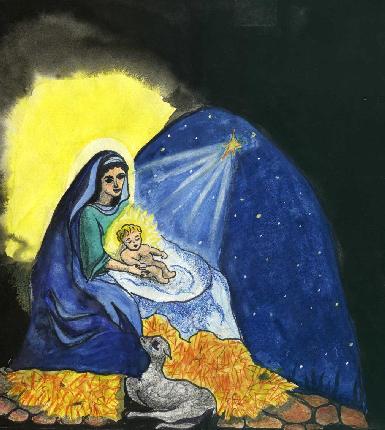
 Sandy Brown and her family have just moved to Spokane, Washington where her husband, Scott, is pastoring a new church. With a fresh start, Sandy is determined to devote more time to her four children. But, within weeks of settling in their new life, the Brown family is plunged into turmoil.




 remarkable book ‘
 Pastor Lina Gabeli commented: “As you read the pages of this book, you will be strengthened in your faith and fall more in love with Jesus, knowing that with God all things are possible when you believe in His promises and appropriate His word. This is a must read for everyone who is facing sickness or a personal crisis.” In the Arms of My Beloved can be purchased at your local Christian bookstore or ordered
 permanent residence in our hearts. That is why anger, while encouraged in Ephesians 4:26, must be without sin or harming of others, and must not be taken to bed. Wisely Ephesians 4:26 suggests that going to sleep with unresolved anger gives a foothold for the negativity which sacramental Christians would describe in their baptism as ‘the world, the flesh and the devil.’
 was described both in class and in an article as the ‘Gold Standard’ of marriage research. The Gottmans (2006) recommend that we husbands need to embrace our wife’s anger and learn the meaning behind the emotion. We need to rediscover anger as a healthy emotion that has its own wisdom if we will stop being so defensive. Gottman’s evocative phrase is “Look for the longing in each other’s complaint.” Brain scans have shown us that we experience anger on the right side of the brain, unlike fear and sadness which is on the left side. While fear causes us to withdraw, anger can actually stir us to make a difference and bring constructive change. The challenge is how to harness the power of anger, much like people in BC harness the power of our mighty rivers for electricity.
 causes emotional distance, loneliness, and a lack of romance. Ironically this is not about the husband not caring but because his over-caring makes him so anxious (Garland, 1998). The husband’s withdrawal is associated with increases in the wife’s blood pressure, norepinephrine and cortisol, all of which are linked to poorer cardiovascular and immune outcomes (Loving, T., & Heffner, K., 2004) Cortisol is a useful hormone in the short-term ‘fight or flight’ response, but is very destructive long-term to the white T cells which fight off cancer.
 and letting God’ is at the heart of true recovery. I am reminded of Paul saying in 2 Corinthians 12: 9-10 that God’s grace is sufficient for him, enabling him to realizing that when he is weak, he is strong.
 vision and relation virtues such as selflessness and unconditional love have been linked with better marital functioning in times of anger and conflict. Couples indicated that their involvement in scripture reading and regular church attendance increased their commitment to relational permanence. Marsh, R. and Dallos, R. (2000) found that couples were able to increase their sense of interpersonal space by detouring their anger to God in marital conflict. In my pastoral work, I have found that praying together can really help a couple, though most find such activity too intimate. It is vital that the couple do not use prayer or the bible as weapons to win a fight, but rather as a way to resolve conflict and build a healthier marriage.
 forgiven’, say Ketterman, lie at the heart of marital harmony and health. She speaks both as a psychiatrist of the Christian faith and as a victim of infidelity who remarried her husband. Forgiveness is indeed a practical proven key to managing anger in martial conflict.
 individualism of North American culture militates against healthy anger management in marriage conflict. They suggest that the way forward is to rediscover a theology of marriage that focuses on the common good, the value of community, discipleship and missional orientation. Marriage, said Matthews and Hubbard, ‘must have a purpose, a goal, a task beyond ‘being together’.
 challenges of marital conflict. This is why Gottman, J. & Silver, N. (1999) encourage couples to explore each others’ dreams and hopes, with an aim to create shared meaning. It is important that couples in conflict do not give up on their ideals and dreams. Higher expectations for romance and passion have been linked with increased marital satisfaction. Sometimes in a desire to get along, spouses give up something essential that actually fuels the romance and passion of their lives.
 many positive behaviours as negative behaviours. Couples in crisis usually only show a corresponding ratio of 1:1 (Gottman, 1999, 2006). The need for a five to one ratio seems to come from the greater emotional impact of negative behaviours on a marriage. Garland (1998) poignantly notes that “truth, especially when it leads to conflict, must be wrapped in words and actions that build rather than tear down love for one another.”
 make the most use of in our church is
  avoid the pain of divorce.
 Sandy Brown and her family have just moved to Spokane, Washington where her husband, Scott, is pastoring a new church. With a fresh start, Sandy is determined to devote more time to her four children. But, within weeks of settling in their new life, the Brown family is plunged into turmoil.
 Many of us enter marriage thinking that our spouse will meet our deepest needs. We then feel cheated when they don’t, and begin to close our hearts. How many of us enter marriage with the view that we are there to serve our spouse? How many of us see marriage as a way of serving God?
 clearly than anger. Because our hearts are deceitful (Jeremiah 17:9), we have an amazing ability to justify our own anger and bitterness towards our spouse, while simultaneously excusing our own bad attitudes. Being angry at our spouses can be very attractive, because it makes us feel both powerful and self-righteous.
 Dr. E. Stanley Jones, founder of the Christian Ashram, once said that ‘there can be no love between a husband and wife unless there is mutual self-surrender. Love simply cannot spring up without that self-surrender to each other. If either withholds the self, love cannot exist.’
 -Click to check out our marriage book

 The heart of spirituality, in fact, is surrendering our will and lives to God who really cares for us. As Jesus was hanging in agony on the cross, he cried out, “Father, into your hands I commit my spirit”. Such a surrender can be our choice one day at a time. Either we commit our lives daily into God’s hands, or we commit our lives into our own hands. Either God ends up at the centre of our lives, or our self ends up at the centre. There is no greater disease than finding one’s self at the centre, the essence of self-centeredness. As Dr. E. Stanley Jones puts it, anything that leaves you at the centre is off-centre.
 itself to something, or someone, beyond itself. Your self in your own hands is a problem and pain; your self in the hands of God is a possibility and power.” Why is it so hard to let go and let God? Why does our ego so often fight self-surrender with all its might? Because self-surrender is choosing to die to the false self, the self-centered way of living, that the true self might live for the sake of others. “Fears, worries, anxieties, and resentments”, says Dr. Jones, “are all roots in the unsurrendered self.”
 As Bob Dylan once wrote, ‘you gotta serve somebody…It may be the devil, it may be the Lord, but you gotta serve somebody’. The choice is ours one day at a time. We may choose to surrender to fear, to pride, to money, to resentment, to popularity, or we can choose to surrender to God who really cares for us. My prayer for those reading this article is that each of us may learn to slow down, let go, and let God.
 By the Rev. Dr. Ed Hird
 Heartfelt, non-critical listening is a rare phenomenon in our fast-paced, analytical culture. Listening takes time. Listening takes energy. Listening takes courage. To be honest, it often seems a lot easier just to give them chocolates. Most of us as men know that we need to grow in the area of listening.
 you tell me?” “Well, Ed”, she said, “You weren’t listening”. Sadly, she was right. One of the dangers of listening to women is that we just might hear something that we don’t want to hear. Our equilibrium may be so unsettled that it will take us quite a while to recover.
 Another danger of listening to women is that we might have to change. None of us like being controlled. We certainly don’t like being treated like children by the key women in our lives. Sometimes we confuse our fear of change with our fear of being controlled. Without change, there is no growth. Without change, there is no future. I have found that if I am willing to change the things that I can change (which is me), then the rest of life begins to make more sense.
 block out parts of conversations that make us feel uncomfortable. Ever wonder why women get so irritated with us, as so many men are forever flicking on the TV channel changer. This filtering ability can make men look like their memories are extremely selective. As the old saying goes, the problem with men is that they never remember, and the problem with women is that they never forget.
 their actions, and ourselves by our good intentions. That is why Jesus challenged each of us to first remove the log from our eyes, before we try to do surgery on the splinter in someone else’s eye.
 the women when they shared about the risen Jesus? Not in your life. Like so many of us men today, they wrote off the women’s stories as “old wives’ tales”.
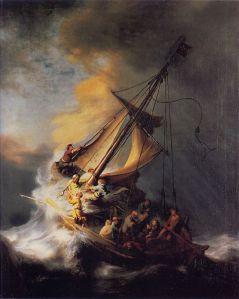 ninth child of a well-to-do couple in Leiden, Holland. While in his early 20’s, he developed an overnight celebrity status somewhat akin to the rise of the Beatles. This brief time of prosperity and popularity,however, was followed by much sorrow and rejection. Championed as the Netherlands alternative to Peter Paul Ruben in Belgium, Rembrandt became very wealthy and over-extended. Taking out an enormous mortgage on a beautiful house, he was accused of wasting his inheritance and living an indulgent lifestyle.
 called Night Watch, was both his greatest success artistically and his worst failure relationally. While painting the Night Watch, he made many people angry who would no longer buy his paintings. The soldiers, who paid to be in the picture, all wanted to be front and centre. Instead of painting a typical group portrait, Rembrandt created a masterpiece where some soldiers were prominent and others were hardly visible.
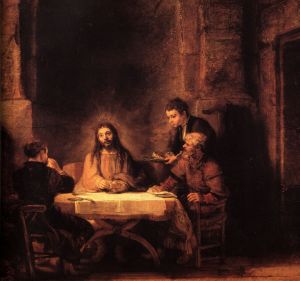 another scandal with his new housekeeper, Hendrickje Stoffels, whose pregnancy scared off even more of his Dutch customers. His financial problems became so severe that in 1656 Rembrandt was declared insolvent. All of Rembrandt’s possessions, his large collection of artwork, and his house in Amsterdam were sold in three auctions during 1657 and 1658. In 1663, Hendrickje, who has been described as ‘one of the noblest souls to serve a troubled genius’, died. Five years later, Rembrandt’s hopes were again raised and then dashed when he celebrated his son Titus’ wedding, only to see him buried that same year. Only his daughter Cornelia, his daughter-in-law Magdalene van Loo, and his granddaughter Titia survived him.
 love was concentrated in the hands. When the famous author Henri Nouwen saw the Prodigal Son painting in the St Petersburg Hermitage, he was struck by the sight of “a man in a great red cloak tenderly touching the shoulders of a disheveled boy kneeling before him. I could not take my eyes away. I felt drawn by the intimacy between the two figures, the warm red of the man’s cloak, the golden yellow of the boy’s tunic, and the mysterious light engulfing them both. But, most of all, it was the hands –the old man’s hands–as they touched the boy’s shoulders that reached me in a place where I had never been reached before. …” Nouwen realized that Rembrandt must have shed many tears and died many deaths before he could have so exquisitely painted the father’s heart for his lost son. Rembrandt had once again painted himself as the Prodigal Son, but this time coming back home to his Father.
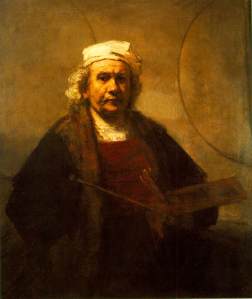 Prodigal Painter coming home to the true Father. Rembrandt knew that he had wandered a long way, but that it was never too late to return home. My prayer is that many of us may have the courage, like Rembrandt, to turn our hearts towards Home, where love and forgiveness are waiting.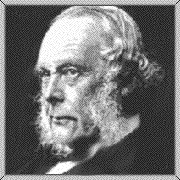
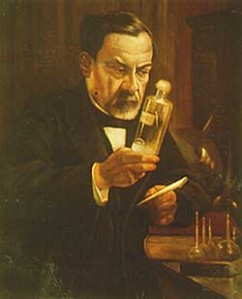 by the medical establishment. When Pasteur was publicly honoured at age 70 by his medical peers, he turned and bowed his head towards Lister, saying: “the future belongs to him who has done the most for suffering humanity.”
 gloves, nor did they cover their hair with caps or their noses and their mouths with masks. The result was that the patient was in danger of infection, not from ‘bad air’ as they thought, but from the surgeon’s hands, his clothes, his breath, and his hair. Lister had heard that ‘carbolic acid,’ a coal-tar derivative used to preserve railway tracks and ships’ timbers, was effective in treating sewage in Carlise, and in curing cattle of parasites. By cleaning wounds and dressing his patients with carbolic acid, Lister was able to keep his hospital ward in Glasgow free of infection for nine months. Lister’s cloud of carbolic spray drenched the whole area, surgeon and all, and so killed the bacteria before they had a chance to invade the wound.
 insisting for hygienic reasons that his wards should be separated from all other wards, and that they should not be shared by any other surgeon. He even had the nerve to bring his own personally trained staff with him from Edinburgh. Little by little however, Lister won the English over.
 His ‘criminal’ behaviour was none other than publishing a pamphlet urging doctors to wash their hands before surgery and to sterilize their instruments. Thirty percent of pregnant women in Paris were needlessly dying from infection during childbirth. One grief-struck husband, whose wife had just died from childbirth fever, went on a rampage and shot his doctor dead. Medical doctors rallied against Dr. Pasteur, blaming his pamphlet for the murder and claiming that Pasteur was making the practice of medicine unsafe for physicians and surgeons. “Who did Pasteur think that he was?” They said. “He isn’t even a medical doctor…just a lowly chemist”.
 countryside of Arbois, Pasteur spent the next decade researching the causes of anthrax, the black plague ravaging the sheep across France. Miraculously Pasteur invented an anthrax vaccine, which he gave freely to all farmers’ sheep in Arbois.
 The ‘great physician’ Jesus once said that if anyone wants to be first, he must become the very last, and the servant of all. Louis Pasteur was indeed the servant of all, who sacrificed his time, energy, and health so that others might live. Pasteur selflessly taught that the benefits of science are not for the scientist, but for all of humanity.
 let yourselves be tainted by a barren skepticism nor discouraged by sadness of certain hours that creep over every nation. Do not become angry at your opponents for no scientific theory has ever been accepted without opposition.’
 family life. He quizzed his children on what they read and made up bedtime stories for them. “The thing I remember most about my father,” reflects his daughter Rebecca, “was those marvelous stories he would tell.”
 successful people. Sometimes the most successful outwardly are the most wounded inwardly, especially in one’s primary relationships. “Not the educators nor the legislators nor the scientists can give us tranquillity of heart, and without tranquillity, whatever else they give us is useless at best.” Tozer commented that in this world people are rated by what they do. They are rated according to the distance they have come up the hill of achievement.
